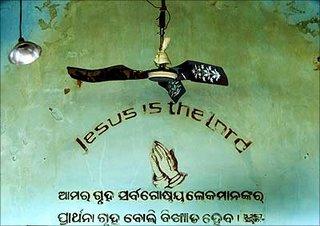
INDIA
- Prayer for seven innocent Christians of Orissa who are imprisoned Kochi (Agenzia
Fides) - The Church in India is in prayer for the release of seven innocent
Christians in the Indian state of Orissa, in prison for nine years. Their
names are: Bhaskar Sunamajhi, Bijay Sanseth, Buddhadev Nayak, Durjo Sunamajhi,
Gornath Chalanseth, Munda Badamajhi and Sanatan Badamajhi. As Fides learns,
the seven, originally from Kandhamal district, theater of anti-Christian
violence which took place in 2007 and 2008, are unjustly accused of being
among those responsible of the killing of Hindu leader Swami Laxmanananda
Saraswati, killed in Orissa on 23 August 2008. In 2013 a district court
sentenced them and an appeal trial is pending at Cuttack High Court. The
hearing of the trial has been postponed several times. The episode of Hindu
leader's death was the spark that triggered the anti-Christian violence
in 2008. Christians were accused in a pretestuous way of murder, then claimed
and attributed to Maoist groups.
In recent days,
in an assembly of priests held in Kerala on "What Happened in Kandhamal?",
the present recalled that the Indian Church organized prayer vigils for
the Indian Salesian Fr. Tom Uzhunnalil, kidnapped in Yemen and then released.
"Now it is urgent to pray for the innocent of Kandhamal", says to Fides
journalist and Catholic intellectual Anto Akkara, who has traveled many
times to the district and has written several books on the subject. In
one of these investigative books, titled "Who Killed Swami Laxmanananda?",
the journalist reports evidence that clears the seven Christians name.
Some priests,
in collaboration with Akkara, have elaborated a special prayer that will
spread among the Catholic communities in Orissa and other states of India.
Bishops, priests, religious and lay Indians throughout the country have
confirmed that they will join the prayer campaign for the seven innocent
victims. "I have no doubt that faith must lead to action. The blood of
martyrs' will inspire the faithful to support the voiceless. After the
launch of the campaign, thousands have already begun praying for the innocent
of Kandhamal", says Akkara to Fides.
Human rights
activists, social workers, journalists, and leaders of the Church have
contested the district court's conclusions that condemned the seven Christians
at first instance: the verdict was based on the theory of a conspiracy
lacking evidence and authenticity. Akkara also launched an online petition
for the release of the seven, sending it to the Chief Judge of the Supreme
Court of India, to the President of India and the President of the National
Human Rights Commission. "This is for me a journey of faith. The Lord has
guided my path in the past nine years, and the petition and the campaign
of prayer emerged from the desire for truth and justice", concludes Akkara.
The district
of Kandhamal in the State of Orissa (or Odisha) experienced inter-community
tensions and an unprecedented wave of violence during Christmas in 2007
and then since August 2008. The violence lasted for at least four months,
killed more than 100 people and 56,000 were left without a home
If
Christian ministries are kicked out of India, who will share the Gospel? India, October 13, 2017: You’ve heard us talk about Christian ministries
being kicked out of India, including Compassion International earlier this
year. A report from India Briefing last month shows that 24,000 NGOs have
now lost their licenses under the Foreign Contribution Regulation Act in
the last year. That is one-third of the NGOs that previously existed in
India before the FCRA.
Many organizations lost their NGO status in India for simply not filing
the proper paperwork. But the NGO reporting requirements have shifting
demands and sometimes sudden deadlines. Ministries have shared it seems
like these are hurdles meant to make it increasingly difficult for non-Hindu
groups to stay in the country.
One of the high-profile cases was Compassion International whose license
in India was revoked earlier this year. They were carrying out ministry
to vulnerable children through local partners in the country.
The Voice of the Martyrs USA’s Todd Nettleton explains, “Many of those
local partners were rejected from a license to accept funding from outside
the country. So what the Indian government basically did is cut off the
flow of funds that were helping those Christian organizations do that ministry
on the ground in India. Because of that, many of those organizations have
had to stop the ministry. Many of the outside groups have had to stop funding
ministry in India because that money is not allowed to be transferred into
the country.”
Since India’s Prime Minister Narendra Modi took power in 2014, hostilities
against Christians have nearly doubled. His background with radical Hindu
nationalists and the RSS have emboldened those groups in their push to
make India a totally Hindu nation.
So if Christian ministries are being systematically kicked out of India,
who will carry on the spread of the Gospel?
Nettleton says, “Obviously the local Church is picking up that mantle
and carrying it forward and sharing the Gospel. Thankfully, there is a
great history of Christianity in India. There are churches and groups that
have been operating for decades that are ready to pick that mantle up and
carry it forward. But it is a challenge.”
The challenge comes when the local Church has to sometimes carry on
ministry initiatives that were supported by other churches and organizations
outside the country. In that, we need to pray for God to bless these ministry
initiatives, and even seek out other Christian ministries to support that
are still able to send funds to India.
Christian ministries that are still in India have to be cautious with
how obvious they are in their Gospel outreach to avoid the crosshairs of
the FCRA. And accusations akin to anti-blasphemy under Section 295A of
the Indian Penal Code are becoming more frequent. But they don’t want to
compromise the biblical message of hope in Christ just to stay in the country.
So where is the balance?
“That is a challenging question for the different ministries to answer
as they go forward,” observes Nettleton. “[There is] that fine line of,
well, we want to be able to stay in the country so we want to be careful
about how we talk about what we do, but we also want to be representatives
of Jesus Christ and we want to be inviting people into fellowship with
Him. We’re not going to compromise on that. So that’s where that challenge
comes in how you do the work on a day-to-day basis and how you talk about
the work, both inside the country and to your donors and your supporters
around the world.”
In addition to praying for Christian ministries and the local Church
in India, there’s something else you can pray for.
“Maybe something we don’t think about as much is praying for the persecutors.
We want to encourage people to pray for even radical Hindu nationalists,
people in the RSS to come to faith in Christ, to have an encounter with
a Christian that shakes up their worldview. You know, when Christians respond
to persecution with love and forgiveness, that really plants a seed of
the Gospel in the heart and in the mind of the persecutor because it’s
not a human response, it’s not a natural response. It’s a supernatural
response,” says Nettleton.
“The only explanation is Jesus Christ is real and he is living and
he empowers people to endure persecution with faith and with courage.”
- mnn
Tags:
Pope praises 'beautiful, complex' diversity of Catholic
Churches in India Vatican City, Oct 10, 2017 / 11:24 am (CNA/EWTN News).- Pope Francis
on Tuesday said the variety of Catholic Churches and rites in India is
a richness for the country that ought to be strengthened, and as a means
of doing so, he expanded the reach of one of the country's indigenous Churches.
The decision moves toward a greater allowance for several bishops from
distinct Catholic Churches in India having a presence in the same territory.
“In a world where large numbers of Christians are forced to migrate,
overlapping jurisdictions have become customary and are increasingly effective
tools for ensuring the pastoral care of the faithful while also ensuring
full respect for their ecclesial traditions,” Pope Francis wrote in an
Oct. 10 letter addressed to India's bishops.
He said the diversity of ecclesial life in the country “shines with
great splendor throughout lands and nations.”
Two Catholic Churches based in India's Kerala state trace their origins
to the preaching of the Apostle Thomas: the Syro-Malabar Church, which
follows the East Syrian or Chaldean rite; and the Syro-Malankara Church,
of the West Syrian or Antiochian rite.
The Latin rite Catholic Church also has a large presence throughout
India, having been introduced to the country by missionaries in the 16th
century.
The various Catholic rites in India, Pope Francis said, constitute
a historic Christian presence in India “that is both rich and beautiful,
complex and unique.”
“It is essential for the Catholic Church to reveal her face in all
its beauty to the world, in the richness of her various traditions,” he
said, and noted how the Second Vatican Council sought to “protect and preserve
the treasure of the particular traditions of each Church,” an ongoing mission
today.
His letter accompanied an announcement on the establishment of two
new eparchies (the equivalent of a diocese in the Latin Church) for the
Syro-Malabar Church.
The establishment of the eparchies of Shamshabad (in Uttar Pradesh)
and Hosur (in Tamil Nadu) was announced along with the name of their first
respective bishops: Bishop Raphael Thattil, until now Auxiliary Bishop
of the Syro-Malabar Archdiocese of Trichur, and Fr. Sebastian Pozholiparampil,
a priest of the Syro-Malabar Diocee of Irinjalakuda. The Shamshabad eparchy
will include the entire country of India not already included in existing
Syro-Malabar eparchies.
Pope Francis also extended the boundaries of the eparchies of Ramanathapuram
and Thuckalay, both of which are located in Tamil Nadu state.
In addition to his role as bishop, Thattil also serves as apostolic
visitor for Syro-Malabar faithful in India who live outside of their own
territory, reporting his observations to Rome.
Pope Francis' decision to establish new eparchies for the Syro-Malabar
Church and widen its jurisdiction to essentially all of India mirrors a
similar decision he made in August with the Syro-Malankara Church, when
he reinforced their own presence with the establishment of a new eparchy
and an apostolic visitor to the Syro-Malankara Church in Europe and Oceania.
The establishment of the eparchies also takes place as the Congregation
for the Oriental Churches celebrates its centenary with a variety of activities
in Rome, culminating in Mass with Pope Francis at the Basilica of St. Mary
Major Oct. 12.
In his letter, Pope Francis noted that “In India, even after many centuries,
Christians are only a small proportion of the population and, consequently,
there is a particular need to demonstrate unity and to avoid any semblance
of division.”
He stated that when the Syro-Malabar Church expanded with missionary
eparchies to parts of northern and central India, “it was generally thought
by the Latin Bishops that there should be just one jurisdiction, that is,
one bishop in a particular territory. These eparchies, created from Latin
dioceses, today have exclusive jurisdiction over those territories, both
of the Latin and Syro-Malabar faithful.”
“However, both in the traditional territories of the Eastern Churches,
as well as in the vast area of the so-called diaspora (where these faithful
have long been established), a fruitful and harmonious cooperation between
Catholic bishops of the different sui iuris Churches within the same territory
has taken place.”
Overlapping jurisdictions in India “should not longer be problematic,”
the Pope wrote, noting that they have already existed in Kerala for some
time, and his own expansion of the Syro-Malankara Church in recent years.
“These developments show that, albeit not without problems, the presence
of a number of bishops in the same area does not compromise the mission
of the Church. On the contrary, these steps have given greater impetus
to the local Churches for their pastoral and missionary efforts.”
He voiced hope that his decision to broaden the reach of the Syro-Malabar
Church would be “welcomed with a generous and peaceful spirit, although
it may be a source of apprehension for some, since many Syro-Malabars,
deprived of pastoral care in their own rite, are at present fully involved
in the life of the Latin Church
Francis stressed his conviction that “there is no need for concern:
the Church’s life should not be disrupted by such a provision.”
“Indeed it must not be negatively interpreted as imposing upon the
faithful a requirement to leave the communities which have welcomed them,
sometimes for many generations, and to which they have contributed in various
ways. It should rather be seen as an invitation as well as an opportunity
for growth in faith and communion with their sui iuris Church, in order
to preserve the precious heritage of their rite and to pass it on to future
generations.”
“The path of the Catholic Church in India cannot be that of isolation
and separation, but rather of respect and cooperation,” he said, adding
that the presence of several bishops of various rites “will surely offer
an eloquent witness to a vibrant and marvelous communion.”
Francis closed his letter urging the Catholic Churches in India “to
be generous and courageous as they witness to the Gospel in the spirit
of fraternity and mutual love.”
“For the Syro-Malabar Church, this continues the valued work of their
priests and religious in the Latin context, and sustains their availability
for those Syro-Malabar faithful who, although choosing to attend Latin
parishes, may request some assistance from their Church of origin. The
Latin rite Church can continue to generously offer hospitality to members
of the Syro-Malabar communities who do not have church buildings of their
own.”
He said that “with the growth of spiritual friendship and mutual assistance,
any tension or apprehension should be swiftly overcome. May this extension
of the pastoral area of the Syro-Malabar Church in no way be perceived
as a growth in power and domination, but as a call to deeper communion,
which should never be perceived as uniformity.”
Hundreds
of thousands pray rosary at Polish border Faithful pray from the Baltic Sea coast in the north to the mountains
in the south
Polish Catholics held rosaries and prayed together along the country’s
2,000-mile border on Saturday, appealing to the Virgin Mary and God for
salvation for Poland and the world in a national event that some felt had
anti-Muslim overtones.
The “Rosary to the Borders” event was organised by lay Catholics but
was also endorsed by Polish church authorities, with 320 churches from
22 dioceses taking part. The prayers took place from the Baltic Sea coast
in the north to the mountains along Poland’s southern borders with the
Czech Republic and Slovakia, and all along the border of this country of
38 million where more than 90 per cent declare themselves Catholics.
Organisers say the prayers at some 4,000 locations commemorated the
centenary of the apparitions of Fatima, when three shepherd children in
Portugal said the Virgin Mary appeared to them.
But the event also commemorated the huge 16th-century naval battle
of Lepanto, when a Christian alliance acting on the wishes of the Pope
defeated Ottoman Empire forces on the Ionian Sea, “thus saving Europe from
Islamisation,” as organisers put it. Prime Minister Beata Szyd?o showed
her support by tweeting an image of rosary beads with a crucifix and sending
greetings to all the participants.
While organisers insisted the prayers Saturday were not directed against
any group, some participants cited fears of Islam among their reasons for
praying at the border.
Halina Kotarska, 65, travelled 145 miles from her home in Kwieciszewo,
central Poland, to express gratitude after her 29-year-old son Slawomir
survived a serious car wreck this year. She described it as a miracle which
she attributed to Mary’s intercession. She said she was also praying
for the survival of Christianity in Poland and Europe against what she
sees as an Islamic threat facing the West. “Islam wants to destroy
Europe,” she said. “They want to turn us away from Christianity.”
Poles also prayed in chapels at airports, seen as gateways to the country,
while Polish soldiers stationed in Afghanistan prayed at Bagram Airfield
there, the broadcaster TVN reported. A leading Polish expert on xenophobia
and extremism, Rafa? Pankowski, saw the prayers as a problematic expression
of Islamophobia coming at a time of rising anti-Muslim sentiment in Poland,
a phenomenon occurring even though the country’s Muslim population is tiny.
“The whole concept of doing it on the borders reinforces the ethno-religious,
xenophobic model of national identity,” said Pankowski, who heads the Never
Again association in Warsaw.
At the Polish-Czech border near the town of Szklarska Poreba, hundreds
of pilgrims arrived in buses and cars to pray at the Karkonosze mountain
range. The procession, which included young and old and families pushing
children in strollers, was made up of pilgrims who held rosaries and prayed
to the Virgin Mary, braving the cold and rain. “It’s a really serious thing
for us,” said Basia Sibinska, who travelled with her daughter Kasia from
Kalisz in central Poland. “Rosaries to the Border means that we want to
pray for our country. That was a main motive for us to come here. We want
to pray for peace, we want to pray for our safety. Of course, everyone
comes here with a different motivation. But the most important thing is
to create something like a circle of a prayer alongside the entire border,
intense and passionate.”
In the northern city of Gdansk, people prayed on a beach lapped by waves
as seagulls flew above. Krzysztof Januszewski, 45, said that he worries
Christian Europe is being threatened by Islamic extremists and by a loss
of faith in Christian societies. “In the past, there were raids by
sultans and Turks and people of other faiths against us Christians,” said
Januszewski, a mechanic who travelled 220 miles to Gdansk from Czerwi?sk
nad Wis??. “Today Islam is flooding us and we are afraid of this too,”
he added. “We are afraid of terrorist threats and we are afraid of people
departing from the faith.”
The Eucharistic miracle of Sokolka: The host is tissue
from heart of a dying man Laboratory analyses confirm that the structure of the cardiac muscle
fibers and the structure of the bread are intertwined in a way impossible
to reproduce by human means.
Every day, on the altars of Catholic churches around the world, the
greatest miracle possible takes place: the transformation of bread and
wine into the true Body and Blood of Christ. Nonetheless, when we
receive Communion, we can only touch its true nature with our faith, because
our senses only perceive bread and wine, physically unaltered by the consecration.
What are the implications, then, of the Eucharistic event in Sokolka,
Poland?
It took place on Sunday, October 12, 2008, two weeks after the beatification
of Servant of God Fr. Michael Sopocko. During the Holy Mass celebrated
at the parish church of St. Anthony in Sokolka, at 8:30 a.m., a consecrated
host fell from the hands of one of the priests during the distribution
of Communion, next to the altar. The priest interrupted the distribution
of Communion and picked up the host, and, in accordance with liturgical
norms, placed it in a small container of water—in this case, one found
in some churches beside the tabernacle, where the priest may wash his fingers
after distributing Communion. The host was expected to dissolve in the
water, which would later be disposed of properly.
Sister Julia Dubowska, of the Congregation of the Eucharistic Sisters,
was the parish sacristan. At the end of the Mass, at the request of the
pastor, Fr. Stanislaw Gniedziejko, she poured the water and the host into
another container. Knowing that the consecrated host would take some time
to dissolve, she placed the new container in the safe located in the parish
sacristy. Only she and the pastor had the keys to the safe.
A week later, on October 19, Mission Sunday, when the pastor asked her
about the condition of the host, Sister Julia went to the safe. When she
opened the door, she noticed a delicate aroma of unleavened bread. When
she opened the container, she saw, in the middle of the host—which was
still largely intact—a curved, bright red stain, like a blood stain: a
living particle of a body. The water was untainted by the color. The sister
immediately informed the priest, who brought in the other priests at the
parish and the visiting missionary, Fr. Ryszard Gorowski. They were all
amazed and left speechless by what they saw. They kept a discreet
and prudent silence about the event, considering its importance; this was
a consecrated host which, by the power of the words of Christ at the Last
Supper, was truly His Body. From a human point of view, it was difficult
at that point to define if the altered form of the remainder of the host
was the result of an organic growth, a chemical reaction, or some other
cause. They immediately notified the metropolitan archbishop of Bialystok,
Edward Ozorowski, who went to Sokolka with the chancellor of the Curia
and other diocesan officials. They were all deeply moved by what they saw.
The archbishop ordered that the host be protected while they waited to
see what would happen.
On October 29, the container with the host was transferred to the Divine
Mercy Chapel in the rectory, and placed in the tabernacle. The next day,
by decision of the archbishop, the stained host was taken out of the water
and placed on a small corporal, which was then put back in the tabernacle.
The host was kept this way for three years, until it was solemnly brought
to the church on October 2, 2011. During the first year, it was kept secret.
During that time, the Church authorities reflected on what to do, since
they were dealing with a sign from God which needed to be interpreted.
By mid-January of 2009, the altered fragment of the host had dried out
naturally, and remained like a blood stain or clot; since then, its appearance
has not changed. That same month, the archbishop requested histopathological
studies be done on the host. On March 30, he created an ecclesial commission
to study the phenomenon.
A piece of the altered host was taken and analyzed independently by
two experts, Prof. Maria Sobaniec-Lotowska, MD, and Prof. Stanislaw Sulkowski,
MD, in order to ensure the credibility of the results. Both are histopathologists
at the Medical University of Bialystok. The studies were carried out at
the university’s Department of Pathomorphology. The specialists’ work was
governed by the scientific norms and obligations for analyzing any scientific
problem in accordance with the directives of the Scientific Ethics Committee
of the Polish Academy of Sciences. The studies were exhaustively described
and photographed. The complete documentation was given to the Metropolitan
Curia of Bialystok.
When the samples were taken for analysis, the undissolved part of the
consecrated host had become embedded in the cloth. However, the red blood
clot was as clear as ever. This transformed part of the host was dry and
fragile, inextricably interwoven with the rest of the fragment, which had
kept the form of bread. The sample that was taken was large enough to carry
out all the necessary studies. The results of both independent studies
were in perfect agreement. They concluded that the structure of the transformed
fragment of the host is identical to the myocardial (heart) tissue of a
living person who is nearing death. The structure of the heart muscle fibers
is deeply intertwined with that of the bread, in a way impossible to achieve
with human means, according to the declaration of Prof. Maria Sobaniec-Lotowska.
The studies proved that no foreign substance was added to the consecrated
host; rather, part of the host took the form of heart muscle of a person
near death. This kind of phenomenon is inexplicable by the natural sciences.
At the same time, the Church teaches us that the consecrated host becomes
the Body of Christ, by the power of His own words at the Last Supper, repeated
by priests during the consecration of the Mass.
The results of the histopathological studies, dated January 21, 2009,
were included in the dossier given to the Metropolitan Curia of Bialystok.
In its official communiqué, the Metropolitan Curia of Bialystok
stated: “The Sokolka event is not opposed to the faith of the Church;
rather, it confirms it. The Church professes that, after the words of consecration,
by the power of the Holy Spirit, the bread is transformed into the Body
of Christ, and the wine into His Blood. Additionally, this is an invitation
for all ministers of the Eucharist to distribute the Body of the Lord with
faith and care, and for the faithful to receive Him with adoration.”
India third among countries that faced most natural
disasters: Guterres Climate change was among the seven global threats that he listed needing
immediate global action.
September 19, 2017, 4:24 PM
United
Nations Secretary-General Antonio Guterres attends a bell-ringing ceremony
at UN headquarters in New York, Sept. 15, 2017. (IANS)
India ranked third among the countries that have faced the most natural
disasters in the last half century, UN Secretary-General Antonio Guterres
said on Tuesday pleading for unwavering international action on climate
change. In his first speech to the annual high-level meeting of the General
Assembly, he said, "It is high time to get off the path of suicidal emissions.
We know enough today to act." "I urge governments to implement the historic
Paris Agreement with ever greater ambition," he said.
United States President Donald Trump has declared that his country is
pulling out of the Paris agreement on combating climate change. Pointedly,
Guterres said, "The United States, followed by China, India, the Philippines
and Indonesia, have experienced the most disasters since 1995 - more than
1,600, or once every five days." Climate change was among the seven global
threats that he listed needing immediate global action. International terrorism
is taking a great toll on the world, he said and called for intensifying
the global efforts against terrorism and radicalisation.
"Stronger international cooperation remains crucial," he said. "Together,
we need to make full use of UN instruments, and expand our efforts to support
survivors. But he added, "Experience has also shown that harsh crackdowns
and heavy-handed approaches are counterproductive." Foremost among the
seven perils he listed is the nuclear threat emanating from North Korea.
"Global anxieties about nuclear weapons are at the highest level since
the end of the Cold War," Guterres warned. "The fear is not abstract. Millions
of people live under a shadow of dread cast by the provocative nuclear
and missile tests of the Democratic People's Republic of Korea."
He appealed to the Security council to act unitedly to meet the threat
and to all countries to comply with its resolution imposing sanctions.
"Only that unity can lead to the denuclearisation of the Korean Peninsula
and -- as the resolution recognises -- create an opportunity for diplomatic
engagement to resolve the crisis," he said while condemning Pyongyang's
nuclear and missile tests. "The dark side of innovation" is another global
peril, he said, adding "it has moved from the frontier to the front door."
"Cyber war is becoming less and less a hidden reality -- and more and more
able to disrupt relations among States and destroy some of the structures
and systems of modern life," he said. Genetic engineering has also raised
ethical questions that have not been resolved, he said.
The humanitarian crisis from unresolved conflicts and violations of
international law that is manifested in the flow of refugees is another
peril the world faces, he said. He mentioned the Rohingya crisis, and said,
"The authorities in Myanmar must end the military operations, and allow
unhindered humanitarian access. They must also address the grievances of
the Rohingya."
The other threats are the growing inequality among nations and within
nations, and human migration. Emphasising the need for global unity to
meet the great perils facing humanity, Guterres said, "We come from different
corners of the world. Our cultures, religions, traditions vary widely --
and wonderfully. At times, there are competing interests among us. At others,
there is even open conflict." "That is exactly why we need the United Nations,
he said. "That is why multilateralism is more important than ever."
IANS
Archaeologists may have discovered the place where
Jesus performed the “miracle of the swine”
A marble slab was uncovered with an inscription in Hebrew that might
indicate the exact location of the event.
The Gospel of Mark recalls the arrival of Jesus to the northeastern
region of the Sea of Galilee, the Kineret:
They reached the territory of the Gerasenes on the other side of the
lake, and when he disembarked, a man with an unclean spirit at once came
out from the tombs towards him. The man lived in the tombs and no one could
secure him any more, even with a chain, because he had often been secured
with fetters and chains but had snapped the chains and broke the fetters,
and no one had the strength to control him. All night and all day, among
the tombs and in the mountains, he would howl and gash himself with stones.
Catching sight of Jesus from a distance, he ran up and fell at his feet
and shouted at the top of his voice, “What do you want with me, Jesus,
son of the Most High God? In God’s name do not torture me!” For Jesus had
been saying to him, “Come out of the man, unclean spirit.” Then he asked,
“What is your name?” He answered, “My name is Legion, for there are many
of us.” And he begged him earnestly not to send them out of the district.
Now on the mountainside there was a great herd of pigs feeding, and the
unclean spirits begged him, “Send us to the pigs, let us go into them.”
So he gave them leave. With that, the unclean spirits came out and went
into the pigs, and the herd of about two thousand pigs charged down the
cliff into the lake, and there they were drowned.
Recently, a group of archaeologists discovered a marble slab in the
shores of the Kineret, with an inscription in Hebrew that might indicate
the exact location of this event, known as the “miracle of the swine.”
According to the team, it might have occurred in Kursi, a town located
in the land of the Gadarenes (or Gerasenes), in the southern part of the
Golan Heights.
“The presence of a Hebrew settlement near the eastern shore of the
Sea of ??Galilee is a very strange phenomenon,” exhlaind Haim Cohen, a
researcher at Haifa University. In fact, the settlement was only discovered
because of a drop in water levels that allowed researchers to find a pier
normally under water and, next to it, the Kursi settlement. The the 1,500-year-old
slab was found inside a building that would have functioned as a synagogue.
The marble slab would shed light on the issue. Being 1.40 meters by
70 centimeters, on its surface there is a Hebrew inscription in which the
experts were able to identify the words “amen” and “marmaria,” which might
translate either “Mary,” “marble” or “rabbi.” As read in Primeros Cristianos
and Israel En Línea, according to Professor Mijal Artzi, the full
text “is composed of eight lines; usually not so many words in Hebrew letters
are carved in stone. The assumption is that the person to whom the inscription
was dedicated had an enormous influence on the local population.”
Turin Shroud stained with blood of torture victim,
new research claims Researchers say the Shroud contains ‘nanoparticles’ of blood that
are typical of someone who has experienced violent trauma
The Shroud of Turin is stained with the blood of a torture victim, scientists
have claimed.
Researchers in Italy said the linen cloth, which is believed to have
been wrapped around Christ’s body after he was crucified, contains ‘nanoparticles’
of blood that are typical of someone who has experienced violent trauma.
Elvio Carlino, a researcher at the Institute of Crystallography in
Bari, Italy says the particles suggest “great suffering”.
Professor Giulio Fanti of the University of Padua added that the particles
have a “peculiar structure, size and distribution” and the blood contains
high levels of creatinine and ferritin, typically found in patients who
have suffered traumas such as torture.
“Hence, the presence of these biological nanoparticles found during
our experiments point to a violent death for the man wrapped in the Turin
Shroud,” Professor Fanti said.
The particles “cannot be artefacts made over the centuries on the fabric
of the Shroud,” he added.
The findings appear in an article titled ‘New Biological Evidence from
Atomic Resolution Studies on the Turin Shroud’, published in American scientific
journal PlosOne.
The researchers used methods recently developed in the field of electron
microscopy to analyse the Shroud.
Carlino said this was the first study of “the nanoscale properties
of a pristine fibre taken from the Turin Shroud.”
Catholic college in Kansas wipes ‘yoga’ from names
of classes — it’s a Hindu thing An online petition posted by students calls on Benedictine President
Stephen D. Minnis to “bring back yoga!” So far, it has received 105 online
signatures. The petition has also drawn the support of Rajan Zed, a well-known
Hindu cleric in Nevada, who urged the college to “relook into their reported
yoga decision.”
Complaints, Johnson said, began to come in from alumni, students, faculty
and some administrators who argued that as a Hindu practice, yoga was not
in keeping with Catholic-based education. Others, Johnson said, argued
that the name yoga should no longer be used because in teaching just the
exercise aspects of yoga — as opposed to both its physical and spiritual
aspects — Benedictine wasn’t teaching true yoga. Thus it should not use
the Hindu name.
The college’s school newspaper, The Circuit, first reported on the
move April 5 and noted that concern also was raised by Archbishop Joseph
F. Naumann of the Archdiocese of Kansas City in Kansas, and Abbot James
Albers of St. Benedict’s Abbey in Atchison.
The paper quoted college President Minnis.
“Yoga as created has some potential for eastern mysticism which has
caused concern among members of the Catholic Church,” Minnis told the college
paper. Archbishop Naumann “has expressed his concerns and the issues surrounding
that. We asked ourselves if there was a way to bring those yoga benefits
to our students and faculty without the possible effects of eastern mysticism.”
Contacted by The Star, the archdiocese sent the following statement
from its chancellor, the Rev. John Riley.
“Many people do not realize that yoga … is intended to be more than
a series of exercises coupled with deliberative breathing and meditation,”
Riley said in an emailed statement. “It is a mind and body practice developed
under Hinduism, the goal of which is spiritual purification that will lead
to a higher level of understanding and eventually union with the divine.
“Although the Catholic Church teaches that much good can be found in
other religions, Catholics believe it is only brought to fullness in Christ.
… It is for these reasons that Catholics are alerted to the dangers of
the practice of yoga and are encouraged to look for other exercise alternatives
that do not incorporate a spiritual dimension.”
Riley said if Catholics want exercises that include a spiritual dimension,
they should consider Pietra Fitness, a set of exercises that includes Christian
prayer and meditation.
Benedictine yoga instructor Julie Romano, a yoga practitioner for 10
years, questioned the decision.
“I have a moral objection to taking something that people spent thousands
of years working on and calling it something else,” she told the school
paper. “I don’t see a conflict in yoga and Catholicism and I don’t see
why we should call it something else to appease others.”
Eric Adler
Argentine priest in railway accident attributes life
to Eucharist By Giselle Vargas
Mendoza, Argentina, Apr 21, 2017 / 12:08 am (CNA/EWTN News).- On Holy
Thursday Father Alejandro Béjar, a priest of the Archdiocese of
Mendoza, narrowly escaped being killed by a train. He attributes his survival
to consecrated Hosts he was transporting on his way to visit the sick.
The April 13 incident took place at a railroad crossing in San Roque
as Fr. Béjar was on his way to visit several sick persons, in addition
to saying three Masses in the communities under his care.
Fr. Béjar, 50, told CNA that he crossed the railroad tracks
that day for lack of a signal and got trapped. He explained he did not
see the rails because of some bushes, and that there was no railroad crossing
barrier.
Trapped on the tracks he could hear the train's horn, and saw the train
appear, coming around a curve.
Within seconds, he tried moving his car. He was unable to, so he quickly
unfastened his seat belt and ran from the car.
His Ford Escort was struck, and dragged some 80 feet by the train,
which was unable to brake in time. The vehicle was destroyed but the priest
could not get over his astonishment that the bag holding the consecrated
Hosts on the front passenger seat was undamaged and remained in place.
“That's strange because in the back of the car there was a bag of fine
flour I was taking for the community where I was going to celebrate Mass.
That bag opened up and (the flour) spread all over, but the bag (with the
Hosts) didn't even move,” he said.
Fr. Béjar said he was ashamed he did not take with him the consecrated
Hosts when he abandoned the vehicle, but he thanked God for saving him
from the onslaught of the train.
“I thank God because I was calm and didn't despair. It was a sign from
God that he was present at that moment and helped me have those reflexes
to stay calm and not give up hope,” he said.
The priest was unable to get the first Mass on his schedule for that
day.
Fr. Béjar noted that eight years ago two women died in similar
circumstances, and so he hopes the authorities will clean up the area from
bushes and put up appropriate railroad crossing signage.
Beirut Bishop Kourie says the two bishops abducted
in Syria in 2013 are still alive Fady
Noun
The Lebanese Syriac Orthodox bishop made the claim during the celebrations
for the 47th anniversary of Virgin's apparitions. The portraits of the
two bishops were displayed inside the church and taken in procession. The
prelate appealed to the Lebanese government to make the case a "national
cause".
Beirut (AsiaNews) – The two bishops of Aleppo abducted in 2013 in Syria
are still alive, said Mgr Daniel Kourie, Syriac Orthodox bishop of Beirut,
who spoke on Saturday at the ceremony marking the 47th anniversary of the
Virgin Mary's apparitions over the dome of the cathedral of Saints Peter
and Paul in Moussaitbeh, near Beirut.
The commemoration of these apparitions, which this Church invariably
commemorates on the first Sunday after Easter, coincided this year with
the 4th anniversary of the abduction in Syria (22 April 2013) of the Syriac
Orthodox and Greek Orthodox bishops of Aleppo, Youhanna Ibrahim and Boulos
Yazigi, whose fate remains unknown. The portraits of the two bishops were
displayed inside the cathedral and carried during the torchlight procession
that marked the anniversary of the apparitions.
During the ceremony for the dual anniversary, Bishop Daniel Kourie,
chairman of the commission charged with the affair, tried to be reassuring.
As far as he knew "the two bishops are still alive. [. . .] Those who believe
otherwise must give us evidence for their claim." The prelate added that
the commission has knocked on every possible door, in Lebanon and Syria,
doing their best, to find the two bishops.
Bishop Kourie called on Lebanese authorities to make this case a national
cause given its impact on interfaith coexistence and dialogue. He slammed
"religious and ethnic cleansing in Syria, Iraq and Egypt" and the states
that support it by providing men, weapons and money.
The apparitions of the Virgin at Moussaitbeh, a mixed district of Beirut
with a substantial Syriac community, are similar to those that occurred
in Zeitoun (1968). The Syriac Orthodox Church considers them authentic
and solemnly recognised them in a patriarchal decree. Unfortunately, they
have not received the attention they deserve from the other Eastern Churches
in Lebanon, all of which had turned inward at the time of the events, even
though these events resonated as a warning and an appeal for openness and
unity, in the face of the initial rise of the Islamist peril.
India: Masses interrupted, pastors arrested, allegations
of forced conversions: Easter plight of India’s Christians Santosh Digal e Nirmala Carvalho
Bishops, activists and ordinary people complain about incidents of
violence and intimidation across the country. Despite constitutional guarantees,
the Christian minority is being persecuted. The threat on Palm Sunday:
"If you want to pray, you must have official permission."
New Delhi (AsiaNews) - Incidents of violence, intimidation and harassment
against Christians in India, a discriminated minority oppressed by the
majority Hindus. Even on Palm Sunday and Holy Week before Easter. As reflected
in the stories of what happened throughout the national territory, pastors
and believers arrested, prayer meetings suppressed, masses interrupted,
arrests on false accusations of proselytism, tribals forced to "return
home", that is to Hinduism. Bishops, activists and ordinary people speak
to AsiaNews pointing out that India is a secular and democratic country
only on paper (constitutional), and over the years has become increasingly
prey to the Hindu nationalists, led by the central government (BJP Bharatiya
Janata Party) of Prime Minister Narendra Modi.
On April 7, the radical nationalist youth brigade Hindu Yuva Vahini,
created in 2002 by Yogi Adityanath, the current chief minister of Uttar
Pradesh, raided a Dadhauli church in Maharajganj district (Uttar Pradesh),
and interrupted the church service. There were about 150 faithful in the
church at that time, including 10 American tourists. All Christians, including
the pastor Yuhanna Adam, were arrested by police on charges of forced conversions
to Christianity. Msgr. Thomas Thuruthimattam, bishop of Gorakhpur, complains:
"It was a real indirect attack on religious freedom. These indirect threats
are against the principles established in the Constitution, against people
who are represented in the Constitution itself. "
Witnesses say that the nationalists insulted, intimidated and provoked
Christians, although police established the falsity of the disputed charges.
The pastor Adam also reports that young people entered the church with
an excuse: "They arrived early in the morning, asking to visit the facility
for its historical value. How could we stop them? The church is open to
all and everyone is welcome at any time. Later, as soon as the Mass began,
the group with saffron bandanas [typical of nationalists headgear, ed]
came back with police. The police immediately blocked the function and
asked everyone to leave the building. "
Sajan K George, president of the Global Council of Indian Christians
(GCIC), criticizes the behavior of the police: “India is a Secular Democratic
Republic with Constitutional Guarantees, no illegalities were being done
at the Church event, yet the police stopped Worship services under the
baseless charges of conversion activities. GCIC fears the increasing insecurity
and targeting of the vulnerable Christian minority.”
The Christian leaders also condemned the “shameful act of targeting
the tourists for attending worship is denounced and condemned by GCIC.
Moreover, it repeats the same old stereotype, of missionaries being out
to ‘convert’ the gullible masses.It is a very common sight to see western
tourists in saffron robes attend all hues of Hindu festivals in India,
very often they are also seen distributing copies of Hindu texts and books
at various places, but the police neither stop them or arrest them, But
when the western tourists attend Worship, they are detained and harassed.
This is a grave human right violation”.
Since last month in Jharkhand radicals of the Rashtriya Swayamsevak
Sangh (RSS) have "brought home to the Hindu family" 53 tribal families,
including the last seven in early April. The campaign of tribal conversion
will last throughout the month. Sajan K George denounces "the tribal Hindus
have never been Hindu, therefore, an attempt to bring them back to the
Hindu fold is just a way to harass them." Then he poses a technical question:
"To what caste they would like to include them, since the tribals are not
Hindus?".
On April 8 in Bangalore, Karnataka, a Christian event scheduled for
the next day was canceled at the last moment. The authorities withdrew
permission to carry out the event, which had more than 1,000 people registered
who were supposed to attend a conference of two American evangelical pastors.
The event was canceled after Girish Bhardwaj, radical Hindus, filed a complaint
with the Immigration Service against the hypothetical attempt to convert
by the two foreigners holding a visa that allowed them only to participate
in the rally , and not to speak in public. The GCIC president expresses
a strong condemnation of the incident and asked the Prime Minister of India
to "invite the state governments to ensure the safety of Christians during
Holy Week."
Indeed, preparations for Easter have also been marred in India, as well
as the attacks against Coptic churches in Egypt. On Palm Sunday many episodes
of intolerance occurred across the territory. In Madhya Pradesh, in the
village of Sitabedi, members of the RSS - accompanied by police - have
interrupted the celebrations and arrested the pastors Amar Singh Solanki,
Kishore Solanki Barela and Prabhakar, their wives and other Christians
on charges of forced conversions . The same charges have been laid against
pastor Yashpal, whilst celebrating mass in Kaithal, Haryana. In the village
of Jahanpur, in Uttar Pradesh, other Hindu extremists beat Pastor Paul
Krishna, the Believer's Church, and dragged him to the police station.
The same fate has befallen the pastor Saji Mathew of the Church of God
in Sri Ganganagar, Rajasthan, who was arrested along with seven other Christians.
Finally Taluka in Palani, Tamil Nadu, some administration officials privately
broke into the pastor Gunasekaran’s residence while he was leading prayer.
The authorities took photographs and filmed the people attending the function.
They have also warned that if Christians want to pray in the future, they
will have to obtain an official permit.
The Holy Sepulcher: Archaeology says the Evangelists
were right Forum Libertas | Apr 19, 2017. Thomas Coex | AFP
What the opening of the marble slab of the Edicule revealed
On October 20th, 2016, one of the most exciting events in centuries
took place: the opening of the marble slab guarding the place tradition
claims was the tomb of Jesus, inside the Basilica of the Holy Sepulcher
in Jerusalem.
Underneath that slab there was a second slab, also of gray marble,
containing a slit along its side and bearing a Lorraine Cross. Most likely,
this is from the time of the Crusades, from the beginning of the 12th century.
Once the second slab was removed, the surprises began, according to
testimonies gathered from different sources. Right below this slab, a fundamental
piece of the site was discovered: an ordinary stone bench excavated in
the rock that is directly connected with the vertical wall, also excavated
in the rock behind it.
The chronicles of medieval travelers such as Félix Faber (1480),
who saw the edicule without the actual covering marbles, testify that the
bank and wall formed a single piece of stone. This corresponds to the northern
wall of the small room: the place traditionally venerated as Jesus’ tomb.
The second surprise revealed the south wall of this room corresponded
to a second vertical wall, also made out of ordinary rock, about two meters
high. In sum, the Edicule of the Basilica of the Holy Sepulcher contains
a site consisting of two stone walls (north and south) and a bank (to the
north side) — all dug out of the rock. This setup corresponds to a “sepulchral
chamber” one could only gain access by going down, as it was below the
level of the outer land. The original stone floor of the tomb, still to
be discovered, is to be found under the present marble pavement.
The archaeological elements described agree with the documentary data
of the Gospels, as in Matthew 27, Mark 15-16, Luke 24, and John 19-20.
That is why it is legitimate to suppose that this is in fact the tomb of
Jesus.
Relatively close to the place in which Jesus was crucified, Joseph
of Arimathea owned a tomb, which had not yet been used by anyone. (Jewish
burial customs at the time usually dictated quick burial in a shallow grave
covered with stones for the poor, with the wealthy purchasing family tombs,
or sepulchers, where bodies would be laid in niches carved out of the walls.
There were also stone benches for the preparation of the body or for visitors
to the family tomb.) This tomb was to be closed with a large stone that
had to be rolled over in order to cover the entrance, according to the
Gospels. This kind of closing is precisely the one that was used for sepulchral
chambers, commonly carved in the rock, as the one discovered under the
Edicule’s marble slab. One could only walk in by slightly descending to
gain access to the place in which the corpse was deposited: that is to
say, the aforementioned stone bench. The Gospels claim that Mary Magdalene
“bent down to look into the tomb.”
The stone bank is also mentioned in the gospels of Mark and John. In
Mark 16:5, it is said that the women entered the tomb and found “a young
man seated in a white garment.” Evidently, one could only sit on such marble
bench, and not in a niche. John 20:12 one speaks of “two angels dressed
in white, sitting in the room [that is, again, the area of the bench] where
the body of Jesus had been placed.”
When Jesus was buried, on a Friday, right before the sunset, they did
not place the body in a niche but rather on the stone bench, as mentioned
in the Gospels. The reason for this decision is that Jesus had died after
considerable physical aggression, and his body was in an unfortunate state,
and needed proper preparation, which could not be provided at the moment,
as the Sabbath rest was about to begin. It was customary among the Jews
of the time to wash and anoint with aromatic oils the bodies of the deceased
before burying them. But as Jesus had to be buried in a hurry, his body
was left on the stone bench, covered hastily with a shroud.
Even if faith in the Resurrection might not lean on logical demonstrations,
it doesn’t imply a leap into an irrational vacuum either. Research shows
archaeological data and the Gospels agree. The archaeological facts are
not to be understood as demonstrations that ground (or not) what is a matter
of faith, but they indeed stimulate reasonableness, based on verisimilitude.
The canonical gospels are indeed documents belonging to the first centuries
of Christianity, and can be read like any other ancient historical document.
From them, a religious revolution sprang out: the one that began on a bench
dug in the rock, inside a sepulcher, in Jerusalem, two thousand years ago.
The 30th Annual Way of The Cross by The Catholic Secular
Forum (CSF) Sacred Heart Church 10.30 am to St. Charles Convent 3.30 pm
Join Thousands in the ICAN - CSF Walk to Pray for PersecutorCSF’s Christian
Response to Attacks in India & Abroad.Thousands to Fast, Suffer
& Pray at Catholic Forum’s Good Friday Walk
Christians publicly forgive attackers, pray for the victims & the
country
Prayer Points
* Nuns Raped
* 7000 Indian Victims
* Properties Targeted
* Christians Murdered
* Churches Desecrated
* Clergy & Believers Attacked
* Women & Children Not Spared
* Situations Abroad Resulting from Fundamentalism & Terrorism
Will you be one among the walking pilgrims ? Or will you worship Jesus
in the comforts of the church ?
Thousands of Christians will undertake an exhausting walk, in a public
gesture of forgiving those responsible for the attacks on Christians, churches
and the clergy, which has risen sharply over the past few months. " The
intention is to offer a Christian response which is in keeping with what
Jesus did on the first Good Friday, when he said, 'Father forgive them
for they know not what they do' about his persecutors. We want to tell
India and the world that we forgive those who target us, our clergy, institution
and properties; but are grieved and cry out that we need to be treated
as equal citizens and the law should take its course ", said Joseph Dias,
general secretary of the Catholic Secular Forum (CSF), the activist community
NGO that organized the pilgrimage.
Starting out from Sacred Heart Church in Santacruz West, in suburban
Mumbai, the pilgrims will brave the scorching heat, most of them fasting
and praying until the religious service called the Stations of the Cross
concludes at around 3 pm in the evening. Along the way at various stops
over the almost 8 Km route, activists dramatized incidents, believed to
have happened when Jesus was killed over 2000 year ago. The serpentine
procession will pass through the lanes of Mumbai’s Khar, Santacruz, Vakola
and Kalina with the crucifixion scenes being enacted (as in the Philippines)
which is a tearful finale. Many of the pilgrims go bare feet at the end
of a fulfilling spiritual experience of 40 days of prayer, fasting and
repentance.
The 'Way of the Cross' devotion or Walk with Jesus relating the suffering
of Christ to modern-day living is in its 30th year and draws Christians
from all over, with even children, women, priests and nuns joining in to
partake in portrayal of the torture and killing of Jesus, enacted through
a musical played out on the streets. The faithful mourned for the intention
of the day – Christians denied freedom of faith and religious liberty.
Speaking on the theme, Joseph Dias, who started this tradition in India
29 years ago, which has not found a parallel in the country said, " There
seems to be a sinister plan to the attacks and the powers behind them could
range from political and economic to the persecution being part of an international
design to target Christians as is happening in the Gulf or African countries.
In the country, the attacks are in the background of new governments both
at the centre and states, who are responsible for law and order. Among
the comity of nations, the image assiduously cultivated by the prime minister
is taking a hit, as he is seen unwilling to reign in those attacking the
community.
Indian Christians do not see these as isolated incidents, especially
given the increase in frequency and the fact that they are backed by statements
from prominent fundamentalists or even elected public representatives.
We are alarmed and afraid at the attempt to demonize Christians and have
the community's basic human rights violated. We are seen as soft-targets
as we do not retaliate, as commanded by our faith and this makes the government
all the more duty-bound to ensure that our rights guaranteed are not trampled
upon ".
According to The CSF press release, " the government apathy towards
Indian Christians is taking its toll, even as communal elements target
the community. Jesus told us to pray for our persecutors and this is a
public display of our hurt sentiments and a cry for justice. There can
be no development without peace, justice or communal harmony ". Forms of
discrimination faced by the community mentioned were those of police action,
political alienation, bureaucratic victimization, anti-conversion laws,
targeted violence, economic deprivation, social boycott, etc.The 30th Annual
Way of The Cross by The Catholic Secular Forum (CSF)
Some of The 15 Stations of the Cross will be enacted are – the arrest
of Jesus, Jesus being sentenced by Pontius Pilate, the falls of Jesus,
Jesus meeting the women of Jerusalem, his mother and disciples at the cross,
Veronica wiping the face of Jesus… This, the activists feel is a dignified
Christian way of protesting against the subtle and not so subtle attacks
on the community.
Thousands of passer-byes will witness the Calvary (place where Jesus
was crucified) story, with biblical characters acting out the arrest and
the last few hours before Jesus death. Similar enactments are known to
happen in the Philippines and Latin America, with a couple of Christians
actually being nailed to a cross, to experience in a small way Jesus' suffering.
Joseph Dias added that " initially it started since many non-Christians
believed that Good Friday was a feast, rather than a day of mourning. He
pointed out that “while fundamentalists of various hues and colours are
persecuting Christians, the inaction and official neglect by the government
is appalling. As a micro minority, who are not aggressive, politically
influential and spread out; the governments of the day takes us for granted.
This therefore also signals the heralding of Christians as vociferous and
politically active citizens”.
The pilgrims will stop still for a special prayer at 3 pm, believed
to be the time, when Jesus died or the moment of grace to pray for the
intentions and the theme. They now look forward to a new hope, that the
resurrection of Jesus from the dead on Easter Sunday brings, which will
also be enacted, since Christians believe that the crucifixion in not the
end.
The Republic of Congo was recently consecrated to the
Virgin Mary The current Vatican Secretary of State, Cardinal Pietro Parolin, recently
visited the Republic of Congo (Brazzaville). This trip ended with the act
of consecration of the country to the Virgin Mary, during a Mass celebrated
on Saturday, February 4, 2017.
Three thousand faithful were present at the National Basilica of St
Anne of Brazzaville. The civil, diplomatic and military authorities also
attended the ceremony. The Mass was concelebrated by the Apostolic Nuncio,
Bishop Francisco Escalante Molina, the bishops of the country and 150 priests.
The cardinal received warm applause for his homily. He spoke of Christ’s
love, which the Congo needs. A love that is in fact "capable of resisting
the temptation of indifference and considering the good of others as its
own good."
In the same way, the cardinal affirmed that "the good Christian is above
all the one who commits himself every day to walking with God and living
in harmony with Him, doing good and fleeing evil."
Hail Mary, full of grace, the Lord is with thee.
Blessed art thou among women, and blessed is the fruit of thy womb,
Jesus. Holy Mary, Mother of God, pray for us sinners now, and at the hour
of death.
Amen.
Jesuit Manuel Carreia: "Islam, the Worst Plague the
Human Race Has EverSeen" (Madrid) the famous astrophysicist and Jesuit, Father Manuel Carreira,
has said "Islam, the worst plague that the human race has ever seen."
In an interview Carreira had indirectly responded to a discussion
on West Germany and said that one could not plausibly claim that "Islam
is compatible with the rights of a European nation".
Astrophysicist and Jesuit
The Spaniard Manuel Maria Carreira Verez SJ became famous mainly as
an astrophysicist, but also as a philosopher and theologian. Since 1974
he is a member of the Vatican Specula, was an employee at numerous NASA
projects in the United States and taught more than 30 years at various
universities, including the John Carroll University in the US and the Pontifical
University of Comillas in Spain.
In an interview with El Español he addressed some current issues,
including the migration crisis, the relationship between the West and Islam,
and the relationship between the state and Church.
The State must preserve Christian heritage, he does not want to jeopardize
its existence
"The state need not impose any specific religious behavior," but it
has to be taken into account, that the Western countries are based on Christian
ethics, because this has formed these States and made them what they are
and what is necessary to defend.
"The Catholicity is a central key element in the development of the
state", which applies to all of Western Europe. Therefore, the European
countries could not accept the abolition of Christianity without putting
their very existence at risk.
There is growing secularization, and this was "up to a certain point,
even desirable, because religion must not be a political element." But
the state has the task and duty to protect its Christian heritage as part
of the common good.
Islam is "completely unable" to respect human dignity and human rights
Carreira mainly sees a threat to Western countries, and that is above
all Islam. "I would say that Islam is the worst plague that humanity
has seen in the past 2000 years.". Islam is "completely unable" to develop,
respect for human dignity.
For Muslims it is therefore "impossible to respect human rights and
the Western tradition".
A Muslim in Europe "denies either this respect, then is an internal
threat to Europe, or he accepts European thought, which means he is an
unbeliever and is dead according to Islamic understanding." Either way,
"there is no positive contribution by Islam to a modern society that is
respectful of the fundamental rights of every human being," said Carreira.
Idea of ??the multicultural state "an intellectual blunder"
For this reason, the astrophysicist and Jesuit sees in the idea of ??a
multicultural state an "intellectual blunder". It lacks any "reasonable
relation to reality". Father Carreira said: "It seems to me that one can
not plausibly claim that Islam is compatible with the rights of a European
nation."
"Islam," said the Jesuit, "was created as decaffeinated Christianity
because they simply have obscured what they did not understand in Christianity:
one no longer talked about the Trinity, nor the incarnation of God for
the simple reason that they had not understood it. "Therefore, Islam is
a 7th - 9th Century developing form of "a minimalist distorted Christianity"
with its "own theology," which is of a "very simple thinking."
Text: Giuseppe Nardi
Jailed Christians forced to convert to Islam, a disgrace
on the justice system says Pakistani Church J
Kamran Chaudhry
The accused are asked to change religion in exchange for their release.
The latest case sparks protest among Christians. Girls are converted by
force to marry Muslims whilst Christians men who marry Muslim are beaten
and their homes torched. Even Asia Bibi was offered to convert to Islam.
Lahore (AsiaNews) – Religious leaders and Christian activists are calling
for action against a prosecutor who confessed to pushing Christian prisoners
to give up their faith to embrace Islam.
This comes after Pakistani media reported that Deputy District Public
Prosecutor Syed Anees Shah told 42 Christian prisoners before an anti-terrorism
court in Lahore, Punjab, that he could “guarantee their acquittal” if they
converted to Islam.
Contacted by a British newspaper, Shah first denied the allegation
then conceded that he had offered them a choice.
The Christians involved in the case are all from Youhanabad, Lahore.
They were arrested in connection with the lynching of two suspected Muslim
terrorists shortly after the Taliban attacked two churches on 15 March
2015.
“It is really bad to lead people astray,” said Rev Arshad Ashknaz of
Christ Church, from one of the churches attacked in Youhanabad, speaking
to AsiaNews. “This,” he added, “will give a bad image to the court and
the whole legal fraternity.
In his view, “The public prosecutor can be sued for this prejudiced
action. We plan to meet him soon. The government should reject this. Fear
of death can force anyone to change religion”.
This has not happened in isolation. Forced conversions are a hot topic
in the country. Pakistani human rights organisations note that each year
about a thousand Hindu and Christian women are forced to convert to marry
Muslim men.
According to the latest Report on religious minorities in Pakistan
by the National Commission for Justice and Peace of the Catholic Bishops'
Conference of Pakistan, five Christians converted to Islam in 2014, including
three teenager girls who were abducted and forced into marriage.
Against the backdrop, Sindh last year became the first Pakistani province
to pass a law against forced religious conversions. However, the provincial
government was forced to go back on its decision to protect minorities
after opposition from some religious scholars.
For Rev Ashknaz, “There is no religious freedom. The whole system supports
Christian women who marry their Muslim spouses, but it is a torment for
Christian men who do the same. Their families suffer and their houses are
burnt”.
According to Nadeem Anthony, a Christian lawyer, Asia Bibi, the Christian
mother on death row for the past seven years charged with blaspheming the
Prophet Mohammad, was made a similar offer.
However, “My faith is alive and I will never convert”, she told him
when they met at the Sheikhupura District Jail in 2010.
“This is a common practice. Even my Muslim friends asked me to do the
same. Such impositions are expected in cases of religious persecution”,
said the lawyer, who is also a human rights activist.
Pope Francis' latest prayer video spotlights Christian
persecution
Vatican City, Mar 2, 2017 / 11:47 am (CNA/EWTN News).- In his prayer
video for March, Pope Francis prays for persecuted Christians, asking for
the prayers and aid of the whole Church toward those mistreated on the
basis of their beliefs.
“How many people are being persecuted because of their faith, forced
to abandon their homes, their places of worship, their lands, their loved
ones!” the Pope says in the video.
Released March 2, the video shows people from different countries being
photographed as if arrested, then holding up signs reading “Protestant,”
“Catholic,” and "Orthodox.”
“They are persecuted and killed because they are Christians,” the Pope
says. “Those who persecute them make no distinction between the religious
communities to which they belong.”
The video continues with real footage of destroyed churches in the Middle
East, followed by clips of adults and children praying in a church, at
home, and at a school, and people packing up food at a food bank, as the
Pope asks: “how many of you pray for persecuted Christians?” “Do it with
me, that they may be supported by the prayers and material help of all
the Churches and communities.”
An initiative of the Jesuit-run global prayer network Apostleship of
Prayer, the Pope’s prayer videos are filmed in collaboration with the Vatican
Television Center and mark the first time the Roman Pontiff’s monthly prayer
intentions have been featured on video.
The Apostleship of Prayer, which produces the monthly videos on the
Pope’s intentions, was founded by Jesuit seminarians in France in 1884
to encourage Christians to serve God and others through prayer, particularly
for the needs of the Church.
Since the late 1800s, the organization has received a monthly, “universal”
intention from the Pope. In 1929, an additional missionary intention was
added by the Holy Father, aimed at the faithful in particular.
Starting in January, rather than including a missionary intention, Pope
Francis has elected to have only one prepared prayer intention – the universal
intention featured in the prayer video – and will add a second intention
focused on an urgent or immediate need if one arises.
According to a report released in January, global persecution of Christians
has risen for the fourth year in a row and is on a “rapid rise” in Asia.
The advocacy group Open Doors UK warned in its annual report on Christian
persecution, released Jan. 12, that “Persecution levels have been rising
rapidly across Asia and the Indian subcontinent, driven by extreme religious
nationalism which is often tacitly condoned, and sometimes actively encouraged,
by local and national governments.”
Overall persecution of Christians has risen from last year, Open Doors
UK noted, stating that “Christians are being killed for their faith in
more countries than before.”
“Christians living in these countries need the support of their family,
the body of Christ, to help them stand firm in their faith,” they stated.
Archbishop Nassar described Syria as 'a huge disaster
zone' of 'ghost neighbourhoods and towns destroyed to the ground' The Marionite Archbishop of Damascus has written a pastoral letter
describing the challenges of daily life in war-torn Syria.
In a letter released on Ash Monday – the beginning of Lent in the Eastern
and Oriental Catholic Church – Archbishop Samir Nassar speaks of five of
the horrors experienced in the Syrian Civil War.
Entitled “A Very Bitter Lent”, the pastoral letter portrays the “apocalyptic
scene” that Syria has been reduced to.
“It is a huge disaster zone of debris, carbonised buildings, burned
down houses, ghost neighbourhoods and towns destroyed to the ground,” Archbishop
Nassar writes, “More than twelve million Syrians, 50 per cent of the population,
are lacking a roof.”
The letter goes on to describe shattered family life and the sacrifice
of childhoods.
“The children are the most fragile,” he says, “They have paid a great
price for this merciless violence.
“The centres of psychological support cannot overcome the number and
depth of wounds and psychic blocks. How do we restore the spirit of these
children destroyed by violence and barbaric scenes?”
The archbishop adds that there has been a severe decline in parish
life, pointing to the departure of a third of clergy from the Church of
Damascus as a blow to the Christian minority in the country.
He goes on: “The priests struggling to remain without any reassurances
consider negotiating their eventual departure. They only wait for humanitarian
agencies to arrive to assist broken families.”
Finally, Archbishop Nassar writes that Syrians have lost all hope of
finding freedom through fighting and daily life is simply about survival.
“Their daily combat is finding bread, water, gas and fuel, which are
harder and harder to find. Electrical shortages have become more frequent
and lengthy. These darken nights and reduce any social life.
“The search for lost brotherrs, parents and friends is a very discrete,
anxious and hopeful undertaking.”
The letter concludes with a request from the archbishop for Syrians
to recommit themselves to the Church and to find rest in Christ during
“this bitter Lent of 2017”.
Archbishop Nassar’s letter in full:
A Very Bitter Lent
1) An Apocalyptic Scene
In six years of war the face of Syria has changed quite a lot. It is
a huge disaster zone of debris, carbonised buildings, burnt-down houses,
ghost neighbourhoods and towns destroyed to the ground. More than twelve
millions Syrians, 50% of the population, are lacking a roof.
They form the largest mass of refugees since the Second World War.
Several millions have left the country in search of more merciful skies.
Many are waiting for mercy in camps of misery, some have drowned attempting
to leave, and others are in line at embassies, nomads in search of a welcoming
land. How can they leave this Syria of torments?
2) A Shattered Family
The family, which fortifies Church and Nation and has saved the country
in the past, is heavily shaken. Seldom is a complete family found. Violence
has scattered this basic cell of society. Some family members are in graves,
others in exile, in prison or on the battlefield. This painful situation
is the cause of depression and anxiety and forces those few left without
support to beg.
Young fiancées, separated by this exodus, the immigration of
their partner or military mobilisation, cannot marry. Crisis surrounds
them. A hope for their future has crumbled. How is it possible to follow
course without a family or with a broken family?
3) A Sacrificed Childhood
The children are the most fragile. They have paid a great price for
this merciless violence. According to UNESCO, more than three million Syrian
children haven’t attended school because they have to prioritise their
physical wellbeing. Those that have been to school witness the demise of
the quality of teaching due to fewer faculty and students in remaining
schools. These overwhelming circumstances impose academic failure.
The centres of psychological support cannot overcome the number and
depth of wounds and psychic blocks. How do we restore the spirit of these
children destroyed by violence and barbaric scenes?
4) Threatened Parishes
Parishes have seen the number of parishioners diminish and pastoral
activities reduced considerably. The priests are deprived of the means
to provide human and spiritual support. The Church of Damascus has witnessed
the departure of one third of their clergy (27 priests). This is a hard
blow weakening the place and role of the Christian minority already in
decline.
The priests struggling to remain without any reassurances consider
negotiating their eventual departure. They only wait for humanitarian agencies
to arrive to assist broken families.
How do we fix this alarming haemorrhage?
Can we imagine a Church without priests?
5) Between Pain and Freedom
The Syrian people are no longer looking for liberty. Their daily combat
is finding bread, water, gas and fuel, which are harder and harder to find.
Electrical shortages have become more frequent and lengthy. These darken
nights and reduce any social life.
The search for lost brothers, parents and friends is a very discrete,
anxious and hopeful undertaking.
Finding a little room for shelter in a country in ruins has become
an impossible dream for families and even more for young fiancés.
Fighting for liberty or searching for bread, what course should one
take?
This little Syrian population lives this reality with pain visible
in silent looks and streams of tears.
This bitter Lent of 2017 offers us time in the desert to take a good
look at our commitment to the Church in the midst of faithful in distress,
to lead the way towards Christ Resurrected. Christ Light of the world who
knows the hearts of men and women says: “Come to me, all who are weary
and burdened, and I will give you rest.” (Matthew 11:28)
Iraqi Christians erect large cross in area liberated
from ISIS Cross erected in Telekuf-Tesqopa, Iraq. Credit: Patriarchate of
Babylon.
Mosul, Iraq, Feb 23, 2017 / 04:00 pm (CNA/EWTN News).- After years of
darkness, hope has returned to Telekuf-Tesqopa. Located just 17 miles from
Mosul, the village is rebuilding after being liberated from ISIS.
As a visible sign of the rebuilding, a giant cross was erected on a
hill, marking the victory of the Christian faith against the darkness of
the jihadists.
On Feb. 18, the Chaldean Catholic Patriarch of Baghdad, Louis Sako,
visited the village, where he blessed the large cross and participated
in the celebration of the first Mass after two and a half years in Saint
George Church.
According to the website of the Patriarchate of Babylon, the authorities
and officials of the region were present at the celebration.
In his homily, Patriarch Sako said that this event is “the first spark
of light shining in all the cities of the Nineveh Plain since the darkness
of ISIS, which lasted almost two and a half years.”
“This is our land and this is our home,” he told the faithful. He also
said that now is the time to regain hope and for the people to return to
their towns to begin a new stage of life.
The patriarch said that Christians will thus demonstrate to the world
that the forces of darkness, which wreaked havoc and ravaged their land,
are ephemeral and that the Church of Christ, although it suffers, is built
upon rock.
When the Mass was over, everyone went out to a hill located on the
outskirts of the city. There Patriarch Sako blessed the huge cross which
was raised amid fireworks and with cries of “Victory! Victory! Victory!
For those who chose the faith and those who return!”
The Catholic Patriarch said that this cross will announce “to the world
that this is our land, we were born here and we will die here. Our ancestors
were buried in this pure land and we are going to remain to preserve them
with all our might and for future generations.”
“It is a sincere and great call to return and rebuild. We are joined
to our land, to our future on the land of our ancestors. Here we can be
proud of our history and here we can obtain the granting of all our rights,”
Patriarch Sako said.
Before the celebration of the Mass, a delegation came to Telekuf-Tesqopa
to assess the state of damage and to thus ask for the support of international
organizations for reconstruction. Saint George Church was cleaned by volunteers
from the French aid organization SOS Chrétiens d’Orient. (SOS Christians
of the East).
The placement of crosses has become a recurring gesture since the Iraqi
Army began the offensive to recover the city of Mosul, the ISIS stronghold
in Iraq.
In every village liberated on the Plain of Nineveh, Christians have
made wooden crosses and have placed them on the roofs of churches and homes.
Muslims have also participated in these events. Last week, a group
of Muslims youths joined those cleaning a church dedicated to the Virgin
Mary located in east Mosul, liberated by the Iraqi Army.
This action is part of a campaign that seeks to remember the religious
coexistence that was present in the city before the jihadists occupied
it in 2014.
Hundreds of Christians have fled the city of el-Arish
in Egypt after a spate of attacks by suspected Islamic militants. Egyptians
carry candles during a vigil for the victims of a bomb explosion that targeted
the St Peter and St Paul Coptic Orthodox Church on December 11, 2016 (Photo:
Getty)
A priest says 1,000 Christians have fled, with some receiving
threats on their mobile phones
A priest told the Associated Press that he and some 1,000 other Christians
had fled for fear of being targeted next. He blamed lax security, saying:
“You feel like this is all meant to force us to leave our homes. We became
like refugees.”
It was earlier reported that militants had shot dead a Coptic Christian
man, Kamel Youssef, in front of his wife and daughter. The account had
been given by two officials speaking on condition of anonymity.
A priest in the city said militants then kidnapped and stabbed his daughter
before dumping her body near a police station. It wasn’t immediately possible
to confirm his account.
No militant group has claimed responsibility for the attack but earlier
this week Egypt’s Islamic State group affiliate, which is based in the
Sinai Peninsula, vowed in a video to step up attacks against the embattled
Christian minority. A spate of killings by suspected militants have spread
fears among the Coptic community in el-Arish as families left their homes
after reportedly receiving threats on their mobile phones.
A day before Youssef’s killings, militants killed a Coptic Christian
man and burned his son alive, then dumped their bodies on a roadside in
el-Arish. Three others Christians in Sinai were killed earlier, either
in drive-by shooting or with militants storming their homes and shops.
The Coptic Church has made no official comment on the spate of murders.
Coptic Christians, who make up 10 per cent of Egypt’s population, have
increasingly come under attack since the military’s overthrow of elected
Islamist President Mohammed Morsi in 2013. A top target of Islamic extremists
throughout the years, the Christians heavily supported the army-chief-turned-president,
Abdel-Fattah el-Sissi, and his security crackdown on Islamists since Morsi’s
removal.
The priest, who spoke on condition of anonymity for fear of retribution,
said a total of 30 Christians — including Coptic soldiers — have been killed
since then, including two priests.
The northern region of Sinai, bordering Gaza Strip and Israel, has been
a battleground between the military and Islamic militants since 2011 when
the region sank into lawlessness during the 18-day uprising that led to
the ouster of longtime autocratic President Hosni Mubarak.
Since then, there have been waves of Christian displacement. The first
one was from the town of Rafah when the only church, the Holy Family, was
looted, torched and destroyed in several militant attacks. The church is
built on the site where Christians believe the Holy Family first stopped
to rest after crossing into Egypt. Subsequent waves followed militants’
threats in past years. According to the priest, less than 1,000 remain.
El-Sissi declared a state of emergency and imposed a curfew in the volatile
region in 2014 in the aftermath of deadly suicide bombings that killed
over 30 soldiers. Blaming the stepped-up militancy on Gaza’s ruling Hamas
group, which uses underground tunnels for smuggling contraband, the Egyptian
military razed hundreds of houses in the border area to create a buffer
zone and stop what it described as the infiltration of extremists from
Gaza.
Since 2013, Islamic militants have carried out several suicide bombings
across Egypt, mainly against the police and the army. However, in December,
an IS-affiliated suicide bomber blew himself up inside a landmark Cairo
church, killing around 30 worshippers, mostly women.
That attack marked a turning point in the Sunni militant group’s strategy
as Christians became its top targets. The extremists have used Christians’
support for el-Sissi as a pretext to increase attacks against them.
The Islamic State group’s video, released on Monday, showed the bomber
behind the December church attack and described the Christians as “infidels”
who are empowering the West against Muslim nations.
Congo Catholics targeted by violence Several religious communities in the Democratic Republic of Congo
(DRC) were subjected to violent attacks last weekend. In Kinshasa, pamphlets
are being distributed, calling for the destruction of Catholic schools
and churches. Jean-Paul Musangania and Loup Besmond de Senneville - February 22,
2017
Congolese achieved an agreement between the government and the opposition
at the end of 2016 but it is yet to be implemented. / T. Mukoya/Reuters
“The Catholic Church is being deliberately targeted, in order to destroy
its mission of peace and reconciliation.”Cardinal Laurent Monsengwo is
angry. In a message published on Sunday, the Archbishop of Kinshasa, the
DRC's capital, strongly condemned the violent attacks on a parish and a
major seminary.
“Along with all bishops, we denounce these acts of violence, which
are likely to plunge our country further into unspeakable chaos.”The Cardinal
seldom expresses his opinions, which makes his statement all the more powerful.The
first attack, on Saturday, was the ransacking of the major Seminary of
Malole of Kananga, in central Kasai, a province in the center of the DRC.
“They systematically broke down the doors to different rooms and destroyed
everything inside. They entered the teachers’ rooms and burned their belongings,”
Father Richard Kitenge, the Seminary Rector, told Agence France-Presse.The
men responsible for this violence belong to a militia operating in the
name of a traditional chief, Kamwina Nsapu. The group uses many child-soldiers.The
second act of violence on the same weekend was the attack on a parish in
Kinshasa by about a dozen men. Before Mass, the furniture of Saint Dominic’s
Church was broken, the altar was vandalized and the tabernacle desecrated.
A community of nuns not far from the parish was also attacked.“The police
arrived too late …
We are all in shock,” said Father Julien Wato, the Dominican priest
of the Kinshasa church.Although he went on to say that he is not afraid
for his own safety, he spoke about the tense mood in the Congolese capital.“In
the street, it’s not unusual to hear threats against the Church.”Two suspects
have been arrested and the church was closed for several days.On Sunday,
Pope Francis called upon the country’s leaders to stabilize the situation
quickly. He condemned, in particular, the use of child-soldiers.
"I suffer deeply for the victims, especially for so many children ripped
from their families and their schools to be used as soldiers,” he stated.Are
these violent attacks linked to the actions of the Catholic Church that,
for the past few months, has been mediating between those in power and
the opposition?
The intention of the mediation is to get the country out of the political
crisis caused by President Joseph Kabila’s refusal to step down, even though
his mandate ended on 20 December.The link is plausible. St Dominic’s
Church in Kinshasa is not far from the headquarters of the Union for Democracy
and Social Progress (UDPS), the opposition party that, until his death
on 1 February in Brussels at the age of 84, was led by Étienne
Tshisekedi.Tshisekedi’s death was announced, certain party members
threatened to seize the property and assets of the Catholic Church.
This was because they are angry about the delay in the implementation
of the agreement on a political transition, signed on 31 December.
The agreement allows the President to remain in power until elections
are held at the end of 2017 and a successor takes office. During this period,
a person picked by the opposition will serve as prime minister and have
powers that would check Kabila's authority.
Under the terms of the agreement, brokered by the Catholic Church, Kabila
cannot seek a third term in office, which would violate the constitution.For
several days, pamphlets have been circulating in Kinshasa, calling for
the destruction of Catholic schools and churches, and religious communities.In
this time of tension, Cardinal Laurent Monsengwo called upon the political
leaders of the Congo to abandon their moral turpitude.“We are asking each
one of them to demonstrate wisdom, restraint and the spirit of democracy
to resolve the issue regarding the designation of a prime minister”, he
said.Monsengwo added that this was necessary “to alleviate the current
crisis that could threaten the elections that are meant to be held at the
end of this year, in accordance with the St Sylvester agreement".
“Politicians ought to acknowledge with humility, before their nation
and the international community, their political tendencies and the immorality
of their self-serving decisions," Monsengwo stated. He said this situation
is "leading to impasses and institutional deadlock".
“History will hold them accountable.”
Iraqi Christian: ‘IS made me spit on a Cross’ Zarefa
was forced to convert to Islam and spit on a Cross. Published on: 8:52 am, January 19, 2017 by: mattersindia.com
Fr. Habib
One of the major themes explored in Martin Scorsese’s film, Silence,
is the question of how to respond when faced with a choice between denying
one’s faith or facing death.
Christians in 17th century Japan were given this choice, and it’s the
same for Christians in many parts of the world today.
Throughout the film, the audience is shown Christians being told to
step on – or, in one case, spit on – an image of Jesus or Mary. Some do;
others can’t.
This same choice was given to Zarefa, an elderly Iraqi Christian woman,
when the Islamic State captured her town in 2014. During a raid on the
house where she was staying, IS fighters found a few crucifixes and other
Christian images – strictly illegal under IS rule.
“They forced me to spit on the Cross,” Zarefa recalls. “I told them
that it was not appropriate, that it was a sin. He said that I must spit.
‘Don’t you see that I have a gun?’ he asked me. I said to myself, ‘Oh,
the Cross! I am weak, I will spit on you. But Lord, I ask you to take revenge
for me. I cannot escape from this.’”
I said to myself, ‘Oh, the Cross! I am weak, I will spit on you. But
Lord, I ask you to take revenge for me. I cannot escape from this.’
The shame is still visible on Zarefa’s face when she recounts the memory;
her town, Qaraqosh, is liberated now, but she is still recovering from
the traumatic two years that are only just behind her.
Zarefa’s husband died shortly after Qaraqosh was captured. She remembers
the warning signs in the days beforehand, when a group of teenagers on
motorbikes chastised her for speaking in Syriac – a language closely related
to the Aramaic that Jesus spoke.
“Speak our language!” they shouted, in Arabic, the language of Islam.
By that time, many families had already left Qaraqosh, after IS had
overpowered and completely overrun the Iraqi army, leaving the Christians
unprotected.
For Zarefa, running was no option. Her husband was dying and she had
no enemies in the town; she thought the two of them would be left in peace.
Zarefa was one of the few Christians who decided to stay in Qaraqosh.
But Zarefa soon found out there is no such thing as living in peace
under IS rule.
She shared how, soon after IS came, her husband passed away, leaving
her a widow and more vulnerable than ever.
She moved in with neighbours, but IS fighters repeatedly harassed them
and robbed all of the valuables they could get their hands on. And not
just valuables.
“One day, the man whose house I was a guest in never came home. Some
people said he was killed and buried in an open area. Others said that
he fell in a hole. Another one said that only God knows what happened to
him. The fact is that we have not seen him since,” Zarefa recalls.
I begged them and asked them why we must do such a thing. ‘We will not
add anything to your case by converting to Islam,’ we told them. ‘Let us
choose our own way and religion.’
From then on it was just the two elderly, single women left. As soon
as IS found out about them, they told the women to move to nearby Mosul.
“We told them that we don’t want to leave; that we belong here,” Zarefa
says. “That this is our home; we want to stay here. But they made us leave
against our will. In the night, they took us from our house, they put bags
over our heads and asked us if we had converted to Islam.”
Frightened, Zarefa says she “quickly told them that I had”.
A few hours later, when their hoods were lifted, the two women found
themselves in an IS women’s prison full of mostly divorced women. (In the
eyes of IS, it’s a crime for a woman to divorce.)
After a few days, Zarefa and her friend managed to return to Qaraqosh
as “Muslim” women, but when they arrived, they found three IS soldiers
waiting to question them.
“They requested that we openly profess adherence to Islam,” Zarefa says.
“I begged them and asked them why we must do such a thing. ‘We will not
add anything to your case by converting to Islam,’ we told them. ‘Let us
choose our own way and religion.’”
The leader of the group got angry, drew a gun, pointed it at Zarefa’s
heart, and threatened to kill her if she didn’t convert to Islam.
“What would you do if you were in our position?” she asks. “He said
something, asked us to repeat it, and then asked if we were Muslims. ‘Yes,’
we said. ‘Yes, we are.’ And then they left.”
But that was not enough; the harassment continued.
Zarefa says different IS fighters continually came to their home and
demanded money and valuables at gunpoint. When they had taken nearly everything
and she was left almost bankrupt, she hid her last savings – the equivalent
of 250 dollars – in her bra.
But even that was discovered.
“They forced me to take it off, and then they took my money,” Zarefa
recalls, embarrassed by the memory. “Then that man pushed me down on the
couch, put his gun on my chest, and threatened me because he was convinced
there was more to rob. He shouted at me: ‘We will be cruel to you until
you obey.’”
Christians ‘eager’ to return home
Today, 18 January, the Iraqi army has announced that it has recaptured
“vast swathes” of Mosul east of the Tigris River, which runs through the
city. The army says it’s now preparing to fight to retake the area of Mosul
west of the Tigris.
Despite ordeals such as Zarefa’s, Iraqi Christians who fled outlying
towns like Qaraqosh (east of Mosul) when IS came in 2014 are “eager” to
return home, according to one young Christian in Karamles.
“We are eager to return to our liberated areas,” Valentine told Al-Monitor.
Fr. Thabet Habib, who pastors a church in the town, added: “The time
has come for Christians to return to the liberated areas in Nineveh Valley,
now that the military operations have ended.” Though he admitted the return
will be “gradual”.
World Watch Monitor reported in December that the conflict with IS had
left thousands of homes uninhabitable.
“It seems they wanted to make sure nothing of value would remain,”
Fr. Habib told World Watch Monitor. “The effect is a mounting feeling of
hopelessness among the Christians when they discover the damage. They will
really need time to recover from this news, to adjust to the new perspective
of living in displacement longer than they might have expected.”
Fr. Habib said as much as 80% of the infrastructure in the Hamdaniya
district, where Karamles is located, had been destroyed.
But one resident, Sara Bahnam, told Al-Monitor she is desperate to
return home.
“We are sick and tired of being displaced and paying rent in recent
years. I will be the first to return to Hamdaniya and to my house, whatever
the obstacles,” she said.
Meanwhile, a US bishop has said that the Syriac Catholic Archbishop
of Mosul told him he is against the construction of a “safe corridor” for
religious minorities in Iraq.
Bishop Oscar Cantu told the Catholic News Service that Archbishop Yohanna
Moshe told him: “We don’t want to live in a ghetto. That is counterproductive.
That makes us a target for our enemies. We have to live in a secure but
integrated community where Chaldean Catholics, Syriac Catholics, Sunni
Muslims, etc., have relationships with each other.
“We need an integrated reality, rather than a ‘Gaza’ where there’s
a wall and someone is guarding people going in and out.”
(Source: World Watch Monitor)
I’m being forgotten because I’m not European, says
Indian priest kidnapped by ISIS by Anto Akkara posted Friday, 30 Dec 2016
A file with personal details of Fr Tom Uzhunnalil in Bangalore, India
(AP)
In a video message Fr Tom Uzhunnalil says his health is deteriorating
The emergence of a video in which Salesian Fr Tom Uzhunnalil, kidnapped
by ISIS in Yemen in March, is seen appealing for his release has led to
widespread calls for diplomatic efforts to end his captivity.
Mukhtar Abbas Naqvi, India’s minister of state for parliamentary affairs,
reiterated to Cardinal George Alencherry of Ernakulam-Angamaly, major archbishop
of the Syro-Malabar Catholic Church, that the government is “doing everything
possible” during a meeting at Church headquarters in Cochin.
The minister’s visit came a day after a five-minute video of a visibly
weak Fr Uzhunnalil making an emotional appeal for his release. The Salesian
hails from India’s Kerala state.
In the video, Fr Uzhunnalil appeared to blame both the Indian government
and Church officials for failing to secure his release. He claimed his
captors had made several contacts with the Indian government and yet “I
am very sad that nothing has been done seriously in my regard.”
“If I were a European priest, I would have been taken more seriously.
I am from India. I am perhaps not considered as of much value … Dear Pope
Francis, dear Holy Father, as a father please take care of my life. I am
very much depressed. My health is deteriorating,” the priest is seen saying.
Archbishop Maria Soosa Pakiam of Trivandrum, president of the Kerala
Catholic Bishops’ Council, demanded Fr Uzhunnalil’s release “without further
delay”.
“Not withstanding technicalities involved, the delay is seen by the
common people as a lapse on the part of those concerned,” he said.
Meanwhile, Fr Paul Thelakkat, who ministers in Kerala, called the video
of “Fr Tom’s appeal for his life very painful and distressing,” in an interview
with Catholic News Service.
“The video clearly indicates that the terrorists are putting more pressure
on India and the Church to succumb to their demands, whatever they may
be,” Fr Thelakkat said.
Fr George Njarakunnel, vicar of Ramapuram parish in the Palai diocese,
said parishioners began praying at the priest’s residence after the video
became public
Chinese leader tells Catholics: follow socialism, not
the Vatican by Associated Press osted Friday, 30 Dec 2016 Yu Zhengsheng,
a member of China's Politburo Standing Committee (AP)
Yu Zhengsheng said Catholics should 'adhere to the Sinicisation path
of the religion'
One of China’s top leaders has told Chinese Catholics that they need
to promote socialism and patriotism through religion and operate “independently”
of non-Chinese authorities.
Yu Zhengsheng’s speech came at the end of a meeting of China’s official
Catholic church that was being closely watched by the Holy See. Yu is one
of seven members of the Politburo Standing Committee, China’s top decision-making
body. His speech could be a measure of how much Beijing is willing to yield
in potential dialogue with the Holy See.
Yu called on Catholics to take decisions independently from Rome, saying:
“The Church should adhere to the principles of self-administration, run
religious affairs independently and guide believers to adhere to the Sinicisation
path of the religion.”
State media reported that Yu called on Catholic churches to adhere
to “socialism with Chinese characteristics” – a term that describes China’s
model of development, which for decades has favoured economic liberalisation
but not political reform. China’s ruling Communist Party is officially
atheistic. Yu also said Chinese Catholics should adhere “to the correct
direction of development.”
China and the Vatican have long clashed over whether the party-controlled
Chinese church could operate outside the Pope’s authority. Beijing severed
relations with the Holy See in 1951, shortly after the Communist Party
took power, and officially allows worship only in state-sanctioned churches.
Many of China’s estimated 12 million Catholics are thought to worship in
underground congregations.
Starting under Pope Benedict XVI, the Vatican has sought to unite Chinese
Catholics under the Holy See. Pope Francis has said that both sides had
resumed meetings of working groups over the naming of bishops, an issue
central to the dispute between both sides.
But just last week, the Vatican said it was saddened that the ordination
of two new Chinese bishops was marred by the presence of a bishop ordained
without the Pope’s consent. It said it would watch this week’s conference
with hope for new confidence in the Vatican-China dialogue.
Wang Zuo’an, China’s head of religious affairs, said earlier this week
he hoped the Vatican would be flexible and pragmatic, and take concrete
steps to improve relations, state media reported. No details were given
of what Beijing expects.
State media also reported that Bishop Ma Yinglin was re-elected president
of one of the groups at the conference, the Bishops Conference of Catholic
Church of China. Ma was excommunicated in 2006 by the Vatican after being
named by the Chinese church as a bishop in southwestern Yunnan province.
The Vatican-affiliated AsiaNews service, which closely covers the underground
church in China, quoted on Thursday one priest from northern China calling
the meeting “a staged theatrical representation.”
The priest, identified only as “Fr Peter”, said: “Everything was very
well planned: the assignment of roles, their scripts, the well-chosen audience,
who raised their hands to vote and approve content, the media coverage.
Venezuelan Fr Arturo Sosa Abascal is named new leader
of the Jesuits by Staff Reporter posted Friday, 14 Oct 2016 The new superior general greets the previous superior general, Fr
Adolfo Nicolás, after his election (CNS)
He becomes the 30th successor of St Ignatius of Loyola
Fr Arturo Sosa Abascal has been voted the next superior general of
the Society of Jesus.
The Venezuelan becomes the 30th successor of Jesuit founder St Ignatius
of Loyola and leader of the Catholic Church’s largest religious order.
He is the Jesuits’ first non-European leader and also the first superior
general to be elected under a Jesuit pope.
He succeeds Fr Adolfo Nicolás, a Spanish priest who formally
resigned this month aged 80.
The election took place in Rome today.
Fr Sosa was born in Caracas on November 12, 1948. He is the Delegate
of the General for the International Houses and Works of the Society of
Jesus in Rome.
He has a Political Science doctorate from the Universidad Central de
Venezuela. He speaks Spanish, Italian and English.
Polish bishops oppose Catholic group's support of gay
rights campaign Cardinal Kazimierz Nycz, in a 2014 file photo (CNS/Kacper Pempel, Reuters)
By Jonathan Luxmoore | Sep. 22, 2016
13
WARSAW, POLAND When a group of Polish Catholics declared support for
a gay rights campaign, their involvement was quickly condemned by the country's
bishops conference. Having raised the issue in the church, however, the
group is determined to press on and ensure the atmosphere of understanding
engendered by Pope Francis finds a louder echo in Poland.
"The bishops' reaction is only a first step -- what matters is that
they've now felt it necessary to take up a position on LGBT issues," explained
Dominika Kozlowska, editor of the Catholic monthly Znak (The Sign). "The
Catholics who've engaged in this campaign will also continue to talk about
these issues in publications and discussions. Though the bishops have accused
us of infringing Gospel injunctions, they've also said things in the process
which haven't been said in the church here before."
The campaign, "Let's exchange a sign of peace," was launched in early
September with nationwide billboards depicting clasped hands -- one with
a rainbow bracelet and the other with a Catholic rosary.
Organizers include Poland's Campaign Against Homophobia and a Christian
group, Faith and Rainbow, which ran a network of "LGBT pilgrim havens"
during the church's summer World Youth Day in Krakow.
They've outlined plans for public meetings around the country with LGBT
activists and prominent Catholics, and vowed to remind Poland's mostly
Catholic population of what the church officially teaches -- that Christian
values "include the necessity of respect, openness and willing dialogue
with all people, including homosexuals, bisexuals and transsexuals."
Several Catholic magazines and newspapers pitched in with expressions
of support on the campaign's website, znakpokoju.com, including Wiez (The
Link) in Warsaw, and Znak and Tygodnik Powszechny (Universal Weekly) in
Krakow.
Polish church leaders reacted differently, however.
In a Sept. 8 statement published in the Polish Catholic information
agency, KAI, Krakow's archbishop, Cardinal Stanislaw Dziwisz, accused the
campaign's Catholic backers of selectively quoting the pope and "falsifying
the church's unchangeable teaching," by promoting "not just respect for
homosexual people, but a view of homosexual acts and same-sex unions as
something morally good."
From Warsaw, Cardinal Kazimierz Nycz also hit out at the campaign's
supporters in a Sept. 10 statement with KAI. Encouraging "respect and goodwill
for homosexuals" was fine by Catholic teaching, Nycz said. But some Catholics
were "criticizing church teaching on how to evaluate homosexuality," and
even "suggesting a need to modify or change it."
On Sept. 14, the whole Bishops' Conference presidium pitched in, attacking
Wiez, Znak and Tygodnik Powszechny by name, and rejecting claims that the
Polish church was homophobic. Although LGBT groups often accused the church
of violating their dignity, the bishops said, the church was in reality
"the only institution which, for two thousand years, has untiringly proclaimed
the dignity of all without exception."
"But if extending hands to others means accepting the person, it never
means approving their sin," the communique continued. "Members of a community
gathered in the liturgy have a permanent duty to be converted, and meet
Gospel demands by turning away from their sinful fancies. We fear this
action, extracting the extended hand gesture from its liturgical context,
assumes a meaning incompatible with the teaching of Christ and the church."
Gay and lesbian groups have frequently complained of discrimination
in Poland, where the predominant Catholic church opposed clauses in a 1997
constitution barring discrimination on grounds of ''sexual orientation"
and has rejected repeated requests for a pastoral service for homosexuals.
In 2010, the European Union criticized church-owned schools and colleges
for refusing to employ declared homosexual staffers, while in January 2013,
the church thanked Polish members of parliament for voting down a bill
to allow same-sex civil partnerships.
In December 2013, the bishops attacked the "ideology of gender" in a
pastoral letter, warning it was "deeply destructive" to "all social life"
and calling on Poles to resist it. A year later, church leaders attacked
state broadcasting directors for allowing TV channels to run a half-minute
program defending gays and lesbians.
And in October 2015, the Polish church's vigorous stance was forcefully
presented at Rome's Synod of Bishops, when its chief representative, Archbishop
Stanislaw Gadecki of Poznan, condemned "feelings of false compassion" and
rejected any rethink on homosexuality.
Surveys suggests more and more Polish Catholics are questioning their
church's teachings on issues like this, while the widening gap between
church teaching and public opinion appears to be exacerbating feelings
of rejection and alienation.
In one recent questionnaire on Poland's Queer.pl website, only 21 percent
of gays and lesbians claimed to be "faithful and practicing" Christians,
less than a third of the national average, while 47 percent said they were
no longer Catholics and further 30 percent described themselves as "believers
who avoid the Catholic church."
Hopes have been aroused in Poland, not surprisingly, by the pope's conciliatory
statements on homosexuality, including his March 2016 apostolic exhortation
Amoris Laetitia, and his statement on a June flight from Armenia that the
church "must say it's sorry to the gay person it has offended."
In July, before Francis arrived in Krakow for World Youth Day, a group
of parents with LGBT children wrote to the pontiff, begging him to speak
out against the "hatred" directed at their families. Given the Polish church's
strong influence on public opinion, they asked, why were priests not defending
LGBT citizens in their homilies, and speaking out against "attacks of verbal
and physical violence."
"We are moved by fear about the fate and future of our children -- a
fear justified by the homophobia which is very widespread in our society,"
the group told the pope. "LGBT people are excluded from the church, although
many believe in God and wish to practice and nurture their faith. Holy
Masses and meditations for homosexuals are conducted secretly and in hiding,
and few priests have any feeling for them. ... Why is the church watching
with such indifference?"
Kozlowska, the Catholic editor, thinks the pope's "good example" could
hold the key. Social and cultural attitudes are changing in Poland, as
in other countries, she says, with more citizens now living in "irregular
situations."
Having refused to recognize homosexuality as a genuine orientation,
and seen it only as something sinful, Poland's Catholic bishops now have
to consider the subject more carefully.
"The institutional church must start offering adequate pastoral support
for this part of our society, rather than just treating these issues ideologically,"
the Znak editor told NCR. "I think Francis is offering a way out of the
deadlock, by proposing new ways of thinking, acting and speaking, and giving
a new quality to church reflections. This is something quite new for Poland,
and conservatives and progressives here should all learn from it."
Yet the battle looks set to continue, as the pope's teachings are struggled
over and rival Catholic groups vie other to influence the church's agenda.
When the Polish bishops' communique was published Sept. 15, Kozlowska
and her Catholic editor colleagues from other publications defended their
move in a statement of their own and welcomed the bishops' affirmation
"with Pope Francis, that every person must be respected, whatever their
sexual orientation."
They had acted "in full accord with the Magisterium," they insisted,
in "engaging in church activity to ensure appropriate pastoral care for
LGBT people" -- and they had no intention of "asserting political, legal
or doctrinal demands."
"Our involvement as media patrons of this campaign was aimed solely
at stressing those elements of church teaching which are little known and
disseminated in Poland," the Catholic editors wrote. "Polish Catholics
have now received a clear call from their pastors to treat homosexual brothers
and sisters with dignity and respect. If our involvement in this campaign
was improperly understood, perhaps this was a felix culpa, or fortunate
mistake."
Yet in their statement, the bishops conference warned that homosexual
acts must continue to be viewed as "objective moral evils," and cautioned
Catholics not to play any part in a campaign whose postulates "clearly
depart from the Gospel" and could "damage society and individuals."
Nycz has said he's planning to talk with the editors to clarify his
"justified doubts," while KAI has accused them of helping "promote homosexual
attitudes."
Some conservative church groups are circulating a petition, demanding
that Wiez, Znak and Tygodnik Powszechny, all founded in the post-War communist
years, are stripped of their "Catholic" titles.
Despite the furor, Kozlowska is hopeful.
Although LGBT issues have long been talked about by Poland's media,
she says, the church itself has rarely touched the subject. And when it
has done, it's invariably been in "very strong language," insisting family
life and all social relations must be governed by natural law.
Even while condemning the latest campaign, the bishops will have raised
LGBT issues to a new level and been forced to confront them more credibly
and effectively.
"No one us wants to start an open struggle with the bishops, interfere
with their teaching or make a public declaration of doctrinal opposition,"
she told NCR. "But we hope the bishops' communique and our subsequent statement
won't be the last act in this area. The voice of lay Catholics is weak
in Poland and the habits of submission are strong. But things are clearly
evolving, so we should be optimistic."
[Jonathan Luxmoore's two-volume study of communist-era martyrs, The
God of the Gulag, is published by Gracewing in the UK.]
Catholicism’s incredible growth story by Philip Jenkins posted Thursday, 8 Sep 2016 There are around 1.2 billion Catholics in the world today; by 2050
it may be 1.6 billion (CNS)
Critics keep announcing the Church's imminent demise. If only they realised
that numbers have doubled since 1970 – and are still rising
In many parts of the world, it’s difficult to feel optimistic about
the future of the Catholic Church. Some years ago, the American Physical
Society heard an alarming paper that predicted the countries in the world
that would have no religion whatever by 2100, and high on the list were
such former Catholic heartlands as Austria and Ireland – Ireland! For over
a decade now, we have heard so many appalling stories of sexual abuse and
scandal that we might even be tempted to ask if the Church can really survive.
It is strange then to realise that this Church – which is already,
by far, the largest religious institution on the planet – is in fact enjoying
global growth on an unprecedented scale. In 1950, the world’s Catholic
population was 437 million, a figure that grew to 650 million by 1970,
and to around 1.2 billion today. Put another way, Catholic numbers have
doubled since 1970, and that change has occurred during all the recent
controversies and crises within the Church, all the debates following Vatican
II and all the claims about the rise of secularism.
Nor does the rate of growth show any sign of diminishing. By 2050,
a conservative estimate suggests there should be at least 1.6 billion Catholics.
I spoke about global growth, and that “global” element demands emphasis.
The Church has an excellent claim to have invented globalisation, and that
goes far towards explaining just why its numbers are actually booming.
Throughout history there had been so many so-called “world empires” which
in reality were mainly confined to Eurasia. Only in the 16th century did
the Spanish and Portuguese empires truly span the globe. For me, true globalisation
began in 1578, when the Catholic Church established its diocese at Manila,
in the Philippines – as a suffragan see of Mexico City, on the other side
of the immense Pacific Ocean.
Those once mighty empires are long departed, but their ghosts remain
in the thriving Catholic populations of Brazil, Mexico and the Philippines,
which today constitute the Church’s three largest population centres. Mexico’s
overall population has swelled from 50 million in 1970 to 121 million today,
so of course there are lots more Catholics in that country. The Philippines,
meanwhile, today claims 80 million Catholics, a number that will likely
increase to well over 100 million by 2050. Last year, there were more Catholic
baptisms in that country than in France, Spain, Italy and Poland combined.
A cynical observer might object that Church growth is solely the result
of surging populations in particular regions where Catholicism happens
to be the default religion. Certainly, as always, demographics plays its
part in religious change, but this is by no means the whole story, and
the clearest proof of this is found in Africa. Back in 1900, Africa had
perhaps 10 million Christians of all denominations, constituting some 10
per cent of the whole population. Today, there are half a billion African
Christians, accounting for half the continental population, and that number
should exceed a billion by the 2040s.
This phenomenal growth – which is, incidentally, by far the largest
quantitative change that has ever occurred in any religion, anywhere –
is in part the result of the continent’s overall population growth.
In 1900, there were three Europeans for every African. By 2050, there
will be three Africans for every European. But this expansion is also,
clearly, the result of mass conversions. During the 20th century, some
40 per cent of Africa’s people shifted their allegiance from older primal
faiths to Christianity.
Although Catholics do not represent the whole of this African story,
they are a very significant part of it. In 1900, the whole of Africa had
just a couple of million Catholics, but that number grew to 130 million
by the end of the century, and today it approaches 200 million. If current
trends continue, as they show every sign of doing, then by the 2040s there
will be some 460 million African Catholics. Incredibly, that number would
be greater than the total world population of Catholics as it stood in
1950.
Already by about 2030, we will cross a historic milestone when the
number of Catholics in Africa will exceed the number for Europe. A few
years after that, Africa will overtake Latin America to claim the title
of the most Catholic continent. Within just a generation from now, a list
of the 10 nations with the largest Catholic populations will include several
names where Catholicism was virtually new in 1900: African lands such as
Nigeria, Uganda, Tanzania and the Democratic Republic of Congo.
Now, there are some problems with these numbers. I have been citing
official Church figures, but those counts of the faithful are actually
quite flawed. If you look at survey evidence of religious belief, you’ll
find a major disparity between the number of people claiming to be Catholic
versus the totals reported by Church authorities. But that gap is not what
we might intuitively suspect. Far from optimistically over-counting the
faithful, the African Church is systematically under-counting, and by a
whopping 20 per cent. They might be too busy baptising people to keep very
good records.
Nor is this just an African story. Just since 1980, the total number
of African Catholics grew by 238 per cent, while the equivalent rate in
Asia was 115 per cent, and 56 per cent in the Americas.
Of course, if you want to see Catholic growth in action, you don’t
have to make the effort to travel to Africa or Asia, as booming Catholic
Africa and Asia are coming to you. In recent decades, many millions of
migrants from the global South have travelled northwards, and a great many
of those are Catholic. We see plenty of evidence of this in British churches,
and especially in the country’s old and revived pilgrimage sites, but similar
patterns can be seen across Europe. Look at the number of parishes in historically
Catholic Europe – in Ireland or France, say – which are now graced by priests
from Nigeria or Vietnam.
This reality was brought home to me when I visited Denmark, which is
historically one of the continent’s least Catholic nations. But go to a
small city like Aarhus and watch the floods of people surrounding the small
Catholic church, where Masses are offered in languages as diverse as Vietnamese,
English, Chaldean and Tagalog (the last being the main tongue of the Philippines).
The global Church comes home; or perhaps we should say, the empires strike
back.
When we consider those African statistics alone, any suggestion of
the Catholic Church “dying” or even stagnating is so wildly inaccurate
as to be comical. Strangely, though, this is not the first time that at
least some observers have felt that prospects for the Church were so dismal.
Back in the 1890s, Mark Twain sagely observed that: “In this world we have
seen the Roman Catholic power dying … for many centuries. Many a time we
have gotten all ready for the funeral and found it postponed again, on
account of the weather or something … Apparently one of the most uncertain
things in the world is the funeral of a religion.”
See you at the graveside?
Russian government introduces draconian Soviet era
restrictions on religious freedom – churches all over Russia turn to prayer
and fasting Russia, June 30, 2016: Christians in Russia called for prayer and fasting
as the country looks set to introduce draconian new restrictions on freedom
of religion similar to those that existed in the Communist era.
Last Friday two members of the Russian Duma (parliament) introduced
a series of amendments to anti-terrorist legislation that would require
individuals to gain prior state authorisation before even discussing their
faith with someone else. The Duma adopted the amendments and on despite
major protests by churches on Wednesday the bill was passed by the Council
of the Russian Federation. It now goes to Russian President Vladimir Putin
who has until July 20th to decide whether the bill will become law
The new law will require any sharing of the Christian faith – even
a casual conversation – to have prior authorisation from the state. This
includes something as basic as an emailed invitation for a friend to attend
church. Even in a private home, worship and prayer will only be allowed
if there are no unbelievers present. Churches will also be held accountable
for the activities of their members. So if, for example, a church member
mentions their faith in conversation with a work colleague, not only the
church member but also the church itself could be punished, with individuals
facing fines of up to 50,000 roubles (£580; USD770; €700). There
are also restrictions on the extent to which churches can have contact
with foreigners; for example, any non-Russian citizen attending a church
service would be required to have a work visa or face a fine and expulsion
from Russia.
The bill appears to be using the excuse of anti-terrorist legislation
to clamp down on any churches other than the Russian Orthodox, support
for which is closely tied to Russian nationalism. President Putin has in
recent years increasingly emphasised his own membership of the Russian
Orthodox Church as a means of bolstering popular support for himself. However,
even some senior members of the Russian Orthodox Church have voiced concerns
about the bill.
If passed, the extent that this law is implemented will depend on local
authorities. However, the bill is vaguely worded and, with a heavily politicised
judiciary, could lead to a situation similar to that faced by Christians
in the Communist era.
Barnabas Fund colleagues in Russia have expressed serious concerns
about the proposed measures. Leaders of Russia’s Baptist Union called a
national day of prayer and fasting yesterday (Wednesday 29 June) as the
Council of the Russian Federation discussed the bill. Meanwhile, the Advisory
Council of Heads of Protestant Churches of Russia has urgently appealed
to Russian President Vladimir Putin to stop the legislation. Now in scenes
reminiscent of the book of Esther (4:1-17) churches all over Russia are
praying and fasting for deliverance from this edict.
More tribal people choosing Christianity in India:
report But
some question the official data, fearing it can be used for divisive politicking
More tribal people choosing Christianity in India: report Indian Lambadi tribal women dance during a performance in Hyderabad
on the eve of International Day of the World's Indigenous Peoples on Aug.
8. Official figures say that from 2001 to 2011 there has been a 63 percent
growth in the number of tribal people in India who identify as Christians.
(Photo by AFP)
ucanews.com reporter, New Delhi India April 20, 2016
A grwing trend in India shows tribal people embracing either Christianity
or Islam over Hinduism, said the latest government statistics. However
some see divisive political fodder in the data.
Government figures released in mid-April said the number of Christian
tribal people has increased from 6.3 million in 2001 to 10.03 million in
2011, recording a 63 percent growth.
The number of tribal people who profess Islam has grown 51 percent
from 1.2 million to 1.8 million during the period when the national census
was last conducted.
While the number of tribal people following the Hindu faith is much
larger, their percentage growth has been comparatively less at 39 percent.
The 60 million Hindu tribal people in 2001 grew to 84 million in 2011.
In contrast, total tribal population growth was only 23 percent from
84 million to 104 million for the period. The number of tribal people who
do not belong to any religion or follow animism decreased from 16.4 million
to 7.8 million, indicating increased religious conversions.
"There is nothing wrong" if the data is interpreted to show tribal
people have been converting to Christianity, said Father Ranjit Tigga,
head of the department of tribal studies at New Delhi's Indian Social Institute.
He said the Indian constitution gives all citizens the freedom to profess
and propagate a religion of their choice.
"If the data is correct, it is good news" for the tribal-based church
in the north and northeastern parts of India, said Father Tigga.
Bishop Vincent Barwa of Simdega said that if the data is to be believed,
then it is positive.
"It ill give us a morale boost to work hard for evangelization and
also it gives us the satisfaction that we are heading in the right direction,"
said Bishop Barwa who is the convener of the national bishops' office for
tribal affairs.
Data politics
Father Tigga said that there are elections going on in many states and
releasing the census data now can also be viewed as polarizing.
"Political parties have their own agenda. Some political parties are
trying to divide people in the name of caste and creed," the priest said
without naming any particular party or group.
Religious conversion has been a sensitive issue in Indian politics
for several decades but assumed special significance after the Hindu nationalist
Bharatiya Janata Party (BJP) came to power two years ago. The party opposes
religious conversion saying it destabilizes the nation and its dominant
Hindu culture.
Muslim leader Arif Khan said he does not believe the government statistics,
which he says has a political agenda behind it.
It is part of the political strategy of the BJP and its affiliated
groups, said Khan.
These Hindu groups are "there to divide people in the name of religion,"
he said.
Khan added that all Indians should be on guard to protect the secular
nature of their country "otherwise religious minorities will become second
class citizens."
Warsaw gets new church after 225 years of waiting WARSAW: Worshippers in the capital of Catholic Poland finally celebrated
the consecration of the city's highest church on Friday -- after a mere
225 years of waiting. The cornerstone of the enormous Temple of Divine
Providence in Warsaw was laid in 1792 but its halting progress since has
mirrored turbulent Polish history. Just a few days after construction started,
Russian troops invaded Poland and Polish independence was soon a distant
memory.
The Temple is meant to be a national and religious symbol for Poland.
The Divine Providence complex comprises a Church of Divine Providence,
a Museum to Pope John Paul II and Cardinal Stefan Wyszynski. It is
worth seeing the basements of the temple with the Pantheon of Great Poles.
Priest Jan Twardowski, President Ryszard Kaczorowski and Minister Krzysztof
Skubiszewski are buried there. There are also relics of Blessed John Paul
II and Jerzy Popieluszko. In spite of the fact that the construction work
continues in the upper part of the temple, masses are held inside.
The project was enthusiastically resurrected after World War I but Hitler's
invading army put a stop to it in 1939. Once again, Catholic Church bosses
tried to revamp the project after Hitler's defeat but this time it was
blocked by the Communist authorities. Only when the Berlin Wall fell could
Poland's religious authorities seek to celebrate their new-found freedom
by starting again.
The perseverance paid off on Friday with an inaugural Mass attended
by Prime Minister Beata Szydlo and President Andrzej Duda. Archbishop Stanislaw
Gadecki cited Poland's beloved former pope John Paul II in calling for
a "responsible" use of their freedom and warning against the "arrogance
of power."
The most recent building work began in 2003 and was mainly financed
by some 50 million euros ($54 million) in private donations from around
100,000 people. However, even after 225 years, the work is not yet over
with some painting unfinished and stained-glass windows not yet fixed.
Seven million euros more are required in donations to complete the job.
The building is not universally popular with its enormous rotunda earning
it the unwelcome nickname of the "giant lemon juicer". The final version
is packed with modern touches such as ultra-fine acoustics in the main
hall, which will also be used for concerts.
The lighting can also be changed to reflect different periods of the
liturgical calendar. On Friday, the church was lit up in the national colours
of red and white, as Poland celebrates the 98th anniversary of its independence.
75 metre high, 67 metre diameter reinforced concrete building has a
4,500 seat capacity and is the largest ecclesiastical structure built in
Poland in several centuries.
Address: 02-972 Warszawa, ul. Ks. Prymasa A. Hlonda 1
Iraqi Christians determined to return to their homes,
says archbishop Internally
displaced Christian women pray during Mass at the St Joseph Cathedral in
Ankawa, northern Iraq (AP) by Murcadha O'Flaherty
posted Wednesday, 2 Nov 2016
Archbishop Bashar Warda said 100,000 people have begun preparations
to return to ancient towns and villages in the Nineveh Plain
Displaced Iraqi Christians are determined to return to their homes
in areas liberated from ISIS, according to the bishop who has led the relief
effort during their period of exile.
Archbishop Bashar Warda of Erbil described how some of the 100,000
internally displaced people (IDPs) in Kurdish northern Iraq had already
begun preparations to return to the ancient towns and villages in the Nineveh
Plain.
However, the archbishop underlined the difficulty of Christians returning
to nearby Mosul which is still under ISIS control, but he added that many
of the faithful originally from the city still held out the hope of returning
one day.
In interviews with Catholic charity Aid to the Church in Need, Archbishop
Warda said: “People have not yet returned [to Nineveh] because of the operation
to secure Mosul and the [subsequent] reconstruction plans. There is definitely
a will to return after it’s secure. People have started [their] preparations.”
He added: “People have been holding prayers and celebrations. Some
priests went to liberated villages – with soldiers. They [villagers and
priests] sang hymns to the victorious Cross.”
But the archbishop recognised the many obstacles to be overcome before
the displaced people in Erbil, the capital of Kurdistan, and Dohuk and
elsewhere can realistically return to their homes in Nineveh up to 40 miles
away
Italian priest blames recent spate of earthquakes on
gay civil unions Father Giovanni Cavalcoli calls seismic shocks 'divine punishment'
An Italian priest has said the recent earthquakes that have shaken
the country, killing hundreds and leaving tens of thousands homeless, were
"divine punishment" for gay civil unions.
Father Giovanni Cavalcoli, a theologian known for his hardline views,
made the comments on October 30, the day central Italy was struck by a
6.6-magnitude quake - the most powerful to hit the country in 36 years
- according to Italian media.
Cavalcoli said on Radio Maria that the seismic shocks were "divine
punishment" for "the offence to the family and the dignity of marriage,
in particular through civil unions".
Legislation allowing gay civil unions in Italy only took effect last
month, making it the last country in Western Europe to legally recognise
same-sex relationships.
The radio station distanced itself from the priest’s views and late
on Friday the Vatican issued a stinging rebuke, saying the idea of a vengeful
God was "a pagan vision" dating from "the pre-Christian era".
Archbishop Angelo Becciu, number two in the Vatican's powerful Secretariat
of State, said Cavalcoli's comments were "offensive to believers and disgraceful
for non-believers", in remarks reported by Italian media.
Becciu asked for forgiveness from victims of the earthquake and reminded
them they had the "solidarity and support" of Pope Francis.
But Cavalcoli has refused to back down, insisting to another radio
station that earthquakes are indeed caused by "the sins of man" and telling
the Vatican to "read their catechism".
The priest is far from being the first 21st Century Christian leader
to think homosexuality somehow causes natural disasters.
In 2012, during that year’s presidential election, the right-wing American
chaplain John McTernan linked Hurricane Sandy to gay marriage, Barack Obama’s
backing of it, and his Republican rival Mitt Romney being – he claimed
- “a big-time homosexual supporter.”
“A pro-homosexual Mormon along with a pro-abortion/homosexual, Muslim
Brotherhood promoter, Hard Left Fascist are running for president. And
there is no cry of repentance from God’s people! I see this storm as a
warning from the LORD to call His church to repentance.”“This monster storm
aimed at America is not a coincidence,” wrote the founder of Defend and
Proclaim the Faith ministries. “What a sign from the holy God of
Israel that American politics is an abomination to Him.
In 2015 the American Christian lobbyist Tony Perkins, president of
the Family Research Council was quoted as saying he agreed that Hurricane
Joaquin, which devastated parts of the Bahamas last year, was a sign of
God’s wrath. “God is trying to end us a message,” Mr Perkins was quoted
as saying.
In 2016 a flood destroyed Mr Perkins’ Louisiana home. He told
the Family Research Council’s radio station, without any apparent awareness
of the potential irony: “This is a flood, I would have to say, of near
Biblical proportions.”
In city liberated from Islamic State, Iraqi bishop
celebrates first Mass in over two years
October 31, 2016
Syrian
Catholic Archbishop Youhanna Petros Mouche of Mosul presided at a Mass
in Qaragosh, Iraq, on October 30—the first time that Mass had been celebrated
in the city sine the Islamic State seized the region two years ago.
As an international force nears Mosul, Qaragosh was liberated from the
Islamic State last week, and returning Christians found the cathedral of
the Immaculate Conception largely intact—although pews had been overturned,
graffiti scrawled across the walls, and fires damaged the interior. The
archbishop told the AsiaNews service that the cathedral was a vital symbol
of the people of Qaragosh. “If we had not found it as it is now—if it had
really been destroyed—the Qaragosh people would not want to return,” he
said.
CDF
issues instruction on cremation, affirms Church’s strong preference for
burial
October 25,
2016
The
Congregation for the Doctrine of the Faith has released Ad resurgendum
cum Christo [To Rise with Christ], an instruction on the burial of the
deceased and the conservation of the ashes in the case of cremation.
The instruction,
approved by Pope Francis on March 18 and dated August 15, was made public
on October 25. Its twofold purpose is to emphasize “the doctrinal and pastoral
reasons for the preference of the burial of the remains of the faithful
and to set out norms pertaining to the conservation of ashes in the case
of cremation.”
Since the
Church first permitted cremation in 1963, “the practice of cremation has
notably increased in many countries, but simultaneously new ideas contrary
to the Church’s faith have also become widespread,” the Congregation noted.
“Following
the most ancient Christian tradition, the Church insistently recommends
that the bodies of the deceased be buried in cemeteries or other sacred
places,” the Congregation stated. “In memory of the death, burial and resurrection
of the Lord, the mystery that illumines the Christian meaning of death,
burial is above all the most fitting way to express faith and hope in the
resurrection of the body.”
The Congregation
continued:
By
burying the bodies of the faithful, the Church confirms her faith in the
resurrection of the body, and intends to show the great dignity of the
human body as an integral part of the human person whose body forms part
of their identity. She cannot, therefore, condone attitudes or permit rites
that involve erroneous ideas about death, such as considering death as
the definitive annihilation of the person, or the moment of fusion with
Mother Nature or the universe, or as a stage in the cycle of regeneration,
or as the definitive liberation from the “prison” of the body …
The burial
of the faithful departed in cemeteries or other sacred places encourages
family members and the whole Christian community to pray for and remember
the dead, while at the same time fostering the veneration of martyrs and
saints.
Turning to cremation,
the Congregation established:
“In circumstances
when cremation is chosen because of sanitary, economic or social considerations,
this choice must never violate the explicitly-stated or the reasonably
inferable wishes of the deceased faithful.”
“The Church continues
to prefer the practice of burying the bodies of the deceased, because this
shows a greater esteem towards the deceased. Nevertheless, cremation is
not prohibited, unless it was chosen for reasons contrary to Christian
doctrine.”
“When, for legitimate
motives, cremation of the body has been chosen, the ashes of the faithful
must be laid to rest in a sacred place, that is, in a cemetery or, in certain
cases, in a church or an area, which has been set aside for this purpose,
and so dedicated by the competent ecclesial authority.”
“The conservation
of the ashes of the departed in a domestic residence is not permitted”
except in “grave and exceptional cases dependent on cultural conditions
of a localized nature” with permission of the bishop. “Nonetheless, the
ashes may not be divided among various family members and due respect must
be maintained regarding the circumstances of such a conservation.”
“In order that
every appearance of pantheism, naturalism or nihilism be avoided, it is
not permitted to scatter the ashes of the faithful departed in the air,
on land, at sea or in some other way, nor may they be preserved in mementos,
pieces of jewelry or other objects.”
“When the deceased
notoriously has requested cremation and the scattering of their ashes for
reasons contrary to the Christian faith, a Christian funeral must be denied
to that person according to the norms of the law,” the Congregation concluded.
Pope
Says Nuns Killed in Yemen Are Victims of ‘the Globalization of Indifference’ Yemeni
pro-government fighters guard outside a Missionaries of Charity elderly
home March 4 after unidentified gunmen targeted the home in Aden, Yemen.
Four Missionaries of Charity and 10 to 12 other people were killed in the
attack. (CNS photo/EPA)
Gerard O'Connell | Mar 6 2016 - 10:02am
On Sunday Pope Francis expressed his closeness to the Missionaries of
Charity, founded by Mother Teresa of Calcutta, at the killing of four of
their sisters in Aden, the port city of Yemen, on March 4. Departing from
his prepared text, he hailed these sisters who were caring for the elderly
in this war stricken land as “the martyrs of our day” and said, “they were
killed by their attackers, but also by the globalization of indifference.
His words about "the globalization of indifference" are understood to
refer not only to the general indifference to the attacks on Christians
in this region but also to the great indifference of the international
community to the year-long civil war in this impoverished country, which
has brought it to the brink of catastrophe. The previous day he expressed
the hope that "this pointless slaughter will awaken consciences, lead to
a change of heart and inspire all parties to lay down their arms and take
up the path of dialogue."
One of martyred sisters, Sister Anselm, was from India; the other three
were from Africa: Sisters Margherite and Reginette from Rwanda and Sister
Judith from Kenya. “Their names do not appear on the front page of
the newspapers, but they gave their blood for the church,” Francis stated.
“I pray for them and for the other persons killed in the attack, and
for their family members,” he added. He prayed that Mother Teresa—whom
he will declare a saint in September—“may accompany into paradise these
here daughters, martyrs of charity, and intercede for peace and the sacred
respect of human life.”
The Vatican said he was “shocked and profoundly saddened” by the murder
of four Missionaries of Charity and 12 other people at a retirement home
for the elderly (80 of whom lived there) run by the sisters in Aden, last
Friday morning. Gunmen entered the building where they lived and went room-to-room,
handcuffing victims before shooting them in the head, killing at least
16 people. Medical sources told Al Jazeera that the other victims included
four local nurses, four security guards and three cleaning staff.
On Saturday, March 5, the Vatican Secretary of State, Cardinal Pietro
Parolin, sent a message on the pope’s behalf, saying the Holy Father “sends
the assurance of his prayers for the dead and his spiritual closeness to
their families and to all affected from this act of senseless and diabolical
violence.”
He said the pope “prays that this pointless slaughter will awaken consciences,
lead to a change of heart, and inspire all parties to lay down their arms
and take up the path of dialogue.”
He issued a strong appeal from Pope Francis for an end to the ongoing
violence in Yemen, saying that “in the name of God, he calls upon all parties
in the present conflict to renounce violence, and to renew their commitment
to the people of Yemen, particularly those most in need, whom the Sisters
and their helpers sought to serve.”
He concluded by saying the pope “invokes God’s blessing upon everyone
suffering from this violence, and in a special ways he extends to the Missionaries
of Charity his prayerful sympathy and solidarity.”
The killing of these four sisters brings to a total of seven the number
of Missionaries of Charity who have died as martyrs in this land, on the
southern coast of the Arabian Peninsula, over the past two decades. In
1998, three other sisters—Zelia and Aletta (India) and Michael (the Philippines)—were
killed at Hodeida, another city in this war-torn land where Catholics count
for a mere 3,000 faithful (migrant workers) in a population of some 25
million people. In 1973, Mother Teresa was invited to open a mission in
the country by the then government of North Yemen. She agreed but asked
that they could also have priests. Her request was granted and the Salesian
order provided the priests, and five of them are living in the country
today.
One of the priests, the only Catholic priest in Aden, Fr. Thomas Uzhunnali,
from Kerala, India, was living with the sisters in this building at the
time of the attack, since his parish residence was destroyed last September.
He was praying in the chapel of the retirement home when the killers arrived,
and was taken away by them, according to the mother superior of the community
of Missionaries of Charity in Aden who, press reports say, managed to hide
and so avoided being killed in the attack. It is not known what happened
to him.
The Holy See and the Republic of the Yemen, an Islamic state, established
diplomatic relations in October 1998, and it was hoped then that this would
guarantee some protection to the tiny Christian community there and make
it possible for them to carry out their mission, such as that done by the
Missionaries of Charity in caring for the elderly and the disabled. In
the civil war, however, even the poorest and those who serve them have
little protection.
In 2011 Yemen experienced the Arab Spring protests, along with Egypt,
Tunisia, Bahrain, Libya and Syria. Worried that these could spill out of
control or even beyond its borders, the BBC reports that Yemen's Gulf Arab
neighbors brokered a deal that saw longstanding President Ali Abdullah
Saleh deposed and replaced by President Abdrabbuh Mansour Hadi.
Mr. Saleh remained in the country, however, and in 2014, threw his support
behind a rebellion by the Iranian-backed Houthi rebels, enabling them to
march almost unopposed into the capital, Sanaa. By January 2015, the U.N.-recognized
President Hadi had lost power and fled into exile in Saudi Arabia. By March
2015, the Shiite rebels had taken over the whole of western Yemen, where
the bulk of the population is concentrated.
According to the BBC, the Saudis and their Gulf Arab allies saw this
as an Iranian takeover, and fearing that Iran was about to seize control
of the port city of Aden and the strategic entrance to the Red Sea, through
which thousands of ships pass each year, they formed a nine-nation coalition.
In March 2015, the Saudis began a massive campaign of airstrikes, targeting
both the rebels and the units loyal to Mr. Saleh, but by December 2015
the Shiite Houthis still remained firmly embedded in the capital and much
of the north.
Today, the Shiite Houthi rebels control the northern region but are
being hit hard by Saudi-led airstrikes. The Saudi-backed internationally-recognized
government controls the southern region, but there is great instability
here too. Yemen effectively has two capitals—Sanaa and Aden—as the country
continues to be trapped in a war that neither side seems to be winning.
Aden descended into lawlessness after the Saudi-led coalition recaptured
this key city from the Shiite rebels last summer, but both Al Qaida and
the Islamic State are now active there.
At the end of last year, the BBC reported that Yemen’s basic infrastructure
was shattered, its economy was grinding to a halt, and at least 80 percent
of the population was dependent on food aid. Peace talks opened in Switzerland
last December but so far have not managed to end this civil conflict in
which Saudi Arabia and Iran are deeply engaged.
Already the poorest country in the Arab world, with ever-decreasing
oil and water reserves, Yemen is now facing catastrophe according to the
United Nations: 21.2 million people need some form of humanitarian assistance,
around 6,000 people have been killed, and 2.4 million people have been
displaced from their homes. Human rights organizations say both sides are
responsible for atrocities in this impoverished but strategically important
land where the tussle for power has serious implications for the region
and the security of the West. The U.N. Security Council needs to intervene,
but that is not happening. The globalization of indifference still reigns
supreme, and people die.
The drama of the persecution of Christians in Nigeria
The fruit of the blood of the martyrs: the more Christians Boko Haram
kills more people are baptized
Google's translation from Spanish
Boko
Haram jihadists were already strong in Nigeria ... now they open a section
in Cameroon, with local youth in a country before without extremists
Beatriz de la Rosa / Actuall
March 6, 2016
Nigeria has become the country where more Christians have died persecuted
for their faith.
Between 9,000 and 11,000 Christians have been killed for their beliefs,
a large number of houses have been destroyed, including 13,000 churches
that have either reduced to ashes or have closed. More than one million
Christians have been forced to leave their homes to find a safe place to
live. It is explained in the report of the organization Open Doors
International along with the Christian Association of Nigeria in the report
'Crushed but not defeated' in revealing the impact it has had violence
against church in northern Nigeria.
Nigeria is officially a secular country with a current constitution
which guarantees freedom of thought, conscience and religion. In southern
Nigeria there is economic stability, freedom of expression and peace on
the current situation. Instead, the Northern cities are predominantly Muslim
and in the last 15 years several radical groups have emerged with the sole
desire to impose the Caliphate and impose Sharia (Islamic law). In the
north the Christian population has suffered from marginalization and violence
systematically. Murders, rapes marginalization and discrimination has led
to the near extinction of Christians in the north of the country.
Terrorist organizations as Boko Haram or Hausa's population, a Muslim
sector of great influence in Nigeria, have attacked the large Christian
minority mercilessly. The persecution has led to the near extinction of
Christians in some areas of the north. They were murdered in the streets,
and women and girls living in constant danger of being kidnapped, raped
and murdered. Many of them are given as slaves to the military. In addition
Islamists throw Christian families from their homes and prevent them from
returning. Christians, in short, can not have their own business or go
to college or university. However, Christians survive.
In northern Nigeria have surfaced, they have remained strong in their
beliefs and have positively impacted many Muslims. Open Doors has interviewed
a large number of Christians who have remained in the area despite the
fear and threats. Their testimonies reflect that reality is very different.
Christians have grown by 31% since 2014, one of the worst years of persecution
by Boko Haram, in fact churches have grown by 66% in both members and visitors.
Christians have claimed that their spiritual and personal relationship
with God has grown significantly since the persecution became more noticeable.
They say they have now understood what the love of neighbor and the "enemy"
who have stopped being afraid and started to pray for them. Prayer, in
fact, has increased by 65%.
One respondent stated: "Violence has reaffirmed my faith in God, the
few that we have been continuing to grow spiritually, we will not hate
our executioners, hatred just brings more hatred, Islam needs the love
of Christianity" assured . Nigerian Christians have understood, says Open
Doors, which in Nigeria both religions live together. "We need to coexist,
both north and south formed a single country, the tension must be reduced
, " said another witness. Despite the trauma living in Nigeria, Christians
only demanding one thing: "We want our right to freedom of speech recognition,
we do not want revenge, only hatred is over and we can live in communion
with Islam , " says one interviewed by the association.
The courage of Nigerian Christians has impacted the Muslim society.
Despite not being able to openly discuss their beliefs in Africa are more
Christians than Muslims, they can no longer contain the conversion to Christianity,
why resort to violence. According to sociologist Massimo Introvigne,
founder of CESNUR, in 1900 a population of 10 million Christians in Africa
was estimated, but today the sociologist estimated 500 million.
Is a Catholic concept of mercy at the heart of true
Islam?
Professor
Saeed Khan spoke at Cor unum convention on the 10th anniversary of "Deus
caritas est" Feb. 25-26, 2016. Credit: Alexy Gotovskiy/CNA.
By Elise Harris
Vatican City, Feb 27, 2016 / 09:23 am (CNA).- Professor Saeed Khan,
an expert in Islam, has said that mercy is central to the Muslim faith
– a mercy with roots in Catholicism and which is opposed to the misguided,
fundamentalist interpretations of some extremist groups.
Mercy is “the core of Islam,” Saeed Khan told CNA in a Feb. 25 interview,
adding that the Muslim concept of mercy “is actually an expansion of Catholic
notions of mercy.” While the conventional understanding of mercy is typically
“showing compassion and forgiveness for those in need,” in Islam mercy
also means “a blessing and a gift,” he said. The concept of mercy as both
a blessing and a gift shows God’s omniscience and omnipotence in the sense
that mercy is proactively given, rather than simply reactively received
by someone seeking forgiveness, Khan explained. Because of this, creation
itself “is a mercy to mankind,” he said, adding that the various prophets
throughout history, including, in his words, Adam, Noah, Abraham, Isaac,
Ishmael, Jesus and Mohamed, “are also mercies on mankind because they have
been the ones to transmit and convey the divine message.”
Khan is a lecturer for Detroit-based Wayne State University’s Department
of Near East and Asian Studies. He teaches courses on Islamic and Middle
East History, Islamic Civilizations and the History of Islamic Political
Thought. He was present in Rome as a speaker for a Feb. 25-26 conference
organized by the Pontifical Council Cor Unum in celebration of the 10th
anniversary of the publication of retired pontiff Benedict XVI’s first
encyclical, “Deus Caritas Est,” meaning “God is love.”
The document was published Dec. 25, 2005, just eight months after his
election as Bishop of Rome. Conference participants came from all over
the world to discuss the encyclical from theological and charitable perspectives,
as well as the perspective of other religions such as Judaism and Islam.
Khan himself spoke on the first day of the conference, offering participants
his perspective on the Muslim understanding of mercy. In his comments to
CNA, Khan said the Islamic concept of God’s closeness to humanity is that
he “is closer to you than your own jugular vein.”- This shows that a very
intimate relationship that exists which can only be infused by love, he
said. “So when Pope Benedict XVI mentioned in his encyclical that the primacy
of love and how God then manifests that love then to his creation that
is also an Islamic concept.” Khan said mercy is also closely linked to
the concept of charity. In Islam, charity is “a devise of mercy” that goes
beyond providing material needs such as food and clothing, but reaches
the spiritual level, he said.
As an example, he pointed to a famous saying of the Prophet Mohamed
that “even a smile is a form of charity” since it forms a human connection.
This is especially true, he said, at a time when humanity is becoming increasingly
more impersonal, despite advancements in technology and communications.
However, while mercy is “the core of Islam,” there is tragically a difference
between “Islam as an ideal and Islam as it is applied and as it is practiced
by people,” Khan said, noting that the same can be said of any religion.
“Unfortunately there are people who will invoke the name of Islam to all
kinds of unspeakable and egregious things,” he said. “Those may claim to
be believers who act out in such vengeful and violent ways, but again,
it is such an anomaly and such an aberration from the divine message that
it’s very difficult to be able to say with a certain straight face that
this is really what God intended.”
The professor said that instead, to get to the heart of true Islam one
has to go back to the sources of in order to see the real divine message
and understand what God is really mandating. Mercy, Khan said, “is
so embedded in Islam that in several places within the Quran it says ‘and
establish regular prayer and charity.’ He noted how two of the 99 attributes
Muslims recognize in God are “all-merciful” and “ever-merciful.” These
phrases, he added, are invoked at least 17 different times during the five
daily prayers Muslims recite throughout the day. The terms are also
invoked by Muslims before they embark on “any act or deed,” so therefore
the concept of an all-merciful God also exists in Islam, the professor
explained.
When it comes to verses in the Quran supporting vengeance and violence
such as death by the sword, Khan said that Islam is “a totalistic religion”
which also provides instructions on what to do in a time of war, persecution
or when one’s life is threatened. He acknowledged that there are sanctions
for war and for committing physical violence in the Quran, but said they
are “a last resort,” and are heavily regulated to societies that would
otherwise be “very unregulated, very anarchic, even more brutal than they
already are. Turning to the current Jubilee of Mercy, the professor touched
on Pope Francis’ numerous affirmations that the Holy Year isn’t just for
Catholics, but for people of all religions, including our “Muslim brothers.”
When asked how Muslims can participate in the Jubilee, Khan said that
one of the most important things to remember is that it’s not just God
who is merciful, “but we who are his instruments on earth have an obligation
as well as the opportunity to express that kind mercy. He noted how the
Quran speaks to two different audiences, namely, believers and non-believers,
and that mercy is something that can and should be commonly expressed “It
is incumbent on Muslims to understand that when it comes to mercy, this
is something that then binds both believers and all of humanity in the
fact that mercy can be displayed, and should be displayed, to everyone,”
he said.
Eucharistic Mercy for Inner Healing
February 24, 2016. Kathleen Beckman
A Catholic who seeks inner healing is similar to the traveler on a
journey. The Holy Spirit helps him to become aware of his heart wound and
mercifully sets him on the road of encounter with Jesus. The healing journey
is comparable to the situation of the disciples on the road to Emmaus.
On the day of Christ’s Resurrection, two men were walking to the village
of Emmaus. They were discussing all the recent events. They must have been
perplexed, their hopes dashed. What were they to make of everything now
that Jesus had been crucified? Failure? Then Jesus drew close to them and
began to walk and talk with them.
But their eyes were kept from recognizing him. And he said to them,
“What is this conversation which you are holding with each other as you
walk?” And they stood still, looking sad. So they drew near to the village
to which they were going. He appeared to be going further, but they constrained
him, saying, “Stay with us, for it is toward evening, and the day is now
far spent.” So he went in to stay with them. When he was at table with
them, he took the bread and blessed and broke it, and gave it to them.
And their eyes were opened, and they recognized him; and he vanished out
of their sight. They said to each other, “Did not our hearts burn within
us while he talked to us on the road, while he opened to us the Scriptures?”
And they rose that same hour and returned to Jerusalem; and . . . told
what had happened on the road and how he was known to them in the breaking
of the bread. (Luke 24:13–17, 28–35)
The journey to Eucharistic healing includes many of the emotions experienced
by the disciples on the road to Emmaus. One might be perplexed by a circumstance
or become profoundly disappointed that what once looked so promising now
is ending in failure. There is a breach that wounds the heart. Jesus draws
near, but our eyes are kept from recognizing Him. We are in a state of
spiritual blindness and deafness. Our understanding is darkened for a time.
Providence will arrange a surprising encounter in which we can see again.
Our eyes will be opened in the breaking of the bread. Our heart will begin
to burn with love again. The Eucharist rekindles the fire of love to cauterize
the bleeding wound. Jesus turns even painful experiences into something
beautiful—in His perfect time. Bitterness fades. Trust is possible again.
Christ absorbs the pain. A new journey begins. “[I]f any one is in Christ,
he is a new creation; the old has passed away; behold, the new has come”
(2 Cor. 5:17).
Eucharistic Mercy In ways seen and unseen the worthy reception of the Eucharist heals
sin sickness. I am one who received inner healing through the sacraments
of the Church, especially through my daily Eucharistic life. The need began
when the pain of two traumas in my family deeply wounded my heart. By the
grace of God I came to understand that because of these two traumas, I
lost clarity about my true identity. Once secure as a child of God and
experiencing only the love of family and friends into my mid-thirties,
two traumas, two years apart, caused me to doubt others and myself. Because
of cruel words and deeds, a great spiritual battle ensued between the true
and false self. In prayer, an inspiration came, “Take care to heal so that
you do not project your wounds upon my Body, the Church.” Jesus in the
Eucharist became my Divine Physician. At daily Mass and Adoration, divine
mercy penetrated my heart wounds, curing the lies of rejection and healing
the traumatic memories. Several priests also helped; one personally guided
me through the life-changing Spiritual Exercises of St. Ignatius of Loyola
weekly for a year. I learned to listen, to recognize the still small voice
of the Lord, and to know the movements of my own heart—desolation, consolation,
discernment, etc.
Prudence requires that we not over spiritualize inner healing, since
Christ also heals communally with health professionals. The Catholic Medical
Association is a grounded apostolate that supports the healing ministry
of the Church. The Church’s healing, deliverance, and exorcism ministry
is another way in which Christ heals, and we most often consult with medical
professionals. It is not surprising that divine mercy works beautifully
through a variety of ways for the care of the beloved. God desires us to
be whole and holy.
To Know Yourself in the Gaze of Eucharistic Love Fr. Jim McManus’s Catholic perspective on healing through forgiveness,
and the need for healthy self-esteem for a life of happiness offers good
insights. God wills to bring us to a place of joyful, grateful self-acceptance.
Fr. McManus calls this a spirituality of true self-esteem wherein we know
our true identity as precious children of God. Sometimes we live in the
“house of the destructive word” as Fr. Mc Manus terms it. Destructive words
impoverish life; hold us back. Constructive words affirm and encourage
even when correcting. Healing starts when we move from the “house of the
destructive word to the house of the constructive word.” There are so many
opportunities to build one another up spiritually and emotionally; too
often we do the exact opposite. Other people or the devil, or both, tell
us lies about ourselves but Abba Father tells us the truth. Nothing separates
us from the love of God. Is Christ enough for you?
Having prayed with, listened to, and counseled countless people at international
retreats, I have found a common malady in which people struggle with their
identity stemming from what they “do” or “have.” This is contrary to the
Catholic perspective of knowing that we are “temples of the Holy Spirit”
(cf. 1 Cor. 6:19). The Eucharist beautifies God’s temple.
Fr. McManus understands the separation of psychology and theology, but
he sees a synthesis in which our psychological structures relate to our
spiritual selves. This challenges core beliefs about the question “Who
am I?” Jesus seeks to bring our self-image into alignment with the truth
of divine love. The Eucharist can affect this because by it we are incorporated
into Incarnate Truth. When we gaze at the Eucharist in Adoration, Christ
mirrors our dignity to us and heals our self-esteem according to the biblical
truth of His love.
Eucharistic Healing, Resurrection, the Holy Spirit’s work In the Eucharist we have direct physical contact with Jesus. This is
an important distinction. In the Gospel accounts of people being healed,
we discover the fact that everyone who touched Jesus was healed. “[T]hey
. . . brought to him all that were sick, and begged him that they might
only touch the fringe of his garment; and as many as touched it were made
well” (Matt. 14:35–36). When we receive the Eucharist, we are touching
Jesus, and our communion is physical and spiritual. We touch the Lord as
contrite sinners in need of healing medicine and receive Him worthily faithful
according to the Church’s norms. The sacraments of Confession and Holy
Communion are intersecting rivers of divine mercy for healing.
The Eucharist bridges the gap between fallen humanity and redeemed humanity
and prepares us for our glorified humanity in Christ’s second coming. We
are in a process of deification through the Eucharistic life. This process
is one of healing from fallen nature (sin) to redeemed nature (sanctity)
to glorified nature (transforming union with God: beatific vision). The
Holy Spirit is the key agent in the process of transformation in Christ,
wherein we are healed. St. Paul often speaks of the Holy Spirit, who mercifully
penetrates the areas of our personality that would hold us captive. It
is the Holy Spirit who breaks open the mysteries of God’s mercy and empowers
us to be free. The Holy Spirit brings us to an abiding encounter with Christ
in the Eucharist, in which we are grafted like branches onto the vine (cf.
John 15:4). This communion is by no means temporary. The physical presence
of Christ in the Eucharist is vital because our physicality, our bodies
matter as “temples of the Holy Spirit” (cf. 1 Cor. 6:19).
Healing is resurrection. What was dead is brought to life, what was
diseased is restored to health, what was infected is made clean again,
what was dormant is awakened. The Eucharist affects your resurrection.
Fr. Lawrence Lovasik teaches,
“Holy Communion establishes between Jesus Christ and us not merely spiritual
contact but physical contact as well through the ‘species’ of bread. The
resurrection of the body can be traced from this physical contact with
Christ. The resurrected bodies of those who have worthily received the
Eucharist during their lifetime will be more strikingly resplendent because
of their frequent contact, during life, with the risen Body of their Lord.”
Prayer to Become a Living Monstrance Lord Jesus, please fashion me into a living Eucharistic monstrance
so that I may be a vessel of mercy carrying your love to others. Through
our Eucharistic incorporation, grant that I may be a child of the light,
salt of the earth, bread for the hungry, water for the thirsty, new wine,
and healing oil for others. May people see You in my servant’s heart, You
in the light of my eyes, in the warmth of my heart, in the works of my
hands, in the words of my voice, in the incense of my prayer, in the lightness
of my laughter, in the glistening of my tears, in the lowliness of your
creature. Hide me, I pray, in the gilded monstrance of Your merciful heart
so that I will be a living monstrance radiating healing rays of mercy.
Joint Declaration From Pope Francis and Patriarch Kirill
May
the Blessed Virgin Mary, through her intercession, inspire fraternity in
all those who venerate her, so that they may be reunited, in God’s own
time, in the peace and harmony of the one people of God, for the glory
of the Most Holy and indivisible Trinity!
February 12, 2016•ZENIT
“The grace of the Lord Jesus Christ and the love of God the Father and
the fellowship of the holy Spirit be with all of you” (2 Cor 13:13).
1. By God the Father’s will, from which all gifts come, in the name
of our Lord Jesus Christ, and with the help of the Holy Spirit Consolator,
we, Pope Francis and Kirill, Patriarch of Moscow and All Russia, have met
today in Havana. We give thanks to God, glorified in the Trinity, for this
meeting, the first in history.
It is with joy that we have met like brothers in the Christian
faith who encounter one another “to speak face to face” (2Jn12), from heart
to heart, to discuss the mutual relations between the Churches, the crucial
problems of our faithful, and the outlook for the progress of human civilization.
2. Our fraternal meeting has taken place in Cuba, at the crossroads
of North and South, East and West. It is from this island, the symbol of
the hopes of the “New World” and the dramatic events of the history of
the twentieth century, that we address our words to all the peoples of
Latin America and of the other continents.
It is a source of joy that the Christian faith is growing here
in a dynamic way. The powerful religious potential of Latin America, its
centuries–old Christian tradition, grounded in the personal experience
of millions of people, are the pledge of a great future for this region.
3. By meeting far from the longstanding disputes of the “Old World”,
we experience with a particular sense of urgency the need for the shared
labour of Catholics and Orthodox, who are called, with gentleness and respect,
to give an explanation to the world of the hope in us (cf.1Pet3:15).
4. We thank God for the gifts received from the coming into the world
of His only Son. We share the same spiritual Tradition of the first millennium
of Christianity. The witnesses of this Tradition are the Most Holy Mother
of God, the Virgin Mary, and the saints we venerate. Among them are innumerable
martyrs who have given witness to their faithfulness to Christ and have
become the “seed of Christians”.
5. Notwithstanding this shared Tradition of the first ten centuries,
for nearly one thousand years Catholics and Orthodox have been deprived
of communion in the Eucharist. We have been divided by wounds caused by
old and recent conflicts, by differences inherited from our ancestors,
in the understanding and expression of our faith in God, one in three Persons
– Father, Son and Holy Spirit. We are pained by the loss of unity, the
outcome of human weakness and of sin, which has occurred despite the priestly
prayer of Christ the Saviour: “So that they may all be one, as you, Father,
are in me and I in you … so that they may be one, as we are one” (Jn17:21).
6. Mindful of the permanence of many obstacles, it is our hope that
our meeting may contribute to the re–establishment of this unity willed
by God, for which Christ prayed. May our meeting inspire Christians throughout
the world to pray to the Lord with renewed fervour for the full unity of
all His disciples. In a world which yearns not only for our words but also
for tangible gestures, may this meeting be a sign of hope for all people
of goodwill!
7. In our determination to undertake all that is necessary to overcome
the historical divergences we have inherited, we wish to combine our efforts
to give witness to the Gospel of Christ and to the shared heritage of the
Church of the first millennium, responding together to the challenges of
the contemporary world. Orthodox and Catholics must learn to give unanimously
witness in those spheres in which this is possible and necessary. Human
civilization has entered into a period of epochal change. Our Christian
conscience and our pastoral responsibility compel us not to remain passive
in the face of challenges requiring a shared response.
8. Our gaze must firstly turn to those regions of the world where Christians
are victims of persecution. In many countries of the Middle East and North
Africa whole families, villages and cities of our brothers and sisters
in Christ are being completely exterminated. Their churches are being barbarously
ravaged and looted, their sacred objects profaned, their monuments destroyed.
It is with pain that we call to mind the situation in Syria, Iraq and other
countries of the Middle East, and the massive exodus of Christians from
the land in which our faith was first disseminated and in which they have
lived since the time of the Apostles, together with other religious communities.
9. We call upon the international community to act urgently in order
to prevent the further expulsion of Christians from the Middle East. In
raising our voice in defence of persecuted Christians, we wish to express
our compassion for the suffering experienced by the faithful of other religious
traditions who have also become victims of civil war, chaos and terrorist
violence.
10. Thousands of victims have already been claimed in the violence in
Syria and Iraq, which has left many other millions without a home or means
of sustenance. We urge the international community to seek an end to the
violence and terrorism and, at the same time, to contribute through dialogue
to a swift return to civil peace. Large–scale humanitarian aid must be
assured to the afflicted populations and to the many refugees seeking safety
in neighbouring lands.
We call upon all those whose influence can be brought to bear
upon the destiny of those kidnapped, including the Metropolitans of Aleppo,
Paul and John Ibrahim, who were taken in April 2013, to make every effort
to ensure their prompt liberation.
11. We lift our prayers to Christ, the Saviour of the world, asking
for the return of peace in the Middle East, “the fruit of justice” (Is32:17),
so that fraternal co–existence among the various populations, Churches
and religions may be strengthened, enabling refugees to return to their
homes, wounds to be healed, and the souls of the slain innocent to rest
in peace.
We address, in a fervent appeal, all the parts that may be involved
in the conflicts to demonstrate good will and to take part in the negotiating
table. At the same time, the international community must undertake every
possible effort to end terrorism through common, joint and coordinated
action. We call on all the countries involved in the struggle against terrorism
to responsible and prudent action. We exhort all Christians and all believers
of God to pray fervently to the providential Creator of the world to protect
His creation from destruction and not permit a new world war. In order
to ensure a solid and enduring peace, specific efforts must be undertaken
to rediscover the common values uniting us, based on the Gospel of our
Lord Jesus Christ.
12. We bow before the martyrdom of those who, at the cost of their own
lives, have given witness to the truth of the Gospel, preferring death
to the denial of Christ. We believe that these martyrs of our times, who
belong to various Churches but who are united by their shared suffering,
are a pledge of the unity of Christians. It is to you who suffer for Christ’s
sake that the word of the Apostle is directed: “Beloved … rejoice to the
extent that you share in the sufferings of Christ, so that when his glory
is revealed you may also rejoice exultantly” (1Pet4:12–13).
13. Interreligious dialogue is indispensable in our disturbing times.
Differences in the understanding of religious truths must not impede people
of different faiths to live in peace and harmony. In our current context,
religious leaders have the particular responsibility to educate their faithful
in a spirit which is respectful of the convictions of those belonging to
other religious traditions. Attempts to justify criminal acts with religious
slogans are altogether unacceptable. No crime may be committed in God’s
name, “since God is not the God of disorder but of peace” (1Cor14:33).
14. In affirming the foremost value of religious freedom, we give thanks
to God for the current unprecedented renewal of the Christian faith in
Russia, as well as in many other countries of Eastern Europe, formerly
dominated for decades by atheist regimes. Today, the chains of militant
atheism have been broken and in many places Christians can now freely confess
their faith. Thousands of new churches have been built over the last quarter
of a century, as well as hundreds of monasteries and theological institutions.
Christian communities undertake notable works in the fields of charitable
aid and social development, providing diversified forms of assistance to
the needy. Orthodox and Catholics often work side by side. Giving witness
to the values of the Gospel they attest to the existence of the shared
spiritual foundations of human co–existence.
15. At the same time, we are concerned about the situation in many countries
in which Christians are increasingly confronted by restrictions to religious
freedom, to the right to witness to one’s convictions and to live in conformity
with them. In particular, we observe that the transformation of some countries
into secularized societies, estranged from all reference to God and to
His truth, constitutes a grave threat to religious freedom. It is a source
of concern for us that there is a current curtailment of the rights of
Christians, if not their outright discrimination, when certain political
forces, guided by an often very aggressive secularist ideology, seek to
relegate them to the margins of public life.
16. The process of European integration, which began after centuries
of blood–soaked conflicts, was welcomed by many with hope, as a guarantee
of peace and security. Nonetheless, we invite vigilance against an integration
that is devoid of respect for religious identities. While remaining open
to the contribution of other religions to our civilization, it is our conviction
that Europe must remain faithful to its Christian roots. We call upon Christians
of Eastern and Western Europe to unite in their shared witness to Christ
and the Gospel, so that Europe may preserve its soul, shaped by two thousand
years of Christian tradition.
17. Our gaze is also directed to those facing serious difficulties,
who live in extreme need and poverty while the material wealth of humanity
increases. We cannot remain indifferent to the destinies of millions of
migrants and refugees knocking on the doors of wealthy nations. The unrelenting
consumerism of some more developed countries is gradually depleting the
resources of our planet. The growing inequality in the distribution of
material goods increases the feeling of the injustice of the international
order that has emerged.
18. The Christian churches are called to defend the demands of justice,
the respect for peoples’ traditions, and an authentic solidarity towards
all those who suffer. We Christians cannot forget that “God chose the foolish
of the world to shame the wise, and God chose the lowly and despised of
the world, those who count for nothing, to reduce to nothing those who
are something, that no human being might boast before God” (1Cor1:27–29).
19. The family is the natural centre of human life and society. We are
concerned about the crisis in the family in many countries. Orthodox and
Catholics share the same conception of the family, and are called to witness
that it is a path of holiness, testifying to the faithfulness of the spouses
in their mutual interaction, to their openness to the procreation and rearing
of their children, to solidarity between the generations and to respect
for the weakest.
20. The family is based on marriage, an act of freely given and faithful
love between a man and a woman. It is love that seals their union and teaches
them to accept one another as a gift. Marriage is a school of love and
faithfulness. We regret that other forms of cohabitation have been placed
on the same level as this union, while the concept, consecrated in the
biblical tradition, of paternity and maternity as the distinct vocation
of man and woman in marriage is being banished from the public conscience.
21. We call on all to respect the inalienable right to life. Millions
are denied the very right to be born into the world. The blood of the unborn
cries out to God (cf.Gen4:10).
The emergence of so-called euthanasia leads elderly people and
the disabled begin to feel that they are a burden on their families and
on society in general.
We are also concerned about the development of biomedical reproduction
technology, as the manipulation of human life represents an attack on the
foundations of human existence, created in the image of God. We believe
that it is our duty to recall the immutability of Christian moral principles,
based on respect for the dignity of the individual called into being according
to the Creator’s plan.
22. Today, in a particular way, we address young Christians. You, young
people, have the task of not hiding your talent in the ground (cf. Mt25:25),
but of using all the abilities God has given you to confirm Christ’s truth
in the world, incarnating in your own lives the evangelical commandments
of the love of God and of one’s neighbour. Do not be afraid of going against
the current, defending God’s truth, to which contemporary secular norms
are often far from conforming.
23. God loves each of you and expects you to be His disciples and apostles.
Be the light of the world so that those around you may see your good deeds
and glorify your heavenly Father (cf. Mt5:14,16). Raise your children in
the Christian faith, transmitting to them the pearl of great price that
is the faith (cf. Mt13:46) you have received from your parents and forbears.
Remember that “you have been purchased at a great price” (1Cor6:20), at
the cost of the death on the cross of the Man–God Jesus Christ.
24. Orthodox and Catholics are united not only by the shared Tradition
of the Church of the first millennium, but also by the mission to preach
the Gospel of Christ in the world today. This mission entails mutual respect
for members of the Christian communities and excludes any form of proselytism.
We are not competitors but brothers, and this concept must guide
all our mutual actions as well as those directed to the outside world.
We urge Catholics and Orthodox in all countries to learn to live together
in peace and love, and to be “in harmony with one another” (Rm15:5). Consequently,
it cannot be accepted that disloyal means be used to incite believers to
pass from one Church to another, denying them their religious freedom and
their traditions. We are called upon to put into practice the precept of
the apostle Paul: “Thus I aspire to proclaim the gospel not where Christ
has already been named, so that I do not build on another’s foundation”
(Rm15:20).
25. It is our hope that our meeting may also contribute to reconciliation
wherever tensions exist between Greek Catholics and Orthodox. It is today
clear that the past method of “uniatism”, understood as the union of one
community to the other, separating it from its Church, is not the way to
re–establish unity. Nonetheless, the ecclesial communities which emerged
in these historical circumstances have the right to exist and to undertake
all that is necessary to meet the spiritual needs of their faithful, while
seeking to live in peace with their neighbours. Orthodox and Greek Catholics
are in need of reconciliation and of mutually acceptable forms of co–existence.
26. We deplore the hostility in Ukraine that has already caused many
victims, inflicted innumerable wounds on peaceful inhabitants and thrown
society into a deep economic and humanitarian crisis. We invite all the
parts involved in the conflict to prudence, to social solidarity and to
action aimed at constructing peace. We invite our Churches in Ukraine to
work towards social harmony, to refrain from taking part in the confrontation,
and to not support any further development of the conflict.
27. It is our hope that the schism between the Orthodox faithful in
Ukraine may be overcome through existing canonical norms, that all the
Orthodox Christians of Ukraine may live in peace and harmony, and that
the Catholic communities in the country may contribute to this, in such
a way that our Christian brotherhood may become increasingly evident.
28. In the contemporary world, which is both multiform yet united by
a shared destiny, Catholics and Orthodox are called to work together fraternally
in proclaiming the Good News of salvation, to testify together to the moral
dignity and authentic freedom of the person, “so that the world may believe”
(Jn17:21). This world, in which the spiritual pillars of human existence
are progressively disappearing, awaits from us a compelling Christian witness
in all spheres of personal and social life. Much of the future of humanity
will depend on our capacity to give shared witness to the Spirit of truth
in these difficult times.
29. May our bold witness to God’s truth and to the Good News of salvation
be sustained by the Man–God Jesus Christ, our Lord and Saviour, who strengthens
us with the unfailing promise: “Do not be afraid any longer, little flock,
for your Father is pleased to give you the kingdom” (Lk12:32)!
Christ is the well–spring of joy and hope. Faith in Him transfigures
human life, fills it with meaning. This is the conviction borne of the
experience of all those to whom Peter refers in his words: “Once you were
‘no people’ but now you are God’s people; you ‘had not received mercy’
but now you have received mercy” (1Pet2:10).
30. With grace–filled gratitude for the gift of mutual understanding
manifested during our meeting, let us with hope turn to the Most Holy Mother
of God, invoking her with the words of this ancient prayer: “We seek refuge
under the protection of your mercy, Holy Mother of God”. May the Blessed
Virgin Mary, through her intercession, inspire fraternity in all those
who venerate her, so that they may be reunited, in God’s own time, in the
peace and harmony of the one people of God, for the glory of the Most Holy
and indivisible Trinity!
Francis Bishop of Rome
Pope of the Catholic Church Kirill Patriarch of Moscow and all Russia
12 February 2016, Havana (Cuba)
Massive crowd in Rome protests proposal to recognize
same-sex unions
Catholic World News
FamilyDayRoma
February 01, 2016
An enormous crowd gathered at the Circus Maximus in Rome on January
31 to protest plans for the legal recognition of same-sex unions in Italy.
The size of the crowd for the “Family Day” demonstration was a matter
of keen debate among different news outlets. Some referred to “thousands”
of demonstrations, while others said “tens of thousands;” the event’s organizers
claimed that over 1 million people had attended. Although there were no
reliable statistics on the crowd size, at least 1,500 buses had been chartered
for the occasion, with countless other participants arriving by car, foot,
or public transportation.
Speakers at the Family Day rally concentrated on the argument that homosexual
individuals already have legal rights, and a move toward acceptance of
their unions would endanger the principle that every child should have
a mother and a father.
Legislation to register civil unions will be taken up for debate in
the Italian Senate on February 2. Although the proposed legislation stops
well short of recognizing same-sex marraige, as other European nations
have done, popular resistance in Italy has been fierce. Massimo Gandolfini,
one of the main organizers of the Sunday rally, remarked: “Italy is one
of the few Western countries that is still resisting this deviation.”
The Family Day rally was largely organized by Catholic lay groups. The
Italian bishops’ conference—which in past years has led the opposition
to acceptance of homosexual unions—did not openly support the event. Cardinal
Angelo Bagnaso of Genoa, the president of the episcopal conference, made
a strong statement of support for male-female marriage last week; but the
secretary-general of the conference, Bishop Nuncio Galantino, has been
perceived as open to the new legislation. Pope Francis has avoided public
comment on the issue.
Muslims against Christianophobia The
Middle East needs Christians, says a leading Lebanese Muslim.
Mohammed Sammak | Feb 2 2016
In June 2015, the Islamic charitable association Maq?sid promoted the
drafting of the Beirut Declaration, a document that aims to counter religious
violence and promote an enlightened interpretation of Islamic culture.
One of the contributors condemns the subversive rhetoric used by extremists
against both Christians and Muslims. His position is born out of a conciliatory
interpretation of Islam, and the belief that Muslims need Christians (and
vice versa) in order to survive.
The concerns currently gripping Eastern Christians are not unfounded.
It is a reaction to the tragic events that have shaken many Arab countries,
and in which the victims were Christians. People who have been killed for
their faith, forced to emigrate, taken prisoner and deprived of their places
of worship, churches and monasteries.
This wave of religious extremism, characterised by violence and dominion
over vast areas (especially in Iraq and Syria), but above all by its subversive,
Takfiri slogans, has not been met by an Islamic counterwave capable of
a robust legal and practical response. This has increased among Christians
the feelings of frustration and fear for their future and destiny. The
resulting mass emigrations represent an unprecedented phenomenon in the
history of modern Muslim-Christian relations.
Since the middle of the 20th century, the percentage of Christians living
in Arab countries has fallen by more than half, and the bleeding is likely
to increase if subversive extremism continues to grow. Christians have
many reasons to be concerned. The most important of these is linked to
certain religious notions espoused by extremist Islamic movements, which
they interpret as central tenets of the Islamic faith, but which, in point
of fact, are nothing of the sort.
Dhimma vs. citizenship Some extremist Islamic movements deny the faith of Christians and Jews
on the basis of incorrect understanding of two Qur’anic verses: “Indeed,
the religion in the sight of Allah is Islam” (3:19) and “whoever desires
a religion other than Islam shall not be accepted by God” (3:85). This
is the consequence of an exclusivist vision of faith in God, which is limited
solely to the message of Muhammad. In truth, this misunderstanding leads
these Islamic movements away from the spirit of Islam and the essence of
the Qur’anic text. In fact, the meaning of Islam is submission to the will
of the one true God. In light of this clarification, it can be seen that
being a Muslim does not mean believing exclusively in what God revealed
to Muhammad. The essence of Islam is to believe in all God’s prophets and
messengers, from Abraham to Muhammad, and all the heavenly scriptures that
were revealed to them, insofar as these writings were inspired by the Word
of God, and especially the Gospel and the Torah, which, recalls the Qur’an,
contain “guidance and light” (5:44-46).
Dhimmitude is not a Qur’anic notion, any more than it is a religious
statute. It is a legal “pact” concluded (during a given period) between
two parties: the Muslims who were in power and the Christians who were
under their protection. At the time when the Muslims established this system
it represented the best and fairest way of regulating coexistence with
non-Muslims.
Today, however, we have the concept of citizenship. During the Mamluk
and Ottoman periods, this pact caused resentment because it relegated the
Christian to the status of a second-class citizen within the framework
it had established, so that he felt deprived of both his dignity and his
rights. Re-evoking this notion in today’s day and age would be tantamount
to calling for a return of the inhuman, uncivilised and ungodly excesses
of those times.
For this reason, Christians regard the dhimma system as an attack on
patriotism and coexistence. And they are right. The dhimma system is an
anachronistic notion that is no longer valid, since the parties have long
since dissolved the contract it was based on, which has been superseded
by the nation-state, created by Muslims and Christians together. With the
consolidation of the concept of citizenship, which guarantees the equality
of citizens regardless of religion, confession, race and gender, the dhimma
has become a historical fact, and is not a definitive, stable legal precept.
It goes without saying that superseding the dhimma does not signify superseding
Islamic sharia law or Islamic doctrine. Dhimmitude is a sad page in a long
history that has seen its own light and dark ages, as emphasised by the
Apostolic Exhortation on Lebanon in 1995.
Eastern Christians: conqueror crusaders? Whenever there is a political problem involving Christians, irrespective
of whether the issue regards a political party, or a political or religious
authority, the Crusades are dusted off and used to defame, discredit and
damage them. But the reality is that the Middle Eastern Crusades were not
Christian attempts at proselytising the region. They were expansionist
campaigns, carried out by the West under the banner of the cross, with
the aim of liberating Jerusalem from the Muslims. This is demonstrated
by the fact that the first victims of the campaigns were the faithful of
the Eastern Churches and the Jews, from Constantinople to Jerusalem itself.
The Crusaders destroyed churches, killed monks and priests, and burned
Christian towns and villages inhabited by peaceful people. The former Coptic
Pope, Shenouda, once mentioned to me that the Coptic Church has canonised
some nuns who were killed by the Crusaders. Arab historians soon realised
how things really stood, defining these expeditions as “Frankish campaigns”.
They knew that Eastern Christians were as much victims of these campaigns
as Muslims were.
Similarly, whenever a crisis erupts in relations between the Arabs and
the United States, or any European country, Arab Christians are accused
of being a fifth column of the Western enemy against Muslims and Arabs.
The origin of this error, or rather, this sin, lies in the confusion that
is generated in the minds of Islamic extremists between the notions of
the West and Christianity. This leads them to assume that Eastern Christianity
is simply an extension of the West, its spearhead, or that Eastern Christians
are the remnants of the Conqueror Crusaders.
Two facts belie this view. First, the West has renounced Christianity,
severing its cultural link with religion and embracing secularism as the
foundation of its societies. When the West sets itself up as a defender
of the rights of Eastern Christians, it is not moved to do so out of any
reasons of faith, rather by the desire to protect its interests in the
region. Secondly, Eastern Christians have taken a stand against Western
colonialism and the Zionist occupation, as evidenced by the national movements
in Lebanon, Syria, Egypt, Iraq and Jordan, but above all in Palestine,
which were led by Christians or in which Christians played an active role.
Takfir and human dignity Reticence about takfir [“anathema”] directed against non-Muslims is
the foundation that makes it possible to level charges of anathema also
against Muslims. This anathema is even used against Muslims of the same
confession simply because they express a differing political or personal
opinion! But, in reality, the noble Qur’an describes Christians as believers
and praises its priests and its monks. The Prophet Muhammad established
relations with them both before and after the start of his mission. He
concluded agreements with them based on the principle that “our rights
are their rights, our obligations are their obligations,” and prohibited
his followers from violating their people, their churches and their monasteries,
defining such places as houses of God where His name resonates and is praised.
This is confirmed by the covenant between the Prophet and the Christians
of Najran, and the covenant between ‘Umar and the Patriarch of Jerusalem.
The monopolisation of the faith, and the exclusion of those who adhere
to other religions and creeds from God’s mercy, contrast with the Islamic
notion of faith, which extends to all the People of the Book. Indeed, this
notion is not limited to Christians and Jews, but may also be extended
to others. In fact, as the Almighty affirms in the Qur’an, He holds men
to account only after sending a Messenger, that is to say after the way
that leads to faith in Him has been revealed. The Almighty has also stated
that many of His prophets and messengers are not mentioned in the Qur’an.
Extremists limit the right to human dignity to adherents of the Muslim
faith. For this reason they do not accord the Christians, members of the
united Arab family and nation, the right to dignity. But the Qur’an says:
“Verily we have honoured the Children of Adam” (17:70) meaning that Man
is honoured by God as a human being, not for his faith in a religion or
his beliefs. God has chosen men (above all other creatures) as His representatives
on earth, without making it a condition that they be Muslims or adherents
of a particular religion or doctrine.
The restrictive practice of limiting dignity to a specific group of
human beings is a mistake. It is at odds with the openness of Islam, which
teaches us that dignity is a gift for everyone, and that all men have the
right to it. So, how do we safeguard these people, the children of one
nation and one family? It is the rights that come with citizenship that
make everyone equal, without distinction.
“Cleave all to the rope of God” The concept of diversity, which, according to Islam, exists and persists
because of the will and wisdom of God, contradicts the idea of ??a monopoly
on truth claimed by the extremists and fanatics, who consider any thought
other than their own disbelief and, as such, a deviation from true religion.
People are different, this is a natural fact. And only God, on the Day
of Resurrection, may judge human beings, taking into account the way in
which they have differed from one another. It follows that no one has the
right to scrutinise the conscience of another, in order to judge him. The
right to judge is reserved exclusively for the Almighty, on the day of
resurrection, as is clearly explained in the Qur’an. It is true that Islam
and Christianity differ on their understanding and definition of the Unity
of God, but it is equally true that Christianity no longer affirms that
God is the third of three. Christianity states that God is one, merciful
and compassionate.
Islam itself distinguishes between diversity, which it calls upon its
followers to welcome and respect, and fragmentation, which it rejects and
warns against. As we have already cited above, the Qur’an says: “Cleave
all to the Rope of God and be not divided among yourselves” (3:103). He
did not say “let there be no difference between you.”
One can hardly deny that Arab and Eastern Christians show big concerns
about sharia, which places non-Muslims outside the sphere of citizenship,
or renders them second-class citizens. And once again, the Christians are
right. In principle, the obligation to apply the Islamic sharia to Christians
contradicts the Qur’an, which states: “Let the people of the Gospel judge
by what God hath revealed therein” (5:47). Hence, the offenders are those
who have not judged according to what God has revealed to them.
The Noble Qur’an did not tell the people of the Gospel to judge according
to what God has revealed in the Qur’an! In light of this, how is it possible
to contemplate imposing sharia on those who should not be subject to it,
when Islam states “for each We have made for you a law and a clear way”
(5:48)? How can a religion that professes non-compulsion, as taught by
2:256, force Christians to follow sharia?
Caliphate: Qur’anic or post-Qur’anic origins? Today, with the advent of the so-called Islamic State, talk has again
turned to the idea of the Caliphate. It is understood as a religious state
that would marginalise Christians. However, the institution, as such, is
not mentioned in the Qur’an, neither can it be considered a legacy of the
Prophet.
Basically, in Islam, there is no such thing as a clerical religious
state, as recently reiterated by al-Azhar. The Caliphate is an institution
that was established upon the death of the Prophet, in order to confer
authority on the Muslim ruler as successor to Muhammad. The successors
of Ab? Bakr al-Sidd?q, successor to God’s Messenger, bore the title Commander
of the Faithful. Even before the death of Muhammad, his companions differed
on who should assume power after the Prophet, and how this power should
be conferred. They certainly would not have needed to gather to discuss
this matter if a text on the Caliphate had existed. Three of the four rightly
guided Caliphs (‘Umar, ‘Uthman and ‘Ali) were assassinated and their differences
generated a schism (fitna) that has not yet been resolved. Over time, the
differences have continued to multiply and accumulate, one upon the ruins
of the other.
To give a religious dimension to the Ottoman Empire, the Sultan, who
was neither an Arab, nor a descendant of the Quraysh (the Prophet’s tribe),
took the title of Caliph. Subsequently the British, who wanted to punish
the Sultan for having sided with Germany during World War I, attempted,
unsuccessfully, to establish a new caliphate in the Arab world or in India,
which was then under their control. At this point, they successfully campaigned
to abolish the Caliphate as an institution.
But Islam did not suffer the same fate, persisting as a religion protected
by the will of God. This proves that the fall of the caliphate system does
not necessarily mean the fall of Islam; and similarly, that the return
to the caliphate system does not mean the return of Islam. Islam is not
a political system for Muslims, but the message of the Lord of the worlds
intended for all men.
Islamophobia and Christianophobia The phenomena of fanaticism and extremism – of such great concern for
Eastern Christians – constitute the main reasons for their emigration.
In addition to damaging the fragile foundations of citizenship, extremism
– with its deviation from the fundamentals of sharia and Islamic law, and
its claim to a monopoly on truth – is an important factor that lends its
weight to the elements responsible for the political and economic emigration,
which are having such a negative impact on our national societies.
This emigration is, in itself, one of the causes of Islamophobia, because
it helps to reinforce the conception held in the West that it is not possible
to co-exist with Islam, because Islam rejects the “other.” The West responds
with the same logic: if Islam rejects the other, how can it accept us?
And if, by its very nature, it refuses to accept us, why should we accept
it? Consequently, the emigration of Christians from the East not only causes
the collapse of the national social fabric and the loss of irreplaceable
cultural, scientific and economic skills, but also harms the Islamic presence
in the West and in the rest of the world, impacting negatively on relationships
between Muslims and Christians in Europe, North America, Australia, Canada,
etc., accentuating the feeling of rejection of Islam and fomenting discrimination
against Muslims.
Islamophobia has repercussions in Muslim countries where Eastern Christians
are victims, generating in turn what we may term Christianophobia. And
this, as we have already affirmed, is due to the failure to distinguish
between the West and Christianity. The result is an increase of extremism
not only in the East, but also in the West, which further undermines Muslim-Christian
relations.
In light of all this, it is not possible, or perhaps it is no longer
possible, to isolate and resolve these three phenomena on an individual
basis, since they have reached the point where they are interdependent.
Halting this Christian exodus – a goal shared by Christians and Muslims
alike – depends on the ability to curb extremism and fanaticism in Islamic
societies. Arab and Eastern Christians and Muslims have the unique responsibility
of maintaining Christian-Muslim relations by setting aside mutual provocations.
Christians can convey to the world an image of constructive coexistence
with Muslims, but to make this possible they must be permitted to lead
peaceful, constructive lives in their own countries. But this will never
happen until they are accorded the rights of full citizenship. For their
part, Muslims can help their fellow Christians to fulfil this role, but
to do so must also be able to live peaceful, constructive lives. These
aims can only be achieved by eradicating the culture of rejection, and
promoting a culture of respect for individual and collective freedoms,
in order to achieve full citizenship based on rights and duties.
Our Arab societies suffer from a lack of democracy and an excess of
extremism and fanaticism. The absence of democracy, imposed by suffocating
tyrannical regimes, contrasts with the requirements necessary to manage
religiously and ethnically diverse and sectarian societies, reinforces
fanaticism, and fans the flames of division and strife. Naturally, this
impacts negatively on the rights of citizenship, and the religious freedoms
that are implicit in such rights, which are systematically violated.
In summary, we can affirm that Eastern Christians are original citizens
of the region. They do not belong to Western culture, nor are they a political
extension of Europe, but must be numbered among the architects of Arab
culture and the guardians of its language, as well as active participants
in the development of Arab countries and defenders of their sovereignty.
Their suffering is an aspect of the suffering of all of the peoples of
the region. Western Islamophobia generates Christianophobia in the East,
as a reaction to political and human injustices, as evidenced by the West’s
support of Israel. These two negative phenomena are closely intertwined,
because they augment each other. The only way out of this situation is
citizenship, with respect for human rights, communities and the reinforcement
of Christian-Muslim relations at all levels.
Today these relations are going through a very critical phase, which,
as we have noted, is driving mass emigration and the rise of fanaticism.
Opposing this wave of extremism with “a good word” is both a right and
a duty. It is a right of society and the duty of every man of faith to
aspire to unity, security and peace in his society, both in Lebanon and
other Arab states. In an age when fanatical slogans resound, “a good word
is like a good tree, its root set firm and its branches reaching into heaven”
(14:24).
To stay on the straight path Muslim men and women perform the five daily prayers. The faithful are
expected to perform at least 17 raka‘?t [prostrations performed during
the ritual prayer] during prayers. As they perform each rak‘a, the faithful
recite the Opening sura: “Guide us to the straight path, the path of those
upon whom You have bestowed Your grace, not the path of those who earn
Your anger nor of those who go astray!” Who are those on whom God has bestowed
His grace? Who are those who have earned God’s anger? And who are those
that go astray? From the context of the sura it is clear that those on
whom God has bestowed His grace are the men who are led on the right way,
and that remain within the limits set by Him. Therefore those with whom
God is angry are the men who have left the right path and have overstepped
his bounds, while those who wander in error are the men who have been radicalised,
have abandoned the middle way and embraced excess.
Reciting the Opening sura while performing each rak‘a, at every prayer,
every day, is an extremely sensible obligation, because it reminds the
faithful of the importance of staying on the right path, never leaving
it, in order to avoid finding oneself among those who go astray, nor rejecting
it, in order to avoid being among those with whom God is angry.
Yet the Islam of the 21st century is suffering from the growing influence
of those who have moved away – those with whom God is angry and those who
wander in error – with respect to the community of the faithful who keep
firmly to the right path.
The term “righteousness” (istiq?ma) and its derivatives occur 46 times
in the noble Qur’an, in 34 suras. The rectitude that Islam demands is related
to, and derives from, faith since it expresses the need to respect the
values and principles of Islam. The noble Qur’an states: “Verily those
who say, ‘Our Lord is God!’ and stand straight and steadfast, the angels
shall descend on them” (41:30). Faith is the gateway to righteousness.
Righteousness is the fruit of faith. To turn away from this path generates
confusion, rebellion awakens the wrath of God.
Despite the fact that the community of true believers far outnumbers
them, the voice of the fanatics is heard ever more frequently, and the
quarrelsome play an increasingly negative role. These two groups presume
to speak on behalf of Islam, placing false words in its mouth, and this
damages the image of Islam, relations with non-Muslims and even relations
with Muslims of other denominations or even the same confession!
In a sound had?th, God’s Messenger, peace be upon Him, states: “The
faith of a servant is not upright until his heart is upright, and his heart
is not upright until his tongue is upright.” This had?th is completed by
another saying. To the question “Who is a Muslim?,” the Prophet replied:
“a true Muslim is one whom the people need not fear either by word or deed.”
Christians and Muslims together in diversity In order to overcome the crisis of confidence that has shaken and dominated
Muslim-Christian relations, it is necessary to rediscover the conciliatory
– and not simply tolerant – spirit that typifies Islam. This rediscovery
is complementary to the rediscovery of the spirit of Christianity sanctioned
by the Second Vatican Council in the declaration Nostra Aetate in 1965.
For the first time, the Council not only expressed its esteem for Muslims,
who profess the uniqueness of God, honour the mother of the Messiah and
the Messiah Himself, worshiping Him as a prophet, but also stated that
“the differences with Muslims constitute a danger to the faith in the one
God, who created all men and called them to redemption and happiness.”
It set a basic principle:
“The Church regards with esteem also the Moslems. They adore the one
God, living and subsisting in Himself; merciful and all- powerful, the
Creator of heaven and earth, who has spoken to men. They take pains to
submit wholeheartedly to even His inscrutable decrees, just as Abraham,
with whom the faith of Islam takes pleasure in linking itself, submitted
to God. Though they do not acknowledge Jesus as God, they revere Him as
a prophet. They also honour Mary, His virgin Mother; at times they even
call on her with devotion. In addition, they await the day of judgment
when God will render their deserts to all those who have been raised up
from the dead. Finally, they value the moral life and worship God especially
through prayer, almsgiving and fasting.”
It is true that, in the Middle East in general, but in particular in
Lebanon, even before the Second Vatican Council, Muslims and Christians
shared feelings of brotherhood. However, the Council lent a theological
basis to this brotherhood, so that national fraternity was joined by the
brotherhood of faith in the one God. This brotherhood should not be just
a slogan, but should be reflected in individual and collective attitudes
and in public life. This explains the insistence of the Apostolic Exhortation
Ecclesia in the Middle East (n 25) on the right and the duty of Christians
to “participate fully in national life, working to build up their country,”
specifying that “they should enjoy full citizenship and not be treated
as second-class citizens or believers.”
Muslims in the Middle East, and particularly in Lebanon, have no need
of Christians when practising their religious rituals and consolidating
their spiritual relationship with God. Likewise, or perhaps even more so,
Christians can do without Muslims; but neither can do without the other
in his life. Life, in fact, as Martin Buber says, is the encounter with
the other.
And this encounter does not take place between the similar, it takes
place between the different.
Mohammed Sammak is adviser to the Grand Mufti of the Republic of the
Lebanon and secretary of the Committee for Muslim-Christian Dialogue in
the Lebanon. In 1995 he represented the Sunnite community at the Special
Synod for the Lebanon convened in the Vatican by John Paul II. He is the
author of various books, including Minorities between Arabness and Islam.
Watch the Incredible Procession at the Eucharistic
Congress - 2 millions! January 30, 2016
The image above, now circulating on Facebook, is remarkable. So is
the video below. An estimated 2 million people took part.
The story (h/t Fr. Patrick Longalong):
Cebuanos and delegates to the 51st International Eucharistic Congress
(IEC) currently being held in this city trooped to the Cebu Provincial
Capitol and filled its surrounding streets to hear the Mass led by Dublin,
Ireland Archbishop Diarmuid Martin.
According to Fr. Roberto Ebisa, SVD, of DYRF, Police Chief Inspector
Ryan Debaras estimated the crowd that gathered for the Mass and procession
to be nearly 2 million. Streets leading to the Capitol were closed to make
way for the millions of people joining in the international Catholic gathering
dubbed as the “World Youth Day of adult Catholics”. Candle-bearing delegates
and pilgrims from Cebu and around the world chanted hymns and prayers as
the carriage carrying the monstrance made its way slowly from the Capitol
through Osmeña Boulevard towards Plaza Independencia while a choir
led in the chanting of the Litany of the Saints and other hymns.
In his homily, Martin reminded the people that “the Church became present
through the Eucharist, through the Holy Communion.” No Eucharist, no Church
“There is no Church without the Eucharist. The Eucharist constructs the
Church,” he said. Martin was joined at the makeshift altar by Papal legate
Charles Maung Cardinal Bo, Cebu Archbishop Jose Palma, the Holy See’s Permanent
Observer to the United Nations Archbishop Bernardino Auza, and president
of the Pontifical Committee on IECs Archbishop Piero Marini as well as
hundreds of bishops and priests.
The Primate of Ireland said Christians need to realize that Christ came
to us as a gift and not as someone “we construct ourselves.” He then urged
Catholics to model their lives as a celebration of the mystery of the life
and love of Jesus Christ. “We are called to understand, love and assimilate
the very love of Jesus… Our lives too must be offered in sacrifice.” Martin,
who is archbishop of the last diocese to host the IEC said that the Christian
community, a “Eucharistic community”, must always be a caring one. Special
monstrance Last Thursday, the Cebu provincial government declared no work
at the Capitol on Friday via its official social media accounts to give
way for the preparations for the Holy Mass and the Eucharistic procession.
The monstrance, specially designed for the IEC, was placed on a pedestal
in an open-top truck decked with flowers. Thousands followed the procession
while others waited at the sides, carrying lighted candles or praying the
rosary.
Fourth degree Knights of Columbus in full Honor Guard regalia led the
procession followed by women in white veils and the rest of the crowd.
On Sunday, millions are expected to attend the Statio Orbis Mass (Latin
for “Stations of the World”) or Concluding Mass of the 51st IEC at the
South Road Properties. The term was first used to describe the concluding
celebration of the 37th IEC in Munich, Germany in 1960. The phrase came
to refer to the
The Catholic Priest Who Found Jesus Christ While Among
the Muslims At
great risk, Fr. Humblot lived for years in Iran, sharing the Gospel and
serving the poor
James Davis
January 31, 2016 January 31, 2016
One of the first times Father Humblot came into contact with Muslims
was seeing the shadow of a “terrorist” during the war in Algeria. He was
serving at the time in the French contingent, and the figure was at the
end of his gun. He knew he should shoot, but he chose not to pull the trigger
and withdrew on tiptoe. The enemy did not shoot either. When he was still
a seminarian, he decided to devote his life to the service of Muslims.
He became a missionary priest in the Prado association.
While he finished studying theology in Beirut in the early 60s, Father
Humblot chose to live in the slum which adjoined the city dump. His neighbors,
Lebanese Shiites of southern Lebanon or Syria, were dockers or worked sorting
garbage. Separated from them by a simple sheet of cardboard, he was admitted
into this community of poor Muslims and he shared their work, either in
the middle of the city dump or as a longshoreman at the port. His goal
was to help seminarians and young priests who wanted to serve the poor
not only to contemplate the poverty of Jesus Christ but to share for a
few days that of the poor.
“I gave the baby bottle” He established a relationship of trust with his neighbors, who knew
he was a Catholic priest: “My chapel was out in the open, everyone could
see it,” he recalls. One night, the man in the house just next to his called
for help: his wife had left and he did not know how to feed the baby as
she had been breast-feeding … The priest then boiled a bottle and made
a baby bottle out of it. And this is how we could see a French priest giving
a small Muslim his milk between two cardboard boxes in a Beirut slum!
Koran Reading When it rained, the inhabitants of the slum met during the night in
each other’s homes, to avoid going out in the muddy streets. They listened
to the Koran, gathered around the best reader. Father Humblot was chosen
to read, resulting in another strange scene: a Catholic priest reciting
suras, especially that of “Maryam,” that he explained to his audience in
the light of the Gospels. Two sheiks got wind of the priest’s activities
and wanted to stop them, but they were driven out by Father Humblot’s neighbors
who were accustomed to “their” priest.
At the end of his stay, he learned that his activities and his complicity
with the local population earned him the distrust of some Muslims, but
his neighbors protected him during the June 1968 war with Israel. “During
many of my journeys, I was followed by two neighbors who discreetly ensured
my protection! I knew nothing at the time. ”
No animosity “I never felt any animosity on the part of the Muslims that I lived
with,” says the priest, who spent 45 years in Iran. His troubles came from
the political police, who looked askance at his activities as a missionary
priest in Tehran and who threatened him to the point that his bishop urged
him to leave five years ago. Since 1969, after learning the language, he
did something scandalous: he taught Muslims who wanted to convert to Christianity
— and there are many of them — despite the risks!
His neighbors knew it but never reproached him for it. “Once, during
the Islamic Revolution, in the volatile atmosphere you can imagine, a group
of youths attacked me when I had gone out to shop at the local grocer,
“This is an American! Let’s get him!”
I told them I was French. Their answer was: “Oh yes, since the Imam
Khomeini took refuge in France, all foreigners are French!”
When we got to the grocer’s who knew me, we continued to debate and
finally the leader of the group offered me a cigarette, a Marlboro! My
immediate response was: “I do not smoke American … Take one of these.”
And I took an Iranian cigarette out of my pocket. The whole gang burst
out laughing and we parted friends. ”
The Catechism of the Catholic Church translated by ayatollahs Later, the priest was invited to the holy city of Qom where the ayatollahs
and other Shiite leaders are trained. A group of Muslim clerics asked him
to check their translation of the Catechism of the Catholic Church. When
Father asked why they had translated it, they replied: “Because we want
to present each religion with the official texts of the religion, not according
to what we think.”
In the discussion that followed, the Muslim clerics questioned him.
“What is the greatest commandment in Christianity?” Father Humblot answered
that there was only one commandment: Love, which encompasses all things.”
And off we go into a discussion on this one God who is love, not only because
He loves us, but because He is not remote, solitary and dangerous, overseeing
and judging sinners …” he recalls.
This catechism was printed up but then destroyed by the political and
religious police but then reprinted on the occasion of the election of
the new president. It is on sale in bookstores in Tehran and the Father
often used it to answer catechumens’ questions.
“Thanks to the Muslims, I am aware that Jesus is the Son of God”
Father Humblot continues his dialogue now from Paris through the Internet
with Muslims who, in Iran, Afghanistan and Europe wish to convert to Christianity,
and receives touching testimonies of friendship like that of Amin, an Iranian,
who wrote: “I am a Muslim but I like the Catholics because they are respectful
of the person and preach love.” Father Humblot gives thanks to God for
having “converted him to Jesus Christ through the Muslims’ attitude.”
He explains: “Raised in a very Christian family, I loved the gospel
and considered Jesus as my best friend. Until the day when, in the leper
colony where often the very sick and suffering prayed and fasted with great
submission to the will of God Almighty, I discovered adoration and prostration
before Jesus, as not only my friend but also the Son of God. ”
Translated the French by Liliane Stevenson.
Ten Ways to Fall in Love with the Eucharist Fr. Ed Broom, OMV
The saints are the mad-lovers of Jesus; they were on earth and now
are in heaven loving God for all eternity. In this article, we will
give a list of what some saints have said in an excess of love for the
most Holy Eucharist. Then we will give ten keys to unlock the treasure-case
of gems to love the Eucharist more in our lives! Let us read and meditate
on the fire of the saints and the Eucharist:
“Holy Communion is the shortest and the safest way to Heaven.” (St. Pius
X)
“If the angels could be jealous of men, they would be for one reason: Holy
Communion.” (St. Maximilian Kolbe)
“In one day the Eucharist will make you produce more for the glory of God
than a whole lifetime without it.” (St. Peter Julian Eymard)
“How I love the feasts!… I especially loved the processions in honor of
the Blessed Sacrament. What a joy it was for me to throw flowers beneath
the feet of God!… I was never so happy as when I saw my roses touch the
sacred Monstrance.” (St. Therese the Little Flower)
“When you look at the Crucifix, you understand how much Jesus loved you
then. When you look at the Sacred Host you understand how much Jesus loves
you now.” (Blessed Mother Teresa of Calcutta)
“From the Eucharist comes strength to live the Christian life and zeal
to share that life with others.” (St. John Paul II)
“This is the bread of everlasting life which supports the substance of
your soul.” (St. Ambrose)
“The longer you stay away from Communion, the more your soul will be weak,
and in the end you will become dangerously indifferent.” (St. John
Bosco)
“The Eucharist is the consummation of the whole spiritual life.” (St. Thomas
Aquinas)
Now let us dive into ten golden keys that can open up the infinite treasure
house of jewels so as to derive countless graces and blessings from Jesus’
greatest Gift to the entire world: Holy Mass and Holy Communion, His Body,
Blood Soul and Divinity!
Faith.
Beg the Lord for a greater faith in the sublime mystery of the most
Holy Eucharist. Let us say with the Apostles Saint Thomas:
“My Lord and my God.” Let us also so the prayer of the man of the Gospel:
“Lord I believe but strengthen my faith!”
Visit.
Make it a habit to visit the most Blessed Sacrament as often as is possible.
Hopefully when we die Jesus will not reproach us with these words: “Whenever
I see a church I stop to make a visit so that when I die the Lord will
not say: “Who is it!” Friends meet to chat, talk, and enjoy
each other’s company; so should we, in visiting and talking frequently
to Jesus.
Spiritual Communion.
Highly recommended by St. Alphonsus Liguouri as well as Pope Benedict
XVI in his document “Sacramentum Caritatis” is the frequent practice of
the Spiritual Communion. It can be done in a simple manner
and as often as your heart desires. You can say the simple
prayer: “Jesus I believe that you are truly present in the Tabernacle
in your Body, Blood, Soul, and Divinity. Now I cannot receive you sacramentally
but come at least spiritually into my heart.” Then enter into your
heart and thank, praise and love the Lord who has come spiritually into
your soul. This can fan the flame of love for our Eucharistic Lord.
Read John 6.
The Gospel of John chapter six has three parts: Jesus multiples the
loaves, walks on water, and then He gives a sublime discourse related to
the Eucharist; actually it is a Eucharistic prophecy. Best
known as the “Bread of life discourse”, Jesus promises to give us the Bread
of Life. Also Jesus points out in no unclear terms that our immortal
salvation depends upon our eating His Body and drinking His Blood, which
obviously refers to Holy Communion. Read and meditate this powerful
chapter!
Fifteen Minutes.
Years ago there was published a small booklet with the title “The fifteen
minutes”. It is a little gem where Jesus encourages the reader to
enter into simple but profound conversation with Him. Basically Jesus wants
to be our Best Friend and challenges us to open up the secret mysteries
of our heart to Him and only He can truly understand the inner secrets,
wounds and mysteries in our heart. Read and pray through this
booklet if possible in front of the Blessed Sacrament!
Holy Hour.
Get into the habit of making a daily Holy Hour in front of the most
Blessed Sacrament. It will transform your life if you persevere in the
practice. The Great Servant of God, Archbishop Fulton J. Sheen, who
made his Holy Hour faithfully for more than fifty years, called it THE
HOUR OF POWER!
Adorn and Embellish Churches & the Eucharist.
The woman lavished her expensive nard on the feet of Jesus; she wept
and her tears came pouring forth on the feet of Jesus; finally she wiped
Jesus’ feet with her hair (Lk. 7:36-50). Fulton Sheen points
out that this is symbolic of the gestures of love and attention we should
manifest in the way we adorn, embellish and beautify the Churches and tabernacles
where Jesus abides.
Known for his spirit of penance, fasting, and sacrifice, the Cure of
Ars would travel long distances and expend big sums of money to purchase
the best for his little Church. Why? For the simple reason that Jesus the
King of Kings and the Lord of Lords abides in the tabernacle and descends
from heaven in the hands of the priest in every consecrated Host. “O come
let us adore Him!”
Holy Mass and Holy Communion.
Of course the greatest action in the whole universe is the celebration
of the Holy Sacrifice of the Mass. The greatest gesture any human being
can accomplish is to assist at Mass and to receive Holy Communion with
faith, devotion, reverence and awe but especially with a passionate love.
Whenever possible, go to daily Mass. Arrive early to prepare yourself.
Offer your own private intentions. Participate in Holy Mass fully, actively
and consciously. Receive Holy Communion as if it were your
first Holy Communion, last Holy Communion and only Holy Communion. Be exceedingly
thankful for your faith in such a sublime and august mystery!
Do not rush out of the Church after Mass, as if your pants were on fire!
Rather, spend some time after Holy Mass to render abundant thanks to Jesus
for such a sublime gift. Actually the word “Eucharist” means THANKSGIVING!
What a sublime gift, free of charge. The only condition is lively faith
and a heart overflowing with love for Jesus the greatest of all lovers!
A.C.T.S.
Remember the four principal ends or purpose of the Holy Sacrifice of
the Mass—A.C.T.S…
A—stands for adoration. The primary purpose of Holy Mass is to
offer adoration to God the Father, by the offering of Jesus the Victim
and through the power of the Holy Spirit.
C—stands for contrition. Our hearts should be contrite and humble
and repentant for our many sins. It is a great practice to offer our Mass
and Holy Communion in reparation for our sins, the sin of our families
as well as in reparation for the sins of the whole world. “For the
sake of His sorrowful passion, have mercy on us and on the whole world.”
T—stands for thanksgiving. Everything that we have in this life—with
the exception of our own sins—is a pure gift from God. Therefore we should
be overflowing and abounding in the thanksgiving. “With the Psalmist let
us pray: “Give thanks to the Lord for He is good; his love endures forever.”
S—Stands for supplication; in other words we should offer prayers of
fervent intercession and petition for the many needs of the world: the
world at large, the Church, the conversion of sinners, the sick, the dying,
our own personal family needs, the souls in purgatory, and much more….
Eucharistic Missionary.
As Mary received Jesus in the Annunciation and promptly and quickly
brought Jesus to her cousin Elizabeth, so should we bring Jesus to others,
and others to Jesus. This can be done in a very concrete manner
by encouraging Catholic lost sheep wandering in the wilderness back to
the fold. The second largest religious group in the United States
are non-practicing Catholics.
Find the time, manner, effort and initiative to invite some lost soul
back to Church. Hopefully he or she can make a good confession and return
to the reception of Holy Communion and to the loving embrace of God the
Father. All this might take place if you simply trust God and take the
initiative to welcome them back! God is so loving and good! Share
the Good News to the entire world!
Archbishop of Guwahati: In Asia religion is not dying,
the faithful take strength from the Eucharist
INDIA – PHILIPPINES - AsiaNews
Mgr Menamparampil is among the speakers at the International Eucharistic
Congress in Cebu, Philippines. He was also a conflict mediator between
various ethnic groups. He told AsiaNews about the value of the Congress
for the Catholic Church in Asia and how people can bear witness the Gospel
today, even amid tensions and violence of those who "hate us." "with the
same pain in our hearts that we descend to our depths during a Eucharistic
adoration."
Mumbai (AsiaNews) – “In Asia, prayer gatherings draw larger crowds than
sports events or entertainments of any sort. This is the best answer to
militant atheists who keep arguing that religion is dying out. At a massive
prayer-event the rich and the poor become equal”, says Mgr Thomas Menamparampil,
Archbishop of Guwahati and Apostolic Administrator of Jowai in India, speaking
about the 51st International Eucharistic Congress in Cebu. The Archbishop
acted as mediator in the conflict between the various ethnic groups and
declares that “silent worship is just what Asians value most in religion”
and for it “Eucharistic adoration breathes a sense of mystery.”
“We would best witness to the Gospel in Asia”, says, “if we should be
able enter into the mental state of Jesus who felt abandoned as he was
close to his death in order to understand the inner agony of those who
feel abandoned by society, even by their families and intimates in certain
painful contexts. The cry of the poor is the cry of Jesus on the
Cross”.
The role od dialogue with religions, which it doesn’t mean sit together
to have “a cup of the”, but “it is ongoing relationship, mutual education,
stimulating cooperation.” The Christian Inculturation should not become
“like an artificial face-makeup, but it is the life-giving touch of Christ.”
Archbishop Menamparampil’s interview with AsiaNews follows:
Excellency, what is the meaning of the International Eucharistic
Congress for the Church in Asia?
Silent worship is just what Asians value most in religion. Eucharistic
adoration makes profound meaning for them as it breathes a sense of mystery.
It stands for depth in their understanding. The external ceremonies and
solemnity are less important in their perception. What is Important is
to delve behind the meaning of those rituals.
For believing Asians, all activities derive their strength and motivation
from their relationship with the Ultimate. Mahatma Gandhi began the more
serious part of his political career in an Ashram with regular habits of
prayer. When he taught nonviolence from a prayer context it appealed to
the nation. With the tools of nonviolence sharpened, he could go ahead
more confidently into his struggle for his country's independence.
How do we witness to the Gospel in Asia in our times?
I think we would best witness to the Gospel in Asia when we join the
rest of local society in seeking to address the problems of the day. "We
also evangelise when we attempt to confront the various challenges which
can arise (EG 61)," says Pope Francis.
Addressing a human need with a sense of commitment is the primary duty
for a Christian. "You yourselves give them something to eat," said Jesus
to his disciples who wanted to withdraw before an actual human need. I
would not limit this way of addressing the needs of the poor to merely
to food and drink, medicine and blankets; but also to encouraging words
and supportive fellowship, to contextual wisdom and a vision for the future,
reassuring forgiveness and dreams that people consider impossible.
The sigh of the helpless is closely linked to the loud "groans and tears"
(Heb 5:7) of Jesus in Gethsemane. We should be able to keep close to him
in his agony in the anguish of deprived slum dwellers, marginalised ethnic
groups, exploited Dalit villagers; in the uncertainties of mentally confused
young people. We should be able enter into the mental state
of Jesus who felt abandoned as he was close to his death in order to understand
the inner agony of those who feel abandoned by society, even by their families
and intimates in certain painful contexts. The cry of the poor is
the cry of Jesus on the Cross.
I would say the best evangelisers today are those who have developed
the skill of building bridges to individuals and communities, not necessarily
those who are over-confident about their message and their methods, or
those who speak from a moral high ground, or are specialised in denouncing
others. The best missionaries are those who know how to relate with cultures,
communities, heritages, and collective identities with intelligence;
and how to deal with resentful individuals, inward-looking ethnic groups,
angered societies, vengeful radicals, with attention, respect and sensitivity.
The best evangelisers are those who accept the most pressing problems of
the day as the starting for sharing a relevant message, suggesting realistic
solutions, and sustaining hope when all human solutions fail. There they
have a chance to point beyond!
What would you say about dialogue with religions?
The problem with us is that we seem to limit Dialogue to an academic
exercise. How many dialogue sessions end up as a ritual, concluding with
a cup of tea! But if the dialogue is about the most pressing problems of
society at a given moment, it comes to life. Each one draws strength
from his/her own source of inspiration, but its worth is weighed according
to its relevance to the anxiety they share. One's words acquire convincing
power in proportion to their applicability to the context. Even the best
proposals may be rejected, but the sense of what is right remains, and
it may acquired greater respectability when the situation makes its rightness
evident. But this is just one aspect dialogue. In fact, dialogue
is ongoing relationship, it is mutual education, it is stimulating cooperation.
It is about creating a sense co-belonging. In these times of mutual exclusion,
mild hostility, and even absolute hatred between communities, religious
groups and civilizational blocs, dialogue of respect and relationship is
just what is needed. In a highly secularized, market-driven, value-neutral,
materialistic world, sincere followers of various religious traditions
must come together and inspire and help each other.
Religious dialogue ascends to new heights when it concerns itself with
actual religious experiences. Everyone is deeply edified when he/she hears
the description of an actual religious experience in another tradition.
An encounter with the divine is life-transforming. In this era of vanishing
and values and absence of moral convictions, we seek assistance from persons
of every persuasion to help. Jesus somehow interests more people than we
think, if only his real face is made manifest.
Mgr Menamparampil, what do you think about the ongoing process of
Inculturation among Asian tribal cultures?
I am cautious about speaking on Inculturation as a sort of surgical
operation or genetic engineering. I would consider it rather as a happy
encounter between two sets of human experiences. The historical and social
experiences of a particular tribe will have given shape to an identity
to a community with its own worldview and values. If any community feels
its identity or heritage threatened, it goes on the defensive. Today it
is happening all over the world. If a community perceives an increase of
threat, its defence may take a radical shape. Christian Inculturation should
not become something like an artificial face-makeup or a decorative adaptation.
It is the life-giving touch of Christ, a stimulating encounter with his
message, where what is best in a tradition begins to flower in a new and
amazing way. If there are areas of self-correction or instances of sharing
elements from other faith-communities, these can only be in the context
of the growth of the community in keeping with its original genius. That
evangeliser helps best who knows how to bring to life what is best in a
community's values and traditions.
And what do you say about the missionary’s commitment to the poor?
My answer is simple: when you run short of generosity, draw close to
the poor. Their needs will stir in your generosity. They will multiply
your energies. They will empower you to do amazing things. No wonder, Mother
Teresa used to say, "The poor are our teachers." St. Vincent de Paul
had some similar expression. In an earlier question I had already spoken
about the various needs of the poor. Let me add one more dimension. I have
a feeling that those who are poorest are those who are most distant from
God. In this year of mercy, we come close them and help them to rediscover
their way to God.
And how do you deal with huge social problems?
Let me add a new category: those who oppose us, hate our beliefs and
values, and harass and persecute us beyond endurance. I agree that we have
every right to put the entire strength of law and the weight of public
opinion in self defence. Any yet we have the duty to identify ourselves
with them too. As the victim is our brother/sister, so is the aggressor.
It is thinking about him that Christ cried and shed tears in the Garden
and writhed in pain on the cross. It is with the same pain in our hearts
that we descend to our depths during a Eucharistic adoration. If these
things do not form a part of our inner struggle, our Eucharistic devotion
lacks depth.
The powers of evil are defeated only when they are driven out of the
inner world of our brother/sister. Historic wounds cannot be healed by
immediate persuasion. But putting our weight on the path of persuasion,
we hasten the coming of the Kingdom. I am sure many will not agree with
me. These are beyond practical possibilities, but our evangelisation becomes
convincing only when people see that we know how to look beyond the horizon,
that we are people of faith, that ultimate realities of which we speak
are are living force with us. Let us keep believing in the impossible and
striving towards it as a witness to our faith
Finally, does the Congress push forward the mission of the Christians
in Asia?
In Asia, prayer gatherings draw larger crowds than sports events or
entertainments of any sort. This is the best answer to militant atheists
who keep arguing that religion is dying out. At a massive prayer-event
the rich and the poor become equal. There they recharge their energies
for another round of generous service. In this sense, the International
Eucharistic Congress in the Philippines can help to revive the faith of
the Catholics in that country and motivate all who gather there to return
home and bear witness to their faith with redoubled spiritual strength.
Non-Christians queue to cross Bandra Holy Door (Photo)
INDIA
Nirmala Carvalho
Pilgrims to the Basilica of Our Lady of the Mount kneel in front of
the priest and ask to confess. Msgr. Nereus Rodrigues is rector of the
Basilica, where Card. Gracias opened the Holy Door. The bishop has set
up panels that draw attention to the corporal works of mercy. The Holy
Door decorated with messages. Thousands of pilgrims visiting.
Mumbai (AsiaNews) - Since the Holy Door of Mercy was opened in the basilica
of Our Lady of the Mount in Bandra (Mumbai), Maharashtra, it has attracted
thousands of Christians and faithful of other religions. "Everyone is eager
to receive the sacrament of reconciliation," says Msgr. Nereus Rodrigues,
rector of the basilica, who cares for many pilgrims who arrive every day
from dawn to dusk, along with the vice rector Fr. Anaiceto. The prelate
adds: "Many Christians come here, stand in line, then kneel in front of
the priest and sit in the confessional. Speaking softly, asking for the
forgiveness of their sins".
Msgr. Nereus is confident that many people of different faiths come
to the Church throughout the year. But now, with the opening of the Jubilee
Door, the church is frequented by a growing number of devotees.
Outside the basilica, in the area reserved to the oratory (see photo),
the bishop installed panels that draw your attention to the spiritual and
corporal works of mercy, underlined by Pope Francis for this Jubilee. According
to Msgr. Nereus, "in this way, through the written warnings, pilgrims can
read, understand and then implement the works of mercy."
Other panels were placed along the sides of the front entrance to the
basilica. Msgr. Nereus said: "We want the faithful to celebrate the Jubilee
of mercy even before entering the church. At the entrance there are two
large panels that sway in the wind: one shows the logo of the extraordinary
Holy Year, the other is the image of the prodigal son, with an explanation
by Pope Francis. "
Moreover, the same Holy Door is decorated with the message: "On one
side the inscription 'Mary conceived without sin'. The other an invocation
for the Jubilee. "
At the Milk Grotto, 'evidence that there is God' Couples
struggling with fertility attribute ‘miracle babies’ to where Mary supposedly
first nursed Jesus
Pilgrims
experiencing fertility issues flock to the Milk Grotto in Bethlehem. Renata
Sedmakova / Shutterstock 12/17/2015
Judith Sudilovsky OSV Newsweekly
At the Milk Grotto, 'evidence that there is God' Pilgrims experiencing
fertility issues flock to the Milk Grotto in Bethlehem. Renata Sedmakova
/ Shutterstock
Tucked away behind Nativity Square, not far from the Church of the
Nativity that, according to Christian tradition, marks the spot where Jesus
was born in the manger, is the Milk Grotto. This is the location where,
according to another tradition, Mary nursed the Infant Jesus and where
a few drops of her milk fell onto the rocks, turning the soft limestone
from its original yellowish-brown hue to a creamy white.
In a tradition dating back centuries — possibly even to the earliest
Christians — women and couples who are unable to conceive have come to
this grotto to pray to Mary, in hopes that her intercession will bless
them with a baby.
Keeping records
Today, pilgrims can take home tiny packets of white powder from the
grotto, and together, the couple for 40 days follows a devotion that includes
drinking small amounts of the powder and saying a prayer. The bags are
sold at a symbolic cost but can only be purchased at the grotto since the
requests would be overwhelming to manage.In the 12 years since Brother
Lawrence Bode, the Franciscan caretaker of the shrine, has been keeping
records, there have been about 4,000 letters from couples attributing their
miracle babies to the “milk powder.” Brother Lawrence estimates that there
have been twice as many babies born whose parents have not written him.
He keeps all the letters and pictures in black and white three-ring binders
and is now on his 10th binder. The latest babies include a pair of twins.
“(Last week), I went to the post office box and there were about 10
baby pictures,” Brother Lawrence said. “People pray for healing so they
can have a baby and become a mother. Every two days, we have a baby. It
is a wonderful place to work, bringing babies from all over the world.
It is such tangible evidence to the miracle. The letters are the testimony.”
Indeed, the letters and pictures in the binders and the ones decorating
almost two walls of his small office next to the shrine come from every
corner of the world, including Brazil, Argentina, India, the Philippines,
Mexico, the United States, Canada, Germany, Sri Lanka, Bermuda, Ireland
and Spain. More recently, Brother Lawrence said, he has even been receiving
letters from Taiwan and China.
Miraculous evidence
Each letter attests to the difficulty the couples had in conceiving.
One woman and her husband wrote from India that they had struggled to conceive
for as long as 20 years. The husband wrote about their immense joy when
their baby girl was born after they had followed the devotion. An Episcopal
pastor from the United States wrote about the six years he and his wife
were trying to conceive and sent a picture of him proudly carrying his
newborn baby in a carrier on his chest. From Argentina, a young woman wrote
about the birth of her daughter after 10 months of trying to conceive.
Two local Palestinian couples sent in pictures of their miracle babies:
One couple had triplets, and the other quadruplets.
Brother Lawrence says he often jokes with couples to be careful how
much of the powder they take because that is what can happen. But in all
seriousness, he says he never asks the couples if they are also undergoing
fertility treatments but acknowledges that very well may also be the case.
Their prayers and faith in the devotion may help the process along, he
said. Some letters attribute other miracles, such as healing from cancer,
blindness and paralysis to the “milk powder” as well.
“It is a wonderful feeling to know that there is hope for couples, people
who are sick, even people who are losing faith. I pray for the people who
take this devotion every day of my life,” said Brother Lawrence. “This
is evidence that there is God. We are talking about miracles. In these
days, you talk about miracles and people don’t believe.” Some people, such
as the parents of the quadruplets and the parents of a girl from a northern
Galilee village who was in a coma, have brought their children back to
the shrine to give thanks, Father Lawrence said.
Giving hope
Long devoted to the Virgin Mary even before he went into religious life,
Brother Lawrence said his devotion has grown threefold since he joined
his order.
“There are a certain number of prayers I have to pray to the Virgin
Mary every day or I am not a happy person,” he smiled, adding: “We put
our faith in Jesus. We put our faith in his mother.” In several spots in
the grotto, ceiling holes the width of a finger are evident where, over
the years, people have scraped bits of the powder to take home. Indeed,
Brother Lawrence says, they must be vigilant of people who try to scrape
the powder from the ceiling. Just recently, he said, a visitor was attempting
to carve out hunks of the stone with an umbrella.
The structure was renovated two years ago, removing centuries’ old soot
from the ceiling and, to accommodate bigger pilgrim groups, adding a larger
upper chapel on top of the older chapel, which was built over the grotto
around the year 385. He noted that at some point during earlier renovations,
a huge deposit of the powder was put into storage, which is what is today
offered to the faithful who come to the shrine. Brother Lawrence said he
believes there is enough to “last at least 100 years.”
“This gives the people hope. It is good that there is hope,” said Svetlana
Rezinovski, a tour guide who came by for the second time in two days to
buy numerous packets for members of her group from Moldova. “Orthodox Christians
also come to ask for (Mary’s) help, too.”
As Christians are celebrating the birth of Jesus during the Christmas
season, Brother Lawrence says he celebrates the birth every day as babies
from all over the world are born with what he believes is the intercession
of Mary using the grotto’s “milk powder.” On Jan. 1, a special Mass in
honor of Mary is celebrated at St. Catherine Cathedral, which is adjacent
to the Church of the Nativity. Several hundred faithful follow in a procession
with song and prayer, carrying an icon of the Virgin Mary to the Milk Grotto,
where they are blessed by a priest.
“Jesus tells us that if we have the faith of a mustard seed, we can
move the mountain,” Brother Lawrence said. “Miracles happen with people’s
faith. This is not magic. It has to do with a person’s faith and belief.”
Judith Sudilovsky writes from Jerusalem.
The number of Christian martyrs has tripled in two
years.
Cross
of the Martyrs.
Washington D.C., Jan 15, 2016 / 04:03 pm (CNA/EWTN News).- In 2013,
there were some 2,100 Christians killed for faith-related reasons across
the globe. Last year, that number rose to at least 7,100, according to
a recent report from an advocacy group.
“The persecution of Christians is getting worse – in every region in
which we work – and it’s getting worse fast,” Lisa Pearce, CEO of Open
Doors UK and Ireland, said in the group’s 2016 report. “Many countries
have dropped down the list, not because persecution there is decreasing,
but simply because others are getting worse faster. And it wasn’t good
three years ago.” “We can and must be strenuous in protecting Christians
and all others facing persecution for their faith,” Pearce added.
Open Doors has worked to help persecuted Christians for over 60 years.
It was founded by a Dutchman known as Brother Andrew. He smuggled Bibles
into Eastern Europe at a time when communist regimes severely restricted
Christianity and other religions. The organization works in 60 countries.
Each year, it compiles instances of anti-Christian persecution and evaluates
the global situation.
The latest report found that anti-Christian persecution reached a new
peak in 2015, with thousands more people killed for faith-related reasons.
About 4,000 Christians were killed in Nigeria, over 1,200 in the Central
African and over 700 in Chad throughout 2015. In addition, over 2,400 churches
were attacked or shut down for faith-related reasons, the Open Doors report
said.
Open Doors’ World Watch List evaluates Christian persecution in the
world’s countries and ranks the worst 50. The worst 10 countries on the
2016 list are North Korea, Iraq, Eritrea, Afghanistan, Syria, Pakistan,
Somalia, Sudan, Iran and Libya. North Korea, a communist state, is still
the country where it is most difficult to be a Christian, the group found.
It has about 300,000 Christians in a population of 24.5 million. The country
has headed Open Doors’ watch list for 14 years. News from the isolated
country is difficult to confirm. However, Open Doors said the country’s
leadership sees Christianity as “deeply Western and despicable.”
“Christians try to hide their faith as far as possible to avoid arrest
and being sent to a labor camp. Thus, being Christian has to be a well-protected
secret, even within families, and most parents refrain from introducing
their children to the Christian faith in order to make sure that nothing
slips their tongue when they are asked.”
In Iraq, hundreds of thousands of Christians have fled their homes for
fear of violence, especially from ISIS. “Iraq has suffered from years of
structural uncertainty, conflict and instability under a government incapable
of enforcing the rule of law and providing a minimum of security,” Open
Doors said. In Eritrea, there are about 2.5 million Christians out of a
population of 6.7 million. “The Eritrean regime is absolutely authoritarian
and intolerant towards any form of association, dissent and free expression,”
Open Doors commented.
The government aims to control all religious institutions and has deposed
the Eritrean Orthodox Patriarch. The country has consistently supported
the rise of radical Islam in the region, including arming the Islamist
extremist group Al-Shabaab.
The Open Doors watch list cited several trends worsening anti-Christian
persecution.
These trends include the expansion of self-styled Islamic caliphates,
who now operate across international borders. Governments who fear Islamic
extremism respond by working to increase nationalist sentiment or they
tighten rules and increase surveillance over religious expression. In addition,
some Muslims are becoming stricter out of fear of extremist takeovers or
ISIS sleeper groups.
According to the report, the Middle East, Africa and Central Asia were
the fastest growing areas of persecution. More states suffer lawlessness,
which means minorities there suffer more violence. Religious extremism,
including Islamic, Hindu and Buddhist extremism, is the greatest source
of anti-Christian persecution. The report blamed tribal antagonism as well
as churches that do not want to recognize Christians of other denominations.
Mexico ranks 40th on the list, while Colombia ranks 46th. They are the
only countries in the Americas to appear on the list. Open Doors said that
drug trafficking is largely at the root of anti-Christian persecution in
Latin America. Local church leaders are often the only ones who will oppose
drug traffickers, but then become targets for violence and extortion.
“There is always hope, and yet we are in unmarked territory – the pace
and scale of persecution of Christians is unprecedented and growing fast.
We should not expect that to change unless we are part of changing the
situation,” Pearce said.
She found hope in areas where Christian churches grow despite persecution.
In countries like Syria, Christian communities care for their Muslim neighbors.
In places like Mandera, Kenya, Muslims opposed anti-Christian attackers,
saying, “You kill all of us or none of us.”
Slovenia rejects same-sex marriage in referendum
Even the Pope got involved
Dec 21st 2015,
MORE THAN 60% of Slovenian voters opposed legalising gay marriage in
a referendum marked by low turnout, according to near-complete results
from the electoral commission. The outcome marked a setback for gay rights
activists who had hoped to see the largely Catholic nation become Europe’s
first ex-communist country to give same-sex couples the right to marry
and adopt. With 99.9% of ballots counted, 63.48% of voters said ‘no’ to
approving the legislation, which already passed in parliament earlier this
year. More than 1.7 million people were registered to vote on an issue
that has stoked heated debate in the former Yugoslav republic, but turnout
was low at just 36.18%. For the outcome to be legally valid, opponents
of the law needed to muster the support of at least 20% of registered voters
— the equivalent of at least 342,000 votes. They ended up garnering 391,818,
the commission said.
According to Ljudmila Novak, a senior member of the conservative Nova
Slovenija party, said the “message is clear”. “We need to protect the rights
of children,” she said. “We agree with providing the appropriate rights
for homosexuals, while preserving the family as the primary environment
for children.” In March, parliament approved legislation redefining marriage
as a “union of two” instead of a “union of a man and a woman”, granting
homosexual couples the same rights as their heterosexual counterparts,
including the right to adopt children. But opponents immediately launched
a campaign to reverse the changes, meaning the legislation never came into
force and no same-sex couples were able to tie the knot. A group called
“Children Are At Stake” managed to gather the 40,000 signatures necessary
to force a referendum. Even Pope Francis waded in, urging Slovenians to
defend traditional family values.
He said last week he encouraged “everyone, especially those with public
responsibility, to support the family, a structural reference point for
the life of society”.
A “miracle” at the Holy Door in Zhengding: 10,000 underground
Catholics celebrate the Jubilee without arrests
CHINA, Dec. 15, 2015–”It’s a miracle! It is protection from Heaven!”
said some Catholics from the underground community in Zhengding (Hebei)
after what happened on Sunday, December 13.
About 10,000 faithful from Zhengding, Lingshou, Beijing, and Baoding
had gathered outside the cathedral (pictured) to celebrate the beginning
of the Jubilee and the opening of the Holy Door. The “miracle” is that
police, which is always present in front of the church, did nothing to
prevent the event and did not arrest anyone. (Perhaps) an even greater
miracle was the fact that the underground bishop led the liturgy, which
lasted from 8:30 am to 12:30 pm.
Mgr Julius Jia Zhiguo, who is not recognized by the government, has
been under house arrest for years for refusing to join the Chinese Patriotic
Catholic Association (CPCA), and for remaining loyal to the pope. The CPCA
is a Communist Party agency whose aim is to establish a Catholic Church
independent from the pope. Mgr Jia Zhiguo lives near Zhengding cathedral
and is monitored day and night. He is often taken away for a week or two
of “holiday” – i.e. classes of indoctrination and brainwashing – to convince
him to join the CPCA.
Despite this, “it is amazing,” said a nun, “that so many people could
gather for so long and no one was arrested. It is likely that there were
plainclothes police mingled with the crowd, but nothing happened.” A procession
followed by a series of readings from Misericordiae Vultus, Pope Francis’
Bull of Indiction of the Jubilee of Mercy, preceded the solemn opening
of the Holy Door in Zhengding. A single Eucharistic ceremony followed the
door opening.
For years, the Chinese government has been trying to eliminate unregistered
underground communities, whose “crime” is that of engaging in unsupervised
religious activities. For this reason, priests involved in underground
services are often imprisoned. In recent months, many underground priests
and bishops have come under strong pressure to join the CPCA, through enticements
and offers of money. Despite the constant monitoring to which he is subjected,
Mgr Jia Zhiguo is well liked by the police as well as the population. For
a long time, he hosted at his residence about 200 abandoned children and
disabled people, taking care of them along with some nuns and faithful.
(AsiaNews)
WATCH The Amazing Copts Filled With Joy For The 21
Martyred Copts
By Shoebat Foundation on February 20, 2015 in General, Featured
By Walid Shoebat
Imagine thanking the killers of two of your brothers who were beheaded
and video taped for the whole world to watch the barberic cruelty. Yet,
this is exactly what the brother of two of the 21 Coptic Christians did
when ISIS murdered both of them in Libya last week. With amazing grace
comes amazing faith. Speaking on a live prayer and worship programme Beshir
Kamel said that he was proud of his brothers Bishoy Estafanos Kamel (25)
and Samuel Estafanos Kamel (23) because they were “a badge of honour to
Christianity”.
Harrowing scenes of the murders have been seen around the world. The
last words of some of those killed were “Ya Rabbi Yasou” (My Lord Jesus
Christ).
The amazing faith of Beshir Kamel even gave thanks, not just to God
and Christ, but also to ISIS for not editing out the men’s declaration
of belief in Christ because he said this had strengthened not only his
own faith but the families of the ex-patriate workers were “congratulating
one another” and not in despair: “We are proud to have this number of people
from our village who have become martyrs,” he told the programme.
Kamel expressed the story of the Copts: “Since the Roman era, Christians
have been martyred and have learned to handle everything that comes our
way. This only makes us stronger in our faith because the Bible told us
to love our enemies and bless those who curse us.”
But such faith is not void of strength and the view that militarism
is also necessary. Kamel welcomed the air strikes launched in response
by the Egyptian government, saying: “Only the length of the time period
when we didn’t know where they were justified the air strikes for us. If
they had been martyred on the same day they were kidnapped, we wouldn’t
have asked for any retaliation.”
Asked by host Maher Fayez what he would say if he were asked to forgive
ISIS, he related what his mother said she would do if she saw one of the
men who killed her son. “My mother, an uneducated woman in her sixties,
said she would ask [him] to enter her house and ask God to open his eyes
because he was the reason her son entered the kingdom of heaven.”
And if you think this is only him. Shoebat.com has reviewed interviews
of several family members of the martyred Copts and pretty much all of
them, young and old were so glad at the news.
For example, Habib Lam’i the uncle of one of the martyrs Samuel, as
much as the interviewer asks him questions, his response always divert
to “we thank Christ so much for they are absent from the body and present
with Christ”. Both the interviewer and the family are in complete joy.
“I sent congratulations and not condolences to the families of the martyrs”.
Samuel had two boys and a girl.
“When we saw the video we were filled with joy. They were like lions,
none of them left their faith. We thank God.” “we are so glad. They are
with Christ. We thank the Lord”. “They went to the eternal joy. We were
tired when we did not know, but we were filled with joy when we found out
they were heroic”.
And just as Kamel who invited to pray for his brothers’ killers, Beshir
prayed: “Dear God, please open their eyes to be saved and to quit their
ignorance and the wrong teachings they were taught.” Lam’i said “It is
as if Christ has opened the heavens for them and He said ‘come up hither’
or why else they would all be kneeling firmly with joy and firmness in
their faith. The myth that Muslims desire martyrdom is busted when one
sees the Copts. It is through our martyrdom that eyes are opened, so ISIS,
you can take our lives but you cannot take our souls. In fact, our martyrdom
will be the means to open the eyes of thousands others, so their souls
too can be saved.
We pray that we are next, please O Lord.
Mother of Coptic Christian Beheaded by ISIS: I Thank
God He Kept Faith, Died for Cross
BY BRIAN SPROWL
March 24, 2015
A girl holds up a poster with pictures of the 21 Egyptian Coptic Christians
beheaded by Islamic State in Libya, as they gather in a gesture to show
their solidarity, in front of the Egyptian embassy in Amman February 17,
2015.
The mother of an Egyptian Copt who was among the 21 Christians beheaded
by ISIS in February said she is thankful that her son kept his faith until
the end.
Milad Makeen Zaky's mother described her son's faith and bravery in
a video posted on Christian ministry International Christian Concern's
Facebook page last week. ICC recorded the video in Upper Egypt shortly
after ISIS released the video of the beheadings on Feb. 15. In the ICC
video, Zaky's mother called her son a martyr and expressed that she is
proud in how he carried himself in the face of adversity.
"I thank God that my son kept the faith and died for the cross, because
he was the son of Christ from his birth, not my son," said Zaky's mother.
She continued in the short video by talking about her son's upbringing
in the church, and his personal journey abroad because he had struggled
to find work in Egypt, which ultimately led him to Libya.
"From his childhood he was going to Sunday school, reading the Holy
Bible, attending the prayer meetings in the church community," she told
the camera.
While some might see the words of Zaky's mother as an act of defiance
in the face of danger, Todd Daniels, regional manager for the Middle East
sector of the ICC, told The Christian Post that he thinks the exact opposite.
"The testimony of hope in the midst of suffering is a testament to the
value of the faith for which her son died," said Daniels via email on Monday.
"This is the message the world needs to see, what the Christian world needs
to see."
According to Daniels, like Zaky's mother, the families of the other
20 victims take great pride in the faith that their loved ones maintained
until the end.
Zaky, along with 20 others, was beheaded at an unknown time on a beach
in Libya, but the video of the beheading was released last month. Zaky
was a part of Egypt's Coptic Christian minority. In the video entitled
"A Message Signed With Blood to the Nation of the Cross," all 21 Christians
were pushed to the ground and beheaded after a short speech that included
a reference to Osama bin Laden.
For months, ISIS has been terrorizing people overseas in an effort to
convert others to Islam. They have kidnapped, assaulted and killed thousands.
The group has disfigured women by pouring acid on them, used mentally challenged
children as suicide bombers and cut off the hands of women who were caught
using their cellphones. They have routinely recorded videos of mass beheadings
and released them via social media for the public to see.
Pope sends message to Charismatic Renewal movement Pope Francis - ANSA 06/12/2015 10:37
(Vatican Radio) Pope Francis has urged members of the Charismatic Renewal
to "walk in the newness of life."
In a Message sent on Saturday through the Secretary of State, Cardinal
Pietro Parolin, the Holy Father called on participants of the 39th Conference
of the Rinnovamento nello Spirito ("Renewal of the Spirit") taking place
in Rimini, Italy, to "walk in the newness of life, and, made fruitful by
personal and communitarian charismatic prayer, contribute with the renewing
power of the Gospel to the Christian animation of the secular city."
The Message said Pope Francis "invokes the abundant gifts of the divine
Spirit" on all the groups, communities, and the entire Movement.
Biblical sin city Sodom FOUND in Jordan, claim archaeologists
after decade-long dig 19:28, 14 Oct 2015 By Jon Dean
Vice: Experts claim to have found a Sodom-like city
The ancient biblical city of sin Sodom may have been found in Jordan,
a team of archaeologists claim. A dig in the Middle Eastern country could
have unearthed ruins from the notorious metropolis of vice.
Experts excavating the site, in Tall el Hammam, say they have discovered
a Bronze Age city-state that matches "every Sodom criterion". According
to the book of Genesis, God consumed Sodom and neighbouring Gomorrah
with fire and brimstone due to their resident's depraved behaviour.
Has this archaeologist found the biblical city of Sodom? The names of
the cities have since become bywords for sin and vice. Steven Collins and
his team have been digging at the huge site for a decade, and have found
evidence of various palatial buildings. He told Popular Archaeology : "I
concluded that if one wanted to find Sodom, then one should look for the
largest city on the eastern Kikkar that existed during the Middle Bronze
Age, the time of Abraham and Lot. Brimstone: Sodom and Gomorrah were destroyed
by God, according to the Bible "When we explored the area, the choice of
Tall el Hammam as the site of Sodom was virtually a no-brainer since it
was at least five to 10 times larger than all the other Bronze Age sites
in the entire region."
The site is in the Jordan valley, close to the Dead Sea. It appears
to have consisted of an upper and lower city - where inhabitants would
live according to their wealth. The remains of defensive walls 10 metres
high and five metres thick have been found. Some of the defense structures
are thought to have towered 30 metres high. Mr Collins added: "It was a
huge undertaking, requiring millions of bricks and, obviously, large numbers
of labourers.
"It was an impressive and formidable defensive system protecting the
residences of the wealthier citizens of the city, including the king's
palace and related temples and administrative buildings. "The remains of
a "Red Palace" in the upper city have been discovered. Life in the city
appears to have come to a sudden halt, and 'Sodom' appears to have been
abandoned for 700 years.
Full Texts of All of Pope Francis’ Addresses During
His Visit to the U.S.
Here is a list of Pope Francis' individual addresses:
Family is part of God’s plan, Pope says in 3 Philadelphia
addresses
In
two speeches and a homily in Philadelphia on September 26 and 27, Pope
Francis emphasized the importance of family life. In his address to the
festival of families and vigil of prayer at the Benjamin Franklin Parkway
in Philadelphia on the evening of September 26, Pope Francis emphasized
that the family is part of God’s plan, both at creation and in the Incarnation:
God did not want to come into the world other than through a family. God
did not want to draw near to humanity other than through a home. God did
not want any other name for himself than Emmanuel (cf. Mt 1:23). He is
“God with us”. This was his desire from the beginning, his purpose, his
constant effort: to say to us: “I am God with you, I am God for you”.
He is the God who from the very beginning of creation said: “It is not
good for man to be alone” (Gen 2:18). We can add: it is not good for woman
to be alone, it is not good for children, the elderly or the young to be
alone. It is not good. That is why a man leaves his father and mother,
and clings to his wife, and the two of them become one flesh (cf. Gen 2:24).
The two are meant to be a home, a family. From time immemorial, in the
depths of our heart, we have heard those powerful words: it is not good
for you to be alone. The family is the great blessing, the great gift of
this “God with us,” who did not want to abandon us to the solitude of a
life without others, without challenges, without a home.
The following morning, Pope Francis met with bishops taking part in
the World Meeting of Families. Addressing them at St. Charles Borromeo
Seminary in Philadelphia, he said that fostering appreciation for the gift
of the family is the “foremost pastoral challenge of our changing times”
and warned about the effects of the consumerist mentality: The result is
a culture which discards everything that is no longer “useful” or “satisfying”
for the tastes of the consumer. We have turned our society into a
huge multicultural showcase tied only to the tastes of certain “consumers”,
while so many others only “eat the crumbs which fall from their masters’
table” (Mt 15:27). This causes great harm. I would say that at the
root of so many contemporary situations is a kind of impoverishment born
of a widespread and radical sense of loneliness. Running after the
latest fad, accumulating “friends” on one of the social networks, we get
caught up in what contemporary society has to offer. Loneliness with
fear of commitment in a limitless effort to feel recognized.
“As pastors, we bishops are called to collect our energies and to rebuild
enthusiasm for making families correspond ever more fully to the blessing
of God which they are!” the Pope continued. “We need to invest our energies
not so much in rehearsing the problems of the world around us and the merits
of Christianity, but in extending a sincere invitation to young people
to be brave and to opt for marriage and the family. Here too, we
need a bit of holy parrhesia [boldness]!”
On the afternoon of September 27, Pope Francis returned to the Benjamin
Franklin Parkway and celebrated the concluding Mass for the World Meeting
of Families. The Associated Press estimated the size of the crowd in the
hundreds of thousands. In his homily, he emphasized the importance of “little
gestures” within family life: [L]ike happiness, holiness is always tied
to little gestures. “Whoever gives you a cup of water in my name
will not go unrewarded”, says Jesus (cf. Mk 9:41). These little gestures
are those we learn at home, in the family; they get lost amid all the other
things we do, yet they do make each day different.
They are the quiet things done by mothers and grandmothers, by fathers
and grandfathers, by children. They are little signs of tenderness,
affection and compassion. Like the warm supper we look forward to
at night, the early lunch awaiting someone who gets up early to go to work.
Homely gestures. Like a blessing before we go to bed, or a hug after
we return from a hard day’s work. Love is shown by little things,
by attention to small daily signs which make us feel at home. Faith
grows when it is lived and shaped by love. That is why our families,
our homes, are true domestic churches. They are the right place for faith
to become life, and life to become faith.
Full Text: Pope Francis' address to the United Nations
General Assembly Washington D.C., 25 Sep 2015
Mr President, Ladies and Gentlemen,Thank you for your kind words.
Once again, following a tradition by which I feel honored, the Secretary
General of the United Nations has invited the Pope to address this distinguished
assembly of nations. In my own name, and that of the entire Catholic community,
I wish to express to you, Mr Ban Ki-moon, my heartfelt gratitude. I greet
the Heads of State and Heads of Government present, as well as the ambassadors,
diplomats and political and technical officials accompanying them, the
personnel of the United Nations engaged in this 70th Session of the General
Assembly, the personnel of the various programs and agencies of the United
Nations family, and all those who, in one way or another, take part in
this meeting. Through you, I also greet the citizens of all the nations
represented in this hall. I thank you, each and all, for your efforts in
the service of mankind.
This is the fifth time that a Pope has visited the United Nations.
I follow in the footsteps of my predecessors Paul VI, in1965, John Paul
II, in 1979 and 1995, and my most recent predecessor, now Pope Emeritus
Benedict XVI, in 2008. All of them expressed their great esteem for the
Organization, which they considered the appropriate juridical and political
response to this present moment of history, marked by our technical ability
to overcome distances and frontiers and, apparently, to overcome all natural
limits to the exercise of power. An essential response, inasmuch as technological
power, in the hands of nationalistic or falsely universalist ideologies,
is capable of perpetrating tremendous atrocities. I can only reiterate
the appreciation expressed by my predecessors, in reaffirming the importance
which the Catholic Church attaches to this Institution and the hope which
she places in its activities.
The United Nations is presently celebrating its seventieth anniversary.
The history of this organized community of states is one of important common
achievements over a period of unusually fast-paced changes. Without claiming
to be exhaustive, we can mention the codification and development of international
law, the establishment of international norms regarding human rights, advances
in humanitarian law, the resolution of numerous conflicts, operations of
peace-keeping and reconciliation, and any number of other accomplishments
in every area of international activity and endeavour. All these achievements
are lights which help to dispel the darkness of the disorder caused by
unrestrained ambitions and collective forms of selfishness. Certainly,
many grave problems remain to be resolved, yet it is clear that, without
all those interventions on the international level, mankind would not have
been able to survive the unchecked use of its own possibilities. Every
one of these political, juridical and technical advances is a path towards
attaining the ideal of human fraternity and a means for its greater For
this reason I pay homage to all those men and women whose loyalty and self-sacrifice
have benefitted humanity as a whole in these past seventy years. In particular,
I would recall today those who gave their lives for peace and reconciliation
among peoples, from Dag Hammarskjöld to the many United Nations officials
at every level who have been killed in the course of humanitarian missions,
and missions of peace and reconciliation.
Beyond these achievements, the experience of the past seventy years
has made it clear that reform nd adaptation to the times is always necessary
in the pursuit of the ultimate goal of granting all countries, without
exception, a share in, and a genuine and equitable influence on, decision-making
processes. The need for greater equity is especially true in the case of
those bodies with effective executive capability, such as the Security
Council, the Financial Agencies and the groups or mechanisms specifically
created to deal with economic crises. This will help limit every kind of
abuse or usury, especially where developing countries are concerned. The
International Financial Agencies are should care for the sustainable development
of countries and should ensure that they are not subjected to oppressive
lending systems which, far from promoting progress, subject people to mechanisms
which generate greater poverty, exclusion and dependence.
The work of the United Nations, according to the principles set forth
in the Preamble and the first Articles of its founding Charter, can be
seen as the development and promotion of the rule of law, based on the
realization that justice is an essential condition for achieving the ideal
of universal fraternity. In this context, it is helpful to recall that
the limitation of power is an idea implicit in the concept of law itself.
To give to each his own, to cite the classic definition of justice, means
that no human individual or group can consider itself absolute, permitted
to bypass the dignity and the rights of other individuals or their social
groupings. The effective distribution of power (political, economic, defense-related,
technological, etc.) among a plurality of subjects, and the creation of
a juridical system for regulating claims and interests, are one concrete
way of limiting power. Yet today’s world presents us with many false rights
and – at the same time – broad sectors which are vulnerable, victims of
power badly exercised: for example, the natural environment and the vast
ranks of the excluded. These sectors are closely interconnected and made
increasingly fragile by dominant political and economic relationships.
That is why their rights must be forcefully affirmed, by working to
protect the environment and by putting an end to exclusion.
First, it must be stated that a true “right of the environment” does
exist, for two reasons. First, because we human beings are part of the
environment. We live in communion with it, since the environment itself
entails ethical limits which human activity must acknowledge and respect.
Man, for all his remarkable gifts, which “are signs of a uniqueness which
transcends the spheres of physics and biology” (Laudato Si’, 81), is at
the same time a part of these spheres. He possesses a body shaped by physical,
chemical and biological elements, and can only survive and develop if the
ecological environment is favourable. Any harm done to the environment,
therefore, is harm done to humanity.
Second, because every creature, particularly a living creature, has
an intrinsic value, in its existence, its life, its beauty and its interdependence
with other creatures. We Christians, together with the other monotheistic
religions, believe that the universe is the fruit of a loving decision
by the Creator, who permits man respectfully to use creation for the good
of his fellow men and for the glory of the Creator; he is not authorized
to abuse it, much less to destroy it. In all religions, the environment
is a fundamental The misuse and destruction of the environment are also
accompanied by a relentless process of exclusion. In effect, a selfish
and boundless thirst for power and material prosperity leads both to the
misuse of available natural resources and to the exclusion of the weak
and disadvantaged, either because they are differently abled (handicapped),
or because they lack adequate information and technical expertise, or are
incapable of decisive political action. Economic and social exclusion is
a complete denial of human fraternity and a grave offense against human
rights and the environment. The poorest are those who suffer most from
such offenses, for three serious reasons: they are cast off by society,
forced to live off what is discarded and suffer unjustly from the abuse
of the environment. They are part of today’s widespread and quietly growing
“culture of waste”.
The dramatic reality this whole situation of exclusion and inequality,
with its evident effects, has led me, in union with the entire Christian
people and many others, to take stock of my grave responsibility in this
regard and to speak out, together with all those who are seeking urgently-needed
and effective solutions. The adoption of the 2030 Agenda for Sustainable
Development at the World Summit, which opens today, is an important sign
of hope. I am similarly confident that the Paris Conference on Climatic
Change will secure fundamental and effective agreements.
Solemn commitments, however, are not enough, even though they are a
necessary step toward solutions. The classic definition of justice which
I mentioned earlier contains as one of its essential elements a constant
and perpetual will: Iustitia est constans et perpetua voluntas ius sum
cuique tribuendi. Our world demands of all government leaders a will which
is effective, practical and constant, concrete steps and immediate measures
for preserving and improving the natural environment and thus putting an
end as quickly as possible to the phenomenon of social and economic exclusion,
with its baneful consequences: human trafficking, the marketing of human
organs and tissues, the sexual exploitation of boys and girls, slave labour,
including prostitution, the drug and weapons trade, terrorism and international
organized crime. Such is the magnitude of these situations and their toll
in innocent lives, that we must avoid every temptation to fall into a declarationist
nominalism which would assuage our consciences. We need to ensure that
our institutions are truly effective in the struggle against all these
The number and complexity of the problems require that we possess technical
instruments of verification. But this involves two risks. We can rest content
with the bureaucratic exercise of drawing up long lists of good proposals
– goals, objectives and statistical indicators – or we can think that a
single theoretical and aprioristic solution will provide an answer to all
the challenges. It must never be forgotten that political and economic
activity is only effective when it is understood as a prudential activity,
guided by a perennial concept of justice and constantly conscious of the
fact that, above and beyond our plans and programmes, we are dealing with
real men and women who live, struggle and suffer, and are often forced
to live in great poverty, deprived of all rights.
To enable these real men and women to escape from extreme poverty, we
must allow them to be dignified agents of their own destiny. Integral human
development and the full exercise of human dignity cannot be imposed. They
must be built up and allowed to unfold for each individual, for every family,
in communion with others, and in a right relationship with all those areas
in which human social life develops – friends, communities, towns and cities,
schools, businesses and unions, provinces, nations, etc.
This presupposes and requires the right to education – also for girls
(excluded in certain places) – which is ensured first and foremost by respecting
and reinforcing the primary right of the family to educate its children,
as well as the right of churches and social groups to support and assist
families in the education of their children. Education conceived in this
way is the basis for the implementation of the 2030 Agenda and for reclaiming
the environment.
At the same time, government leaders must do everything possible to
ensure that all can have the minimum spiritual and material means needed
to live in dignity and to create and support a family, which is the primary
cell of any social development. In practical terms, this absolute minimum
has three names: lodging, labour, and land; and one spiritual name: spiritual
freedom, which includes religious freedom, the right to education and other
civil rights.
For all this, the simplest and best measure and indicator of the implementation
of the new Agenda for development will be effective, practical and immediate
access, on the part of all, to essential material and spiritual goods:
housing, dignified and properly remunerated employment, adequate food and
drinking water; religious freedom and, more generally, spiritual freedom
and education. These pillars of integral human development have a common
foundation, which is the right to life and, more generally, what we could
call the right to existence of human nature itself.
The ecological crisis, and the large-scale destruction of biodiversity,
can threaten the very existence of the human species. The baneful consequences
of an irresponsible mismanagement of the global economy, guided only by
ambition for wealth and power, must serve as a summons to a forthright
reflection on man: “man is not only a freedom which he creates for himself.
Man does not create himself.
He is spirit and will, but also nature” (BENEDICT XVI, Address to the
Bundestag, 22 September 2011, cited in Laudato Si’, 6). Creation is compromised
“where we ourselves have the final word... The misuse of creation begins
when we no longer recognize any instance above ourselves, when we see nothing
else but ourselves” (ID. Address to the Clergy of the Diocese of Bolzano-Bressanone,
6 August 2008, cited ibid.). Consequently, the defence of the environment
and the fight against exclusion demand that we recognize a moral law written
into human nature itself, one which includes the natural difference between
man and woman (cf. Laudato Si’, 155), and absolute respect for life in
all its stages and dimensions (cf.
Without the recognition of certain incontestable natural ethical limits
and without the immediate implementation of those pillars of integral human
development, the ideal of “saving succeeding generations from the scourge
of war” (Charter of the United Nations, Preamble), and “promoting social
progress and better standards of life in larger freedom” (ibid.), risks
becoming an unattainable illusion, or, even worse, idle chatter which serves
as a cover for all kinds of abuse and corruption, or for carrying out an
ideological colonization by the imposition of anomalous models and lifestyles
which are alien to people’s identity and, in the end, irresponsible.
War is the negation of all rights and a dramatic assault on the environment.
If we want true integral human development for all, we must work tirelessly
to avoid war between nations and between To this end, there is a need to
ensure the uncontested rule of law and tireless recourse to negotiation,
mediation and arbitration, as proposed by the Charter of the United Nations,
which constitutes truly a fundamental juridical norm. The experience of
these seventy years since the founding of the United Nations in general,
and in particular the experience of these first fifteen years of the third
millennium, reveal both the effectiveness of the full application of international
norms and the ineffectiveness of their lack of enforcement. When the Charter
of the United Nations is respected and applied with transparency and sincerity,
and without ulterior motives, as an obligatory reference point of justice
and not as a means of masking spurious intentions, peaceful results will
be obtained. When, on the other hand, the norm is considered simply as
an instrument to be used whenever it proves favourable, and to be avoided
when it is not, a true Pandora’s box is opened, releasing uncontrollable
forces which gravely harm defenseless populations, the cultural milieu
and even the biological environment.
The Preamble and the first Article of the Charter of the United Nations
set forth the foundations of the international juridical framework: peace,
the pacific solution of disputes and the development of friendly relations
between the nations. Strongly opposed to such statements, and in practice
denying them, is the constant tendency to the proliferation of arms, especially
weapons of mass distraction, such as nuclear weapons. An ethics and a law
based on the threat of mutual destruction – and possibly the destruction
of all mankind – are self-contradictory and an affront to the entire framework
of the United Nations, which would end up as “nations united by fear and
distrust”. There is urgent need to work for a world free of nuclear weapons,
in full application of the non-proliferation Treaty, in letter and spirit,
with the goal of a complete prohibition of these weapons.
The recent agreement reached on the nuclear question in a sensitive
region of Asia and the Middle East is proof of the potential of political
good will and of law, exercised with sincerity, patience and constancy.
I express my hope that this agreement will be lasting and efficacious,
and bring forth the desired fruits with the cooperation of all the parties
involved.
In this sense, hard evidence is not lacking of the negative effects
of military and political interventions which are not coordinated between
members of the international community. For this reason, while regretting
to have to do so, I must renew my repeated appeals regarding to the painful
situation of the entire Middle East, North Africa and other African countries,
where Christians, together with other cultural or ethnic groups, and even
members of the majority religion who have no desire to be caught up in
hatred and folly, have been forced to witness the destruction of their
places of worship, their cultural and religious heritage, their houses
and property, and have faced the alternative either of fleeing or of paying
for their adhesion to good and to peace by their own lives, or by enslavement.
These realities should serve as a grave summons to an examination of
conscience on the part of those charged with the conduct of international
affairs. Not only in cases of religious or cultural persecution, but in
every situation of conflict, as in Ukraine, Syria, Iraq, Libya, South Sudan
and the Great Lakes region, real human beings take precedence over partisan
interests, however legitimate the latter may be. In wars and conflicts
there are individual persons, our brothers and sisters, men and women,
young and old, boys and girls who weep, suffer and die. Human beings who
are easily discarded when our only response is to draw up lists of problems,
strategies and disagreements.
As I wrote in my letter to the Secretary-General of the United Nations
on 9 August 2014, “the most basic understanding of human dignity compels
the international community, particularly through the norms and mechanisms
of international law, to do all that it can to stop and to prevent further
systematic violence against ethnic and religious minorities” and to protect
innocent peoples.
Along the same lines I would mention another kind of conflict which
is not always so open, yet is silently killing millions of people. Another
kind of war experienced by many of our societies as a result of the narcotics
trade. A war which is taken for granted and poorly fought. Drug trafficking
is by its very nature accompanied by trafficking in persons, money laundering,
the arms trade, child exploitation and other forms of corruption. A corruption
which has penetrated to different levels of social, political, military,
artistic and religious life, and, in many cases, has given rise to a parallel
structure which threatens the credibility of our institutions.
I began this speech recalling the visits of my predecessors. I would
hope that my words will be taken above all as a continuation of the final
words of the address of Pope Paul VI; although spoken almost exactly fifty
years ago, they remain ever timely. “The hour has come when a pause, a
moment of recollection, reflection, even of prayer, is absolutely needed
so that we may think back over our common origin, our history, our common
destiny. The appeal to the moral conscience of man has never been as necessary
as it is today... For the danger comes neither from progress nor from science;
if these are used well, they can help to solve a great number of the serious
problems besetting mankind (Address to the United Nations Organization,
4 October 1965). Among other things, human genius, well applied, will surely
help to meet the grave challenges of ecological deterioration and of exclusion.
As Paul VI said: “The real danger comes from man, who has at his disposal
ever more powerful instruments that are as well fitted to bring about ruin
as they are to achieve lofty conquests” (ibid.).
The common home of all men and women must continue to rise on the foundations
of a right understanding of universal fraternity and respect for the sacredness
of every human life, of every man and every woman, the poor, the elderly,
children, the infirm, the unborn, the unemployed, the abandoned, those
considered disposable because they are only considered as part of a statistic.
This common home of all men and women must also be built on the understanding
of a certain sacredness of created nature.
Such understanding and respect call for a higher degree of wisdom,
one which accepts transcendence, rejects the creation of an all-powerful
élite, and recognizes that the full meaning of individual and collective
life is found in selfless service to others and in the sage and respectful
use of creation for the common good. To repeat the words of Paul VI, “the
edifice of modern civilization has to be built on spiritual principles,
for they are the only ones capable not only of supporting it, but of shedding
light on it” (ibid.).
El Gaucho Martín Fierro, a classic of literature in my native
land, says: “Brothers should stand by each other, because this is the first
law; keep a true bond between you always, at every time – because if you
fight among yourselves, you’ll be devoured by those outside”.
The contemporary world, so apparently connected, is experiencing a
growing and steady social fragmentation, which places at risk “the foundations
of social life” and consequently leads to “battles over conflicting interests”
(Laudato Si’, 229).
The present time invites us to give priority to actions which generate
new processes in society, so as to bear fruit in significant and positive
historical events (cf. Evangelii Gaudium, 223). We cannot permit ourselves
to postpone “certain agendas” for the future. The future demands of us
critical and global decisions in the face of world-wide conflicts which
increase the number of the excluded and those The praiseworthy international
juridical framework of the United Nations Organization and of all its activities,
like any other human endeavour, can be improved, yet it remains necessary;
at the same time it can be the pledge of a secure and happy future for
future generations. And so it will, if the representatives of the States
can set aside partisan and ideological interests, and sincerely strive
to serve the common good. I pray to Almighty God that this will be the
case, and I assure you of my support and my prayers, and the support and
prayers of all the faithful of the Catholic Church, that this Institution,
all its member States, and each of its officials, will always render an
effective service to mankind, a service respectful of diversity and capable
of bringing out, for sake of the common good, the best in each people and
in every individual.
Upon all of you, and the peoples you represent, I invoke the blessing
of the Most High, and all peace and prosperity. Thank you.
Pope Francis' Sept. 24 address to members of the United
States Congress Washington D.C., Sep 24, 2015
Mr.
Vice-President, Mr. Speaker, Honorable Members of Congress, Dear Friends,
I am most grateful for your invitation to address this Joint Session
of Congress in “the land of the free asnd the home of the brave”. I would
like to think that the reason for this is that I too am a son of this great
continent, from which we have all received so much and toward which we
share a common responsibility.
Each son or daughter of a given country has a mission, a personal and
social responsibility. Your own responsibility as members of Congress is
to enable this country, by your legislative activity, to grow as a nation.
You are the face of its people, their representatives.
You are called to defend and preserve the dignity of your fellow citizens
in the tireless and demanding pursuit of the common good, for this is the
chief aim of all politics. A political society endures when it seeks, as
a vocation, to satisfy common needs by stimulating the growth of all its
members, especially those in situations of greater vulnerability or risk.
Legislative activity is always based on care for the people. To this you
have been invited, called and convened by those who elected you.
Yours is a work which makes me reflect in two ways on the figure of
Moses. On the one hand, the patriarch and lawgiver of the people of Israel
symbolizes the need of peoples to keep alive their sense of unity by means
of just legislation. On the other, the figure of Moses leads us directly
to God and thus to the transcendent dignity of the human being. Moses provides
us with a good synthesis of your work: you are asked to protect, by means
of the law, the image and likeness fashioned by God on every human face.
Today I would like not only to address you, but through you the entire
people of the United States. Here, together with their representatives,
I would like to take this opportunity to dialogue with the many thousands
of men and women who strive each day to do an honest day’s work, to bring
home their daily bread, to save money and –one step at a time – to build
a better life for their families. These are men and women who are not concerned
simply with paying their taxes, but in their own quiet way sustain the
life of society. They generate solidarity by their actions, and they create
organizations which offer a helping hand to those most in need.
I would also like to enter into dialogue with the many elderly persons
who are a storehouse of wisdom forged by experience, and who seek in many
ways, especially through volunteer work, to share their stories and their
insights. I know that many of them are retired, but still active; they
keep working to build up this land. I also want to dialogue with all those
young people who are working to realize their great and noble aspirations,
who are not led astray by facile proposals, and who face difficult situations,
often as a result of immaturity on the part of many adults. I wish to dialogue
with all of you, and I would like to do so through the historical memory
of your people.
My visit takes place at a time when men and women of good will are
marking the anniversaries of several great Americans. The complexities
of history and the reality of human weakness notwithstanding, these men
and women, for all their many differences and limitations, were able by
hard work and self- sacrifice – some at the cost of their lives – to build
a better future. They shaped fundamental values which will endure forever
in the spirit of the American people. A people with this spirit can live
through many crises, tensions and conflicts, while always finding the resources
to move forward, and to do so with dignity. These men and women offer us
a way of seeing and interpreting reality. In honoring their memory, we
are inspired, even amid conflicts, and in the here and now of each day,
to draw upon our deepest cultural reserves.
I would like to mention four of these Americans: Abraham Lincoln, Martin
Luther King, Dorothy Day and Thomas Merton.
This year marks the one hundred and fiftieth anniversary of the assassination
of President Abraham Lincoln, the guardian of liberty, who labored tirelessly
that “this nation, under God, [might] have a new birth of freedom”. Building
a future of freedom requires love of the common good and cooperation in
a spirit of subsidiarity and solidarity.
All of us are quite aware of, and deeply worried by, the disturbing
social and political situation of the world today. Our world is increasingly
a place of violent conflict, hatred and brutal atrocities, committed even
in the name of God and of religion. We know that no religion is immune
from forms of individual delusion or ideological extremism. This means
that we must be especially attentive to every type of fundamentalism, whether
religious or of any other kind. A delicate balance is required to combat
violence perpetrated in the name of a religion, an ideology or an economic
system, while also safeguarding religious freedom, intellectual freedom
and individual freedoms. But there is another temptation which we must
especially guard against: the simplistic reductionism which sees only good
or evil; or, if you will, the righteous and sinners. The contemporary world,
with its open wounds which affect so many of our brothers and sisters,
demands that we confront every form of polarization which would divide
it into these two camps. We know that in the attempt to be freed of the
enemy without, we can be tempted to feed the enemy within. To imitate the
hatred and violence of tyrants and murderers is the best way to take their
place. That is something which you, as a people, reject.
Our response must instead be one of hope and healing, of peace and
justice. We are asked to summon the courage and the intelligence to resolve
today’s many geopolitical and economic crises. Even in the developed world,
the effects of unjust structures and actions are all too apparent. Our
efforts must aim at restoring hope, righting wrongs, maintaining commitments,
and thus promoting the well-being of individuals and of peoples. We must
move forward together, as one, in a renewed spirit of fraternity and solidarity,
cooperating generously for the common good.
The challenges facing us today call for a renewal of that spirit of
cooperation, which has accomplished so much good throughout the history
of the United States. The complexity, the gravity and the urgency of these
challenges demand that we pool our resources and talents, and resolve to
support one another, with respect for our differences and our convictions
of conscience.
In this land, the various religious denominations have greatly contributed
to building and strengthening society. It is important that today, as in
the past, the voice of faith continue to be heard, for it is a voice of
fraternity and love, which tries to bring out the best in each person and
in each society. Such cooperation is a powerful resource in the battle
to eliminate new global forms of slavery, born of grave injustices which
can be overcome only through new policies and new forms of social consensus.
Here I think of the political history of the United States, where democracy
is deeply rooted in the mind of the American people. All political activity
must serve and promote the good of the human person and be based on respect
for his or her dignity. “We hold these truths to be self-evident, that
all men are created equal, that they are endowed by their Creator with
certain unalienable rights, that among these are life, liberty and the
pursuit of happiness” (Declaration of Independence, 4 July 1776). If politics
must truly be at the service of the human person, it follows that it cannot
be a slave to the economy and finance. Politics is, instead, an expression
of our compelling need to live as one, in order to build as one the greatest
common good: that of a community which sacrifices particular interests
in order to share, in justice and peace, its goods, its interests, its
social life. I do not underestimate the difficulty that this involves,
but I encourage you in this effort.
Here too I think of the march which Martin Luther King led from Selma
to Montgomery fifty years ago as part of the campaign to fulfill his “dream”
of full civil and political rights for African Americans. That dream continues
to inspire us all. I am happy that America continues to be, for many, a
land of “dreams”. Dreams which lead to action, to participation, to commitment.
Dreams which awaken what is deepest and truest in the life of a people.
In recent centuries, millions of people came to this land to pursue
their dream of building a future in freedom. We, the people of this continent,
are not fearful of foreigners, because most of us were once foreigners.
I say this to you as the son of immigrants, knowing that so many of you
are also descended from immigrants. Tragically, the rights of those who
were here long before us were not always respected. For those peoples and
their nations, from the heart of American democracy, I wish to reaffirm
my highest esteem and appreciation. Those first contacts were often turbulent
and violent, but it is difficult to judge the past by the criteria of the
present. Nonetheless, when the stranger in our midst appeals to us, we
must not repeat the sins and the errors of the past. We must resolve now
to live as nobly and as justly as possible, as we educate new generations
not to turn their back on our “neighbors” and everything around us. Building
a nation calls us to recognize that we must constantly relate to others,
rejecting a mindset of hostility in order to adopt one of reciprocal subsidiarity,
in a constant effort to do our best. I am confident that we can do this.
Our world is facing a refugee crisis of a magnitude not seen since the
Second World War. This presents us with great challenges and many hard
decisions. On this continent, too, thousands of persons are led to travel
north in search of a better life for themselves and for their loved ones,
in search of greater opportunities. Is this not what we want for our own
children? We must not be taken aback by their numbers, but rather view
them as persons, seeing their faces and listening to their stories, trying
to respond as best we can to their situation. To respond in a way which
is always humane, just and fraternal. We need to avoid a common temptation
nowadays: to discard whatever proves troublesome. Let us remember the Golden
Rule: “Do unto others as you would have them do unto you” (Mt 7:12).
This Rule points us in a clear direction. Let us treat others with
the same passion and compassion with which we want to be treated. Let us
seek for others the same possibilities which we seek for ourselves. Let
us help others to grow, as we would like to be helped ourselves. In a word,
if we want security, let us give security; if we want life, let us give
life; if we want opportunities, let us provide opportunities. The yardstick
we use for others will be the yardstick which time will use for us. The
Golden Rule also reminds us of our responsibility to protect and defend
human life at every stage of its development.
This conviction has led me, from the beginning of my ministry, to advocate
at different levels for the global abolition of the death penalty. I am
convinced that this way is the best, since every life is sacred, every
human person is endowed with an inalienable dignity, and society can only
benefit from the rehabilitation of those convicted of crimes. Recently
my brother bishops here in the United States renewed their call for the
abolition of the death penalty. Not only do I support them, but I also
offer encouragement to all those who are convinced that a just and necessary
punishment must never exclude the dimension of hope and the goal of rehabilitation.
In these times when social concerns are so important, I cannot fail
to mention the Servant of God Dorothy Day, who founded the Catholic Worker
Movement. Her social activism, her passion for justice and for the cause
of the oppressed, were inspired by the Gospel, her faith, and the example
of the saints.
How much progress has been made in this area in so many parts of the
world! How much has been done in these first years of the third millennium
to raise people out of extreme poverty! I know that you share my conviction
that much more still needs to be done, and that in times of crisis and
economic hardship a spirit of global solidarity must not be lost. At the
same time I would encourage you to keep in mind all those people around
us who are trapped in a cycle of poverty. They too need to be given hope.
The fight against poverty and hunger must be fought constantly and on many
fronts, especially in its causes. I know that many Americans today, as
in the past, are working to deal with this problem.
It goes without saying that part of this great effort is the creation
and distribution of wealth. The right use of natural resources, the proper
application of technology and the harnessing of the spirit of enterprise
are essential elements of an economy which seeks to be modern, inclusive
and sustainable. “Business is a noble vocation, directed to producing wealth
and improving the world. It can be a fruitful source of prosperity for
the area in which it operates, especially if it sees the creation of jobs
as an essential part of its service to the common good” (Laudato Si’, 129).
This common good also includes the earth, a central theme of the encyclical
which I recently wrote in order to “enter into dialogue with all people
about our common home” (ibid., 3). “We need a conversation which includes
everyone, since the environmental challenge we are undergoing, and its
human roots, concern and affect us all” (ibid., 14).
In Laudato Si’, I call for a courageous and responsible effort to “redirect
our steps” (ibid., 61), and to avert the most serious effects of the environmental
deterioration caused by human activity. I am convinced that we can make
a difference and I have no doubt that the United States – and this Congress
– have an important role to play. Now is the time for courageous actions
and strategies, aimed at implementing a “culture of care” (ibid., 231)
and “an integrated approach to combating poverty, restoring dignity to
the excluded, and at the same time protecting nature” (ibid., 139). “We
have the freedom needed to limit and direct technology” (ibid., 112); “to
devise intelligent ways of... developing and limiting our power” (ibid.,
78); and to put technology “at the service of another type of progress,
one which is healthier, more human, more social, more integral” (ibid.,
112). In this regard, I am confident that America’s outstanding academic
and research institutions can make a vital contribution in the years ahead.
A century ago, at the beginning of the Great War, which Pope Benedict
XV termed a “pointless slaughter”, another notable American was born: the
Cistercian monk Thomas Merton. He remains a source of spiritual inspiration
and a guide for many people. In his autobiography he wrote: “I came into
the world. Free by nature, in the image of God, I was nevertheless the
prisoner of my own violence and my own selfishness, in the image of the
world into which I was born. That world was the picture of Hell, full of
men like myself, loving God, and yet hating him; born to love him, living
instead in fear of hopeless self-contradictory hungers”. Merton was above
all a man of prayer, a thinker who challenged the certitudes of his time
and opened new horizons for souls and for the Church. He was also a man
of dialogue, a promoter of peace between peoples and religions.
From this perspective of dialogue, I would like to recognize the efforts
made in recent months to help overcome historic differences linked to painful
episodes of the past. It is my duty to build bridges and to help all men
and women, in any way possible, to do the same. When countries which have
been at odds resume the path of dialogue – a dialogue which may have been
interrupted for the most legitimate of reasons – new opportunities open
up for all. This has required, and requires, courage and daring, which
is not the same as irresponsibility. A good political leader is one who,
with the interests of all in mind, seizes the moment in a spirit of openness
and pragmatism. A good political leader always opts to initiate processes
rather than possessing spaces (cf. Evangelii Gaudium, 222-223).Being at
the service of dialogue and peace also means being truly determined to
minimize and, in the long term, to end the many armed conflicts throughout
our world. Here we have to ask ourselves: Why are deadly weapons being
sold to those who plan to inflict untold suffering on individuals and society?
Sadly, the answer, as we all know, is simply for money: money that is drenched
in blood, often innocent blood. In the face of this shameful and culpable
silence, it is our duty to confront the problem and to stop the arms trade.
Three sons and a daughter of this land, four individuals and four dreams:
Lincoln, liberty; Martin Luther King, liberty in plurality and non-exclusion;
Dorothy Day, social justice and the rights of persons; and Thomas Merton,
the capacity for dialogue and openness to God.
Four representatives of the American people.I will end my visit to your
country in Philadelphia, where I will take part in the World Meeting of
Families. It is my wish that throughout my visit the family should be a
recurrent theme. How essential the family has been to the building of this
country! And how worthy it remains of our support and encouragement! Yet
I cannot hide my concern for the family, which is threatened, perhaps as
never before, from within and without. Fundamental relationships are being
called into question, as is the very basis of marriage and the family.
I can only reiterate the importance and, above all, the richness and the
beauty of family life.
In particular, I would like to call attention to those family members
who are the most vulnerable, the young. For many of them, a future filled
with countless possibilities beckons, yet so many others seem disoriented
and aimless, trapped in a hopeless maze of violence, abuse and despair.
Their problems are our problems. We cannot avoid them. We need to face
them together, to talk about them and to seek effective solutions rather
than getting bogged down in discussions. At the risk of oversimplifying,
we might say that we live in a culture which pressures young people not
to start a family, because they lack possibilities for the future. Yet
this same culture presents others with so many options that they too are
dissuaded from starting a family.
A nation can be considered great when it defends liberty as Lincoln
did, when it fosters a culture which enables people to “dream” of full
rights for all their brothers and sisters, as Martin Luther King sought
to do; when it strives for justice and the cause of the oppressed, as Dorothy
Day did by her tireless work, the fruit of a faith which becomes dialogue
and sows peace in the contemplative style of Thomas Merton.
In these remarks I have sought to present some of the richness of your
cultural heritage, of the spirit of the American people. It is my desire
that this spirit continue to develop and grow, so that as many young people
as possible can inherit and dwell in a land which has inspired so many
people to dream.
God bless America!
Pope Francis warns of danger of ISIS infiltration amid
refugee crisis Monday, 14 Sep 2015
Francis raised his concerns about the terrorist threat during an interview
with a Portuguese radio station
As thousands of refugees attempt to reach Europe, Pope Francis has acknowledged
the danger of infiltration by ISIS terrorists. “It’s true, I recognise
that, nowadays, border safety conditions are not what they once were. The
truth is that just 400 kilometres from Sicily there is an incredibly cruel
terrorist group. So there is a danger of infiltration, this is true,” the
Pope said during an interview with Portuguese radio station Radio Renascença.
He added that “nobody said Rome would be immune to this threat”. The
Pope went on to say that “if a refugee arrives, despite all the safety
precautions, we must welcome him, because this is a commandment from the
Bible”. However, he also said that “we can’t be simplistic” over the way
to handle the migrants and asylum seekers, referring to Europe’s “very
big Labour crisis”. During the wide-ranging interview, Pope Francis also
re-iterated his call for parishes and Catholic institutions to take in
refugee families.
“What I asked was that in each parish and each religious institute,
every monastery, should take in one family. A family, not just one person.
A family gives more guarantees of security and containment, so as to avoid
infiltrations of another kind,” he said. “When I say that a parish should
welcome a family, I don’t mean that they should go and live in the priest’s
house, in the rectory, but that each parish community should see if there
is a place, a corner in the school which can be turned into a small apartment
or, if necessary, that they may rent a small apartment for this family;
but that they should be provided with a roof, welcomed and integrated into
the community… There are convents which are almost empty.”
The Pope added that two families that the Vatican plan to take in “have
already been identified and the two Vatican parishes have undertaken to
go and search for them.” Francis also briefly discussed the upcoming synod
on the family, which will take place next month. “At the synod we will
be speaking about all the possible ways to help these families”, he said.
“But one thing should be very clear – something Pope Benedict left quite
clear: people who are in a second union are not excommunicated and should
be integrated into Church life.”
When asked about his global popularity, Francis responded that he hopes
the peace in his heart will be maintained.
“Crosses exist. You can’t see them, but they are there,” he said. “Jesus
also, for a certain time, was very popular, and look at how that turned
out. So nobody has their happiness guaranteed in this world. The only thing
I ask is that this peace in my heart be maintained and that He keep me
in his Grace, because, until the last moment we are sinners and we can
renounce his Grace.”
Pope calls on every European parish to welcome a refugee
family
Catholic World News - September 07, 2015
Following his September 6 Angelus address, Pope Francis appealed to
“every parish, every religious community, every monastery, every shrine
of Europe” to show mercy to refugee family.
“Faced with the tragedy of tens of thousands of refugees who flee death
from war and hunger, and who have begun a journey moved by vital hope,
the Gospel calls us to be ‘neighbors’ of the weakest and the abandoned,
to give them concrete hope,” he said. “It’s not enough to say, ‘Take heart.
Be patient.’”
“Therefore, before the upcoming Jubilee of Mercy, I make an appeal to
parishes, religious communities, monasteries and shrines of all Europe,
that they give expression to an application of the Gospel and welcome a
family of refugees,” he continued. “I address my brother bishops of Europe,
true pastors, so that in their dioceses they back my appeal, remembering
that Mercy is the second name of Love: ‘What you have done for the least
of my brothers, that you have done for me.’ The two parishes of the Vatican
will also in the coming days welcome two families of refugees.”
Statue
of the Virgin Mary is Left Miraculously Intact After Fire
A violent
fire at a military base near Madrid spared nothing except a small statue
and surrounding vegetation August 24, 2015
The events took place at the El Goloso military base, located near the
Spanish capital, seat of the nation's armored infantry brigade "Guadarrama."
According to several Spanish news sites, including Infovaticana and Religión
en Libertad, a fire broke out that was impossible to control, burning most
of the surrounding vegetation.
Once the flames were extinguished, to the soldiers’ surprise,
in the middle of the charred area, stood a statue of Our Lady of Lourdes—totally
undamaged! What's more, the soldiers were shocked to see that the grass
near the statue had not been touched by the flames and that it was even
still surrounded by vases filled with flowers, also intact, as if the flames
had respected the space around the statue.
The fire took place on July 30, in the middle of the heat wave
which had descended upon Spain. The soldiers could not explain why the
statue had suffered no damage nor why the flowers had not even been blackened
or withered by the heat. The story quickly spread though social networks,
some suspecting a fraud, but further investigations have dispelled all
possible doubts. In the photographs, one can easily see that the ground
is completely burnt, except near the statue.
Indeed, for the most part, the soldiers on the base did not know
that there was a statue of the Virgin in their garden. However, some of
them who had a special devotion to Mother Mary had recommended themselves
to this representation of Our Lady of Lourdes. And, the statue had already
participated in official ceremonies at the military base.
The local authorities’ investigation seems sufficient to clarify
the natural aspects of the event. There are realities that human knowledge
cannot understand but that faith explains. And human science and faith,
working together, offer some explanation.
Still, this story reveals Our Lady’s special protection of this
statue, however simple and unpretentious. And everyone can learn a lesson
from this. Unexpected events may occur that set fire to a world full of
threats and evils. In the near future, in the midst of disasters that we
cannot even imagine, Our Lady—especially Our Lady of Lourdes–will go through
them, fearless and untouched, with the symbols of the devotion of the faithful.
And those who believe, even if they are a minority discredited by the atheist
or unbelieving majority, will be recognized amid the tragedy as Heaven’s
beloved children.
Jehovah's Witnesses hid child sex abuse cases: Australian
inquiry told
SYDNEY | BY MATT SIEGEL
Jul 27, 2015
The
Jehovah's Witnesses Church in Australia failed to report to police more
than 1,000 cases of child sexual abuse going back more than 60 years, a
government investigation into abuse and its aftermath heard on Monday.
Australia's Royal Commission into Institutional Responses to Child Sexual
Abuse, which was launched in 2013 amid allegations of serial child abuse
inside the Catholic Church in Australia, has a broad mandate to examine
religious and secular organizations.
At the opening hearing into the Jehovah's Witnesses on Monday, Angus
Stewart, senior council assisting the commission, described the church
as an insular sect with rules designed to stem the reporting of sexual
abuse
"Evidence will be put before the Royal Commission that of the 1,006
alleged perpetrators of child sexual abuse identified by the Jehovah’s
Witness Church since 1950, not one was reported by the church to secular
authorities," he said. "This suggests that it is the practice of the Jehovah’s
Witness church to retain information regarding child sexual abuse offences
but not to report allegations of child sexual abuse to the police or other
relevant authorities."
The U.S.-based Jehovah's Witnesses number about 8 million worldwide
and are known for their foreign ministries as well as their door-to-door
campaigns. There are about 68,000 members in Australia, Stewart said. Two
church members, identified as BCB and BCG, are expected to give testimony
containing allegations that they were discouraged by church elders from
reporting their abuse. Stewart outlined multiple institutional failures
to protect children or censure alleged abusers, including doctrine releasing
church elders from their responsibility to report abuse where there was
no mandatory legal obligation to do so. Although the church expelled 401
members after internal abuse hearings, it allowed 230 of them to return
to the fold. Thirty-five were welcomed back on multiple occasions.
The church also erected high barriers to its internal process, requiring
that two or more witnesses be produced before proceeding to a church "judicial
committee". This blocked 125 allegations from being heard, Stewart said.
The royal commission has kept Australians riveted with airings of abuse
allegations and cover-ups in the highest ranks of its Orthodox Jewish and
Roman Catholic communities going back decades. They have reached even into
the Vatican, where Australian Cardinal George Pell, now in charge of reforming
the Vatican's economic departments, has come under scrutiny over allegations
he failed to take action to protect children years ago. Pell dismissed
as "false", and "outrageous" allegations heard before the commission that
he had little regard for victims.
Yoga is ‘incompatible’ with Christian faith, Greek
Orthodox Church says June 17, 2015
The Holy Synod of the Greek Orthodox Church reacted to the UN’s decision
to designate June 21 as International Day of Yoga in 2014. The Holy Synod’s
statement says that the practice of yoga has “no place in the lives of
Christians” since it is a fundamental aspect of Hinduism and as such is
not considered a “form of exercise” but of worship!
Though praised for its calming effect and wellness, Christians are urged
to seek the same comfort in God – not hindu practises. After all, the postures
of yoga were created as adulation to 330 million Hindu gods. The postures
are viewed in the Hindu faith as offerings to gods that in Christianity
are considered to be idols.
Furthermore, a third of yoga is concerned with emptying the mind – a
contradiction to what Christianity teaches. In the Christian faith, there
is free choice and transformation through renewal. Furthermore, astral
travel that yoga guides people into is a practise that the church continues
to frown upon.
“For this reason, yoga is totally incompatible with our Christian Orthodox
faith and it has no place in the life of Christians,” the statement said,
even though it added that the the Church respects religious freedom.
Imam Hamid Slimi: Mosque raises money to repair Catholic
church allegedly damaged by schizophrenic Muslim Hamid Slimi and the members of his Mississauga mosque raised $5,000
in one night
ANDREW BUNCOMBE - Tuesday 30 June 2015
When a Muslim leader heard that a member of his own community had vandalised
a nearby church, he realised he had to act. Not just with words but with
deeds. So Hamid Slimi, imam of the Sayeda Khadija Centre in Mississauga,
Canada, paid a visit to the nearby St Catherine of Siena Roman Catholic
Church where he was shocked to see the damage. Pages had been torn from
the Bible, an alter had been damaged and a cross had been thrown to the
floor. Mr Slimi then return to his mosque and organised its members to
raise money to help repair the vandalism, carried out in May. In one day
they managed to raise around $5,000.
It was a very bad scene,” Mr Slimi told The Star. “The guy who did
it ripped pages out of the Bible. He broke the altar. He threw the cross.
When I saw this, I thought it was pure injustice. It was just wrong.”
The newspaper said that police Iqbal Hessan, 22, in connection with
the damage and and charged him with breaking and entering. During the bail
hearing, Mr Hessan said he was “upset with the Christian religion.” His
father reportedly told the court his son had been diagnosed with schizophrenia,
which he believed had caused his anger and imbalance. Police said that
reviewing the young man’s mental health history, police decided they were
“not proceeding with a hate crime”.
Mr Slimi’s mosque did not immediately respond to phone calls. However,
Father Camillo Lando, of St Catherine of Siena Roman Catholic Church, told
The Independent that he had informed his congregation this Sunday of the
gift from mosque members. “It was very nice,” he said. “I told people on
Sunday. We have said there should be no revenge.”
ISIS seen undermining Islamic faith as more Muslims
convert to Christianity Monica Cantilero 08 June 2015
Islam will reportedly become the world's largest religion 55 years from
now based on recent projections, but the barbarous practices of the Islamic
State could undermine the growth of the world's Muslim population, experts
said. According to a recent Pew Research Center study, Christianity and
Islam will be near parity by 2050, with Christians expected to comprise
31.4 percent of the planet's population against 29.7 percent who follow
Islam. The study said Islam will grow more than twice as fast as any other
major religion over the next half century because of a higher fertility
rate in Muslim dominated countries. However, Muslims frightened by the
inhumane acts by the ISIS, which the militants claim they are doing in
the name of their god Allah, are now questioning their very own faith,
and presumably considering to leave it, CBS News reported on Friday.
This is backed by testimonies from missionaries working in the Islamic
world who noted that more Muslims have converted to Christianity in the
last 14 years since the devastating Sept. 11, 2001 terrorist attacks in
the US. The number of converts in the recent period, they said, is greater
than during the entire 14 centuries of Islamic history. "Many Muslims are
saying, 'If ISIS is Islam, I'm leaving.' Some are becoming atheists," said
Brother Rachid, who hosts a Christian program reaching Muslims called "Daring
Questions" in Arabic language. "There is a huge wave of atheism in the
Arab world right now and many are turning to Jesus Christ. Islam was never
faced with this crisis before." "Islam is going to collapse," added Brother
Rachid, whose father is a Moroccan imam who lived as a secret Christian
convert for 15 years.
Pastor Fouad Rasho of Angered Alliance Church in Sweden, who has baptized
more than a hundred former Muslims, maintained that ISIS causes many Muslims
to come to Jesus. "Every week I meet one or more persons who come to me
and want to know more about Christianity and the Bible because they are
very angry about being a Muslim. They don't want to continue to be Muslim,"
said Imran, who is also an immigrant from Syria.
Many converts keep their shift in religion a secret, fearing for their
lives and for being an outcast. Imram (not his real name), a British college
student from a Pakistani immigrant family, said leaving Islam is tough.
"If someone leaves Islam and becomes an apostate, he is thrown out of his
family; his family will be the first ones to abandon him," he said. "His
friends will reject him and he will be killed or he will be persecuted.
A lot of my friends said, 'This is the last time I'm talking to you because
you disrespected the prophet Mohammed, you disrespected Islam.'"
Transfixed by the face of Jesus: Pilgrims at the Shroud
of Turin
Pope
Francis with the Shroud of Turin in the Cathedral of Saint John the Baptist,
Turin on June 21, 2015. Credit: L'Osservatore Romano
Turin, Italy, Jun 24, 2015 / 04:02 am (CNA/EWTN News).- At this year's
exposition of the Shroud of Turin, pilgrims reflected on looking upon what
some believe to be Christ's own image – miraculously imprinted on a Jewish
burial cloth 2,000 years ago. “I was transfixed looking at the face,” said
Peter Taylor, a seminarian for the diocese of Middlesbrough, England in
an interview with CNA. “I just couldn't tear my eyes away from the face
of Christ. It was just so mesmerizing that you couldn’t look away.” Taylor,
who is completing his second year of formation for the priesthood at the
Venerable English College (VEC) in Rome, was one of scores of pilgrims
to have visited the Shroud of Turin during its April 19-June 24 exposition.
Pope Francis also made a pilgrimage to Turin before the event ended. Housed
in Turin's Saint John the Baptist Cathedral, the image on the 14 ft. long,
3-and-a-half ft. wide cloth is stained with the postmortem image of a man
– front and back – who has been brutally tortured and crucified. Taylor
said it was especially moving to see the face on the shroud in light and
Pope Francis' recent Bull of Induction for the Year of Mercy, set to begin
this December: “To see Jesus is to say the face of the Father's mercy.”
“To really look upon Christ was really moving,” he said.
The staff and student body of the VEC began this past academic year
with a trip to the Holy Land, during which they visited the Holy Sepulchre
in Jerusalem. Many of these took part in a pilgrimage organized by the
seminary to see the shroud during this current exposition. “To actually
have been in the tomb (of Jesus), and then to see the shroud, was a very
moving experience I think for everybody,” Taylor said. For pilgrims traveling
to Turin to see the shroud, the experience begins a short way from the
main Cathedral. Visitors are led quietly through a series of covered walkways
which wind through a nearby wooded area. The path is occasionally marked
by images and quotes from the local saints, such as St. John Bosco and
Blessed Pier Giorgio Frassati.
Visitors are then led into a darkened room where they are presented
with a short film, without narration, showing the details of the burial
cloth, and what the various markings mean. The film draws particular attention
to the wounds on the shroud, emphasizing the correlation between the injuries
seen on the image and those suffered by Christ as depicted in the Gospel.
At the conclusion of the film, the visitors are led through the Cathedral
itself, which has been darkened to allow the full effect of the backlighting
behind the Shroud. They pass by various side chapels, including one containing
the tomb of Turin local, Blessed Pier Giorgio Frassati. Finally, they are
led behind the central altar, and allowed to stand, in silence for about
five minutes, just a few feet from where the Shroud is on display.
Although tickets are required to be able to see the Shroud close up,
it is still visible from the pews which are open to everyone, and it is
easy to make out many of the details owing to the overall darkness in the
Cathedral in relation to the dim lighting behind the cloth. Marco Egawhary,
a third-year seminarian receiving formation at the VEC for the Archdiocese
of Birmingham, also took part in the pilgrimage to Turin. He told CNA he
was surprised by the prayerful atmosphere considering the number of people
who were going. “Before the shroud itself is actually very, very prayerful,
and that was what really struck me,” he said. “It was the quietness of
the atmosphere and just the deep sense of prayer that was going on.”
The Shroud of Turin is among the most well-known relics believed to
be connected with Christ's Passion. Venerated for centuries by Christians
as the burial shroud of Jesus, it has been subject to intense scientific
study to ascertain its authenticity, and the origins of the image.
Regardless of what the evidence indicates, however, it is not necessary
to believe that the Shroud is authentic, according to Catholic teaching.
Belief in whether it is genuine or not is left up to the individual.
In light of the question surrounding the Shroud’s authenticity, Egawhary
explained his attitude in going to Turin: “If this is the shroud that has
wrapped our Lord in the tomb, then what would that mean for me and to be
praying in front of it?”
Although he believes the evidence suggesting that the cloth is real
is compelling, he said his faith does not depend on its being authentic.
“Our faith is not based on these sort of exterior signs of things like
the shroud or the true relics of the cross. Our faith is based on a personal
encounter with Jesus. That’s what it is to be a Catholic.” “My experience
in front of the shroud being that powerful sort of confirmed it, that interior
sense. But if a statement were to be released saying it’s not genuine…it
wouldn’t change my faith.” Echoing the Church’s teaching that it is not
necessary to accept the Turin relic as Jesus' actual burial shroud, Taylor
said the atmosphere of holiness surrounding the Shroud nonetheless left
him believing in its authenticity. “There was a real sense of being somewhere
sacred, being somewhere holy,” he said. Even so, “if the Vatican
said it wasn’t authentic, for me it would still have meant something really
moving,” he said. “Having that time in front of the Shroud was a very poignant
moment in my life and it always will be.”
Hundreds of thousands rally in Rome to defend natural
family and protect kids from gender theory ROME, June 22, 2015 (LifeSiteNews) – Hundreds of thousands of people
rallied in Rome on Saturday to protest the imposition of ‘gender ideology’
in schools and to condemn an Italian Senate bill that proposes to give
same-sex partners equivalent rights as married couples.
“We rally to defend our children from gender theory introduced in the
schools, that damages the innocence and the healthy development of children,
to defend the natural family from the assault to which it is constantly
subjected by our Parliament, to defend the right of parents to educate
their children, and to promote the right of every child to grow up with
a father and a mother,” rally organizer and long-time Italian pro-family
activist Toni Brandi told LifeSiteNews.
Participants taking part in what organizers called a “family day” packed
to overflowing the Piazza San Giovanni in front of the St. John Lateran
Basilica. "We are a million," organizers said from the stage, reported
Italian daily newspaper Corriere della Sera. While Zenit in Italian has
reported a million demonstrators, other news sources such as Breitbart
puts the number at half a million, while mainstream media puts the number
even lower. Event organizer and Catholic leader Kiko Argüello of the
Neocatechumenal Way believes there were even more than a million.
The grassroots-led rally is all the more remarkable in its overwhelming
numbers in that it was announced at the beginning of June and received
no prior media attention. By Sunday, reports of the rally became front
page news in all of Italy’s major newspapers. The rally is even more remarkable
in that a similar rally held last year only drew about 600 people.
Participants, many of them families with children, held banners that
stated: “The family will save the world" and "Let's defend our children.”
“No to gender ideology, no to ideological colonization of our children
in the schools, no to the [Senate] bill Cirinnà and gay ‘marriage,’
rally organizers stated in a press release. “The natural family alone is
the necessary and fundamental cell of society.” Brandi told LifeSiteNews
that despite Pope Francis’ condemnation of gender ideology on at least
four separate occasions, only a handful of Catholic bishops lent their
support to the rally.
Organizers say the event was a total success. “The Piazza was filled
with light and truth, without anything homophobic or discriminatory. The
families of Italy have come with enormous sacrifices to Rome and have raised
their voice to be heard,” the organizers stated in a press release after
the event.
"It was a large group of people and families in defense of the family,
moved by love for our children,” said Mario Adinolfi, director of La Croce
and founder of “Voglio la Mamma” [I need Mama]. Concluded organizers: “It
was a family day with a million smiling faces, all crammed, crowded together,
under the sun and in the rain, without losing their smiles. Young and old
parents, grandparents and grandchildren, children of all ages, even toddlers
in prams, all say in unison to those who work in those hallowed halls of
power: ‘Hey, we are here! You can not ignore us.’”
What happens when an entire country becomes infested
with demons?
By David Ramos
Can a country with deep Christian roots like Mexico find itself at
the mercy of demons? Some in the Church fear so. And as a result,
they called for a nation-wide exorcism of Mexico, carried out quietly last
month in the cathedral of San Luis Potosí. High levels of violence,
as well as drug cartels and abortion in the country, were the motivation
behind the special rite of exorcism, known as “Exorcismo Magno.”
Cardinal Juan Sandoval Íñiguez, the archbishop emeritus
of Guadalajara, presided at the closed doors ceremony, the first ever in
the history of Mexico. Also participating were Archbishop Jesús
Carlos Cabrero of San Luis Potosí, Spanish demonologist and exorcist
Father José Antonio Fortea, and a smaller group of priests and lay
people. The event was not made known to the general public beforehand.
According to Archbishop Cabrero, the reserved character of the May 20 ceremony
was intended to avoid any misguided interpretations of the ritual.
But how can an entire country become infested by demons to the point
that it’s necessary to resort to an Exorcismo Magno? “To the extent sin
increases more and more in a country, to that extent it becomes easier
for the demons to tempt (people),” Fr. Fortea told CNA. The Spanish exorcist
warned that “to the extent there is more witchcraft and Satanism going
on in a country, to that extent there will be more extraordinary manifestations
of those powers of darkness.”
Fr. Fortea said that “the exorcism performed in San Luís Potosí
is the first ever carried out in Mexico in which the exorcists came from
different parts of the country and gathered together to exorcise the powers
of darkness, not from a person, but from the whole country.” “This rite
of exorcism, beautiful and liturgical, had never before taken place in
any part of the world. Although it had taken place in a private manner
as when Saint Francis (exorcised) the Italian city of Arezzo,” he stated.
The Spanish exorcist explained, however, that the celebration of this ritual
will not automatically change the difficult situation Mexico is going through
in a single day. “It would be a big mistake to think that by performing
a full scale exorcism of the country everything would automatically change
right away.”
Nevertheless, he emphasized that “if with the power we’ve received from
Christ we expel the demons from a country, this will certainly have positive
repercussions, because we’ll make a great number of the tempters flee,
even if this exorcism is partial.” “We don’t drive out all the evil spirits
from a country with just one ceremony. But even though all will not be
expelled, those that were removed are not there anymore.” Fr. Fortea emphasized
that “when the exorcists of a country drive out its demons, it has to be
done in faith. You’re not going to see anything, feel anything, there’s
not going to be any extraordinary phenomenon. We have to have faith that
God conferred on the apostles a power, and that we can use this power.”
“In any case, if this ritual were to be carried out in more countries once
year, before or after, this would put an end to any extraordinary manifestations
which would show us the rage of the devil. Because, without a doubt, the
demons hate to be driven out of a place or to be bound with the power of
Christ.”
The Spanish exorcist said that “it would be very desirable that when
there’s an annual meeting of exorcists in a country, a ritual such as this
exorcismo magno that took place in Mexico be performed.” He also emphasized
that a bishop “can authorize its occurrence once a year with his priests
in the cathedral.” “The bishop is the shepherd and he can use the power
he has received to drive away the invisible wolves from the sheep, since
Satan is like a roaring lion prowling around looking for someone to devour,
and the shepherds can drive away the predator from the victim,” he concluded.
Attacks on minorities on rise under Modi regime, report
says New Delhi:
The past year has seen an increase in the number of attacks in India
on Christians and Muslims under the ruling pro-Hindu Bharatiya Janata Party
(BJP), according to a report compiled by human rights activists.
The report, titled 365 Days: Democracy and Secularism Under the Modi
Regime, was released on Thursday in Delhi to highlight the number of alleged
persecution cases and hate speeches against the two religious minorities
by the Hindu majority. It was compiled by several activists that included
Shabnam Hashmi, the founder of ANHAD (Act Now for Harmony and Democracy);
John Dayal, spokesman of the United Christian Forum for Human Rights (UCFHR);
and Professor Apoorvanand, a literary and cultural critic who teaches Hindi
at Delhi University.
According to the report, there were more than 200 cases of persecution
against Christians, more than 170 against Muslims and more than 230 reported
hate speeches leveled against the two communities in the last year around
the country. Comparative figures from previous years were not provided
in the report. Besides Delhi, the report was also released in 15 other
cities across the country The Narendra Modi-led BJP, which came to power
in May last year following a landslide election win, has been accused by
rights activists of trying to turn the country into a Hindu nation with
the backing of the hardline Rashtriya Swayamsewak Sangh (RSS).
“This report is a public document. As activists we have presented before
the nation what is happening. If things continue in the direction they
are going, then there would be a big attack on our democracy. It is a dangerous
signal,” said Hashmi. The report's allegations of ongoing violence are
at odds with the Indian government, which has claimed that Prime Minister
Modi's election has largely ended violence against the country's minority
communities. Last month India's minister for minority affairs, Najma Heptulla,
told journalists during a visit to Srinagar that no attacks on religious
or ethnic minorities had taken place under Modi's first year as prime minister,
according to a report in The Hindu newspaper. "No one has attacked the
minorities. No riots took place anywhere. Only verbal attacks were taking
place, but that has stopped now," the minister was reported as saying.
In the report released Thursday, activists expressed concern over the
way incidents of communal violence were taking place in a very “planned
manner”. “You may not see blood spilled on the streets; still, the minority
community gets affected at large,” said Harsh Mander, an activist and author
who also helped compile the report. The activists pointed to a recent case
of communal violence in the village of Atali, in the northern Indian state
of Haryana, where Muslims were attacked and their houses allegedly burned
by Hindu militants. The Muslim community had to flee the village and take
shelter at a police station.
“The incident is an example of how segregation of minority communities
has started happening in the country. The victims were brought in to the
village after promises of protection for them, and now they are not allowed
to meet any community leaders,” Professor Apoorvanand said. “A different
kind of violence, more psychological, is happening. There is a re-ordering
of social relations in the country. There is an attempt to tame minority
communities,” he added. In a veiled attack on the pro-Hindu RSS, Vidya
Bhushan Rawat, an activist who also contributed to the report, told ucanews.com
that the problem is not with the government, but "with the extra-constitutional
forces which think that it is their country and they can get away with
anything they do”.
He said that these forces have created grass roots activists who are
totally communalized and attack minorities. Rawat said it is the duty of
the government to prevent the situation from getting worse. Dismissing
government claims that attacks on minorities have decreased, the UCFHR's
Dayal accused the government of keeping incidents of communal violence
under wraps. “They are not reported. In those states, which are ruled by
the BJP, the police, government and the RSS is one seamless entity. The
cases that happen do not come out in the open,” Dayal said. Activists accuse
Hindu militants of orchestrated persecution of minority religious groups.
Pope
in Turin tells young people to be chaste in love, go against the flow and
not retire at 20
In
his last meeting on the first day of his visit to Turin, Francis met young
people in Vittorio Square. In a Question and Answer exchange, he talked
about love, friendship and loss of trust towards life. "I understand you.
How many hypocrites speak of peace and sell weapons. How can one trust?
By following Christ, whose act of extreme love, i.e. the Cross, saved humanity."
The pontiff also looked at the horrors of the 20th century as evidence
of the loss of trust towards world powers. He urged young people “not to
retire at 20,” but “live, don’t just exist.”
Turin (AsiaNews)
– Love, friendship and attitude towards life must be lived in light of
the teachings of Jesus. This is the only way to understand them in their
fullness, said Pope Francis in his last public address to a large gathering
of young people in the city’s Vittorio Square on the first day of his pastoral
visit to Turin.
On this occasion,
the Holy Father blessed the World Youth Day Cross, as it made a stop on
its way to Krakow, setting for the upcoming world gathering. He also answered
three questions from young people. One of the latter was a 19-year-old
disabled education student who is scheduled to take her exams. She asked
the pope to explain "the greatest love, that of Christ”. Another, 30-year-old
Sara, “has a full life" but cannot find work. A young man who helps out
in seven oratories asked the pontiff about the idea of friendship with
Christ. The pope’s long answer follows (Transcribed and translated by AsiaNews).
Thanks Clara,
Sara and Luigi. Thank you for the questions about the three words we heard
from the Gospel of John: love, life and friends. In John’s text, these
three words meet, and one explains the other. It is not possible to talk
about life in the Gospels without talking about love and life. It is also
not possible to talk about love without this transformation, from servants
into friends.
These three
words are very important to life. All three have a common root, the desire
to live. Let me quote the words of Blessed Piergiorgio Frassati who said,
“live, don’t just exist”. You know how bad it is to see young people idle
away, vegetating - excuse me for that expression. Some young people are
involved in things but . . . life is life. Their life goes as life does,
stuck, unable to move. You don’t know how sad it is for me to see young
people retire from life at the age of 20. They have aged precociously.
What then? Thus, when Chiara asked about love, what makes a young person
not retire early . . . is the desire to love, to give what is most beautiful
to man and God. John’s definition of God is “God is love”.
When a young
person lives, he loves, grows and does not retire. He grows, grows, grows
and gives. What is love? Is it one of the boring soap operas we see [on
TV]? For some, that is love. Speaking about love is so beautiful. One could
say many beautiful things. However, love moves on two axles. If someone,
a young person, does not have these two axles, these two aspects, it is
not love.
First of all,
love is more in deeds than in words. Love is real. When I spoke to the
Salesian family two hours ago, I spoke about the concreteness of their
vocation. I told them that they feel young, and here they stand in the
front row [Applause and laughter]. Love is real, more in deeds than in
words. Saying "I love you" is not love. What will one do for love? One
gives love. Remember that God began to speak about love when He became
involved with His people. When he chose his people, he made a covenant
with his people, and saved his people. God has a lot of patience. He forgave
so many times; indeed, that is what he did! He did things, works of love.
The second
aspect, the second axle on which love turns, is the love that one always
communicates. It is, in other words, the love that listens and answers.
Love is done in dialogue, in communion, it communicates. Love is neither
deaf nor dumb, it communicates. These two aspects are very useful to understand
what love is. It is not a romantic feeling, fleeting, or a story. No. It
is something real, in what one does, and communicates. It is in dialogue,
always. So, Chiara, I shall answer that question. However, we often feel
let down, by love. What is Jesus’ love? How can we experience it?
Now, I know
that you are good kids and I will speak truthfully. I do not want to moralise,
but I do want to say something I don’t like, something unpopular. Even
the pope sometimes has to take risks on things to tell the truth. Love
is in deeds, in how one communicates; love is very respectful of people.
It does not use people, i.e. love is chaste. And you, young people, in
this hedonistic world [of ours], in this world where only advertising,
pleasure . . . the good life . . . [prevail], I tell you: be chaste! Be
chaste!
In life, all
of us have been through times when this virtue was hard [to respect]. Yet,
it is the proof of true love, one that knows how to give life, one that
does not try to use others for one’s own pleasure. This love makes holy
the life of the other person. "I respect you; [therefore,] I will not use
you." It is not easy. We all know how hard it is to get over facile and
hedonistic notions of love.
Forgive me,
but let me ask you to make an effort to live love chastely. From this,
one consequence follows. If love is respectful, if it is in deeds and communication,
then this love is about making sacrifices for others. Look at parental
love, that of countless mothers and fathers who each morning arrive at
work tired because they could not sleep in order to take care of their
sick child. This is love. This is respect. This is not the good life; this
is service, another key concept. Love is service; it is service to others.
When after the washing of the feet, Jesus explained his act to the Apostles,
he taught them that we are made to serve one another. If I say that I love
and I do not serve or help others, or move them forward, or make no sacrifices,
then that is not love. You carried the Cross; that is the sign of God.
Those deeds, for many centuries of history, end there: His Son on the Cross.
The greatest service is to give one’s life, sacrificing oneself, to help
others.
It is not easy
to talk about love, to live love, but with what I said, Chiara, I believe
I have gone some way in answering the question that you had for me. I don’t
know, but I hope I have succeeded. Thank you, Sara, our theatre aficionado.
We often feel distrust in life. Indeed, we do! Because there are situations
that make us think, "Well, is this life worth it? Is it right to live this
way? What can I expect from this life?"
Let us now
turn to the wars. I sometimes said that we are in the middle of World War
Three, but piecemeal. There is war in Europe. There is war in Africa. There
is war in the Orient. There is war in other countries. Can I trust such
a world? Can I trust world leaders? When I vote for a candidate, can I
trust that he or she will not lead my country to war?
If you trust
only people, you have lost. [Laughter and applause] One thought comes to
mind: people, CEOs, business people who call themselves Christian and [yet]
manufacture weapons. [Applause] This leads to a loss in trust. They call
themselves Christian! “As a matter of fact, Father, I don’t make weapons.
I just have investments in companies that manufacture weapons. Right! Why?
Because of higher earnings.” Being two-faced is so conventional. Doing
one thing and saying another. [Applause]. What hypocrisy! Let us see what
happened the last century.
There was a
great tragedy in Armenia in 1914 and 1915. [Applause] Many, millions died.
Where were the great powers of that time? They turned the other way, and
were interested in their war, and in those deaths. They [the Armenians]
were third class human beings [Applause]. Later, in the 1930s and 1940s
[came] the tragedy of the Holocaust. The great powers had photographs of
the railway routes that brought the trains to the concentration camps,
to Auschwitz, to kill Jews, Christians, Roma, homosexuals . . . Tell me
then, why did they not bomb them? [Out of] interests, eh? [Applause]. A
little later, in almost the same period, there were concentration camps
in Russia. Stalin! How many Christians suffered and were killed? The great
powers divided up Europe, like a pie. It took many years before we got
some freedom.
It is hypocritical
to talk about peace and make weapons, or sell them to the two warring sides.
[Applause] I understand when you talk about the loss of trust in life.
Even today, I like to say that we are living in a culture of exclusion,
because what is not economically useful is excluded; children because either
they are not born or are killed before they are born; seniors because they
are no longer useful and are left to die, a sort of hidden euthanasia;
and now young people when considering that 40 per cent is jobless. This
is true exclusion! [Applause]
But why? Because,
contrary to God’s will, men and women are not at the centre of the world’s
economic system. The mighty buck is. Everything is done for money. [Applause]
In Spanish there is a saying, "The little monkey will dance for money."
[Applause]. In this culture of exclusion, can we trust life or does the
loss of trust grow? Young people who cannot study, who do not work, who
feel ashamed and unworthy because they have no job and earn no living .
. . How often do they become addicts or commit suicide? We don’t have clear
statistics about suicide among young people. How many times do they go
to fight with the terrorists, at least to do something for an ideal? I
understand this challenge.
For this reason,
Jesus used to say not to trust riches and worldly powers. How can I trust
life, how can I live a life that does not destroy, or turn into a life
of destruction, a life that excludes people? How can I live? Live a life
that does not disappoint me?
Let me answer
Luigi. He spoke about sharing; i.e. about connecting, building. We must
go forward with our construction plans. Such a life cannot disappoint.
If one takes part in a construction project, one of help – helping street
kids, migrants, the many who need food but also involvement – the loss
of trust goes away. What should I do for this? Do not retire too soon!
[You must] do, do [things]. [Applause].
Let me tell
you something else: go against the flow. For you young people, stuck in
the existing economic, cultural, hedonistic and consumeristic situation,
with values like soap bubbles, such values lead nowhere. You must do constructive
things, small ones, that unite us and our ideals. This is the best antidote
to the loss of trust, to a culture that offers only pleasure – living high
on the hog, with money and no worry in the world. [You must] go against
the flow; be creative.
Last summer,
in August, when Rome was as good as dead, I met a group of young men and
women, who travelled across Italy camping here and there. They came to
see me after we spoke on the phone. They were a sad sight, dirty and tired,
but how happy they were. Because they went against the flow [Applause].
Often, advertisers try to convince us that this is good, that that is good.
They try to make us believe that they are like diamonds when in fact they
sell glass and more. We must go against this; we must not be naïve.
[We must] not buy the garbage they sell as if it were diamonds.
Finally, let
me reiterate what Pier Giorgio Frassati said. If you want to make it, if
you want to do something good in life, live, don’t just exist. You are
smart, and you will certainly say, "Father, you speak like this because
you are in the Vatican [Laughter]. You have many monsignors who work for
you. Things are quiet for you, and you don’t know what everyday life is."
Indeed, some people might think this. The secret is to understand where
one lives. In this land, in the late nineteenth century, things were very
bad for young people. [There were] free masons, fiercely anti-clerical,
and the Church could do nothing about it. There were devil-worshippers.
It was one of the worst period in Italian history. [However,] if you want
to write a good home report, go and find those male and female saints who
were born at this time. They knew it and went against the flow of that
culture.
Live reality!
If it is glass and not diamond, try to go against the flow and do the right
thing. Thank you, thank you, thank you very much [Applause]. Always love,
life, friends. But one can only experience these words by going out, always
going out to bring something. If one stands still, one will accomplish
nothing in life, except ruin it
Sister
Nirmala, former head of Missionaries of Charity, dies in India Kolkata, India, Jun 23, 2015 / 11:30 am (CNA/EWTN News).- Catholics
around the world are mourning the death of Sister Nirmala Joshi, who passed
away Tuesday. Sr. Nirmala had succeeded Blessed Teresa of Calcutta as superior
general of the Missionaries of Charity, serving in that capacity from 1997
to 2009.
Sr. Nirmala, who was 81, had suffered ill health for some years,
and was hospitalized and then brought home a few days ago, dying at a Missionaries
of Charity home in Kolkata in the early hours of June 23. “All people in
India and especially the Archdiocese of Calcutta is saddened with this
great loss of Sr. Nirmala Joshi, who was very close and dear to us,” Fr.
Dominic Gomes, vicar general of the Archdiocese of Calcutta, told CNA.
“She was simple, humble and emanated a strong spirituality of faith,” Fr.
Gomes added. “Her exemplary life was an inspiration to the younger generation
in the congregation and to people around the world.”
The body of Sr. Nirmala is lying in state at St John's Church in Kolkata's
Sealdah district, and will be taken to the Missionaries of Charity's Mother
House in Kolkata tomorrow. The funeral Mass will be said at 4 pm local
time on Wednesday, and then interred at St. Johns cemetery. Archbishop
Thomas D’Souza of Calcutta, who had visited Sr. Nirmala a fortnight ago
when she had regained consciousness, has expressed his deep sadness and
grief at her death, saying, 'she was a great soul.” He praised her work,
noting that “she never talked about herself; she was more about how to
support peace, to be helpful to the poor … she had a deep union with Jesus
and she was a gentle apostle of peace until the end.”
Sr. Nirmala was in born in 1934 in Ranchi, capital of what is now India's
Jharkhand state, to a Hindu brahmin family from Nepal who were serving
the British during colonial rule. Her given name was Kusum, meaning “flower,”
and she was the eldest sibling among eight girls and two boys. Her early
education was at Christian schools. She was inspired by Mother Teresa's
humanitarian work, and was baptized. She later entered the Missionaries
of Charity and took the name Nirmala, meaning “purity” in Sanskrit. She
completed a master's degree in political science, and studied law as well.
In the 1970s, she became head of the congregation's contemplative wing.
Sr. Nirmala was elected as superior general of the congregation just a
few months before Mother Teresa's death in 1997, and pursued the founder's
cause for beatification.
During the Missionaries of Charity's general chapter in 2009 she declined
to remain head of the congregation, given her health issues. She was succeeded
by Sr. Mary Prema Pierick, who remains superior general. The Indian government
has recognized her work for the poor and for peace, granting her the Padma
Vibhushan, the nation's second highest civilian award, in 2009. Tributes
and messages have started to flood social media praising her service to
the poor. Indian prime minister Narendra Modi was quick to tweet,
"Sister Nirmala's life was devoted to service, caring for the poor &
underprivileged. Saddened by her demise. May her soul rest in peace.” The
opposition Congress leader Rahul Gandhi tweeted: "Extremely saddened at
the passing away of Sister Nirmala. She carried forward Mother Teresa's
work with quiet dedication & dignity. She will be missed by the countless
whose lives she touched." The West Bengal chief minister Mamata Banerjee
stated, “Saddened at the passing away of Sister Nirmala, who headed the
Missionaries of Charity after Mother Teresa. Kolkata and the world will
miss her.”
Second catholic church in Abu Dhabi inaugurated 12 June 2015
The new St. Paul church of Roman Catholic faith is a 4,560 square
metres complex built on a land given by Abu Dhabi Municipality in Musaffah,
the industrial area of Abu Dhabi.
Abu Dhabi - A second catholic church in Abu Dhabi was inaugurated on
Thursday evening in the presence of Shaikh Nahyan bin Mubarak Al Nahyan,
the UAE Minister for Culture, Youth and Community Development, Cardinal
Pietro Parolin, the Vatican’s secretary of state and Bishop Paul Hinder,
the apostolic vicar of Southern Arabia. The new St. Paul church of Roman
Catholic faith is a 4,560 square metres complex built on a land given by
Abu Dhabi Municipality in Musaffah, the industrial area of Abu Dhabi.
In the UAE there are almost 900,000 Catholics and up to 20,000 of them
are attending weekly church services in Abu Dhabi, which, until now, was
only possible in the capital's only Catholic church, the St. Joseph’s Cathedral,
located in the city centre. With most labour camps now being in Musaffah
and with more people living in the adjacent areas of Mohammed bin Zayed
and Khalifa cities, the new St. Paul church is believed to be a blessing
for Catholics on the outskirts of Abu Dhabi.
'Our leadership knows its true wealth and accepts the obligation to
respect and understand the many religious beliefs of the people living
in this country. I believe that each of you can provide evidence that the
leaders of the UAE are fulfilling that obligation,' said Shaikh Nahyan,
during the inauguration ceremony. St Paul church falls under the apostolic
vicariate of Southern Arabia, a territorial jurisdiction of the Catholic
Church in the UAE, Oman and Yemen, with the seat of the bishop in Abu Dhabi.
'The new church is again a shining example of the generosity of the rulers
of the UAE. We thank the rulers for providing an attractive environment,
where Christians feel accepted and are able to live their own identity
and to practice their religious beliefs,' added Bishop Hinder.
An Armenian catholic church is also being built in Musaffah industrial
area, although completion dates are not yet released.
Dozens of books have been written in recent years by liberal theologians
in an attempt to demonstrate that homosexuality, homosexual relationships,
and homosexual marriage are fully consistent with Biblical Christianity.
I have grown weary of reading that King David was a homosexual because
he loved Jonathan, or that Sodom and Gomorrah were destroyed because of
a lack of hospitality, or – my personal favorite– that the Bible
never actually addresses the issue of homosexual behavior.
I would suggest that the fact that some of such foolishness comes from
persons who once professed to be Christians is yet further evidence of
the fact that the nation– indeed the world– is well along in the Biblically-foretold
age of apostasy. During such a period, we are warned about the prevalence
of false teachers. How can we tell whether a teacher is false?
Who can we rely on? But for the fact that we have the Word of God,
we would be adrift on such matters.
One ubiquitous question asked among Christians for a decade has been:
What Would Jesus Do? A recent article by Dave Daubenmire thoughtfully
addressed the topic: Would
Jesus Officiate at a Same Sex Marriage? His article discusses
how we can know, for certain, the answer to this question by studying exactly
what His Father has revealed to us through the Holy Scriptures as to what
He intended marriage to be. If you do not believe that the Bible
is the Word of God, this article may mean nothing to you. But even
if you don't believe the Bible, I challenge you to read through it, so
that you at least you can say you have heard the other side.
Before we address homosexual marriage it is imperative that we
seek to know how the Definer of marriage identifies marriage. We
begin in Genesis 2:18-25, which states:
"Then the LORD God said, 'It is not good for the man to
be alone; I will make him a helper suitable for him.' Out of the ground
the LORD God formed every beast of the field and every bird of the sky,
and brought them to the man to see what he would call them; and whatever
the man called a living creature, that was its name. The man gave names
to all the cattle, and to the birds of the sky, and to every beast of the
field, but for Adam there was not found a helper suitable for him. So the
LORD God caused a deep sleep to fall upon the man, and he slept; then He
took one of his ribs and closed up the flesh at that place. The LORD God
fashioned into a woman the rib which He had taken from the man, and brought
her to the man. The man said, 'This is now bone of my bones, And flesh
of my flesh; She shall be called Woman, Because she was taken out of Man.'
For this reason a man shall leave his father and his mother, and be joined
to his wife; and they shall become one flesh. And the man and his wife
were both naked and were not ashamed."�
God is the one who said that it was not good for man to be alone.
So when He created a helper for man He created a woman– not another man.
God established monogamy as the pattern for marriage. From Genesis
1:1, which reads,"In the beginning God "...
,"� we know
that the universe is not a chance happening. God is intimately involved
with our existence. God putting His stamp on creation in a unique
way creates man. Genesis 1:26-28 states:
"Then God said, let Us make man in Our image, according
to Our likeness; and let them rule over the fish of the sea and over the
birds of the sky and over the cattle and over all the earth, and over every
creeping thing that creeps on the earth. And God created man in His own
image, in the image of God He created him; male and female He created them.
And God blessed them, and God said to them, 'Be fruitful and multiply,
and fill the earth, and subdue it; and rule over the fish of the sea and
over the birds of the sky and over every living thing that moves on the
earth.'"�
Man is created to have dominion over the earth. Before family comes
purpose. The purpose was that mankind would have dominion. Remember,
the fall of man has not occurred, yet. Man is still in a perfect
environment. Genesis 1:31 reads, "And God saw all that
He had made, and behold, it was very good."� When God created man,
He created the capstone of His creation whose job it is to run His creation.
In Genesis 2:18 the woman comes on to the scene: "Then
the Lord God said, it is not good for man to be alone, I will make him
a helper suitable for him."� Woman was conceived in the mind
of God, not Adam's. Please note that this is different than the creation
of male and female animals. Male and female animals were all created
at the same time. The first creation of man and woman occurred at
different times. I believe the reason why this happened is because
male and female human beings were given the responsibility of dominion.
Animals were not. Whenever you delegate dominion you necessarily
have hierarchy.
Genesis 2:21 states,"So the LORD God caused a deep sleep to
fall upon the man, and he slept; then He took one of his ribs and closed
up the flesh at that place."� Eve is created out of Adam.
So Adam is only half the man he used to be because he loses one side.
In order for him to become a whole man he has to get his rib back.
But his rib is now located in somebody else. He can't take the rib
out of somebody else and put it back. So in order to get his rib
back he has to take hold of somebody else's life, and make this somebody
part of his life to get the rib back that he lost. But getting his
rib back means he gets another half he didn't count on, because he not
only gets his rib, he gets her rib, too.
That means, gentlemen, that what marriage does is bring back what you
lost, with a bonus. That is why she is different from you.
And, that means, ladies, if you are going to understand your rib, you have
got to understand Adam because half of your ribs belong to him. So
in order for you to understand who you are, in the marriage relationship,
you need to understand who he is, because half of what makes you who you
are, is part of what makes him who he is. So in order for both of
you to become all that both of you were meant to be, both of you have to
merge into each other. If you don't take from your mate their strengths
you do not become all that you were created to be.
God performs the marriage ceremony and Adam says, in Genesis 2:23,
"This is now "..."� (note he doesn't say "she"� is now). He says, "This
is now "... ,"�
meaning this new relationship. Ee is talking about
marriage. "This is now bone of my bone, flesh of my flesh, she
shall be called woman because she was taken from man,"� said Adam.
Adam names her. He names her after himself. His name in Hebrew
is Eish. The Hebrew word for woman is Eisha. In the first marriage,
she takes his name. All Eve knows when she is created is that she
is there. She doesn't know who she fully is until she receives his
name. That is why in marriage there is a transfer of names from the
woman's last name to the man's last name, because she is now merged into
another purpose.
The Six Purposes for Which God Created Marriage and Family
There are at least six purposes for which God create marriage and family.
The first reason for marriage is procreation: having babies. The
Bible makes grand statements about having babies, the more the merrier.
Why the big deal? Remember God told Adam and Eve to be fruitful and
multiply so that you will have dominion over the earth. The reason was
not just to have people that looked like them. It had to do with the theology
of dominion. Dominion meant to reproduce yourself and spread out
all over the earth, so that all over this planet there would be somebody
ruling under God's authority. Mankind cannot perpetuate itself based
on homosexual marriage.
Secondly, marriage is self-realization. "Adam I will make a helpmate
for you."� As long as you are single, God is your completeness.
When it is time to marry, God is in the process of bringing someone along
to fix up the rest of us to make us complete. The reason Adam was
given a wife was to complete him. God doesn't give you somebody just
like you. For if both of you are the same, then one of you would
be unnecessary. He gives someone who is different from you so that
you can make up the differences, so that you can fulfill the complete purpose
of God that He has ordained.
Thirdly, marriage is a divine Illustration. You are a type of
Christ in the church. The Bible says that you are the bride and Christ
is the bridegroom. You are to illustrate a greater reality of God
to His people. So a bad marriage means a bad illustration. Ephesians
5:32 tells us that this is an illustration of the relationship of Christ.
Homosexual marriage is not a reflection of divine illustration. In
fact, one could make an argument that it borderlines on blasphemy.
Fourthly, marriage brings about companionship. God created marriage
for companionship. Genesis 2:18 states,"Then the Lord God
said, "˜It is not good for the man to be alone.'"� There is a
great blessing in sharing life with the one you love– your companion.
God created Adam and Eve when He declared that it was not good for man
to be alone.
Fifthly, marriage brings enjoyment. God created sex for enjoyment,
in the context of marriage. I Corinthians 7:5 says,"Stop
depriving one another, except by agreement for a time, so that you may
devote yourselves to prayer, and come together again so that Satan will
not tempt you because of your lack of self-control."� Outside of the
context of heterosexual marriage there might be "pleasure for a season,"�
(Hebrews 11:25) but there can be no true, lasting enjoyment.
Sixthly, marriage is for protection. God desires a godly seed.
Malachi
2:15 reads,"But not one has done so who has a remnant of
the Spirit. And what did that one do while he was seeking
a godly offspring? Take heed then to your spirit, and let no one deal treacherously
against the wife of your youth."� God knows that marriage provides
protection for the family.
But we now live in a lost and fallen world. And America is not
exempt from this broken world. In fact, there are many reasons to
believe that America, far from being an example for the nations, is now
leading the nations in the wrong direction. A recent article
on systemic corruption in America is an eye-opening compendium of the
near complete fallenness of government, corporations and the people.
The Book of Romans gives us a description of the end-times society when
Jesus will return and God will pour out His wrath, beginning with Chapter
1: "For even though they knew God, they did not honor Him as God, or
give thanks; but they became futile in their speculations and their foolish
hearts were darkened. Professing to be wise they became fools."�
I have seen men with degrees, piled on top of degrees that get up and say
how you and I evolved from monkeys. Maybe they did, but I sure didn't!
Some of the greatest intellectual minds of the universe talk about how
we evolved from a single cell protoplasmic blob! That is beyond the
comprehension of the mind. If you saw a Boeing 747 flying across
the sky, wouldn't you assume that because it could fly, it can carry people,
its seats are placed in rows, and that it can do all the things it can
do; wouldn't you assume that somebody thought it up, and somebody put it
together? Certainly you would not conclude that it was the accidental
product of a tornado blowing through a junkyard. Yet, the same mind
can look in the sky and see a bird fly by and say, "product of chance."�
"And they exchanged the glory of the incorruptible God for an image
in the form of corruptible man and of birds and four-footed animals and
crawling creatures,"� reads Romans. They worshiped the creature
rather than the Creator. We have the worship of the creature going
on around us on a global scale. Then look what happened– here is
the tragic payoff. Romans continues:
"Therefore God gave them over in the lust of their hearts
to impurity, that their bodies might be dishonored among them. For they
exchanged the truth of God for a lie, and worshiped and served the creature
rather than the Creator, who is blessed forever, Amen."�
Now look what God did, because they worshiped the creature rather than
the Creator, God steps back. It is as if God has parameters, or limits,
as to how far evil can go. He says that evil can only go so far.
But, God says if you are going to knock against those limits, and if you
knock against them long enough I am going to step back. I will let
you foul your own nest and if you want to live like a pagan, you can.
When He steps back what happened? There was an outbreak of immorality.
Does that sound familiar?
"For this reason God gave them over to degrading passions; for their
women exchanged the natural function for that which is unnatural, and in
the same way the men abandoned that natural function of the woman and burned
in their desire towards one another, men committing indecent acts and receiving
in their own person the due penalty of their error,"�
continues Romans.God
says if you are going to live like that I am going to step back.
What happens? An outbreak of sexual immorality begins. It culminates
in an outbreak of homosexuality. We are there! We have arrived!
"And just as they did not see fit to acknowledge God any longer,
God gave them over to a depraved mind, to do those things which are not
proper,"� says Romans. When God steps back there is an outbreak
of immorality. When we continue to push up against those limits God
will step back again, and there is an outbreak of homosexuality.
When we continue to push those limits, God steps back again and turns us
over to a depraved mind, "to do those things which are not proper."�
It is a time when lawlessness begins to rule and mankind does not have
any standards by which to live by. Paul finishes the chapter by listing
signs of depravity:
"being filled with all unrighteousness, wickedness, greed,
evil; full of envy, murder, strife, deceit, malice; they are gossips,
slanderers, haters of God, insolent, arrogant, boastful, inventors of evil,
disobedient to parents, without understanding, untrustworthy, unloving,
unmerciful; and although they know the ordinance of God, that those who
practice such things are worthy of death, they not only do the same, but
also give hearty approval to those who practice them."�
With all the attention given to homosexuality in the media, it is no wonder
that Galluprecently
found that the American public estimates that 23 percent of Americans are
gay or lesbian, while the actual number Gallup
finds to be 3.8 percent. And the Williams
Institute finds a total of 390,000 married same-sex couples.
However, regardless of the number of homosexuals in America, the definition
of marriage is not decided by plebiscite. God has defined marriage
as between one man and one woman. If a man and a man or a woman and
a woman desire to be together, that is not marriage. Marriage has
been defined from the beginning, by the One who created us male and female.
Most people know the story of Jonah: he was a prophet whom God told
to go to Nineveh and preach a message of repentance. Nineveh was
the capitol of Assyria which was located 550 miles Northeast of Israel.
But Jonah decides he would go to Tarshish, which was 2,500 miles to the
Northwest. Jonah is a renegade preacher who does not want to do what
God called him to do. In his rebellion, he is tossed overboard of
a ship and is swallowed by a big fish. He was there three days and
three nights and was regurgitated on to dry land.
After Jonah goes on the first submarine ride in history, he agrees to
do what God asked him to do. Jonah goes to Nineveh and preaches to
the city, and in one day the entire city repents. Jonah 3:5-9 reads:
"Then the people of Nineveh believed in God; and they called
a fast and put on sackcloth from the greatest to the least of them.
When the word reached the king of Nineveh, he arose from his throne, laid
aside his robe from him, covered himself with sackcloth and sat
on the ashes. He issued a proclamation and it said, "˜In Nineveh by the
decree of the king and his nobles: Do not let man, beast, herd, or flocks
taste a thing. Do not let them eat or drink water. 8' But both
man and beast must be covered with sackcloth; and let men call on God earnestly
that each may turn from his wicked way and from the violence which is in
his hands. "˜Who knows, God may turn and relent and withdraw His burning
anger so that we will not perish.'"�
Notice this about the people of Nineveh. Conversion changed the political
environment of Nineveh. It didn't happen because they made better
laws, hired more policemen, or provided more arms for the people to reduce
the violence. The violence was removed because the people met a living
God. The thing that changes people and brings about peace to an environment
is when men repent before a living God. Nineveh still had the same
King, the same Congress, the same Supreme Court, and the same city Council.
The difference now was there was a heart transformation, and that translated
into actions and behavior. That is the only thing that will help
America change. When the people of America, leaders of America, and
Supreme Court Justices of America encounter the Living God who has the
power to forgive, and to transform our hearts, then we will see a new America.
It doesn't matter who is in public office; it matters if their hearts are
committed to the Living God.
New survey shows huge growth south of Sahara but
decline in Europe
The highest growth rates for Catholicism are in Africa and Asia, according
to a new study released by the Centre for Applied Research in the Apostolate.
The newly-issued report, called “Global Catholicism: Trends & Forecasts”,
states that the Catholic population has grown by 57 percent since 1980.
“However, this growth differs by region, with Europe’s Catholic population
growing by just 6 percent while the number of Catholics in Africa grew
by 238 percent. Differences between these two regions are largely attributable
to differences in fertility rates over time.”
“Over the last 50 years, the proportion of the global population who
are Catholic has remained remarkably steady at about 17.5 percent. Most
demographers anticipate a global population exceeding 10 billion by 2100,
up from 7.3 billion now. The ‘engine’ of population growth is no longer
increasing numbers of children — it is extending life expectancies,” said
the report by CARA, which is based at Georgetown University.
“If current trends continue, we can expect the global Catholic population
to increase by about 372 million from 2015 to 2050. This would represent
29 percent growth during this period and result in the 2050 Catholic population
numbering 1.64 billion.”
CARA looked at five specific regions: Europe, the Americas, Asia, Africa
and Oceania. “Arguably, the three most important indicators of ‘vitality’
for the Catholic Church are the number of Catholics, the number of parishes
and the number of priests,” the study said.
“Since 1980, the church has had a net gain of nearly 15,300 parishes
representing 7 percent growth. However, with the population growing by
57 percent during this period, there has been a lag in constructing the
brick and mortar of the church. In 1980 there were 3,759 Catholics per
parish in the world. This figure now stands at 5,491 Catholics per parish.”
The study added: “In Asia and Africa, where the fastest growth in the
Catholic population has occurred, the number of parishes had doubled since
1980. In the Americas, the number of parishes has increased by 25 percent
and in Oceania they have ticked up by 5 percent. In Europe, the number
of parishes has declined by 12 percent.”
The Church had about 20,000 fewer priests in 2012 than it did in 1980,
a drop of 17 percent. While the number of priests in Africa and Asia doubled,
the Americas netted an increase of less than 2 percent, and Europe’s priest
population fell by 78,090, or 32 percent.
“In 2012, Europe was home to less than one in four Catholics,” or 23
percent, the study said. “Yet this region still has 55 percent of all Catholic
parishes and 42 percent of all Catholic priests.”
The report also stated that the average percentage of an American country’s
Catholics saying they attended Mass dropped from 52 per cent in the 1980s
to just 29 per cent today.
The Catholic population in Africa has grown by 238 percent since 1980
and is approaching 200 million, CARA said, outstripping the growth in the
number of priests, up 131 percent, and of parishes, up 112 percent. “If
current trends in affiliation and differential fertility among religious
groups continue, in 2040, 24 percent of Africans will be Catholic. This
would result in a Catholic population of 460,350,000 in Africa,” the study
said.
Asia’s numbers are less solid, it said, because of varying accounts
of the number of Catholics in China, which has been put at anywhere from
9 million to 143 million. Still, with a doubling in Asia’s Catholic population
from 62 million to 134 million, “the percentage of Asia’s population that
is Catholic is growing slowly from 2.4 percent in 1980 to 3.2 percent in
2012,” the study said.
Giant 14-story 'Bulletproof' Cross being built in Karachi
Pakistans,
May 15, 2015: In hopes of encouraging fellow Christians to stay in Pakistan
in light of religious tensions, a Christian businessman in the country's
largest city is building a giant 14-story cross outside the entrance to
the largest Christian cemetery in Karachi.
Parvez Henry Gill, a devout christian who lives in Karachi, recently
told The Washington Post that God came to him in a dream one night four
years ago and challenged him with the divine task of finding a way to relieve
Pakistani Christians from the constant fear of persecution and abuse frequently
perpetrated by Pakistan's radical Muslim community. "I want you to do something
different," Gill remembers God telling him. Gill admitted that he wasn't
quite sure what the best way to answer God's call was. After many sleepless
nights, he awoke one morning with the realization that he needed to build
a giant cross. "I said, 'I am going to build a big cross, higher than any
in the world, in a Muslim country,'" Gill asserted. "It will be a symbol
of God, and everybody who sees this will be worry free."
Four years later, that giant cross is nearly complete, standing at the
entrance to the Gora Qabaristan Cemetery in Karachi. With the cross measuring
in at 140-feet tall, the cross bar is 42 feet in length. Parts of Gora
Qabaristan Cemetery, which dates back to the British colonial era, have
been disrespectfully settled upon, and many of the headstones have suffered
defacement by the Muslim community, which makes up about 96 percent of
the Pakistani population. Although many Pakistani Christians, who make
up a little over 1 percent of the nation's population, have been killed,
beaten, burned, wrongfully jailed and treated like second-class citizens,
Gill hopes that Christians around Karachi will see the cross as a positive
sign that Christianity can exist there. "I want Christian people to see
it and decide to stay here," Gill explained.
Considering the Muslim community in Karachi will have objections to
the huge, noticeable symbol of Christianity and will likely attempt to
tear it down, Gill said destroying the cross will not be easy because it's
"bulletproof" and sits on a 20-foot underground base. "Tons and tons of
Iron, steel and cement," Gill stated. "If anyone tries to hit this cross,
they will not succeed." Gill explained that getting construction workers
to build the cross was a challenge. Upon hiring workers, Gill said he did
not tell them what they were building. But when the shape of the cross
became obvious, Gill said about 20 of his Muslim workers quit. However,
that did not stop other Muslims from continuing to peacefully work on the
cross alongside Christians.
One particular Muslim named Mohammad Ali — not to be confused with
the boxing legend, Muhammad Ali —works on the cross' construction as a
volunteer for an astonishing 98 hours a week and considers it a "work of
God. "Henry has supported me well over the years, helping with the birth
of my children, with medicine, their education, so I don't need a daily
wage," Ali told the Post.
Many of the area Christians are concerned that the cross will only further
escalate religious tensions in the area and bring about more attacks against
them Although many of Gill's friends are concerned with his safety since
they believe he has a target on his back, Gill said he doesn't worry about
the possibility that Muslims are out to get him. He leaves his safety in
the hands of God, who was the one who initially called him to take action.
Gill referred to Psalm 91. "Whoever dwells in the shelter of the Most High
will rest in the shadow of the Almighty. I will say of the Lord, 'He is
my refuge and my fortress, my God, in whom I trust,'" Psalm 91 reads. "Surely
he will save you from the fowler's snare and from the deadly pestilence."
Although Gill said he wanted to build his cross higher than any other
cross in the world, his structure does not top the list of the world's
tallest crosses. "The Great Cross" in St. Augustine, Florida, still holds
the title for the world's largest cross, as it stands in at 208 feet in
height. Gill said that his cross will be the largest cross constructed
in Asia When the Cross and its lighting system are finally completed later
this year, Gill said he plans to hold an inaugural ceremony to honor its
construction and plans to invite Pope Francis, Hillary Clinton, Queen Elizabeth
and Pakistani Prime Minister Nawaz Sharif.
Tips from Padre Pio for Those Who Are Suffering
If your hope is weakening and slowly dying, you should read this
Every now and then, God sends extraordinary people to our world who
act as a bridge between earth and heaven, and they help thousands of people
to enjoy eternal Paradise. The twentieth century gave us an especially
unique one: the Capuchin friar Padre Pio of Pietrelcina, who was born in
that small town in the south of Italy and died in 1968 in San Giovanni
Rotondo. Saint John Paull II raised him to the altars in 2002 during a
canonization ceremony that beat all attendance records. Today, it can be
said that he is the most venerated saint in Italy.
Padre Pio received special gifts from God, such as the discernment of
souls and his capacity to read consciences; miraculous healings; bilocation;
the gift of tears; the fragrance of roses that he gave off; and, above
all, the stigmata in his feet, hands and side that he suffered for 50 years.
Throughout his life, he wrote thousands of letters to those to whom
he gave spiritual direction. Those letters are a source of practical Christian
wisdom that is very relevant today.
Ideas to help in the face of suffering
We offer our readers this small selection of ideas from Padre Pío
regarding suffering, taken from those very letters. They go straight to
the point. They give us hope and lift up our soul:
1. "If you can talk with the Lord in prayer, talk to him, offer him
your praise; if, due to great weariness, you cannot speak, do not find
displeasure in the ways of the Lord. Stay in the room like servants of
the court do, and make a gesture of reverence. He will see you, and your
presence will be pleasing to him. He will bless your silence and at another
time you will find consolation when he takes you by the hand."
2. "The more bitterness you experience, the more love you will receive."
3. "Jesus wants to fill your whole Heart."
4. "God wants his omnipotence to reside in your powerlessness."
5. "Faith is the torch that guides the steps of the spiritually desolate."
6. "In the uproar of the passions and of reverses of fortune, we are
upheld by the comforting hope of God's inexhaustible mercy."
7. "Put all your trust only in God."
8. "The best consolation is that which comes from prayer."
9. "Fear nothing. On the contrary, consider yourself very fortunate
to have been made worthy to participate in the sufferings of the Man-God."
10. "God leaves you in that darkness for his glory; here is a great
opportunity for your spiritual progress."
11. "The darkness that sometimes clouds the sky of your souls is light:
by means of it, when it arrives, you believe you are in darkness and you
have the impression that you are in the midst of a burning briar patch.
It's true that, when brambles burn, it gets smoky all around and the disoriented
spirit is afraid of not seeing or understanding anything anymore. But then
God speaks and makes himself present to the soul, that glimpses, understands,
loves and trembles."
12. "My Jesus, love is what sustains me."
13. "Happiness is only found in heaven."
14. "When you feel despised, imitate the kingfisher, who builds its
nest on the masts of ships. That is to say, raise yourself up above the
earth, elevate yourselves with your mind and heart to God, who is the only
one who can console you and give you strength to withstand the trial in
a holy way."
15. "Be certain that the more the attacks of the devil increase, that
much closer is God to your soul."
16. "Bless the Lord for your suffering and accept to drink the chalice
of Gethsemane."
17. "Be capable of bearing bitter sufferings during your whole life
so you can participate in the sufferings of Christ."
18. "Suffering born in a Christian way is the condition that God, the
author of all grace and of all the gifts that lead to salvation, has established
for granting us glory."
19. "Remember that we cannot triumph in battle if not through prayer;
the choice is yours."
20. "Prayer is the best weapon we have; it is a key that opens God's
heart."
Why Do So Many Misunderstand Pope Francis?
Here's how not to make the same mistake
This week Pope Francis found himself in yet another media firestorm.
Did he really say that Palestinians leader Mahmoud Abbas was “an angel
of peace”? CNN clarifies the controversy here. It turns out the Pope gave
Abbas a commemorative medal just as he does other visiting politicians.
On the medal is an angel of peace and, in explaining the medal, the pope
encouraged Abbas (as he encourages other politicians) to be “an angel of
peace.”
The misunderstanding unlocks a greater problem with Francis’ papacy.
In many ways it cannot be denied that Francis’ papacy is divisive. His
actions and words are misunderstood so often that we must ask why the problem
occurs and what can be done about it. Some of it has to do with Francis’
informal, off the cuff style. He would rather risk some misunderstanding
than to be hedged about with so many restrictions that he cannot speak
from the heart.
However, there are several factors that contribute to the problem which
are no fault of Pope Francis’. First we have the language barrier. The
Pope usually communicates in Italian or Spanish. Subtleties of subtext
and connotation are invariably lost in translation. Not only must the Italian
and Spanish be translated into English, but the words are translated into
every global tongue. To complicate matters further, with instant global
communications the words are no sooner out of the Pontiff’s mouth than
they are splashed across the world’s headlines. Public figures have never
had to cope with such constant accessibility and instant communication.
The third essential problem is the cultural barrier. The Pope is from Argentina.
Like every pope before him, he brings his own worldview, personal history
and cultural background to the papacy. It is impossible for everyone to
understand the full context of his communications because it is impossible
for everyone to understand what it means to be an Argentinian.
Communication is a two-way street, and in addition to the linguistic,
media and cultural difficulties every public figure experiences, one must
also consider the person who is receiving the communications. Every communication
is filtered through the ears and eyes of the person receiving the message.
Whatever Pope Francis says, therefore, will be perceived in a different
way depending on each person’s personal background and bias.
Consequently, a North American progressive may very honestly perceive
Pope Francis as a typical pro-gay, socialist left winger while a social
conservative may see Pope Francis as a strong anti-abortion, pro-family
traditional Catholic leader. In other words, those receiving the message
may only hear the message they want to hear. When Pope Francis turns out
to be opposed to same-sex marriage and women’s ordination the progressive
will either block out the message or devise some trick to pretend it is
not really Pope Francis speaking.
Likewise, the social conservative might hear that Pope Francis seems
to oppose capitalism, is open to helping divorced and re-married Catholics,
and says he is not the one to judge people with same-sex attraction, and
become upset because the Pope challenges his pre-conceived ideas.
Finally, Pope Francis—like every public figure—has to deal with the
humiliation of having his words and actions dissected and deliberately
misinterpreted by the world’s press. The mainstream journalists on Vatican
duty rarely have enough education in Catholic matters to report accurately,
and when they do, too often their reporting is biased. They are selective
in what they report, slant the stories to cater to their editor’s political
viewpoint and often miss the point of both the Pope’s actions and the overall
priorities and perspectives of the Catholic Church.
Therefore, here are some guidelines to avoid misunderstanding Pope Francis.
First of all, don’t believe the headlines. Headlines are designed to grab
your attention, not to communicate the story accurately. Don’t believe
the website headlines. Don’t believe the blog headlines. Don’t believe
the Facebook headlines. Don’t believe the newspaper headlines.
Secondly, try to get your news about the Catholic church from reliable
Catholic news sources like Aleteia, Catholic News Service and ZENIT. These
online sources may not be as exciting as sensational blogs, salacious Facebook
stories or tabloid gossip, but they will use reporters who understand Pope
Francis and the mission of the Catholic Church.
Thirdly, make a real attempt to get to know Pope Francis as he really
is—not as the media presents him. There are plenty of good biographies
on Francis and plenty of good books with his speeches, homilies and writings.
Try to understand his cultural, religious and political background. Take
time to understand how the turmoil of events in Argentina during his lifetime
have formed his spirituality, his teaching and his pastoral role in the
church. Most of all, get to know him as the shepherd of souls, the compassionate
pastor and the loving Holy Father. Remember who he is and who God has called
him to be.
Finally, remember to really pray for Pope Francis. As you do you will
come to understand him in the deepest and truest way. The Holy Spirit
will show you how to understand Pope Francis and why he has been chosen
at this time to lead Christ’s Church on earth.
The Future Of The Catholic Church
I'm sticking with a loving, global, imperfect church
Whether he is wearing a poncho, addressing congress, or admitting he
is a bit of a Luddite, it seems Pope Francis rarely goes a day without
making the news. And it's not just Catholics who seem to be hanging on
the Holy Father's every word. People of all backgrounds respect this pope's
concern for the poor, his candor, his joy. We never know what Pope Francis
is going to do next. And that's exactly what is so exciting.
Francis reminds us to be open to the God of surprises. And he continually
uses the attention directed toward him to direct his followers back to
Christ. I've heard stories of many young Catholics who once felt alienated,
now reconsidering a relationship with the church, thanks to Francis' example.
But while Francis may make the church more inviting, he is not reason enough
to stay. Thankfully, there are many good reasons to feel hopeful about
the future of the Catholic Church, and many reasons for young Catholics
to stick around, long after the Francis frenzy fades. Here are just a few:
Growing emphasis on the global nature of the Church. Thanks to the
wonders of the Internet, it's easier than ever for young people to connect
with people around the world, and we want our church to reflect that diversity.
The 20 newest cardinals appointed by Pope Francis represent 18 different
countries. The group is diverse both geographically and ideologically,
which will hopefully help to raise awareness of the wide variety of challenges
faced by Catholics in different regions of the globe. Already, global voices
are gaining prominence: African bishops haveexpressed concern over struggles
ranging from poverty to polygamy to Boko Haram. And Cardinal Luis Tagle
of the Philippines recently noted the struggles faced by many workers in
the Philippines.
Stronger partnerships between lay Catholics and religious orders. Many
religious orders are formally collaborating with lay men and women in an
effort to increase awareness of their charisms. The Jesuit Collaborative,
in part, runs leadership programs and retreat programs for young adults
who want to be steeped in Ignatian spirituality. The Sisters of Mercy have
established the Mercy Associates, of which I am a member. This means I
have pledged to try to live out the values of ministry, prayer, and spirituality
in my own life as a lay, soon-to-be-married woman. The Sisters of Mercy
work closely with the Associates, and see us as partners in their mission
and ministry.
As many young people continue to seek meaningful experiences of community,
these partnerships can offer a steady connection to a faith community even
as we move from place to place, helping us to incorporate this spirituality
into our everyday lives. In addition, I know individuals interested in
building new communities of religious around the idea of temporary vows,
where members commit to some of the traditional vows (poverty, chastity,
and obedience/service) within the context of a community, for a limited
time, instead of a lifetime.
Increasing support for women in church leadership roles. Since the Second
Vatican Council, women have served in an unprecedented number of leadership
roles in the church. They have led Catholic parishes, schools, hospitals,
and social service agencies. A large number of women are professional lay
ministers and theologians, and some teach in Catholic seminaries. Pope
Francis is among those calling for a greater role for women, especially
in places of authority in the church. However, in this regard, little progress
has been made, and Francis himself often uses disheartening terminology
when talking about women. And while some Catholics hope for further discussion
about the ordination of women to the priesthood, Francis has said that
the ordination of women "is not a question open to discussion." However,
many Catholics--men and women--have suggested a number of creative ways
for Catholic women to hold positions of power in the church, like heading
a congregation or council in the Roman Curia, serving on the diplomatic
corps of the Holy See, or serving as a cardinal, deacon, or lay preacher.
Young Catholics accustomed to seeing women succeed in the workplace hopefully
will have a chance to see become leaders in a faith setting, as well.
Increasing efforts to listen. Young Catholics want to be heard; and
they have ideas worth hearing. Several dioceses made deliberate efforts
to collect the opinions of Catholics at the parish level prior to the Synod
on the Family. I hope that church leaders will hear the pain of those who
feel alienated, and that they will listen to the ways in which it has sometimes
caused that pain. I feel hopeful that our church ismoving toward greater
accountability for the tragedy of sexual abuse by clergy. I hope that church
leaders will be deliberate about encouraging people to be their most authentic
selves. The future of our faith depends on our ability to be truly present
to one another right now.
A continued call to love. Many young people find hope in Pope Francis,
because he constantly reminds us of what Christ reminded us: Love one another.
When people worry about the future of the church, so often those worries
are related to the tangible things, the buildings, the schools, the smells
and bells of the liturgy. And the church does, in fact, include those things.
But it's all too easy to forget that the church also exists in each of
us. It exists in the parents bundling up their children to go to Mass.
It exists in the young person doubting God. It exists in the man kneeling
before the Eucharist. It exists in the Catholic Workers who know the guests
at their soup kitchen by name. It exists in the anti-death penalty advocates,
in the people in orange jumpsuits outside the White House protesting the
prison at Guantánamo Bay. It exists in the grandmothers praying
rosaries for their grandchildren, and in the grandchildren running circles
around their grandparents. The church exists in those who have left it,
in those who are angry or sorrowful because of the church's own sins. It
exists in the forgiveness in the genocide survivors I have met in Rwanda,
and in the men I know serving time at San Quentin State Prison. It exists
in people of all classes, races, and sexual identities. It does not know
political or pastoral boundaries. The church goes out to the margins. It
is at the margins. And it is at the center of all we do.
The church is imperfect. I am in love with the church, so it will always
have the ability to break my heart. And it has done so with some frequency.
But my vulnerability, that brokenness, often allows an entry point for
the Holy Spirit. Although survey after survey tells me that many young
people are opting out of the whole religion thing, I've found that the
best way for me to deal with my frustrations with the church is to delve
more deeply into my faith. And then, more often than not, I find a sign
of hope, of the Spirit at work, out of sight, even when the church or the
world seem stagnant and immutable. For many young people, in fact, the
lessons we have learned through the Catholic Church have informed our desire
to work against the injustices within it. I care about this beautiful,
controversial, hierarchical, historic, flawed, inspired, blessed, excruciatingly
slow-moving institution. I don't know what lies in store for the church.
But persevering through uncertainty with hope, is exactly what it means
to have faith.
The church is spirit led. So wherever the church goes, I am staying
with it. And I am here by choice. I am here because I believe, and because
every day I must confront my unbelief. I don't always agree with everything
my church leaders say. But I trust that God will either transform their
hearts or mine. Likely both. Hopefully soon. In the mean time, all we can
do is keep working with others to try to build up the kingdom of God, even
if we can't quite tell what it will look like. Because we believe that
the Holy Spirit will continue to guide the church toward what is true and
good and beautiful. We never know what the Holy Spirit will do next. And
that's exactly what is so exciting.
Kerry Weber is managing editor of America and the author of "Mercy in
the City."
Parrikar says Christianity sweetens Indian society
He also lauded the Christian peace efforts and said such moves are based
on the Christian teaching to love the neighbor.
Posted on May 4, 2015, New Delhi:
Christianity is a sweetener like sugar in the Indian society and the
nation appreciates the Christian efforts for peace and development in the
country, defense minister and BJP leader Manohar Parrikar has said. He
said the sugary words on Friday while addressing a gathering of some 2,000
people, largely Christians, gathered to felicitate Bishop Jacob Barnabas,
who was installed as the first bishop of the Syro-Malankara diocese of
Gurgaon, based in Delhi.
"You are like sugar in society. It adds sweetness," said Parrikar,
the former chief minster and native of Goa, where Christians are socially
and politically powerful.
He also lauded the Christian peace efforts and said such moves are based
on the Christian teaching to love the neighbor. In presence of Parrikar,
Cardinal Baselios Cleemis asserted the evangelization mission of the Church
and said Christians will continue to attract people to their religion.
“We will continue our work. What is our work? It is to spread the joy
of the Gospel without offending anyone. There is no compromise on that,”
said Cardinal Cleemis, head of the Malankara Church and president of the
Catholic Bishops Conference of India.
He said that Christian evangelization is to attract people to Christ
without offending anyone. That work will be done respecting the constitution
of India and without supporting forcible conversions. Delhi Chief Minister
Arvind Kejriwal Deputy chairman of Rajya Sabha P. J. Kurian were among
others to address the gathering along with Apostolic nuncio Archbishop
Salvatore Pennacchio. Kejriwal said the mission of his Aam Admi political
party is to "spiritualize" politics and requested the prayers of all Christians
saying be believes in the power of prayer.
He expressed concern over the attacks of churches in Delhi and said
he believes the criminals will be brought to book and punished soon. Speaking
in Hindi he said he trusts in the power of God in solving problems. He
and his party have been through seemingly irresolvable issues. Each time,
God shows the way out, he said. Kejriwal described Indian constitution
as a spiritual book and said its preamble stresses the equality of all
human beings. That is what the sacred books of every religion holds, he
said.
He said his party would work for establishing the equality of all Indians
and all parties should respect and uphold the values of the constitution.
The diocese of Delhi-Gurgaon covers 22 states in northern and eastern part
of India. It along with the newly erected Pune diocese covers the entire
area of India outside Kerala, it base. The establishment of this diocese
the Syro Malankara Church has "achieved" a long cherished dream, Archbishop
Pennachio said.
The Future of World Religions: Population Growth Projections,
2010-2050
Why Muslims Are Rising Fastest and the Unaffiliated Are Shrinking
as a Share of the World’s Population
The religious profile of the world is rapidly changing, driven primarily
by differences in fertility rates and the size of youth populations among
the world’s major religions, as well as by people switching faiths. Over
the next four decades, Christians will remain the largest religious group,
but Islam will grow faster than any other major religion. If current trends
continue, by 2050 …
The number of Muslims will nearly equal the number of Christians around
the world.
Atheists, agnostics and other people who do not affiliate with any religion
– though increasing in countries such as the United States and France –
will make up a declining share of the world’s total population.
The global Buddhist population will be about the same size it was in 2010,
while the Hindu and Jewish populations will be larger than they are today.
In Europe, Muslims will make up 10% of the overall population.
India will retain a Hindu majority but also will have the largest Muslim
population of any country in the world, surpassing Indonesia.
In the United States, Christians will decline from more than three-quarters
of the population in 2010 to two-thirds in 2050, and Judaism will no longer
be the largest non-Christian religion. Muslims will be more numerous in
the U.S. than people who identify as Jewish on the basis of religion.
Four out of every 10 Christians in the world will live in sub-Saharan Africa
These are among the global religious trends highlighted in new demographic
projections by the Pew Research Center. The projections take into account
the current size and geographic distribution of the world’s major religions,
age differences, fertility and mortality rates, international migration
and patterns in conversion.
Projected Change in Global Population
As of 2010, Christianity was by far the world’s largest religion, with
an estimated 2.2 billion adherents, nearly a third (31%) of all 6.9 billion
people on Earth. Islam was second, with 1.6 billion adherents, or 23% of
the global population.
Islam Growing FastestIf current demographic trends continue, however,
Islam will nearly catch up by the middle of the 21st century. Between 2010
and 2050, the world’s total population is expected to rise to 9.3 billion,
a 35% increase.1 Over that same period, Muslims – a comparatively youthful
population with high fertility rates – are projected to increase by 73%.
The number of Christians also is projected to rise, but more slowly, at
about the same rate (35%) as the global population overall.
As a result, according to the Pew Research projections, by 2050 there
will be near parity between Muslims (2.8 billion, or 30% of the population)
and Christians (2.9 billion, or 31%), possibly for the first time in history.2
With the exception of Buddhists, all of the world’s major religious
groups are poised for at least some growth in absolute numbers in the coming
decades. The global Buddhist population is expected to be fairly stable
because of low fertility rates and aging populations in countries such
as China, Thailand and Japan.
Worldwide, the Hindu population is projected to rise by 34%, from a
little over 1 billion to nearly 1.4 billion, roughly keeping pace with
overall population growth. Jews, the smallest religious group for which
separate projections were made, are expected to grow 16%, from a little
less than 14 million in 2010 to 16.1 million worldwide in 2050.
Size and Projected Growth of Major Religious Groups
Adherents of various folk religions – including African traditional
religions, Chinese folk religions, Native American religions and Australian
aboriginal religions – are projected to increase by 11%, from 405 million
to nearly 450 million.
And all other religions combined – an umbrella category that includes
Baha’is, Jains, Sikhs, Taoists and many smaller faiths – are projected
to increase 6%, from a total of approximately 58 million to more than 61
million over the same period.3
While growing in absolute size, however, folk religions, Judaism and
“other religions” (the umbrella category considered as a whole) will not
keep pace with global population growth. Each of these groups is projected
to make up a smaller percentage of the world’s population in 2050 than
it did in 2010.4
Projected Change in the Unaffiliated Population, 2010-2050
Similarly, the religiously unaffiliated population is projected to
shrink as a percentage of the global population, even though it will increase
in absolute number. In 2010, censuses and surveys indicate, there were
about 1.1 billion atheists, agnostics and people who do not identify with
any particular religion.5 By 2050, the unaffiliated population is expected
to exceed 1.2 billion. But, as a share of all the people in the world,
those with no religious affiliation are projected to decline from 16% in
2010 to 13% by the middle of this century.
At the same time, however, the unaffiliated are expected to continue
to increase as a share of the population in much of Europe and North America.
In the United States, for example, the unaffiliated are projected to grow
from an estimated 16% of the total population (including children) in 2010
to 26% in 2050.
As the example of the unaffiliated shows, there will be vivid geographic
differences in patterns of religious growth in the coming decades. One
of the main determinants of that future growth is where each group is geographically
concentrated today. Religions with many adherents in developing countries
– where birth rates are high, and infant mortality rates generally have
been falling – are likely to grow quickly. Much of the worldwide growth
of Islam and Christianity, for example, is expected to take place in sub-Saharan
Africa. Today’s religiously unaffiliated population, by contrast, is heavily
concentrated in places with low fertility and aging populations, such as
Europe, North America, China and Japan.
Total Fertility Rate by Religion, 2010-2015
Globally, Muslims have the highest fertility rate, an average of 3.1
children per woman – well above replacement level (2.1), the minimum typically
needed to maintain a stable population.6 Christians are second, at 2.7
children per woman. Hindu fertility (2.4) is similar to the global average
(2.5). Worldwide, Jewish fertility (2.3 children per woman) also is above
replacement level. All the other groups have fertility levels too low to
sustain their populations: folk religions (1.8 children per woman), other
religions (1.7), the unaffiliated (1.7) and Buddhists (1.6).
Age Distribution of Religious Groups, 2010Another important determinant
of growth is the current age distribution of each religious group – whether
its adherents are predominantly young, with their prime childbearing years
still ahead, or older and largely past their childbearing years.
In 2010, more than a quarter of the world’s total population (27%) was
under the age of 15. But an even higher percentage of Muslims (34%) and
Hindus (30%) were younger than 15, while the share of Christians under
15 matched the global average (27%). These bulging youth populations are
among the reasons that Muslims are projected to grow faster than the world’s
overall population and that Hindus and Christians are projected to roughly
keep pace with worldwide population growth.
All the remaining groups have smaller-than-average youth populations,
and many of them have disproportionately large numbers of adherents over
the age of 59. For example, 11% of the world’s population was at least
60 years old in 2010. But fully 20% of Jews around the world are 60 or
older, as are 15% of Buddhists, 14% of Christians, 14% of adherents of
other religions (taken as a whole), 13% of the unaffiliated and 11% of
adherents of folk religions. By contrast, just 7% of Muslims and 8% of
Hindus are in this oldest age category.
Projected Cumulative Change Due to Religious Switching, 2010-2050
In addition to fertility rates and age distributions, religious switching
is likely to play a role in the growth of religious groups. But conversion
patterns are complex and varied. In some countries, it is fairly common
for adults to leave their childhood religion and switch to another faith.
In others, changes in religious identity are rare, legally cumbersome or
even illegal.
The Pew Research Center projections attempt to incorporate patterns
in religious switching in 70 countries where surveys provide information
on the number of people who say they no longer belong to the religious
group in which they were raised. In the projection model, all directions
of switching are possible, and they may be partially offsetting. In the
United States, for example, surveys find that some people who were raised
with no religious affiliation have switched to become Christians, while
some who grew up as Christians have switched to become unaffiliated. These
types of patterns are projected to continue as future generations come
of age. (For more details on how and where switching was modeled, see the
Methodology. For alternative growth scenarios involving either switching
in additional countries or no switching at all, see Chapter 1.)
Over the coming decades, Christians are expected to experience the largest
net losses from switching. Globally, about 40 million people are projected
to switch into Christianity, while 106 million are projected to leave,
with most joining the ranks of the religiously unaffiliated. (See chart
above.)
Impact of Migration on Population Projections, by RegionAll told, the
unaffiliated are expected to add 97 million people and lose 36 million
via switching, for a net gain of 61 million by 2050. Modest net gains through
switching also are expected for Muslims (3 million), adherents of folk
religions (3 million) and members of other religions (2 million). Jews
are expected to experience a net loss of about 300,000 people due to switching,
while Buddhists are expected to lose nearly 3 million.
International migration is another factor that will influence the projected
size of religious groups in various regions and countries.
Forecasting future migration patterns is difficult, because migration
is often linked to government policies and international events that can
change quickly. For this reason, many population projections do not include
migration in their models. But working with researchers at the International
Institute for Applied Systems Analysis in Laxenburg, Austria, the Pew Research
Center has developed an innovative way of using data on past migration
patterns to estimate the religious composition of migrant flows in the
decades ahead. (For details on how the projections were made, see Chapter
1.)
The impact of migration can be seen in the examples shown in the graph
at the right, which compares projection scenarios with and without migration
in the regions where it will have the greatest impact. In Europe, for instance,
the Muslim share of the population is expected to increase from 5.9% in
2010 to 10.2% in 2050 when migration is taken into account along with other
demographic factors that are driving population change, such as fertility
rates and age. Without migration, the Muslim share of Europe’s population
in 2050 is projected to be nearly two percentage points lower (8.4%). In
North America, the Hindu share of the population is expected to nearly
double in the decades ahead, from 0.7% in 2010 to 1.3% in 2050, when migration
is included in the projection models. Without migration, the Hindu share
of the region’s population would remain about the same (0.8%).
In the Middle East and North Africa, the continued migration of Christians
into the six Gulf Cooperation Council (GCC) countries (Bahrain, Kuwait,
Oman, Qatar, Saudi Arabia and the United Arab Emirates) is expected to
offset the exodus of Christians from other countries in the region.7 If
migration were not factored into the 2050 projections, the estimated Christian
share of the region’s population would drop below 3%. With migration factored
in, however, the estimated Christian share is expected to be just above
3% (down from nearly 4% in 2010).
Beyond the Year 2050
Long-Term Projections of Christian and Muslim Shares of World’s PopulationThis
report describes how the global religious landscape would change if current
demographic trends continue. With each passing year, however, there is
a chance that unforeseen events – war, famine, disease, technological innovation,
political upheaval, etc. – will alter the size of one religious group or
another. Owing to the difficulty of peering more than a few decades into
the future, the projections stop at 2050.
Readers may wonder, though, what would happen to the population trajectories
highlighted in this report if they were projected into the second half
of this century. Given the rapid projected increase from 2010 to 2050 in
the Muslim share of the world’s population, would Muslims eventually outnumber
Christians? And, if so, when?
The answer depends on continuation of the trends described in Chapter
1. If the main projection model is extended beyond 2050, the Muslim share
of the world’s population would equal the Christian share, at roughly 32%
each, around 2070. After that, the number of Muslims would exceed the number
of Christians, but both religious groups would grow, roughly in tandem,
as shown in the graph above. By the year 2100, about 1% more of the world’s
population would be Muslim (35%) than Christian (34%).
The projected growth of Muslims and Christians would be driven largely
by the continued expansion of Africa’s population. Due to the heavy concentration
of Christians and Muslims in this high-fertility region, both groups would
increase as a percentage of the global population. Combined, the world’s
two largest religious groups would make up more than two-thirds of the
global population in 2100 (69%), up from 61% in 2050 and 55% in 2010.
It bears repeating, however, that many factors could alter these trajectories.
For example, if a large share of China’s population were to switch to Christianity
(as discussed in this sidebar), that shift alone could bolster Christianity’s
current position as the world’s most populous religion. Or if disaffiliation
were to become common in countries with large Muslim populations – as it
is now in some countries with large Christian populations – that trend
could slow or reverse the increase in Muslim numbers.
Projected Annual Growth Rate of Country Populations, 2010-2050
Regional and Country-Level Projections
In addition to making projections at the global level, this report projects
religious change in 198 countries and territories with at least 100,000
people as of 2010, covering 99.9% of the world’s population. Population
estimates for an additional 36 countries and territories are included in
regional and global totals throughout the report. The report also divides
the world into six major regions and looks at how each region’s religious
composition is likely to change from 2010 to 2050, assuming that current
patterns in migration and other demographic trends continue.8
Due largely to high fertility, sub-Saharan Africa is projected to experience
the fastest overall growth, rising from 12% of the world’s population in
2010 to about 20% in 2050. The Middle East-North Africa region also is
expected to grow faster than the world as a whole, edging up from 5% of
the global population in 2010 to 6% in 2050. Ongoing growth in both regions
will fuel global increases in the Muslim population. In addition, sub-Saharan
Africa’s Christian population is expected to double, from 517 million in
2010 to 1.1 billion in 2050. The share of the world’s Christians living
in sub-Saharan Africa will rise from 24% in 2010 to 38% in 2050.
Meanwhile, the Asia-Pacific region is expected to have a declining share
of the world’s population (53% in 2050, compared with 59% in 2010). This
will be reflected in the slower growth of religions heavily concentrated
in the region, including Buddhism and Chinese folk religions, as well as
slower growth of Asia’s large unaffiliated population. One exception is
Hindus, who are overwhelmingly concentrated in India, where the population
is younger and fertility rates are higher than in China or Japan. As previously
mentioned, Hindus are projected to roughly keep pace with global population
growth. India’s large Muslim population also is poised for rapid growth.
Although India will continue to have a Hindu majority, by 2050 it is projected
to have the world’s largest Muslim population, surpassing Indonesia.
The remaining geographic regions also will contain declining shares
of the world’s population: Europe is projected to go from 11% to 8%, Latin
American and the Caribbean from 9% to 8%, and North America from 5% to
a little less than 5%.
Europe is the only region where the total population is projected to
decline. Europe’s Christian population is expected to shrink by about 100
million people in the coming decades, dropping from 553 million to 454
million. While Christians will remain the largest religious group in Europe,
they are projected to drop from three-quarters of the population to less
than two-thirds. By 2050, nearly a quarter of Europeans (23%) are expected
to have no religious affiliation, and Muslims will make up about 10% of
the region’s population, up from 5.9% in 2010. Over the same period, the
number of Hindus in Europe is expected to roughly double, from a little
under 1.4 million (0.2% of Europe’s population) to nearly 2.7 million (o.4%),
mainly as a result of immigration. Buddhists appear headed for similarly
rapid growth in Europe – a projected rise from 1.4 million to 2.5 million.
Religious Composition of the United States, 2010-2050In North America,
Muslims and followers of “other religions” are the fastest-growing religious
groups. In the United States, for example, the share of the population
that belongs to other religions is projected to more than double – albeit
from a very small base – rising from 0.6% to 1.5%.9 Christians are projected
to decline from 78% of the U.S. population in 2010 to 66% in 2050, while
the unaffiliated are expected to rise from 16% to 26%. And by the middle
of the 21st century, the United States is likely to have more Muslims (2.1%
of the population) than people who identify with the Jewish faith (1.4%).10
In Latin America and the Caribbean, Christians will remain the largest
religious group, making up 89% of the population in 2050, down slightly
from 90% in 2010. Latin America’s religiously unaffiliated population is
projected to grow both in absolute number and percentage terms, rising
from about 45 million people (8%) in 2010 to 65 million (9%) in 2050.11
Changing Religious Majorities
Several countries are projected to have a different religious majority
in 2050 than they did in 2010. The number of countries with Christian majorities
is expected to decline from 159 to 151, as Christians are projected to
drop below 50% of the population in Australia, Benin, Bosnia-Herzegovina,
France, the Netherlands, New Zealand, the Republic of Macedonia and the
United Kingdom.
Countries That Will No Longer Have a Christian Majority in 2050
Muslims in 2050 are expected to make up more than 50% of the population
in 51 countries, two more than in 2010, as both the Republic of Macedonia
and Nigeria are projected to gain Muslim majorities. But Nigeria also will
continue to have a very large Christian population. Indeed, Nigeria is
projected to have the third-largest Christian population in the world by
2050, after the United States and Brazil.
As of 2050, the largest religious group in France, New Zealand and the
Netherlands is expected to be the unaffiliated.
About These Projections
While many people have offered predictions about the future of religion,
these are the first formal demographic projections using data on age, fertility,
mortality, migration and religious switching for multiple religious groups
around the world. Demographers at the Pew Research Center in Washington,
D.C., and the International Institute for Applied Systems Analysis (IIASA)
in Laxenburg, Austria, gathered the input data from more than 2,500 censuses,
surveys and population registers, an effort that has taken six years and
will continue.
The projections cover eight major groups: Buddhists, Christians, Hindus,
Jews, Muslims, adherents of folk religions, adherents of other religions
and the unaffiliated (see Appendix C: Defining the Religious Groups). Because
censuses and surveys in many countries do not provide information on religious
subgroups – such as Sunni and Shia Muslims or Catholic, Protestant and
Orthodox Christians – the projections are for each religious group as a
whole. Data on subgroups of the unaffiliated are also unavailable in many
countries. As a result, separate projections are not possible for atheists
or agnostics.
The projection model was developed in collaboration with researchers
in the Age and Cohort Change Project at IIASA, who are world leaders in
population projections methodology. The model uses an advanced version
of the cohort-component method typically employed by demographers to forecast
population growth. It starts with a population of baseline age groups,
or cohorts, divided by sex and religion. Each cohort is projected into
the future by adding likely gains (immigrants and people switching in)
and by subtracting likely losses (deaths, emigrants and people switching
out) year by year. The youngest cohorts, ages 0-4, are created by applying
age-specific fertility rates to each female cohort in the childbearing
years (ages 15-49), with children inheriting the mother’s religion. For
more details, see the Methodology.12
In the process of gathering input data and developing the projection
model, the Pew Research Center previously published reports on the current
size and geographic distribution of major religious groups, including Muslims
(2009), Christians (2011) andseveral other faiths (2012). An initial set
of projections for one religious group, Muslims, was published in 2011,
although it did not attempt to take religious switching into account.
Some social theorists have suggested that as countries develop economically,
more of their inhabitants will move away from religious affiliation. While
that has been the general experience in some parts of the world, notably
Europe, it is not yet clear whether it is a universal pattern.13 In any
case, the projections in this report are not based on theories about economic
development leading to secularization.
Rather, the projections extend the recently observed patterns of religious
switching in all countries for which sufficient data are available (70
countries in all). In addition, the projections reflect the United Nations’
expectation that in countries with high fertility rates, those rates gradually
will decline in coming decades, alongside rising female educational attainment.
And the projections assume that people gradually are living longer in most
countries. These and other key input data and assumptions are explained
in detail in Chapter 1 and the Methodology (Appendix A).
Since religious change has never previously been projected on this
scale, some cautionary words are in order. Population projections are estimates
built on current population data and assumptions about demographic trends,
such as declining birth rates and rising life expectancies in particular
countries. The projections are what will occur if the current data are
accurate and current trends continue. But many events – scientific discoveries,
armed conflicts, social movements, political upheavals, natural disasters
and changing economic conditions, to name just a few – can shift demographic
trends in unforeseen ways. That is why the projections are limited to a
40-year time frame, and subsequent chapters of this report try to give
a sense of how much difference it could make if key assumptions were different.
For example, China’s 1.3 billion people (as of 2010) loom very large
in global trends. At present, about 5% of China’s population is estimated
to be Christian, and more than 50% is religiously unaffiliated. Because
reliable figures on religious switching in China are not available, the
projections do not contain any forecast for conversions in the world’s
most populous country. But if Christianity expands in China in the decades
to come – as some experts predict – then by 2050, the global numbers of
Christians may be higher than projected, and the decline in the percentage
of the world’s population that is religiously unaffiliated may be even
sharper. (For more details on the possible impact of religious switching
in China, see Chapter 1.)
Finally, readers should bear in mind that within every major religious
group, there is a spectrum of belief and practice. The projections are
based on the number of people whoself-identify with each religious group,
regardless of their level of observance. What it means to be Christian,
Muslim, Hindu, Buddhist, Jewish or a member of any other faith may vary
from person to person, country to country, and decade to decade.
Acknowledgements
These population projections were produced by the Pew Research Center
as part of the Pew-Templeton Global Religious Futures project, which analyzes
religious change and its impact on societies around the world. Funding
for the Global Religious Futures project comes from The Pew Charitable
Trusts and the John Templeton Foundation.
Many staff members in the Pew Research Center’s Religion & Public
Life project contributed to this effort. Conrad Hackett was the lead researcher
and primary author of this report. Alan Cooperman served as lead editor.
Anne Shi and Juan Carlos Esparza Ochoa made major contributions to data
collection, storage and analysis. Bill Webster created the graphics and
Stacy Rosenberg and Ben Wormald oversaw development of the interactive
data presentations and the Global Religious Futures website. Sandra Stencel,
Greg Smith, Michael Lipka and Aleksandra Sandstrom provided editorial assistance.
The report was number-checked by Shi, Esparza Ochoa, Claire Gecewicz and
Angelina Theodorou.
Several researchers in the Age and Cohort Change project of the International
Institute for Applied Systems Analysis collaborated on the projections,
providing invaluable expertise on advanced (“multistate”) population modeling
and standardization of input data. Marcin Stonawski wrote the cutting-edge
software used for these projections and led the collection and analysis
of European data. Michaela Potan?oková standardized the fertility
data. Vegard Skirbekk coordinated IIASA’s research contributions. Additionally,
Guy Abel at the Vienna Institute of Demography helped construct the country-level
migration flow data used in the projections.
Over the past six years, a number of former Pew Research Center staff
members also played critical roles in producing the population projections.
Phillip Connor prepared the migration input data, wrote descriptions of
migration results and methods, and helped write the chapters on each religious
group and geographic region. Noble Kuriakose was involved in nearly all
stages of the project and helped draft the chapter on demographic factors
and the Methodology. Former intern Joseph Naylor helped design maps, and
David McClendon, another former intern, helped research global patterns
of religious switching. The original concept for this study was developed
by Luis Lugo, former director of the Pew Research Center’s Religion &
Public Life project, with assistance from former senior researcher Brian
J. Grim and visiting senior research fellow Mehtab Karim.
Others at the Pew Research Center who provided editorial or research
guidance include Michael Dimock, Claudia Deane, Scott Keeter, Jeffrey S.
Passel and D’Vera Cohn. Communications support was provided by Katherine
Ritchey and Russ Oates.
We also received very helpful advice and feedback on portions of this
report from Nicholas Eberstadt, Henry Wendt Scholar in Political Economy,
American Enterprise Institute; Roger Finke, Director of the Association
of Religion Data Archives and Distinguished Professor of Sociology and
Religious Studies, The Pennsylvania State University; Carl Haub, Senior
Demographer, Population Reference Bureau; Todd Johnson, Associate Professor
of Global Christianity and Director of the Center for the Study of Global
Christianity, Gordon Conwell Theological Seminary; Ariela Keysar, Associate
Research Professor and Associate Director of the Institute for the Study
of Secularism in Society and Culture, Trinity College; Chaeyoon Lim, Associate
Professor of Sociology, University of Wisconsin-Madison; Arland Thornton,
Research Professor in the Population Studies Center, University of Michigan;
Jenny Trinitapoli, Assistant Professor of Sociology, Demography and Religious
Studies, The Pennsylvania State University; David Voas, Professor of Population
Studies and Acting Director of the Institute for Social and Economic Research,
University of Essex; Robert Wuthnow, Andlinger Professor of Sociology and
Director of the Center for the Study of Religion, Princeton University;
and Fenggang Yang, Professor of Sociology and Director of the Center on
Religion and Chinese Society, Purdue University.
While the data collection and projection methodology were guided by
our consultants and advisers, the Pew Research Center is solely responsible
for the interpretation and reporting of the data.
Roadmap to the Report
The remainder of this report details the projections from multiple angles.
The first chapter looks at the demographic factors that shape the projections,
including sections on fertility rates, life expectancy, age structure,
religious switching and migration. The next chapter details projections
by religious group, with separate sections on Christians, Muslims, the
religiously unaffiliated, Hindus, Buddhists, adherents of folk or traditional
religions, members of “other religions” (consolidated into a single group)
and Jews. A final chapter takes a region-by-region look at the projections,
including separate sections on Asia and the Pacific, Europe, Latin America
and the Caribbean, the Middle East and North Africa, North America and
sub-Saharan Africa.
1.This overall projection (9.3 billion in 2050) matches the “medium
variant” forecast in the United Nations Population Division’s World Population
Prospects, 2010 revision. A recent update from the United Nations has a
somewhat higher estimate, 9.55 billion. The U.N. does not make projections
for religious groups. ?
2.Christianity began about six centuries before Islam, a head start
that helps explain why some scholars believe that, in the past, Christians
always have been more numerous than Muslims around the world. The Pew Research
Center consulted several scholars on this historical question. Todd M.
Johnson, co-editor of the “Atlas of Global Christianity,” and Houssain
Kettani, author of independent estimates of the growth of Islam, contend
that the number of Christians always has exceeded the number of Muslims.
But some other experts, including Oxford University demographer David Coleman
and Columbia University historian Richard W. Bulliet, say it is possible
that Muslims may have outnumbered Christians globally sometime between
1000 and 1600 C.E., as Muslim populations expanded and Christian populations
were decimated by the Black Death in Europe. All of the experts acknowledged
that estimates of the size of religious groups in the Middle Ages are fraught
with uncertainty. ?
3.Although some faiths in the “other religions” category have millions
of adherents around the world, censuses and surveys in many countries do
not measure them specifically. Because of the scarcity of census and survey
data, Pew Research has not projected the size of individual religions within
this category. Estimates of the global size of these faiths generally come
from other sources, such as the religious groups themselves. By far the
largest of these groups is Sikhs, who numbered about 25 million in 2010,
according to the World Religion Database. Estimates from other sources
on the size of additional groups in this category can be found in the sidebar
in Chapter 2. ?
4.Jews make up such a small share of the global population, however,
that the projected decline is not visible when percentages are rounded
to one decimal place. Jews comprised 0.20% of the world’s population in
2010 and are projected to comprise 0.17% in 2050. Both figures are rounded
to 0.2% (two-tenths of 1%) in the charts and tables in this report. ?
5.In many countries, censuses and demographic surveys do not enumerate
atheists and agnostics as distinct populations, so it is not possible to
reliably estimate the global size of these subgroups within the broad category
of the religiously unaffiliated. ?
6.The standard measure of fertility in this report is the Total Fertility
Rate. In countries with low infant and child mortality rates, a Total Fertility
Rate close to 2.1 children per woman is sufficient for each generation
to replace itself. Replacement-level fertility is higher in countries with
elevated mortality rates. For more information on how fertility shapes
population growth, see Chapter 1. ?
7.Most immigrants come to GCC countries as temporary workers. These
projections model a dynamic migrant population in GCC countries, in which
some migrants leave as others arrive and, over time, there are net gains
in the size of the foreign-born population within each GCC country. ?
8.The assumptions and trends used in these projections are discussed
in Chapter 1 and in the Methodology section (Appendix A). ?
9.As noted above, the “other religions” category includes many groups
– such as Baha’is, Sikhs and Wiccans – that cannot be projected separately
due to lack of data on their fertility rates, age structure and other demographic
characteristics.?
10.People who identify their religion as Jewish in surveys are projected
to decline from an estimated 1.8% of the U.S. population in 2010 to 1.4%
in 2050. These figures, however, do not include “cultural” or “ethnic”
Jews – people who have Jewish ancestry but do not describe their present
religion as Jewish. A 2013 Pew Research survey found that more than one-in-five
U.S. Jewish adults (22%) say they are atheist, agnostic or nothing in particular,
but consider themselves Jewish aside from religion and have at least one
Jewish parent. For the purposes of the religious group projections in this
report, people who identify their religion as atheist, agnostic or nothing
in particular are categorized as unaffiliated. To avoid double-counting,
they are not included in the Jewish population. If the projected Jewish
numbers were expanded to include cultural or ethnic Jews, it is possible
that the size of the more broadly defined Jewish population might be greater
than the projected number of U.S. Muslims in 2050. ?
11.The global projections are for Christians as a whole and do not
attempt to calculate separate growth trajectories for subgroups such as
Catholics and Protestants. However, other studies by the Pew Research Center
show that Catholics have been declining and Protestants have been rising
as a percentage of the population in some Latin American countries. See
the Pew Research Center’s 2014 report “Religion in Latin America.” ?
12.How accurate have population projections using the cohort-component
method been in the past? An overview of how previous projections for general
populations compare with actual population trends is provided in the National
Research Council’s 2000 book “Beyond Six Billion: Forecasting the World’s
Population,”http://www.nap.edu/catalog/9828/beyond-six-billion-forecasting-the-worlds-
population. ?
13.For example, there is little evidence of economic development leading
to religious disaffiliation in Muslim-majority countries. In Hindu-majority
India, religious affiliation remains nearly universal despite rapid social
and economic change. And in China, religious affiliation – though very
difficult to measure – may be rising along with economic development. ?
Jesus Christ and Prophet Muhammad Followed "The Golden
Rule"
Craig Considine
Posted: 04/24/2015 1:42 pm EDT Updated:
04/24/2015 1:59 pm EDT
Christianity and Islam are often painted as mortal enemies that will
be forever fighting in a war for religious supremacy. Christians and Muslims
would be wise to remember that Jesus Christ and Prophet Muhammad are kindred
spirits. By turning to their teachings, we can see that these two prophets
are brothers, not foes.
Jesus and the Prophet were proponents of peace. Jesus told his followers:
"Blessed are the peacemakers, for they shall be called sons of God" (Matthew
5:9). Saint Peter, one of Christ's disciples, echoed this message of goodwill
by encouraging people to "turn away from evil and do good... seek peace
and pursue it" (Peter 3:11). Roughly 600 years after Jesus, Prophet Muhammad
revealed his revelations to the tribes of Arabia, where Muhammad was particularly
adamant about establishing peace. One of the Prophet's favorite sayings
was: "Forgive him who wrongs you, join him who cuts you off, do good to
him who does evil to you." He considered striving for peace even more important
than Islamic principles such as charity, fasting, and prayer. One of the
primary goals of the Prophet in Arabia was to unite all people, regardless
of whether they were Jews, Christians, or atheists. He stated in a hadith:
"It is keeping peace and good relations between people, as quarrels and
bad feelings destroy mankind" (Al-Bukhari). These passages show how Jesus
and Muhammad regarded goodwill and peace as more favorable than division
and war.
Along with peace, forgiveness is one of the main aspects of the teachings
of Christ and the Prophet. As a Catholic, I ask God for forgiveness on
a daily basis when I utter the words: "forgive us our trespasses, as we
forgive those who trespass against us" (Matthew 6:15). Jesus wanted people
to forgive others because it is only in forgiving others that God forgives
us for our sins. Christians are also asked by Christ to extend love to
all of humanity. He said: "I say to you hear: Love your enemies, And do
good to those who hate you" (Luke 6:27). Like Jesus, Prophet Muhammad forgave
his enemies. After a victorious battle in Mecca, Muhammad released his
enemies and told them that they were free to leave unharmed. The release
of his prisoners shows the Prophet's mercy and compassion because he could
have easily taken revenge by killing these defenseless enemies. Jesus and
Muhammad forgave their enemies because God is not harsh or revengeful,
but rather mild and gentle.
Christianity and Islam also teach people to speak kindly to one another
and not to gossip about others. Using cruel words is sinful in the eyes
of Christ and the Prophet. Jesus's emphasis on kindness is found in Ephesians
(4:29), which reads: "Let not corrupting talk come out of your months,
but only such as is good for building up... that it may give grace to those
who hear." Muhammad also advised people to avoid injuring other people
emotionally and physically. The Prophet was particularly concerned that
people in his community maintained good relations and looked beyond ethnic
and tribal rivalries. He stated: "... it is unworthy to curse any one;
and it is unworthy to abuse any one" (Al-Bukhari). Muhammad told his peers
that "kindness is a mark of faith and whoever has not kindness has not
faith" (Al-Bukhari). In our time of strife and conflict between Christianity
and Islam, Christians and Muslims should remember that being kind to one
another is one of the main teachings of both Jesus and Muhammad.
The most important bond that Jesus Christ and Prophet Muhammad share
is their love for humanity. Both of them cared for other people and groups
as much as their own followers. Jesus taught his followers to "Honor all
people, love the brotherhood" (1 Peter 2:17). Christ's love for humanity
is also seen in Philippians (2:1-2), which calls on human beings to comfort
and love one another and to be of "one accord, of one mind." The Prophet
Muhammad reiterated Jesus's love for humanity in stating "All God's creatures
are His family" (Al-Bukhari). He added: "None of you (truly believe) until
he wishes for his brother what he wishes for himself" (Al-Bukhari). Christ
and the Prophet did not call for discord and separation. Harmony and unity
in society were much more important to them.
Jesus and Muhammad lived by "The Golden Rule," which means that they
wanted human beings to treat others as they would want to be treated. The
examples of Christ and the Prophet teach Christians and Muslims how they
can overcome animosity and bigotry in favor of generosity and coexistence.
Parishes to serve Indian faithful established in Lancaster
Two newly established Personal Parishes are thought to be the first
for Syro-Malabar Catholics in Europe Syro-Malabar Catholics in England have been given two personal parishes
by the Bishop of Lancaster, the first time such parishes have been established
for the Indian eastern Church in Europe. The two personal parishes, St
Alphonsa in Blackpool and Ss Kuriakose Elias Chvara and Euphrasia in Preston,
will cater for the growing number of Syro-Malabar Catholics in that part
of England.
The Syro-Malabar Catholic Church is an Eastern Church in full communion
with Rome. Personal parishes serve specialised groups of people with particular
pastoral needs.
Earlier this year St Ignatius church in Preston, which had suffered
from declining Mass attendance, was saved after the Syro-Malabar Catholics
were asked to take it on. Several hundred live in the town, many employed
by the hospital.
Fr Mathew Jacob of the Syro-Malabar Church thanked Bishop Michael Campbell
of Lancaster, saying in a statement: “We are very pleased and very grateful
to the Bishop. It is recognition by the diocese of the place of the Syro-Malabar
Church here.” He said the personal parishes gave members of his church
a sense of identity and reference point, as well as “recognition, security
and stability to our people”. A chaplaincy for Syro-Malabar Catholics was
originally established by Bishop Patrick O’Donoghue in 2004.
After vision of Christ, Nigerian bishop says rosary
will bring down Boko Haram
Rome, Italy, Apr 21, 2015 / 02:44 am (CNA/EWTN News).- A Nigerian bishop
says that he has seen Christ in a vision and now knows that the rosary
is the key to ridding the country of the Islamist terrorist organization
Boko Haram.
Bishop
Oliver Dashe Doeme says he is being driven by a God-given mandate to lead
others in praying the rosary until the extremist group disappears. “Towards
the end of last year I was in my chapel before the Blessed Sacrament… praying
the rosary, and then suddenly the Lord appeared,” Bishop Dashe told CNA
April 18.
In the vision, the prelate said, Jesus didn’t say anything at first,
but extended a sword toward him, and he in turn reached out for it. “As
soon as I received the sword, it turned into a rosary,” the bishop said,
adding that Jesus then told him three times: “Boko Haram is gone.”
“I didn’t need any prophet to give me the explanation,” he said. “It was
clear that with the rosary we would be able to expel Boko Haram.” The bishop
said he didn’t want to tell anyone, but “felt that the Holy Spirit was
pushing him to do so.”
He started with the priests of his diocese, and then told participants
in the April 17-19 #WeAreN2015 congress in Madrid, Spain. The event is
being sponsored by the Spanish Catholic sister groups hazteoir.org and
CitizenGo to gather ideas on how to preserve the Christian presence in
nations where they are most persecuted. Bishop Dashe leads the Diocese
of Maiduguri, in northeastern Nigeria's Borno State. In 2009, there were
around 125,000 Catholics under his guidance. After a surge in violence
from the Islamist extremist group called Boko Haram, today “there are only
50 to 60 thousand left,” he said. Most of those who fled sought safer areas
in other parts of Nigeria, he said. Some of the same families are now returning
home as armed forces from Nigeria, Chad and Cameroon liberate their homes.
In 2014, Boko Haram became known worldwide when members kidnapped nearly
300 girls from a school in Borno State. On March 7, 2015, five suicide
bombers killed 54 and wounded nearly three times as many in the capital
city of Maidaguri, where the bishop lives and works. The group has killed
1,000 people across Nigeria in the first three months of 2015, according
to Human Rights Watch, which reports that more than 6,000 have died in
Boko Haram-led violence since 2009. Just last month, the group pledged
its allegiance to ISIS – also known as the Islamic State – which launched
a bloody campaign in Iraq and Syria last summer. Meanwhile, Bishop Dashe
has just completed a “consolation tour” to communities in his diocese,
promoting forgiveness and continued faith. He believes he was asked by
Jesus to spread devotion to the rosary in order to aid them as they do
so. “Maybe that’s why he did it,” said the bishop, referring to Jesus in
his vision.
Bishop Dashe said he has a strong devotion to Christ’s mother, and that
“I never joke with ‘Mamma Mary.’ I know she is here with us.” And he is
not the only Nigerian bishop putting the future of the country in the hands
of Mary. The nation’s bishops’ conference has consecrated the country to
her twice in recent years Bishop Dashe believes that one day his diocese
will completely recover and grow thanks to her intercession. “These terrorists…
think that by burning our churches, burning our structures, they will destroy
Christanity. Never,” Bishop Dashe told several hundred people from the
dais of the #WeAreN2015 congress. “It may take a few months or a few years
… but ‘Boko Haram is gone.’”
He later told CNA that “prayer, particularly the prayer of the rosary,
is (what) will deliver us from the claws of this demon, the demon of terrorism.
And of course, it is working.”
Indian Bishops condemn violence against nuns Fifteen
Catholic bishops of northeast India representing all seven northeastern
India states ?meeting in ?Miao diocese in Eastern Arunachal, 12-15 March,
2015 - RV
The Catholic Bishops’ Conference of India has learnt with deep sorrow
and dismay the sad incident that took place at the Jesus and Mary School
in Ranaghat, West Bengal. The physical violence inflicted on the Nuns,
including raping an ailing 75 year old Nun, and the desecration of the
consecrated Hosts are ruthless inhuman acts, of which all citizens of India
should be ashamed of.
While condemning such dastardly acts, the Catholic Bishops’ Conference
of India expresses its solidarity with the victims of violence and earnestly
requests the Chief Minister of West Bengal to take appropriate action to
book the culprits and to provide adequate security and protection to the
nuns and to the religious institutions, whose selfless service has contributed
much to the development and progress of our dear Nation.
Meanwhile, fifteen Catholic bishops of northeast India representing
all seven northeastern India states meeting in Miao diocese in Eastern
Arunachal, 12-15 March, joined the Catholic Bishops Conference of India
(CBCI) in condemning the attack against Christians, rape of women and nuns
and lynching of rape accused. They condemned the attack and
gang rape of religious nuns at Ranaghat in Nadia district West Bengal,
14 March and expressed solidarity to the victims.
The joint statement released 14 ?March stated, “The Catholic Bishops'
Conference of Northeast India, which met at Miao, Arunachal Pradesh is
pained to hear of the atrocious crime against religious women and church
property at Ranaghat, Nadia District, West Bengal. We express our deepest
sympathy and prayers for the victims. We appeal to the Government of West
Bengal to bring to culprit to book and to ensure the safety of church personnel
and church property.” They have also strongly condemned the recent rape
related lynching incident in Dimapur (Nagaland State, NE India) stating
that “no one should take law into their own hands.” Salesian archbishop
Dominic Jala of Shillong is the president of Catholic Bishops' Conference
of Northeast India.
Salesian Bishop George Pallipparampil of Miao, is the host of this regional
council meeting.
Rape of Catholic nun, church attacks unnerve Indian
Christians
Anti-christian persecution
By Muneeza Naqvi, Associated Press March 17, 2015
An Indian man prayed as Christians and others held a candlelight
vigil outside the Sacred Heart cathedral in New Delhi to condemn the gang
rape of a nun at a Catholic missionary school in eastern India. (AP Photo/Saurabh
Das)
NEW DELHI — India’s Prime Minister Narendra Modi said Tuesday that he
was “deeply concerned” about the recent rape of a nun and the destruction
of a church, but Christian groups said his words did little to dispel the
fear gripping the tiny community since his rightwing Hindu government came
to power.
“We are feeling very, very vulnerable,” said John Dayal, a Christian
leader and social activist, on the sidelines of a conference of Indian
Christian groups. Over the weekend a nun in her 70s was gang-raped by a
group of men in the eastern state of West Bengal. The men who attacked
the Convent of Jesus and Mary School in Nadia district, 80 kilometers (50
miles) northeast of the state capital of Kolkata, also ransacked the chapel
and destroyed holy items, police said.
A day later, a church in the northern Haryana state was destroyed and
the vandals planted a flag with the name of the Hindu god Rama, news reports
said. While sexual violence is pervasive in India, and the motive for the
rape of the nun was unclear, a slew of attacks have taken place against
India’s Christian community, who make up little more than 2 percent of
the country’s 1.3 billion people. “There is a sense of insecurity that
the state will not protect us. The incidents are happening all over India,”
said the Rev. Sunil Dandge, a pastor from the southern city of Bangalore.
Modi’s massive electoral victory in May came on the back of promises
to overhaul India’s economy and root out endemic corruption. But he started
his foray into public life with the Rashtriya Swayamsevak Sangh, a militant
Hindu organization that is also the ideological parent group of the ruling
Bharatiya Janata Party. The RSS has long been accused of stoking hatred
against Muslims and Christians. While Modi played down religious issues
during the campaign, wary of alienating voters, nationalist voters turned
out for him in droves. For several Hindu rightwing groups, his win has
been viewed as their time to push their social and cultural agenda after
years on the political fringes.
Signs of trouble began to appear in December.
Rightwing Hindu groups allied with the BJP conducted a series of ceremonies
to convert Christians and Muslims to Hinduism. The events are called “homecomings,”
with organizers saying they were reconverting people whose ancestors had
been Hindu. Some of the Muslims and Christians, though, later said they’d
either been paid to convert or threatened with violence if they did not.
Then a series of churches were vandalized. And the rhetoric of groups like
the RSS and its allies like the Vishwa Hindu Parishad, or World Hindu Council,
began to get more aggressive. On Monday, senior VHP leader Surendra Jain
said that attacks on churches would continue if Christians didn’t stop
trying to convert people to Christianity. “Will the Christians allow us
to make a Hanuman temple in the Vatican?” he was quoted saying in the newspaper
Daily News & Analysis “How do we even respond to this kind of language?
How can one stoop so low?” asked the Rev. Dominic Emmanuel, spokesman for
the New Delhi Catholic Archdiocese.
Conversions are legal in India, but highly emotional.
Modi issued a brief statement saying that he was “deeply concerned about
the incidents in Hisar, Haryana, and Nadia, West Bengal,” and asked for
an immediate report from local officials. But it did little to assuage
the fears of most Christians. “The PM’s image as a man influenced by the
RSS is obvious to Christian groups, and that is very unfortunate,” said
Dandge, the Bangalore pastor.
Don Bosco past pupil sacrifices life to save others
in Pakistan church attack 09/03/2015 World News \ Asia
Akash Bashir, who sacrificed his life to prevent a large scale human
carnage at St. John's Catholic Church in Lahore, Pakistan, on March 15.
- ANSA
The heroic guard who on March 15 prevented a suicide bomber from entering
a crowded Catholic Church in Lahore, Pakistan, sacrificed his life to avoid
a large scale carnage in the place of worship. Two suicide bombers
exploded themselves near St. John’s Catholic Church and the Protestant
Christ ?Church, some 600 meters apart, in Lahore’s predominantly Christian
neighborhood of Youhannabad on ?Sunday as the faithful were gathered inside.?
In the attack on the two churches, claimed by Tehreek-e-Taliban Pakistan
Jamaatul Ahrar (TTP-JA), 17 people died and more than 70 were wounded.
Akash Bashir, the heroic security guard at St. John’s Church was a past
pupil of the Don Bosco Technical Centre (DBTC) located in Youhannabad.
Akash Bashir was standing together with another security guard at the main
gate of the church, checking those who entered. The suicide bomber approached
the entrance and tried violently to get past the two young guards. When
Akash stopped him he noticed the explosives hidden under his jacket. He
grabbed hold of the attacker and the lower part of his body was blown off
in the explosion, but saved the lives of many other people. His identity
was confirmed on March 17 as details of the story of what happened gradually
became clear.
The funeral of Akash Bashir and others was held on March 17.
Akash’s father said that his 19-year old son had always aspired to be a
great man. “His mother once asked him to stop standing at the church’s
gate. He replied that he wanted to make people safer and did not care for
his own life,” the elder Bashir said. He said that Akash and his sacrifice
should be remembered.
Meanwhile the climate of violence and insecurity in the city has not
lessened. The Salesian centre will remain closed until security can be
guaranteed. Today some young people cannot even return to their homes,
because of continuing unrest and violence in the streets. "As a Christian
minority there are times when our only hope is in God and His Mother, Mary"
the Salesians of Don Bosco in Lahore said. Two other students of
the Salesian school were injured as they passed in front of the Catholic
Church. “We regard these two guards as heroes who gave their lives
to prevent a worse massacre," the local Salesians said. "What happened
remains for all of us involved in education in our Christian schools in
Pakistan a warning that sooner or later we could easily be the new victims
of such barbarity ... from Peshawar to Youhannabad,” they said.
(Source: ANS)
The blood of St. Gennaro liquefies in Francis’ presence
St. Gennaro’s relic miraculously turned to liquid in Naples Cathedral.
This usually only happens on the feast of the saint on 19 September. Sepe
said St. Gennaro loves the Pope, the blood has already liquefied by half."
But the whole relic eventually turned to liquid
Giacomo Galeazzi in naples
This is the first time it happened. San Gennaro’s blood had never liquefied
during a papal visit to Naples before. None of the visits paid by Pius
IX, John Paul II or Benedict XVI provoked the phenomenon. But the miracle
was witnessed this afternoon, after Francis’ heartfelt address to faithful
and clergy.
The Pope had taken the vial with the blood of St. Gennaro - displayed
on the altar
03/21/2015
This is the first time it happened. San Gennaro’s blood had never liquefied
during a papal visit to Naples before. None of the visits paid by Pius
IX, John Paul II or Benedict XVI provoked the phenomenon. But the miracle
was witnessed this afternoon, after Francis’ heartfelt address to faithful
and clergy. The Pope had taken the vial with the blood of St. Gennaro
- displayed on the altar - in his hands and kissed it. Cardinal Sepe said
over the microphone: “It is the sign that St. Gennaro loves Pope Francis:
half of the blood turned to liquid.” The pronouncement was followed by
a long applause from faithful. The Pope then replied: “If only half of
it liquefied that means we still have work to do; we have to do better.
We have only half of the saint’s love.” But the blood continued to liquefy
until the whole relic had turned to liquid, with many faithful crying out
as they witnessed this.
Prior to this, the Pope had set aside his written speech and continued
off the cuff, describing some personal experiences he had had and encouraging
faithful to worship and love the Church (“you cannot love Jesus without
loving his Church”) and show apostolic zeal (“The Church exists in order
to bring Jesus” to people, he stressed). “We need to start from Jesus and
Mary, the Pope urged, before going on to condemn wheeling and dealing in
the Church, the “terrorism of gossip” and the attachment to money displayed
by some priests and religious. “Wheeling and dealing” in the Church is
an “ugly” thing.
Pope Francis set aside his prepared speech and delivered a long address
off the cuff at his meeting with priests, nuns and religious in Naples
Cathedral. He listed a series of “testimonies” and counter-testimonies
which the consecrated can give God’s people, including the “spirit of poverty”.
The Pope told the story of a nun who was attached to money. “When there
is wheeling and dealing in the Church this is an ugly thing,” he said.
“I remember a great nun, a good woman, a great bursar who was good at her
job but was too attached to money. She would subconsciously pick people
according to how much money they had: ‘I like him more, he’s very well
off’. She was a bursar at an important college, she had important structures
built. She was a great woman but you could see this in her. And the final
humiliation this woman faced was public: she was around 70 years old and
she was in the teachers’ lounge having a coffee when she fainted and fell.
People tried slapping her to get her return to consciousness but
she wouldn’t. So one of the female teachers said put a 100 pesos note on
her and let’s see if she reacts. The poor woman was dead but this was the
last thing that was said when no one was sure if she was alive or not:
an ugly testimony.”
When a priest is “greedy” and “gets involved in business”, how many
scandals have been witnessed int he Church and how much lack of freedom
just because of money!” the Pope continued. H eexplained the cautiousness
shown by some clerics when they find themselves int he midst of moneyed
people: “I should give this person a piece of my mind but since he or she
is an great benefactor and great benefactors lead the lives they want,
it is not my place” to start preaching to them. “A priest can have his
savings, but that is not where his heart should be” otherwise “you start
to differentiate between people when there’s money involved and so I ask
you to examine your conscience: how is my life of poverty going? Even in
the small things, whether one is a cleric or not.”
Pope Francis also condemned “worldliness “and excess, for example spending
too much time in front of television.” In the diocese where I served before
there was a nuns’ college. They were good nuns but the house in which they
lived, the apartment they had was a bit old and needed work done to it.
So they had work done on it, too much work in fact, it became a luxury
house. They put televisions in every room. And when there was a soap opera
on there wasn’t a nun in sight at the college!” “These are the things
that lead us to a worldly spirit,” the Pope underlined. “And this brings
me onto the other point I wanted to make. Worldliness is dangerous, living
a worldly life, living in a spiit of worldliness that Jesus did not want.”
In response to a question put to him by a prelate on the scarcity of
vocations, the Pope said: “But bearing witness to the faith attracts vocations.
‘I want to be like that priest, I want to be like that nun’. A comfortable
and worldly life does not help us.” The Pope then spoke about
the joy of testimony. “If a cleric is sad then something’s not quite right.
They should go to a friend or a good spiritual councillor.” “If Jesus isn't
center of your life, postpone ordination,” Francis said addressing candidates
to the priesthood. Francis also warned religious against the “terrorism
of gossip” because “whoever gossips is a terrorist who throws a bomb and
destroys, while he or she keeps a safe distance. At least if that person
was suicide bomber…” “Gossip destroys. You talk about differences face
to face,” he added.
Pope Francis: The Devil Hasn't Forgiven Mexico for
the Virgin Mary's Apparition
March 16, 2015 - Highlights from the Pope's recent interview
This March 13, on the second anniversary of the Pope's election, the
Vatican published an interview granted by Pope Francis to Valentina Alazraki,
Televisa's Vatican correspondent. The Pope responded at length to questions
on various topics: drug trafficking, migration, a possible visit to Mexico
in 2016, the recent disappearance of a group of Mexican students, the misunderstanding
of the phrase "Mexicanization" of Argentina, his devotion to Our Lady of
Guadalupe, his intuition that his pontificate will only last a few years,
and the reform of the Curia, among other things.
The interview was recorded by the Vatican Television Center and Vatican
Radio, which published its complete transcript.
Here are the highlights:
1. Pope Francis responded to the reactions unleashed by the private
email he sent to a friend, where he said that the bishops should try to
avoid the "Mexicanization" of Argentina.
He said,"Clearly, this is a 'technical' term, if I may use that expression.
It has nothing to do with Mexico's dignity. When we use the term 'Balkanization,'
neither the Serbs, nor the Macedonians, nor the Croats get angry. And we
say that something is 'Balkanized' and it is used technically, and the
mass media have used it many times, haven't they?"
He recognized that his comment stirred up the dust and said that, according
to statistics that he had consulted, 90% of Mexicans were not offended
by the expression. "Which makes me happy. It would have been very painful
for me if it had been interpreted that way. The government itself, after
having asked, accepted my explanations. These, which are the real ones.
And everything is in peace. In other words, that misunderstanding
didn't close the doors of Mexico to me. I will go to Mexico."
2. The devil hasn't forgiven Mexico for the Virgin Mary's apparition
"This is not the first difficult moment that Mexico has passed through.
In other words, it is connected with holiness, don't you think? That is,
Mexico went through times of religious persecution, which led to martyrs.
I think that the devil punishes Mexico with a lot of problems. Because
of this: I think the devil has not forgiven Mexico, for Mary having shown
her Son there. That's my interpretation. In other words, Mexico is privileged
by martyrdom, because it has recognized and defended its Mother.
"And you know this well yourself. You will find some Mexicans who are
Catholics, some who are not Catholics, some who are atheists, but they
are all 'Guadalupanos,' [devoted to Our Lady of Guadalupe- translator's
note]. That is to say, they all feel that they are her children. Sons and
daughters of the one who brought the Savior who destroyed the devil.
That is to say, the holiness connection is there too. I believe that the
devil is making Mexico pay, don't you? And that is the reason for all these
things. You can see that throughout history there have always appeared
hot spots of grave conflict, right?"
3. Promise to make a proper visit to Mexico
Alazraki asked him why he is not going to Mexico this year, despite
visiting Philadelphia in the USA. The Pope responded that he thought of
doing it by entering the USA crossing the Mexican border. "But, if I went
to Ciudad Juárez, for example, and entered from there, it would
have caused a bit of an uproar: 'How is it possible that he goes there
and doesn't come to see Our Lady, our Mother!' Besides, I can't visit Mexico
piece by piece; I'd need a whole week to do it.
4. Devotion to the Virgin of Guadalupe
The conversation took place in Saint Martha Hall, in chairs right in
front of a large image of the Virgin of Guadalupe. In this way, the
Pope showed his great devotion to the "mestiza" Virgin. "She is the Mother
who brings the Gospel to us in Mexico. [...] She is an expectant Mother.
It shows that she is bearing a child. But, in what way does she show it?
How does she reveal herself, beyond the fact that she is pregnant? She
appears as a mestiza. That is a prophecy of our American mixture of ethnicities."
5. Mary and the mixture of ethnicities
He repeatedly emphasized the cultural and religious experience of the
mixture of ethnicities through the apparition. "That is why she goes beyond
the limits of Mexico, she goes far beyond it and is the unity of the American
people. She is the Mother. America isn't an orphan; it has a Mother, a
Mother who brings us Jesus."
"That is to say, our Salvation, which is Christ, comes through a woman,
and she wanted to show through her appearing with mixed ethnicity that
she brought Christ especially to Mexico. And she chooses to reveal herself
through a son of that culture. She doesn't choose a Spanish man, or a colonist,
or a beautiful woman; no, no. A simple, married, humble man. And so for
me she is a Mother. She is a mother of mixed ethnicity and, I dare to say,
something more. She is the beginning of something we don't talk about much
in America: she is the initiator of holiness. In other words, in the colonization
of America, in the conquest of America, there was a lot of sin."
The complete interview was published by Vatican Radio.
Here in Spanish Los primeros dos años de la “Era Francisco”
en entrevista a Televisa Vatican Radio
He left the seminary to practice Yoga and to follow
Hindu gurus until in prayer Jesus touched him!
Testimony of Fr Paresh Gujarat (Ahmedabad diocese)
I am a Gujarati, from Bombay. Though my fore-fathers hail from Gujarat,
we have settled down in Bombay since last two generations. We converted
to Catholicism since the last two generations only, as the church of Gujarat
is 114 years old..
I was born and brought up in Bombay. My daddy expired when I was in
9th std. Being the youngest of six brothers and sisters, I was showered
with a lot of love and care. I joined the Engineering College (Production
Engineering) soon after my 12th std. I was elected as the General Secretary
of the college. I was into blood donations and was also involved in other
social work in hospitals and other public centers. When once I visited
TATA hospital I met a little 11yr old girl suffering from leukemia. Her
parents were finding it difficult to get blood donors for her. In Bombay
there are several such families begging to the doctors for the life of
their babies. I decided to help this little girl. We had a big group of
blood donors. I also arranged for the treatment expense. Though we tried
our best to save her life she died in 6 months. This death had its effect
on me and my perspective about life changed. My dream was to become successful
person, go abroad and work but suddenly, I saw that nothing or no one can
stop prevent death, no matter how much money you have!
I started asking God 'why do you allow so much suffering? Why do you
allow people to cry?' I wanted to experience God if He really existed and
my search for God began.
I was just a routine church- goer. During those days I got my hand on
a philosophical book by Swami Vivekananda. I found it interesting. I read
all the volumes of the books by Swami Vivekananda. Somehow I felt that
we can never encounter God at home. One needs to renounce the world. Thus,
with little or no faith in Jesus, I went to Gujarat to become a priest.
I spent a year there but I was not happy. I left the place and retuned
back to Bombay.
Even though I tried to become a priest I couldn't experience God. As
soon as I left the seminary my brothers and sisters-in-law wanted me to
get married. I was not ready for marriage and so finally I reached a decision
to open a factory in Bombay. However even this did not give me any satisfaction
instead my desire to experience God grew stronger. Not knowing what to
do I started visiting famous Swamis and Gurus all over India. I visited
many Ashrams. I met preachers of different communities. Every Monday I
used to go to Shiv Temple, Tuesday - Friday I went to Kali and Durga devi
temple and Saturdays to Hanuman temple. I used to get up at 3:30 a.m ,
have a cold water dip, do kriya yoga etc. although I was a catholic I completely
stopped going to Church. Some of India's famous Swamis used to come to
my house and take me with them to their ashrams.I used to go with them
to the jungles and stay for 10-15 days with them.
Because of my yoga practices, I started getting some psychic gifts But
my Hindu guru's kept telling me that if I get stuck with the spiritual
gifts, then I will not be able to experience the 'giver of the gifts, i.e.
God. So I continued in my search for God. I was looking for a Guru who
would accept me as his disciple. A well known Hath-Yogi from Malad, Bombay
had told me several times that Jesus is my Guru and that I have to become
a priest. My mom began to get worried about me seeing me running after
so many gurus.
A 108 year old guru from a village called Zarap, near Sawantwadi [Maharashtra],
gave me a guru mantra (a chant) and asked me to recite and see its power.
I started reciting the mantra. I was very happy and recited that mantra
religiously. I had already spent two and a half years since I had left
my seminary and seeking God following the Hindu guru's. Nothing seemed
to be happening. Infact I was experiencing some sort of turmoil within
me.
On 7th of June, 1994 I was out for an evening walk and was passing through
my parish church (St. Teresa's Church) in Bandra. I saw the board 'Jesus
heals'. A force dragged me into the Church. I was not aware of the charismatic
movement at that time. When I entered I noticed that Fr. Joe Santiago from
Poona Diocese was conducting the prayer services. People were screaming
on the top of their voices shouting 'Alleluia' before the exposed Blessed
Sacrament. I found all this a bit funny. I found my self misplaced there
and was just waiting for this prayer service to get over so that I could
get out of all that madness.
At 9 pm, the priest asked all of us to stand up and pray so that the
Lord may touch us. I too got up casually looking all around with curiosity.
And lo... what happens....Suddenly I saw a ball of light on the altar.
The light entered into my heart and I fell down. I was embraced and engulfed
with that light. I instantly recognized the light. IT WAS JESUS. Jesus
was right in front of me. I could hear His voice saying "I am the Master
you are looking for. I have a plan for you to become a priest; go to Gujarat
and I have a plan for you there". I could experience the light for 10 minutes.
I could experience a power entering my body and another power leaving my
body. I was getting transformed. Like 'Saul was becoming Paul'.
After the prayers I found myself a changed person. I came home and for
the first time in my life I started reading Bible with devotion. I miraculously
came in touch with my college friend Ralph, who was into healing ministry.
I joined his prayer group and there I received the gift of tongues and
the gift of healing.
Having confirmed Gods call, I left my home once again to join priesthood.
I went to Gujarat and met the Bishop of Ahmedabad and he accepted me in
his diocese.
I was 28 years old when I joined. And today, I am 40, and have completed
4...years of my priesthood and I continue to serve our LORD in His vineyard.
Praise the Lord. Many are the wonders he has worked in my life thereafter
and continues to work everyday of my life. Today I am convinced beyond
any doubt that our Lord is the true God and also the only living God. Thank
you Jesus Praise you Jesus.
I would like to conclude my testimony by stating that if any of you
are searching for the one true living God then it stops at Jesus. I have
been through the arduous path and convinced myself beyond any doubt.
John 14:15 ‘If you love me, you will keep my commandments. 16 And
I will ask the Father, and he will give you another Advocate (HOLY SPIRIT),
to be with you for ever.
After
surviving ISIS, Myriam thanks God and teaches the world a lesson on forgivenes
Watch Myriam
as she shares her story of being displaced from Qaraqoush, Iraq by #ISIS,
and forgives and sings a song of gratitude to God for His protection
10 Signs Christianity Is on the Rise
March 09, 2015
It may look different in the future, but that's a good thing.
Christianity is a dying relic of an ancient past. The Internet is killing
it. Science is killing it. Western sophistication is killing it. Right?
Wrong.
In many ways, Christianity is on the rise as never before—worldwide,
and in America. Here are the ways we can tell:
1. Christianity is growing by leaps and bounds worldwide.
The research shows Christian numbers rising, not falling worldwide.
"Christianity should enjoy a worldwide boom in the coming decades, but
the vast majority of believers will be neither white nor European, nor
Euro-American,” writes Philip Jenkins of Baylor University, author of The
Next Christendom.
In America, this will mean that as white descendants of Europeans fall
off a demographic cliff, they will be replaced by the growing Southern
Christian and Catholic populations.
2. Nominal Christianity is dead—and that’s a good thing.
Meanwhile, in America, research showing that Christian numbers
are tanking is a little misleading. What it really shows is a fall in the
number of people who call themselves Christians but have never darkened
the door of a Church. We no longer feel we have to dishonestly mark the
“Christian” box, and we now feel it's okay to be honest and mark the “atheist”
box—but this shows health rather than weakness.
It is an interesting dynamic: In the West, the nominal Christianity
that was inherited unthinkingly is disappearing and in the East and South,
real Christianity is a rapidly growing grassroots movement. Books like
God's Century by Monica Duffy Toft of Public Policy at the John F. Kennedy
School of Government and God Is Back by John Micklethwait and Adrian Wooldridge
of The Economist are trying to figure out what that will mean.
3. The Church is promoting the sacraments.
But the nominal Catholic rate still causes problems. We know various
polls place Mass attendance at various small percentages. What we don’t
know is the extent to which they merely show that nominal Catholics still
mark “Catholic” on polls.
Another thing we also know is that the Church is promoting the
first necessary step to increased Mass attendance: Confession. The Vatican’s
24 hours for the Lord March 13-14 is doing this church-wide, seeing promotions
pay off in Great Britain, while events such as Chicago’s Festival of Forgiveness
and Philadelphia's confession push are doing the same in America.
4. Eucharistic Adoration is on the rise.
A good measure of whether Catholics are more than nominal is Eucharistic
adoration. To spend time with Jesus Christ is the very definition of a
Christian, after all. Adoration is offered at 7,094 U.S. parishes as listed
by RealPresence.com. In 2005, that website’s president, Mike Mortimer,
estimated that there were 715 perpetual adoration chapels in America. The
Vatican now estimates that there are 1,100 perpetual adoration chapels
in America.
The worldwide church is led by a man who prays a daily Eucharistic
hour and the Church in America is actively promoting Eucharistic adoration
through events like the Eucharistic Adoration Novena.
5. Catholic youth movements have never been stronger.
A movement’s future is only as strong as its next generation,
and so for Catholicism to have a future it has to have a youth movement.
Catholicism does. Our most recent World Youth Day attracted 3.7 million—one
of the 30-year event’s largest gatherings ever.
At home, we see a pro-life force largely led by young American
Catholics, which dwarfs almost every other activist movement. Tens of thousands
of Catholic young people descend on Washington each January for the March
for Life, and you can add to that the young people at the 115 smaller marches
for life throughout the United States and the nationwide life chain events
in October.
6. … and the Catholic youth movements are linked to higher education.
When I went to college, people referred to “the hardcore four”
or “thriving five” Catholic colleges faithful to the magisterium. Now I
work at a college and we continually hear new stories of schools trying
to reclaim their Catholic identity in order to compete. Today, the National
Catholic Register’s latest Catholic Identity Guide lists more than 30 schools
that are promoting the strength of their Catholic identity.
At the same time, new Catholic centers at state schools are trying
to make inroads in hostile environments that dismantle students’ faith:
The Seek 2015 conference of FOCUS (The Fellowship of Catholic University
Students) attracted nearly 10,000 college students this year.
7. New, young vocations.
Another phenomenon you can’t help but notice in Catholic circles
is hidden from official numbers: The new young vocations. We see them at
Benedictine College all the time—in our classrooms, in our Abbey, and among
our alumni. But because of the huge numbers of elderly priests and nuns,
the total numbers of priests and nuns keeps dropping in America.
Research does show that millennials are “even more likely” to
consider vocations than the generation before them, and anecdotal evidence
shows that there was a Benedict Effect before there was any Francis Effect
in vocations, and that priests under 35 represent a sign of hope in the
Church.
8. Strong, engaged Bishops.
Complaining about bishops is a pastime as old as the Church itself.
It can be done in a helpful way (see the letters of St. Paul in your New
Testament) and in an unhelpful way (as in the joke about the part of the
bishop-making ceremony where the candidate’s spine is removed).
But the 21st century has seen a huge change in the way American
bishops engage the world. It first became noticeable with the candidacy
of John Kerry, a radically pro-abortion politician whose nominal Catholicism
forced bishops to take a stand. Then came the rise of Obama and the HHS
mandate—which every U.S. bishop denounced. Finally, new strong bishops
are emerging from what Thomas Peters calls the “Benedict Bishop Bump.”
9. A new interest in Scripture.
Many people predicted when the Da Vinci Code was popular that
the long-term effect of the novel’s crazy anti-Scriptural premise would
be to increase interest in Scripture. That paradoxical prediction has proven
true. In the wake of the Da Vinci Code, a new interest in Scripture can
be seen in popular books, television miniseries, and major Hollywood movies.
10. The witness of the martyrs.
Last but not least by a long shot is the witness of the martyrs.
The beautiful way Christians are showing their deep faith and love for
Jesus Christ, as I've said before, will grow the Church just as it did
in the former atheist communist bloc, and indeed as it did in the early
Church.
The bottom line is that if Christianity is true, then we can
expect it will continue to rise and not die. If it's not true, then it
will certainly die—and the sooner, the better. But since Jesus Christ really
did die and rise and leave us the sacraments, don’t expect it to go away
any time soon.
Tom Hoopes is writer in residence at Benedictine College in Atchison,
Kansas.
Jesus Christ's childhood home 'discovered' by British
academic
3 March 2015. By Martin Bagot
Dr Ken Dark said that the humble first century home in Nazareth,
northern Israel, could have been where Mary and Joseph brought up the son
of God
A British archaeologist has identified what he believes could have been
the house where Jesus was raised. Dr Ken Dark said that the humble first
century home in Nazareth, northern Israel, could have been where Mary and
Joseph brought up the son of God.
The Reading University archaeologist said that an ancient text described
precisely how it was located between two tombs and below a church. Clerics
from the Crusader period and the Byzantine era also put the ruins in the
cellar of their churches, suggesting that it was of great significance
and needed to be protected. In an article Professor Dark said that there
was ‘no good reason’ why the courtyard style house was not the boyhood
home of Jesus.
He has been researching the ruins since 2006 and published his findings
in Biblical Archaeological Review, a respected journal.
Is this Jesus' home?
Holy site: An exterior view of the house believed to be where Jesus
lived as a young boy
Should Dr Dark’s analysis be correct, it will solve a mystery which
has baffled Christians for centuries. They believe that Mary and Joseph
lived in Nazareth when the angel Gabriel revealed that Mary would give
birth to the son of God, a baby to be named Jesus. According to Dr Dark,
the house is located beneath the Sisters of Nazareth Convent which is across
the road from Church of Annunciation in Nazareth.
He describes it as having been cut out of a limestone hillside and having
a series of rooms and a stairway. One of the original doorways has survived,
as has part of the original chalk floor. Overall the design was typical
of early Roman settlements in the Galilee, Dr Dark says. The house was
first identified as a site of special significance in the 1880s after the
chance discovery of an ancient cistern at the convent, after which the
nuns ordered an excavation.
Jesuit priest Henri Senes carried out more work in 1936 and then Dr
Dark’s team followed up in 2006, discovering broken cooking pots, a spindle
whorl and limestone artifacts.
The limestone items suggest a Jewish family lived there as Jews believed
that limestone could not be impure. Dr Dark also found that subsequent
generations after the first century took great care to look after the site
In the article he wrote: ‘Great efforts had been made to encompass the
remains of this building within the vaulted cellars of both the Byzantine
and Crusader churches, so that it was thereafter protected. ‘Both the tombs
and the house were decorated with mosaics in the Byzantine period, suggesting
that they were of special importance, and possibly venerated’.
The key piece of evidence linking the site to Jesus is pilgrim text
called ‘De Locus Sanctis’ written in 670 AD by abbot Adomnàn of
Iona, the island off the West coast of Scotlan, It was supposedly based
on a pilgrimage made to Nazareth made by the Frankish bishop Arculf and
talks about a church ‘where once there was the house in which the Lord
was nourished in his infancy.
Discovery:
The key piece of evidence linking the site to Jesus is pilgrim text called
‘De
Locus Sanctis’
In the article Dr Dark says that the text describes two churches in
Nazareth, one of which was the Church of Annunciation. He writes: ‘The
other stood nearby and was built near a vault that also contained a spring
and the remains of two tombs. ‘Between these two tombs was the house in
which Jesus was raised. From this is derived the more recent name for the
church that Adomnàn described’. The Sisters of Nazareth Convent
matches this because there is evidence of a large Byzantine church with
a spring and two tombs in its crypt, Dr Dark writes.
Rex Remains of a residential building from the time of Jesus was exposed
in the heart of Nazareth were discovered in an archaeological excavation
of the Israel Antiquities Authority near the Church of the Annunciation.
The house he believes was Jesus’ boyhood home stands in between the two
tombs which also matches with Adomnàn’s account. Dr Dark, a specialist
in first century and Christian archaeology, writes: ‘Was this the house
where Jesus grew up? It is impossible to say on archaeological grounds.
‘On the other hand, there is no good archaeological reason why such an
identification should be discounted’.
The last attempt to identify the house where Jesus grew up was in 2009
when archaeologists from the Israel Antiquities Authority found another
1st century home they believed had been occupied by a Jewish family. However
they were only able to say that Jesus may have lived near to the site as
they did not have the link to the ancient texts that Professor Dark found.
Yoga without ethics: just empty posturing?
Can the fitness fad live up to its traditional roots?
Zac Alstin | 5 March 2015
Bikram
Choudhury teaches Yoga class
Bikram Choudhury, founder of the popular Bikram Yoga, is currently
facing six civil lawsuits from female former-students alleging rape
or sexual assault. Bikram Yoga is famous for its 90 minute classes
carried out in 41 °C (105 °F) heat at 40% humidity. First
introduced in the 1970s, Bikram Yoga has made its namesake a wealthy man
with a net worth reportedly in the billions. With several dozen Rolls-Royces
and Bentleys, an 8,000 square foot Beverley Hills mansion, and devoted
students spending thousands of dollars just to train with their hero for
a week: the swearing, name-dropping, speedo-wearing guru hardly fits the
popular image of what a master Yogi should be.
Yet Yoga in its many, varied forms has become so popular in the West
that – along with meditation – it has even made its way into corporate
environments, promoting physical and mental health in the workplace.
But the mainstream adoption of these ancient religious practices is not
without its critics. Buddhist psychotherapist Dr Miles Neale coined the
terms “McMindfulness and Frozen Yoga” to describe the denaturing and secularisation
of these practices, stripped of their important ethical content for the
sake of mainstream palatability:
“What we see in America today, in both the yoga boom and mindfulness
fad, is an overemphasis on training in meditation (samadhi) to the exclusion
of the trainings in wisdom (prajna) and ethics (shila)...
American culture is fascinated by quick fixes, glamorous fads and celebrity
teachers: yoga and mindfulness are no exception to this trend. What’s next?
Drive-through yoga? Meditation on demand? We are experiencing a feeding
frenzy of spiritual practices that provide immediate nutrition but no long-term
sustenance.”
Even the overtly irreligious expressions of the Bikram Yoga founder
can’t take the spiritual shine off the mysterious Indian practice.
According to Choudhury
“Religion is the biggest piece of **** created in all time!", yet civil
lawsuits
describe:
“a cult-like atmosphere where the charismatic Mr Choudhury would tell
young women training to be instructors they had been "touched by God" before
forcing himself upon them.”
In fact what most Westerners know as “Yoga” is more accurately described
simply as “asanas” or postures. Traditional Yoga (from Sanskrit yoga, think
“yoke”) is a spiritual discipline aimed at union with the divine.
The Yoga Sutras of Patanjali, compiled around 400 AD, include eight aspects
or “limbs” of this spiritual discipline:
Yama – abstaining from violence, deceit, covetousness, sexual activity,
and possessiveness.
Niyama – observing cleanliness of body and mind, contentment, austerity,
scriptural study, and worship of God.
Asana – the postures required to maintain physical health as a support
to the Yogic discipline.
Pranayama – breathing exercises.
Pratyahara – withdrawal of the senses from the external world.
Dharana – mental concentration.
Dhyana – steadfast meditation.
Samadhi – the final blissful goal of meditation.
It’s hard to imagine Yoga being quite so popular in the West if the
first two limbs were emphasised over and above the promise of a “taught
and toned Yoga body” with intimations of feel-good meditative bliss. Likewise,
it’s hard to imagine Choudhury having as much cachet in a society where
ethics extends Yogic discipline beyond the merely physical.
But in our self-consciously secular environment it’s hard to give credence
to the idea that mysterious-looking postures might be less effective than
onerous moral injunctions, let alone religious observances. Without
a trace of irony, many Westerners would rather twist themselves into the
most difficult and unlikely contortions if only to avoid the conclusion
that self-denial, moral rectitude, and religious observance might be the
genuine path to a better way of life.
Raising saints, not rabbits
Moving beyond mere biology is essential to the pope's teachings on
the family. Posted on February 17, 2015,
By Fr William Grimm - Tokyo:
When Pope Francis commented that people should not reproduce "like
rabbits," some who read his comment were upset that he seemed to be attacking
large families even though he was raised in one himself.
That is probably one reason that lately he has extolled the wonders
of large families and criticized the "selfishness" of some who choose to
be childless.
What might seem to be mutually contradictory positions are accurate,
in fact, when viewed in a larger context because, ultimately, family size
is not a matter of arithmetic. Celibates who "have no children to speak
of" are too often prone to view human reproduction in ways that seem
more like animal husbandry than a sharing of human life.
Insisting that every act of coitus must be open to the breeding of children
while ignoring the fact that human reproduction entails much, much more
than simply the production of fetuses smacks more of the barnyard than
of human
society. Human reproduction is not simply biology. Giving birth is
the beginning of a process that takes years, even decades. Children must
be fed, housed, socialized and educated. They must have access to an environment
in which their health and safety are protected. They must be equipped to
one day take their places as members of society, and even as parents themselves.
In short, they must be enabled to exercise their dignity as children of
God.
There is no ideal size for a family that will enable children born into
it to achieve that dignity. Size is not so important as quality. Much depends
upon what counts as a dignified life in particular societies and circumstances.
When food and access to medical care are severely limited, giving birth
to more children than can be supported is, in many cases, simply condemning
babies to a short life of suffering. Those who survive are often handicappe
intellectually and physically by deprivation in infancy and childhood.
Even in situations where biological life is not threatened, there are
still the demands of social life. If, for example, a family has too many
children to provide them with an adequate education, then, though they
may manage to stay alive, their quality of life compared to the opportunities
their society offers and the expectations it will place upon them will
be compromised. However, the biggest challenges that parents and guardians
face are not material.
Raising children from bawling infancy through exhausting childhood and
frustrating adolescence to the point where they have children of their
own requires the sacrifice of parents' or guardians' time, energy, interests
and personal comfort until the day they can say, as my mother once did,
"Grandchildren are a mother's best revenge." Until then, there are intellectual,
emotional, physical, psychological and spiritual demands involved in child
rearing. The rewards of being a parent or guardian come precisely in responding
to those demands.
The limits of what a family can manage differ from case to case. Some
families are joyfully, healthily large. Others are joyfully, healthily
small. Caring for a child with special physical, emotional or psychological
needs may compromise the care provided to his or her siblings. In such
cases, the sacrifices the entire family makes can be a source of growth
in love and virtue for all. For other families, though, responding to the
needs of one child requires limiting the number of others. But even when
no child in the family has what are generally called "special needs," the
usual needs of children can exhaust the limits of their parents' or guardians'
or siblings' ability to provide for them. In many situations, families
can rely on relatives and friends or organizations or governments for assistance,
but that is not always the case.
Pope Paul VI in his encyclical Humanae Vitae (called by the irreverent
"Paul's Epistle to the Fallopians") proscribes certain methods of birth
control, but also recognizes that circumstances may make such control necessary.
"With regard to physical, economic, psychological and social conditions,
responsible parenthood is exercised by those who prudently and generously
decide to have more children, and by those who, for serious reasons and
with due respect to moral precepts, decide not to have additional children
for either a certain or an indefinite period of time."
I once heard a speaker ask, "If you die tonight, will your children
go to heaven?" That is the glory and responsibility of being a Christian
parent. We must not reproduce like rabbits, but like men and women who
will raise up saints. To do that requires the humility to know our limitations,
the intelligence to not attempt more than we can handle, and the faith
to know that God will work with us in fulfilling our humbly intelligent
choices.
Maryknoll Fr William Grimm is publisher of ucanews.com, based in Tokyo.
Holy Land tour planned for priests, Religious
A $2,500 fee includes expenses during the pilgrimage, as well as
return airfare from the airports of Bangalore, Cochin, Delhi, and Mumbai
in India. February 11, 2015
Plans are underway to have a 20-day Holy Land pilgrimage for Indian
priests and Religious aiming to help them renew lives and become more effective
in their ministry. The Franciscans of the Holy Land and the Salesian Pontifical
University of Jerusalem are jointly organizing the pilgrimage titled: "Hearts
Aflame: walking with Jesus in his land." It is scheduled for April 21–May
10. "The highlights of the program are a thorough orientation by Biblical
experts, a detailed pilgrimage in the footprints of the disciples to the
nooks and corners of Holy Land and a encountering a spiritual retreat experience,"
Fr. Tojy Jose, OFM, one of the organizers.
Fr. Jose told Catholic News Agency that the pilgrimage is meant to help
priests retreat into a "spiritual Emmaus." A $2,500 fee includes expenses
during the pilgrimage, as well as return airfare from the airports of Bangalore,
Cochin, Delhi, and Mumbai in India. Fr. Jose emphasized the program is
meant to integrate study and prayer, with time alloted for personal study,
reflection, and prayer.
Cardinal George Alencherry, Syro-Malabar Major Archbishop of Ernakulam-Angamaly,
endorsed the pilgrimage, calling it "a beautiful program" and asking that
"may many be attracted by this project and let all the organizers succeed
in executing this project." Fr. Jose explained that seminars will be held
in English by eminent scholars such as Fr. David Neuhaus, SJ; Fr. Lionel
Goh, OFM; Fr. Piotr Zelazko; Fr. Pier Giorgio Gianazza, SDB.
Topics discussed will include biblical history and geography, Jewish
culture and politics, early Christian history, priestly renewal, and spirituality
of the Holy Land. Meetings with Patriarch Fouad Twal of Jerusalem and with
the Franciscan Custos of the Holy Land are also scheduled. A retreat on
discipleship will be held at the site of the Visitation and the birthplace
of St. John the Baptist.
Delhi archbishop: Indian election result ‘a vote for
change’
by Conor Gaffey
posted Wednesday, 11 Feb 2015
Archbishop criticises lack of government response after anti-Catholic
violence mars election Indian prelates, including Cardinal Oswald Gracias of Bombay (centre),
conduct a candelight protest against recent attacks on Catholic churches
(CNS)
The Archbishop of Delhi has said the Indian government failed to deliver
on its promises following the victory of an anti-corruption party in the
state elections. Speaking to AsiaNews, Archbishop Anil Joseph Thomas Couto
claimed the election had been marred by anti-Catholic violence after churches
were vandalised and a peaceful protest was broken up by heavy-handed police.
The Aam Aadmi Party (AAP), which translates as “the common man”, won 67
of the 70 assembly seats in the Delhi state elections on Tuesday. Its leader,
Arvind Kejriwal, will be the new chief minister of Delhi. The Bharatiya
Janata Party (BJP), the party of Indian Prime Minister Narendra Modi, was
left with just three seats.
Archbishop Couto said: “The result is a vote for change. Even after
eight months, the Modi government has failed to act well, nor has it fulfilled
its promises. “The people of Delhi are disappointed and that’s why they
wanted to give Arvind Kejriwal a chance as the new chief minister.” Since
December, five different churches in the Indian capital territory have
been vandalised. Last week, the Church of St Alphonsa was broken into and
sacred hosts were scattered on the altar and the floor.
A peaceful protest against the attacks on churches was broken up by
police last week. AsiaNews reported that Delhi police beat and detained
dozens of priests, nuns and laypeople, including women and children, during
the silent march outside the Cathedral of the Sacred Heart.
Archbishop Couto said: “These elections were negatively affected by
the attacks on churches. “Five attacks on five different churches and the
BJP, which was in power, stood by in silence. “What’s worse, it said that
what happened was normal, that in many other places similar incidents were
happening.”
The result constitutes a major setback to the BJP and Mr Modi, who has
enjoyed widespread public support since winning the 2014 general election.
Archbishop Couto said: “The people of Delhi voted against the BJP and its
attempt to polarise the voters in the name of religion. “The result of
these elections is a message to the Prime Minister: he should think seriously
about his behaviour.”
In a separate incident, India’s Catholic bishops protested last week
against a government decision to deny visas to two Vatican officials. Archbishop
Arthur Roche, former Bishop of Leeds and now secretary at the Congregation
for Divine Worship and the Discipline of the Sacraments, and Archbishop
Portase Rugambwa, president of the Pontifical Mission Societies, were due
to address a conference of Catholic bishops in Bangalore on the subject
of “Life and Liturgy” but had to cancel their trip at the last minute.
7,000 Christians faced threats in 2014, reports Catholic
body
Madhya Pradesh (23) and Chhattisgarh (19), both BJP-ruled states,
along with Congress-ruled Karnataka (14) account for nearly half of all
incidents across India. Posted on February 10, 2015,
Mumbai:
The Mumbai-based Catholic Secular Forum (CSF) says it has documented
120 attacks on Christians and their institutions across India in 2014,
with over 7,000 Christians facing threats. The Hindustan Times said the
CSF report, made available to the newspaper, lists five murders across
India in little over a year.
Madhya Pradesh (23) and Chhattisgarh (19), both BJP-ruled states, along
with Congress-ruled Karnataka (14) account for nearly half of all incidents
across India. Between December 2013 and December 2014, 7,000 Christians
faced threats, violence and displacement. These included 1,600 women and
500 children. 300 members of the clergy and community leadership were also
targeted during this period. The report also expresses concern over certain
moves of the Union government such as making Christmas ‘good governance
day’ and foreign minister Sushma Swaraj’s call to make Bhagwad Gita the
national book of India.
Joseph Dias, general secretary of CSF, told HT that the details of the
report had been shared with human rights groups across the world. The CSF’s
annual reports and their global reach offer some clues into the circumstances
that led President Barack Obama to call for greater religious tolerance
in India.
The CSF’s 2013 report, which counted 4,000 offences against Christians
in India, was used by Indian Christian groups in California to lobby for
minority protection as one of the terms of reference for India-US talks.
In a February 2013 memorandum, these groups sought a “house resolution
that would make human rights and justice for religious minorities a priority
in US-India talks.” Former judge of Bombay and Karnataka high courts Michael
Saldanha told HT, “Representatives of countries such as France, UK, Australia,
Italy as well as the Vatican have approached us for information. These
countries have then proceeded to take these matters up with the Indian
government.”
Dachau is the largest cemetery of Catholic priests
in the world. The concentration camp for priests
2015-02-02 L’Osservatore Romano
“Between 1938 and 1945 2,579 Catholic priests, seminarians and monks,
together with 141 Protestant and Orthodox priests were deported to Dachau.
And 1,034 died in the camp”, recalls Guillaume Zeller, the author of the
book La Baraque des prêtres, Dachau, 1938-1945 (Paris, Éditions
Tallandier, 2015, 384 pages, 21.90 euros). Interviewed by Guillaume Perrault
of Le Figaro, the author explains that the Vatican was unable to stop them
from being deported but succeeded in having them sent to Dachau, “even
though they were from all over Europe: Germany, Austria, Czechoslovakia,
Poland, Belgium, Holland, Luxembourg, France and Italy”.
Many German priests were arrested for having opposed Hitler’s euthanasia
programme. While, according the reports sent by Reihard Heydrich, others,
mostly Slavic priests were arrested by Einsatzgruppen in Poland in 1940,
as they were considered to be dangerous elite figures. The priests in France
were targeted instead for having actively participated in the Resistance.
These men of the Church, continues Zeller, experienced the same suffering
as their lay prison mates, however they were able to maintain “incredible
dignity”, even though the Nazi soldiers continuously sought to brutalize
and humiliate those interned in the camp.
For as much as Primo Levi was an atheist, he recognized the admirable
moral and intellectual stature of the rabbis deported to Auschwitz. “Even
if the circumstances were different”, the author continues, “the same could
be said of the priests in Dachau”.
Locked in the camps, the priests forced themselves to maintain and strengthen
their faith, hope and charity. Prayer, sacraments and support to the sick
and dying, secret theology lessons and pastoral formation, faithfulness
to the Church hierarchy allowed them to safeguard their humanity, recalling
also the Church persecutions in the centuries before. One of the Nazi strategies
was to turn the detainees against each other, but the majority of priests
did not fall into this trap. Rather there were many stories of heroism
and holiness. During the winter of 1944 and 1945, the prisoners were wiped
out by a typhus epidemic. “While the SS soldiers and kaps would not enter
the infected barracks, dozens of priests voluntarily entering, knowing
full well of the risks they were running by tending to and consoling the
dying. Many died doing this”.
The book also includes the story of the German seminarian Karl Leisner
whose clandestine ordination in articulo mortis was held in a building
used as chapel. Bishop Gabriel Piguet of Clermont-Ferrand, France, who
performed the ordination, was a maréchaliste or a supporter of Marshal
Pétain, head of the Pro-German Vichy regime from 1940 to 1944. Piguet
was deported to Dachau for hiding Jews and Yad Vashem has given him the
title, Righteous Among the Nations.
During the pontificates of John Paul II, Benedict XVI and now Pope Francis,
“56 religious who died in the concentration camps have been beatified,
after evidence emerged of their natural or Christian virtues of of an exemplary
or heroic nature. And the Dachau camp remains the largest cemetery of Catholic
priests in the world”. (Silvia Guidi)
SAUDI ARABIA - A forest of crosses and names of martyrs
in the desert of Saudi Arabia A Franco-Saudi archaeological team is responsible for the discovery.
Prof Frédéric Imbert dated the graffiti to 470-475, a time
when anti-Christian persecution began, culminating under the usurper Yusuf.
Even the Qur'an refers to it indirectly. The findings show how far Christianity
had spread at the time, until the arrival of Islam.
Beirut (AsiaNews/Agencies) - A forest of crosses engraved in the rocks
of the desert of Saudi Arabia is a sign of the presence of a vibrant Christian
community around the fifth century AD.
Unearthed by a Saudi-French archaeological team, the graffiti include
inscriptions with a number of biblical and Christian names, perhaps those
of martyrs killed during a wave of persecution in the fifth century.
L'Orient-Le Jour reported that Prof Frédéric Imbert, a
professor at the University of Aix-Marseille and a member of the team,
presented his findings at a conference at the American University of Beirut
on the rock engravings of Jabal Kawkab ("Star Mountain"), in Najran, southern
Saudi Arabia. The area is called Bi'r Hima or Abar Hima, names "that refer
to places with wells known since ancient times."
According to Imbert, an epigrapher, the area is located on the route
"that connected Yemen to Najran" where caravans could be resupplied in
water. Inscriptions were found with crosses, scattered over a one-square
kilometre. Some inscriptions appear to be in a local version of Aramaic,
a pre-Islamic form of Arabic, Nabataean-Arabic to be more precise. The
inscriptions have been dated to the reign of Shurihbil Yakkuf, who controlled
southern Arabia in 470-475. The persecution of Christians appears to have
started under his rule.
It is interesting to note that the names Marthad and Rabi were found
inscribed on the crosses. Both are on the list of martyrs of Najran, in
the so-called Book of Himyarites. In order to understand crosses and rock
inscriptions, it is necessary to know that back in the 3rd century AD,
southern Arabia was ruled by the ?imyarite dynasty, which lasted for about
150 years. In order to maintain its neutrality between the two great powers
of the time, the Byzantine and Persian empires, its kings chose Judaism
as their religion. However, Christianity began to spread in Arabia in the
fourth century. By "the sixth century, it reached the Gulf region, Najran
and the Yemen coast".
The missionary activities of Christians from Iran's Sassanid Empire
and Monophysite Christians from Syria hostile to the Council of Chalcedon
(on Christ's dual nature) favoured the spread of Christianity. Two Syriac
bishops, probably from what is now Iraq, were consecrated in 485 and 519.
Later, Yusuf (Dhu Nuwas) seized power in the Kingdom of ?imyar, ordering
the massacre of Christians in Najran, an event reported in several Christian
chronicles, with a reference even in the Qur'an, in Shura Al-Bur?j (The
Celestial Stations).
When Christian survivors sent an appeal to Khaleb, King of Ethiopia,
he organised a military expedition to rescue the persecuted. Yusuf's army
was defeated and the usurper himself was killed. A Christian kingdom was
established in Arabia, as an Ethiopian protectorate, until it was conquered
by Islam. For Frédéric Imbert, the crosses and the inscriptions
are "the oldest book of the Arabs," written "on desert stones," a "page
of Arab and Christian history".
Obama calls for religious tolerance, respect for religious
freedom in India Catholic World News - January 29, 2015
In a visit to India, now governed by a Hindu nationalist party, President
Barack Obama issued a call for greater respect for religious freedom. “We
remember the wisdom of Gandhiji, who said, ‘For me, the different religions
are beautiful flowers from the same garden, or they are branches of the
same majestic tree,’” said Obama. “Branches of the same majestic tree.”
He added: Our freedom of religion is written into our founding documents.
It’s part of America’s very first amendment. Your Article 25 says that
all people are “equally entitled to freedom of conscience and the right
freely to profess, practice and propagate religion.” In both our countries
-- in all countries -- upholding this fundamental freedom is the responsibility
of government, but it's also the responsibility of every person.
In our lives, Michelle and I have been strengthened by our Christian
faith. But there have been times where my faith has been questioned --
by people who don’t know me -- or they’ve said that I adhere to a different
religion, as if that were somehow a bad thing. Around the world, we’ve
seen intolerance and violence and terror perpetrated by those who profess
to be standing up for their faith, but, in fact, are betraying it. No society
is immune from the darkest impulses of man. And too often religion has
been used to tap into those darker impulses as opposed to the light of
God. … every person has the right to practice their faith how they choose,
or to practice no faith at all, and to do so free of persecution and fear
and discrimination. (Applause.)
The peace we seek in the world begins in human hearts. And it finds
its glorious expression when we look beyond any differences in religion
or tribe, and rejoice in the beauty of every soul. And nowhere is that
more important than India. Nowhere is it going to be more necessary for
that foundational value to be upheld. India will succeed so long as it
is not splintered along the lines of religious faith -- so long as it's
not splintered along any lines -- and is unified as one nation.
Bishops ask Modi to urgently intervene to save secular
India
The Christians of this country need assurance from the Government
that we are protected and secure and safe in our motherland. January 22, 2015, 8:53 AM
Cardinal
Cleemis opens the consultation with a prayer
Officials of the Indian bishops in a special consultation have asked
Indian Prime Minister Narendara Modi to urgently intervene and stop activities
that challenge nation's secular nature. They urged Modi "to urgently intervene
and take appropriate action to stop incidents that pose big threat to the
unity of this secular nation," said a press release from Indian Catholic
Bishops' Conference.
Cardinal Baselios Cleemis Catholicos, president of the conference, presided
over the special consultation on Monday in New Delhi. Cardinals Oswald
Gracias, Telesphore Toppo and George Alencherry also attended it along
with CBCI Office-Bearers, representatives of Conference of Religious, laity
youth and women.
The unfortunate incidents that happened in the past few months in various
parts of our country have hurt the sentiments of the Christian community,
said the press release referring to several cases of attacks against Christians
and churches in India. Such events have "shaken the faith in the secular
fabric of our nation. The shocking incidents that have taken place against
Churches, clergy and laity in Chhattisgarh, Madhya Pradesh, Odisha, Uttar
Pradesh and Delhi have caused great concern for the Christian community,"
it said.
The recent controversies in the name of religious reconversions portray
a negative image about India. Communal polarization and the bid to homogenize
India are posing threat to all minorities – women, dalits, and all linguistic,
cultural and religious minorities, it said. The reconversion programs of
Hindu hardline organizations called Ghar Wapsi programmes, the saffranisation
of education and culture, and the demands for a Hindu Rashtra are challenging
to the secular ethos of our beloved country.
"The Christians of this country need assurance from the Government that
we are protected and secure and safe in our motherland. We express our
strong concern on the aforementioned issues," said the press release signed
by Conference's Deputy Secretary General Fr. Joseph Chinnayyan. "Putting
an end to such dangerous tendencies is inevitable for the growth and progress
of our great nation," said asserting Christian recommitment "for the progress
and development of our nation."
Persecution report highlights attacks on India's Christians
Prime Minister Narendra Modi must take action to stop persecution, critics
say.
January 21, 2015
New Delhi:
At least five Christians, including an 11-year-old child, were killed
and around 7,000 people experienced persecution during 2014, according
to a new report that tracks persecution against Christians in India. The
Christian Persecution Report, released this week by the Mumbai-based Catholic
Secular Forum (CSF), states that about 300 clergymen and Christian leaders
were targeted in incidents of violence around the country last year.
The report’s authors are critical of what they see as a swing toward
conservatism and fundamentalism in India, a Hindu-majority country that
is nevertheless wildly diverse. “Some right-wing forces have become active
since the pro-Hindu Bhartiya Janata Party (BJP) took over the reins of
the country,” Joseph Dias, CSF’s general secretary, told ucanews.com.
The report claims that roughly 273,000 minorities had been re-converted
to Hinduism in one part of northern India’s massive Uttar Pradesh state.
In October, Hindu fundamentalists attacked twelve Christian villagers in
central India’s Chhattisgarh state. Earlier in the year, 50 villages in
the same district passed resolutions outlawing non-Hindu religious ceremonies.
These alarming problems have led the report’s authors to label Chhattisgarh
as India’s worst place to live as a Christian. “Such incidents prove that
the right-wing forces in the country want to make India a Hindutva hub,
and there is a hate campaign going on against the minorities in the country,”
CSF chairman Michael Saldanha told ucanews.com.
Saldanha said the government must ensure that Christians in India are
safe from attacks and persecution. Instead, the report says, persecution
often goes unrecorded because victims are too afraid to complain. Samuel
Jaykumar of the National Council of Churches in India said the government’s
lethargy in investigating persecution claims will see the problem persist.
“Incidents of persecution coming to light every now and then from across
the country are very disturbing but we have to face the reality that this
trend is going to continue due to the government’s inaction against the
attackers,” he told ucanews.com. “Christians in the country have a sense
of fear since the BJP government took over. We are not panicked but worried.”?
The CSF report appealed to Prime Minister Narendra Modi to take strong
action against fundamentalism and to stop acts of persecution against the
Christian community. However, Modi is seen by many religious minorities
as a Hindu nationalist who has stayed silent on the issue since coming
to office last year. For example, church leaders have pointed a finger
at Hindu fundamentalists for a string of recent attacks on churches in
Delhi, including last month’s torching of Saint Sebastian's Church, which
caused significant damage. But Modi has not spoken out about the issue,
despite appeals from Christian groups.
However, Hindu groups at the time said it was unfair to blame them for
specific attacks, calling them “small and isolated incidents”. “We do not
endorse any act of vandalism and it will not be fair to put blame on organizations
or individuals if some individuals have been found involved in some incidents,”
Ravinder Kapur, a BJP leader, told ucanews.com.
Second Priest from Zeliang community ordained in Poilwa
Village - North Eastern India
Attendees of the ordination programme for the second priest
from Poilwa village and the Zeliang community. KOHIMA, JANUARY 4 (MExN): Reverend Deacon Peuhausuiding Peter, MSFS,
the second priest from Poilwa village and Zeliang tribe was ordained on
January 4 by Most Rev. Dr. James Thoppil, Bishop of Kohima. “You are God’s
Field, God’s building” (1Cor.3:9) is Fr. Peter’s priestly motto.
A press note informed that Deacon Peter was escorted to the venue of
the Ordination by the villagers humming and singing the traditional tunes
and firing of guns. Rev. Fr. Joseph MSFS, the first priest from the village
and the tribe anchored the program while Rev. Fr. Kusam, the Parish Priest,
accorded the words of welcome to the congregation, invited guests and dignitaries.
The bishop in his homily clearly enunciated the role of the priest as
that of lifting Jesus so that Jesus may draw all people to Himself and
give them eternal life. The bishop while thanking the family and village
for offering their son to the service of God and the Church urged the people
to support Fr. Peter though their constant prayers.
Fr. Peuhausuiding Peter MSFS is the 5th son of Lt. Heurangswang Hillary
and Peugwapoilie of Poilwa village. He completed his schooling at All Saints
Hr. Sec. School, Peren and did his Hr. Sec. School at SFS, Medziphema.
He finished his Novitiate at Chabua, Assam and his Philosophical and Graduation
at Suvidya College, Bangalore. He completed his Theological studies at
Oriens Theological College, Shillong. He was ordained as deacon by His
Grace Dominic Jala, Archbishop of Shillong.
The newly ordained priest gave his first priestly blessing to the people
after the Holy Mass and thanked everyone present for this great event in
his life.
Catholic population up 15 million worldwide
Woman
praying at Catholic church in Myanmar. - AFP
(Vatican Radio- 31.12.2014) The number of Catholics in the world
has increased with growth registered across all five continents. The figures
are taken by the Fides news agency from the latest edition of the Church’s
Book of Statistics updated to 31 December 2012. These show that on that
date the number of Catholics in the world stood at 1,228,621,000 with an
overall increase of more than 15,000,000 compared to the previous year.
The Americas and Africa registered the biggest increases followed by Asia,
Europe and Oceania. The world percentage of Catholics stood at 17.49 %,
a decrease of 0.01% compared to the end of 2011.
The total number of priests in the world increased by 895 to 414,313.
Europe once again registered the largest decrease (-1,375) followed by
the Americas (-90) and Oceania (-80). In Africa the number of priests grew
by 1,076 and in Asia by 1,364.
There was an overall decrease in the number of women religious worldwide,
whose numbers dropped by 10,677 to 702,529. Once again Africa and Asia
showed increases whilst Europe and the Americas showed the biggest decrease
in the number of women religious.
The number of lay missionaries in the world is 362,488 with an overall
decrease of 19,234. In the field of education, the Catholic Church runs
71,188 kindergartens, 95,246 primary schools and 43,783 secondary schools.
Charity and healthcare centres in the world run by the Church are 115,352.
First new church in a century to be built in Turkey
Francis met Syriac Christians during his recent visit to Turkey (CNS) Turkish government gives go-ahead to Syriac church in Istanbul, Turkey’s
government has given the go ahead for the building of the first new church
in the country for nearly a century.
The Syriac Orthodox church will be built in Ye?ilköy on the outskirts
of Istanbul, in an area which already has Greek Orthodox, Armenian and
Catholic churches. The announcement was made last Friday, after Turkey’s
prime minister Ahmet Davutoglu met Turkey’s religious leaders. He told
Turkish media: “It is the first [new church] since the creation of the
republic [in 1923]. Churches have been restored and reopened to the public,
but no new church has been built until now.”
Turkey’s ruling party Justice and Development Party (AKP) has been accused
of Islamising the country, with the country’s 100,000 strong Christian
minority talking of an increasingly intolerant atmosphere. However the
party are in some ways more tolerant to Christianity than Turkish republicans
who tend to be hostile to all religious expression.
Before the outbreak of the First World War Turkey had a big Christian
population and Constantinople a Christian majority, but large numbers of
Armenians, Greeks and Syriac Christians were murdered or driven out in
the conflict. Since then the surviving Christians have faced discrimination.
But last Friday the prime minister insisted that AKP “does not discriminate
between our citizens… the principle of equal citizenship continues to be
our characteristic trait”.
The country’s 20,000 Syriac population, mostly in the south-east of
the country, has now been swollen by large numbers of refugees fleeing
from Syria and Iraq. The $1.5m cost of the new Virgin Mary Church is being
met by the Syriac community.
Millions of Indian Christians Forced to Choose Between
Faith and Government Benefits for 'Untouchables'
BY STOYAN ZAIMOV , CHRISTIAN POST REPORTER
December 29, 2014|9:13 am
India
(PHOTO:
REUTERS/AMIT DAVE) A member of India's lowest caste "Dalits" shouts slogans
as he is detained by police during a demonstration in the western Indian
city of Ahmedabad, April 27, 2014. Dozens of the Dalits on Sunday held
a protest outside the venue of a yoga camp in the city demanding action
against Indian yoga guru Baba Ramdev for his recent remarks that Dalits
said were disrespectful.
Millions of Christians in India from the lowest caste system, known
as "dalit," are being forced to choose between their faith and receiving
government benefits available only to "untouchables," a report has said.
The International Christian Concern noted on Sunday that there are close
to 25 million Dalits across India who've converted to Christianity, but
now must make the choice between maintaining their faith or benefiting
from a government program that only helps them if they identify with their
Hindu background. "This choice has significantly affected the constitutional
right India's citizens have to freely choose a religion for themselves,"
the ICC reported. "It also has left millions of Dalits to have to decide
between choosing to follow Jesus as their Lord and Savior and receiving
government benefits that have the ability to take their families out of
poverty. All added up, this discrimination has affected the official appearance
of India's religious landscape."
The government benefits program in question concerned the Scheduled
Caste Order of 1950, which is a way of determining who can receive government
benefits and who cannot. Dalits, also referred to as "untouchables," make
up India's lowest caste. Rev. Madhu Chandra Singh, an elder from a Baptist
church, explained that although the Indian Supreme Court denies the situation,
Christians from the Dalit caste suffer oppression both before and after
their conversion. "After their conversion, Dalit Christians begin to suffer
religious persecution from religious fanatics but also a denial of Scheduled
Caste benefits because of the Schedule Caste Order of 1950, which I term
a double discrimination of Dalit Christians," Singh said.
Several Christian Indians speak out in the report, noting that the government
is forcing them to "lie" about who they are in order to receive the much
needed benefits. Franklin Caesar, a Christian rights activists, added:
"This system is against the fundamental rights provided to all India's
citizens in the Constitution. The Presidential Order of 1950 has destroyed
fundamental and constitutional rights of Dalits from Christian and Muslim
backgrounds; the benefits must be delink from religion." The report noted
that it is rumored that many millions more Dalits privately consider themselves
Christians, but do not identify publicly as such, in fear of losing the
government benefits.
Christians from various backgrounds face discrimination because of their
faith in India. Earlier in December, a group of 30 Hindu radicals attacked
a Christian pastor and 15 of his flock that had been singing Christmas
carols in the city of Hyderabad. The attack left the pastor and four other
Christians several injured, and was reportedly carried out because the
radicals believed the Christians were attempting to forcefully convert
people.
India (PHOTO: REUTERS/ADNAN ABIDI)
A woman holds her child as she stands outside her house at Dalit
village of Bhaddi Kheda in the northern Indian state of Uttar Pradesh,
January 15, 2012. Although she presides over one of the most poverty-plagued
states of India -- its per-capita income is just above 50 percent of the
national average -- Kumari Mayawati's extraordinary personal extravagance
preserves a tradition set over the centuries by a succession of rulers
in the plains of the river Ganges .
Middle Eastern Christians: Battered, Violated, and
Abused, Do They Have Any Chance of Survival?
Throughout the Middle East, the birthplace of Christianity, Christians
are facing pervasive and systematic persecution that is steadily increasing
in its intensity and scope. A century ago, Christians represented some
20 percent of the population of the Middle East; today, that figure is
estimated at 4 percent. One leading academic authority in London
has estimated that between one-half and two-thirds of Middle Eastern Christians
have either been killed or left the area over the last century. Reviewing
a report on this trend, the Daily Telegraph led with the title: “Christianity
‘close to extinction’ in the Middle East.”
Pope Francis is expected to arrive in the Middle East this May, a region,
he said, where Christians are “unjustly accused and are subjected to every
type of violence.” Prince Charles recently expressed similar sentiments,
saying, “It seems to me that we cannot ignore the fact that Christians
in the Middle East are increasingly being deliberately targeted by fundamentalist
Islamist militants.”
In Muslim states throughout the Middle East the effects of this persecution
are demonstrated by the drastically declining Christian population. While
such censuses are by nature inexact, the rough picture they provide is
extremely valuable in understanding the true magnitude of this phenomenon.
A century ago Christians represented some 20 percent of
the population of the Middle East, today that figure is estimated at 4
percent.
To gain perspective on all this demographic data, it is useful to recall
that even after the Arab conquests of the Middle East in the 7th century,
the majority of the population in most cases was still Christian. Yet the
number of Christians steadily declined over the centuries that followed.
In 1927, Egypt’s Christian population was 8.3 percent of the general
population; by 2011, it was down to 5.3 percent. Similarly, Syria’s Christian
population was found to be 9.7 percent of the population in 1970;
today, contesting reports find it to be somewhere between 4.4 to 10.2 percent.
A similar trend is seen in Iraq, too, where the Christian population has
dropped from 3.7 percent in 1970 to varying reports of 0.9 to 2.5
percent today. According to another calculation, there were between
1.2 and 1.4 million Christians in Iraq in 1990. Today there are fewer than
200,000. Iranian Christians have also suffered from this trend with
the population declining from 0.9 percent in 1970 to 0.35 percent
today.
As Pope Francis recently stated, the injustice of this persecution is
compounded by the fact that it is occurring in states where “on paper,
freedom and human rights are protected.” This author has spoken at
length regarding the great peril Christian life in the Middle East finds
itself in. To that end, he has visited with top Congressmen, including
then-Senators Santorum and Brownback; he has testified at congressional
hearings attended by a wide range of public officials; met with Vice President
Cheney’s national security staff in the West Wing of the White House; consulted
and lectured at the State Department; and spoken at think tanks such as
the Hudson Institute.
If these warnings are not heeded, and these states continue to violate
the basic human rights obligations incumbent upon them, Christian life
may cease to exist in the very place of its birth. This danger was recently
voiced by British cabinet minister and Muslim, Baroness Sayeeda Warsi,
who stated:
Across the world, people are being singled out and hounded
out simply for the faith they hold….[Middle Eastern Christians] are rooted
in their societies, adopting and even shaping local customs. Yet…[a] mass
exodus is taking place, on a Biblical scale. In some places, there is a
real danger that Christianity will become extinct.
If these warnings are not heeded, and these states continue
to violate the basic human rights obligations incumbent upon them, Christian
life may cease to exist in the very place of its birth.
RECENT PERSECUTION OF CHRISTIANS THROUGHOUT THE MUSLIM WORLD
Egypt
•In October 2013, four Coptic Christians, including young girls of 8
years-old and 12 years-old, were killed, and 24 were injured when gunmen
fired on a wedding party in front of the Church of the Virgin Mary near
Cairo. Among those killed was eight year-old Mariam Ashraf. Ashraf’s three
year-old brother and mother were also shot. Her father stated, “Nobody
comes out to tell you honestly: ‘We have arrested the culprit and they
are being subjected to the law.’ There is nothing like that.” Eyewitnesses
of the attack stated that despite numerous calls for help, ambulances and
police only arrived two hours following the shooting.
Egyptian
Copts carry four coffins down the aisle of the Virgin Mary Coptic church,
on October 21, 2013, as thousands attend the funeral of the victims, gunned
down as they attended a wedding the previous evening at the same church.
•In March 2010, an Egyptian court acquitted four Muslims in the
killing and beheading of 61 year-old Farouk Attallah. Attallah was killed
after the assailants shot him 31 times before beheading him in a busy market
place. The court based its verdict on the testimony of false witnesses,
exculpating the killers while refusing to accept the testimony of key witnesses
of the attack. Peter Sarwat, the victim’s attorney, described the verdict,
stating, “It sends a clear message that Coptic blood is extremely cheap….
This acquittal will make permanent the present culture of impunity enjoyed
by Muslim aggressors against Copts.” He continued, “It is not safe for
Copts now, as any Muslims who wants to get rid of a Copt, would kill him,
knowing well that in the end he will be acquitted.” Sarwat further described
how police often purposely prepare inadequate police reports in order to
facilitate the acquittal of Muslims.
•Christians in the Minya Governorate in Upper Egypt have been the subject
of countless kidnappings. An official in the Egyptian Ministry of the Interior
stated that there had been 17 kidnappings in August and September. Ezat
Ibrahim, director of the Minya branch of the Al-Kalema Human Rights Organization,
reported that in November 2013 alone there were 9 cases of kidnappings.
One report found that since the start of the revolution in 2011, there
had been close to 100 kidnapping cases. In each of the cases, the Christian
families were forced to pay 100,000 to 250,000 Egyptian pounds ($14,500
to $36,300 USD) in ransom.
•In one case of kidnapping, in June 2013, a six year-old Copt, Cyril
Yusuf Sa’ad, was abducted and held for ransom. Despite his family paying
the ransom, the Muslim kidnapper, Ahmed Abdel Moneim Abdel-Salam, killed
the boy and threw his body in the sewer.
•A Human Rights group has reported that in 2013 alone, 207 churches
have been attacked and 43 churches completely destroyed.
Christian
farmer Ishaq Aziz cradles a picture of his 17 year-old daughter Nirmeen,
a school girl, who went missing in February 2013, in the Minya town of
Matai, Egypt.
•15,000 Christians in the village of Dalga have been forced to
pay the jizya, an additional tax or tribute imposed on conquered non-Muslims.
Those unable to pay are often beaten or killed. In one such case, Emad
Damian, 50, and Medhat Damian, 37, were murdered after refusing to pay
10,000 Egyptian Pounds demanded by the leader of a Muslim gang. The
two Copts had reported the incident to the local police; however, nothing
was done. Ahmed Fawzi, secretary of the Egyptian Social Democratic Party,
described the case, stating, “the gang surprised the two Copts by going
to their home in the morning and showering them with bullets, leaving both
dead.…[T]he police know who the killers are but are doing nothing to arrest
them.”
•Arguably the most telling aspect of this persecution is that this past
August, for the first time in 1,600 years, prayers were not held in the
Virgin Mary and Priest Ibram Monastery, which was destroyed by supporters
of deposed President Morsi. That same month, Coptic Bishop Anba stated
in the UK that “over the past weeks we have witnessed an increasing trend
in anti-Christian rhetoric calling for the ‘attack upon and eradication
of Christians and churches’ in Egypt.” The Coptic Pope Tawadros II also
accused the Muslim Brotherhood of fomenting the anti-Christian violence.
In 2013 alone, 207 churches have been attacked and 43 churches
completely destroyed. An official in the Egyptian Ministry of the Interior
stated that there had been 17 kidnappings in August and September.
Syria
•As of December 2013, since the beginning of the Syrian civil war in
March 2011, 450,000 Syrian Christians have fled their homes and 1,200 murders
of Christians have been documented.
•In October 2013 in the town of Saddad, 45 Christians were killed and
the town’s 14 churches were destroyed. Selwanos Boutros Alnemeh,
Syrian Orthodox Metropolitan of Homs and Hama, described these events as
“the greatest massacre of Christians in Syria.”
•On January 8, 2014, Fadi Matanius Mattah was beheaded by Islamic militants
while travelling from Homs to the Christian village of Marmarita. The militants
intercepted and fired on the car he was traveling in along with another
Christian, Firas Nader. Mattah was beheaded after the militants noticed
the cross he was wearing. Nader, who was wounded in the attack, succeeded
in escaping after the militants believed he had been killed.
•The Antiochian Orthodox church of Sts. Sergius and Bacchus in al-Thawra
was destroyed by rebel forces in August 2013. One refugee stated:
The ‘Free Syrian Army’ demolished the [Sts. Sergius and Bacchus]
church.…[T]hey tore up the sanctuary curtains, Bibles and other holy books,
and broke all the crosses, chairs and icons of Jesus and the saints. They
stole electrical appliances like fans, chandeliers and lights. They took
whatever was in the church, and sold it all. There is nothing there now.
•In December 2013, 12 nuns from the village of Maaloula were abducted and
taken to a rebel-held town.
•In January 2014, it was reported that an Armenian Christian was killed
by the al-Qaeda linked Islamic State in Iraq and the Levant after refusing
to convert to Islam. The man and his father were reportedly held for 115
days in a prison maintained by the group in Aleppo.
•In June 2013, Mariam, a 15 year-old Christian, was kidnapped, repeatedly
gang raped, and then killed.56 Mariam was abducted by a commander
in the Jabhat al Nusra, who married, raped her, and then passed her on
to another man who did the same. This took place over the course of 15
days, during which Mariam was raped by 15 different men.
As of December 2013, since the beginning of the Syrian civil
war in March 2011, 450,000 Syrian Christians have fled their homes and
1,200 murders of Christians have been documented.
•In January 2014, it was reported that a group of rebel forces from the
Islamic State of Iraq and the Levant (ISIS) imposed strict Sharia law in
the northern province of Raqqa. Among others, the directives include that
women must wear the niqab full face veil and all men must attend Friday
prayers at a mosque. A directive also stated that Christians must
not make renovations to churches or display crosses or any religious symbols
outside of churches.
Fighters
from the al-Qaida linked Islamic State of Iraq and the Levant (ISIL) marching
in Raqqa, Syria. Once a vibrant, mixed city, Raqqa is now a shell of its
former life, transformed by al-Qaida militants into the nucleus of the
terror group’s version of an Islamic caliphate they hope one day to establish
in Syria and Iraq.
• After rebels attacked the town of Maalula on September 4, 2013,
Adnan Narallah, , described the scene. “I saw people wearing Al-Nusra headbands
who started shooting at crosses.…[O]ne of the shooters put a pistol to
the head of my neighbor and forced him to convert to Islam by obliging
him to repeat ‘there is no God but God’….Afterwards they joked, he’s one
of ours now.”
•Another Maalula resident, Rasha, described how rebel forces murdered
her fiancé. “I rang his mobile phone and one of them answered,”
she said. She described how the man who answered told her that her fiancé
was asked to convert to Islam but refused. The rebel added, “Jesus didn’t
come to save him.”
•In al-Thawrah, three residents were stopped by rebel forces. The two
who were Muslim were released; the third, who was a Christian, was bludgeoned
to death.
•In September 2013, the al-Qaeda linked group the Islamic State of Iraq
and the Levant, broke the crosses of the Church of the Annunciation and
the Church of Martyrs in the city of Raqqah before setting fire to the
contents of both churches.
•This troubling situation in Syria was recently summed up by Rima Tuzun
of the European Syriac Union. While speaking to Nina Shea, Director of
the Center for Religious Freedom, Tuzun stated, “[K]idnapping, killings,
ransom, rape…2013 is a tragedy for Christians in Syria. All Syrians have
endured great suffering and distress. The Christians, however, often had
to pay with their lives for their faith.”
Iraq
•On Christmas Day 2013, 37 people were murdered in attacks on Christians.
•In March 2013, it was reported that over the course of only one decade,
the number of churches in Iraq has dropped from over 300 to only 57 today.
•According to one Iraqi pastor, Christians have ceased observing basic
Christian traditions such as putting up a Christmas tree, due to fear of
persecution.
In
this mobile phone camera image obtained by the Associated Press, the interior
of the Our Lady of Salvation church is seen after gunmen took the congregation
hostage on Sunday, Oct. 31, 2010.
•In October 2010, 51 worshipers and 7 Iraqi troops were killed after
gunmen from an al-Qaeda affiliated group attacked and laid siege to Our
Lady of Salvation church in Baghdad. Among the 51 worshipers killed were
five children and eight women. After these events, one church member commented,
“We are the minority. We cannot defend ourselves. We cannot stay in this
country anymore.”
•Iraqi Christians, too, have not been immune from the imposition of
the jizya tax. Mofed, the owner of a photo shop in Baghdad, was threatened
by Muslims who came into his shop and presented him with three options:
convert to Islam, pay a $70,000 tax, or be killed. Mofed and his family
have fled to Jordan.
•In a similar case, Androus, a Christian from the town of Mosul, described
a similar threat he received by phone. He described being told “Because
you are infidels, you have to pay jizya.…[E]ither you pay jizya, or we
will kill you or your son.”
•On May 30, 2011, Arkan Juhad Yacob, a 63 year-old Christian, was shot
dead in cold blood.76 Yacob previously escaped from two unsuccessful ransom
abductions.
•On June 25, 2013, gunmen attacked St. Marry’s Assyrian Chruch in Baghdad,
wounding two Christian guards.
•Also on June 25, 2013, two Christian owned businesses were bombed,
killing one of the Christian shop owners.
•On August 2, 2011, 23 people were wounded when a car bomb exploded
outside of the Holy Family Church in Kirkuk.
Over the course of only one decade, the number of churches
in Iraq has dropped from over 300 to only 57 today.
Pakistan
•78 people were killed and over 100 were injured in the bombing of the
All Saints Church in Peshewar in September 2013.
Pakistani
Rukhsana Saleem, 38, who survived the bombing of the All Saints Church,
prays at the church where the attack took place, in Peshawar, Pakistan,
Monday, Sept. 23, 2013.
•Following the attack, four blasphemy cases were filed against Christians
in less than one month. In all four cases, no direct evidence against the
accused was available. Pakistan’s blasphemy laws disproportionately protect
Islam over other religions and have historically been used to persecute
Christians and other non-Muslims. The laws prescribe a punishment of life
imprisonment or death in certain instances.
•In October 2013, an illiterate vendor was beaten by a group of Muslims
after it was discovered that fireworks he was selling were wrapped in pages
that had verses of the Quran written on them. A blasphemy case has been
filed against him. Khurram Shazhad, who filed the case, stated, “The police
have also told us that they have put his name on the exit control list
at all airports, and he will not be able to leave Pakistan….[H]is punishment
will be an example to all those who dare insult Islam and our holy book.”
•In March 2013, a mob set fire to over 100 homes in a Christian neighborhood
in Lahore, displacing over 150 families. The attack took place after Sawan
Masih was accused of blasphemy following an altercation with a Muslim barber
who refused to serve him. One resident stated, “They threw acid and stoned
our houses, then set them on fire. The authorities intervened only when
everything was destroyed.” The local imam said Sawan will be killed when
found. Other Christian residents described how prior to the attack, police
instructed them “to vacate the area for their ‘security’ and not to worry
about their properties.” Three months after the attack, hundreds of those
detained during the violence have been released. Naeem Shakir, a Christian
lawyer stated, “Most of the people who were stopped after the attack were
declared innocent by the police and immediately released, for corruption
or political pressure.”
Pakistan’s blasphemy laws disproportionately protect Islam
over other religions and have historically been used to persecute Christians
and other non-Muslims
•In a similar case, a violent mob attacked the Christian village
of Francis Abad in the city of Gujranwala. The attack ensued following
a violent altercation between the Christian and Muslim communities that
resulted from a conflict between Christian youth and Muslim clerics who
accused the Christians of playing loud music outside of a mosque.
Iran
•On October 16, 2013, four Christians were sentenced to 80 lashes for
drinking communion wine after being charged with consuming alcohol in violation
of Iran’s anti-alcohol law.
•After being arrested in February 2012 in a raid on their house-church,
four Christians, Mojtaba Seyyed-Alaedin Hossein, Mohammad-Reza Partoei,
Vahid Hakkani, and Homayoun Shokouhi, were sentenced to 44 months in prison
for “attending a house church, spreading Christianity, having contact with
foreign ministries, propaganda against the regime, and disrupting national
security.” Homayoun Shokouhi’s wife, Fariba Nazemina, and son, Nima Shokouh,
also received two-year suspended prison sentences.
HUMAN RIGHTS OBLIGATIONS
It should be noted that Egypt, Syria, Iraq, Iran, and Pakistan are all
parties to the International Covenant on Civil and Political Rights (ICCPR).
Article 18 of the Covenant provides that, “Everyone shall have the right
to freedom of thought, conscience and religion." This also encompasses
the right to manifest one’s “religion or belief in worship, observance,
practice and teaching” in public or in private. The respect of freedom
of religion is of such utmost importance, according to the Covenant, that
it may not be derogated from under any circumstances, even in times of
emergency as is allowed for other protected rights.
Moreover, parties to the Covenant must ensure that anyone whose rights
or freedoms are violated shall have an effective remedy. Additionally,
Article 26 provides that the law must “guarantee to all persons equal and
effective protection against discrimination on any ground such as…religion."
Furthermore, in regard to Pakistan and its blasphemy laws, Article 6 prescribes
that in states that have not yet abolished the death penalty, “sentence
of death may be imposed only for the most serious crimes."
Lastly, in addition to individual rights and freedoms, as a minority
Christians are entitled to protections on the communal level as well. Article
27 says, “In those States in which ethnic, religious or linguistic minorities
exist, persons belonging to such minorities shall not be denied the right,
in community with the other members of their group, to enjoy their own
culture, to profess and practise their own religion, or to use their own
language."
Consequently, Egypt, Syria, Iran, Iraq and Pakistan are all obligated
to prevent such acts as described above. With regard to Syria, it
should be noted that although most of the acts above were committed by
rebel forces, Syria may still be held liable for these actions in a number
of circumstances.
In addition to the obligations of these states to themselves prevent
and protect their citizens from persecution, the United States is also
empowered and committed to help combat such persecution abroad. The International
Religious Freedom Act of 1998 commits the United States “[t]o condemn violations
of religious freedom, and to promote, and to assist other governments in
the promotion of, the fundamental right to freedom of religion." To that
end, the statute provides that the President may impose various sanctions
on States in response to violations of religious freedoms.
Two levels of violations may trigger the use of sanctions. The first,
“particularly severe violations of religious freedom,” includes “torture
or cruel, inhuman, or degrading treatment or punishment [or] prolonged
detention without charges…or other flagrant denial of the right to life,
liberty, or the security of persons." The second, “violations of
religious freedom,” refers to “violations of the internationally recognized
right to freedom of religion and religious belief and practice” as recognized
in such instruments as the International Covenant on Civil and Political
Rights. It includes actions such as “arbitrary prohibitions on, restrictions
of, or punishment for assembling for peaceful religious activities such
as worship, preaching and prayer; speaking freely about one’s religious
beliefs; and changing one’s religious beliefs and affiliation."
The sanctions include, inter alia, public condemnation; “directing the
Export-Import Bank of the United States, the Overseas Private Investment
Corporation, or the Trade and Development Agency not to approve the issuance
of any…guarantees, insurance, extensions of credit, or participations in
the extension of credit with respect to the specific government, agency,
instrumentality, or official” responsible for violations; and the cancellation
of working, official, or state visits.
In order to emphasize the seriousness of the acts of persecution described
above, it should be noted that the Rome Statute of the ICC provides that
when committed as part of a widespread or systematic attack, persecution
against an identifiable group on religious grounds in connection to acts
such as murder and imprisonment constitutes a crime against humanity.
PALESTINIAN CHRISTIANS: A CASE STUDY
Palestinian Deception and Lip Service to Human Rights
With regard to Christians living in the West Bank and Gaza Strip, the
leaders of the Palestinian Authority (PA), Hamas and the Christian community
would have you believe that they are immune from this disturbing trend
of persecution. At a Christmas tree-lighting ceremony in December 2013
in Bethlehem’s Manger Square, PA Prime Minister Rami Hamdallah stated,
“Palestine has preserved the values of peace and tolerance by celebrating
Christmas for centuries."
Similarly, Vera Baboun, a Christian and the first female mayor of Bethlehem,
commented in a letter in honor of the holiday season that “this is the
Bethlehem we also share with the world. A Bethlehem that is a model of
natural coexistence between Christians and Muslims, an example for the
rest of the region." However, the utopian society described by the mayor
does not even hold up to inspection of the mayor’s own experiences. Baboun
has been the subject of a smear campaign claiming that she had discriminated
against Muslims. Additionally, threats have been made against her
and her family. Following these events, Baboun filed a complaint with the
PA that was subsequently withdrawn following the intimidation of Fatah’s
armed wing, the Aqsa Martyrs Brigades.
PA President Mahmoud Abbas recently stated:
Christians are not a minority here: they are an integral
part of the Palestinian people. Orthodox, Catholics, Armenians, Assyrians,
Lutherans, Anglicans, Copts, Melkites, Protestants and others are all part
of the rich mosaic of this free, sovereign, democratic and pluralistic
Palestine we aspire to have and as established in our declaration of independence
and draft constitution.
Abbas’ invocation of the Palestinian Draft Constitution in support of the
Palestinians purported commitment to human rights is rather peculiar considering
that Article 7 of the Constitution provides that “The principles of the
Islamic shari`a are a main source for legislation."
Yasser Arafat also made similar statements. In 1996, he claimed his
people “have decided to celebrate with the Christian brothers, all Arabs
and all friends in the world the 2,000th anniversary of the birth of Jesus
Christ in a world religious celebration." It should be remembered that
this is the same Arafat who promptly after the PA gained control of Bethlehem
converted the Greek Monastery next to the Church of the Nativity into his
official residence and drastically altered the municipal boundaries of
Bethlehem in order to marginalize the city’s Christian residents.
Palestinian
President Mahmoud Abbas, center, is welcomed by the Latin Patriarch of
Jerusalem, Fouad Twal, at the Church of Nativity on Christmas Eve, Wednesday,
Dec. 25, 2013.
Religious leaders echoed similar sentiments. The Bishop Alexius of the
Roman Orthodox Church in Gaza praised the Hamas government, stating, “Hamas
and its government are keen to maintain the security of the Church and
the Gaza Strip [where]…our people experience a general sense of safety,
even better than before.…The Palestinian government in Gaza has confirmed
that it does not discriminate against Christians in the Gaza Strip on a
religious basis." Hamas media adviser, Taher Al-Nunu, similarly noted,
“The Christians in Gaza are living in safety just like their Muslims brothers."
When one compares these statements to the reality of the
everyday life of Palestinian Christians, the persistence of the long-established
pervasive persecution of Palestinian Christians quickly becomes apparent.
The Reality of Christian Life under the PA and
Hamas Leadership
When one compares these statements to the reality of the everyday life
of Palestinian Christians, the persistent and pervasive persecution
of Palestinian Christians quickly becomes apparent. While rarely attracting
media attention, this persecution has been documented since the early day
of Palestinian self-administration in the 1990s. Sadly, numerous recent
examples of such persecution can be seen.
•In July 2013, it was reported that the St. Lazarus Monastery in Bethany
(al-Eizariya) had been the subject of attacks including theft and stone
throwing. The attacks stemmed from a dispute with a local Muslim family
that asserted ownership of Monastery land. The monastery’s Mother Superior
has appealed directly to PA President Abbas, clearly demonstrating that
the chance of obtaining legal recompense were next to nothing.
•In December 2013, Christian residents of Bethlehem spoke of the hostile
environment they are forced to live in. One Christian told of how her friend
was forced to flee Bethlehem after being accused of selling her land to
Jews. The Palestinian Land Law prescribes the death penalty for the crime
of selling land to Jews. This prohibition is regarded as applying to the
selling of land to Christians as well and is applied and enforced in that
manner. Ramzi, a Christian, described how he was threatened with death
if he sold his land to Christians. Pastor Isa Bajalia, an evangelical
pastor, described a similar case where two men, one a member of the Tanzin
militia group, attempted to extort him in exchange for his land. He stated,
“It’s like the mafia.…He says if I pay him $30,000 and assign the land
over to him, he’ll get off my back." Pastor Bajalia has been forced to
flee to the United States. As will be described below, this incident
is in clear violation of the Palestinian Authority’s legal obligations.
Article 17 of the Universal Declaration on Human Rights protects “everyone’s
right to own property." Additionally, as with similar Pakistani laws, this
PA law violates Article 6 of the International Covenant on Civil and Political
Rights, which limits the use of the death penalty to the most “serious
crimes."
•In April 2013, arsonists set fire to the Christian Holy Family School
in Gaza. A couple months later in June, in a further case of the imposition
of extremist Islamic ideology, five Christian schools in Gaza were faced
with closure following a government order forbidding mixed gender institutions.
While the order applies to all schools, the five Christian schools are
the only coed schools in Gaza.
•In July 2012, a Jericho court sentenced a man to a month of imprisonment
for eating in public during Ramadan. Five other people were also arrested
for the same conduct. On a related note, Sheikh Yusuf Ida’is, Chairman
of the PA Supreme Court for Shari’ah Law, stated “[W]e have to monitor
the streets and severely punish anyone who [eats] in public during Ramadan,
and this is the responsibility of the security forces.…I call upon others
[non-Muslims] to be considerate of Muslims’ feelings." One should take
note of the Sheik’s use of the word “considerate.” One would think that
as Christians represent a miniscule minority in an overwhelmingly Muslim
environment, that Muslims should be the ones being “considerate” to the
vulnerable minority among them.
•In June 2012, a young girl reciting a poem on a children’s program
broadcasted on official Palestinian Authority TV, stated, “They [Christians
and Jews] are inferior and smaller, more cowardly and despised.”1
•In 2006, Hamas and Islamic Jihad gunmen set fire to the YMCA headquarters
in the Hamas-controlled city of Qalqiliya. One source in the city commented:
“The identity of the attackers is well known to Hamas. We don’t expect
the Hamas-controlled police, the Hamas city council or the Hamas Interior
Ministry to do anything about this attack."
•In February 2008, gunmen attacked the YMCA library in the Gaza Strip.
The gunmen first kidnapped two of the library’s guards and then proceeded
to detonate a number of explosives. The attack, which destroyed the library,
was reportedly in response to the publication of Danish cartoons “ridiculing”
the Prophet Mohammed.
Palestinians
examine the damage to the library of the YMCA in Gaza City, Friday, Feb.
15, 2008.
•In May 2013, Steve Khoury, Pastor of the First Baptist Church of Bethlehem,
told of the continuous harassment Christians have faced and the subsequent
fear that has lead Christians to refrain from wearing crosses in public
and carrying Bibles. Khoury further described the general sense of intimidation
felt by Christians in Palestinian society, stating, “People are always
telling them, ‘Convert to Islam. Convert to Islam. It’s the true and right
religion." The First Baptist Church of Bethlehem has been firebombed 14
times.
•In October 2007, Rami Ayad, a Christian and owner of a Gaza book-store,
was abducted and murdered, after having been publicly accused of missionary
activities.
•In July 2012 according to the Greek Orthodox Church in Gaza, five Christians
were kidnapped and forcibly converted to Islam. One of those Christians,
Ramez Al-Amash, was allegedly kidnapped from his home and prevented from
contacting family. An Islamic group released a video of Al-Amash declaring
that he had converted voluntarily. After Al-Amash’s mother had fallen ill,
his family succeeded in contacting the kidnappers and arranging a meeting
at the hospital. Al-Amash was accompanied by gunmen to the meeting and
was then taken to an unknown location. Al-Amash’s parents lodged a complaint
with the Hamas police to no avail. In a press release, the Greek Orthodox
Church claimed that the police refused to intervene due to the involvement
of an Islamic religious leader and Hamas representative of the Palestinian
parliament, Salam Salameh, in the events. Local Christians have accused
the organization that Salameh chairs, the Hamas affiliated Palestine Scholars
Association, as being responsible for the conversions. Following these
events, Josef Elias, a Christian from Gaza City, stated, “We aren’t safe
anymore.…This is a conspiracy against our existence in the Holy Land."
•Samir Qumsieh, a Christian community leader from Beit Sahour near Bethlehem,
spoke in December 2013 of the discrimination the Christian community faces.
He provided a subtle example that is reflective of the extensive persecution
of Christians. Qumsieh presented several souvenirs sold around Manger Square
in Bethlehem, such as a FC Barcelona soccer ball and a t-shirt showing
the Church of Nativity. The crosses that normally appear on both items
were removed. This is not a new phenomenon, as Qumsieh spoke of the removal
of the cross from souvenirs already in 2010.
In
this July 16, 2012, photo, a Palestinian Christian holds a poster of Ramez
Al-Amash, 25, during a rally at a Greek Orthodox church in Gaza City.
•In a 2007 interview, Qumsieh described how Christians often “have their
land stolen by the [Muslim] mafia." He described how Muslim gangs forge
documents attesting to their ownership of Christian owned land. When Christian
owners resist, they are often beaten. Qumsieh’s own home was firebombed
after publicly speaking about the Christian community’s suffering.
•In December 2013, the owner of a religious novelty store described
the regular defacement of Christian property. He stated, “We are harassed,
but you wouldn’t know the truth. No one says anything publicly about the
Muslims. This is why Christians are running away."
It should be noted that while the examples above may not be as alarming
as the experiences of Christians in Iraq, Syria, Iran, Pakistan, and Egypt,
they are reflective of the greater prevailing atmosphere of persecution
experienced by Palestinian Christians at the hands of their own leadership.
Christian Denial and Self-Blame
Perhaps the most saddening aspect of this persecution is the denial
of it by Christian leaders and their disconnect from the members of their
community. Qumsieh referred to Palestinian leaders as cowards more interested
in the Palestinian cause against Israel than their community’s own issues.
He stated, “If somebody claims that there is no discrimination, he is a
liar.” He added, “[The mayor of Bethlehem] said everything is okay. Of
course. In her position she can’t say anything else." On another occasion,
Qumsieh stated, “The future of Christianity here is gloomy and anyone claiming
otherwise is wrong….Extremism is expanding and we, the Christians, are
the weakest link in the chain." A Palestinian journalist, Abd Al-Nasser
Al-Najjar, similarly noted “Let us be honest with ourselves and courageously
say out loud that Palestinian Christians are taking many severe blows,
yet are suffering in silence so as not to attract attention." He
added, “Despite all the injustices [against the Christians], no one has
seen or heard of any constructive action to curb it and to [defend] the
Christians’ rights – whether by the elites, by any of the three branches
(executive, legislative, and judiciary), by non-government organizations,
or even by the political factions themselves."
In addition to denying and ignoring the plight of their own people,
many Christian leaders go one step further in placing the blame for Christian
persecution onto Israel. While speaking during his annual “Christmas message,”
the Latin Patriarch of Jerusalem, Foud Twal, used the opportunity to point
the finger at Israel for Christian suffering. The Patriarch stated, “The
scenarios in Syria and Iraq can be repeated elsewhere, as seen in Egypt
and Libya. The instability affects everyone, but especially our faithful
who are tempted to emigrate." The Patriarch continued, stating, “the Israeli-Palestinian
talks resumed in late July, after three years of interruption. But the
efforts are hampered by the continuous building of Israeli settlements.
As long as this problem is not resolved, the people of our region will
suffer.
Similar sentiments were expressed in literature published in honor of
Christmas by the UK-based Amos Trust, which stated:
If Jesus was born today in Bethlehem, the Wise Men would
spend several hours queuing to enter the town.…The shepherds, despite being
residents of Bethlehem, would struggle to graze their sheep because their
land would be annexed by the building of the separation wall [Israeli security
fence], and a lack of freedom to travel and restrictions on trade would
make it very difficult for them to make a living.
The Palestinian Authority’s Human Rights Obligations
Article 18 of the PA Draft Constitution provides that “The state of
Palestine shall abide by the Universal Declaration of Human Rights and
shall seek to join other international covenants and charters that safeguard
human rights." Article 2 of the Declaration states, “Everyone is entitled
to all the rights and freedoms set forth in this Declaration, without distinction
of any kind, such as…religion." Furthermore, Article 7 states, “All are
equal before the law and are entitled without any discrimination to equal
protection of the law…and against any incitement to such discrimination."
In addition to prohibiting incitement, this Article serves to extend the
protection of the Declaration to discrimination of any kind, even that
regarding rights and freedoms that are absent from the Declaration. Article
17 states that “everyone has the right to own property."
Article 18 of the Universal Declaration of Human Rights says that “everyone
has the right to freedom of thought, conscience and religion; this right
includes freedom to change his religion or belief, and freedom, either
alone or in community with others and in public or private, to manifest
his religion or belief in teaching, practice, worship and observance."
The PA is also obligated to protect fundamental human rights under the
2003 Palestinian Basic Law, which serves as the PA’s interim constitutional
document. Article 10 of the Basic Law provides that “Basic human rights
and liberties shall be protected and respected” and that “The Palestinian
National Authority shall work without delay to become a party to regional
and international declarations and covenants that protect human rights."
More explicitly, Article 8 of the previous 1995 Basic Law, states that
the PA “recognizes and respects the fundamental human rights and freedoms
prescribed in the Universal Declaration of Human Rights [and] the International
Covenant on Civil and Political Rights."
Article 18 of the PA Draft Constitution provides that “The
state of Palestine shall abide by the Universal Declaration of Human Rights
and shall seek to join other international covenants and charters that
safeguard human rights.”
An additional source of the PA’s Human Rights obligations is found in the
Barcelona Declaration, to which the PA is a party. The Declaration provides
that members undertake to act in accordance with the Universal Declaration
of Human Rights and “respect human rights and fundamental freedoms and
guarantee the effective legitimate exercise of such rights and freedoms."
Further sources can also be found in various declarations and agreements
that the PA has signed with Israel.
While the PA is not a sovereign state and consequently a party to the
above treaties, it would be highly indisposed to on the one hand assume
the responsibilities of governance while on the other hand look for a way
out of complying with the law, which it purportedly adopted. If territorial
non-state actors, such as the PA, are to “claim a right to become states
by virtue of the right to self-determination, they cannot in good faith
reject the applicability of norms that attach to statehood." Moreover,
international tribunals have recognized that unilateral declarations “may
have the effect of creating legal obligations." However, as it may
be questioned whether non-state actors are capable of binding themselves
under international human rights law, at the least, such unilateral undertakings
may serve to stop the PA from denying its human rights obligations in certain
circumstances.
The PA’s human rights obligations have also been recognized by the UN
Human Rights Council, which has stated that the PA has “declared their
commitment to respect international human rights law” and is “bound to
respect international human rights standards." Moreover, the Human Rights
Council has stated in regard to the PA that “it is clear that non-State
actors that exercise government-like functions over a territory have a
duty to respect human rights." It should be noted that some have argued
that such a rule has not yet attained the status of customary international
law.
The PA’s human rights obligations have also been recognized
by the UN Human Rights Council, which has stated that the PA has “declared
their commitment to respect international human rights law” and is “bound
to respect international human rights.
Hamas’ Human Rights Obligations
Hamas has also bound itself to abide by international human rights standards.
In July 2009, Hamas formally stated to the UN Fact-Finding Mission on the
Gaza Conflict (Goldstone Report) that “they accepted the obligation to
respect human rights and fundamental freedoms, including those enshrined
in the Universal Declaration of Human Rights and Palestinian Basic Law."
Similarly, in the text of its 2007 National Unity Government program, Hamas
committed to “respect…public liberties; to strengthen the establishment
of democracy; to protect human rights…insofar as they conform with our
character, customs and original traditions." Lastly, in a speech given
in 2006, Hamas Prime Minister Ismail Haniya stated that Hamas is determined
“to promote…the respect for human rights, the equality among citizens;
to fight all forms of discrimination; to protect public liberties, including
the freedom of the press and opinion."
Additionally, the UN Human Rights Council has also recognized that “the
Gaza authorities have an obligation to respect and enforce the protection
of the human rights of the people of Gaza, in as much as they exercise
effective control over the territory, including law enforcement and the
administration of justice.”196 However, one should take note that the Human
Rights Council made this determination on the basis of the language of
a previous Human Rights Council Report that appears to have been intended
as matter of lex ferenda that does not seem to reflect customary law.
Hamas has also bound itself to abide by international human
rights standards. In July 2009, Hamas formally stated to the UN Fact-Finding
Mission on the Gaza Conflict (Goldstone Report) that “they accepted the
obligation to respect human rights and fundamental freedoms, including
those enshrined in the Universal Declaration of Human Rights and Palestinian
Basic Law.”
CONCLUSION
Muslim states such as Egypt, Syria, Iran, Iraq, and Pakistan are obligated
to protect the basic rights and freedoms of their Christians citizens.
They have clearly failed to live up to the liberal values they have assumed
upon themselves.
To contrast the treatment of the freedom of religion in those States
described above, it should be noted that Israel, as a democracy with an
independent and competent judiciary, has from its inception protected the
fundamental rights and freedoms of all its citizens.Thus, while not explicitly
enumerated in the 1992 Basic Law: Human Dignity and Liberty, a document
of constitutional status, Israeli courts have recognized the freedom of
religion as an inalienable and fundamental right of all citizens.199 The
true realization of these values is demonstrated by the fact that a Christian
Arab, Justice Salim Joubran, serves on the Israeli Supreme Court.
Muslim states such as Egypt, Syria, Iran, Iraq, and Pakistan
are obligated to protect the basic rights and freedoms of their Christians
citizens. They have clearly failed to live up to the liberal values they
have assumed upon themselves.
The Christians of the Middle East are suffering from debilitating persecution.
The Muslim states described above have neglected and abused the most fundamental
rights and freedoms of their most vulnerable citizens. In doing so, they
have not only violated the very legal obligations they have assumed but
also have violated the very values cherished by democracies the world over.
The recalcitrance of these states to enforce international human rights
standards has made them perpetrators and accomplices to a multitude of
human rights abuses.
The behavior of these states is an affront to the international community.
The definition of the crime of genocide includes deliberately inflicting
on a religious group “conditions of life calculated to bring about its
physical destruction in whole or in part." Christians are being systematically
persecuted across the Middle East, the result being the termination of
communal Christian life in the Middle East. As one Palestinian Christian
stated, “We aren’t safe anymore.…[T]his is a conspiracy against our existence
in the Holy Land." While the situation of Christians today does not
amount to genocide, it is nonetheless alarming and disturbing. Left unchecked,
this persecution is liable to lead to another mass exodus of a minority
from the Middle East. It is evident that after Jews were driven from the
Muslim states of the Middle East in the 20th century, that Christians are
the next minority on the chopping block in the 21st century.
Christians are being systematically persecuted across the
Middle East, the result being the termination of communal Christian life
in the Middle East.
This eradication of minorities is of even more significance in light of
the present turbulent times of the post-Arab Spring Middle East. Many states
throughout the Muslim world are experiencing periods of governmental upheaval
and change.
Our modern concepts of freedom and liberty have deep roots in Jewish
scripture and the writings of early Christians. Medieval scholastics and
Protestant reformers were essential in developing our modern concept of
universal human dignity and freedom.204 The early Christian thinker Tertullian
was the first to coin the phrase “religious liberty” and argued that religious
liberty is a universal right of all people without any distinction such
as race and creed.205 As a visible minority group in the Middle East, Christians
bring a measure of diversity and pluralism to overwhelmingly Muslim societies.
The case of Palestinian Christians presents a unique opportunity
to deal with such human rights abuses before they become fully entrenched
with the backing of a state.
Thus, Christians have an essential role in stimulating the growth and development
of pluralism and democratic values in the region. Consequently, it is essential
that the treatment and rights of Christians be part of the current public
discourse on the character and makeup of these states. True democratization
will never be attained if the human rights abuses against Christians are
swept under the rug.
The case of Palestinian Christians presents a unique opportunity to
deal with such human rights abuses before they become fully entrenched
with the backing of a state. The PA and Hamas (in Gaza) are obligated to
protect the fundamental freedoms of their Christian citizens. The PA professes
to the world its yearning and right to statehood, but as described, it
has not lived up to the liberal values expressed in the foundational documents
of the would-be Palestinian state.
However, while the seeds have been planted, there is still time to take
action before they fully take root. Therefore, the question we must ask
ourselves is, will Palestinian efforts for statehood lead to another state
where minorities are brutally persecuted until they slowly cease to exist,
or to a liberal state such as Israel where such minorities are accorded
the rights and freedoms to which they are entitled?
Pope Francis is set to arrive in the Middle East this May. If this persecution
persists, the next time a Pope visits the region, he may have no flock
left to tend.
Pope Francis Gives Direction to Charismatic Renewal
and New Movements
By Deacon Keith A Fournie 12/20/2014
I believe that the term ecclesial movements is helpful and
we should begin to use it. It does not focus on a particular movement -
but on the Lord and His Church. Movements come and go, but the Church endures.
On November 22, 2014, Pope Francis addressed a Congress sponsored by
the Pontifical Council for the Laity. It brought together new movements
and communities in the Catholic Church - from across the globe. These movements
are not only flourishing, but multiplying in the Catholic Church. They
are also playing a vital role in reaching out to Christians of other communities.
Pope Francis sees these movements collectively. He also recognizes them
as one of the greatest missionary resources of the Catholic Church in her
work of reaching out to this age with the liberating message of the Gospel
of Jesus Christ. He views the time in which we live as a new missionary
age.
Pope
Francis at the last Pentecost Sunday Mass. Included in the massive crowd
were members of the diverse ecclesial movements from around the world.
CHESAPEAKE, VA (Catholic Online) - On November 22, 2014, Pope Francis
addressed a Congress sponsored by the Pontifical Council for the Laity.
It brought together new movements and communities in the Catholic Church
- from across the globe. These movements are not only flourishing, but
multiplying in the Catholic Church. They are also playing a vital role
in reaching out to Christians of other communities.
Pope Francis sees these movements collectively. He also recognizes them
as one of the greatest missionary resources of the Catholic Church in her
work of reaching out to this age with the liberating message of the Gospel
of Jesus Christ. He views the time in which we live as a new missionary
age.
Francis is a good pastor who wants to ensure that the members of these
ecclesial movements do not fall prey to one of the common temptations faced
by enthusiastic movements, to turn inward and become, to use one of his
favorite words of warning to the whole Church, self-referential.
Over the last few pontificates, the term ecclesial movements has become
the preferred term used to refer to the multiple movements which are growing
up within the Catholic Church and inspiring a tremendous spiritual renewal.
They all demonstrate that Jesus Christ has indeed been raised from the
dead - and that He continues His ministry through His Body, the Church,
of which we are members.
I believe that the term ecclesial movements is helpful and we should
begin to use it. It does not focus on a particular movement - but on the
Lord and His Church. Movements come and go, but the Church endures. Even
if we participate in a particular movement, our call is to bring people
into a relationship with Jesus and help them to find a home in His Body.
Though each movement may have a unique charism and mission, they have
some important common elements which are discernible. For example, they
all invite Christians into a personal relationship, an encounter, with
the Lord Jesus Christ.
They all proclaim that Jesus Christ has been raised from the dead and
is still alive in our midst in the Church which He founded. They all emphasize
the universal call of all baptized Christians to holiness. They all point
to living faith as united with action and directed toward mission.
On May 21, 2013, Pope Francis addressed a massive crowd which included
the leaders of ecclesial movements. It was Pentecost Sunday. He told them:
"The Holy Spirit draws us into the mystery of the living God and saves
us from the threat of a Church which is gnostic and self-referential, closed
in on herself; he impels us to open the doors and go forth to proclaim
and bear witness to the good news of the Gospel, to communicate the joy
of faith, the encounter with Christ. The Holy Spirit is the soul of mission."
The last three Popes have used the language of encounter, emphasizing
that encountering the Lord personally brings faith alive! Pope Francis
continues to emphasize this need for encountering the Lord. In fact, he
is even more insistent about it.
The ecclesial movements are 'evangelical' in the fullest sense of the
word. They call men and women into an encounter with Jesus Christ, the
Evangel. This encounter awakens the grace of Baptism within them and changes
them, opening them to conversion of life. The movements invite the men
and women of this age to experience the Pentecost of the Holy Spirit which
the Lord promised, right here and now, and not view it as a past event
alone.
Then, all who experience such an encounter with the Risen Christ, and
are clothed in the Spirit, are invited to find their home in the Heart
of His Church. From that base of operation they are enlisted into a mission
into the whole world, to take their place in the ongoing redemptive mission
of the Lord, as it continues through His Body, the Church.
The last conference for ecclesial movements in Rome exceeded over 120,000
representatives. There were representatives from over 150 ecclesial movements
in attendance, reflecting their growing diversity and numbers.
The Successor of Peter seeks to unite them in the one mission of the
Church in this moment in history. He is issuing a call for laborers in
the vineyard of a new missionary age. He does this because he is the Vicar
of Christ. The word Vicar means representative. It is Jesus Himself who
is calling us into the fields of this current age which are ready for harvest.
Men and women from every walk of life who have encountered the Risen
Lord Jesus and believe in the power of the Holy Spirit, are needed for
this new missionary age. Men and women who understand that the very nature
of the Church is missionary - and that every member of the Church is called
into that mission.
I offer below some excerpts from this pastorally wise, inspiring talk
given to the leaders of the new movements and communities. The problem
with much of the coverage of this pontificate is that we do not read or
hear these kinds of instructions from this Pope.
In these words, we can see the gift that Pope Francis is for the Church
in this new missionary age. He certainly recognizes the contributions of
the new movements and communities.
However, he warns them all of against the pitfalls which can accompany
enthusiastic movements. He encourages them all to move toward Christian
and ecclesial maturity. He calls them into the fullness of communion. He
invites them to live, as I like to say, in the heart of the Church, for
the sake of the world.
He calls them to develop an authentically Catholic Christian vision,
one which is rooted in Catholic teaching, but has a heart for the whole
Christian people and enters into the priestly prayer of Jesus Christ for
unity - so that the world may believe. (John 17:21) The direction that
Pope Francis gave to Charismatic Renewal and the new movements is for all
of us.
* * *
From Pope Francis
Dear brothers and sisters, Good morning!
At the heart of your deliberations in these days are two elements
which are essential for Christian life: conversion and mission. These are
intimately connected. In fact, without an authentic conversion of heart
and mind, the Gospel cannot be proclaimed; at the same time, if we are
not open to mission, conversion is not possible and faith becomes sterile.
The Movements and New Communities that you represent are moving towards
a deeper sense of belonging to the Church, a maturity that requires vigilance
in the path of daily conversion. This will enable an ever more dynamic
and fruitful evangelization. I would like, therefore, to offer you a few
suggestions for your journey of faith and ecclesial life.
First, it is necessary to preserve the freshness of your charism,
never lose that freshness, the freshness of your charism, always renewing
the "first love" (cf. Rev 2:4). As time goes by, there is a greater temptation
to become comfortable, to become hardened in set ways of doing things,
which, while reassuring, are nonetheless sterile. There is the temptation
to cage in the Holy Spirit: this is a temptation!
However, "realities are more important than ideas" (cf. Evangelii
Gaudium, 231-233); even if a certain institutionalization of the charism
is necessary for its survival, we ought not delude ourselves into thinking
that external structures can guarantee the working of the Holy Spirit.
The newness of your experiences does not consist in methods or forms, or
the newness itself, all of which are important, but rather in your willingness
to respond with renewed enthusiasm to the Lord's call.
Such evangelical courage has allowed for the growth of your Movements
and New Communities. If forms and methods become ends in themselves, they
become ideological, removed from reality which is constantly developing;
closed to the newness of the Spirit, such rigid forms and methods will
eventually stifle the very charism which gave them life.
We need always to return to the sources of our charism, and thus
to rediscover the driving force needed to respond to challenges. You have
not been schooled in such a spirituality. You have not attended an institution
of spirituality in this way. You are not simply a small group. No! You
are rather a movement, always on the way, always in movement, always open
to God's surprises which are in harmony with the first call of the movement,
namely the founding charism.
A further issue concerns the way of welcoming and accompanying men
and women of today, in particular, the youth (cf. Evangelii Gaudium, 105-106).
We are part of a wounded humanity - and we must be honest in saying this
- in which all of the educational institutions, especially the most important
one, the family, are experiencing grave difficulties almost everywhere
in the world.
Men and women today experience serious identity problems and have
difficulty making proper choices; as a result, they tend to be conditioned
and to delegate important decisions about their own lives to others. We
need to resist the temptation of usurping individual freedom, of directing
them without allowing for their growth in genuine maturity. Every person
has their own time, their own path, and we must accompany this journey.
Moral or spiritual progress which manipulates a person's immaturity
is only an apparent success, and one destined to fail. It is better to
achieve less and move forward without seeking attention. Christian education,
rather, requires a patient accompaniment which is capable of waiting for
the right moment for each person, as the Lord does with each one of us.
The Lord is patient with us! Patience is the only way to love truly and
to lead others into a sincere relationship with the Lord.
One other consideration we must never forget is that the most precious
good, the seal of the Holy Spirit, is communion. This is the supreme blessing
that Jesus won for us on the Cross, the grace which the Risen Christ continually
implores for us as he reveals to the Father his glorious wounds, "As you,
Father, are in me, and I in you, may they also be in us, so that the world
may believe that you have sent me." (Jn 17:21).
For the world to believe that Jesus is Lord, it needs to see communion
among Christians. If, on the other hand, the world sees divisions, rivalries,
backbiting, the terrorism of gossip, please. if these things are seen,
regardless of the cause, how can we evangelize? Remember this further principle:
"Unity prevails over conflict" (Evangelii Gaudium, 226-230), because our
brothers and sisters are always of greater value than our personal attitudes;
indeed, it is for our brothers and sisters that Christ has shed his blood
(1 Pet 1:18-19); it has not been shed for my ideas!
In addition, real communion cannot exist in Movements or in New Communities
unless these are integrated within the greater communion of our Holy Mother,
the hierarchical Church. "The whole is greater than the part" (cf. Evangelii
Gaudium, 234-237), and the part only has meaning in relation to the whole.
Communion also consists in confronting together and in a united fashion
the most pressing questions of our day, such as life, the family, peace,
the fight against poverty in all its forms, religious freedom and education.
In particular, New Movements and Communities are called to coordinate their
efforts in caring for those wounded by a globalized mentality which places
consumption at the center, neglecting God and those values which are essential
for life.
In order to attain ecclesial maturity, therefore, maintain - I say
again - the freshness of your charism, respect the freedom of each person,
and always strive for communion. Do not forget, however, that to reach
this goal, conversion must be missionary: the strength to overcome temptations
and insufficiencies comes from the profound joy of proclaiming the Gospel,
which is the foundation of your charisms.
In fact, "when the Church summons Christians to take up the task
of evangelization, she is simply pointing to the source of authentic personal
fulfillment" (Evangelii Gaudium, 10), the true motivation for renewal of
one's own life, since all mission is a sharing in the mission of Christ
who always precedes and accompanies us in the work of evangelization.
-----
Deacon Keith A. Fournier is Founder and Chairman of Common Good Foundation
and Common Good Alliance. A married Roman Catholic Deacon of the Diocese
of Richmond, Virginia, he and his wife Laurine have five grown children
and six grandchildren, He serves as the Director of Adult Faith Formation
at St. Stephen, Martyr Parish in Chesapeake, VA. He is also a human rights
lawyer and public policy advocate who served as the first and founding
Executive Director of the American Center for Law and Justice in the nineteen
nineties. He has long been active at the intersection of faith and culture
and currently serves as Special Counsel to Liberty Counsel. He is also
the Editor in Chief of Catholic Online
Christians celebrate Christmas with heavy heart in
India
They are concerned over increasing attacks on the community across
the country. Archbishop
Anil Couto of Delhi addressing a gathering of devotees.
Dec 23th, 2014
(Agenzia Fides) Bishops and Christian leaders India say they celebrate
Christmas this year with "a heavy heart" because of the violence against
Christians in various parts of the country.
The leaders of various denominations said in a statement in Delhi that
attacks against their people have increased across the country, especially
in the states of "Chhattisgarh, Madhya Pradesh, Odisha, Uttar Pradesh and
now in the territory of the capital city Delhi.” Archbishop Anil
Couto of Delhi signed the statement along with and other Catholic, Orthodox,
Protestant Bishops and civil society leaders.
The burning of Saint Sebastian's church in Delhi, as well as other incidents
of targeted violence, show contempt not only towards the religious feelings
of our community, but also for the protection guaranteed in the Constitution
of India," the Christian leaders said. They explained that these acts of
violence are not isolated incidents, but part of a series of interconnected
actions by various non-state actors. "Many politicians have called for
national laws against conversion, measures that affect the Christian and
Muslim communities, although not mentioned." "The well organized campaign,
also by senior members of Parliament belonging to the ruling party, is
a threat to peace and national harmony and calls into question the identity
and patriotism of different religious minorities in India", discrediting
and exposing them to further violence.
The statement said, "While the government won the election by presenting
a platform of 'development and good governance', radical groups see their
program of hatred and religious nationalism approved. It is a blatant attempt
to sabotage the Indian Constitution, which guarantees freedom of every
Indian citizen to profess, practice and propagate their religion."
The leaders noted that the measures, paradoxically called "Laws for
religious freedom", in force in several Indian states, have been in fact
limited and "have been used against minorities, giving police the power
to disrupt, arrest and punish priests, religious and church operators".
The Bishops have sent a memorandum to the government that lists various
"representative episodes of hostility and discrimination suffered by Christians
throughout India". They report cases of "social boycott" (some Christian
missionaries are denied entry in over 50 villages in the region of Bastar
in Chhattisgarh, and some Christian families in Orissa are not allowed
to use the public well in the village); physical aggression in many states;
desecration of religious buildings.
The statement concluded reminding that India's founders were committed
to ensure that the rights of all are protected regardless of religion,
gender or caste and hoping that a strong political will of civil and political
institutions would stop this discrimination and targeted violence.
10,000 People Protest Against Islam in the German City
of Dresden
Participants hold a banner during a demonstration called by anti-immigration
group Patriotic Europeans Against the Islamization of the West (Pegida)
in Dresden, Germany, on Dec. 15, 2014
Hannibal Hanschke—Reuters
Protesters
demand immigration-policy overhaul, ruling politicians label them "Nazis
in pinstripes"
A march against the “Islamization of the West” in the German city of
Dresden attracted about 10,000 people on Monday. Participants gathered
under banners reading “Protect our homeland” and “No Shari‘a law in Europe,”
but also the famous slogan “We are the people,” used during the demonstrations
that led up to the fall of the Berlin Wall, reports the BBC.
“There’s freedom of assembly in Germany, but there’s no place for incitement
and lies about people who come to us from other countries,” said Chancellor
Angela Merkel in Berlin. “Everyone [who attends] needs to be careful that
they are not taken advantage of by the people who organize such events.”
It is the ninth week in a row that a movement called Patriotic Europeans
Against the Islamization of the West (Pegida) is organizing protests in
the German state of Saxony, but Monday’s march is the biggest by far. Frauke
Petry, Dresden leader of the Pegida-sympathetic party Alternativ für
Deutschland, said the march was “protesting against inadequate legislation
on asylum rights.”
Germany accepts more asylum seekers than any other country, and immigration
rates have surged because of the wars in Syria and Iraq. However, a mere
2% of Saxony’s population is foreign, and only a fraction of them Muslim,
the New York Times points out. Considering the country’s troubled past
with extreme right-wing politics, the protests have shocked many Germans.
Justice Minister Heiko Maas has called them “a disgrace” and the Social
Democrats, part of the ruling coalition, have branded them “Nazis in pinstripes.”
Bombay. Golden jubilee of first papal visit concluded
Archbishop Salvatore Penncchio, the papal nuncio to India, was the main
celebrant.
Posted on December 9, 2014 - Photo courtesy: bellevision
Mumbai:
Bombay Archdiocese on Sunday concluded the golden jubilee celebrations
of Pope Paul VI visiting the city for the 1964 Eucharist Congress as the
first pope in history to visit India. The moth-long program to commemorate
the pope opening the 38th International Eucharistic Congress in the city
ended with a Mass in at the Don Bosco School grounds in Wadala.
Archbishop Salvatore Penncchio, the papal nuncio to India, was the main
celebrant. The three-hour ceremony included a special mass followed by
a cultural program of music and dance, said Father Nigel Barrett, spokes
person of the archdiocese. Archbishop of Bombay Oswald Cardinal Gracias
stressed on the contribution of Catholic institutions to nation-building,
especially in education and healthcare, Fr Barrett, said.
The month-long activities, which included exhibitions, rallies and administration
of Sacraments, were planned to remember the event and help the spiritual
growth of the people. The archdiocese began on Nov. 6 what is called "the
circle of life" in which the Blessed Sacrament visited parishes of the
archdiocese where the faithful spent hours in adoration. It also opened
an exhibition of the Congress at the St. Joseph’s Convent in Bandra in
November, which will close only on Dec. 14.
On Dec. 3, the feast of St. Francis Xavier, a special blood donation
drive has been organized at various hospitals. During the week, prayers
were held for priests and religious. A Stations of the Cross was held on
Friday with the script from the original that was used by Blessed Paul
the VI during the Eucharist Congress 50 years ago. Parishes also were asked
to reach out the poor through acts of mercy as the Cardinal and his auxiliaries
planned visits to hospitals, the prison and the hospice.
India - Huge crowds flock to see St Francis Xavier's
relics on his feast day
Procession of the relics of St. Francis Xavier in Old Goa outside
Se Cathedral on his feast day, Dec. 3, 2014. Credit: Archdiocese of Goa
and Daman.
By Antonio Anup Gonsalves
Panjim, India, Dec 5, 2014 / 12:03 am (CNA/EWTN News).- On Wednesday,
the 462nd anniversary of his death, an estimated 200,000 people visited
Se Cathedral in Old Goa to venerate the relics of St. Francis Xavier, the
“Apostle to the Far East.” The saint's relics are in the midst of an exposition,
lasting from Nov. 22 until Jan. 4, 2015, which only happens once every
ten years. The last exposition, in 2004, drew more than 2.5 million to
Goa. “There is a great spiritual awakening through catechesis, which is
animating faith formation in the family and also fostering the building
of small Christian communities,” explained Fr. Mario Saturnino Dias, director
of the Archdiocese of Goa and Daman's missionary center. “We are indebted
to ‘Goencho Saib’ in receiving faith, vocations, and the Catholic Church,”
Fr. Dias told CNA Dec. 3.
The residents of Goa, irrespective of religion, hold St. Francis Xavier
in high esteem, calling him “Goencho Saib,” Konkani for “Sir” or “Lord.”
St. Francis Xavier was among the first companions of St. Ignatius of Loyola,
and was one of the first members of the Society of Jesus. He evangelized
in India, Indonesia, and Japan, and died in 1552 on his way to China. His
remains are normally kept at the Basilica of Bom Jesus in an elevated silver
casket, but they were transferred to Se Cathedral on Nov. 22 for public
veneration. Some 95-100,000 pilgrims were coming to Goa each day, but last
weekend the number surged to over 200,000 daily, in anticipation of his
feast. Some pilgrims have walked hundreds of miles on foot to visit the
relics.
“People have identified St. Francis as a holy man of God who can intercede
for them; they have witnessed several grace and miracles,” Fr. Dias said.
“The faith of the people is also seen in the popular devotions that are
strengthened in the Eucharist. Thousands of faithful also queue for confessions.”
Fr. Dias emphasized the role of catechesis in promoting and refining popular
piety, which the Goa-Daman archdiocese has taken up formation modules sent
to the parishes. During Mass on Dec. 3, Cardinal Oswald Gracias of Bombay
called Francis Xavier “a holy man, a messenger of God.” Cardinal Gracias'
family has roots in Goa, and he noted that it is through St. Francis' teaching
of the catechism, administering the sacraments, and forming Christian communities
that his forefathers received the faith. “Through him my ancestors received
faith, and so today I am thanking God for this gift of faith.”
The prelate, explaining “the jewel of faith” received from St. Francis,
asked the faithful “Are we keeping it shining? Is the Gospel the center
of our life?” Cardinal Gracias urged the families to maintain and continue
the Goan traditions of family prayer and Bible reading. The Mass was concelebrated
by Bishop Carlos de Pinho Moreira Azevedo, an official of the Pontifical
Council for Culture; Bishop Jose Caires de Nobrega of Manajary, in Madagascar;
Archbishop Blasco Collaco, apostolic nuncio emeritus to South Africa; and
Bishop Anthony Fernandes Barreto of Sindhudurg, a suffragan diocese to
Goa and Daman. Archbishop Filipe Neri Antonio do Rosario Ferrao of Goa
and Daman expressed his gratitude to the pilgrims and looked forward to
the Jan. 4 canonization of Bl. Joseph Vaz by Pope Francis during his trip
to Sri Lanka.
Bl. Joseph Vaz was a native of Goa who evangelized Sri Lanka in the
16th century and is known as the island's “apostle.”
Pope Francis: Muslim leaders should condemn terrorism
Pope Francis and Patriarch Bartholomew I signed a pledge to support
Christians in the Middle East
BBC 01-12-2014. Pope Francis has urged Muslim leaders around the world
to condemn terrorism carried out in the name of Islam. Speaking on board
a flight back to Rome, the Pope said that he understood the harm caused
by the stereotype that linked Islam with terrorism. He said a "global condemnation"
of the violence would help the majority of Muslims dispel this stereotype.
Pope Francis was returning from a three-day visit to Turkey, where he
discussed divisions between faiths. The pontiff denounced people who say
that "all Muslims are terrorists". "As we cannot say that all Christians
are fundamentalists," he said. In Istanbul, Pope Francis called for an
end to the persecution of Christians in the Middle East. In a joint declaration,
the Pope and Patriarch Bartholomew I said they could not resign themselves
to a "Middle East without Christians".
Patriarch Bartholomew is the spiritual leader of the world's 250 million
Orthodox Christians, whose Church broke with Rome in 1054 in a schism that
divided the Christian world. Constantinople, as the modern Turkish city
of Istanbul was once known, was the centre of Orthodox Christianity until
the Ottoman conquest in 1453. Only around 120,000 Christians remain in
Turkey, where the vast majority of the 80 million citizens are Muslims.
Pope Francis also called for dialogue with Muslims to counter fanaticism
and fundamentalism when he visited the Turkish capital, Ankara.
'Indifference of many'
Pope Francis flanked by Vatican spokesman father Federico Lombardi talks
to journalists during a press conference aboard the flight towards Rome
Pope Francis was returning to Rome after his three-day visit to Turkey
when he made his latest comments Christians have been targeted by Muslim
hardliners in Iraq and Syria in recent years, with a violent campaign of
persecution by Islamic State militants this summer when they captured the
Iraqi city of Mosul.
In their joint declaration, the two Church leaders said: "We express
our common concern for the current situation in Iraq, Syria and the whole
Middle East. "Many of our brothers and sisters are being persecuted and
have been forced violently from their homes. It even seems that the value
of human life has been lost, that the human person no longer matters and
may be sacrificed to other interests. And, tragically, all this is met
by the indifference of many."
The pontiff and the patriarch also called for peace in Ukraine. The
violent conflict in Ukraine this year has accentuated differences between
its large Orthodox and Catholic communities. The Pope and the patriarch
said: "We pray for peace in Ukraine, a country of ancient Christian tradition,
while we call upon all parties involved to pursue the path of dialogue
and of respect for international law in order to bring an end to the conflict
and allow all Ukrainians to live in harmony." As his visit drew to a close,
Pope Francis met Turkey's chief rabbi, whose flock has diminished to just
17,000 people.
At the Blue Mosque on Saturday, one of the greatest masterpieces of
Ottoman architecture, the Pope turned east towards Mecca, clasped his hands
and paused for two minutes as the Grand Mufti of Istanbul, Rahmi Yaran,
delivered a Muslim prayer. The Pope then visited Hagia Sofia - which for
almost 1,000 years was the most important Orthodox cathedral, then for
nearly five centuries a mosque under the Ottomans, and is currently a museum.
For Istanbul, a city that passed from the Byzantines to the Ottomans,
a place where religions, empires and cultures collided, the Pope's message
of interfaith dialogue has profound resonance, says the BBC's Mark Lowen
in Istanbul.
INDIA - Christian missionaries labeled "enemies of
Hindus"
New Delhi (Agenzia Fides) - Christian missionaries are identified among
the five biggest enemies of Hindus: is what is said in a pamphlet distributed
at World Hindu Congress 2014 which has just ended in Delhi. As Fides learns,
other "sworn enemies of Hindus" highlighted in the text are: Islam, Marxism,
materialism, "Macaulayismo" (the public education system launched by Tohmas
Macaualy during the days of British dominion, ed).
These concepts, expression of Hindutva ideology (which preaches "India
for only Hindus") found space during the Congress, given the massive presence
of militants and radical organizations.
"The combination of forces and anti-Hindus is weakening Indian society",
is what is said and therefore the faithful are invited to counter the cultural
system in force. The pamphlet defines Islam "poisonous", criticizes the
cultural and religious pluralism and the approach of Christian missionaries
who "wickedly introduce the value system of their own western societies"
World Hindu Congress in 2014 was attended by over 1,500 delegates from
40 countries. (PA) (Agenzia Fides 26/11/2014)
In Turkey, Pope Francis Voices Concern Over "Grave
Persecution" of Minorities in Iraq and Syria
Erdogan hears plea for Christians as Pontiff begins three-day visit.
Vatican Radio — Pope Francis has urged more interreligious dialogue
to help bring peace and end all forms of "fundamentalism, terrorism and
irrational fears."
His appeal came in a speech to Turkey’s President Recep Tayyip Erdogan
and other top political leaders on the first day of his pastoral visit
to the cities of Ankara and Istanbul. His visit comes in response to invitations
from the Turkish government and from the Ecumenical Patriarch Bartholomew
I, spiritual leader of 300 million Orthodox Christians.
In his discourse today, the Pope stressed the importance of religious
freedom and respect for human dignity and said we must never "resign ourselves"
to ongoing conflicts in the Middle East. He spoke of his concern
over the conflicts in Iraq and Syria along with the "grave persecution"
of minorities there and praised Turkey’s "generous" response in welcoming
a large number of refugees from these regional conflicts.
Here is an English translation of Pope Francis’ address to President
Erdo?an and other Turkish political leaders:
Mr President, Distinguished Authorities,Ladies and Gentlemen,
I am pleased to visit your country so rich in natural beauty and history,
and filled with vestiges of ancient civilizations. It is a natural
bridge between two continents and diverse cultures. This land is
precious to every Christian for being the birthplace of Saint Paul, who
founded various Christian communities here, and for hosting the first seven
Councils of the Church. It is also renowned for the site near Ephesus
which a venerable tradition holds to be the “Home of Mary,” the place where
the Mother of Jesus lived for some years. It is now a place of devotion
for innumerable pilgrims from all over the world, not only for Christians,
but also for Muslims.
Yet, the reasons why Turkey is held with such regard and appreciation
are not only linked to its past and ancient monuments, but also have to
do with the vitality of its present, the hard work and generosity of its
people, and its role in the concert of nations. It brings me great
joy to have this opportunity to pursue with you a dialogue of friendship,
esteem and respect, in the footsteps of my predecessors Blessed Paul VI,
Saint John Paul II and Benedict XVI. This dialogue was prepared for
and supported by the work of the then Apostolic Delegate, Angelo Giuseppe
Roncalli, who went on to become Saint John XXIII, and by the Second Vatican
Council.
Today what is needed is a dialogue which can deepen the understanding
and appreciation of the many things which we hold in common. Such
a dialogue will allow us to reflect sensibly and serenely on our differences,
and to learn from them. There is a need to move forward patiently in the
task of building a lasting peace, one founded on respect for the fundamental
rights and duties rooted in the dignity of each person. In this way,
we can overcome prejudices and unwarranted fears, leaving room for respect,
encounter, and the release of more positive energies for the good of all.
To this end, it is essential that all citizens – Muslim, Jewish and Christian
– both in the provision and practice of the law, enjoy the same rights
and respect the same duties. They will then find it easier to see
each other as brothers and sisters who are travelling the same path, seeking
always to reject misunderstandings while promoting cooperation and concord.
Freedom of religion and freedom of expression, when truly guaranteed to
each person, will help friendship to flourish and thus become an eloquent
sign of peace.
The Middle East, Europe and the world all await this maturing of friendship.
The Middle East, in particular, has for too long been a theater of fratricidal
wars, one born of the other, as if the only possible response to war and
violence must be new wars and further acts of violence. How much
longer must the Middle East suffer the consequences of this lack of peace?
We must not resign ourselves to ongoing conflicts as if the situation can
never change for the better! With the help of God, we can and we
must renew the courage of peace! Such courage will lead to a just,
patient and determined use of all available means of negotiation, and in
this way achieve the concrete goals of peace and sustainable development.
Mr. President, interreligious and intercultural dialogue can make an
important contribution to attaining this lofty and urgent goal, so that
there will be an end to all forms of fundamentalism and terrorism which
gravely demean the dignity of every man and woman and exploit religion.
Fanaticism and fundamentalism, as well as irrational fears which foster
misunderstanding and discrimination, need to be countered by the solidarity
of all believers. This solidarity must rest on the following pillars:
respect for human life and for religious freedom, that is the freedom to
worship and to live according to the moral teachings of one’s religion;
commitment to ensuring what each person requires for a dignified life;
and care for the natural environment. The peoples and the states
of the Middle East stand in urgent need of such solidarity, so that they
can “reverse the trend” and successfully advance a peace process, repudiating
war and violence and pursuing dialogue, the rule of law, and justice.
Sadly, to date, we are still witnessing grave conflicts. In Syria
and Iraq, particularly, terrorist violence shows no signs of abating.
Prisoners and entire ethnic populations are experiencing the violation
of the most basic humanitarian laws. Grave persecutions have taken
place in the past and still continue today to the detriment of minorities,
especially – though not only – Christians and Yazidis. Hundreds of
thousands of persons have been forced to abandon their homes and countries
in order to survive and remain faithful to their religious beliefs.
Turkey, which has generously welcomed a great number of refugees, is directly
affected by this tragic situation on its borders; the international community
has the moral obligation to assist Turkey in taking care of these refugees.
In addition to providing much needed assistance and humanitarian aid, we
cannot remain indifferent to the causes of these tragedies. In reaffirming
that it is licit, while always respecting international law, to stop an
unjust aggressor, I wish to reiterate, moreover, that the problem cannot
be resolved solely through a military response. What is required is a concerted
commitment on the part of all, based on mutual trust, which can pave the
way to lasting peace, and enable resources to be directed, not to weaponry,
but to the other noble battles worthy of man: the fight against hunger
and sickness, the fight for sustainable development and the protection
of creation, and the relief of the many forms of poverty and marginalization
of which there is no shortage in the world today. Turkey, by virtue of
its history, geographical position and regional influence, has a great
responsibility: the choices which Turkey makes and its example are especially
significant and can be of considerable help in promoting an encounter of
civilizations and in identifying viable paths of peace and authentic progress.
May the Most High bless and protect Turkey, and help the nation to be
a strong and fervent peacemaker! Thank you!
Muslims Expel All Christians From a Village in Pakistan
Christians forced to leave because a Christian married a Muslim woman. Pakistan/Aleteia (Aleteia.org/ar) – In a Pakistani village in the Punjab
province, Christian families are being forced to leave because a Christian
married a Muslim woman. The Muslims in this village became enraged when
this occurred and began threatening them.
This event is happening as little was two weeks after the atrocious
crime wherein a Christian couple was burned in a brick kiln by a Muslim
mob. The couple had been working there when they were accused of blasphemy;
a crime they did not commit. The Punjab has once again become the scene
for a new tragedy.
All of the Christian families in one of the villages of the Sahiwal
region were forced to flee from their homes due to these threats from Muslims.
They condemned one of the Christians for getting married to someone from
their group. ‘Abid Masih, a friend of the couple, revealed to Press Trust
of India news agency on the 13th of November that, “They were married in
October and once the Muslims in the village learned of the marriage they
demanded that the young woman be returned or we would bear the consequences.”
Prohibited by Islamic Law The names of the newly married couple are Shahab Masih and Ruksana
Kosar, who is in her twenties. They no longer live in the village where
the young woman was raised. They now live in the Khanewal region, which
is where the young Christian man lived. The future couple met in the village
of Sahiwal, where Shahab frequently traveled to visit his family.
When the news of the marriage was learned, the Muslims in Sahiwal attacked
Shahab’s family as well as other Christian families in the village. The
Muslims demanded that Ruksana be returned immediately, according to Sharia
which prohibits Muslim women from marrying a man from another religion.
In this regard ‘Abid clarified saying, “We told them that Shahab is
now living in Khanewal with his wife and that it would be better for them
to go and discuss the matter with him there. However, they would not listen.
Then, the Muslim woman’s father Jamil Hussein proceeded to file a complaint
with the Shahkot police, accusing Shahab and two of his family members
with kidnapping. Meanwhile, the entire Muslim community was threatening
to kill Shahab’s father and all of the village’s Christians.
The Police provided no assistance The Christians’ pleas for help from the local police were all in vain.
In light of this fact, the nine Christian families living in Sahiwal (approximately
25 people) were forced to flee during the night leaving their homes and
jobs. The Investigator, Muhammad Riyad from the Shahkot police defended
himself by saying, “We have not arrested anyone yet due to the sensitive
nature of this case. We will not take any further steps before undergoing
a thorough investigation.”
Without shelter and resources This is the third time during the past few weeks that Christian families
in the Punjab have been forced to leave their village because of Muslims.
Two other cases occurred in the areas of Sargodha and Narowal. Meanwhile,
Aslam Sahoutra, leader and president of the Humanitarian Liberation Front
of Pakistan, condemned these recent incidents. Furthermore, he demanded
that the Punjab provincial president, Shahbaz Sharif ensure that families
can return to their villages with police protection. They have been left
destitute since being forced from their homes and villages.
Likewise, other human rights activists protested and condemned this
recent incident. They renewed their complaint that “members of the Muslim
community are immune from all prosecution, yet there is a complete absence
of protection for Christians.”
Shocking murder of a married couple who were burned alive This has all happened at a time when the country is still living in
a state of shock because of the murder of the Christian couple Shahjad
Masih and Shama Bibi who were burned alive on the 4th of November by an
angry mob of hundreds of Muslims who accused them of desecrating the Quran.
In light of the extreme barbarism by which this tragedy is characterized,
the media in the country are throwing their support exclusively behind
the Islamic community; which happens to be the largest religious group
in Pakistan. Yet, the community’s leader, Siraj al-Haqq did meet with the
families of the two victims on November 10th in order to offer his condolences.
The government was urged to “take decisive measures against the perpetrators
of this terrible crime.” Since these crimes occurred on the 4th of November
protests have erupted in several of the country’s largest cities, demanding
that “authorities learn from this tragedy in order to prevent it from happening
again.”
In Faisalabad more than a thousand human rights activists, a variety
of religious leaders, Christians, Muslims, monks and students gathered
for a candlelight vigil commemorating the slain couple. This all took place
in front of local government buildings on Thursday, November 13th. This
march, which was organized by the National Minorities Alliance of Pakistan
(NMAP), the Joshua Welfare Organization (JWO) and the Muslims and Christians
Union, was concluded with an interfaith prayer in honor of Shama and Shahzad.
Eradication of minorities At the end of the demonstration Lala Robin Daniel, an NMAP leader stated
that, “the Christians that were murdered in the name of religion under
the pretext of anti-blasphemy laws amounts to the eradication of minorities.”
A government official over minority rights demanded that “immediate measures”
be taken regarding the violations being committed in the name of the anti-blasphemy
laws, and that harsher punishments be given to those who would use those
laws for revenge or to settle personal scores. Father Suhail Kanwal supported
this announcement by saying, “the arbitrary use of anti-blasphemy laws
is an act of blasphemy in and of itself and deserves the same punishment.”
Furthermore, he recommended that authorities create a committee entrusted
with investigating blasphemy cases that “are still pending before the courts,”
such as the much publicized case involving Asia Bibi. Finally, the Muslim
leader Yunus Abar mentioned the importance of immediate reforms for worker’s
rights; especially in the labs and brick factories where minority workers
are often the victims of violations and harassment.
In Lahore, thousands of demonstrators (students, activists from the
Human Friends Organization and the International Stefanos Union) rallied
on Saturday the 15th of November in front of the Press Club. During the
demonstration they chanted, “Justice must be served,” and “Stop the massacre
of minorities.” Furthermore, they demanded that the “death penalty be given
to those who murdered Shahzad and Shama.” During this demonstration, which
was followed by a candlelight vigil to commemorate the Christian couple
who had been murdered, a picture of the brick factory’s owner, Yusuf Ghawjar
was burned as an act of condemnation for the “guilty who have been allowed
to avoid punishment.”
During the day on the 17th of November, hearings were started in order
to arraign those who had been accused of being the ringleaders in the mass
murder of Christians. Among those who had been arrested there were fifty
who had been detained since the tragedy occurred. A counter-terrorism court
was convened to hear the cases of four who were the owners of the brick
factory and afterwards the judge remanded them to prison where they will
be held until the next scheduled hearing on the 19th of November.”
Archibishop of Manila: An exorcist Warns Against Yoga
- ‘You’re Opening Yourself To Possession’
Philippine Daily Inquirer. Saturday, November 1st, 2014
Tina G. Santos
Church warns yoga, feng shui practitioners Practicing yoga and believing in feng shui, horoscopes and lucky charms
can make one vulnerable to demonic possession, warned an exorcist of the
Archdiocese of Manila.
“When you practice yoga, you are told to ‘empty your mind’ while saying
[the mantra] ‘om,’ so you can feel relaxed. But when you empty yourself,
you’re opening yourself to possession. You have to be careful because demons
might take advantage of (this) empty [vessel of your soul] and possess
it,” Msgr. Jay Bandojo said during a recent talk at the Arzobispado de
Manila in Intramuros.
The belief in occult practices, feng shui, lucky charms, amulets, fortune-telling,
astrology, horoscope, transcendental meditation and similar practices also
allow demons to have a claim over a person, said Bandojo, who has special
permission to perform exorcisms.
‘Spirit of the Glass’
Playing ‘Spirit of the Glass’ (the local version of the Ouija board),
even as an observer, can be risky, he added. “The mere fact that you took
a peek [means] you’re already contaminated. It means there could be a [demon]
attached to you because of your curiosity.”
Instead of asking people to empty their minds, Catholic teaching tells
the faithful to “center on Christ, on the angels, on saints and on Mama
Mary,” when they “pray, meditate or contemplate,” said Bandojo.Bad spirits
also attach to people who engage or have interest, in hidden knowledge
“usually (found) in masonry, illuminati (groups), scientology (and) fraternities
… spirits attach to you when you engage in those,” the monsignor said.
People may also be vulnerable to demonic possession through “the sin
of omission and sin of commission,” he added.
“You sin because you are doing what is not good, and you sin because
you did not do what is good,” he explained. “Every sin has a demon involved.
Do not think that it’s just a small sin or (that) nobody knows about
it because you already allowed a spirit to enter you, to be attached to
you,” Bandojo said.
Don’t curse
Cursing and being cursed also open one to demonic possession, this exorcist
said. “So even at the height of your anger, don’t curse other people. Parents,
don’t curse your children because the demons will take advantage, they
will ride on your curse. And you (would have) put problems in your children’s
future,” Bandojo said.
He added that being in a state of shock or trauma also makes one vulnerable
to possession.“Because it’s like your mind is empty and demons will take
advantage (of it). That’s why some trauma patients attempt suicide. They
hear voices (telling them) ‘kill yourself,’ ‘kill your friend,’ ‘jump off
a building,’” Bandojo said, adding that demonic possession can result in
the destruction of one’s personality, relationships, health and wealth.
But being possessed by evil can also be avoided, he said.
“All you need to do is live the sacraments… live a good Catholic life,
away from (bad) influences,” Bandojo said, adding that apart from basic
sacramentals like holy water and exorcised oil and salt usually used by
exorcists to ward off demonic possessions, religious items such as rosaries,
scapulars, crucifixes and prayer books can also protect us from evil.
“But don’t use them like amulets,” Bandojo cautioned. “If you are influenced,
if you are open [to influences], these things become ineffective. They
only become effective if you are in (a state of) sanctifying grace.”
Chavara, a New Indian Saint Who Was a "Spiritual and
Social Revolutionary"
A devout Christian in a non-Christian land who worked on behalf of
all Mannanam, India – Canonization may be a practice exclusive to Catholics
and Orthodox. But when Pope Francis raised two Indians to the altars Sunday,
the celebrations were not confined to Christians.
Indeed, in spite of growing tensions between Hindu nationalists and
Christians in India, many Hindus joined in celebrations in predominantly
Christian areas of the subcontinent while Pope Francis conducted the canonization
rites in Rome on the feast of Christ the King.
Father Kuriakose Elias Chavara, a priest from the Indian state of Kerala,
was canonized along with Sister Euphrasia Eluvathingal, who belonged to
the Congregation of the Mother Carmel, founded by St. Chavara. Pope Francis
also canonized Italians Giovanni Antonio Fraina, Ludovico da Casoria, Nicola
da Longobardi and Amato Ronconi.
Father Chavara, a priest of the Syro Malabar Church, which traces its
lineage to St Thomas the Apostle, worked for Indians across religious and
caste divides, and many non-Christians today say they are in his debt for
the work he did. As Kerela's chief minister Oommen Chandy, an Orthodox
Christian, put it, the priest "is not the exclusive heritage of a denomination
or a community. He belongs to the whole Kerala.”
Chandy led a delegation of Kerala’s political leaders, including Hindu
ministers in his cabinet, to a Mass Sunday at St. Chavara’s shrine at Mannanam.
The Mass drew about 100,000 people.
Father Chavara founded St. Joseph’s monastery on top of Mannanam hill
in 1831 and spent 33 years there. His body was moved here in 1889, and
the place has been one of the most popular pilgrimage sites in Kerala for
decades.
“Father Chavara was a revolutionary both in spiritual matters and in
social action. He paved the way for the social transformation and educational
progress of our state,” Chandy acknowledged.
Kerala’s progress in the field of education is rooted in the “outcome
of Father Chavara’s order” that each church should have a school to educate
the low castes who were not allowed to enter schools at the time, Chandy
said.
Kerala is the largest Christian pocket in India with nearly 7 million
Christians among its 35 million people. It is also the most literate
and educationally advanced in India. The Church there runs nearly half
of the 15,000 private primary schools.
“Father Chavara pioneered many social service initiatives like education
of the weaker sections, free lunch for the poor, and empowerment of women,”
noted Ramesh Chennithala, a Hindu and Kerala’s home minister. “The government
is only following some of the examples Father Chavara showed us,” he added.
Thirvanjur Radhakrishan, another Hindu minister in the Kerala government,
hailed St. Chavara as a “friend of the poor.”
Earlier, Bishop Mathew Arackal of the Syro-Malabar Eparchy of Kanjirappilly
spoke of the “unique legacy” of Chavara, who “went around begging for money
to provide lunch to hungry students” from lower castes.
He pointed out that the priest opened the first Sanskrit school in 1846
(at the monastery compound) at a time when lower castes were punished for
studying the language of the priestly Brahmin class.
“It was a bold step for the lifting up of the poor,” Bishop Arackal
said.
“Saints are not created in the Vatican. They are born and live among
us. I am proud to say that I am from Mannanam,” C V Anand Bose, a Hindu
and senior official in the Indian government, told Aleteia November 25
on flying back to New Delhi after attending the celebrations at Mannanam.
“Our family is grateful to Father Chavara for encouraging the education
of women. We are beneficiaries of that,” said Bose, who belongs to a Nair
family which used to shun the education of women.
“Inspired by Father Chavara’s teachings, my grandmother Naniammma sent
my mother for English medium education in a Catholic school. The result
is that all of us are highly educated,” said Bose, who qualified for the
prestigious ‘“Indian Administrative Service” in 1977.
Bose added that his great-great grandfather Iswaran Nair was a close
friend of Father Chavara who used to visit their ancestral home regularly.
“It is a difficult task to summarize the multifarious life witness of
Father Chavara,” Cardinal George Alencherry, Major Archbishop of the Syro
Malabar Church, wrote in an introduction to the souvenir pamphlet.
Born in 1805, Chavara was ordained a priest in 1829. Two years later,
he co-founded the Carmelites of Mary Immaculate, the first indigenous congregation
which now has more than 3,000 professed members of men.
In 1866, Father Chavara also founded the Congregation of the Mother
Carmel, which now has over 6500 nuns.
The canonization of St. Chavara, who had been beatified by Pope John
Paul II during his visit to Kottayam in 1986, also drew massive crowds
at Koonammavu where he died and at his native parish of Kainakiry.
Anto Akkara writes from New Delhi, India.
Top 10 Studies Showing Risks to Couples in Same-Sex
Unions
Risks show how misguided are the Human Rights Campaign's attacks
on U.S. bishops and Courage
Last month the LGBT-activist Human Rights Campaign (HRC) carried out
its latest campaign – targeting eight Catholic bishops in the U.S. who
publicly expressed support for traditional marriage, the Courage apostolate
and, in some cases, even quoted the constant teaching of the Church (see
CCC nos. 2357 -2359) concerning homosexual conduct and persons with same-sex
attraction (SSA). The aim of this Synod-related effort was to push for
the acceptance of homosexual conduct and unions by the Catholic Church
and to marginalize bishops who spoke out against such conduct and unions.
The demonstrations against these bishops likely had no effect on the
Extraordinary Synod or the targeted bishops. The HRC-friendly confusing
language on homosexual persons and unions in the interim report was replaced
by paragraph 55 in the final, official Relatio, which reverted to Catholic
teaching as set forth in the Catechism. Yet, a surprising one-third of
the bishops at the Extraordinary Synod (62/180) rejected the approach based
on the Catechism and a 2003statement by the Congregation for the Doctrine
of the Faith: “‘There are absolutely no grounds for considering homosexual
unions to be in any way similar or even remotely analogous to God’s plan
for marriage and family.’ Nevertheless, men and women with a homosexual
tendency ought to be received with respect and sensitivity” (no. 55).
It is hoped that during the Synod on the Family that will take place
in October 2015, the discussion of homosexual unions will take into account
the serious risk factors inherent in the homosexual lifestyle. In fact,
an understanding of these physical, emotional and spiritual risks is essential
to fostering a charitable, pastoral approach to those with SSA. I use the
term “fostering” rather than developing because such an outreach to those
with homosexual tendencies and their families has been present internationally
in the Church for over 30 years, thanks to the apostolate of Courage International
(www.couragerc.net).
Today, numerous peer-reviewed published studies report serious psychological
and medical risks associated with same sex unions. Ten of these studies
are described below.
1. One of the most extensive studies of same-sex couples found
that only seven of the 156 couples had a completely exclusive sexual relationship
and that the majority of relationships lasted less than five years. Couples
whose relationship lasted longer than five years incorporated some provision
for outside sexual activity in their relationship. The psychologists wrote,
“The single most important factor that keeps couples together past the
10-year mark is the lack of possessiveness. ... Many couples learn very
early in their relationship that ownership of each other sexually can be
the greatest internal threat to their staying together” (McWhirter, D.
and Mattison, A. 1985. “The Male Couple: How Relationships Develop.” (Upper
Saddle River, NJ: Prentice Hall). The risks? Outside sexual activity can
expose the partner to sexually-transmitted diseases, and relationship break-up
typically gives rise to emotional distress.
2. Partner instability is also present in lesbian relationships.
A 2010 study in a respected peer-reviewed journal, showed lesbian relationships
to be statistically less stable than heterosexual relationships. (Schumm,
W. 2010. “Comparative Relationship Stability of Lesbian Mother and Heterosexual
Mother Families: A Review of Evidence,” Marriage and Family Review
46: 499-509)
3. A 2011 study analyzed the impact of sexual orientation on suicide
mortality in Denmark during the first 12 years after legalization of same-sex
registered domestic partnerships (RDPs), using data from death certificates
issued between 1990-2001 and Danish census population estimates. This study
found that the age-adjusted suicide risk for same-sex RDP men was nearly
eight times greater than the suicide risk for men in a heterosexual marriage.
(Mathy, R. et al. 2011. “The Association between Relationship Markers of
Sexual Orientation and Suicide: Denmark, 1990-2001,” Social Psychiatry
and Psychiatric Epidemiology, 46: 111-117)
4. In a 2010 report, the U.S. National Longitudinal Lesbian Family
Study, 40 percent of the lesbian couples who had conceived a child by artificial
insemination had broken up. (Gartrell, N. & Bos, H. 2010. “U.S. National
Longitudinal Lesbian Family Study: Psychological Adjustment of 17-year-old
Adolescents,” Pediatrics, 126 (1): 28-36.)
5. A 2002 study of lifetime abuse victimization revealed that
7 percent of heterosexual males reported being abused whereas 39 percent
of males with SSA reported being abused by other males with SSA. (Greenwood,
G. et al. 2002. “Battering victimization among a probability-based sample
of men who have sex with men,” American Journal of Public Health, 92:1964–69).
6. A major study published in the journal “Cancer” in May 2011
revealed that men with SSA in California are twice as likely to report
a cancer as heterosexual men. Most troubling is the mean age of onset of
cancer in the men with SSA - age 41, compared to age 51 in heterosexual
males. (Boehmer, U. et al. 2011, “Cancer Survivorship and Sexual Orientation,”
Cancer, 117:3796–3804.)
7. A November 12, 2014 article in the “Wall St. Journal” on HPV-related
cancers throat cancers stated that it increased by 72 percent between 2000
and 2004. Most of that growth has been in men and the number of sexual
partners was suggested as a contributing factor. A researcher stated that,
“the problem with HPV-positive oral cancer is that premalignant lesions
are not clinically detectable. They’re deep within the tonsils that are
in the base of the tongue. By the time HPV-infection is detected, they
usually already have Stage 3 or 4 cancer.”
7. Finneran and Stephenson (2012) conducted a systematic review
of 28 studies examining interpersonal violence among men who have sex with
men. The authors concluded that, “The emergent evidence reviewed here demonstrates
that IPV – psychological, physical, and sexual – occurs in male-male partnerships
at alarming rates” (p. 180). (Finneran, C., Stephenson, R. 2012. “Intimate
Partner Violence Among Men Who Have Sex With Men: A Systematic Review,”
Trauma, Violence and Abuse, 14: 168-185.)
8. A 2007 study published by the New York Academy of Medicine
found that over 32 percent of active homosexuals report that they have
suffered “abuse” by one or more “partners” during the course of their lives.
Fifty-four percent (n?=?144) of men reporting any history of abuse reported
more than one form. Depression and substance abuse were among the strongest
correlates of intimate partner abuse. (Houston, E. & McKiman, D.J.
2007, “Intimate Partner Abuse Among Gay and Bisexual Men: Risk Correlates
and Health Outcomes,” Journal of Urban Health 84: 681-690.)
9. A 2014 systematic review of 19 studies examining associations
between intimate partner violence (IPV) and men with SSA. The pooled lifetime
prevalence rate of any form of IPV was 48 percent. (Buller, A. et al. 2014.
“Associations between Intimate Partner Violence and Health among Men Who
Have Sex with Men: A Systematic Review and Meta-Analysis.” PLOS Medicine,
11(3): e1001609. doi:10.1371/journal.pmed.1001609.)
10. Research on men with SSA in Amsterdam found that 86 percent of new
HIV infections occur within steady partnerships. The researchers concluded,
“Prevention measures should address risky behavior, especially with steady
partners, and the promotion of HIV testing.” (Xiridou, M. et al., 2003.
“The contribution of steady and casual partnerships to the incidence of
HIV infection among homosexual men in Amsterdam,” AIDS 17:1029-38.)
Research on persons who had sought help from Courage revealed that those
with SSA had more mental health distress than a heterosexually-oriented,
normative sample. SSA respondents who had become more chaste had an improvement
in their overall mental health. Measures of authentic spirituality were
also positively correlated to increased mental health. Positive correlations
were also found between chastity, religious participation and self-reported
measures of happiness. (Harris, S. 2009. “Mental health, chastity and religious
participation in a population of same-sex attracted men.” Doctoral dissertation.)
The recommendation of an international expansion of this effective apostolate
should be considered by the Synod as a primary pastoral outreach to those
with homosexual tendencies and their families. As St. John Paul II said
of this apostolate, "COURAGE is doing the work of God!"
Rick Fitzgibbons, MD is the director of the Institute for Marital
Healing outside Philadelphia and has worked with several thousand couples
over the past 38 years. Trained in psychiatry at the Hospital of the University
of Pennsylvania and the Philadelphia Child Guidance Center, he participated
in cognitive therapy research with Aaron T. Beck. In 1986 he wrote a seminal
paper on the psychotherapeutic uses of forgiveness in the treatment of
excessive anger and in 2000 coauthored Helping
Clients Forgive: An Empirical Guide for Resolving Anger and Restoring Hope
with Dr. Robert D. Enright, University of Wisconsin, Madison, for American
Psychological Association Books. The second edition of this book is in
press. He has been an adjunct professor at the Pontifical John Paul II
Institute for the Studies of Marriage and Family (The Catholic University
of America, Washington, DC) and a consultor to the Vatican's Congregation
for the Clergy
Are we entering the age of Asian saints?
Recent Indian canonizations are a matter of pride for the 'Third
Church'.
Posted on November 24, 2014, 3:04 PM
By Fr Dominic Emmanuel
New Delhi:
It is widely believed and accepted — although there is a lack of incontrovertible
evidence — that Christianity was brought to India by two of Jesus’s apostles,
Thomas and Bartholomew.
Thus, Christianity can be said to have existed in India from almost
the time the religion was born.
Despite this, the names of Indian Christians — particularly their holy
credentials — have somehow not found a prominent place in Church annals.
However, with the canonization of Blessed Kuriakose Elias Chavara and
Sister Euphrasia on Sunday, Sister Alphonsa a few years ago, and with up
to 25 more Indians up for possible sainthood, that situation seems to be
changing fast.
The question that naturally springs to mind is, why have things changed
so quickly?
Is it because the rules for canonization have been changed or relaxed?
Is it because Catholics in India have become more holy in recent times?
Is it because people here are being noticed because of their new social
and economic status? Or has the Vatican become more sympathetic towards
the faithful in this region?
In his 1974 book: The Coming of the Third Church, Swiss Capuchin Walbert
Buhlmann predicted the rise of Christianity outside of Western Europe,
which he coined the “Second Church”. The “First Church” being Christianity
in its formative years in the Middle East.
Buhlmann, observing changes in the world, especially after the Second
Vatican Council (1963-65), said: “The Church at home in the Western world
for almost 2,000 years will, in a short time, have shifted its centre of
gravity into the Third World, where its adherents will be much more numerous.”
Similarly, Adrian Hastings, speaking about this shift in 1991, in Modern
Catholicism: Vatican II and After, wrote: “The geography of the Catholic
Church in 1990 has become remarkably different from that of 1960. Where
for instance, there was then a mere handful of African bishops, there are
now many hundred.”
The recent spurt of canonizations in Asia and moves to put other Asians
on the road to sainthood provide sufficient evidence of the accuracy of
Buhlmann’s predictions made exactly forty years ago as well as the observations
made by Hastings.
With the exception of St Gonsalo Garcia — a Franciscan friar from Maharashtra,
who was martyred in Japan along with 25 other missionaries and canonized
in 1862 — the naming of new Indian saints and the prospect of more from
the predominantly Hindu nation, is certainly a matter of pride for the
Third Church.
The line up of several Venerables (on the way to sainthood), Blessed
and Saints from India and hopefully in future from other Asian and African
countries is certainly a sign of the shifting sands of time and tide.
“Ecclesia in Asia,” a bishops’ synod document released in 1999 in Delhi
by late Pope John Paul II (now a saint himself), envisaged the third millennium
as the time for "a great harvest of faith" in Asia.
The document said: "Just as in the first millennium the Cross was planted
on the soil of Europe, and in the second on that of the Americas and Africa,
we can pray that in the Third Christian Millennium a great harvest of faith
will be reaped in this vast and vital continent."
The 20th century saw more canonizations in Asia than any other time,
and the trend is continuing.
In 1984, Pope John Paul II canonized 103 Korean Catholic martyrs. In
February this year, Pope Francis declared Paul Yun Ji-chung and 123 companions
Venerable and in August he beatified Paul during his visit to Korea, elevating
them closer to sainthood. Plans are also afoot to beatify other 20th century
Korean Catholics who were killed by communists during the Korean War.
Pope John Paul II was instrumental in declaring saints in Asia. In 1988,
he canonized 117 Vietnamese Catholic martyrs. In 2002, he canonized 120
people in China — 87 Chinese Catholics and 33 European missioners — martyred
in the past three centuries.
The Philippine's second saint, Pedro Calungsod was canonized in 2012,
some 25 year after the country’s first saint — Lorenzo Ruiz — was canonized
in 1987.
Sri Lanka will get its first saint when Blessed Joseph Vaz, an Indian
missionary, is canonized during Pope Francis's visit there in January.
Looking at this phenomenon from the perspective of faith we must look
at the words of Archbishop Anil Couto of Delhi who said the beatification
and canonization of saints has to take its own time according to God's
plan and not human reckoning.
"The declaration of someone as a "saint" by the Church cannot be forced.
It is the result of a long-drawn process that follows strict procedures
that cannot be bypassed or compromised with,” he said.
“The cult of a Saint emerges from the common people themselves who are
the first judges of the exceptional holiness of a life of someone who is
dead and gone but who has left behind a brilliant example of authentic
Christian life and so is an intercessor on our behalf before the throne
of God," he added.
In a country like India, where people have deep spiritual roots, regardless
of which religion they may belong to, many more people have certainly led
a godly life and are worthy to be considered as saints. Our task would
be not just to carry on but intensify that legacy.
Fr Dominic Emmanuel is a media consultant and commentator based in Delhi.
He is a priest belonging to the Society of the Divine Word.
Pope Francis addresses pilgrims from India
In his remarks, he made special mention of the Catholics in Kerala,
thanking them for their “apostolic zeal”.
Posted on November 25, 2014, 8:40 AM
Vatican City:
Pope Francis on Monday greeted pilgrims from India who came to Rome
for the canonization of Father Kuriakose Elias Chavara and Sister Euphrasia
Eluvathingal.
“Father Kuriakose Elias was a religious, both active and contemplative,
who generously gave his life for the Syro-Malabar Church, putting into
action the maxim ‘sanctification of oneself and the salvation of others,"
Pope Francis said.
“For her part, Sister Euphrasia lived in profound union with God so
much so that her life of holiness was an example and an encouragement to
the people, who called her ‘Praying Mother’.”
In his remarks, he made special mention of the Church in the Indian
state of Kerala, thanking them for their “apostolic zeal”.
Here is the text of the Pope’s address to the pilgrims from India
I am pleased to join you in giving thanks to the Lord for the canonization
of two new Indian saints, both from the State of Kerala. I take this opportunity
to thank the Church in India, the Church in Kerala, for all its apostolic
vigour and for your witness to the Faith! My heartfelt gratitude! Keep
up the good work! Kerala is rich in vocations to the priesthood and religious
life. Continue on this path, working through your witness. I thank Cardinal
George Alencherry, the Bishops, priests, men and women religious, and each
of you, dear brothers and sisters of the Syro-Malabar rite. I remember
in a special way the Cardinal of the Syro- Malankara rite: thank you! Did
you know that your Syro-Malankara Cardinal is the youngest member of the
College of Cardinals?
You have come to Rome in great numbers on this very important occasion,
and have been able to live days of faith and ecclesial communion, praying
also at the tombs of the Apostles. May this time of celebration and intense
spirituality help you to contemplate the marvellous works accomplished
by the Lord in the lives and deeds of these new saints.
Father Kuriakose Elias Chavara and Sister Euphrasia Eluvathingal, who
was a member of the religious Institute founded by him, remind each of
us that God’s love is the source, the support and the goal of all holiness,
while love of neighbour is the clearest manifestation of love for God.
Father Kuriakose Elias was a religious, both active and contemplative,
who generously gave his life for the Syro-Malabar Church, putting into
action the maxim “sanctification of oneself and the salvation of others”.
For her part, Sister Euphrasia lived in profound union with God so much
so that her life of holiness was an example and an encouragement to the
people, who called her “Praying Mother”. There are many consecrated religious
here today, especially consecrated women. May you also may be known as
“Praying Sisters”.
Dear brothers and sisters, may these new saints help you to treasure
their lessons of evangelical living. Follow in their footsteps and imitate
them, in a particular way, through love of Jesus in the Eucharist and love
of the Church. Thus you will advance along the path to holiness. With this
hope and the assurance of my prayers, I impart to each of you and to all
your loved ones my Apostolic Blessing. Thank you!
Millions expected to venerate remains of Saint Francis
Xavier
Preparations are underway in Goa for the once-a-decade event.
By Christopher Joseph. Old Goa: - Posted on November 20, 2014
Some five million people are expected to venerate the remains of the
16th century Spanish missionary Francis Xavier when they are exhibited
for 40 days beginning this weekend in Goa. For the once-a-decade event,
the government of Goa has allotted some US$1.6 million to renovate and
build infrastructure such as roads, bridges, and accommodation facilities.
Officially called the "Exposition of the Sacred Relics of St Francis Xavier,"
it has become a state-Church collaborative event, promoted by the state's
Tourism Department.
The main attraction is the remains of the saint, who died in 1552.
The remains are preserved in a glass-paneled silver casket and kept inside
the 16th-century Basilica of Bom Jesu (Good Jesus). During the exposition
the casket will be kept inside the nearby Se Cathedral, another 16th century
building. These buildings and numerous other churches and convents in Old
Goa, the former colonial capital of the Portuguese in Asia, are now under
the Archeological Survey of India (ASI), a federal agency for the care
and maintenance of historically important structures across the nation.
"We're determined that this event is celebrated in all its pomp and piety.
We are working with other government agencies and the Church to make it
a huge success," said ASI's Gangadhar Koregaonkar, assistant superintending
archeological engineer.
Archeological experts, stationed in Goa to oversee painting and maintenance
of the buildings, said they want to make sure that temporary structures
being put up on the vast campus do not harm the old buildings. The exposition
has been increasing in popularity with each event recording a roughly twentyfold
increase in the last 30 years, said Father Alfred Vaz, chief of the organizing
committee of the Goa archdiocese. "This year we expect some five million
people, at least half a million foreigners, to visit and venerate the relics,"
said the senior priest.
He said for years after the death of the saint on Shangchuan Island
near China in 1552, the body was considered "uncorrupt" but the miracle
of the body ended long ago. "What we now have is only the relics or remains
of the body," he said. The clothed skeleton can be seen through the glass
panels of the silver case with the help of a light inside. Fr Vaz said
people look forward to the exposition "to see the relics closer and kiss
them seeking the blessings" of the saint. The body was buried on the island
where he died but a year later Jesuits moved it and temporarily buried
it inside a church in Malacca. At that time in February 1553, they reportedly
found the body “uncorrupt”. In December of the same year, the body was
shipped to Goa. The first exposition took place 23 years after the Jesuits
were expelled in 1759 following the suppression of their society. The 1782
exposition was, historians say, to ally fears that Jesuits took away with
them the uncorrupt body of the Jesuit saint.
A series of expositions followed but most of them marked special occasions.
Since 1964, however, the relics have been displayed for 40 days every 10
years, covering the saint’s feast day on December 3. Critics like Jose
Mario, a Catholic who lives close to the cathedral compound, said the Church
is "running a business" with the exposition of the remains of the saint.
"It is no more faith. It is a business of donations and no one tells how
much they collect."
He argued that if it were not for the money earned, the exposition
would be for a shorter period, there would not be so many donation boxes
around, and there would be no real need to keep a dead body unburied especially
since officials agree that the miracle of the "uncorrupt body" is over.
"My faith should not depend on a body there," he said.
But Fr Vas said such accusations are common from people who do not understand
the faith aspect of the event. "I do not know how much in donations we
got last time, but the income from such activities go to fund our orphanages
and old age homes. And, we don't spend money on this. The government departments
take care of it," he said. "For us, this is an occasion to catechize our
people. It is an occasion of spiritual renewal for the people," he said
explaining several liturgical and biblical programs they have scheduled
for the period. And, most Goans who have migrated to other countries and
are living in different cities come home for this special occasion, he
said explaining the reason for having decennial expositions.
This year organizers are trying to attract more young people to the
event by organizing an international FIFA approved soccer match involving
teams from Egypt, Brazil, Portugal, Ghana, Nepal, India and Colombia. The
teams are scheduled to play in at least four Indian cities, Fr Vaz said.
The matches with the theme, "preach from the ground" will cost some $10
million to organize but "we expect to cover at least some of the expenses
from the tickets because some of these teams will have World Cup players",
the priest said. Goa is well known for soccer in India, "we would like
to spread the spirit of Goan football across India with a Christian spirit"
as a special exposition program, he said. He also dismissed rumors that
this will be the last exposition. "I think these are rumors spread by travel
agents to get more customers," he said.
I’m a Divorced and Remarried Mother. Please, Don’t
Change Church Practice.
The day my soul became Catholic was the day I found out that as a divorced
and remarried woman I could not receive Communion. Tears of sorrow and
joy flowed. Sorrow because I had by then grasped the truth of transubstantiation,
only to find I couldn’t consume, and joy because at last we found the ground
of real authority—his Church, the one he founded, the one tasked to keep
all he taught her Apostles.
I came to Catholicism from Calvinism. That’s a tough row to hoe if
there ever was one. It was that prescient and beautiful encyclical Humanae
Vitae which softened my heart to the Catholic Church. After that, I couldn’t
get enough. I wanted to hear what the Church believed in her own words.
And so I kept reading—Theology of the Body, Familiaris Consortio, Mulieris
Dignitatem, and Church documents significant to those of us coming from
the Reformed tradition.
Because I had been divorced, and because another family member recently
left his marriage after forty-three years, our children had many doubts
and questions about marriage. One day around the dinner table one of the
kids voiced their anxiety, stating in our presence that “you never know”
if both mom and dad will be there for you as you grow up.
This clued us in to how deeply they had been affected by our choices
and the culture that made them possible. As Christian parents we were keen
to bring up our children in a Church unwavering on marriage. The Catholic
Church offered a rich and beautiful doctrine of marriage in all its fullness,
especially as a picture of Christ’s marriage to his bride, the Church.
This vision was slowly leading us to consider the Church’s other claims.
But there’s more to coming to the Catholic faith than theological reading.
As any convert can attest, there are many ups-and-downs during the journey:
Struggling with doctrine followed by insights from magisterial passages
coupled with Scripture, feeling still and alone followed by being overwhelmed
by the presence of the saints before us, crying out to God for His presence
and having Him answer in the Blessed Sacrament. Many times I woke up in
the middle of the night thinking: How can I be considering Catholicism?
But then in the morning at daily mass praying the liturgy, I experience
the profound presence of God, even though I do not take the Eucharist.
Since I cannot now receive the Eucharist, it is through spiritual communion
that I am kept spiritually fed by the Lord. This act of willing reception
is not, as some may think, second-class communion. Far from it. To believe
so is to diminish one of the ways Christ feeds his people, as Hans Urs
von Balthasar warns in his book, Prayer:
For spiritual communion is by no means merely an act of longing for
the reception of the Lord under the sacramental signs; much deeper, and
more properly, it is the act of prayer of a living and understanding faith,
by which it enters into living communication and communion with Christ,
the eternal and living Truth.
Balthasar wants to impress upon the reader the objective reality of
spiritual communion. It is not the absence of something but the presence
of him. I don’t get to pine or indulge in self-pity during the distribution
of the Eucharist. And God forbid I should become angry with my priest or
the Church for not giving me Communion. As Archbishop Charles J. Chaput
put it during the 2014 Erasmus lecture, “none of us are welcome on our
own terms, in the Church we’re welcome on Jesus’ terms. That’s what it
means to be a Christian, you submit yourself to Jesus and His teaching.
You don’t recreate your own body of spirituality.”
Before you feel sorry for me, remember that the Church didn’t do this
to me. I did this to myself when I disobeyed my God by walking away from
my first marriage. Was I young and immature? Yes. Were there circumstances
that drove me to such drastic measures? Sure. And yes, I am currently pursuing
a Decree of Nullity, trusting God for a just decision. Whatever the outcome,
I can not, and will not walk away from the Church for standing firmly on
the teachings of Christ.
Some people may be shocked at the idea of submitting to a church that
tells me because I’m divorced and remarried I can’t take Communion. But
unless it can be shown otherwise, any tampering with Communion for the
divorced and remarried will corrupt the doctrine of marriage, and—by diminishing
the image of the Church as bride of Christ—debase the Church
I have run to her for shelter. I now pray—for my sake, for my children’s—that
the Church will not waver.
Luma Simms is the author of Gospel Amnesia. Follow her @lumasimms.
Chaldean Priests Forced to Choose Between Apostasy
and Martyrdom
October 24, 2014 by Kathy Schifferis
Patriarch Sako suspends ten Iraqi-American priests for not returning
to Iraq by deadline.
Patriarch Louis Raphael Sako, head of the Chaldean Catholic Church,
has suspended ten Iraqi-American priests who fled Iraq to escape the Gulf
War in the 1990s and established parishes and ministries here in the United
States.The Patriarch demanded that the priests return to Iraq before October
22, 2014, or face suspension from priestly ministry.
The head of Chaldean Catholics around the world is concerned that there
is a need for priestly ministry and spiritual leadership in Iraq, where
any remaining Catholic Christians must live in fear for their lives.
Aleteia interviewed Patriarch Sako during the recent Synod, and His Beatitude
explained his decree:
“The priests who escaped without any canonical documents encourage others
to leave, including their own families. They have asked for exile in Western
countries, while others have remained in fidelity to their people. There
is no justice in this. If we do not put a limit on this, others will also
leave and the Church and the country will be without Christians.
We have a vocation. A priest has given himself to the Lord and to service:
he shouldn’t seek his freedom, his security. His future is found in fidelity
to Christ and his people, not in America or Australia. One might say that
he has citizenship in these countries, but what does that have to do with
the priesthood?
There are also six monks: a monk has chosen community life. How can
he leave and go establish a parish in the United States without the permission
of his Superior?”
At issue, though, is the safety of any priests who accept the Patriarch's
request to return. Chaldeans and other Christians areunder attack by the
militant Islamic State, which has ruthlessly bombed Chaldean churches,
destroyed monasteries, and driven Chaldeans from their ancestral land.
Incidents such as theshooting deaths of a priest and three deacons in Mosul
and the 2010 invasion of Baghdad's Our Lady of Salvation Syrian Catholic
Church, in which three priests and 50 worshippers were murdered by terrorists,
demonstrate a sad reality: Muslim extremists will no longer permit the
Catholic Church to minister openly in many regions of the country. Any
priests who return to the country are likely to be summarily executed.
In August 2014,Catholic News Agency quoted Fr. Nawar, a priest originally
from Nineveh who has been living and studying in Rome. “Today the story
of Christianity is finished in Iraq,” Father Nawar said. “People can’t
stay in Iraq because there is death for whoever stays.”
Here in the United States, tens of thousands of Chaldean Catholics have
relocated from Iraq to escape persecution. In the Chaldean Catholic Eparchy
of St. Peter The Apostle, which covers 19 western states, there are only
14 Chaldean priests to serve an estimated 50,000 Chaldean Christians. Patriarch
Sako's decree would remove ten of them from ministry, effective immediately.
The Eparchy of St. Peter The Apostle, based in San Diego, has sent several
appeals to Patriarch Sako. but has received no response. On October 22,
when the priests named in last month's decree were ordered to return or
cease their priestly work, an emergency appeal was filed with the Vatican.
The priests are now permitted to exercise their ministry, as they await
a response from Pope Francis.
Southern California Public Radio 89.33 KPCC reports that Southern California
is home to an estimated 50,000 Chaldeans, mostly in San Diego County. Community
leaders and a Chaldean bishop have been lobbying Congress, the State Department,
even the United Nations to open the door to more Chaldean refugees.
Mark Arabo is National Spokesperson for the Chaldean Church in the United
States, which includes about 250,000 Chaldeans, and is also a member of
the church in El Cajon led by Fr. Noel Gorgis, one of the suspended priests.
Arabo disagreed with Patriarch Sako—calling His Beatitude's decree “a complete
tragedy.” Many of the priests, he explained, have been in this country
for 20 years and have American citizenship. “What the Patriarch is doing
is inhumane, it is not even Christian,” Arabo insisted. “We are going
to do everything in our power to make sure these ten priests do not return
like cattle to the slaughter in Iraq.
Arabo worried that a suspension of these priests would force the church
to cut some services and could affect prayer groups, confession and baptisms.
He added that Sako's recalling of the priests shows the "growing disconnect
between himself and our people."
Despite Patriarch Sako's decree, it appears that at least for now it
may be impossible for clergy to return to Iraq and to resume priestly ministry.
They could return and become martyrs for the faith, inspiring others by
their fearless example in the face of adversity. But is this the mission
to which they are called? Or are they needed to serve the many thousands
here in the U.S. who also want spiritual direction and leadership?
Kathy Schifferis a freelance writer and speaker, and her blog Seasons
of Grace can be found on the Catholic Portal at Patheos
Pope Emeritus says interreligious dialogue no substitute
for mission By Francis X Rocca on Friday, 24 October 2014
Benedict XVI has said that dialogue with other religions is no substitute
for spreading the Gospel to non-Christian cultures, and warned against
relativistic ideas of religious truth as “lethal to faith.” He also said
the true motivation for missionary work is not to increase the church’s
size but to share the joy of knowing Christ.
The retired pope’s words appeared in written remarks to faculty members
and students at Rome’s Pontifical Urbanian University, which belongs to
the Congregation for the Evangelization of Peoples. Archbishop Georg Ganswein,
prefect of the papal household and personal secretary to the Pope Emeritus,
read the 1,800-word message aloud on October 21, at a ceremony dedicating
the university’s renovated main lecture hall to the retired pope.
The speech is one of a handful of public statements, including an interview
and a published letter to a journalist, that Benedict XVI has made since
he retired in February 2013.
“The risen Lord instructed his apostles, and through them his disciples
in all ages, to take his word to the ends of the earth and to make disciples
of all people,” Benedict XVI wrote.
“‘But does that still apply?’ many inside and outside the Church ask
themselves today. ‘Is mission still something for today? Would it not be
more appropriate to meet in dialogue among religions and serve together
the cause of world peace?’ The counter-question is: ‘Can dialogue substitute
for mission?’”
He continued: “In fact, many today think religions should respect each
other and, in their dialogue, become a common force for peace. According
to this way of thinking, it is usually taken for granted that different
religions are variants of one and the same reality. The question of truth,
that which originally motivated Christians more than any other, is here
put inside parentheses. It is assumed that the authentic truth about God
is in the last analysis unreachable and that at best one can represent
the ineffable with a variety of symbols. This renunciation of truth seems
realistic and useful for peace among religions in the world.
“It is nevertheless lethal to faith. In fact, faith loses its binding
character and its seriousness, everything is reduced to interchangeable
symbols, capable of referring only distantly to the inaccessible mystery
of the divine.”
The Pope Emeritus added that some religions, particularly “tribal religions,”
are “waiting for the encounter with Jesus Christ,” but that this “encounter
is always reciprocal. Christ is waiting for their history, their wisdom,
their vision of the things.” This encounter can also give new life to Christianity,
which has grown tired in its historical heartlands, he wrote.
“We proclaim Jesus Christ not to procure as many members as possible
for our community, and still less in order to gain power. We speak of him
because we feel the duty to transmit that joy which has been given to us.”
An Abducted Yazidi Woman Describes the Horrors of the
Islamic State
"I want to die so my suffering will come to an end" October 22, 2014 -Arbil/Aleteia (aleteia.org/ar) – A Yazidi-Iraqi woman
abducted by the Islamic State was able to make contact with a BBC correspondent
and said that the conditions under which she was being held were deplorable.
She added that “we are still wearing the same summer clothing we were wearing
when we were abducted and with winter coming on conditions will worsen.
My children were like angels, but the horrible conditions within which
we are living currently have completely changed them. It is as though they
are no longer children or human beings anymore.”
She further stated that, “The children under twelve years of age are
left with their mothers, but the children older than thirteen are taken
with the men and no one knows exactly what happens to them. We don’t know
anything about them. With regards to the girls, even the younger ones are
being taken.”
We were unable to ascertain the name of the woman or where she was being
held because she feared for her safety. She was only able to speak by telephone;
her only line connecting her with the outside world, because she was able
to hide from her captors. She added, “We have been waiting for more than
two months for someone to come rescue us, but it has been in vain. I want
to die so my suffering will come to an end.”
Yazidi activists estimate that the number of children who have been
abducted by IS fighters from various villages throughout the Nineveh Province
is approximately 1,500.
Many of them are suffering from dehydration, skin diseases and psychological
problems after spending more than two months in captivity. They are accompanied
by more than 3,000 women and men who are protecting them in schools, prisons,
and apartments in various villages. This has all occurred since ISIS took
control of a vast area of northern Iraq.
Noreen Channu, a Yazidi activist in a group that calls itself “Yazidis
Around the World” said that they were able to gather data about the whereabouts
of Islamic State fighters by speaking with people who had escaped from
captivity and through other means as well.
Channu added that “Iraqi, Kurdish, American and British authorities
have informed us of the location where many of the captives are being held,
but as of yet no one has done anything to rescue them.”
The activist mentioned that she had been in contact with some of the
captives via telephone, but has lost contact with many of them over time.
Members of the Islamic State may have found out that they had telephones.
She also lost contact with some young girls and women after “they were
sold and taken out of Iraq to countries like Syria, Saudi Arabia, and Pakistan.”
Channu expressed her feelings of frustration “because the world is sitting
idly by while atrocities are being committed against the Yazidi minority.”
Amina Sa’id, a former Yazidi member of Parliament is assisting efforts
to draw the International Community’s attention to the plight of the Yazidis.
She said, “The International Community is intervening in dozens of countries
to fight against the Islamic State. They are arming the Iraqi military
and the Peshmerga in Kurdistan for this purpose. However, to date no one
who has been abducted has been freed. We hope that they will quickly rescue
them because dozens of them have died and have been sold.”
ON THE UNREASONABLE CHARACTER OF HOMOSEXUAL ACTS
by Martin Rhonheimer
I wish here to investigate the central idea of the “truth of sexuality,”
the idea that human sexuality possesses a truth proper to it, which without
relativizing or devaluing its intrinsic goodness as affective and sensual
experience, nevertheless transcends and integrates it into the whole of
the spiritual dimension of the human person. […]
The truth of sexuality is marriage: union between persons in which the
inclination is lived as a preferential choice – "dilectio" – and in which
it becomes love, mutual gift, indissoluble communion open to the transmission
of life, and friendship in view of a community of life that endures until
death. It is in this way, in this specific context – that of conjugal chastity
which includes the good of the other person and transcends itself toward
the common good of the human species – that sexual activity, including
its affective, impulsive and sensual dimensions, is also seen as an authentic
("bonum rationis", something intrinsically reasonable and good thus good
for reason. […]
Sexual acts – i.e. sexual intercourse – and sexual activity, as reasonable
acts, are therefore necessarily and by their very nature the expression
of a love in the context (“ethical context”) of the transmission of life.
Sexual activity that in principle excludes this transmission of life,
whether as intentionally procured (as with contracepted heterosexual acts)
or “structurally” given (as with homosexual acts), is not a good for reason
precisely as sexual activity. It falls to the level of a mere good of the
senses, a truncated affectivity, structurally reduced to the sensual, instinctive
and impulsive level.
Such a sensual reduction of love and affectivity is also logically possible
with heterosexual acts, even apart from contraception, and in marriage.
In the case of homosexuality, however, this reduction is not only intentional
and voluntarily sought, but “structural,” i.e. given by the very fact that
it involves two persons of the same sex who, for biological reasons and
by their very nature, cannot be procreative.
The ultimate cause of this reduction is in the fact that we are dealing
– as a result of conscious and free choices – with a sexuality without
a task or without a “mission, a sexual inclination that does not transcend
itself toward an intelligible human good beyond the sexual activity itself,
and that cannot therefore become the expression of love between persons
and mutual gift. Experience – including that of practicing homosexuals,
often deeply anguished – confirms this. […]
With homosexual acts, therefore, the separation between sexuality and
procreation is structural. This is why its acts are structurally non-reasonable
and therefore morally non-justifiable by their very physical structure
or nature. They are what moralists have traditionally called a sin "contra
naturam", even if such acts can seem reasonable and justifiable in the
context of an affectivity oriented toward the satisfaction of the sensual
impulse.
The separation of sexuality and procreation in contemporary culture
makes the understanding of the intrinsic non-reasonableness of homosexual
acts more difficult. This culture of separating sexuality and procreation,
which is encouraged at the global level by easy access to contraceptives,
is now the norm; it is the distinctive character of that “sexual revolution”
that is a true and proper cultural revolution. One consequence of this
revolution is the increasing loss of the understanding of marriage as a
project of life, and more specifically, as a project with a social transcendence,
capable of uniting two persons who look to the future with the common objective
of founding a family that will endure through time.
Homosexual unions cannot define themselves as families in this sense,
even if children are present, either as adopted or as “made” through reproductive
technologies. Such “families” formed by same-sex couples are only an imitation
of a true family, which is a project carried out by two persons through
their love and their reciprocal gift in the fullness of their bodily and
spiritual being. The “families” of homosexual couples can never realize
this project of spousal love at the service of life because the love that
is at the basis of these same-sex unions – that is, the sexual acts that
claim to be acts of spousal love – are structurally and necessarily, based
on their very nature, infecund.
Different, certainly, is the case of a heterosexual couple which, for
reasons independent of the wills of the partners, cannot have children
and for this reason adopt one or more children. In this case, in fact,
their union is by its nature – that is, structurally – generative. For
this reason the intentional structure and moral character of the act of
adoption also changes, taking on the value of an alternative way of realizing
something to which conjugal union is by its nature predisposed, and in
their case is only "per accidens" impeded. The infecundity of such heterosexual
couples is not from the nature and structure of their acts but unintentional
("praeter intentionem"); their infecundity is, therefore, not the result
of moral disorder so their act of adoption is able to participate in the
structure of the intrinsic fecundity of marital love.
The same cannot be said about a couple formed by persons of the same
sex: in this case the infecundity is structural and intentionally assumed
through the free choice to form precisely this kind of union. In this case
there is no link between authentic marital love and adoption, since the
former – a marital love that includes an openness to the procreative dimension
– is completely absent. For this reason the act of adoption in a homosexual
union is purely an imitation – a counterfeit – of that to which marriage
is predisposed by its nature.
A final observation: any judgment on homosexuality and its intrinsic
non-reasonableness and immorality refers, obviously, solely to sexual acts
between persons of the same sex. This does not include a judgment on the
mere disposition to such acts which, even if it is considered unreasonable,
to the extent that it is not acted upon does not have the character of
a moral error.
Even less are we dealing with a judgment on persons with homosexual
tendencies, on their personal dignity or their moral character. These are
undermined not by tendencies but by free choices to engage in homosexual
acts and to adopt a corresponding lifestyle. Precisely these are morally
erroneous, and thus evil, choices which alienate their agents from the
true human good.
A non-practicing homosexual, on the other hand, who abstains from the
practice of homosexual acts, can live the virtue of chastity and all of
the other virtues, attaining even the highest degree of holiness.
__________
St. John Paul the Prophet and the Synod Seeing the Synod through the lens of "Theology of the Body"
TOM HOOPES
day,” Oct. 22, will come in the wake of the 2014 Synod on the Family.
John Paul was a prophet on marriage and the family. He knew exactly
the importance of Church teachings on marriage, and he will be praying
powerfully for those teachings to transform the world.
Here are five of the Pope’s prophetic teachings on the family that are
even more relevant today than they were when he pronounced them.
1. Destroy the family and you destroy civilization. Said St. John Paul II: “As the family goes, so goes the nation and
so goes the whole world in which we live.”
To St. John Paul II, everything depends on the family. The family is
where we learn faith. The family is where we learn to love. The family
is where we learn our nation’s culture.
The family is not just the foundation of society to John Paul II — it’s
the glue that holds it together.
In Centesimus Annus , he wrote that “the individual today
is often suffocated between two extremes represented by the state and the
marketplace.” It is primarily families that “strengthen the social fabric,
preventing society from becoming an anonymous and impersonal mass, as unfortunately
often happens today.”
To a bureaucrat, we are a social security number. To a merchant, we
are a dollar sign. We are of infinite dignity and value, to be loved unconditionally
— but only our families ever come close to treating us that way.
2.Our bodies have a meaning. Said St. John Paul II: “Families will be the first victims of the evils
that they have done no more than note with indifference.”
The new fad today is to reinvent ourselves radically without reference
to who we are made to be. But St. John Paul II had a deep understanding
of the danger posed by refusals to take man as he is found.
His Theology of the Body saw clues embedded by God in our very bodies
that show the enormous importance of marriage and the family. Fundamentally,
John Paul’s Theology of the Body is the recognition that we are built for
each other — man for woman and vice versa.
His “nuptial meaning of the body” describes not just the sexual compatibility
of man and woman but also the emotional and psychological complementarity
of “feminine genius” and those sons of Adam who was “not meant to be alone.”
Only by being true to our bodies can we “become who we are” in his
memorable phrase.
3. Contraception changes relationships for the worst. Said St. John Paul II: “The two dimensions of conjugal union, the unitive
and the procreative, cannot be artificially separated without damaging
the deepest truth of the conjugal act itself.”
The results of the contraceptive revolution have been devastating to
families. Thinkers like Mary Eberstadt and Janet Smith has done an excellent
job of showing how it has led to divorce, abortion and a host of other
ills.
And it stands to reason: the more sex is reduced to recreation on the
one hand, or a physical urge on the other, the less it speaks to the real
needs of couples. In often frank language, St. John Paul saw especially
the importance of “the moment in which a man and a woman, uniting ‘in one
flesh’, can become parents.”
At that moment, he said, “The two dimensions of conjugal union, the
unitive and the procreative, cannot be artificially separated without damaging
the deepest truth of the conjugal act itself.”
4. Witnessing to the family life is a primary call of the New Evangelization. Said St. John Paul II: “To bear witness to the inestimable value of
the indissolubility and fidelity of marriage is one of the most precious
and most urgent tasks of Christian couples in our time.”
The greatest answer to the world’s questions and concerns about marriage
and family, said St. Pope John Paul II, was to see it witnessed and lived
by Catholics.
He used the word “witness” 40 times in his groundbreaking document on
the Family in the Modern World.
The only way to “win” on marriage and family is the hard way. No one
will follow Church teaching unless each of us becomes a “genuine witness”
a “credible witness” a “witness of love” a “witness of faith” — a
“witness of a life lived in conformity with the divine law in all its aspects.”
5. Threats to the family are as urgent as threats to peace. “At the start of a millennium which began with the terrifying attacks
of September 11, 2001 … one cannot recite the Rosary without feeling caught
up in a clear commitment to advancing peace,” said St. John Paul II, then
added, “A similar need for commitment and prayer arises in relation to
another critical contemporary issue: the family.”
It was when Pope John Paul II made that urgent call that my own
family, which had been spotty at best at praying the rosary, began to do
so in earnest. This October, the month of the rosary, is a great time to
redouble our efforts.
St. John Paul was indeed a prophet: Lose the family and you lose personal
identity, real couple love and solidarity, the love that holds society
together.
Lose the family and you lose everything.
As Cardinal George Pell of Australia said at the close of the Synod,
we are in no danger of losing our rich Catholic teaching on the family.
“Our task now is to ask people to pause, pray, and catch their breath.”
St. John Paul II, join us in this prayer. Help us be worthy witnesses
of the great and vital truths of the family that you expressed so eloquently
— and so urgently.
The Christian minority in India is under serious threat Bhubaneswar, India, Oct 15, 2014 / 12:04 pm (Aid to the Church in Need).-
With the election of Narendra Modi of the Hindu "Bharatiya Janata Party”
(BJP) as prime minister of India the country's secular constitution has
come under threat, a Catholic priest in India has charged.
Father Ajay Kumar Singh, a human rights activist in Kandhamal District
in the East Indian state of Odisha (formerly Orissa), warned of the growing
influence of radical Hindu forces on the Indian subcontinent.
"Especially under threat is the Christian minority because it is rejected
by extremists as alien and because the Christian message is threat to the
caste system," the priest said in an interview with international Catholic
charity Aid to the Church in Need.
According to Father Kumar Singh – who is associated with the “Odisha
Forum for Social Action" – the BJP aims to establish a state religion which
excludes the lower castes and all minorities.
"They even want to impose only one language, Sanskrit, even though
hundreds of languages are spoken in India," he continued, adding that the
strength of party and the movement it represents has become the strongest
political force in India, taking many observers, including Church leaders
and their flock, by surprise.
"It is important for us to understand what is happening. As a Church
we must think way beyond the bounds of the individual dioceses; we must
act regionally and nationally in order to find responses to this challenge,”
the priest said.
“Otherwise Orissa 2008 will be repeated, even worse than then because
we learned no lessons from it,” the priest said, referring to August 2008,
when Hindu nationalists attacked villages of Christian dalits or “untouchables,”
belonging to the lowest caste in the Hindu social hierarchy.
The violence left more than 100 dead, according to the "National People’s
Tribunal” (NPT), an association of human rights activists in Odisha.
According to the NPT, the attacks had been prepared well in advance:
more than 600 villages were looted, with 5,600 houses, 295 churches and
13 schools destroyed. More than 54,000 people were made homeless, and of
this number 30,000 have not been able to return to their villages.
Around 10,000 children were robbed of the possibility to attend school
because they were forced to flee and were displaced. Some 2,000 Christians
were compelled to deny their faith. Numerous women were raped. Many of
the perpetrators of the violence—though they are known to authorities—have
never been charged.
Father Kumar Singh is afraid history might repeat itself.
Aid to the Church in Need is an international Catholic charity under
the guidance of the Holy See, providing assistance to the suffering and
persecuted Church in more than 140 countries.www.churchinneed.org (USA);
www.acnuk.org (UK); www.aidtochurch.org (AUS); www.acnireland.org (IRL);
www.acn-aed-ca.org (CAN) www.acnmalta.org (Malta)
BBC political correspondent Martina Purdy quits journalism
to become a nun PUBLISHED: 07:46 GMT, 15 October 2014
One of the BBC's top political reporters has given up her 25-year career
in journalism to join a convent of nuns called the Adoration Sisters.
Northern Ireland political reporter Martina Purdy, who has been with
the BBC for 15 years, announced her decision to become a nun and focus
on 'new challenges' last week.
She was then photographed at the weekend dressed casually on her way
to Sunday Mass at St Peter's Cathedral, Belfast, alongside six members
of the Adoration Convent.
In a statement posted on her Twitter page, she said: 'I've been a journalist
now for almost 25 years, 15 of them at the BBC.
'It has been an immensely rewarding profession and I'm very grateful
for all the support I've had over many years from colleagues, family, contacts
and friends.
Ms Purdy added: 'I know many people will not understand this decision.
It is a decision that I have not come to lightly, but it is one that I
make with love and great joy. I ask for prayers as I embark on this path
with all humility, faith and trust.'
She went on to ask that the privacy of the Adoration Sisters - a self-described
'contemplative community' which makes altar breads - be respected as she
faces 'the new challenges' of her life.
She went on to offer her thanks via Twitter to those who had shown
their support for her decision
After which she added she wouldn't be giving a 'running commentary'
on her new lifestyle
Following the announcement she tweeted: 'Thanks all for your generosity
- from those of my faith, other faiths, those trying to find Him, those
trying to ignore Him. God bless you.'
And in a final tweet, she added: 'I'm not planning a running commentary
- but I'm truly overwhelmed. x.'
Ms Purdy, who was born in Belfast but brought up in Canada, joined
the BBC Northern Ireland in 1999 after working as a newspaper journalist.
She was known as a familiar figure in the Northern Ireland Assembly
at Stormont, covering Northern Irish politics for television and radio.Kathleen
Carragher, head of news for BBC Northern Ireland, paid tribute to Ms Purdy,
saying: 'We will miss her wit and wisdom. I wish her happiness and fulfilment
in her new life.'
Yoga Banned at Austria School for Biblical Reasons Friday, October 10, 2014
A primary school in Austria has dropped yoga classes for children after
a mother argued Yoga goes against Christian teachings.
Ingrid Karner taught yoga to students once a month at the school in
Dechantskirchen.
But she told the Kleine Zeitung newspaper she was told to stop the
classes after a complaint.
"All I heard was that according to the Bible yoga should not be allowed
and it would lead the children in the wrong direction," Karner said.
The school principal told a newspaper no parents had complained when
the courses started this year.
A school inspector says schools should not offer anything linked to
"esoteric" practices.Yoga began in Hinduism and Buddhism but has been widely
accepted in modern society.
Six miles from ISIS: A shockingly brave priest returns
to Iraq By Elise Harris
Vatican City, Oct 9, 2014 / 04:02 am (CNA/EWTN News).- Father Ghazwan
Yousif Baho had the option to stay in Italy when he recently accompanied
an elderly Iraqi couple to an audience with Pope Francis.
But he has decided to go back because he can't leave his people.
“One of them told me, 'Father, I saw you always from afar, but this
week I found out who you are, and it has given me so much strength (to
know) that you are a priest in the middle of your people,'” he told CNA
Oct. 4.
“Sometimes I thought about leaving Iraq, but now I say, 'I don't leave
my village anymore.'”
Fr. Baho is the parish priest in Alqosh, Iraq as well as a guest professor
at the Pontifical Urbanianum University in Rome, where he teaches two months
out of the year. While in Rome, he also serves as pastor in the city's
Joachim and Ann parish. He was present in Rome to accompany an elderly
Iraqi couple, Mubarack and Agnese Hano, to an audience Pope Francis held
with elderly and grandparents on Sept. 28. He will return to Alqosh, which
sits only 10 kilometers – around six miles – from the ISIS-controlled city
of Qaraqosh, this weekend. The militant Sunni Islamist organization was
among the rebels fighting in the Syrian civil war. In June it spread its
operations to Iraq, taking control of Mosul and swaths of territory in
the country's north and west, as well as in northern Syria.
It has now declared a caliphate, which is defined as an Islamic state
controlled by a religious and political leader known as a caliph or “successor”
to Muhammad. In Syria on Aug. 13, ISIS seized a string of towns located
northeast of Aleppo and near the Turkish border, including Akhtarin. On
Aug. 11 it had seized the Iraqi town of Jalawla, located 90 miles northeast
of Baghdad in Diyala province. All non-Sunni persons have been persecuted
by the Islamic State – tens of thousands of Christians, Yazidis, and Shia
Muslims have fled the territory. Since the night of Aug. 6 when ISIS forces
entered the city of Qaraqosh, formerly referred to as the Christian capital
of Iraq, many have fled and are living in tents as refugees in camps, the
priest noted. Despite having lived in these circumstances for two months,
many have maintained a strong faith, he explained. “I’ve met very few people
who had lost faith and hope. So many suffered, so the sorrowful mysteries
for us a daily act. But despite all this suffering, I’ve seen very few
people who’ve lost the faith.”
When ISIS attacked the city of Mosul, 40 kilometers from Alqosh, many
lost everything including their homes, their jobs, their money and even
their wedding rings, which militants would take from persons fleeing the
city. However, when he met with families “they would tell me ‘Father, we
are safe and all our children are with us. The rest will come later. But
we thank God that the Lord has saved us. We have lost everything, but we
are saved.’ “I heard this phrase from so many people. Desperate, but they
never lost their faith. And these sorrowful mysteries of the rosary for
us are a daily reality, but they also give us the strength to keep going.”
Fr. Baho then recalled how he and a few of the others who had fled the
city as ISIS approached the nearby Qaraqosh returned after a week to ring
the bells of their parish, which had been silent since the Aug. 6 attack.
“After a week of this silence of all the bells of the churches on the plains
of Nineveh, and they still are in many villages, with a group of guys from
the parish, we challenged the fear and we went (back) into the village.”
The priest, along with 20 or 30 people who were on guard that night, entered
Alqosh again on Sept. 15, where they rang the bells of the parish once
again and celebrated Mass. “For me that Mass was a culmination of Christian
faith, and with so much pain, with so much fear, we finished the Mass and
we returned back to the Kurdish area,” Fr. Baho said.
On the way back, Father said he saw one young man that was with him
when he initially fled. This young man told him: “Father, I saw you always
from afar, but this week I found out who you are, and it has given me so
much strength (to know) that you are a priest in the middle of your people.”
Father also said he had written to his fellow priest from his parish in
Rome about what they were planning to do: “Today I need to ring the bells
that for a week haven’t sounded. I have to do this, even if it’s last time
the bells ring, I will do it.”
As they were entering Alqosh to celebrate the Mass, the priest recounted
how one young man told him “Father, today we see you a little stronger.”
Referring to how his fellow priest had promised to pray a rosary for them,
he responded that “Yes, there are people who pray for us, even if they
are far, they are united to us in prayer.” “For me this was the day of
salvation. From there the people began to have more hope. Different families
returned to the city. Also, the war is 10 kilometers from the city, but
the people returned. So when I return I’ll go there, to the parish next
week,” he said.
In his homily during the Mass, Fr. Baho explained how often times we
seek miracles in order know whether or not God is with us, but that the
great miracle happened for them when more than 100,000 people escaped at
the same time and all managed to get out “sane and safe.” “It was an exodus,
exactly an exodus. The third exodus here. The Lord is truly with us. This
is a true miracle,” the priest continued, observing how when they all fled
from the Plains of Nineveh around 10 p.m. the only thing visible were the
lights of the other cars. “If you can imagine 100,000 people leaving together
and not even an accident happens, this is a true miracle.”
Many who attended the courageous Mass in Alqosh filmed the event, the
video of which was presented to Pope Francis by Fr. Baho and the Hano couple
during their encounter with him in his audience with the elderly. “This
also gave us the strength, he made us feel that he is very close to us,
and he has said many times, and he said it that day, 'I am always close
to you. I hear your sufferings and I am united with you in prayer.'” The
sounding of the Alqosh church bells in St. Peter’s Square in front of the
more than 4,000 people present that day, as well as their broadcast to
millions throughout the world, gave witness to the Christian presence in
Iraq for more than 2,000 years, the priest said. “So that voice that they
wanted to silence rang out even stronger. And this also gave hope.”
Full transcript of Pope's in-flight interview from
Korea
By Alan Holdren and Andrea Gagliarducci
Pope Francis speaks with journalists on the papal plane on the return
flight to Rome August 18, 2014. Credit: Alan Holdren/CNA.
Aboard the papal plane, Aug 18, 2014 / 04:30 pm (CNA).- Speaking to
journalists aboard the Aug. 18 flight to Italy from South Korea, Pope Francis
said he supports international intervention in Iraq and is willing to go
to there personally if it will help end the violence against Christians
and other religious minorities.
He also addressed topics ranging from peace efforts between Israel and
Palestine, future papal visits, to his personal schedule, relationship
with Benedict XVI and life at the Vatican.
Below is a full transcript of the discussion between Pope Francis and
journalists during Tuesday's flight.
Korean journalist Sun Yin Park, Yonhap press agency:
In the name of the Korean journalists and our people, I wish to thank
you for your visit. You have brought happiness to many people in Korea
and thank you for your encouragement for the education of our country.
Holy Father, during your visit to Korea, you have reached out to the family
of victims of the Sewol ferry disaster and consoled them. Two questions.
One, what did you feel when you met them? Two, were you not concerned your
actions could be misinterpreted politically?
Pope Francis:
When you find yourself in front of human sorrow, you do what your heart
brings you to do. Today, they will say, 'oh, he's done this because he
has political intention,' or that other thing. But you can say anything.
But, you think about these men and women, mothers and fathers, who lost
their children. Brother and sisters who have lost brothers and sisters…to
the great sorrow of such a catastrophe. My heart…I'm a priest, you know,
and being able to come close like that is the first thing. I know that
the consolation I can give with a word of mine isn't a remedy, it doesn't
give new life to their dead but the in these moments human proximity gives
us strength. There is solidarity. I remember that, as archbishop of Buenos
Aires, I lived two of these catastrophes.
One, was a dance hall where you could hear pop music, 193 died (he refers
to Cromagnon disco). And then, another time a catastrophe with a
train. I think 120 died. In that time, I felt the same, to come close to
make them strong. And if we in these sad moments come close to each other,
we help each other so much. And then on the other question and then I'd
like to say something more. I put this on (the yellow lace from the victims'
relatives). After half a day of wearing it, I took it on for solidarity
with them, eh. Someone came up and said, it's better to take it off, eh.
You must be neutral (there is a controversy about the responsibility of
the tragedy: relatives of victims have touched on government corruption
which led to building a ship with sub-par material). But, listen with human
sorrow you can't be neutral. It's what I feel. Thanks for this question.
Thanks.
American journalist Alan Holdren, Catholic News Agency/ACI PRENSA/ EWTN:
As you know, not long ago the U.S. military forces have started bombing
terrorists in Iraq to prevent a genocide. To protect the future of the
minorities, I think also of the Catholics under your guidance, do you approve
of this American bombing (campaign)?
Pope Francis:
Thanks for such a clear question. In these cases where the is an unjust
aggression, I can only say that it is licit to stop the unjust aggressor.
I underscore the verb “stop.” I don't saying to bomb or make war, (but)
stop it. The means with which it can be stopped should be evaluated. To
stop the unjust aggressor is licit. But we also have to have memory, as
well, eh. How many times under this excuse of stopping the unjust aggressor
the powers have taken control of nations. And, they have made a true war
of conquest. One single nation cannot judge how you stop this, how you
stop an unjust aggressor. After the Second World War, there was the idea
of the United Nations. It must be discussed there and said 'there's an
unjust aggressor, it seems so “How do we stop it?” Only that, nothing more.
Secondly, the minorities. Thanks for the word because they speak to me
of the Christians, poor Christians – it is true, they suffer – and the
martyrs – and yes, there are so many martyrs – but here there are men and
women, religious minorities, and not all Christian and all are equal before
God, no? Stopping the unjust aggressor is a right that humanity has but
it is also a right of the aggressor to be stopped so he doesn't do evil.
French journalist Jean Louis de la Vaiessiere, Agence France Press:
As Cardinal Filoni and the Dominican superior Bruno Cadoré, Would
you be ready to support a military intervention against the jihadists in
Iraqi territory? Another question, do you think of someday being able to
go to Iraq, maybe to Kurdistan to sustain the Christian refugees and pray
with them in the land where they've lived for 2000 years?
Pope Francis:
Thank you. I have been not long ago with the governor of Kurdistan.
He had a very clear thought on the situation and how to find a solution
but it was before these last aggressions. And the first question I have
responded to. I am only in agreement in the fact that when there is an
unjust aggressor that he is stopped. Sorry, I forgot about that. Yes, I
am available but I think I can say this. When we heard with my collaborators
this situation of the religious minorities and also the problems in that
moment of Kurdistan which couldn't receive so many people. It's a problem.
It's understood. They couldn't, right? It can't be done and we've thought
of so many things. We wrote first of all a communique that Fr. Lombardi
wrote in my name. Then, this statement was sent out to all of the nunciatures
so that it might be communicated to the governments. Then, we sent a letter
to the secretary general of the United Nations. And so many things and
in the end we said, eh, sending a personal envoy (who was) Cardinal Filoni.
And in the end we have said, and if it were necessary when we return from
Korea we can go there. It was one of the possibilities. This was the response.
And in this moment, I am ready and right now it isn't the most, the best
thing to do but I am disposed for this.
Italian journalist Fabio Zavattaro, Rai Television:
You were the first pope to fly over China. The telegram that you sent
to the Chinese president was received without negative comments. Are we
passing on to a possible dialogue and would you like to go to China?
Vatican Spokesman Father Federico Lombardi: I can announce that we are
now in Chinese airspace so the question is pertinent.
Pope Francis: When we were about to enter into Chinese airspace I was
in the cockpit with the pilot. One of them, showed me the registry. Anyway,
he said, there were 10 minutes left before entering Chinese airspace. we
have ask for authorization. You always ask. 'Is it normal to ask for permission
in every nation? Yes.' I heard how they asked authorization and how
they responded. I was a witness to this. Then the pilot said, now we send
the telegram. But I don't know how they will have done it by like that.
So, then i said goodbye to them and went back to my seat and i prayed a
lot for that beautiful and noble Chinese people. a wise people. i think
of the great Chinese sages, a history of science and knowledge. Also we
Jesuits have a history there, also Father (Matteo) Ricci. And, all thees
things came up to my mind. Do I have a wish to go.? Certainly, tomorrow.
Yes. We respect the Chinese people. It's just that the Church ask for freedom
for its role and for its work. This is another condition. But, do not forget
that fundamental letter for the Chinese problem which was the letter sent
to the Chinese by Pope Benedict XVI. That letter today is current. Rereading
it is good for you. The holy see is always open to being in contact, always,
because it has a real esteem for the Chinese people.
Spanish journalist Paloma Garcia Ovejero, Radio Cope:
The next trip will be Albania, then maybe Iraq and the Filippines and
Sri Lanka. But where will you go in 2015? I'll tell you also just in case,
you know that in Avila and Alba de Tormes there are so many expectations,
can they still hope?
Pope Francis: Yes, yeah. The madam president of Korea in perfect Spanish
told me “hope is the last thing to go.” That's what she said. Hoping for
the unification of Korea, no. That's what she told me. We can hope, no?
But it has not been decided...
Journalist: and after Mexico?
Pope Francis:
Now I'll explain. This year, Albania is planned. Some say that the Pope
has a style of starting things from the peripheries. But, I'm going to
Albania for two important reasons. First, because they were able to make
a government – and let's think of the Balkans, eh – a government of national
unity among Muslims, Orthodox and Catholics with an inter-religious council
that has helped a lot and is balanced. And this is good it is harmonized
it. The presence of the Pope to all peoples…but you can work well, eh.
I've that it could be a true aid to that noble people. I've also thought
of the history of Albania, which of all the nations in the former Yugoslavia
was the only one that in its constitution had the practical atheism. If
you went to Mass, it was unconstitutional. And then, one of their ministers
told me that - and I want to be precise in the number – 1820 churches were
destroyed, orthodox and catholic, in that time. And then other churches
were made into cinemas and others dance halls. I felt like I needed to
go. It's close, done in a day.
Next year, I would like to go to Philadelphia for the encounter of families.
I was also invited by the president of the United States to the American
congress and by the secretary general of the United Nations in New York.
Maybe the three cities together, no? Mexico. The Mexicans would like me
to go to Our Lady of Guadalupe. And we could take advantage of that, but
it's not certain.
And then Spain. The monarchs have invited me. And the episcopate has
invited me. But it's raining invitations to go to Spain, also Santiago
di Compostela. But maybe, and I won't say more, because it isn't decided,
to go in the morning to Avila and Alba de Tormes and return in the afternoon.
It would be possible, yes, but it's not decided. And this is the response.
Thank you.
German journalist from KNA:
What type of relationship is there between you and Benedict XVI? Is
there an habitual exchange of opinions and ideas? Is there a common project
after this encyclical?
Pope Francis:
We see each other. Before leaving I went to see him. He, two weeks prior,
had sent me an interesting text and he asked me an opinion. We have a normal
relationship because I go back to this idea and maybe a theologian doesn't
like it. But, I think that the pope emeritus is not an exception. After
so many centuries, he's the first emeritus and let's think that if i am
aged and don't have the strength, but it was a beautiful gesture of nobility
and also humility and courage. But, I think that 70 years ago also the
bishops emeritus were an exception. They didn't exist. Today, the bishops
emeritus are an institution. I think that the pope emeritus is already
an institution. Why? Our lives are getting longer and at a certain age
there is not the capacity to govern well, because the body tires and health
perhaps is good but there is the capacity to carry forward all of the problems
like those in the governance of the church. I think that Pope Benedict
made this gesture of popes emeritus. I repeat that maybe some theologian
would say this isn't just, but i think like this. The centuries will tell
if it's like this or not, we'll see, but if you can to say to me, 'but
do you think that one day if you don't feel like it, will you go on?' But,
I would do the same. I would do the same. I will pray, but I would do the
same. He opened a door that is institutional not exceptional. And our relationship
is one of brothers, truly, but I've said that it's like having a grandfather
at home for the wisdom. He has a wisdom with his nuances and it does me
well to hear. He encourages me a lot. This is the relationship we have.
Japanese journalist Yoshinori Fukushima:
Your Holiness, Pope Francis, first of all many thanks for this first
visit to Asia. During this visit, you met people who have suffered. What
did you feel when you greeted the seven 'comfort women' at mass this morning.
And regarding the suffering of people, as in Korea there were hidden Christians
in Japan and next year will be the 150th anniversary of their coming out
(after years of hiding, editor note – see my previous email ). Would it
be possible to pray for them together with you in Nagasaki? Thanks.
Pope Francis:
It would be wonderful. I was invited, eh, both by the government and
the episcopate I was invited. But suffering. You go back to one of the
first questions. The Korean nation is a people that has not lost its dignity.
It was a people invaded and humiliated, it has gone through wars and been
divided with so much suffering. Yesterday, when I went to the encounter
with young people, I visited the museum of the martyrs there. It's terrible
the suffering of these people. Simply to not step on the cross. It's a
pain, an historical suffering. It has the capacity to suffer this nation
and also this is a part of its dignity. Also today, when there were these
elderly ladies in front at Mass. Think that during that invasion they were
girls taken away to the police stations to be taken advantage of. And they
haven't lost their dignity. They were there today showing their faces.
These elderly women, the last of them who remain. It's a people strong
in their dignity. But going back to martyrdom and suffering, also these
women are the fruits of war. Today we are in a world of war. everywhere.
Someone told me, 'you know father that we're in the third world war, but
in pieces. ' He understood this, no? It is a world in war where they commit
these cruelties.
I would like to speak about two words. First, cruelty. Today, children
don't count. Once they spoke of 'conventional warfare.' Today this doesn't
count. I'm not saying that the conventional war is a good thing, but today
the bomb goes and kills the innocent with the culpable with the child and
the women and mother. They kill everyone. But, we need to stop and think
a bit about what level of cruelty we have reached. This should scare us.
And, this is not to create fear. We could make an empirical study. The
level of cruelty today of humanity is a bit scary. Another word on which
I would like to say something in relation with this is torture. Today,
torture is one of the almost ordinary means of acts of intelligence services,
of judicial processes. And, torture is a sin against humanity. It is a
crime against humanity. And, to Catholics I say that torturing a person
is a mortal sin. It is a grave sin. But, it's more. It's a sin against
humanity. Cruelty and torture. I would really like it if you in your media
were to make a reflection of how you see these things today, how is the
level of cruelty of humanity and what you think of torture. I think it
would do us all well to think about this.
American journalist Deborah Ball, Wall Street Journal:
Our question is You have a very, very difficult routine. With very little
rest and little vacation and you make these hard trips. And then in the
last few months we've also seen that you've had to cancel some appointments
anche an event. Should we be concerned about the rhythm you carry?
Pope Francis:
Yes, some have told me this. I took my holidays at home as usual. Once
I read a book and it's interesting. The title was “Be happy to be neurotic.”
I've also got some neuroses. But you have to treat neuroses well, eh. Give
them “mate” (an Argentine tea) every day, no? (laughs) One of my neuroses
is that I'm too attached to life. The last time I took a vacation outside
of Buenos Aires with the Jesuit community was in 1975. But then, I always
take holidays. Truly, eh. But at home. I sleep more. I read book that I
like. I listen to music. I pray more. In July and a part of August I did
this and it was good (for me). The other part of the question, it's true
that I’ve had to cancel. That is true. The day I had to go to Gemelli Hospital.
10 minutes before. That there, I just couldn't do it. They were certain
very busy days. But I need to be more prudent, you're right.
French journalist Anais Martin, French Radio:
In Rio, when the crowd yelled “Francesco, Francesco!” you responded
“Cristo, Cristo!” Today, how do you manage this immense popularity? How
do you live it?
Pope Francis:
I don't know how to tell you. I live it thanking the Lord that his people
are happy. I really do that, hoping the best for the people of God. I live
it as generosity towards the people. On the inside, I try to think of my
sins and my errors not to flatter myself because I know it won't last long.
Two or three years and then (makes a sound and gesture) up to the house
of the of the Father. It's not wise to believe this. I live it as the presence
of the Lord in his people who uses his bishop, the shepherd of the people
to do so many things. I live it more naturally than before. Before I was
a bit scared. Also, it comes to mind not to make errors because you can't
do wrong for the people and all these things.
Italian journalist Francesca Paltracca, RAI Radio:
For the Pope who came from the ends of the world and found himself in
the Vatican, beyond Saint Martha Residence where you have your life and
your choice (to live there)? How does the pope live within the Vatican?
They always ask us this, but how does he move around? Does he take walks?
You go to the cafeteria. … This is surprising. So, what type of life do
you have beyond that of St. Martha?
Pope Francis:
I try to be free. There are appointments of the office, of work. But
my life for me is the most normal that I could have. Truly. I would love
to be able to leave but you can't…You can't because if you go out the people
come so you can't and that's a reality. But there inside in the St Martha,
I have a normal life of work and rest and chatting. I have a normal life.
Journalist: Don't you feel imprisoned, then?
Pope Francis:
No, no, at the beginning yes. Now some of the walls on the inside have
come down.
Journalist: Which are the walls that have come down?
Pope Francis:
I don't know, the Pope can't… For example, to have a laugh. One goes
to the elevator, someone comes because the Pope can't go down in the elevator
alone. But, go back to your post because I'm going down alone! That's how
it is. It's normality. It's a normality.
Argentine journalist:
Holy Father, sorry for this but I have to ask you as part of the Spanish
group from Argentina. I'm going to have to ask you a question that will
exhibit your knowledge. Your team for the first time is the champion of
America. I would like to know how you're living it, how you found out.
They tell me that one of the delegation is coming Wednesday and you're
going to receive him during the general audience.
Pope Francis:
It's true that this is the greatest piece of news after the second place
(of the Argentine national team) in Brazil. I found out here. In Seoul
they told me. Listen, on Wednesday they're coming, eh. They're coming.
And, it's a public audience. For me, San Lorenzo is the team for which
all of my family were fans. My father played basketball for San Lorenzo.
He was a player on the basketball team. And when we were kids, we went
and my mom came with us to the Gasometro (San Lorenzo stadium). I remember
today the season of 1946. A magnificent team that San Lorenzo had. They
came out champions. I live it with joy.
Journalist: Is it a miracle?
Pope Francis:
Miracle? No. (laughs) Miracle, no.
German journalist Juergen Erbacher, German TV:
Holy Father, they have long spoken of an encyclical on ecology. Can
you tell us when it will be released? And, which are the central points?
Pope Francis:
This encyclical. I've spoken a lot with Cardinal Turkson and also with
others and I have asked Cardinal Turkson to bring together all of the contributions.
They arrived. And the week before the trip, no, four days before he delivered
the first draft to me. The first draft is this big (gestures). I'd say
it's a third bigger than Evangelii Gaudium. And that's the first draft.
Now, it's not an easy issue because on the protection of creation and the
study of human ecology, you can speak with sure certainty up to a certain
point then come the scientific hypotheses some of which are rather sure,
others aren't. In an encyclical like this that must be magisterial, it
must only go forward on certainties, things that are sure. If the Pope
says that the center of the universe is the earth and not the sun, he errs
because he says something scientific that isn't right. That's also true
here. We need to make the study, number by number, and I think it will
become smaller. But going to the essence is what we can affirm with certainty.
But, you could say in the notes, in the footnotes, that this is a hypotheses
and this and this. To say it as an information, but not in the body of
the encyclical which is doctrinal and needs to be certain.
Korean journalist Young Hae Ko, Korean daily newspaper:
Thank you so much for your visit to South Korea. I'm going to ask you
two questions. First one is: just before the final mass at the Myeong-dong
Cathedral, you consoled the comfort women there. What thought came to you?
That's my first question and my second question is Pyongyang sees Christianity
as a direct threat to its regime and it's leadership and we know that something
terrible happened to North Korean Christianity but we don't know exactly
what happened. Is there special effort in your mind to change North Korea's
approach to Christianity?
Pope Francis:
The first question. I repeat this. Today, these women were there because
despite all they have suffered they have dignity and they showed their
faces. I have thought also about what I've said a little bit ago about
the sufferings of war, the cruelty brought by a war. These women were taken
advantage of, enslaved, but they are all cruelties. I thought of all of
this. The dignity they have and also how much they've suffered. Suffering
is an inheritance. We say…They first fathers of the Church say that the
blood of the martyrs is the seed of Christians. The Korean have planted
a lot. A lot. For coherence, no? You now see the fruit of that planting,
of the martyrs.
On North Korea, I know what is a sufferance. One, I know for sure, that
there are some family members, many family members that cannot reunite
and this is true. This is a suffering of that division of the nation. Today
in the cathedral where I dressed in the adornments of the Mass, there was
a gift they've given me which was a crown of thorns of Christ made with
the iron wire that divides the single Korea. We've got this on the airplane.
It's a gift I'm carrying. The suffering of the division, of a divided family.
As I said yesterday I think, I don't remember, we have a hope. The two
Koreas are siblings and they speak the same language. When you speak the
same language it's because you have the same mother and this gives us hope.
The suffering of division is great and I understand this and I pray that
it ends.
American journalist Phil Pulella, Reuters:
I won't stand up because if I do my colleagues from the televisions
will kill me. An observation and a question. As an Italian-American I wanted
to compliment you on your English. You shouldn't be afraid. And if before
you go to America, my homeland, you want to practice I'm available.
(Pope inaudible, making faces about the difficulty of English pronunciation).
Whichever accent you want to use: New Yorker…I'm from New York so I'm
available.
So the question is this: You spoke about martyrdom. At what point are
we in the process for the bishop Romero? And what would you like to see
come out of this process?
Pope Francis:
The process was in the Congregation for the Doctrine of the Faith, "blocked
for prudence," as they said. Now it is unblocked and has passed to the
Congregation for Saints and it is following the normal path of a process.
It depends on how the postulators move. That's very important to do it
quickly. What I would like is that it's clarified when there is martyr
in odium fidei (for the hatred of the faith) both for confessing the creed
and for doing works that Jesus commands with our neighbor. This is a work
of the theologians, who are studying it. Because behind him is a long list
and there are others. There are others who were killed but weren't of the
same height of Romero. We have to distinguish this theologically, no? For
me, Romero is a man of God. He was a man of God. But we have to run the
process and the Lord has to give his sign there. But, now the postulators
have to move because there are no impediments.
French journalist Celine Noyaux, La Croix:
Seeing the war in Gaza, do you think the prayer for peace organized
in the Vatican last June 8 was a failure?
Pope Francis:
Thanks for the question. That prayer for peace, absolutely was not a
failure! First, the initiative didn't initiative didn't come from me. The
initiative to pray together came from the two presidents. The president
of the state of Israel and the president of the State of Palestine. They
made the restlessness present to me. Then, we wanted to do it there but
we couldn't find the right place because of the political post of each
one it was very strong if we did it in one or another part. The nunciature
was a neutral site, yes, but to get to the nunciature the president of
Palestine had to enter in Israel. The thing wasn't easy. They said, well,
let's do it in the Vatican. We'll go. These two men are men of peace. They
are men who believe in God. They have lived so many nasty things, so many
nasty things. They are convinced that the only path to resolve that situation
is negotiation, dialogue, peace.
Your question now. Was it a failure? No, I think that the door is open.
All four. With the representative which is Bartholomew. I wanted him to
be there as the head of the orthodox, but the ecumenical patriarch of the
orthodox. I don't want to use terms that aren't appreciated by all of the
orthodox. As ecumenical patriarch, it was good that he was with us. But
the door to prayer was opened. We said we needed to pray. It's a gift,
peace is a gift. It's a gift that is merited through our work, but it's
a gift. And to say to humanity that also the path of dialogue which is
important, of dialogue also there is prayer. It's true, after this what
happened has happened. But this is given by circumstances. That encounter
wasn't given by circumstances. It's a fundamental step of the human being,
prayer. Now the smoke of the bombs of the wars don't allow us to see the
door but the door is still open from that moment. As I believe in God,
I believe that God is watching that door and all who pray and ask that
he help us. I like that question. Thanks for having posed it. Thanks.
Fr. Federico Lombardi: Holy Father, thanks a lot. I think you've done
more than an hour of conversation also with us and now it's just that you
go relax a bit with the end of the voyage. Anyway, we know that on this
trip you'll probably go on to Our Lady.
Pope Francis:
From the airport, I'm going to Our Lady. It’s a nice thing. I asked
Dr. Giani (the head of the Vatican's gendarme police) to bring roses from
Korea with the colors of Korea, but then outside the nunciature a little
girl came with a bouquet of flowers and we said why don't we take these
flowers from a girl from Korea. That's what we'll do. From the airport,
we'll go to pray a bit there and then onwards to home.
Pope's
Mass: Lord, send us nuns and priests, free from idolatry of power and money
2014-03-03
During his morning Mass at Casa Santa Marta, Pope Francis prayed for
vocations, so that young people listen and recognize God's call to service.
The Pope explained that when the heart is full of other interests, joy
turns to sadness, and there is no desire to show faith in Jesus.
Pope Francis: "This is the prayer for vocations. ‘Lord, send us
nuns and send us priests, defend them from idolatry, the idolatry of vanity,
the idolatry of pride, the idolatry of power, the idolatry of money.’ Our
prayer is to prepare these hearts so that they are able to follow Jesus
closely.”
The Pope's missionary prayer intentions for March also deal with vocations,
calling on young people to recognize their vocation for the priesthood
and consecrated life.
Excerpt from the Pope's homily:
"His heart was restless, because the Holy Spirit was pushing him to
get closer to Jesus and to follow him. But his heart was full and he lacked
the courage to empty it. He made his choice: money. His heart was full
of money…. But he was not a thief, or a criminal: no, no, no! He was a
good man: he had never stolen! He had never cheated anyone: his money had
been earned honestly. But his heart was imprisoned, it was attached to
money and he lacked the freedom to choose. Money chose for him.”
"We must pray so that the hearts of these young people may be emptied,
emptied of other interests and other sentiments, so that they may become
free. This is the prayer for vocations. ‘Lord, send us nuns and send us
priests, defend them from idolatry, the idolatry of vanity, the idolatry
of pride, the idolatry of power, the idolatry of money’. This prayer of
ours is to prepare these hearts so that they are able to follow Jesus closely.”
"Lord, help these young people so that they may be free, not slaves,
so that their hearts be for You only; so that the call of the Lord can
be heard and can bear fruit. This is the prayer for vocations. We must
pray a lot. But we must be careful: there are vocations. We must help them
to grow, so that the Lord can enter into those hearts and give this indescribable
and glorious joy that belongs to every person who follows Jesus closely.”
Firing of Polish doctor over abortion refusal sparks
outcry
By Elise Harris
Rome, Italy, Aug 2, 2014 / 04:02 pm (Catholic News Agency :: CNA).-
The removal one of Poland's top doctors as director of Holy Family hospital
in Warsaw for refusing to perform an abortion has drawn widespread criticism,
with many stating the act violated legal grounds.
“The official council in his institution has not found any miscarrying
of procedures or breaking of the rules within the hospital,” Catholic advocacy
group member Professor Bogna Obidzinska told CNA July 23.
“His decision not to commit the abortion was perfectly within the law,
and he had the right, according to the Freedom of Conscious Act,” to refuse.
“The only breech they found that he was guilty of was not referring the
lady to another abortion clinic, which in fact was not among his obligations
because he was not the leading doctor of this woman.”
A representative of Catholic Voices in Poland and professor at the local
Bogdan Janski academy, Obidzinska offered her comments in wake of the July
23 dismissal of Doctor Bogdan Chazan from his position as director of Warsaw’s
Holy Family Hospital. Chazan was fired after refusing to perform an abortion
on a deformed baby who had been conceived through in vitro in a fertility
clinic. Catholic Voices is an international organization dedicated to improving
Catholic media representation, and has supported numerous petitions advocating
on the professor’s behalf, including one on CitizenGo that has obtained
more than 85,000 signatures. Although Polish law protects the right of
mothers to abort babies conceived in rape and those who are fatally ill
up to full term, under the country’s conscience clause no doctor is required
to participate in or perform an abortion. However following his refusal
to perform the requested abortion, Chazan’s hospital was fined 70,000 zloty,
roughly $23,000. Warsaw’s vice-mayor removed the physician on the grounds
that he had not used the conscience clause correctly, which states that
if a doctor refuses an abortion, they must refer their patient to another
abortionist.
“In Poland, every pregnant woman has a doctor who looks after her throughout
the pregnancy,” and for the woman in question “that was not professor Chazan,”
Obidzinska stated. “She actually had her doctor, and that doctor later
on did provide her with the information she asked.”
Chazan has been given on a three month grace period – which took effect
immediately after his July 23 dismissal – and he will be required to officially
step down when the hospital appoints a new head. The doctor, who is being
represented by Polish organization “Ordo Iuris,” has said that he will
launch an appeal, despite the fact that the Warsaw city council stated
their ruling cannot be appealed.
“It’s very hard to say why all this is happening, because he’s a successful
doctor and he wasn’t even responsible for the woman, she just consulted
with him,” the media representative explained, stating that there could
be “some kind of jealousy between clinics” due to Chazan's success. Numbers
found in the committee of the city of Warsaw's official report on the clinic
“state that the number of patients who have used the clinic have tripled
over the time when Professor Chazan was appointed, which is about 10 years.”
“There has been only one abortion carried out in this clinic over those
last 12 years, and the number of caesarian sections has dropped (at least)
by half, which means that the quality of the medical care in this hospital
must be truly extraordinary.”
In light of this, the professor's dismissal “looks quite artificial,
there really seem to be no reasons,” Obidzinska continued.
“The baby was born, the woman is healthy,” and although the baby died
as expected a few days after birth, “Professor Chazan actually offered
the woman full care in a special unit of the clinic with hospice and with
special psychological care for her and for her husband, so she was not
just left alone with the problem.”
Referring to how Chazan is being called a “hypocrite” by some due to
a previous change in his stance on abortion, Obidzinska noted that “the
hypocrisy of those criticizing Dr. Chazan is awful because he has been
a well-known doctor for saving lives for at least 15 years now.”
“People, women in Warsaw know that if they want an abortion they
simply don’t go to him. This is common knowledge as well,” she said. “He
is famous for doing extraordinary things in order to save life, and he's
also known and famous for having saved life where other doctors had thought
that pregnancies would naturally end in tragedy,” the media representative
observed. “He did save lots and lots of babies. If someone goes to ask
him for an abortion that sounds like a provocation. I can’t believe that
the woman wouldn’t know he would refuse.”
Pope meets with Sudanese Christian woman who faced
death sentence for apostasy
July 24, 2014: In this photo provided by the Vatican newspaper L'Osservatore
Romano, Pope Francis meets Meriam Ibrahim, from Sudan, with her daughter
Maya in her arms, in his Santa Marta residence, at the Vatican. The Sudanese
woman who was sentenced to death in Sudan for refusing to recant her Christian
faith has arrived in Italy along with her family, including the infant
born in prison.AP/L'Osservatore Romano/File July 24, 2014: Meriam Ibrahim disembarks with her children Maya, in
her arms, and Martin, accompanied by Italian deputy Foreign Minister Lapo
Pistelli, after landing at Ciampino's military airport on the outskirts
of Rome. (AP Photo/Riccardo De Luca).
Pope Francis met privately Thursday with Meriam Ibrahim, the Sudanese
Christian woman who faced a death sentence for refusing to renounce her
faith, blessing the woman after she was flown to Italy on an Italian government
jet. The Vatican characterized the visit with Ibrahim, 27, her husband
and their two small children as "very affectionate."
The 30-minute encounter took place just hours after the family landed
at Rome's Ciampino airport, accompanied by an Italian diplomat who helped
negotiate her release, and welcomed by Italy's premier, who hailed it as
a "day of celebration." Vatican spokesman the Rev. Federico Lombardi said
the pope "thanked her for her faith and courage, and she thanked him for
his prayer and solidarity" during the half-hour meeting Thursday. Francis
frequently calls attention to the suffering of those persecuted for their
religious beliefs. Lombardi said the presence of "their wonderful small
children" added to the affectionate tone of the meeting. Ibrahim was presented
with a rosary, a gift from the pope. Ibrahim and her family are expected
to spend a few days in Rome before heading to the United States.
Earlier Thursday, Reuters reported that Italian television broadcast
images of Ibrahim and her family arriving in Rome with Italian politician
Lapo Pistelli. Pistelli had posted a picture on his Facebook page depicting
himself with Ibrahim and her two children. The caption, translated from
Italian, read "With Meriam, Maya, Martin and [Ibrahim's husband] Daniel,
a few minutes from Rome. Mission accomplished." Italian Prime Minister
Matteo Renzi was among those who greeted the plane, calling it "a day of
celebration." Ibrahim had spent more than a month at the American Embassy
in Khartoum after a previous attempt to leave Sudan was halted by that
country's authorities. They said she had attempted to use false travel
documents, a claim Ibrahim denied.
Last month, Sudan's Supreme Court threw out the death sentence Ibrahim
had received for refusing to renounce her Christian faith. Ibrahim's father,
a Muslim, claimed she had abandoned Islam and committed adultery with her
husband Daniel Wani, a U.S. citizen who lives in New Hampshire. However,
Ibrahim insisted that she had been raised Christian by her Ehiopian Orthodox
mother after her father left the family when she was still young. Pistelli
told the Associated Press that Italy had leveraged its historic ties within
the Horn of Africa region to help win her release, though the specifics
were not immediately clear. Ibrahim's lawyer, Mohaned Mostafa, told Reuters
that he had not been aware of her departure.
"I don't know anything about such news but so far the complaint that
was filed against Mariam and which prevents her from travelling from Sudan
has not been cancelled," he said.
Catholics urged to pray for cancellation of ‘black
mass’
An estimated 2,000 people attend holy hour May 12 at St. Paul Church
in Cambridge, Mass., in reaction to plans for a satanic ritual “black mass”
to be held in a pub on the Harvard University campus. The student group
organizing the “black mass” ultimately cancelled the event. (CNS photo/Gregory
L. Tracy, Pilot) Jul 23, 2014
Fr. John Lankeit, rector of Ss. Simon and Jude Cathedral in Phoenix,
is urging local Catholics to gather for a 7 p.m. holy hour July 25 in order
to pray that a black mass scheduled to take place Sept. 21 in Oklahoma
City will be canceled.
A black mass is a sacrilegious ceremony that invokes Satan and desecrates
a eucharistic host stolen from a Catholic church. The host is then used
in a profane, sexual ritual. “We will pray specifically for the cancellation
of the black mass,” Fr. Lankeit said. “I am calling on all of the Catholic
faithful and people of good will to stand firm against the powers of Hell,
and in defense of those vulnerable souls who would be drawn to this evil
event.” Archbishop of Oklahoma City Paul Coakley has been an outspoken
critic of the black mass.
“There are common standards of decency that civic-minded people uphold
that are necessary for constructive public discourse, and this violates
all of those standards,” Archbishop Coakley told Catholic News Agency July
16. “This is a mockery of one faith, a hostile act toward a significant
faith community, the Catholic community.” It would be “truly offensive
to a significant segment of their population, that is the Catholic, and
the Christian community at large,” the archbishop added. “Oklahoma is a
very church-minded community; there are not many Catholics here, but a
great majority are Christian, and this is really an affront to all Christian
believers, and I think the more people are recognizing that, the more they’re
willing to speak up.”
The occult group Dakhma of Angra Mainyu has been scheduled to hold a
black mass at the Oklahoma City Civic Center Music Hall Sept. 21. “I give
the benefit of the doubt to those who allowed this civic center to be booked
by a satanic group for the purpose of a black mass, because my suspicion
is that whoever booked it had no idea what a black mass is, how offensive
such a thing is,” Archbishop Coakley reflected. “Initially there was ignorance,
I think, about what they were getting into.”
When CNA spoke on July 3 with Jennifer Lindsey-McClintock – the music
hall’s public information manager – about the nature of the event, she
cited the hall’s neutrality policy saying it’s “not for us to judge…whether
it is appropriate or not.” Archbishop Coakley said that “my hope is that
through prayer, and through continued communication with the civic officials
here, they will come to recognize this is not a prudent course, not a good
course, for the city.” He added that he supposes “that if someone desired
to rent the civic center to have a public burning of a Quran, or a blatantly
anti-semitic sort of program, that the city would rightly find some way
to prevent that from happening. And they should. That would be very clear.
“My question, is why can’t they recognize that this is equally offensive
to the Catholic community, and act accordingly to prevent such a black
eye on the community, such an affront to the Catholic and to the Christian
community?” Lindsey-McClintock, however, claimed that as a city-funded
facility, they must “operate in a position of neutrality.” She said that
this policy would mean the center would host racist or anti-Jewish events
“as long as it was not hosting something specifically illegal in nature,
or that during the production they were taking part in illegal activities…we
do not discriminate against any group based on the content of their message.”
“I think the more people here in Oklahoma, as well as around the country,
have heard about this, and reflected upon what exactly it entails, the
more outraged, and upset, people have become,” Archbishop Coakley said.
Black masses, he said, are a “grievous sacrilege and blasphemy of the first
order…taking what is most sacred to us as Catholics, and mocking it, desecrating
it, in vile, often violent and sexually explicit ways…It’s obviously horrendous…what
they intend to do with that consecrated Host is offensive beyond description.”
Archbishop Coakley called it a “terribly disturbing development in our
community, and I think one of the things people need to realize, is this
is inviting very dark and evil forces into our community. I think I have
an obligation, we have an obligation, to do what we can do to prevent that
from happening – unleashing spiritual influences which are harmful and
destructive.”
Noting the recently planned black mass at Harvard, another satanic group’s
attempt to place a satanic monument at the Oklahoma capitol, and this planned
black mass, the archbishop said that “perhaps if anything, it’s a manifestation
that these kinds of groups are becoming emboldened because of a certain
kind of increasing tolerance for an increasingly outrageous mode of conduct
in our culture.
“I hope to be meeting in the near future with civic officials,” he added.
“We’ll continue to explore ways of dialoguing with civic officials.”
“Obviously for us as people of faith, as Catholics, we’re praying
for a change of heart, that something will shift, and that there will be
a change of direction, and a recognition that this cannot be allowed.”
The archbishop noted that there have been a number of petitions against
the event on Facebook and other sites, not organized by the archdiocese,
but “very much a grassroots thing.” “My role in this,” Archbishop Coakley
said, “is simply to provide a voice, and leadership, drawing attention
to it, and encouraging people to pray, and to voice their concern to civic
officials.”
Should the black mass not be canceled, the archbishop said the Catholic
community will “find a way to lift up the Eucharist in a way that shows
our love for Christ in the Eucharist, our respect and honor for the gift
of the Blessed Sacrament.” Whether through Masses of reparation, holy hours,
or processions, “we will do what we can do to bear witness to our faith
in the true presence of Christ in the Eucharist,” Archbishop Coakley said.
A Voice Against Oppression Martyred 30 Years Ago -
Bl. Jerzy Popieluszko
Bl. Jerzy Popieluszko's meek but fearless counsel to Solidarity offers
lessons we'd be well to heed.
SR. M. MICHELE JASCENIA, SCMC (2) July 22, 2014
The life and martyrdom of Bl. Jerzy Popieluszko—just 30 years ago—is
probably little known outside the Polish and Polish-American communities.
They should be. How he counseled and spiritually led the then growing opposition
to the Communist regime in Poland is a model that we could do well to emulate
today wherever human rights are being systematically violated.
On 6 June 2010, Pope Benedict XVI beatified Father Jerzy Popieluszko.
Father Popieluszko was abducted and murdered by the Communist secret police
in October 1984, at the age of thirty-seven.
Blessed Jerzy was a chaplain and influential advocate of
the Solidarity movement. His gentle words of encouragement, his dedication
to the Gospel message in the midst of immense pressure and threats from
the government and law enforcement were like living flames from the Holy
Spirit—warning, warming and lighting the way for thousands of Polish people
who knew firsthand the denial of basic human rights, and in particular
the denial of religious freedom. The predominantly Catholic Poles hungered
for freedom.
Father Jerzy took their hearts into his own heart and made their hunger
his hunger, their struggle his struggle, their pain, his pain. Father
reminded the many who attended his Masses about God’s love, His strength,
His truth. He used the words of Jesus to maintain peace while encouraging
their perseverance. Though the government reacted with violence, Father
was able to keep the crowds focused on Jesus’ way—the way of prayerfully,
peacefully, trustingly moving forward regardless of what retaliation the
government promised. Such retaliation did come and it was often brutal.
Still, Blessed Jerzy would not back down. The people would not back down
in spite of arrests, violence, and at times, bloodshed. The faithful stood
firm in the face of powerful opposition.
Father Popieluszko gave witness to how every Christian must respond
to pressure, threats and physical and or psychological attacks.
The Gospel, the crucifix, as well as patience and adherence to the truth
were their shields; prayer was their weapon; unity and perseverance marked
the mindset of Solidarity. Father led his people to Christ and led them
with Christ against a godless government.
Blessed Jerzy paid for this with his life. The Polish people paid with
their hearts, for when Father was taken from them, they had to carry on
without his gentle encouragement, his loving and understanding presence.
What Father Popieluszko planted in their hearts and souls, however, even
the Communist government of Poland could not destroy with all its cold
and deadly force. It could not even weaken their resolve. On the contrary,
government retaliation only served to strengthen the Polish people.
The blood of Father Popieluszko watered the seeds of faith and the Gospel
message in the lives of the people. The witness of Blessed Jerzy, his sacrifice
on their behalf and on behalf of all of Poland, had already secured a victory.
No one can kill God, even in His witnesses. The power of charity and the
power of sacrifice, in imitation of Jesus’ love and sacrifice on the Cross,
marked a new beginning in the struggle.
We, too, must make Blessed Popieluszko’s example our own. May his witness
keep us strong in the Spirit, urging us on to be witnesses to the truth,
to the Gospel, and to the love and gentleness of Christ. May Father Popieluszko
help to strengthen our wills to do what is good and true; and with the
power of Christ and His Cross, may this martyr of Poland help us to persevere
in our struggle for freedom, and for truth.
Sr. M. Michele Jascenia, S.C.M.C. is a religious with the Sisters
of Charity of Our Lady Mother of the Church and resides at their Holy Family
Motherhouse in Baltic, Ct. She teaches elementary school and is a freelance
writer
Iraq Catholic leader says Islamic State worse than
Genghis Khan
BY DOMINIC EVANS AND RAHEEM SALMAN
BAGHDAD Mon Jul 21, 2014 12:23am BST
Iraqi Christians fleeing the violence in the Iraqi city of Mosul, pray
at the Mar Afram church at the town of Qaraqush in province of Nineveh,
July 19, 2014. REUTERS-Stringer
CREDIT: REUTERS/STRINGER
(Reuters) - The head of Iraq's largest church said on Sunday that Islamic
State militants who drove Christians out of Mosul were worse than Mongol
leader Genghis Khan and his grandson Hulagu who ransacked medieval Baghdad.
Chaldean Catholic Patriarch Louis Raphael Sako led a wave of
condemnation for the Sunni Islamists who demanded Christians either convert,
submit to their radical rule and pay a religious levy or face death by
the sword.
At the Vatican, Pope Francis decried what he said was the persecution
of Christians in the birthplace of their faith, while U.N. Secretary-General
Ban Ki-moon said the Islamic State's actions could constitute a crime against
humanity.
Hundreds of Christian families left Mosul ahead of Saturday's ultimatum,
many of them stripped of their possessions as they fled for safety. They
formed the remnants of a community which once numbered in the tens of thousands
and traced its presence in Mosul to the earliest years of Christianity.
People of other faiths in the once diverse city, including Shi'ites, Yazidis
and Shabaks, have also fled from the ultra-conservative militants, who
have blown up mosques and shrines and seized property of fleeing minorities.
"The heinous crime of the Islamic State was carried out not just against
Christians, but against humanity," Sako told a special church service in
east Baghdad where around 200 Muslims joined Christians in solidarity.
"How in the 21st century could people be forced from their houses just
because they are Christian, or Shi'ite or Sunni or Yazidi?" he asked. "Christian
families have been expelled from their houses and their valuables were
stolen and ...their houses and property expropriated in the name of the
Islamic State." "This has never happened in Christian or Islamic history.
Even Genghis Khan or Hulagu didn't do this," he said. Hulagu Khan led a
Mongol army which sacked Baghdad in 1258, killing tens of thousand of people,
destroying a caliphate which lasted nearly 600 years and leaving the city
in ruins for centuries.
"WORLD MUST ACT"
Muslims at the service held up leaflets declaring "I am Iraqi, I am
Christian", some writing it on their shirts. Others marked themselves with
an "N", the first letter of the Arabic word for Christian, "Nasrani" or
Nazarene. The Islamic State has been putting an "N" on Christian property
marked out for seizure. One of Zako's deputies, Bishop Shlemon Wardooni,
called for an international response. "The world must act, speak out, consider
human rights," he said, adding that the Iraqi state was weak and divided
and Muslim leaders had remained silent.
"We haven't heard from clerics from all sects or from the government,"
he told Reuters on Sunday. "The Christians are sacrificed for Iraq." Iraqi
Prime Minister Nuri al-Maliki condemned the treatment of the Christians
and what he described as attacks on churches in Mosul, saying it showed
"the extreme criminality and terrorist nature of this group". He said he
instructed a government committee set up to support displaced people across
Iraq to help the Christians who had been made homeless, but did not say
when the army might try to win back control of Mosul. Iraq's security forces,
which wilted under the weight of last month's Islamic State-led offensive,
have been reinforced by Shi'ite militia fighters and are trying to push
back the Sunni militants further south. So far they have failed to take
back significant territory from the insurgents.
Pope Francis said he was troubled by the Islamic State ultimatum in
his weekly public prayers on Sunday. The Chaldeans are Eastern Rite Catholics
in communion with Rome. "I learned with great concern the news that came
from the Christian communities in Mosul and other parts of the Middle East,
where they have lived since the birth of Christianity and where they have
made significant contributions to the good of their societies," he said
"Today they are persecuted. Our brothers are persecuted. They've been driven
away. They must leave their homes without being able to take anything with
them."
REFUGEES ROBBED
U.N. Secretary General Ban condemned "in the strongest terms the systematic
persecution of minority populations in Iraq by Islamic State (IS) and associated
armed groups," a statement by his spokesman said. Any systematic attack
on a civilian population because of their ethnic background, religious
beliefs or faith may constitute a crime against humanity, for which those
responsible must be held accountable, he said. More than 2 million people
have already been displaced in Iraq and the local U.N. mission said another
400 uprooted families arrived on Sunday morning in two cities in northern
Iraq's autonomous Kurdish enclave. Another 700 families were expected in
Arbil, barely 50 miles (80 km) from Mosul, it said. One Christian who left
Mosul last week described how he fled with his family when he learned of
the Islamic State deadline. "We gathered all our belongings and headed
for the only exit. There was a checkpoint on the road and they were stopping
cars there," 35-year-old Salwan Noel Miskouni said.
When the militants saw they were Christians, they demanded gold and
money. The family initially said they had none, one of the fighters took
their four-year-old son by the hand and threatened to abduct him. "My sister
emptied her entire handbag with our money and gold and her ID. They let
the car pass and the child go," Miskouni said. A few Christian families
had stayed on, he said, hiding with Muslim neighbours who gave them shelter.
But for now, he saw no possibility of returning with his family. "If (the
Islamic State) leaves we will probably go back but if they stay it’s impossible
- because they will slaughter us."
Pope Francis: Communists ‘stole’ the flag of Christianity
Published time: June 30, 2014 00:51
Pope Francis, whose criticisms of unbridled capitalism have caused
many to brand him a Marxist, said in an interview published Sunday that
communists “stole” Christian ideals.
The 77-year-old pontiff was asked during his interview with local Il
Messaggero newspaper about a blog in the Economist magazine by a journalist
who said the Pope sounded a lot like a Leninist because he often criticized
capitalism and called for reform of the global economic system.
“I can only say that the communists have stolen our flag. The flag of
the poor is Christian. Poverty is at the center of the Gospel,” said the
Pope. He was referring to passages in the Bible which state the need to
help the poor. Pope Francis has often called for people to share
their wealth with the poor. “Communists say that all this is communism.
Sure, twenty centuries later. So when they speak, one can say to them:
‘but then you are Christian,'” he said laughing. The Pope also said
that global politics is mired in corruption and bribery, adding that there
is a deficiency in social work in society. In regards to religious
doctrine, the Pope said that the gospel cannot be understood without understanding
poverty, and to be poor before God means poverty of the spirit. Earlier
this month, Pope Francis said that wealth from financial speculation and
speculation on commodities was scandalous and compromised the poor’s access
to food.
Pope emphasizes: ‘you cannot love God outside of the
Church’
Catholic World News - June 25, 2014
Pope Francis continued his series of Wednesday general audiences on
the Church and emphasized that belonging to the Church is essential to
being a Christian. “We are Christians because we belong to the Church,"
Pope Francis said. “It’s like a last name: if the first name is ‘I am a
Christian,’ the last name is ‘I belong to the Church.’”
“No one becomes a Christian by himself,” the Pope continued, as he explained
that Christians receive their faith in baptism and through catechesis.
He asked those assembled in St. Peter’s Square to recall the faces of parents,
grandparents, priests, nuns, and others who taught them the sign of the
cross, prayers, and the content of the faith. “I always remember the face
of the nun who taught me catechism,” he said, as he called the Church “a
large family.” “There are those who believe you can have a personal, direct,
immediate relationship with Jesus Christ outside of the communion and the
mediation of the Church,” he continued. “These are dangerous and harmful
temptations.”
The Pope concluded by asking the Virgin Mary to pray “the grace never
to fall into the temptation” of thinking that we do not need the Church.
“On the contrary, you cannot love God without loving the brothers, you
cannot love God outside of the Church; you cannot be in communion with
God without being in the Church.”
Pope Francis says Italian Mafia members are 'excommunicated'
The Pope comforted the imprisoned father of a 3-year-old boy killed
in the region's drug war and denounced Mafiosi for their 'adoration of
evil' during a one-day pilgrimage to Calabria, the mob power base in southern
Italy.
THE ASSOCIATED PRESS
Saturday, June 21, 2014, 5:56 PM
ASSANO ALL’JONIO, Italy — Pope Francis journeyed Saturday to the heart
of Italy’s biggest crime syndicate, met the father of a 3-year-old boy
slain in the region’s drug war, and declared that all mobsters are automatically
excommunicated from the Catholic Church.
During his one-day pilgrimage to the southern region of Calabria, Francis
comforted the imprisoned father of Nicola Campolongo in the courtyard of
a prison in the town of Castrovillari. In January the boy was shot, along
with one of his grandfathers and the grandfather’s girlfriend, in an attack
blamed on drug turf wars in the nearby town of Cassano all’Jonio. The attackers
torched the car with all three victims inside. The boy’s father and mother
already were in jail at the time on drug trafficking charges. The pope
had expressed his horror following the attack and promised to visit the
town. Francis embraced the man. He asked the pope to pray for the boy’s
mother, who was permitted to leave prison following her son’s slaying and
remains under house arrest. The pope also met two of the boy’s grandmothers.
A Vatican spokesman, the Rev. Ciro Benedettini, said Francis told the
father: “May children never again have to suffer in this way.” “The two
grandmothers were weeping like fountains,” Benedettini added. Calabria
is the power base of the ‘ndrangheta, a global drug trafficking syndicate
that enriches itself by extorting businesses and infiltrating public works
contracts in underdeveloped Calabria. During his homily at an outdoor Mass,
Francis denounced the ‘ndrangheta for what he called its ‘’adoration of
evil and contempt for the common good. ‘’ ‘’Those who go down the evil
path, as the Mafiosi do, are not in communion with God. They are excommunicated,”
he warned. Francis greeted about 200 other prisoners during his visit there.
When Francis visited a hospice, a doctor there removed a bothersome wooden
splinter from one of the pope’s fingers at his request, organizers said.
Peace Breaks Out In Israel Moments After Olive
Tree Planted
June 9, 2014
VATICAN–Just moments after Israeli President Shimon Peres and his Palestinian
counterpart Mahmoud Abbas helped Pope Francis plant an Olive Tree in the
Vatican Garden yesterday, the Jewish news outlet The Fiddler reported that
peace had broken out in Israel.
Upon hearing the news, Pope Francis told Israeli and Palestinian leaders
“I told you so. I told you so. Didn’t I tell you this was a magic tree?”
Surrounded by Palestinians and Israelis holding hands and giving each
other piggyback rides, Israeli Prime Minister Benjamin Netanyahu Skyped
Pope Francis to inform him that everything had been a misunderstanding,
and all was now settled.
“The Palestinians are wonderful people!” Netanyahu told Pope Francis
as he signed an executive order to open all checkpoints in the country,
allowing free access for Palestinians to move around. “As of today we will
have two states. Israel and Palestine will from here on, live happily side
by side.”
The recorded Skype video shows jubilant Hamas leaders hoisting Netanyahu
on to their shoulders as they chanted, “Peace! Peace! Peace!”
But less than one day after receiving news that every single Middle
East conflict had been resolved, the magic Olive Tree that Francis, Peres,
and Abbas had shoddily planted into the ground toppled over with a gust
of wind, instantaneously causing a chain reaction of violent outbreaks
all across the Middle East.
Speaking to reporters from the Vatican Gardens, Francis said that he
was saddened to hear of the news, going on to tell the press that he had
received another Skype from Netanyahu showing the Israeli Prime Minister
in a fist fight with Hamas leaders.
Both sides are now blaming the other over whose shoddy work caused the
fall of the tree.
Sudan court frees Christian woman from death row
(Reuters) - A 27-year-old woman who was sentenced to death in Sudan
last month for converting to Christianity from Islam was freed on Monday
after what the government said was "unprecedented" international pressure.
Mariam Yahya Ibrahim, who is married to a Christian American, was ordered
by a Sudanese court last month to return to Islam and was sentenced to
100 lashes and to death.
Her release is likely to be welcomed by human rights groups and Western
governments who voiced outrage at the ruling. Britain had last month summoned
the Sudanese charge d'affaires to protest against the sentencing.
"The appeal court ordered the release of Mariam Yahya and the cancellation
of the (previous) court ruling," Sudan’s SUNA news agency said. A government
official had told Reuters on May 31 that Sudanese officials were working
to release Ibrahim. Ibrahim was sent to a secret location for her protection,
her lawyer said. "Her family had been threatened before and we are worried
that someone might try to harm her," the lawyer, Mohaned Mostafa, told
Reuters. Ibrahim gave birth in prison to a daughter, her second child by
her husband Daniel Wani, whom she married in 2011. Sudan's Foreign Ministry
said it had come under "unprecedented" international pressure to free Ibrahim.
"Now that the independent Sudanese judiciary has said its word in the
case of a single national, the Foreign Ministry would like to remind the
international community about the continued suffering of 35 million nationals
as a result of sanctions," its statement said U.S. Secretary of State John
Kerry welcomed the decision to release Ibrahim. "Her case has rightly drawn
the attention of the world and has been of deep concern to the United States
government and many of our citizens and their representatives in Congress,"
Kerry said in a statement released by the State Department. "From this
step, we would hope that the government of Sudan could take further strides
toward a different and more hopeful future for the people of Sudan," Kerry
added The United States imposed sanctions on Sudan in 1997 over alleged
human rights violations and support for what it called "international terrorism",
then strengthened the penalties in 2006 over Khartoum's festering conflict
with rebels in Darfur.
(Reporting by Maaz Alnugomi in Khartoum; Additional reporting by Will
Dunham in Washington; Writing by Yasmine Saleh; Editing by Alison Williams
and Mohammad Zargham)
Google praised for dropping porn ads
Mountain View, Calif., Jun 16, 2014 / 07:12 am (EWTN News)
The head of a marriage and family group has lauded reports that Google
is alerting advertisers that it is cutting pornography from its advertising
policy.
“Pornography is turning out to be one of the biggest causes of divorce,
if you talk to divorce lawyers or marriage counselors,” Dr. Janet Morse,
president of the marriage defense group the Ruth Institute, told EWTN News.
“So I applaud Google for taking this off their site. I think that’s a pro-social
act on their part, and it’s a lot better than government censorship.”
Morality in Media reported June 6 that an e-mail from Google to advertisers
informed them of the policy change. Google listed “graphic depictions of
sexual acts” as among the things that it would no longer tolerate and stated
that it would “disapprove all ads and sites that are identified as being
in violation of our revised policy.” Morality in Media added that “it seems
Google will also no longer link to sites that contain such materials.”
Dr. Morse said the decision benefits society as a whole, because pornography
is “anti-social” by nature.
“Pornography use has become an anti-social issue, because it’s a form
of anti-social behavior when you think about the fact that human sexuality
is designed to draw men and women together for the good of the species
and for the good of society,” she explained. “Pornography turns that whole
intrinsically pro-social desire into something that’s completely private
and personal and isolated,” she continued, adding that it is preventing
men “from being in real relationships with real people.”
50 000 Charismatics prays over the Pope
Pope Francis' Comments and Address at Charismatic Renewal
Convention
"You are dispensers of the grace of God, not controllers! Dont be a
customs office to the Holy Spirit!"
Vatican City, June 03, 2014 (Zenit.org)
At 5 o’clock today June 1, the Holy Father went to Rome’s Olympic Stadium
to meet with the participants in the 37thNational Convention of Renewal
in the Holy Spirit (Rome, June 1-2, 2014). The event was organized by Renewal
in the Spirit in collaboration with ICCRS (International Charismatic Catholic
Renewal Services) and CFCCCF (Catholic Fraternity of Charismatic Covenant
Communities and Fellowship).
Several testimonies were presented to the Pope in the course of the
meeting, which he commented on individually, before his address to those
present.
Following is a translation of Pope Francis’ words in response to the
different testimonies and his final address.
* * *
WORDS OF THE HOLY FATHER
To Priests:
To you priests, I wish to say one word: closeness -- closeness to Jesus
Christ in prayer and adoration. Closeness to the Lord and closeness to
the people, to the people of God entrusted to you. Love your people, be
close to the people. This is what I ask of you, this twofold closeness:
closeness to Jesus and closeness to the people.
To Young People:
It would be sad if a young person kept his youth in a strongbox: such
youth becomes old in the worse sense of the word. It turns into a wreck,
is good for nothing. Youth is to be risked: to risk it well, to risk it
with hope. It is to wager on great things. Youth is to be given, so that
others will know the Lord. Do not save your youth for yourselves: go forward!
To Families:
Families are the domestic Church, where Jesus grows, grows in the love
of spouses; grows in the life of the children. It is because of this that
the Enemy so attacks the family: the devil does not want it! And he seeks
to destroy it; he acts so that love will not exist there. Families are
this domestic Church. Spouses are sinners, as everyone is, but they wish
to go forward in the faith, in their fruitfulness, in the children and
in the faith of the children. May the Lord bless the family, may he make
it strong in this crisis in which the devil wants to destroy it.
To the Disabled:
Brothers and sisters who suffer, who have an illness, who are disabled,
are brothers and sisters anointed by the suffering of Jesus Christ; they
imitate Jesus in the difficult moment of their cross, of their life. This
anointing of their suffering they carry forward for the whole Church. Thank
you so much, brothers and sisters; thank you so much for you acceptance
and for being anointed by suffering. Thank you so much for the hope that
you witness, that hope that leads us forward seeking Jesus’ caress.
To the Elderly:
I said to Salvatore that perhaps someone is missing, perhaps the most
important: grandparents are missing! The elderly are missing, and they,
the “old,” are the assurance of our faith. Look, when Mary and Joseph took
Jesus to the Temple there were two elderly there; and four if not five
times – I do not remember well – the Gospel says that they “were led by
the Holy Spirit.” Instead, of Mary and Joseph it says that they were led
by the Law. Young people must comply with the Law; the elderly – as good
wine – have the freedom of the Holy Spirit. And so this Simeon, who was
courageous, invented a “liturgy,” and praised God, he praised … and it
was the Spirit that pushed him to do this. The elderly! They are our wisdom,
they are the wisdom of the Church; the elderly whom we so often discard,
the grandparents, the elderly … And that little grandmother, Anna, did
an extraordinary thing in the Church: she canonized gossip! And how did
she do it? In this way: because instead of gossiping against someone, she
went from one place to the other saying [of Jesus]: “It is he; he it is
who will save us!” And this is a good thing. Grandmothers and grandfathers
are our strength and our wisdom. May the Lord always give us wise elderly
people! -- elderly who give us the memory of our people, the memory
of the Church. And may they give us also what the Letter to the Hebrews
says of them: the sense of joy. It says that the elderly greeted the promises
from afar: may they teach us this.
Prayer of the Pope:
Lord, take care of your people in expectation of the Holy Spirit. Take
care of young people, take care of families, take care of children, take
care of the sick, take care of priests, consecrated men and women, take
care of us Bishops, take care of all. And grant us that holy intoxication,
that of the Spirit, that which makes us speak all languages, the languages
of charity, always close to brothers and sisters who need us. Teach us
not to fight among ourselves to have an extra bit of power; teach us to
be humble; teach us to love the Church more than our party, than our internal
“quarrels”; teach us to have an open heart to receive the Spirit. Send
your Spirit, o Lord, upon us! Amen
***
THE HOLY FATHER’S ADDRESS
Dear brothers and sisters!
I thank you so much for your welcome. No doubt someone told the organizers
that I very much like this song, “The Lord Jesus Lives” … When I celebrated
holy Mass in Buenos Aires with the Charismatic Renewal, after the consecration
and after a few seconds of adoration in tongues, we sang this song with
so much joy and force, as you did today. Thank you! I felt at home!
I thank Renewal in the Spirit, the ICCRS and the Catholic Fraternity
for this meeting with you, which gives me so much joy. I am grateful also
for the presence of the first who had an intense experience of the power
of the Holy Spirit; I believe that it was Patty, here … You, Charismatic
Renewal, have received a great gift from the Lord. You were born of the
will of the Spirit as “a current of grace in the Church and for the Church.”
This is your definition: a current of grace.
What is the first gift of the Holy Spirit? The gift of Himself, who
is love and makes you enamored of Jesus. And this love changes life. Because
of this it is said: “to be born again to life in the Spirit.” Jesus said
it to Nicodemus. You have received the great gift of the diversity of charisms,
diversity that leads to the harmony of the Holy Spirit, to the service
of the Church.
When I think of you Charismatics, the image of the Church herself comes
to me, but in a particular way: I think of a great orchestra, where every
instrument is different from another and the voices are also different,
but all are necessary for the harmony of the music. Saint Paul says
it in chapter XII of the First Letter to the Corinthians. Therefore, as
in an orchestra, no one in the Renewal can think of being more important
or greater than another, please! No one can say: “I’m the head.” You, as
the whole Church, have only one head, only one Lord: the Lord Jesus. Repeat
with me: who is the head of the Renewal? The Lord Jesus! Who is the head
of the Renewal? [those present]: the Lord Jesus! And we can say this with
the strength that the Holy Spirit has given us, because no one can say
“Jesus is the Lord” without the Holy Spirit.
As you perhaps know – because news spreads – in the first years of the
Charismatic Renewal I did not like Charismatics much. And I said of them:
“They seem like a school of samba!” I did not share their way of praying
and the many new things that were happening in the Church. Afterwards,
I began to know them and in the end I understood the good that Charismatic
Renewal does to the Church. And this story, which goes from the “school
of samba” forward, ends in a particular way: a few months before taking
part in the Conclave, I was appointed by the Episcopal Conference spiritual
assistant of Charismatic Renewal in Argentina.
Charismatic Renewal is a great force at the service of the proclamation
of the Gospel, in the joy of the Holy Spirit. You received the Holy Spirit
that made you discover the love of God for all his children and love of
the Word. In the early times it was said that you Charismatics always carried
the Bible with you, the New Testament … Do you still do it today? [the
crowd]: Yes?! I’m not so sure. If not, return to this first love; always
carry in your pocket, in your bag the Word of God! And read a little piece
-- always with the Word of God.
You, people of God, people of the Charismatic Renewal, be careful not
to lose the freedom that the Holy Spirit has given you. The danger for
the Renewal, as our dear Father Raniero Cantalamessa often says, is that
of excessive organization: the danger of excessive organization.
Yes, you need organization, but do not lose the grace of letting God
be God! “However, there is no greater freedom than that of letting oneself
be carried by the Spirit, refusing to calculate and to control everything,
and allow Him to illuminate you, lead you, guide you, and push you where
He wishes. He knows well what the need is in every age and moment. This
calls to be mysteriously fruitful!” (Apostolic Exhortation Evangelii Gaudium,
280).
Another danger is that of becoming “controllers” of God’s grace. So
often the leaders (I prefer the name “servants”) of some group or some
community become, perhaps without wanting it, administrators of grace,
deciding who can receive the prayer of the effusion or Baptism in the Spirit
and who, instead, cannot. If some do so, I beg you not to do so anymore,
don’t do it anymore” You are dispensers of the grace of God, not controllers!
Don’t be a customs office to the Holy Spirit!
You have a guide in the Documents of Malines, a sure course not to mistake
the way. The first document is: Theological and Pastoral Guideline. The
second is: Charismatic Renewal and Ecumenism, written by Cardinal Suenens
himself, great protagonist of Vatican Council II. The third is: Charismatic
Renewal and Service to Man, written by Cardinal Suenens and Bishop Helder
Camara.
This is your task: evangelization, spiritual ecumenism, care of the
poor and needy and hospitality for the marginalized. And all this on the
basis of adoration! The foundation of the renewal is to adore God!
I have been asked to tell the Renewal what the Pope expects from you.
The first thing is conversion to the love of Jesus, which changes life
and makes of the Christian a witness of the Love of God. The Church expects
this witness of Christian life and the Holy Spirit helps us to live the
coherence of the Gospel for our holiness.
I expect from you that you share with all, in the Church, the grace
of Baptism in the Holy Spirit (expression that is read in the Acts of the
Apostles).
I expect from you an evangelization with the Word of God which proclaims
that Jesus is alive and loves all men.
I expect that you give witness of spiritual ecumenism with all those
brothers and sisters of other Churches and Christian communities who believe
in Jesus as Lord and Savior.
That you remain united in the love that the Lord Jesus asks of us for
all men, and in the prayer to the Holy Spirit to come to this unity, necessary
for evangelization in the name of Jesus. Remember that “the Charismatic
Renewal is by its very nature ecumenical … Catholic Renewal rejoices over
what the Holy Spirit carries out in the other Churches” (1 Malines 5, 3).
Be close to the poor, the needy, to touch in their flesh the flesh of
Jesus. Be close, please!
Seek unity in the Renewal, because unity comes from the Holy Spirit
and is born of the unity of the Trinity. From whom does division come?
From the devil! Divison comes from the devil. Flee from internal fights,
please! They must not exist among us!
I want to thank the ICCRS and the Catholic Fraternity, the two organizations
of Pontifical Right of the Pontifical Council for the Laity, at the service
of global Renewal; be committed to preparing the world meeting for priests
and Bishops, which will be held in June of next year. I know that you have
also decided to share the office and to work together as a sign of unity
and to manage the resources better. I rejoice greatly. I also want to thank
you because you are already organizing the Great Jubilee of 2017.
Brothers and sisters, remember: adore the Lord God: this is the foundation!
To adore God. Seek sanctity in the new life of the Holy Spirit. Be dispensers
of the grace of God. Avoid the danger of excessive organization.
Go out into the streets to evangelize, proclaiming the Gospel. Remember
that the Church was born “in going forth” that Pentecost morning. Be close
to the poor and touch in their flesh the wounded flesh of Jesus. Let yourselves
by led by the Holy Spirit, with that freedom and, please, do not cage the
Holy Spirit! With liberty!
Seek the unity of the Renewal, unity that comes from the Trinity!
And I await you all, Charismatics of the world, to celebrate, together
with the Pope, your Great Jubilee in Pentecost of 2017, in Saint Peter’s
Square! Thank you!
Ratzinger the African
Expansion of the nunciatures. Increase of cardinals. Larger number of
positions in the curia. Benedict XVI is betting on Africa. Because, he
says, it is the continent with the most lively faith
VATICAN CITY, December 11, 2012 – "Africa is currently the most dynamic
continent from the point of view of the expansion of the Church and of
Christianity in general, and where vocations are the most numerous in terms
of percentage.”
This was recalled in a recent article in “La Civiltà Cattolica"
focusing on a conference dedicated to “Paul VI and Africa” at which a number
of speakers emphasized “the great attention” that that pope has dedicated
to the continent, “prophetically intuiting also its openness to the evangelical
message.” The article emphasizes how Benedict XVI also “has referred
to Africa as to the ' lung' of the Church.” And in effect, the pontificate
of Joseph Ratzinger is showing itself year by year to be ever more attentive
to what is happening on the black continent.
The attention of Benedict XVI to Africa is highly evident from the
diplomatic point of view, just for starters. In the course of the current
pontificate, the network of nunciatures in Africa has been developed further.
With Benedict XVI, in fact, two new nunciature headquarters have been opened
in Burkina Faso and Liberia. Not only that. Vatican officials have been
sent on a permanent resident basis to Chad, Gabon, and Malawi. But African
countries have also demonstrated a growing interest in having closer relations
with the Holy See.
In 2008, in fact, Botswana also established full diplomatic relations
with the Holy See. In this way, today, only three African countries, all
of them with an overwhelming Islamic majority, do not yet have an exchange
of representation with the Vatican. They are the Comoros islands, Mauritania,
and tormented Somalia. With pope Ratzinger, moreover, while Ireland has
downgraded its historic diplomatic representation from resident to non-resident,
five countries have gone in the opposite direction, establishing the residence
of their ambassador in Rome. Three of these are African: Cameroon, Benin,
and, as of this year, Nigeria, the most populous country on the continent.
To this must be added the increase of diplomatic accords between the
Holy See and African countries. Before the current pontificate, the Vatican
had stipulated a “modus vivendi" with Tunisia in 1964, then there was an
exchange of letters between the king of Morocco and John Paul II in 1983
-84, then two accords with Cameroon concerning the Institut Catholique
of Yaoundé and a couple of partial conventions with Ivory Coast.
The only accord-framework, of broader impact, was the one with Gabon in
1997. With Benedict XVI, three accord-frameworks have already been stipulated:
with Mozambique in 2011, with Equatorial Guinea and Burundi this year.
But the current pope's special attention to Africa does not demonstrate
itself exclusively or primarily in the diplomatic arena.
Let's look at the voyages. The pope theologian has gone there two times
so far, in spite of his advanced age. John Paul II made his last African
voyage, to Nigeria, in 1998, when he was 78 years old. Benedict XVI went
to Cameroon and Angola in 2009, at the age of 82, and in 2011 to Benin,
when he was 84. Let's move on to the creation of cardinals. With Ratzinger
as pope, among the 74 new cardinal electors he has created, 7 are African,
9.5percent. This is the highest percentage ever. John Paul II made 16 out
of 210 (7.6 percent), Paul VI 12 out of 143 (8.4 percent).
In the appointments to the Roman curia as well, Benedict XVI has an
eye of special regard for the African continent. He has called the Ghanaian
cardinal Peter Turkson to head the pontifical council for justice and peace
and has promoted the Guinean Robert Sarah to president of the council "Cor
Unum," bestowing on him the scarlet. Pope Ratzinger has also called the
Tanzanian archbishop Novatus Rugambwa to fill the position of adjunct secretary
of "Propaganda Fide," while he has chosen the Beninois Barthélemy
Adoukonou as secretary of the council for culture, elevating him to the
episcopate, and Monsignor Jean-Marie Mate Musivi Mupendawatu, of the Democratic
Republic of the Congo, as the new secretary of the council for the pastoral
care of health care workers. With Benedict XVI, for the first time an African
has become the master of pontifical ceremonies: he is Jean-Pierre Kwambemba
Masi of the Democratic Republic of the Congo.
And for the first time, a son of the black continent will has been given
the delicate position of head of protocol of the secretariat of state.
He is Monsignor Fortunatus Nwachukwu, a Nigerian, who recently, after five
years of service, has been promoted as archbishop and nuncio in Nicaragua,
becoming the fourth African pontifical representative appointed during
this pontificate. The others are Leon Kalenga, of the Democratic Republic
of the Congo, the Nigerian Jude Thaddeus Okolo, and the Tanzanian Rugambwa
(who afterward, as stated, was called to the curia).
This too is a little Ratzingerian record. Until 2005, in fact, the first
and only African nuncio was the Ugandan Augustine Kasujja, appointed by
John Paul II in 1998. But what is the root of this African predilection
of pope Ratzinger? The pontiff himself explained this in the opening homily
for the African synod of 2009: “Africa represents an immense spiritual
'lung' for a humanity that appears to be in a crisis of faith and hope.”
Benedict XVI further explored this intuition of his in speaking to journalists
during his voyage to Benin in 2011:
"The freshness of Africa’s yes to life and the youthfulness that is
found there, so full of enthusiasm and hope as well as humour and liveliness,
show us that Africa has a reserve of humanity, there is still a freshness
about its religious sense and its hope. [...] So I would say that the fresh
humanism found in Africa’s young soul, despite all the problems of today
and tomorrow, shows that Africa still has a reserve of life and vitality
for the future, on which we can depend."
Two years earlier, on December 21, 2009, assessing his voyage to Cameroon
and Angola, Benedict XVI also positively evaluated the style with which
the liturgy is celebrated in Africa:
"The memory of the liturgical celebrations is impressed upon my memory
in a particularly profound way. The celebrations of the holy Eucharist
were true feasts of faith. I would like to mention two elements that seem
particularly important to me. First of all, there was a great shared joy,
which was even expressed through the body, but in a disciplined way oriented
by the presence of the living God. With this the second element is already
indicated: the sense of the sacred, of the presence of the mystery of the
living God. [...] Yes, this awareness was there: we are in the presence
of God. This does not lead to fear or inhibition, nor to an external obedience,
and far less to self-display before one another or an undisciplined shouting.
There was instead what the fathers called 'sobria ebrietas': being filled
with a joy that nonetheless remains sober and orderly, that unites people
starting from the inside, leading them to the communal praise of God, a
praise that at the same time stirs up love of neighbor, and mutual responsibility."
*
Pope Benedict certainly does not ignore the limitations and difficulties
of the African Church, which became glaring, for example, with the resignation
he imposed on the central African bishops of Bangui and Bossango in 2009
over moral problems, and that of Koudougou in Burkina Faso in 2011 because
of managerial incompetence, or with the "relieving" of authority of the
bishop of Point-Noire in Congo, also in 2011.
But this does not prevent the white-haired "white Father" from continuing
to wager on the black continent for the future of the Church.
MSFS: chart new road map for innovation at all levels
Published Date: February 20, 2013
Chapter gives new thrust on Good Governance.
The 19th General Chapter of the Missionaries of St. Francis De Sales
(MSFS) came to its close on 15th Feb 2013. With the clarion call of the
Founder, the servant of God, Fr. Peter Mary Mermier, “I want missions”,
the Capitulants prayerfully engaged themselves in the unfolding of the
theme of the General Chapter: “ MSFS- Mystics of God’s love for prophetic
ministries today”.
Thirty
eight Capitulants, hailing from South America, North America, Europe, Australia,
Africa and Asia participated in the two-week long Chapter, which has gifted
to the Congregation not only a new team of general administration but also
certain orientations, directives and an action plan for carrying out the
mission of Christ with innovation and fresh enthusiasm.
The General Chapter of Missionaries of St. Francis De Sales elected
Very Rev. Fr. Abraham Vettuvelil MSFS as Superior General for the first
term of six years. It acknowledged the unique contribution of Very Rev.
Fr. Agnelo Fernandes MSFS, the former Superior General to the entire Congregation
through his dynamic spiritual leadership for the last twelve years.
The Chapter also elected the following confreres to assist the Superior
General in the governance of the Congregation: Very Rev. Fr. Thumma Mariadas
Reddy (Assistant Superior General), Very Rev. Fr. Noel Rebello (General
Secretary for Formation), Very Rev. Fr. George Parampukattil (General Secretary
for Education), Very Rev. Fr. Jose Kumblolickal (General Secretary for
Social apostolates and Innovative Ministries), Very Rev. Fr. Jayaseelan(the
General Secretary for Mission), and Very Rev. Fr. Augustine Mangat ( General
Bursar).
The Chapter has given a new thrust on Good Governance at all levels
and has adopted plans for its implementation. While inviting the members
to a joyful fidelity to living the basics of religious life, the Chapter
has also placed a new emphasis on networking and collaboration, sharing
of personnel, and pooling of material resources for the promotion of a
better visibility to the charismatic expressions of the foundational apostolates:
Renewal of Christian life, Pioneering evangelization and Formation of the
young.
With the openness to the Spirit of God, the Capitulants disposed themselves
to taking bold steps for guiding the members of the Congregation “to think
Congregationally”; and respond generously and joyfully to the needs of
people and communities. Thus the Chapter has given a new road map for bringing
innovation in spiritual leadership, mission, life style, community living,
and in carrying out the various apostolates.
The Missionaries of St. Francis De Sales was founded at Annecy in France
by the Servant of God Fr. Peter Mary Mermier. Today the Congregation is
spread out to 26 countries of the world. The six Provinces in India with
over 850 priests and 250 professed members in various stages of formation
form the youthful part of the Congregation. This year, the MSFS Congregation
is celebrating the 175th anniversary of its foundation.
Source: Fr. Francis Thadathil MSFS
A statue of the Virgin Mary is all what is left of
the 80 houses burned by Sandy in Queens,
There is an image of Mother Mary under the advocation of "miraculous
Mary"
NEW YORK, NY - OCTOBER 30: A Virgin Mary is all that remains from a
home which was destroyed during Hurricane Sandy in Breezy Point, Queens
on October 30, 2012 in New York, United States. Over 50 homes wer destroyed
in a late night and fast moving fire. At least 15 people were reported
killed in the United States by Sandy as millions of people in the eastern
United States have awoken to widespread power outages, flooded homes and
downed trees. New York City was hit especially hard with wide spread power
outages and significant flooding in parts of the city. (Spencer Platt,
Getty Images)
Oct. 31 (Bloomberg) -- Matt Long poked around the sooty ground in front
of the charred remains of his home of 15 years.
Nothing inside survived the post-Hurricane Sandy fire that ravaged
the beachfront hamlet of Breezy Point, New York. Long and his wife, Mary,
were trying to salvage the only keepsakes they could: octagonal stones,
each six inches across. One bore the handprint of 10-year-old Grace, the
other was made by 8- year-old Emily.
The house on Gotham Walk and 110 others were destroyed by fire on that
stretch of peninsula on the southwestern tip of New York City’s Queens
borough, about 10 miles by air from John F. Kennedy International Airport.
“It’s awful,” said Long, 46, a former firefighter who was nearly killed
when a bus making an illegal turn slammed into his bicycle in 2005. “There’s
a lot of history in this place, and now it’s all gone.”
Mary, 38, stood on what used to be the family’s front stoop and wiped
away tears. The neighborhood nicknamed the “Irish Riviera” was unrecognizable.
In addition to the structures claimed by fire, many more of Breezy Point’s
2,834 houses were waterlogged, missing walls or listing on sunken foundations.
John Whelan, 49, stood at the edge of what had been a densely-built
block of homes. A few brick chimneys survived and at least three statuettes
of the Virgin Mary.
“These things made it,” Whelan said, pointing to one of the religious
statues. “This is a very Catholic community.”
It reminds the case of last September 5, 2012 in Braithwaite, Louisiana
when a statue of the Virgin Mary stands in flood waters in Plaquemines
Parish. Louisiana officials estimate that at least 13,000 homes were damaged
by Hurricane Isaac
Up to 85 percent of gynecologists in some regions refuse to perform
abortions.
Jesi
is a lovely Italian hill town not far from Ancona on the Adriatic coast
in the center-north of the country. A few weeks ago the local hospital
let it be known that they faced a doctor shortage of sorts. It seems that
all of the town’s 10 gynecologists refuse to perform abortions. They are
all conscientious objectors. The local office of the communist labor union
spread the news because they claimed women’s rights were being denied,
although Italy’s abortion legislation (Law 194/78) explicitly provides
a right for doctors and other medical personnel to refuse to participate
in the procedure.
Jesi’s top medical bureaucrats began a search for doctors elsewhere
in the Marche region where the town is located. A doctor from nearby Fabriano,
40 kilometers away, agreed to be on call in case of need and to go to Jesi
if an abortion seeker would not go to Fabriano. However, his services may
or may not be much in demand.
While abortion doctors in the entire Marche region seem to be rare,
abortions are not that many to begin with. Italian Ministry of Health data
on abortions indicate that women from the Marche region had 2,458 abortions
in 2009, but that nearly one-fourth had their procedure done outside their
resident province and 10% outside the region.
Further north, in the town of Treviglio, near Bergamo in Lombardy, a
similar problem has arisen: 24 out of 25 anesthesiologists in the four
hospitals serving a population of around 350,000 refuse to be involved
in abortions, and 24 out of 28 gynecologists-obstetricians are also conscientious
objectors. Other medical facilities in the Bergamo province also report
a high number of objectors but the supply is not as tight as in Treviglio.
Nonetheless, press reports indicate that in the entire province of Bergamo,
five percent of the 1,867 abortions performed in 2010 were on women from
outside the area. It seems that there may be even more conscientious objectors
elsewhere in Lombardy, Italy’s most prosperous region.
If such refusals are helping the downward trend of abortions in Italy,
there are also incentives for women to keep their babies. The regional
government of Lombardy has put in place a program to assist resident women
who wanted an abortion for economic reasons but changed their minds. Progetto
Nasko – or Project I am Born – grants a mother keeping her child 250 euros
per month for 18 months after she obtains medical confirmation of her pregnancy
and demonstrates evidence of economic hardship. The expectant mother receives
a prepaid rechargeable card which is managed by one of several Centers
for Aid to Life (Centri di aiuto alla vita).
The examples above are part of Italy’s experience since abortion was
legalized in 1978. Not all countries compile data on abortions as detailed
as that of Italy’s Ministry of Health, but the results coming out of Italy,
as discussed in a previous MercatorNet article by this author, indicate
that in 2010, the total number of abortions in Italy declined 2.7 percent
to 115,372 and were 51 percent below the 1982 peak. At the same time, the
number and share of conscientious objectors in the medical profession have
steadily increased.
Evidently moral and ethical factors do play a role in people’s professional
lives. Respect for life and human dignity should be a consideration falling
under medical doctors’ oath to “first do no harm.” Ethical considerations
are not always in harmony with economic perceptions, but every child brought
to light in Italy helps advance the precariously low fertility rate, which
has been inching up in recent years and reached 1.42 in 2011, up from 1.35
in 2006 and 1.25 ten years earlier.
The latest data (2007-2009) also show that the overwhelming majority
of Italy’s gynecologists are conscientious objectors when it comes to abortion.
A regional breakdown shows a range from a low of 52 percent in Emilia-Romagna
(part of Italy’s so-called “red belt”, in political terms) to a high of
85 percent in Basilicata in the south. Indeed, objectors account for over
three-quarters of their profession in 10 out of the 21 Italian regions.
The national average has been as high as 71 percent. Jesi and Treviglio
are just two local examples of good news on the life front coming out of
Italy.
Vincenzina Santoro is an international economist. She represents the
American Family Association of New York at the United Nations.
Pope opens Synod: The Church exists to evangelize 2012-10-07 Vatican Radio (Vatican
Radio) – A host of cardinals, bishops, priests, religious and lay people
drawn from throughout the Universal Church gathered around Pope Benedict
XVI Sunday morning as he declared the Thirteenth Synod of Bishops on the
New Evangelisation, officially open. Emer McCarthy reports :
Green was the liturgical colour and the concelebrating Synod fathers
took their places at the foot of the altar before the façade of
St Peter’s Basilica, as Pope Benedict XVI outlined his vision and hopes
for the important task ahead of them in the next three weeks: helping people
to rediscover faith in Jesus Christ.
In his homily, he said “in every time and place, evangelization always
has as its starting and finishing points Jesus Christ, the Son of God (cf.
Mk 1:1); and the Crucifix is the supremely distinctive sign of him who
announces the Gospel: a sign of love and peace, a call to conversion and
reconciliation”.
This call, he continued, should take into account “those who do not
yet know Jesus Christ and his message of salvation, and those who, though
baptized, have drifted away from the Church”. Then – reflecting on the
Sunday Gospel, Mark Chapter 10 - Pope Benedict singled out one area for
particular attention: Marriage.
Looking out at the tens of thousands gathered in St Peter’s Square
he said that marriage “is a Gospel in itself” and “Good News” for today’s
dechristianized world. “The union of a man and a woman, their becoming
“one flesh” in charity, in fruitful and indissoluble love, is a sign that
speaks of God with a force and an eloquence which in our days has become
greater because unfortunately, for various reasons, marriage, in precisely
the oldest regions evangelized, is going through a profound crisis”.
Benedict XVI pointed to a link between the current crisis of faith
and this crisis in marriage, because marriage is based on the grace of
God that man of today no longer recognizes. To overcome this crisis, any
crisis, we need to be newly reconciled with God.
Above the altar from the central balcony of St Peter’s basilica hung
two giant tapestries depicting St John of Avila and St Hildegard of Bingen.
Reciting the solemn formula in Latin Pope Benedict XVI declared them both
Doctors of the Universal Church. He then reminded the men and women gathered
to the Vatican for the Synod that “the saints are the true actors and pioneers
in evangelization” and invoking their intercession, Pope Benedict concluded
by entrusting the Synod’s work to the Blessed Virgin Mary, Star of the
New Evangelization.
Below the full text of Pope Benedict XVI’s Homily, Sunday October 7th,
2012:
With this solemn concelebration we open the thirteenth Ordinary General
Assembly of the Synod of Bishops on the theme The New Evangelization for
the Transmission of the Christian Faith. This theme reflects a programmatic
direction for the life of the Church, its members, families, its communities
and institutions. And this outline is reinforced by the fact that it coincides
with the beginning of the Year of Faith, starting on 11 October, on the
fiftieth anniversary of the opening of the Second Vatican Ecumenical Council.
I give a cordial and grateful welcome to you who have come to be part of
the Synodal Assembly, in particular to the Secretary-General of the Synod
of Bishops, and to his colleagues. I salute the fraternal delegates of
the other churches and ecclesial communities as well as all present, inviting
them to accompany in daily prayer the deliberations which will take place
over the next three weeks. The readings for this Sunday’s Liturgy of the
Word propose to us two principal points of reflection: the first on matrimony,
which I will touch shortly; and the second on Jesus Christ, which I will
discuss now. We do not have time to comment upon the passage from the Letter
to the Hebrews but, at the beginning of this Synodal Assembly, we ought
to welcome the invitation to fix our gaze upon the Lord Jesus, “crowned
with glory and honour, because of the suffering of death (2:9). The word
of God places us before the glorious One who was crucified, so that our
whole lives, and in particular the commitment of this Synodal session,
will take place in the sight of him and in the light of his mystery. In
every time and place, evangelization always has as its starting and finishing
points Jesus Christ, the Son of God (cf. Mk 1:1); and the Crucifix is the
supremely distinctive sign of him who announces the Gospel: a sign of love
and peace, a call to conversion and reconciliation. My dear Brother Bishops,
starting with ourselves, let us fix our gaze upon him and let us be purified
by his grace.
I would now like briefly to examine the new evangelization, and its
relation to ordinary evangelization and the mission ad Gentes. The Church
exists to evangelize. Faithful to the Lord Jesus Christ’s command, his
disciples went out to the whole world to announce the Good News, spreading
Christian communities everywhere. With time, these became well-organized
churches with many faithful. At various times in history, divine providence
has given birth to a renewed dynamism in Church’s evangelizing activity.
We need only think of the evangelization of the Anglo-Saxon peoples or
the Slavs, or the transmission of the faith on the continent of America,
or the missionary undertakings among the peoples of Africa, Asia and Oceania.
It is against this dynamic background that I like to look at the two radiant
figures that I have just proclaimed Doctors of the Church, Saint John of
Avila and Saint Hildegard of Bingen. Even in our own times, the Holy Spirit
has nurtured in the Church a new effort to announce the Good News, a pastoral
and spiritual dynamism which found a more universal expression and its
most authoritative impulse in the Second Vatican Ecumenical Council. Such
renewed evangelical dynamism produces a beneficent influence on the two
specific “branches” developed by it, that is, on the one hand the Missio
ad Gentes or announcement of the Gospel to those who do not yet know Jesus
Christ and his message of salvation, and on the other the New Evangelization,
directed principally at those who, though baptized, have drifted away from
the Church and live without reference to the Christian life. The Synodal
Assembly which opens today is dedicated to this new evangelization, to
help these people encounter the Lord, who alone who fills existence with
deep meaning and peace; and to favour the rediscovery of the faith, that
source of grace which brings joy and hope to personal, family and social
life. Obviously, such a special focus must not diminish either missionary
efforts in the strict sense or the ordinary activity of evangelization
in our Christian communities, as these are three aspects of the one reality
of evangelization which complement and enrich each other. The theme of
marriage, found in the Gospel and the first reading, deserves special attention.
The message of the word of God may be summed up in the expression found
in the Book of Genesis and taken up by Jesus himself: “Therefore a man
leaves his father and his mother and cleaves to his wife, and they become
one flesh” (Gen 2:24; Mk 10:7-8). What does this word say to us today?
It seems to me that it invites us to be more aware of a reality, already
well known but not fully appreciated: that matrimony is a Gospel in itself,
a Good News for the world of today, especially the dechristianized world.
The union of a man and a woman, their becoming “one flesh” in charity,
in fruitful and indissoluble love, is a sign that speaks of God with a
force and an eloquence which in our days has become greater because unfortunately,
for various reasons, marriage, in precisely the oldest regions evangelized,
is going through a profound crisis. And it is not by chance. Marriage is
linked to faith, but not in a general way. Marriage, as a union of faithful
and indissoluble love, is based upon the grace that comes from the triune
God, who in Christ loved us with a faithful love, even to the Cross. Today
we ought to grasp the full truth of this statement, in contrast to the
painful reality of many marriages which, unhappily, end badly. There is
a clear link between the crisis in faith and the crisis in marriage. And,
as the Church has said and witnessed for a long time now, marriage is called
to be not only an object but a subject of the new evangelization. This
is already being seen in the many experiences of communities and movements,
but its realization is also growing in dioceses and parishes, as shown
in the recent World Meeting of Families.
One of the important ideas of the renewed impulse that the Second Vatican
Council gave to evangelization is that of the universal call to holiness,
which in itself concerns all Christians (cf. Lumen Gentium, 39-42). The
saints are the true actors in evangelization in all its expressions. In
a special way they are even pioneers and bringers of the new evangelization:
with their intercession and the example of lives attentive to the inspiration
of the Holy Spirit, they show the beauty of the Gospel to those who are
indifferent or even hostile, and they invite, as it were tepid believers,
to live with the joy of faith, hope and charity, to rediscover the taste
for the word of God and for the sacraments, especially for the bread of
life, the Eucharist. Holy men and women bloom among the generous missionaries
who announce the Good News to non-Christians, in the past in mission countries
and now in any place where there are non-Christians. Holiness is not confined
by cultural, social, political or religious barriers. Its language, that
of love and truth, is understandable to all people of good will and it
draws them to Jesus Christ, the inexhaustible source of new life. At this
point, let us pause for a moment to appreciate the two saints who today
have been added to the elect number of Doctors of the Church. Saint John
of Avila lived in the sixteenth century. A profound expert on the sacred
Scriptures, he was gifted with an ardent missionary spirit. He knew how
to penetrate in a uniquely profound way the mysteries of the redemption
worked by Christ for humanity. A man of God, he united constant prayer
to apostolic action. He dedicated himself to preaching and to the more
frequent practice of the sacraments, concentrating his commitment on improving
the formation of candidates for the priesthood, of religious and of lay
people, with a view to a fruitful reform of the Church.
Saint Hildegard of Bingen, an important female figure of the twelfth
century, offered her precious contribution to the growth of the Church
of her time, employing the gifts received from God and showing herself
to be a woman of brilliant intelligence, deep sensitivity and recognized
spiritual authority. The Lord granted her a prophetic spirit and fervent
capacity to discern the signs of the times. Hildegard nurtured an evident
love of creation, and was learned in medicine, poetry and music. Above
all, she maintained a great and faithful love for Christ and the Church.This
summary of the ideal in Christian life, expressed in the call to holiness,
draws us to look with humility at the fragility, even sin, of many Christians,
as individuals and communities, which is a great obstacle to evangelization
and to recognizing the force of God that, in faith, meets human weakness.
Thus, we cannot speak about the new evangelization without a sincere desire
for conversion. The best path to the new evangelization is to let ourselves
be reconciled with God and with each other (cf. 2 Cor 5:20). Solemnly purified,
Christians can regain a legitimate pride in their dignity as children of
God, created in his image and redeemed by the precious blood of Jesus Christ,
and they can experience his joy in order to share it with everyone, both
near and far.
Dear brothers and sisters, let us entrust the work of the Synod meeting
to God, sustained by the communion of saints, invoking in particular the
intercession of great evangelizers, among whom, with much affection, we
ought to number Blessed John Paul II, whose long pontificate was an example
of the new evangelization. Let us place ourselves under the protection
of the Blessed Virgin Mary, Star of the New Evangelization. With her let
us invoke a new outpouring of the Holy Spirit, that from on high he may
illumine the Synodal assembly and make it fruitful for the Church’s way
ahead.
Africa: Christians outnumber Muslims
At a conference in Morocco, Italian sociologist, Massimo Introvigne,
revealed that African practicing Catholics outnumber their European counterparts A. TOR Vatican City
The latest figures reveal that Christianity has become the African continent’s
number one religion, clearly surpassing Islam. This is according to the
findings of a study presented today during the course of a conference organised
by CESNUR (Center for Studies on New Religions) at El Jadida University
in Morocco. The figures revealed at the conference which was attended by
seventy speakers from 18 countries, today, Christians account for 46, 53%
of the African population compared to the 40, 46 % represented by Muslims
and the 11, 8% represented by traditional African religions.
The study states that among African countries, 31 have Christian majorities,
21 have Muslim majorities and 6 have populations which adhere mostly to
traditional African religions. In 1900 Christians in Africa totalled ten
million; in 2012 this number reached five hundred million. In 1900 only
2% of Christians in the world were African; today, this figure has risen
to 20%. In ten years time they will be the largest continental bloc within
Christianity, outdoing Europe and the Americas. “This data is still not
widely known - stated sociologist Massimo Introvigne, CESNUR’s founder
– but they have a profound historical, cultural and political significance.
There are now more practicing Christians in Africa than in Europe. In the
long run, this will not only change Africa but Christianity as well as
John Paul II had intuited. His attention to Africa was continued by Benedict
XVI who has already visited the continent twice.”
“Of course, not everyone is happy about this development,” Introvigne
added. The sociologist claims that this growth in the number of Christians
across the African continent could be one of the causes of certain attacks.
“Some Islamic ultra-fundamentalists consider it scandalous that there are
more Christians than Muslims in Africa and proceed to persecute and kill
Christians in countries such as Nigeria, Mali, Somalia and Kenya. The way
the ultra-fundamentalists see it, today, the battle which will determine
whether the world will be Muslim or Christian is being fought in Africa.
And that Islam is losing. This is why they are responding with bombs.”
Speaking at the Rimini Meeting last August, Ignatius Kaigama, the Archbishop
of Jos, in Nigeria, had said: “Most Muslims and Christians in Northern
Nigeria would like to live in peace and be good neighbours, despite all
the tensions that exist. Mixed Muslim and Christian families can be found
in both Southern and Northern Nigeria. But it is no secret that some Muslim
leaders would like to “immerse the Loran in the Atlantic sea”: they believe
Islam should be the country’s dominant religion, as was demonstrated with
the introduction of Sharia law in some parts of the North. Nothing can
be said against what can be defined as a legitimate aspiration: every religion
would like to expand and boost the number of its followers. But this must
be done in a peaceful and civil manner, through testimony.”
Christians should leave their beliefs at home, say
lawyers
The European Court of Human Rights is hearing a test-case appeal from
Christians who want the right to wear a cross at work.
Posted on September 5, 2012, 3:49 PM•
Christians should leave their religious beliefs at home or accept that
a personal expression of faith at work, such as wearing a cross, means
they might have to resign and get another job, government lawyers have
said.
Landmark cases, brought by four British Christians, including two workers
forced out of their jobs after visibly wearing crosses, have been heard
today at the European Court of Human Rights
David Cameron, the Prime Minister, has previously pledged to change
the law to protect religious expression at work but official legal submissions
on Tuesday to Strasbourg human rights judges made a clear “difference between
the professional and private sphere”.
James Eadie QC, acting for the government, told the European court
that the refusal to allow an NHS nurse and a British Airways worker to
visibly wear a crucifix at work “did not prevent either of them practicing
religion in private”, which would be protected by human rights law.
He argued that that a Christian, or any other religious believer, “under
difficulty” is not discriminated against if the choice of “resigning and
moving to a different job” is not blocked.
“The option remains open to them,” he said.
Government lawyers also told the Strasbourg court that wearing a cross
is not a “generally recognised” act of Christian worship and is not required
by scripture.
Nadia Eweida, a BA worker, from Twickenham, south-west London, made
the headlines when she was sent home in 2006 after refusing to remove a
necklace with a cross or hide it from view.
An employment tribunal ruled Ms Eweida, a Coptic Christian originally
from Egypt, had not suffered religious discrimination, but the airline
changed its uniform policy after the case to allow all religious symbols,
including crosses.
Nurse Shirley Chaplin, from Exeter, was moved to a paperwork role by
the Royal Devon and Exeter NHS Trust in Devon after refusing to remove
a necklace bearing a crucifix.
Ms Chaplin told The Daily Telegraph that she felt “insulted” by the
argument that Christians who are told by their employer that they cannot
wear a cross at work can always find another job.
“My Christian faith isn’t something that you put on and then take off
to go to work. It is with you 27/7. It is my identity, it is who I am,
I cannot chop and change it,” she said.
Vatican Radio compares Europe to Tower of Babel
The Church and Europe 2012-09-03 Vatican Radio
(Vatican Radio) – In the first in a series of Vatican Radio editorials
focusing on the Church and Europe, Director of Programming, Fr. Andrej
Koprowski S.J., explores the causes of the current economic crisis gripping
the old continent and how Christianity can help Europe rediscover its dynamism: The Bible describes how the Tower of Babel was built. While they were
at work on it, the builders realised they were actually working against
one another. The more they tried to be like God, the more they risked not
being authentically human. They had lost a basic characteristic of their
humanity: the ability to agree with one another, to understand one another,
to work together.
Europe is in the grips of an economic crisis. The causes are not exclusively
European or even exclusively economic. Its origins can be found in various
spheres: from the financial crisis in the United States, to the rapid economic
development of Asia; from growing unemployment with its inevitable effects
on the future of the younger generation, to the lack of vision in educating
people with respect for cultural and social needs; from the difficulty
of formulating policies that support the family, to the demographic crisis
and the surge of immigration towards Europe, with all its social and cultural
consequences; from the long-term effects of ideologies and lobbies that
fail to consider the community or the future of civil society, to exaggerated
forms of individualism and false freedoms.
The development of the crisis is equally complex. There are multiple
protagonists and causes for both the lack and the excess of development.
Blame and merit can be equally divided. Ideologies tend to simplify reality
and make it artificial, whereas problems need to be faced in terms of their
human dimension. Social issues have become anthropological questions: artificial
procreation, embryo research, human cloning – technological absolutes present
a disturbing scenario for the future of humanity, often relying on instruments
that the “culture of death” has placed at their disposal.
Culturally and demographically weakened, yet enriched by millions of
new citizens coming from various continents, cultures and religions, Europe
is in the throes of creating its future. In 1997, after a meeting in Gniezno,
Poland, between John Paul II and presidents of seven European nations,
German President, Roman Herzog, said: “Changes are happening very quickly
today. In 25 years from now, if Europe is still an independent continent,
or if it is just an appendage of American media or of Asian industry, it
will be because Europe rediscovered its own dynamism at the right time
– a dynamism it inherited from Christianity over the centuries”.
Benedict XVI adds: “In the multicultural situation in which we find
ourselves, we are seeing a rationalistic European culture without a transcendent
religious dimension, that is incapable of entering into dialogue with the
great cultures of humanity, which all possess this transcendent religious
quality, which is the human dimension… I believe that the purpose and mission
of Europe is to discover this dialogue, to integrate modern faith and reason
into a single anthropological vision that completes the human person and
is capable of communicating human cultures”. (In-flight press conference
during trip to Portugal, May 11th 2010)
Plans for Gulf’s biggest Catholic church stir backlash
in troubled Bahrain
By Associated Press, Published: September 3AP
MANAMA, Bahrain — The building of the largest Roman Catholic church
in the Gulf was supposed to be a chance for the tiny island kingdom of
Bahrain to showcase its traditions of religious tolerance in a conservative
Muslim region where churches largely operate under heavy limitations.
Instead, the planned church — intended to be the main center for Catholics
in the region — has turned into another point of tension in a country already
being pulled apart by sectarian battles between its Sunni and Shiite Muslim
communities.
Hardline Sunni clerics have strongly opposed the construction of the
church complex, in a rare open challenge of the country’s Sunni king. More
than 70 clerics signed a petition last week saying it was forbidden to
build churches in the Arabian Peninsula, the birthplace of Islam.
One prominent cleric, Sheik Adel Hassan al-Hamad, proclaimed in a sermon
during Friday prayers last month, that there was no justification for building
further churches in Bahrain, adding, “anyone who believes that a church
is a true place of worship is someone who has broken in their faith in
God.”
In response, the government ordered him transferred out of his mosque,
located in the elite district of Riffa, where many members of the royal
family live and the king has several palaces. But the transfer order touched
off a wave of protests by the cleric’s supporters on social media sites
and by Sunni-led political blocs. Finally, the government was forced last
week to cancel the order.
The uproar reflects the widening influence and confidence of hardline
Sunni groups, who have been a key support for the monarchy as it faces
a wave of protests led by Shiites demanding greater political rights. Shiites
account for about 70 percent of Bahrain’s population of just over half
a million people, but claim they face widespread discrimination and lack
opportunities granted to the Sunni minority. The monarchy has also has
relied heavily on help from ultraconservative Saudi Arabia, which last
year sent troops to help crush protests.
More than 50 people have been killed and hundreds detained in nearly
19 months of unrest in the strategic island kingdom, which is home to the
U.S. Navy’s 5th Fleet. Bahrain’s rulers have promised some reforms and
urged dialogue to ease the crisis.
Instead, positions on all sides have hardened.
Many among the majority Shiites claim the Sunni monarchy is not interested
in reforms that would weaken its near monopoly on power. Bahrain’s most
senior Shiite cleric, Sheik Isa Qassim, has actively opposed the church
plans, questioning why the government should donate land for a Christian
site when Shiite mosques have been destroyed as part of the crackdowns.
A Bahrain-based political analyst, Ali Fakhro, questioned the timing
of the church project at a time when the nation is still locked in its
own upheavals.
“What Bahrain needs is to solve it is own internal issues rather than
adding more new things that could be the source of troubles,” he said.
“The plate is already full.”
So far the outcry has brought no change in plans to build the church
complex, which has been backed by King Hamad bin Isa Al Khalifa’s monarchy.
The complex will be the size of a large shopping center — about 9,000 square
meters (97,000 square foot) — in Awali, an area near Riffa, south of the
capital, Manama. It is to be a base for the Vatican to the small Catholic
communities in the northern Gulf, as well as a spiritual center for other
Christian denominations.
Work on the compound is still in its preliminary stages and no firm
date has been given for its completion, leaving open the possibility of
more complaints in the coming months.
The church project is part of last year’s change by the Vatican to carve
out a new apostolic district covering Kuwait, Bahrain, Qatar and Saudi
Arabia. The administrative headquarters are expected to shift from Kuwait
to Bahrain.
There are believed to be several million Christians in the overwhelmingly
Muslim Gulf region, the vast majority of them expatriate workers who largely
come from East and South Asia. Throughout the Gulf states, non-Muslim places
of worship must work discreetly and cannot actively reach out for converts.
In Saudi Arabia, churches are banned completely and any overt wearing of
non-Muslim religious symbols is banned.
But Bahrain has a multi-religious tradition — and tolerance — that is
unique in Gulf. The island nation has several Christian extended families
which originally immigrated from Iraq, Iran or elsewhere in the early 20th
Century and gained citizenship when Bahrain gained independence. Similarly,
it has native Jewish and Hindu communities. The first Roman Catholic church
in the Gulf was built in 1939 on land donated by Bahrain’s emir.
The building of the church complex “is a sign of openness, important
for Bahrain, and I hope it will serve as a model for other countries, too,”
the region’s bishop, the Rev. Camillo Ballin, said in a statement.
Elsewhere in the Gulf, issues over Christian churches have flared in
the past year.
In Kuwait, Islamist lawmakers have proposed bans on further construction
of churches. Saudi Arabia’s grand mufti, Abdel Aziz Al Sheik, reportedly
urged for the destruction of all Christian churches on the Arabian peninsula,
but it was quickly dismissed by nearly all Islamic leaders in the region.
“Bahrain is a country of tolerance among all religions, sects and races.
This is well known about Bahrain’s history,” said the Rev. Hani Aziz of
Bahrain’s National Evangelical Church, who was among 19 non-Catholic Christian
leaders who also met with Bahrain’s king over the project. “The construction
of a church falls in line with this image.”
Palestinians seek support to end suffering
They say a a renewed Palestinian-Indian friendship would help find a
just solution to their problems.
Posted on July 20, 2012, 4:53 PM
By Philip Mathew and Ritu Sharma
New Delhi:
A two-member delegation from Palestine met with various groups in India
to seek solidarity to end their people’s suffering under Israeli occupation.
“We want India to renew its friendship with Palestinians that seems
to drift toward Israel,” said Fr. Jamal Khader, a professor at Bethlehem
University.
Accompanied by Amjad Alqasis, an international human rights law expert,
the Catholic priest has met with civil society, Churches and government
to explain the Palestinian issue.
They addressed a July 17-18 consultation in New Delhi organized by the
Indian Ecumenical Solidarity Network for Palestine (ISEN), a network of
ecumenical organizations in India concerned about and involved in working
for a just peace.
Last week, they attended a three-day consultation of Christian theologians
at Chennai, that asked people visiting the Holy Land to include in their
itinerary a meeting with Palestinian Christians to witness their plight.
Addressing a press conference in New Delhi Wednesday, Fr. Khader said
a renewed Palestinian-Indian friendship would help find a just solution
to their problems.
Fr. Khader said this against the backdrop of India’s increasing relations
with Israel.
“I have learned that Israel is a supplier of arms to India,” the priest
said, adding that the money earned by selling arms would be used to support
Israeli military industry which in turn would increase their occupation
of Palestinians.
The delegates also noted that the occupation of Palestine by the Israelis
was accompanied by brutal measures designed to humiliate and oppress the
former.
Expressing concern over the situation of the Palestinians, the ISEN
members said that India’s support to the Israeli regime is “unethical and
must end immediately.”
They planned a nation-wide campaign for boycott-disvestments-sanctions
(BDS) against Israel.
BDS is a campaign started on July 9, 2005 by 171 Palestinian non-governmental
organizations in support of the Palestinian cause for boycott, divestment
and international sanctions against Israel.
In addition to the campaign, the ISEN will also engage in building public
awareness about the Palestinians’ cause through meetings, seminars, media
and youth initiatives.
Father Khader said two percent of the five million Palestinians are
Christians.
He said that they have till now visited Europe, United States, South
Africa, the Arab countries and Hong Kong to mobilize public support for
the cause.
Two British women fired for not removing cross in the
workplace
Britain experiences umpteenth attack on religious freedom as two
women are fired for refusing to remove their necklaces in the workplace.
The two are now taking their case to the Court of Human Rights in Strasbourg
Michelangelo Nasca Rome
The case involving the two young British women - Nadia Eweida, an air
hostess at Heathrow airport and Shirley Chaplin, a nurse – who were fired
for refusing to remove their crosses from around their necks during working
hours, may seem absurd but it is true.
The two women - who claim they are victims of discrimination -
are asking the Human Rights Court in Strasbourg to recognise their right
to the freedom of faith. Meanwhile, London legislators have prepared an
ad hoc draft law allowing employers to fire staff who refuse to conceal
symbols of their Christian faith.
The decision of the Court in Strasbourg will be valid for all countries
that are members of the Council of Europe, including Russia, the Ukraine,
Belarus and Moldavia. So Russian Orthodox Christians also see this decision
as a threat to their own faith.
In a statement to The Voice of Russia radio station, Filipp Riabykh,
Moscow Patriarchate representative to the Council of Europe said: “In our
Church’s tradition, it is obligatory for us to wear a cross. If the Court
in Strasbourg allows English employers to win the case, this could have
negative consequences for orthodox Christians in other European countries.
We see this as completely unacceptable because faithful are required to
bear the symbols of Christianity in all circumstances.”
The Christian cross - an innocuous depiction of a man condemned to death
- sparks more protests than any other religious symbol.
It appears, however, that the crucifix represents a real threat to modern
man, one which many non-believers call the “superstition of the converted
individual”. Indeed, according to ancient Christian tradition, the individual
could receive God’s grace and change life at any moment.
If the cross were just a simple little sacred symbol of Christianity,
the whole affair would have been forgotten about. Francesco d’Assisi and
his friends would have continued to play around with life and perhaps in
time would have become a fabric merchant and even richer than his father;
Mother Theresa of Calcutta would have contented herself with teaching in
a girl’s school in Calcutta instead of dedicating every single moment of
her existence to loving the poorest of the poor. Obviously before such
a romantic and incongruent ideology of faith, no one could ever have dreamed
that the crucifix would be banned from public areas.
But as the Patriarchate of Moscow awaits a verdict from Strasbourg,
it has prepared, with the help of some scholars, a document which proves
the right of Christians to wear the cross and profess their religion. The
document has been sent to Strasbourg and will be included in the documents
of the case opened against Britain by Nadia Eweida and Shirley Chaplin.
Russia and Poland, Orthodox and Catholics. The Breakthrough
Message
It has been signed in Warsaw by the patriarch of Moscow and the president
of the Polish bishops. To begin a common journey after centuries of hostilities.
Here is the complete text. With the comment of Pope Benedict XVI
by Sandro Magister
Russian
Orthodox Patriarch Kirill of Moscow, right, and Metropolitan Sawa of the
Polish Orthodox Church greet a Catholic clergyman at St. Mary Magdalene
Orthodox Cathedral in Warsaw Aug. 16. The head of the Russian Orthodox Church made a historic visit to
Poland with a message of reconciliation. (CNS photo/Kacper Pempel, Reuters
ROME, August 22, 2012 – The reports from Russia since the middle of
August have been dominated by the trial of three members of the band Pussy
Riot, the young women charged with insulting President Putin and singing
slogans against God and the Church in the cathedral of Moscow.
During those same days, however, there took place in Eastern Europe
"an important event that raises hope for the future".
This is how Benedict XVI defined, at the Angelus last Sunday, the joint
declaration signed on Friday, August 17 in the castle of Warsaw by the
patriarch of Moscow and all the Rus', Kirill, and by the president of the
Polish episcopal conference, Archbishop Józef Michalik.
Pope Joseph Ratzinger did not define this event as "historic," but he
came close. It is enough to consider that the visit of Patriarch Kirill
was the first ever of a head of the Russian Orthodox Church to Poland.
And that, on the contrary, John Paul II was never able to go to Moscow
precisely because of the immovable burden of the age-old hostilities between
Russia and the nation of his birth, Poland.
In 1965, another document of reconciliation, this time between the Catholic
Churches of Poland and Germany, was signed jointly by the leaders of the
two Churches. And that document is rightly recalled as an historic breakthrough.
But that of today is certainly of greater importance.
The political and religious conflicts that are meant to be healed are
not limited to the last few decades, but span entire centuries: from the
fighting between Polish-Lithuanian forces and those of the tsar in the
seventeenth centuries to the massacre of Katyn in 1943, when the Soviet
secret police massacred 22,000 Polish prisoners of war.
Moreover, those who signed this document with a fraternal spirit are
the representatives of two Churches separated by a millennial schism: Catholic
and Orthodox.
In addition, this is a message projected into the future. Which marks
out a common path for the two Churches and the two peoples, both on the
terrain of evangelization and on that of resistance to the challenges of
secular culture, especially on abortion, euthanasia, the family. In these
passages, the document specifically cites the magisterium of Benedict XVI:
yet another sign of how much improvement there has been, with the current
pontiff, in relations between the Churches of Rome and Moscow.
Below, the document – not easy to find in the Western languages
– is reproduced in its entirety.
While these are the links to the original text, in Russian:
of the Chairman of the Bishops’ Conference of Poland, Archbishop Józef
Michalik, Metropolitan of Przemysl,
and the Head of the Russian Orthodox Church, Patriarch of Moscow and
All Russia Cyril
"God was in Christ reconciling the world to himself, not holding anyone’s
faults against them, but entrusting to us the message of reconciliation"
(2 Cor 5: 19).
In the spirit of responsibility for the present and the future of our
Churches and peoples, urged by pastoral concern, on behalf of the Catholic
Church in Poland and of the Russian Orthodox Church we address this message
of reconciliation to the faithful of our Churches, to our nations and all
people of good will.
Proclaiming the truth that Jesus Christ is our peace and reconciliation
(cf. Eph 2: 14; Rom 5: 11), aware of the call entrusted to us in the spirit
of Christ’s Gospel, we wish to make our contribution to the work of rapprochement
between our Churches and reconciliation between our nations.
1. Dialogue and reconciliation
Our brotherly nations have been tied not only by long centuries of neighbourhood,
but also by the extensive Christian legacy of East and West. Aware of this
long and shared history and the tradition, which takes its roots in the
Gospel of Christ and has exerted a decisive impact on the identity, spirituality
and culture of our peoples and of the entire Europe, we enter a path of
honest dialogue in the hope that it will heal the wounds of the past, facilitate
our overcoming mutual prejudice and misunderstanding and strengthen us
in our pursuit of reconciliation.
Sin, which is the principal source of all divisions, human frailty,
individual and collective egoism as well as political pressure led to mutual
alienation, overt hostility and even struggle between our nations. Similar
circumstances had earlier led to the dissolution of the original Christian
unity. Division and schism, alien to Christ’s will, were a major scandal;
therefore we redouble efforts to bring our Churches and nations closer
to each other and to become more credible witnesses to the Gospel in the
contemporary world. After the Second World War and the painful experience
of atheism, which was imposed on our nations, today we enter a path of
spiritual and material renewal. If this renewal is to be longstanding,
a renewal of the human being must take place first, and through the human
being the renewal of the relations between our Churches and nations.
Fraternal dialogue is the way towards such renewal. It is to facilitate
a better understanding of each other and a reconstruction of mutual trust,
and thus lead to reconciliation. Reconciliation, in turn, presupposes a
readiness to forgive the wrongs and injustices of the past. We are obliged
to do this by the prayer: "Our Father... forgive us our trespasses as we
forgive those, who trespass against us." We call on our faithful to ask
for the forgiveness of the wrongs, injustice and all evil we have inflicted
on each other. We are confident that this is the first and foremost step
to rebuild mutual trust, a precondition for a sustainable human community
and complete reconciliation.
Naturally, to forgive does not mean to forget; memory is a significant
part of our identity. We owe this memory also to the victims of the past,
those tortured to death who laid down their lives for the faith to God
and their homeland on this earth. To forgive, however, means to forgo revenge
and hatred and to participate in the construction of concord and brotherhood
between people, our nations and countries, which is the foundation of a
peaceful future.
2. The past in the perspective of the future
The tragic events of the 20th century were experienced to a greater
or lesser degree by all the countries and nations of Europe. Our countries,
nations and Churches were painfully afflicted. The Polish and Russian people
share the experience of the Second World War and the period of repressions
imposed by the totalitarian regimes. These regimes, with their atheist
ideology, fought against all forms of religious life and waged an especially
atrocious war on Christianity and our Churches. Millions of innocent people
fell victim to this war, of which we are reminded by numerous places of
murder and graves on Polish and Russian soil. Sometimes the events of our
often difficult and tragic shared past give rise to mutual resentments
and accusations, which prevent the healing of old wounds.
An objective recognition of facts and an account of the magnitude of
the tragedies and dramas of the past is an urgent task for historians and
specialists. We appreciate the action taken by competent commissions and
teams of experts in our respective countries. We express a conviction that
their efforts will allow us to learn unadulterated historical truth, help
account for doubts and effectively overcome negative stereotypes. We express
a conviction that sustainable reconciliation as the foundation of a peaceful
future may take place exclusively on the basis of a complete truth about
our shared past. We call upon all those who pursue good, sustainable peace
and happy future: politicians, social activists, people of science, culture
and the arts, those who believe in God and those who do not, representatives
of the Churches: do not falter in your efforts to foster dialogue, support
all that facilitates the reconstruction of mutual trust and brings people
closer to one another and all that allows us to build a peaceful future
of our countries and nations, a future free from violence and wars.
3. Together in the face of new challenges
As a result of political and social transformations, at the close of
the 20th century our Churches were finally able to fulfil their mission
of evangelisation, and therefore to help our societies develop on the basis
of traditional Christian values. Throughout history, Christianity contributed
immensely to the formation of the spirituality and culture of our nations.
Today, in an era of religious indifference and widespread secularisation,
we take every effort so that the social life and culture of our nations
should not be stripped of principal moral values, the cornerstone of a
viable peaceful future.
The essential task of the Church until the end of time is the proclamation
of the Gospel of Christ. All Christians, not only the clergy, but also
the lay faithful are called to preach the Gospel of our Lord and Saviour
Jesus Christ and to proclaim the Good News with their words and through
the witness of their lives, in an individual, familial and social context.
We recognise the autonomy of secular and ecclesiastical authority, but
at the same time call for cooperation with respect to care for the family,
education, social order and other questions which are vital for the good
of the general public. We want to uphold tolerance and first and foremost
defend fundamental freedoms, primarily religious freedom, as well as to
guard the right of the presence of religion in public life.
Today our nations are faced with yet new challenges. Fundamental moral
principles based on the Ten Commandments are questioned under the pretence
of retaining the principle of secularism or the protection of freedom.
We are faced with the promotion of abortion, euthanasia and same-sex relations,
persistently shown as a form of marriage; a consumerist lifestyle is endorsed,
traditional values rejected, while religious symbols are removed from public
space. Quite often we encounter sings of hostility towards Christ, His
Gospel and Cross; attempts are made to exclude the Church from public life.
A misinterpreted secularism assumes a form of fundamentalism and in reality
is a form of atheism.
We call on everyone to respect the inalienable dignity of each human
being, created in God’s image and likeness (Gn 1: 27). In the name of the
future of our nations we call for the respect and protection of the life
of each and every human being from the moment of conception until natural
death. We believe not only terrorism and armed conflict, but also abortion
and euthanasia to be grave sins against life and a disgrace to contemporary
civilisation. The family, a permanent relation between man and woman, is
a sound foundation of all societies. As an institution founded by God (cf.
Gn 1: 28; 2:23-24), the family warrants respect and protection as it is
the cradle of life, a wholesome place of development, a guarantee of social
stability, and a sign of hope for society. The family is a place conducive
for the development of the human being who is responsible for himself,
other people and the society he is part of.
We look with sincere concern, hope and love to young people, whom we
wish to protect from demoralisation and to educate in the spirit of the
Gospel. We want to teach young people how to love God, their fellow human
beings and the earthly homeland as well as to foster in them a spirit of
Christian culture, which will bear fruit with respect, tolerance and justice.
We are certain that the Risen Christ offers hope not only for our Churches
and nations, but also for Europe and the entire world. May He grant His
grace so that each Pole can see each Russian and each Russian can see each
Pole as their friend and brother.
Both Poles and Russians have profound respect for the Holy Virgin Mary.
Having trust in the intercession of the Mother of God, we entrust to Her
care the great work of the reconciliation and rapprochement between our
Churches and nations. Recalling the words of Paul the Apostle: Christ’s
peace must reign in your hearts (Col 3:15), we confer on all our blessing,
in the name of the Father, and of the Son, and of the Holy Spirit.
+ Józef Michalik, Archbishop Metropolitan of Przemysl
+ Cyril Patriarch of Moscow and All Russia
Warsaw, August 17, 2012
(Translation from Radio Vaticana)
__________
The complete text of the words with which Benedict XVI, after the Angelus
on Sunday, August 19, hailed the publication of the joint message:
"In these days the patriarch of Moscow and all the Rus', Kirill I, is
a guest of the Orthodox Church in Poland. I cordially greet His Holiness,
as well as all of the Orthodox faithful. The program of this visit also
included encounters with the Catholic bishops and the common declaration
of the desire to increase the fraternal union of collaboration in spreading
the values of the Gospel in the contemporary world, in the spirit of the
same faith in Christ Jesus. This is an important event that raises hope
for the future. I entrust its fruits to the benevolence of Mary, imploring
the blessing of God."
__________
ACN News, Monday, 25th June 2012 – INDIA
Miracles happen? By John Newton
REPEATED incidents of supernatural healings are a primary cause of the
massive growth of the Church in a remote corner of India – according to
the region’s bishop.
Bishop John Kattrukudiyil of Itangar, Arunachal Pradesh in north-east
India, highlighted the phenomena of reported healings in explaining the
growth of the Church in his diocese from virtually no faithful to about
40 percent of the population within 35 years.
During a visit to the headquarters of the Catholic charity Aid to the
Church in Need(ACN)in Germany, the bishop described the situation in his
diocese saying: “Time and time again they tell me story after story of
healings that have happened in various places. “What they tell me fills
me with amazement.”
The bishop, whose region of India neighbours China, Bhutan and Burma,
added: “I have a lot of theological background in my studies and it’s easy
to become sceptical about all these kind of things, but the people are
absolutely convinced that they have received healing.”
He told of one healing incident involving a man who renounced a past
spent persecuting the Church and converted to marry a Catholic girl.
Bishop Kattrukudiyil said: “After becoming a Catholic the man
was asked to go and pray over a paralysed man. He was unwilling but he
still went and prayed and the next day that man rose up and walked to the
church.
“He was so shocked at this miraculous experience he began to go to
church and now today he is a very active member of the parish.”
However, the bishop admitted that, while he had heard many first-hand
accounts of this kind, they were often treated with scepticism when he
related them to others.
(Bishop John Thomas Kattrukudiyil of Itanagar, the capital of Arunachal
Pradesh in north east India)
He said: “When I recount these stories to people in Europe and elsewhere
they say ‘O bishop, you are telling us stories’.”
But he went on to describe how these experiences were deepening people’s
spiritual lives.
The bishop added: “There are so many [healing] stories coming
to me which we cannot ignore.
“This is the experience of a very young Church, experiencing the same
grace as that of the Church of Apostolic times.”
Bishop Kattrukudiyil said: “The fact that many people experienced healing
by praying to Jesus attracted many people to the Church in its early days
– that and a kind of spiritual peace that they got by belonging to the
Church.”
He added: “From their experience, they found that when they came together
and went to the house of someone who was sick and prayed over him the individual
experienced healing.
“People who had had been suffering from various sicknesses for
a long time were healed – it’s really an experience of the early Church
that these people had.”
According to the bishop, Christians have mushroomed in Arunachal Pradesh
over the last 35 years – from virtually no faithful to an expected 40 percent
of the total population when the 2010 census results are finally released.
The country was closed to Christian missionaries because of strict entry
permit laws – which were only revoked in the 1990s – but the situation
changed when young people in Arunachal Pradesh sought education in Catholic
schools in neighbouring Assam.
Some students at the Catholic schools asked for baptism and, with their
parents’ permission, received the sacrament before returning to their villages,
where the faith spread.
Some of these students were subsequently elected to government posts
and helped to change the situation.
While in many places new Catholics faced beatings, house burnings,
the slaughter of domestic animals and expulsion from of jobs or schools,
gradually things improved, and no incidents of persecution or harassment
have been recorded in the past twenty years.
Bishop Kattrukudiyil said: “Today the church is not tolerated but looked
up to for her developmental works in education and health care.
“The politicians use every occasion to praise the Church for her philanthropic
activities.”
Bishop Kattrukudiyil thanked Aid to the Church in Need for its help
in supporting the growth of the Church through projects to build a minor
seminary, convents and chapels as well as through training for catechists
and teachers.
He said: “ACN helps especially on catechesis, training, building chapels
– these are the most important areas of our activities
“We always feel that ACN is there behind us willing to help us wherever
we are in need.”
On Line donations can be made at www.aidtochurch.org
Where the Church's Growth Is Fastest Bishop From Northeast India Speaks on Christ's Appeal
ROME, FEB. 3, 2012 (Zenit.org).- The northeast corner of India is the
place where the Catholic Church has grown most over the past 30 years,
with an average of about 10,000 adult baptisms every year -- and this despite
the fact that for many generations missionaries were banned.
Mark Riedemann for Where God Weeps in cooperation with Aid to the Church
in Need spoke with a bishop from the region, John Thomas Kattrukudiyil
of Itanagar, the capital of Arunachal Pradesh.
Q: Since the 1970s the Catholic Church has exploded in this northeastern
corner of India growing today to a number a little under 200,000. To what
can we attribute this explosive growth of the Catholic faith?
Bishop Kattrukudiyil: This is a phenomenon that surprised everybody.
The Church, the government, everyone was surprised. The immediate reason
I can give was the desire of the young people of Arunachal Pradesh to profit
from the charitable activities of the Christian missionaries. They saw
the good activities done by the missionaries and since the missionaries
were not allowed in Arunachal Pradesh they thought: "well let us go out
and invite them." One thing led to another; they received baptism and they
became Christians, Catholics. Another factor is that the young were not
at all happy with their traditional religious practices. For example, they
used to have to offer many sacrifices when someone was sick. This is very
expensive and as the traditional religion imposed more and more such expenses
they then turned to the new religion, Christianity, that asked them only
to pray to Jesus. They then found that when they prayed to Jesus they were
getting healed, they were getting graces. So that helped a lot to bring
about change.
Q: Can one say that traditional religions are based on fear?
Bishop Kattrukudiyil: It is basically based on fear. They believe in
many evil spirits and these spirits control their lives and they always
have to placate these evil spirits. And how do you placate them, for example,
in an area where there is no medical help available? By offering more and
more animal sacrifices. When someone is sick, the village traditional religion
leader tells them that this is because of an evil spirit so you have to
offer 10 mithun -- the Indian bison -- for sacrifice, or five pigs or 10
cows. For a village this involves hundreds or thousands of animals and
that is a big burden on them. As soon as they saw an alternative, they
jumped on it.
Q: And the missionaries could come and say: "Have no fear, there is
one spirit, the Holy Spirit, and it's a good spirit."
Bishop Kattrukudiyil: Yes and especially in presenting him as our loving
Father in contrast to these spirits who are only there to threaten us and
to persecute us. I think that made a big difference.
Q: And this extraordinary growth in the face of the fact that in Arunachal
Pradesh, and the other sister states of northeastern India, there is an
anti-conversion law. What is the anti-conversion law and how did this come
about?
Bishop Kattrukudiyil: This anti-conversion law exists not only in the
northeast like Arunachal Pradesh but in other states like Orissa, and Pradesh.
How did this come about? This law came out of fear among a section of Hindus
that Christianity might spread all over India. It is an unfounded fear
though it may be that it is being used as a political tool in order to
win political power. Some Hindu's whip up the emotions of the Hindu majority
by saying that Hindus are in danger and thus the need to bring all the
polarized Hindus under one political apparatus and then turn that group
into a political power. This could be the political angle to the whole
story; otherwise it is unbelievable that Christians who number no more
than 2% of the population could pose a threat to a big country like India.
Q: As a consequence of not having any priests, it was the laity who
started the evangelization in Arunachal Pradesh?
Bishop Kattrukudiyil: Yes, especially the women. A priest established
a mission at the gates of Arunachal Pradesh close to the market place.
He met some of the Arunachal women and invited them to the mission. These
people were more than happy to have someone to talk to. While they were
doing their business in the market and through talking to them, he learned
a few words of their language. They trusted him. He then mentioned his
faith to them. They accepted and many of them were baptized. They went
back to their village. He mentioned too that their children were welcome
to study. So they brought their children to the mission. He put these children
in the schools. In the end this mission station became the center for baptisms.
Many people would say: "Let me go to Harmuti to get baptized" and they
would come, stay there a day or two, get baptized and go back to their
village.
Q: And as we know, today, there are hundreds…
Bishop Kattrukudiyil: At least about 180,000 Catholics must be there.
Q: … And 10,000 adult baptisms every year?
Bishop Kattrukudiyil: Close to that number takes place every year.
Q: What would be the most important tool in terms of the presence of
the Catholic Church in Arunachal Pradesh?
Bishop Kattrukudiyil: The government and the tribal population accept
us because of our contribution in the field of education. Everybody knows
that the whole northeast owes a great deal to the missionaries because
a large percentage of the populations who are educated have gone through
our schools.
Q: In fact, many generations coming now into leadership have passed
through these Catholic schools?
Bishop Kattrukudiyil: Many of those who initiated this anti-conversion
law have their children and grandchildren in Catholic schools. They say:
"Yes, yes it is good that the missionaries have schools for us, but not
for the poor because they may get converted." They want the poor to remain
ignorant. They just want to use the Church facilities for themselves.
Q: … Only for their own purposes?
Bishop Kattrukudiyil: Yes and in fact, this tendency is seen also among
a certain sections of the elite in Arunachal Pradesh who ask me: "Bishop,
why are you wasting your time opening schools in the remote villages? You
have a very nice school in Itanagar. Put all your resources there; charge
a very high fee and we will send our children there." I say: "No, that
is not the purpose for which I am here. I would open a school in the most
remote village sooner than here in the city."
Q: And the purpose is to reach out to the poorest of the poor?
Bishop Kattrukudiyil: Yes. Accepting Christianity is a byproduct but
we would like to give these people who have been denied the basic right
to education the possibility of good education.
Q: Would you say that the primary phase of evangelization has passed
or are we still in the primary phase?
Bishop Kattrukudiyil: The expansion of the Church at a rapid phase has
slowed down. Somehow with the passage of time, the coming of missionaries,
institutionalization of the Church this rapid phase has slowed down but
the appreciation for the Church has remained and the people still keep
coming. The focus now is on consolidation like giving catechesis, and this
has its own difficulties: difficult terrain to reach the villages and the
question of language, all these dialects, every priest is not able to learn
all these dialects so we need translators and then lay catechists.
Q: The first evangelization came from the Baptists and they did a fantastic
job. You have good relations with the Baptists. Now there are new churches
coming in. How is the relationship with all these groups and how is this
inter-Christian dialogue managed?
Bishop Kattrukudiyil: The first Christians in Arunachal Pradesh were
the Baptists, however, today in terms of influence and visibility, the
Catholic Church is by far the most visible in Arunachal Pradesh. When the
government wants to deal with the Christian groups they approach the bishop
of the Catholic Church to find out what the Christians will say. I have
over time found that all the Christian groups generally and very subtly
accepted the leadership of the bishop and accepted the bishop as a representative
of the Christian groups. In fact, when they need to do something they approach
me and they follow the Catholic line in terms of all socio-political realities
despite the fact that they are keen to keep their individuality.
* * *
This interview was conducted by Mark Riedemann for "Where God Weeps,"
a weekly television and radio show produced by Catholic Radio and Television
Network in conjunction with the international Catholic charity Aid to the
Church in Need.
A Muslim Finds the Catholic Faith…Through Geography
and Theology
British soccer team owner and prominent philanthropist Ilyas Khan reflects
on his conversion.
Daily News by EDWARD PENTIN 04/10/2012
Ilyas Khan
Swiss theologian Hans Urs von Balthasar was instrumental in helping
Ilyas Khan, a British philanthropist and former Muslim, to become Catholic.
But so too were many other distinctly Catholic influences, all amounting
to a “pull” towards the faith rather than a “push” away from Islam.
Khan, a merchant banker by training and the owner of the Accrington
Stanley soccer team, is also chairman of the prominent British charity
Leonard Cheshire Disability — the largest organization in the world helping
people with disabilities. In a revealing interview with Register Rome correspondent
Edward Pentin, Khan explains in more detail what drew him to the Catholic
Church in 2009.
What brought you to the faith? Was there anything in Islam, perhaps
Muslims’ devotion to Our Lady, which helped you to convert? Yes and no. Devotion to Our Lady on a personal basis is a big part
of my faith, but at the same time, I know it wasn’t anything to do with
my upbringing as a Muslim. My first tentative steps towards Catholicism
were taken in my very early infancy. My mother was very ill at that time,
and I was raised till about the age of 3 or 4 by a grandmother who was
determinedly Catholic and Irish. I went to a Church school, and I think
that when I started classes I didn’t think of myself as anything other
than being Christian.
I also benefited from being brought up in Lancashire, up on the Pennines
and close to the Ribble Valley. If there was ever a Catholic heartland
in England, that was it — the great stronghold that never really acknowledged
the Reformation.
Later on, when I was entering university, divine Providence intervened
for a second time, and I stayed at Netherhall House, which is an Opus Dei
student hall of residence in London. But, in between, say from the ages
of about 4 to 17, I had been raised as a Muslim in a Muslim household.
I had gone to mosque, learned the Quran. So, yes, I was raised a Muslim,
but I don’t think there was any aspect of Islam that might have nudged
me towards becoming a Catholic.
Was that time in Netherhall very influential, in terms of bringing
you into the faith? Very much so, yes. However, at that point in time, I don’t think I
had the guts to convert or be received into the Church, or even take formal
instruction. Apostasy is something Islam takes very seriously. In the eyes
of a great many, Muslims’ apostasy is actually (as opposed to merely theoretically)
punishable by death. So Netherhall was absolutely instrumental. I remember
very clearly my devotion to prayer was really formed there, surrounded
as I was by living examples of a wonderfully spiritual faith.
Would you say you came to the faith almost subconsciously? Not really. I think I came to my faith wholly consciously. By the age
of 18 and 19, I was a reasoning and questioning young adult. And by then
I had discovered there was a brilliant person called Hans Urs von Balthasar.
There was a library in Netherhall where I started reading theology. That’s
where I came across Origen, and, to a very large extent, that’s also where
I was able to study and appreciate the work of St. Augustine. So I was
very conscious but somewhat apprehensive. Both my parents were still alive
at the time, and part of my reticence was my unwillingness to cause them
hurt. I don’t know quite how I would have described myself by the time
I graduated from university, but probably “a closet Catholic” comes close.
What gave you the courage in the end? Apart from the Holy Spirit? A culmination of two things: a greater
degree of certainty in my own moral compass; and if there was a push away
from Islam or a pull, it was much more the pull of Christ. It wasn’t ever
in my mind a negative thing [to convert]. The other important factor was
my very regular attendance, over a decade prior to my formally being received,
at a church — St. Joseph’s in Hong Kong. I went to live in Asia and Hong
Kong in my mid-20s, and that’s where I discovered my affinity for traditional
Catholicism. The simple acts of faith — ritual, the liturgy and congregational
prayer — were the stepping stones.
Did you have a sense, in those years leading up to being received,
of a growing sense that the Catholic faith is the truth? Yes, though that’s perhaps slightly melodramatic. At this stage of
my life, when my religion is at the core of what I do, it’s very difficult
to differentiate between any actions that might or might not be motivated
by faith. I would hope that everything I do in my life is motivated and
guided by faith. To answer your question in a slightly different way: I
never doubted, from about my mid-20s onwards, that I was a Christian, and
my path towards Catholicism, as opposed to Christianity per se, was really
quite a quick one. In retrospect, the heart of that journey actually took
four or five years and was more academically or intellectually based. I
have to say it was Von Balthasar who guided me.
Were Blessed John Paul II and Pope Benedict XVI also influential?
Both have been described as so-called Balthasarians. That’s a really good question. I’ve never been asked that question
before. Yes, well, Cardinal Ratzinger, the current Pope, definitely qualifies
as being “Balthasarian,” and Blessed John Paul II raised Balthasar to becoming
a cardinal. Obviously, John Paul II was an influence beyond his regard
for Von Balthasar — how could one not be influenced by such a great man?
Like a great many people, Balthasar himself was not just a gigantic intellect,
but also articulated how the mystery of faith is central to our lives as
Christians. And, in that regard, the single most moving moment for me happened
when I was in my mid-30s. I was walking past the Pieta in St. Peter’s,
and I remember being literally arrested in my tracks by a combination of
four or five things all at once. You asked me about my relationship with
the Blessed Mother of God — well, that moment in time was really important.
That can be described as being the turning point.
Was it the beauty of the Pietà that struck you? Yes — and the context. This is God, I thought. This really is God.
You must remember that one of the big things when we look at traditional
Islam is the heresy — in their opinion — of equating the mortal Jesus with
God. And if there is ever an obstacle that a Muslim convert has to contend
with, intellectually and emotionally, more than anything else, that is
it. At that moment, in front of the Pietà, I realized, through sheer
emotion, that the truth of our religion is so simple and so direct.
You mean the fact that Jesus is not just a prophet, but God Himself? Yes, absolutely, and I think at that moment — I remember it distinctly;
it still moves me to tears — there was no doubt in my mind. It was so clear.
I’m afraid it would be impossible for me to articulate that feeling in
mere words. If there was a “before” and an “after,” then that was my point
of arrival, so to speak.
In terms of being concerned about the “apostasy” charge from Muslims
— is it something that keeps you up at night? No, not at all. It doesn’t keep me up at night. However, I can tell
you where it becomes relevant: In various different forums — in articles,
magazines and on radio and once or twice on TV — I have tended to get a
fair degree of coverage in Britain, where I’m also well known as the owner
of one of our best-known football teams. I get described with a standard
tagline saying something like: “The most prominent recent Catholic convert.”
Whilst there have been many times when I have been on the receiving end
of threats from individual Muslims or Islamic organizations who might read
and react to these articles and interviews, I have to say that those occasions
have absolutely never kept me up at night. I have received my fair share
of hate mail and threats of violence, but I conduct myself with what I
hope is a simple dignity and refuse to be drawn into a life governed by
fear or undue caution.
Conversely, what I am interested in is where Islam and Catholicism
meet; here, there is a degree of commonality. And my attitude is to exhibit
for those who are not Catholics the beauty, purity, wonder and the privilege
of being a Catholic. I’m just very straightforward and calm about this
issue, and that’s a reflection of my faith.
Some prominent converts from Islam can be very negative towards their
former religion, but you don’t seem to have that view. My views have the benefit of being blessedly simple. I don’t think
there’s any complexity in my faith, and, as I said earlier, I was pulled
towards my Christian faith, not pushed away from Islam.
However, I must admit that I do have a great deal of sadness in my
heart when I contemplate people who use Islam to justify their actions.
These actions aren’t just un-Islamic — they are inhuman and have nothing
to do with my view of Islam as a religion. Sadly, there appear to be a
very large number of Muslims for whom anger and violence seem intuitive
first responses to anything they don’t agree with. Beyond that, I feel
that the two religions, Islam and Christianity, might be described as “distant
cousins.” Remember, I was raised a Muslim, and I have been to Medina and
Mecca, and I can see some of the inherent qualities. But we must also admit
that the point of departure, the difference between the two religions,
is vast. So while there are similarities, and I can see them, they don’t
count really for very much. … I celebrate the fact that Jesus Christ is
love. It’s a simple statement. It is the defining difference.
And it is very simple in its totality. Yes, it is; but then the thing we call “love,” that we as Christians
concern ourselves (with) at the heart of our faith, is a living, real and
tangible quality. Jesus is actually with us; we don’t need metaphors or
vague conceptual examples of what love “might” be in order to inspire or
inform us. We are blessed by the Holy Sacrament and nourished by the direct
intercession of Our Lord through his sacrifice. In that regard, Von Balthasar
has helped to change the basis of conversation about the relationship between
the Church, Christ and the Holy Spirit. He created a new understanding
around the semantics of “love” in a religious context. I, therefore, can’t
really say much about the contrasts between Catholicism and other religions,
be they Islam or Hinduism, for example, but simply affirm the unerring
simplicity of my own faith.
Edward Pentin writes from Rome
Pope says personal conversion is first step of New
Evangelization
By David Ker
Pope Benedict XVI. Credit: Mazur.
Vatican City, May 24, 2012 / 03:48 pm (CNA/EWTN News).- Pope Benedict
XVI told the bishops of Italy today that personal holiness is an indispensable
first step to reconverting their country and the Western world to Christianity. "The fundamental condition in order to be able to speak about God is
to speak with God, increasingly to become men of God, nourished by an intense
life of prayer and molded by his grace,” the Pope said on May 24.
He encouraged his fellow bishops to allow themselves “to be found and
seized by God so as to help the people we meet be touched by the Truth.”
Pope Benedict made his remarks to the participants of the 64th General
Assembly of the Italian Episcopal Conference, which is being held May 21--25.
The Italian bishops gathered in the Vatican’s Synod Hall, where they
heard the Pope lament how for many people in the West, God has “become
the great Unknown and Jesus is simply an important figure of the past.”
The Pope said that this is resulting in people no longer understanding
the “profound value “ of the “spiritual and moral patrimony” that the West’s
roots are in and that “is its lifeblood.” What was once “fertile land,”
he said, is now at risk of “becoming a barren desert and the good seed
(is in danger) of being suffocated, trampled on and lost.
Even many baptized people in the West “have lost their identity” and
“do not know the essential contents of the faith, or they believe they
can cultivate faith without ecclesial mediation,” he warned the bishops.
The practical impact of this, Pope Benedict said, is that while many
baptized “look doubtfully at Church teaching,” others have reduced “the
Kingdom of God to certain broad values, which are certainly related to
the Gospel but which do not touch the central nucleus of Christian faith.”
But the Pope did not finish his remarks without offering a solution
to the Italian bishops.
He pointed them to the New Evangelization, which has its roots in the
prophetic words of Pope John XXIII. At the opening of the Second Vatican
Council in 1962, John XXIII said that the council would help “transmit
pure and integral doctrine, without any attenuation or misrepresentation”
but in a new way “according to what is required by our times.”
This, explained Pope Benedict, is the key or “hermeneutic” of “continuity
and reform” required to properly understand the council today.
He repeated, though, that any new evangelization will not be achieved
simply by “new methods of announcing the Gospel” or by “pastoral activity”
but only through personal conversion.
“We must begin again from God, celebrated, professed and witnessed,”
said the Pope. “Our primary task, our true and only task, remains that
of dedicating our lives to the one thing that is truly dependable, necessary
and ultimate.”
Before concluding with a prayer to the Holy Spirit, Pope Benedict assured
the bishops that the Catholic faith preached by word and example still
has the power to draw all people to Christ.
“Where space is given to the Gospel, and therefore to friendship with
Christ, man realizes he is the object of a love which purifies, warms,
renews, and makes us capable of serving mankind with divine love,” he said.
At last! A judge who fights for marriage: Senior family
court judge campaigns to break Britain's 'divorce addiction'
•Sir Paul Coleridge said family breakdown is 'destructive' to society
Tomorrow the judge will launch a campaign to promote marriage
He voiced concern over the 'Hello! magazine, Hollywood image' of marriage
By James Chapman
PUBLISHED: 21:30 GMT, 29 April 2012 | UPDATED: 22:37 GMT, 30 April 2012
High Court judge Sir Paul Coleridge, who was assigned to the Family
Division, said family breakdown is 'destructive'.
Britons have an addiction to divorce fuelled by a 'Hello! magazine'
attitude to marriage, a top judge has warned.
Sir Paul Coleridge said family breakdown was 'one of the most destructive
scourges of our time'.
Citing growing evidence of harm to a generation of children, he said
youngsters whose parents separated saw their educational achievements and
job prospects damaged.
In a highly unusual move for a serving judge, Sir Paul will tomorrow
launch a campaign – backed by senior legal figures and Church leaders –
to promote marriage.
There was 'incontrovertible' proof that married couples were more likely
to stay together, he said.
Sir Paul, one of the most senior family court judges, voiced particular
concern over what he called the 'Hello! magazine, Hollywood image' of marriage,
saying: 'The more we have spent on weddings, the greater the rate of family
breakdown.'
And he also warned that a trend for older couples to split once children
leave home was having an 'extremely emotionally disturbing' impact on families.
Sir Paul's campaign is expected to be supported by the Archbishop of
York, Dr John Sentamu and the Chief Rabbi Lord Sacks, while patrons of
the campaign include former chief family law judge Baroness Butler-Sloss,
family lawyer and academic Baroness Deech and Baroness Shackleton, the
divorce lawyer who acted for Prince Charles and Sir Paul McCartney.
The judge warned that courts had 'streamlined' family cases to contend
with the growing numbers, making it too easy for couples to split – suggesting
they should be required to go through counselling and mediation.
'We don't traditionally comment on matters of policy, but there are
very few people who have had as much experience of what is going on as
the family judiciary,' he told the Daily Mail.
'We have watched it get worse and worse and worse. The time for sucking
our teeth is over. Waiting for government or others to take action is merely
an excuse for moaning and inactivity.'
According to official figures, there were 400,000 cases heard in the
family courts in 2010 and 120,000 divorces, up 5 per cent on the previous
year.
A report will say there is now overwhelming evidence that married relationships
are more stable and the children of such relationships fare better.
There were 241,000 marriages in 2010, a near 100-year low. Some 22
per cent of marriages in 1970 had ended in divorce by the 15th wedding
anniversary, whereas 33 per cent of marriages now end in the same period.
Cohabitation, meanwhile, rose from a million couples in 2001 to 2.9million
in 2010 – and it is projected to rise to 3.7million by 2031.
'Marriage is not something that falls out of the sky ready-made
on to beautiful people in white linen suits, it involves endless hard work
and love' - Lord Justice Coleridge
Referring to the 'Hello! magazine' attitude, he said: 'Marriage is not
something that falls out of the sky ready-made on to beautiful people in
white linen suits.
'It involves endless hard work, compromises, forgiveness and love.However
right the person is, they might not be right two years later. It doesn't
matter how wonderful you appear to be to your partner at the beginning,
you will begin to display faults that we all have.
'In order for a relationship to last, you have to hang in there and
adjust and change and alter and understand. Long, stable marriages are
carved out of the rock of human stubbornness and selfishness and difficulties.'
Sir Paul, 62, who has been married for nearly 40 years and has three
children and three grandchildren, also warned of the rise in so-called
'silver splitters' – couples who separate late in life, often when their
children leave home. In the past decade divorce among the over-50s has
risen by 10 per cent.
'It is very sad that we now see such a huge number of people in their
50s, 60s and 70s getting divorced and carving up their estates and their
lives,' he said.
'There has been a dramatic increase. The truth is that people
think it's fine to do that once children are grown up. It probably isn't
as destructive as when as child is 12, but if you speak to those in their
20s or 30s who experience their parents breaking up long after they have
left home, they will tell you almost always that it's an extremely emotionally
disturbing thing for them, and indeed for any grandchildren. It creates
huge sensitivities. The tectonic plates of a family shift.'
Sir Paul said he backed proposals to make it compulsory for anyone
wishing to apply to the courts over an acrimonious separation to attend
mediation or counselling.
Tory ministers have suggested that separating couples should be made
to understand the impact of conflict on children.
But the judge suggested a wider shake up of the law, which he said
dated back to the 1950s.
'The law and the courts have undoubtedly played a part, because in order
to manage the enormous flood of cases we have had to streamline the law
and the process. There is no such thing as a defended divorce any longer.
We see that the fight is no longer over the divorce itself, but over money
and children,' he said.
Sir Paul said he was not interested in 'preaching' or pronouncing moral
judgments. And he defended the right of judges to speak out on issues of
concern in which they had expertise.
It was the same, he said, as doctors alerting the public to an epidemic
they had detected. 'It would be irresponsible to remain quiet. This is
an exceptional situation,' he said.
The Marriage Foundation, the new campaign group he will lead, will
accept divorce is sometimes unavoidable and will not argue that those who
make a sustained commitment to one another outside marriage are in some
way inferior.
'This is not going to be a cosy club for the smug and self-satisfied
of middle England but, we hope, the start of a national movement with the
aim of changing attitudes across the board from the very top to the bottom
of society, and thus improve the lives of us all, especially children,'
the judge said.
Instead, the campaign will seek to promote marriage as the 'gold standard'
for relationships that benefit couples, children and wider society.
A report to be published by the foundation will say there is now overwhelming
evidence that married relationships are more stable and the children of
such relationships fare better.
A baby born to cohabiting parents is more than ten times more likely
to see its parents separate than one born to married parents.
Among natural parents, almost 90 per cent of married couples were still
together when their children were seven compared with just 69 per cent
of couples who were cohabiting. Almost one in four children living with
cohabiting parents as a baby, meanwhile, was in lone-mother families by
the age of seven compared with only one in ten living with married parents.
The costs and consequences for society, the foundation will say, are
unsustainable.
Half a million children and adults are drawn into the family law and
justice system every year, with 3.8million children currently caught up
in the family justice system.
The financial cost to society of broken relationships is estimated
to be £44billion a year. Research by the Youth Justice Board suggests
70 per cent of young offenders are from broken families.
The positive benefits of marriage include higher incomes and greater
accumulation of wealth, avoiding the loss of income that tends to follow
a breakdown.
Marriage also improves health, with one study suggesting the health
gain may be as large as the benefit from giving up smoking.
The five champions of marriage
The five key members of the Marriage Foundation have notched up some
204 years of married life between them.
Lord Justice Coleridge, 62
Has been married to Judith for 39 years. They have two sons and one
daughter.
Sir Paul Coleridge was privately educated at Cranleigh School, Surrey,
and called to the bar in 1970.
He married his wife, a boatbuilder's daughter, in a simple ceremony
– with a reception in a boatyard – in 1973. He has speculated that expensive
weddings create a greater risk of family breakdown.
He has previously said that 'splitting families is like splitting the
atom. You get enormous quantities of pent-up emotional energies that spill
out and are completely unpredictable, plus all sorts of collateral damage
that nobody expected'.
Baroness Deech, 69
Has been married to Dr John Stewart for 45 years. They have one daughter.
Ruth Deech was ennobled as Baroness Deech of Cumnor in Oxfordshire
in 2005.
Her father was a historian and journalist who fled the Nazis in Vienna
and her family arrived in Britain on September 3, 1939, the day war was
declared on Germany.
Lady Deech believes the number of weddings has fallen to its lowest
level since 1895 because 'religion is a waning force, women have financial
independence, there is state support for lone parents, children are no
longer classified as illegitimate, divorce is easy and there is no recrimination
over sex and birth out of wedlock'.
Lord Justice Toulson, 65
Has been married to Elizabeth for 39 years. They have two sons and
two daughters.
Sir Roger Toulson was appointed as a Lord Justice of Appeal in January
2007 after a distinguished 38-year career in the law.
He is patron of several charities, including Time for Families, a Christian
charity that supports families, and Keep Out, a scheme aimed at rehabilitating
young offenders.
In a case in which a morbidly obese man argued that his local health
authority should fund his fat-reducing surgery, he said: 'Human rights
law is sometimes in danger of becoming over-complicated.'
Baroness Shackleton, 55
Has been married to Ian Ridgeway Shackleton for 27 years. They have
two daughters.
Fiona Shackleton is the personal solicitor to Princes William and Harry.
She has been nicknamed 'the Steel Magnolia' for her toughness and has handled
high-profile divorces, including those of the Prince of Wales and Diana,
the Duke and Duchess of York and Sir Paul and Lady McCartney.
She has been quoted as saying: 'I like sticking up for people, making
sure they are not taken advantage of. Even if they are incredibly rich.'
Baroness Butler-Sloss, 78
Has been married to Joseph Butler-Sloss for 54 years. They have two
sons and one daughter.
Elizabeth Butler-Sloss was the most senior woman judge in Britain until
her retirement.
She made many controversial decisions, including blocking a man's legal
battle to see his test-tube baby daughter, conceived after he broke up
with her mother.
When criticised by Fathers 4 Justice, she said: 'I cannot meet [them]
because they are not being sensible, and as long as they throw condoms
with purple powder and send a double-decker bus with a loudspeaker outside
my private house in the West Country there is no point.'
South Korea, the Asian Tiger
of the Church
The number of Catholics there is growing at a staggering pace. With
many thousands of new baptized adults every year. The report of a great
missionary
by Sandro Magister
ROME, April 18, 2012 – The seven years of pontificate that Benedict
XVI will mark tomorrow are associated, in common opinion, with the general
decline of the Church.
But this opinion is nurtured by a view restricted to the Christianity
of the Old Continent: to a Europe that in effect has suffered the blows
of a growing secularization.
If one simply widens the perspective, in fact, the reality appears
different. In the past century the Catholic Church has experienced the
most extraordinary phase of missionary expansion in its history.
At the beginning of the twentieth century, in sub-Saharan Africa there
were fewer than 2 million Catholics. A hundred years later, there were
130 million.
And also on a worldwide scale, the twentieth century was for the Church
a century of numeric explosion. From 266 million at the beginning of the
1900’s, Catholics reached 1.1 billion a hundred years later. An increase
of a factor of four, more than the parallel increase of the planet's
population.
It is an expansion that shows no sign of stopping, and began in the
1800’s, precisely when the Catholic Church in Europe was undergoing the
attacks of a culture and of powers strongly hostile to Christianity.
Today the context is analogous. For the Catholic Church in Europe,
these are lean years. But in other regions of the world it is the opposite.
South Korea, for example, is a country in which Catholicism is growing
at a dizzying pace. And precisely among the most active and "modern" strata
of the population.
The report that follows – published on Easter by the newspaper of the
Italian Episcopal conference, "Avvenire" – was written by one of the leading
experts on Catholic missions in the world. A missionary himself, Fr. Piero
Gheddo is today the director, in Rome, of the historical office of the
Pontifical Institute for Foreign Missions.
He is the author of numerous volumes and collaborated in the drafting
of the 1990 encyclical “"Redemptoris Missio” of by John Paul II.
__________
SEOUL, AN EASTER FOR THE RECORD BOOKS by Piero Gheddo
There may be no other country in the world that over the past half century
has seen growth as sustained as that of South Korea, including conversions
to Christ.
From 1960 to 2010, the number of inhabitants went from 23 to 48 million;
per capita income from 1,300 to 19,500 dollars; Christians from 2 to 30
percent, of which about 10-11 percent, 5.5 million, are Catholic; there
were 250 Korean priests, today there are 5,000.
I first went to South Korea in 1986 with Fr. Pino Cazzaniga, a missionary
of the Pontifical Institute for Foreign Missions in Japan, who speaks Korean.
Even back then it was a Church with many conversions, and it is still
so today. Every parish has from 200 to 400 baptisms of converts from Buddhism
each year. Most of the converts are city dwellers. Each year there are
130-150 new priests, one for every 1,110 baptized. In 2008, the proportion
of Catholics exceeded 10 percent of South Koreans, and grows by about 3
percent each year. In 2009, the number of baptized reached 157,000, and
149 priests were ordained, 21 more than in 2008. More than two thirds of
the priests are under the age of 40. "Over the past ten years, the Catholic
Church in Korea has gone from three to five million faithful; in Seoul
we are 14 percent," Cardinal Nicholas Cheong Jin-suk, archbishop of Seoul,
has said in an interview.
The Catholic Church in South Korea is the one that is growing most vigorously
in Asia. There is full religious freedom in South Korea, and the secretary
of the Korean episcopal conference, Bishop Simon E. Chen, told me that
Koreans demonstrate a strong propensity for Christianity, because it introduces
the idea of the equality of all human beings created by the one God. Moreover,
both Catholics and Protestants participated in the popular movement against
the military dictatorship, between 1961 and 1987, while Confucianism and
Buddhism promote obedience to the established authority. Also, Christianity
is the religion of a personal God made man to save us, while shamanism,
Buddhism, and Confucianism are not even religions, but systems of human
wisdom and of life. Finally, after the war between North and South Korea
(1950 to 1953), South Korea, thanks to American aid, saw extremely rapid
economic, social, and civil development, becoming in every way an advanced
and even rich country, in which the ancient religions do not provide answers
to the problems of modern life.
One characteristic of the Korean Church is the excellent collaboration
of the laity in evangelization. The Church was born in Korea from a few
Korean philosophers and diplomats who emigrated, converted to Christianity
in Beijing, and then, after returning home, propagated the faith and baptized.
From 1779 to 1836, when the first French missionaries arrived, Christians
spread and then the persecutions came, but the habit of collaborating with
the Church has remained. Today in Korea, someone who converts knows that
he must join one of the groups, associations, or movements of the parish.
The "passive" Catholic is not recognized. In Seoul, where there are more
than 200 parishes, I was in the parish of the Salesians of Kuro 3-Dong,
in a working class area on the outskirts of the city. The Catholics, already
in 1986, were 9,537 out of about 150,000 inhabitants, and there were almost
600 baptisms of adult converts each year.
The pastor, Fr. Paul Kim Bo Rok, told me: "In the parish we are two
priests and four sisters, but the real work of mission and religious instruction
is done by the laity, both in the eight courses of catechesis, taught at
different times and by different people, and in the very active ecclesial
movements, especially the Legion of Mary. Each year, we celebrate two or
three rites of collective baptism of adults: each time the baptized are
200, 300, or even more, after about a year of catechumenate: that's not
much, but we can't allow any more time because of the many requests for
religious instruction. Deeper formation in the faith is given after Baptism,
and is the task of the ecclesial movements. Becoming Christian means entering
into a group that draws you in deeply, gives you norms of behavior and
effort, gives you prayers to say every day. When one enters the Church
one accepts everything. This is the Korean spirit: either you accept and
commit yourself, or you don't accept and go away."
Fr. Paul continues: "In Korea, religion is something serious and demanding.
It is true that there is the danger of formalism, but it is the entire
culture of the people that is set up this way. Moreover, Christianity is
the primary force that emphasizes the personal conscience and the freedom
of the person. What are coming, instead, are threats opposite to formalism:
secularism and practical materialism, which draw people away from the religious
spirit. South Korea is seeing prodigious economic development, the poverty
of thirty years ago has disappeared: today for us there is the passage
to abundance and even to wealth. We must react with a deeper and more personal
Christian formation. We are overwhelmed by the wave of conversions, and
we are asking the Christian world at least for the aid of prayer."
Baptisms are generally administered at Easter, Pentecost, and Christmas.
In the parish of Bang Rim Dong in Kwangiù, on Easter of 1986 I participated
in the Mass and in the Baptism of 114 adults with their children. A celebration
of the people, with a long procession of men and women, boys and girls,
dressed in white to receive Baptism. Songs, music, so much joy. In the
Korean Catholic Church, the program "Evangelization Twenty Twenty," the
effort to convert 20 percent of South Koreans by 2020, is in full swing.
They might not make it there, but the launch of this program in 2008 demonstrates
of itself the enthusiastic faith of the baptized laity, because they are
the driving force, and everyone knows it.
At Easter of this year, on Sunday, April 8, in Korea and in the world
of the missions, tens of thousands of catechumens again entered the Church.
Never be pessimistic about the future of Christianity and of the Catholic
Church. We of the Old Continent are going through a crisis in our faith,
but in the young Churches the action of the Holy Spirit is giving us an
injection of hope and of Paschal joy.
Cardinal urges Catholics to wear a cross with pride
Christian workers in England have been disciplined for wearing crosses,
but Cardinal O'Brien is determined that things will be different in Scotland. United Kingdom:
Christians should wear a cross on their clothes every day as “a symbol
of their beliefs”, according to the head of the Catholic church in Scotland.
In his Easter Sunday homily, Cardinal Keith O’Brien called on Christians
to make the cross “more prominent in their lives”.
Speaking at Edinburgh’s St Mary’s Cathedral , he told them to “wear
proudly a symbol of the cross of Christ on their garments each and every
day of their lives”.
“I know that many of you do wear such a cross of Christ, not in any
ostentatious way, not in a way that might harm you at your work or recreation,
but a simple indication that you value the role of Jesus Christ in the
history of the world, that you are trying to live by Christ’s standards
in your own daily life.”
Two women who say they were discriminated against when their employers
barred them from wearing the symbol are fighting to get their cases heard
at the European Court of Human Rights.
Nadia Eweida, 59, of Twickenham, south west London, was suspended by
British Airways for breaching its uniform code in 2006.
Shirley Chaplin, 56, from Exeter, was barred from working on wards by
Royal Devon and Exeter NHS Trust after refusing to hide the cross she wore
on a necklace chain.
Cardinal O’Brien quoted Pope Benedict XVI, who said Christians “need
to be free to act in accordance with their own principles.
Jewish Shroud Expert Teaches at Pontifical University
Photographer From '78 Scientific Examination Speaks of Proofs of
Authenticity
By Andrew Dalton, LC
ROME, MARCH 22, 2012 (Zenit.org).- Barrie Schwortz was the Official
Documenting Photographer for the Shroud of Turin Research Project (STURP),
the team that conducted the first in-depth scientific examination of the
Shroud in 1978.
In this interview, Schwortz tells ZENIT how Shroud science has influenced
his own faith.
ZENIT: You just finished teaching a week-long course as part of
the Diploma in Shroud Studies from the Science and Faith Institute of the
Pontifical Athenaeum Regina Apostolorum, in collaboration with Othonia
and the International Center of Sindonology in Turin. What has that
experience meant for you?
Schwortz: Probably the best part of the experience is the warm
reception that I’m given by the faculty and students. That makes me feel
that being here is very worthwhile. The response from the students
is always so positive.
Of course, being Jewish, it’s sort of ironic. The first time they asked
me [to teach], I said, “So, how often do you bring Jews to teach future
priests about the Shroud?” We all laughed about that.
It really is a great honor. For me, it makes the work that I’ve done
with the Shroud over all these years really meaningful and not just for
myself but obviously for the students. And when you are doing something
that is of value to other people, that’s a great blessing in its own right.
ZENIT: How long did it take for you come accept the Shroud of Turin
as the authentic one belonging to Jesus in the 1stcentury?
Schwortz: At the very beginning of my involvement with the Shroud, I
was very skeptical about its authenticity. I had no emotional attachment
to Jesus and the subject matter because I was raised as an Orthodox Jew.
The main thing I knew about Jesus in those days was that he also was Jewish,
and that was about it.
Examining the Shroud, I knew quickly that it wasn’t a painting because
when you are up close and you see it, you can tell it’s not a painting.
But as far as its authenticity, it took another 18 years after we finished
our examination and all the papers were published.
I still wasn’t completely convinced until one of our fellow team members,
Allen Adler, another Jewish man who was a blood chemist, explained to me
why the blood remained red on the Shroud. I felt that old blood was
supposed to be black or brown. The blood on the Shroud is a red-crimson
color. So that was a deal breaker for me for a long time. But ultimately,
when that was explained to me and especially from my friend Al Adler, may
he rest in peace, who also was involved in this not so much from a religious
point of view as from a purely scientific point of view, he was the one
who put the last piece of the puzzle in for me. It was a shock to me when
I came to the conclusion after almost 20 years that this piece of cloth
was authentic. And I got there based solely on the science.
ZENIT: Regarding the argument for authenticity, do the results
from the 1988 radiocarbon dating remain a thorn in the Shroud’s side?
Schwortz: It is the primary piece of evidence that points in the opposite
direction, but of course I had the benefit by 1988 of having more than
10 years of study, and I knew about historical objects like the Hungarian
Pray Codex that indicate this cloth was around much earlier than the earliest
dates given by the carbon dating.
Now I’m not a physicist, so I didn’t necessarily understand why the
radiocarbon dating was so skewed. It bothered me, and of course it was
a huge setback because for the 10 years after we examined the cloth, the
consensus publicly was, “This thing is probably real.” And then the carbon
dating came out and it knocked it down. And from that point forward the
world began to believe that it couldn’t be authentic.
This was frustrating for me because the evidence is so powerful in my
mind that this has to be the real thing. As Sherlock Holmes said,
“eliminate the impossible, and whatever remains, however improbable, must
be the truth.”
ZENIT: What would you say is the message or meaning of the Shroud?
Schwortz: I always say, the Shroud did not come with a book of instructions,
and consequently, the meaning isn’t on the cloth but in the eye and in
the heart of the beholder. Each person has to regard it, study it or not,
and make up his own mind. It’s not the kind of thing that forces
itself upon you, and I think that’s as it should be. It will not
push to open your heart. You have to open your heart to it.
For me, once I came to the conclusion from the science that it was authentic,
I came to understand how meaningful it is. This is like a forensic document
of the Passion, and for Christians around the world this has got to be
the most significant relic because it accurately documents everything that
is told in the Gospels of what was done to Jesus.
I think that there’s plenty of evidence there to support the belief
that this cloth wrapped the body of the historic Jesus. It doesn’t
speak to whether or not he was the Messiah. Again, that’s a test not so
much for science but for faith.
ZENIT: Was your progressive discovery of Shroud data accompanied
by a journey of faith?
Schwortz: When I first got involved, I was ... well, I don’t have a
label for it. I knew about God, but I didn’t really think about God.
I hadn’t thought about God since I was 13 and had my bar mitzvah, and there
was really no real religious foundation for that. It was almost an obligation
to my family. It was very important to them, but for me it didn’t
have much significance. I walked away from faith and religion and God,
and I really didn’t look back until I was almost 50 years old.
Once I came to the conclusion that the Shroud was authentic, which was
in 1995, I built shroud.com. And in working with that and collecting
this material and making it available to the public, I began to speak publically
about the Shroud around 1996. And as soon as I stood up and said,
“I believe this is authentic,” the questions changed, and everyone asked
me, “Well, what do you believe?” And they weren’t talking about the Shroud.
They were talking about faith in God.
For me this has always been about the truth and about being honest with
people and making it available even if it doesn’t represent my personal
beliefs. I think all Christians have the right to know that the evidence
does point to its authenticity.
So when people started asking me what I believe, I didn’t have an answer.
I was clueless to what I believed. I had not really regarded it in my life
as an adult. It forced me to confront my beliefs for the first time.
And it didn’t take very long because I was raised in an Orthodox Jewish
home where God was part of everything every day, like Fiddler on the Roof.
So I came to the conclusion when I looked: God was there just patiently
waiting for me to acknowledge him. When I looked in my heart, he
was there. It was a shock. I was really surprised to see that
deep down inside I had this faith in a higher power, in God, all along.
It’s just that I had virtually ignored it through the first part of my
adult life, and there at age 50, I suddenly came face to face with God
in my own heart.
And so the Shroud, in essence, was the catalyst for that. How
many Jews can say the Shroud of Turin brought them back to their faith
in God? It’s had great significance in my own life not just from
the obvious intellectual point of view but also from a spiritual point
of view, in that it reconnected me with something that’s very important
to me, and that’s my own faith in God.
ZENIT: What future goals do you have for shroud.com?
Schwortz: About three years ago, back in 2009, I formed a non-profit
organization. I was concerned that, should something happen to me,
the ownership of these materials would come into question.
I didn’t want to burden my son with trying to figure out what should
be done with it, so I formed STERA, Shroud of Turin Education and Research
Association. The primary function of STERA is to educate people through
shroud.com, which just hit its 16th anniversary this year.
Some of the other STURP team members who have passed away have left
to me their collections, so our biggest upcoming project is to raise the
funds to digitally archive all their materials, and ultimately make those
available through shroud.com. Once archived and in one place, future
researchers can have access to this material at no cost.
I think that the future of STERA is to continue that work even when
I am gone. I have a great board of directors, with many well-known
Shroud scholars. Hopefully this will make it very clear after I’m
gone that the ownership is not in question. It belongs to STERA:
the Web site, all of my photographs. All of that has been legally
transferred to STERA so that, if something happens to me, the people are
in place who can carry the work forward.
Ash
Wednesday not just for Catholics anymore
BY DAVID OLSON
The Press Enterprise
Published:
21 February 2012 10:17 PM
Don’t assume
every ash-marked forehead you see today belongs to a Catholic.
Ash Wednesday,
long associated with Catholicism, is increasingly observed in Protestant
churches.
The Rev. Joe
DeRoulhac became senior minister of Redlands’ First Baptist Church in 1989
but didn’t preside over Ash Wednesday services there until 2003. The idea
came from an interfaith Ash Wednesday event he participated in a year or
two before.
DeRoulhac
said there’s an increasing desire among Protestants to look anew at ancient
Christian practices that previously were identified with Catholics.
“Part of this
is retrieving from the past rituals that might help us today to fully experience
the significance of our faith,” he said. “It’s our common heritage.”
As in the
Roman Catholic Church, ashes are typically seen as signs of repentance
and mortality, and Ash Wednesday marks the beginning of Lent, the 40 days
— except Sundays — leading up to Easter.
Even a small
number of evangelical churches have begun holding Ash Wednesday services,
said the Rev. Kurt Fredrickson, an associate dean at Fuller Theological
Seminary, an evangelical institution in Pasadena.
Evangelicals
historically have avoided practices viewed as Catholic, he said. Today,
there’s general acceptance among evangelicals that Catholics are fellow
Christians and they see less of a need to distance themselves from Catholics,
he said.
Changes in
the Catholic Church after the Second Vatican Council of the 1960s helped
reduce the sense of difference Protestants felt toward Catholics, said
the Rev. Sheryl Kujawa-Holbrook, a professor at Claremont School of Theology
and an expert on Christian history. In addition, prejudice against Catholics
has waned and interfaith dialogue has increased, she said.
Kujawa-Holbrook
said the placement of ashes was rare through the five centuries after the
Protestant Reformation until the past few decades, except among Anglicans,
many of whom do not consider themselves Protestant.
The Anglican
Communion, called the Episcopal Church in the United States, has similar
rituals as the Roman Catholic Church and has observed Ash Wednesday since
its 16{+t}{+h} Century beginnings.
The Rev. Bill
Dunn said that when he presides over Ash Wednesday services at St. Stephen’s
Episcopal Church in Beaumont, he thinks of how his forebears did so throughout
the centuries — and how similar rituals in other denominations illustrate
how much Christians of different faith traditions have in common.
Ash Wednesday
attendance at St. Stephen’s approaches that of Sunday worship, Dunn said.
Many Catholic churches are jammed on Ash Wednesday, with special services
and Masses scheduled throughout the day.
Yet in many
Protestant congregations, the observance takes getting used to.
First Christian
Church of Riverside, a Disciples of Christ congregation, has tried Ash
Wednesday services a few times in the nearly three decades the Rev. Chris
Nettles has been there but hasn’t had one in several years.
“Nobody comes
out,” Nettles said. “You get 10, 15 people.”
Even at some
Inland congregations that have held Ash Wednesday services continuously
for years, the pews are usually only half or a quarter full, clergy say.
“This is something
new and different for many people in our congregation,” said First Baptist’s
DeRoulhac.
First Baptist
member Wendy Peske, 33, didn’t grow up observing Ash Wednesday but she
has made a point of attending the service with her husband and their now-3-year-old
daughter.
“When we leave
the service, our daughter is asking us, ‘What’s that on your head? What
does that mean?’” Peske said. “It’s a good way of talking to her about
Jesus and what he did for us.”
The Rev. Sharon
Graff, pastor of Redlands United Church of Christ, said rituals draw congregants
into a lesson in a way that words from the pulpit sometimes cannot. She
sees the ashes as symbolic of the eternal soul as well as repentance.
“We ponder
how it is that we are made of dirt, how it is we are made of the dust of
the ground, but also infused with the spirit of God,” Graff said. “Yes,
our bodies will decay, but we don’t decay.
India: Catholics Seen As Threat, Says Cardinal Alencherry
Written by: UCAN
February 20, 2012
By Alessandro Speciale
Extremist groups in India see the growth of the Catholic Church as
a “threat” and have successfully lobbied the government against Christians’
rights, the newly elevated Cardinal of the Syro-Malabar Church George Alencherry
warned in an interview with ucanews.com in Rome.
Alencherry was among the 22 new cardinals created yesterday by Pope
Benedict XVI in St Peter’s Basilica. Most of the new princes of the Church
come from the Curia and from Europe. Only two – Alencherry and the bishop
of Hong Kong, John Tong Hon – come from Asia.
In his homily, the pope warned the new cardinals that their duty is
“serving God and others” and urged them to be “self-giving”, rejecting
the “power and glory which belongs to this world.”
After weeks of document leaks inside the Vatican and rumors of power
struggles, plots and even a possible resignation by the pontiff, Pope Benedict
also asked cardinals to pray for him, that he “may continually offer to
the people of God the witness of sound doctrine and to guide holy Church
with a firm and humble hand.”
Speaking ahead of yesterday’s ceremony, Archbishop Alencherry said
he looked at his entrance into the College of Cardinals – who will eventually
be called to elect Pope Benedict’s successor – with a spirit of service.
“I am really searching what I can do for the Church, especially at
the universal level.”
He said that though Christians in India are a small minority – Catholics
account for only 1.9 percent of the population – their strong faith and
their communion can send a strong message to the whole Church.
“The tradition is strong, the faithful are ready to pay any price for
their being Catholic,” he said.
Archbishop Alencherry stressed that religious extremists are a small
minority of India’s Hindus and Muslims, but they have been responsible
for “atrocious attacks.” He also cautioned that political parties often
pander to them in an effort to attract votes.
“You cannot say that Hinduism is intolerant. The vast majority of Hindus
live with us in harmony and peace, and they even welcome Christianity in
India.”
While India’s constitution guarantees religious freedom, sometimes
the state protects extremists as “certain political parties” try to “exploit”
religious tensions “to gain more votes” by giving “patronage to these groups”.
The new cardinal also called on the government to reverse its policy
that denies preferential status to people from lower castes that convert
to Christianity. According to Alencherry, the official reason for this
is that “there is no caste difference in Christianity.”
But while it is true that “there is no inequality in the Christian
community,” the archbishop noted that “economic inequality subsists.”
“My reading is that they are afraid that if people who embrace the
Catholic faith and are from the so-called lower caste are given equal rights,
there may be a flow of people into Christianity, and that would be a challenge
for the majority community.”
Even if no one says it explicitly, Alencherry suggested that “behind
the scenes” many see Christianity “as a threat to the majority religion,
Hinduism.”
Half world’s 2.3 billion Christians are Catholic: New
survey
World's Christian population, from the respected Pew Forum
The world’s largest Christian population is in the United States. One-third
of the world’s Christians live in the Americas, North and South. The Middle
East, home of Christianity, is now only four-per-cent Christian. Half the
world’s Christians are Roman Catholics.
Those are some of the findings of the Pew Forum on Religion and Public
Life, arguably the world’s best religion pollster. It came out today, just
before Christmas, with the most extensive data ever on the world’s Christian
population. I will follow up on it later, but in the meantime here are
key findings.
Highlights:
- There are 2.18 billion Christians of all ages in more than 200 countries
around the world, representing nearly a third of the estimated 6.9 billion
2010 global population.
- In 1910, two-thirds of the world’s Christians lived in Europe. Today,
only about a quarter of all Christians live in Europe (26%).
- In the last 100 years, the number of Christians around the world
has more than tripled from historical estimates of approximately 600 million
in 1910 to more than two billion today… Still, because of rising world
populations, Christians make up about the same portion of the world’s population
in 2010 (32%) as they did a century ago (35%).
- Christians are diverse theologically as well as geographically. About
half are Catholic. Protestants, broadly defined, make up 37%. Orthodox
Christians comprise 12% of Christians worldwide.
- Taken as a whole Christians are by far the world’s largest religious
group. Muslims, the second-largest group, make up a little less than a
quarter of the world’s population.
- Almost half (48%) of all Christians live in the 10 countries with
the largest number of Christians. Three of the top 10 are in the Americas
(the United States, Brazil and Mexico). Two are in Europe (Russia and Germany);
two are in the Asia-Pacific region (the Philippines and China); and three
are in sub-Saharan Africa (Nigeria, Democratic Republic of the Congo and
Ethiopia), reflecting Christianity’s global reach.
- Nigeria now has more than twice as many Protestants (broadly defined
to include Anglicans and independent churches) as Germany, the birthplace
of the Protestant Reformation.
The full report, which includes a companion quiz, interactive maps and
sortable data tables, is available on the Pew
Forum’s website.
The happiness of believing
Europeans who belong to a religion report higher levels of happiness
than those who do not.
Do religious belief and practice affect the happiness of Europeans?
In the first part of this two-part article, to answer our question we focused
on the European Values Study. In this second part we deal with results
from the European Social Survey.
For an empirical analysis of the effect of religion on happiness, we
use data from three waves (2002/2003, 2004 and 2006) of the European Social
Survey (ESS) covering 114,019 individuals in 24 different countries. These
provide information on personal characteristics such as gender, age, income,
subjective general health, marital status, main activity, number of children
and the educational level of each individual, among other things.
As indicators of religion, we have two groups of variables. A first
group, about “religious belief”, considers questions such as: “Do you belong
to a particular religion?” (yes or no), “What religion or denomination
do you belong to?” (Roman Catholic, Protestant, Eastern Orthodox, Other
Christian denomination, Jewish, Islam, Eastern religions, Other non-Christian
religions), and “How religious are you?” (on a scale from 0, “not at all
religious” to 9, “very religious”).
The second group proxies for “religious practice” and consists of the
queries: “How often do you attend religious services, apart from special
occasions?” and “How often do you pray, apart from religious services?”,
with responses ranging from “every day”, “more than once a week”, “once
a week”, “at least once a month”, “only on special holy days”, “less often”,
to “never”. As with most studies on economics and happiness, we make use
of the question, “How happy are you?”, to which the respondent answers
on a scale from 1, which stands for “not happy at all”, to 10, which stands
for “completely happy”.
On average, happiness among the 24 European countries is 7.26, but
with great differences ranging from 5.54 for Ukraine to 8.32 for Denmark.
We also find significant differences in the religion variables. The countries
with the lowest proportion of individuals belonging to a particular religion
are Estonia and the Czech Republic, while those with the highest proportion
are Greece, Poland, Portugal and Ireland. Similarly, there is evidence
of differences between “religious belief” and “religious practice” variables.
For example, the proportion of people belonging to a religion in Spain
is 74 per cent (12 points above the mean average), although individuals
attending services and praying report a mean
lower than the European average.
Religion and happiness are correlated
When we ran statistical tests looking for correlations between happiness
and religion variables, the main results were as follows:
1. There is a significant effect of belonging to a religion on happiness.
Those who belong to a religion report higher levels of happiness than those
who do not.
2. The religion or denomination has a significant effect on happiness.
Protestants, other Christian religions and Roman Catholics report higher
happiness levels whereas Orthodox and Eastern religions report the lowest.
3. There seems to be a positive relationship between how religious
a person is and happiness: the more religious, the happier. However, those
who consider themselves “not at all religious” (0) have comparable levels
of happiness to those who give themselves a 5 in the scale of religiosity.
4. Frequency of attendance at services is likewise positively correlated
with happiness: those who attend religious services every day say they
are happier than those who never attend.
5. Frequency of prayer is positively correlated with happiness, with
those who pray every day reporting higher levels of happiness than those
who never pray.
6. Frequency of attendance in services is a more relevant variable
than frequency of prayer in the self-reported happiness levels.
Explaining the religion-happiness link
From the perspective of the psychology of religion, Nielsen (1998) provides
three possible explanations for the positive link between religion and
happiness.
The first refers to the social support. People are happier when they
find themselves in a supportive environment and religion offers this. That
could explain why the beneficial influence of religion on happiness is
strongest among people who need support the most, such as the elderly,
the sick and those who are single. Moreover, religion allows people to
feel themselves closer to God, also viewed as a source of support. Economics
literature expresses this same idea, inasmuch as religion could serve as
insurance during negative shocks (Chen 2003) and a source of both direct
(education) and indirect social benefits (health, work) (Glaeser et al.
2000, Finke and Stark 1998).
Secondly, people with firm beliefs, those who have a sense of what is
important and an orientation in life, tend to be happier (Ellison 1991).
Religion supplies people with such beliefs. This aspect of religion may
have to do with the greater membership success of conservative churches
(Kelley 1972). Although stricter and more demanding in morals and practice,
they offer greater certitude in beliefs.
Thirdly, religion itself may contribute to happiness by triggering positive
experiences, such as a feeling of being in contact with God (transcendence)
or with others (Pollner 1989).
How do these explanations from the psychology of religion test with
the statistical findings set out above? They undoubtedly support (1) “Those
who belong to a religion report higher levels of happiness than those who
do not”, (3) “The more religious a person, the happier”, (4) “The frequency
of attendance at services is positively correlated with happiness” and
(5) “The frequency of prayer is positively correlated with happiness”.
But we do not find them helpful in explaining (2) “The religion or denomination
to which the individual belongs has a significant effect on happiness”
and (6) “Frequency of attendance in services is a more relevant variable
than frequency of prayer in the self-reported happiness levels”.
Regarding (2), which refers to the varying correlations between particular
religions or denominations and self-reported happiness, the psychology
of religion seems to imply that Protestant religions provide greater social
support, firmer beliefs and more positive religious experiences –or any
combination of the three— than Eastern Orthodox religions, for example.
However, we do not have evidence for this. The lumping together of various
Protestant religions, other Christian religions and Eastern Orthodox churches
does not allow us to calibrate the social support, firm beliefs and religious
experiences associated with each.
Neither do we have a straightforward explanation for (6), which suggests
that frequency of attendance at services is more significant than frequency
of prayer for happiness. Certainly, attendance at services could provide
more social support than prayer, which could be done individually. But
attendance at religious services does not necessarily imply firmer beliefs
nor more positive religious experiences. (Some religions may just emphasize
private prayer more than community worship.) We do not know, nor can we
tell with the available data. We would have to tease out the individual
effects of social support, firm beliefs and religious experience from their
cumulative effect on happiness, for attendance at services and for prayer.
But again that is not possible with the available information.
Insights from the sociology of religion
Furthermore, there are other dimensions to both religious belief and
practice than those considered by the ESS. Here is where inputs from the
sociology of religion come in handy. The sociology of religion offers insights
to better understand the underlying notions of religious belief and practice
and the tensions between them. It also sheds light on the relationship
between the individual and the group through mediating institutions such
as the Church, the State and the market.
What could be meant by “religious belief” in this context? Starting
out with the British experience (Davie 1994), and later on extending it
to the rest of Europe and America (Berger et al. 2008), Davie suggests
that “religious belief” mainly refers to feelings, experiences and the
numinous, as could be associated with the New Age movement, for example.
It does not refer to creedal statements with precise and specific contents.
It is a profession in an “ordinary God” (Abercrombie et al. 1970), not
a God “who can change the course of heaven and earth” (Davie 1994: 1).
Philosophically, this corresponds to the God of deism: one who, after creation,
soon left human beings to their own devices. Although nominally Christian,
belief here represents a non-institutional religiosity; it is belief that
has been privatized, becoming invisible and implicit. It also goes under
the names of “popular”, “common”, “customary”, “folk”, “civic” or “civil
religion”. Rather than the absence of belief, it is an individually customized
patchwork of beliefs. Therefore, apart from the categories of belief and
unbelief, the degrees of religiosity and institutional religions, it would
be interesting to look into the range of non-institutional religiosity
and test it against happiness.
And how are we to understand “religious practice”? Again, for Davie
(1994) and colleagues (Berger et al. 2008), this “belonging” covers a wide
range of behaviors, from religious orthodoxy to ritual participation and
an instrumental attachment to religion. They fall under what she calls
“vicarious religion”, meaning that although an individual does not want
to be personally involved with a church, he nonetheless wants the church
to be there for other people or society as a whole (Berger et al. 2008:
15) as seen, for instance, in the role of churches in expressing national
grief or mourning. Therefore, besides data for frequency of attendance
at services and prayer, there are other forms of religious practice such
as “vicarious religion” that can be analyzed in relation to happiness.
Lastly, there are two basic models that relate the individual to the
group in the religious sphere: the traditional, historic or established
church and the church as a voluntary association in the faith market (Berger
et al. 2008: 16-7). The first is dominant in Europe, whereas the second
exists mainly in the United States. The traditional church, much like the
State, exercises a monopoly over the faithful who do not belong to it by
choice, but by default or obligation. In many countries, this is the “national
church” understood as a ministry of the State. The church which arises
through voluntary adherence, on the other hand, follows the market model.
In lieu of an established church is a market where various churches compete.
In some cases, however, the same faith group may adopt the traditional
mode in one place and the voluntary mode in another, as with the Catholic
Church in Europe and in the US, for instance. In general, the decline in
religious belief and practice or “secularization” has affected traditional
churches more than churches of voluntary adherence.
We think that the status of religion –whether traditional or voluntary—
affects not only the levels of belief and practice, but also the level
of happiness. Countries with the traditional model of religion will have
lower levels of religious belief and practice than those with the voluntary
model due to the latter’s internal “locus of control”. It is also probable
that followers of voluntary religion will report higher levels of happiness
than those of traditional religion. But again, unfortunately, this cannot
be confirmed with the available data.
As a final remark, despite positive correlations obtained between religious
belief and practice, on the one hand, and happiness, on the other, results
would have to be nuanced by a better understanding of both religious belief
and practice. For some religions, belief cannot be separated that easily
from belonging or practice and vice-versa. It could also very well be the
case that religion is more than just a means for achieving happiness through
the satisfaction of psychological needs.
Alejo José G. Sison and Juncal Cuñado teach at the University
of Navarra, in Pamplona, Spain.
References Abercrombie, N, Baker, J., Brett, S. and Foster, J. (1970): “Superstition
and religion: the God of the gaps”. In D. Martin and M. Hill (eds.), A
Sociological Yearbook of Religion in Britain, 3, London: SCM, 91-129.
Berger, P., Davie, G. and Fokas, E. (2008): Religious America, Secular
Europe?: A Theme and Variations, Aldershot & Burlington, VT: Ashgate.
Chen, C.W.S., Chiang, T.C. and So, M.K.P. (2003), “Asymmetrical
reaction to US stock-return news: evidence from major stock markets based
on a double-threshold model”, Journal
of Economics and Business, 55, 5-6, 487-502.
Davie, G. (1994): Religion in Britain since 1945. Believing without
Belonging. Oxford, U.K & Cambridge, U.S.A.: Blackwell.
Ellison, C.G. (1991): “Religious involvement and subjective well-being”,
Journal
of Health and Social Behavior, 32, 80-99.
European Values Study (2005): http://www.europeanvaluesstudy.eu/evs/research/themes/religion/
(accessed 20 November 2010).
Finke, R. and Stark, R. (1998): “Religious Choice and Competition”,
American
Sociological Review, 63 (5), 761-766.
Glaeser, E., Laibson, D., Scheinkman, J. and Soutter, C. (2000): “Measuring
trust’”, Quarterly Journal of Economics, 65 (3), 811–46.
Kelley, M.W. (1972): Why Conservative Churches are Growing. New York:
Harper & Row.
Nielsen, M.E. (1998): “An assessment of religious conflicts and their
resolutions”, Journal for the Scientific Study of Religion, 37,
181-190.
Pollner, M. (1989): “Divine relations, social relations, and well-being”,
Journal
of Health and Social Behavior, 30, 92-104.
Explorers Say They've Found Pieces of Noah's Ark
video here http://www.cbn.com/cbnnews/world/2011/December/Explorers-Say-Theyve-Found-Pieces-of-Noahs-Ark/ It's perhaps one of the most told stories in the Bible
Cartoon sketches of Noah's ark fill children's books, and Hollywood
even produced a modern-day adaptation in "Evan Almighty."
Now, a group of scientists say they've found parts of the biblical
ark.
Daniel McGivern and his team claimed to have discovered two large sections
of Noah's ark resting just below surface atop Mount Ararat in Turkey --
where the Bible says the ark came to rest.
"The mountain is treeless. The mountain is volcanic with gases. There
is no conceivable way that you could have an object that big on a mountain,"
McGivern said.
The team used military satellite imagery and ground penetrating radar
technology to locate the ruins. They believe the large object is wooden.
"The evidence is overwhelming," McGivern added. "This is the large
piece from Noah's ark."
His evidence is based solely on imaging technology.
The large piece of wood will likely remain buried under ice.
"There's a huge problem with getting down to it, because of the fact
that you can't melt the ice," McGivern explained. "You are up there at
16,600 feet. How are you going to get down to it?"
For centuries, explores have searched Mount Ararat for the ark.
Just last year, a Chinese team claimed to have found the historical
boat -- releasing a video showing men inside what appeared to be ancient
wooden structures.
The video and find was widely believed to be a hoax.
McGivern's claim may never have the hard evidence to back it up, but
the discovery could provide a great opportunity to share the gospel.
UK is a Christian nation, Cameron emphasizes December 20, 2011 In a speech commemorating the 400th anniversary of the King James Bible,
Prime Minister David Cameron emphasized that the United Kingdom is a Christian
nation.
“We are a Christian country,” he said. “And we should not be afraid
to say so … what I am saying is that the Bible has helped to give Britain
a set of values and morals which make Britain what it is today. Values
and morals we should actively stand up and defend. The alternative of moral
neutrality should not be an option. You can’t fight something with nothing.
Because if we don’t stand for something, we can’t stand against anything.”
“Those who oppose this usually make the case for secular neutrality,”
he added. “They argue that by saying we are a Christian country and standing
up for Christian values we are somehow doing down other faiths. And that
the only way not to offend people is not to pass judgment on their behavior.
I think these arguments are profoundly wrong. And being clear on this is
absolutely fundamental to who we are as a people, what we stand for, and
the kind of society we want to build.”
In an apparent swipe at Catholic teaching on women’s ordination,
Cameron, an Anglican, said that the Bible has been “at the forefront of
the emergence of democracy, the abolition of slavery, and the emancipation
of women--even if not every church has always got the point.”
Family values remain strong in a changing world
Values remain strong in a changing world
Gobal data shows majority support for the traditional
family, despite some erosion.
In the last section of the Sustainable
Demographic Development report Laurie deRose surveys global statistical
evidence on international family strcuture, children’s trends, family culture,
and family economic wellbeing. Here MercatorNet reproduces his findings
on family culture, which are generally positive. The third and last in
this series.
KEY FINDINGS: Throughout the world, support for the institution of the
family is strong. In every country examined except Sweden, men and women
agree that a child needs a mother and father to grow up happily. In all
29 countries, a majority of adults believes marriage is still relevant
and that an additional emphasis on family life would be a good thing. Nevertheless,
support for marital permanence is weaker, with adults in many countries
taking a relatively permissive stance toward divorce.
Marriage is a near-universal institution around the globe. The meaning
of marriage, however, varies from country to country and has changed across
time. In many places around the world, marriage has become about love and
companionship—a stark contrast to pre-Industrial Revolution marriages that
were to a large degree about economic survival. Still, marriage continues
to be viewed by many as the “gold standard” in relationships, as the optimal
arrangement for childrearing, and as a relationship that should not easily
be terminated. Precisely how many hold these views around the world is
not clear.
To shed light on adults’ attitudes toward marriage and family life around
the world, we present data from the World Values Survey, collected between
1999 and 2007, on four cultural indicators in 29 countries: (1) agreement
that a child needs a home with a mother and father to grow up happily,
(2) disagreement that marriage is an outdated institution, (3) agreement
that more societal emphasis on family life would be a good thing, and (4)
opinions about how justified divorce is. Because the World Values Survey
has been collected since the early 1980s in many of the 29 countries of
interest, we are also able to paint a portrait of changes in family culture
over the last 25 years or so.
Do children need a mother and a father?
The vast majority of adults around the world believe a child needs to
be raised in a home with both a mother and a father in order to grow up
happily (see Table 3 and Figure 4). This sentiment is strong in South America;
more than 75 percent of adults in Argentina (88 percent), Chile (76 percent),
Colombia (86 percent), and Peru (93 percent) believe a two-parent home
is necessary for a happy childhood. North Americans are less likely to
agree to this idea, but still 63 percent of U.S. adults and 65 percent
of Canadians affirm the mother-father household as optimal for raising
happy children.
Agreement with the mother-father family ideal is even stronger in Europe
than in the Americas, with the sole exception of Sweden. There, only 47
percent of adults agree that a child needs to be raised by a mother and
father to be happy. Notably, Sweden is the only country in the world where
a minority agrees with this sentiment. Agreement with a mother-father ideal
exceeds 90 percent in Italy (93 percent) and Poland (95 percent) and 80
percent in France (86 percent) and Germany (88 percent). More than three-quarters
(78 percent) of Spaniards view this family arrangement as best for children,
as do two-thirds (67 percent) of British adults.
Support for the mother-father family type is nearly unanimous in the
Middle Eastern and African countries: Egypt (99 percent), Saudi Arabia
(95 percent), Nigeria (97 percent), and South Africa (91 percent). Asian
support for children being raised by a mother and father is also strong.
Most of the Asian countries profiled exceed 90 percent agreement: China
(97 percent), India (90 percent), Malaysia (92 percent), Philippines (97
percent), and South Korea (92 percent); and the remainder exceed 80 percent:
Indonesia (81 percent), Japan (89 percent), and Taiwan (87 percent). Australians
(70 percent) and New Zealanders (68 percent) express less agreement, resembling
Americans, Canadians, and British attitudes on this issue.
There is not clear evidence that this attitude is changing drastically
over time in one particular direction.
In most cases, support for a mother-father family type has remained
relatively stable, or has fluctuated in a nonlinear fashion. Two notable
exceptions to this are Chile, which saw agreement with this statement drop
from 93 percent in 1990 to 76 percent in 2006; and Sweden, which fell from
71 percent agreement in 1982 to 47 percent in 2006. South African support
for the mother- father family ideal may have even grown from 83 percent
in 1982 to 91 percent in 2006.
Marriage an outdated institution?
Like agreement that children need a mother and father to be happy, the
overwhelming majority of adults around the world disagree that marriage
is outdated (see Table 3). In none of the 29 countries did fewer than 64
percent of adults (France) feel this way. Between 70 and 80 percent of
adults in most American countries disagree marriage is outdated: Argentina
(70 percent), Canada (78 percent), Chile (72 percent), Colombia (75 percent),
Mexico (71 percent), and Peru (80 percent). The United States stands out
a bit from its neighbors, with 87 percent disagreeing marriage is outdated.
European support for marriage as a relevant institution is similarly
strong in most countries. French (64 percent) and Spanish (67 percent)
adults are the least likely to disagree marriage is outdated, but support
for marriage as an institution exceeds 70 percent in Germany (78 percent),
Sweden (78 percent), and the United Kingdom (74 percent). More than 80
percent believe marriage remains relevant in Italy (81 percent), and support
for marriage surpasses 90 percent in Poland (91 percent).
Belief in marriage’s relevance is even stronger—these data suggest—in
most other parts of the world. The two Middle Eastern countries examined
here exhibit strong support for the institution of marriage: Egypt (96
percent) and Saudi Arabia (83 percent). In Africa, 85 percent of Nigerians
believe marriage is not outdated; a relatively low (but still high in absolute
terms) percentage of South Africans (77 percent) feel the same way. Marriage
receives high levels of support throughout Asia and Oceania as well: China
(88 percent), India (80 percent), Indonesia (96 percent), Japan (94 percent),
Malaysia (86 percent), Philippines (83 percent), South Korea (87 percent),
Taiwan (89 percent), Australia (82 percent), and New Zealand (85 percent).
There is some evidence of a decline in this attitude around the world,
though it is clearly not universal and not precipitous. Double-digit declines
in support for marriage occurred in Chile from 1990 to 2006 (85 percent
to 72 percent), in Mexico from 1981 to 2005 (81 percent to 71 percent),
in Great Britain from 1981 to 1999 (86 percent to 74 percent), and in India
from 1990 to 2006 (95 percent to 80 percent).
For more information visit sustaineddemographicdividend.org/e-ppendix
Double-digit increases, however, took place in Japan (76 percent to
94 percent). Still, decline in support for marriage seems to be the more
common trend, as modest declines in support for the institution can be
seen in many of the other countries examined here.
More emphasis on Family Life a Good Thing?
Around the world, adults overwhelmingly believe that family life deserves
more emphasis (Table 3). When asked whether more emphasis on family life
would be a good thing, a bad thing, or something they wouldn’t mind, vast
majorities report that this would be a good thing. In most countries in
the Americas, 90 percent or more believe additional emphasis on family
life would be a good thing: Argentina (94 percent), Canada (95 percent),
Chile (90 percent), Colombia (99 percent), Mexico (97 percent), and Peru
(96 percent). Desire for more emphasis on family is 88 percent in the United
States.
European desire for a greater focus on family life is also strong. Swedes
are the least likely Europeans to report such a development would be a
good thing, but even 81 percent of Swedish adults believe it would be good.
Additional family emphasis would clearly be welcomed by most in France
(93 percent), Germany (87 percent), Great Britain (93 percent), Italy (93
percent), Poland (94 percent), and Spain (92 percent).
Throughout the Middle East [Egypt (96 percent) and Saudi Arabia (90
percent)] and Africa [Nigeria (94 percent) and South Africa (86 percent)],
adults view positively an added emphasis on family life. Asians would also
welcome this added focus, although India (75 percent) and Malaysia (78
percent) less so than other countries [China (92 percent), Indonesia (87
percent), Japan (87 percent), Philippines (92 percent), South Korea (89
percent), and Taiwan (97 percent)]. In Oceania, too, a heightened focus
on family life would be embraced by most [Australia (90 percent) and New
Zealand (92 percent)].
If anything, the desire for added emphasis on family life appears to
be growing around the world. Relatively large increases in this attitude
can be seen in Mexico (9 percentage points from 1981 to 2005), Great Britain
(9 percentage points from 1981 to 2006), Spain (8 percentage points from
1981 to 2007), China (18 percentage points from 1990 to 2007), and Japan
(7 percentage points from 1981 to 2005).
For more information visit sustaineddemographicdividend.org/e-ppendix
Some countries have witnessed declines in this sentiment, however, including
Chile (7 percentage points from 1990 to 2006) and the United States (7
percentage points from 1982 to 2006).
Divorce attitudes
While support for mother-father families, marriage, and family life
in general is strong around the world, attitudes toward divorce vary widely
by region (see Table 3). On a scale of 1 to 10, with 1 being permissive
and 10 being restrictive, countries range from the very permissive (Sweden,
2.6) to the very restrictive (Nigeria, 8.5). In the Americas, the countries
with the most conservative attitudes about divorce are Peru (7.2) and Colombia
(6.3). All other American countries fall below the scale midpoint of 5.5:
Argentina (4.5), Canada (5.1), Chile (5.0), Mexico (5.7), and the United
States (5.2).
The European countries range from moderate to permissive in their divorce
attitudes, with Poland (6.3) and Italy (6.0) being the most restrictive.
Swedish adults (2.6) believe divorce is almost always justifiable. Spain
(3.9), France (4.1), Germany (4.3), and Great Britain (4.6) are also quite
permissive.
The Middle East, Africa, and Asia have the most conservative attitudes
toward divorce, though even here the numbers are not always extreme. Egypt
(6.0) and Saudi Arabia (6.4) are fairly moderate in their stance on divorce.
Nigeria (8.5) is the most conservative nation on this attitude, and South
Africa (7.1) is also relatively restrictive. Asian countries vary somewhat
widely in their attitudes, ranging from Japan at 4.6 to China at 8.3. In
between these extremes are moderate countries like South Korea (6.4) and
Taiwan (6.3), and somewhat more conservative countries like India (7.1),
Indonesia (8.0), Malaysia (7.4), and the Philippines (7.8).
Oceania, like Europe, is fairly permissive when it comes to divorce.
Both Australia and New Zealand have average scores of 4.3, indicating divorce
is justifiable more often than not.
There is a clear pattern of liberalization of divorce attitudes in the
Americas, Europe, and Oceania. With the exceptions of Colombia, Peru, and
Italy, countries in these regions have become more permissive in their
divorce attitudes.
For more information visit sustaineddemographicdividend.org/e-ppendix
We do not have longitudinal data for the Middle East, but in Nigeria
divorce attitudes appear to have become more conservative, and attitudes
have been generally consistent across time in South Africa. China has seen
attitudes become more restrictive—especially since 1995—but other Asian
countries, specifically India, Japan, South Korea, and Taiwan, have become
more permissive in their attitudes about divorce. So too have Australia
and New Zealand.
Conclusions
Taken together, these findings suggest that in most countries around
the world, adults have relatively traditional family attitudes. They believe
children need to be raised by a mother and father to grow up happily. They
endorse marriage as an institution, and they wish that there were more
emphasis placed on family life. Nevertheless, they hold relatively permissive
attitudes toward divorce. This suggests that in many places around the
world, adults are wrestling with the meaning of marriage and what an ideal
family should look like. On the one hand, they value the institution and
its childrearing benefits; on the other hand, they are more open to an
individualistic understanding of marriage that allows for the termination
of the relationship under many circumstances.
While these are the dominant patterns, there are clearly variations
in family culture around the world. North America, Oceania, and Scandinavia
generally take a more laissez-faire view of family matters, whereas Africa,
Asia, the Middle East, and Latin America embrace a more familistic view
of things. These differences can be attributed to variations in religiosity,
economic development, political culture, and the relative importance of
community vis-à-vis the individual in these different regions of
the world.
Motherhood at a Price IVF Is Proving Perilous
By Father John Flynn, LC
ROME, OCT. 28, 2011 (Zenit.org).- Even as in vitro fertilization treatments
are being sought by growing numbers of women, more and more evidence is
surfacing to confirm the downsides of its use.
Canadian doctor John Barrett described what he termed an "epidemic
of multiple births, largely as a result of IVF," the National Post newspaper
reported Sept. 22.
"What the IVF industry is doing is creating a population of sick babies
... that is impacting all society," he said. The number of multiple births
in Canada increased by 45% to almost 12,000 a year in the period 1991 to
2008, according to the article, citing data from Statistics Canada.In a
further article on IVF on Sept. 26 the National Post reported that it is
linked to rare genetic disorders. Addressing a conference on fertility
Dr. Rosanna Weksberg said that babies born as a result of IVF are up to
10 times more likely to have genetic problems. While she affirmed her support
for the use of IVF, Weskberg also said she is seeing many IVF children
with rare disorders. She added there is evidence that IVF babies are more
likely to be born at a low weight.The cause of this increased risk of genetic
problems is unknown, but according to Weksberg it could well be a combination
of the infertility problems of the parents, together with the fertility
treatments themselves. In cases where outside donors are involved, other
problems for IVF children can come about due to their lack of knowledge
of any medical issues of their biological parent.
Sickness
In Australia a television station recently ran a story about a woman
conceived using donor sperm, who now has inheritable bowel cancer, which
was not from her mother.
According to a report published Sept.5 by the British BioNews service,
the woman cannot obtain any information about her father, nor can she contact
the other eight half-siblings, due to the fact that at the time of their
conception the identity of donors was kept secret.
A number of Australian states have now changed the law to require donors
to consent to the release of their information, but the change is not retrospective.
A similar problem was reported by American ABC News on July 21. Rebecca
Blackwell and her 15-year-old son Tyler were trying to track down his sperm
donor father and while he did not respond to their requests for information
his sister did tell them that her brother had an inheritable aortic heart
defect. They also found out that Tyler had inherited this condition, which
could kill him without warning. He later had an operation, but faces the
need for continual monitoring for the rest of his life.
Tyler's father donated sperm at three clinics, fathering at least 24
children. He did not tell any of them about his health problems, which
also include Marfan's syndrome, a tissue disorder.
Other negative consequences come about when a donor's sperm has been
used very frequently. The concern is that some of the children, ignorant
of who their father is, could enter into an incestuous relationship. One
British sperm donor has fathered children in 17 families, the Sunday Times
reported, Sept. 18. Official guidelines put a limit at 10, but the Human
Fertility and Embryology Authority (HFEA) has admitted there have been
other breaches as well. Moreover, they also don't know how many times the
rules have been broken. "There is a real danger in a small country like
the UK for donor-conceived children to meet up unknowingly with half-siblings,"
said Josephine Quintavalle, of the Comment on Reproductive Ethics.
While the United States is a lot bigger than England the problem of multiple
IVF offspring from the same donor is significant.
One notable case highlighted in a report published Sept. 5 by the New
York Times told of a man who has up to now fathered 150 children. While
this is an extreme example the article said that there are many other cases
of donors fathering 50 or more children.
"We have more rules that go into place when you buy a used car than
when you buy sperm," said Debora L. Spar, author of "The Baby Business:
How Money, Science and Politics Drive the Commerce of Conception."
According to the New York Times there is no certain data on how many
children are born involving the use of sperm donors. There are various
estimates, however, ranging from 30,000 to 60,000.
Complications
It's not just the babies who are at risk. An analysis of existing studies
found that women who undergo IVF have a higher risk, as much as 40% in
some cases, of a serious complication during pregnancy, London's Telegraph
newspaper reported Oct. 20.
It is thought that the process involving the initial development of
the embryo outside the mother's body leads to a poor development of the
placenta later on. Another cause is that the women tend to be older and
to have health problems.
Some IVF treatments involve the donation of ova from another woman.
Concern was recently expressed that the large number of ova being taken
from some donors puts them at risk, the Sunday Times reported Oct. 23.
In addition to problems such as mood swings, headaches and tiredness,
the hormones injected into donors can lead to a condition called ovarian
hyperstimulation syndrome, causing blood clots and kidney damage and even
death in some cases.
Data from the HFEA show that in one case as many as 85 ova were taken
from one donor. Others had large numbers removed, from 50 up to 70. These
worries come at a time when fertility authority has increased -- from £250
to £750 ($400 to $1,200) -- the amount an ova donor can be paid,
the Independent newspaper reported, Oct. 20. The move came as clinics suffer
from a shortage of donors. In part this came about due to donor anonymity
being removed in 2005. "This is a disgraceful decision that puts
young women's health at risk," declared David King, director of Human Genetics
Alert. A £750 payment is a strong incentive to university students
who are struggling to pay their fees, he said. Apart from health
risks the clinics sometimes make mistakes, which are on the rise in Britain,
according to an Aug. 13 article published by the Daily Mail.
Figures from the HFEA reveal that 564 serious errors or near misses
occurred at clinics in Britain in 2010. This is three times the 2007 number.
The mistakes include injecting the wrong sperm into an ova, embryos accidentally
being destroyed, and the wrong embryos being implanted into women. There
has only been a slight increase in the number of IVF treatments in recent
years, so the sharp increase in mistakes is not due to higher numbers of
cases. Earlier, in a July 22 article, the Daily Mail reported that hundreds
of thousands of embryos are thrown away by clinics. More than 30 human
embryos are created for every successful birth by IVF, according to figures
published by the Department of Health. The information revealed that since
1991 more than 3 million embryos have been created by IVF, with fewer than
100,000 births resulting. According to the Daily Mail around 1.5 million
were discarded in the course of treatment and more than 100,000 were given
for research in destructive experiments. The opposition of the Catholic
Church to the use of IVF is well known, but you don't have to be a Catholic
to be very concerned over the immense human cost involved in these procedures.
Italian Priest Shot Dead in Southern Philippines An Italian Catholic priest who was about to travel to a clergy meeting
was shot dead Monday in his remote southern Philippine parish, police said.
The Rev. Fausto Tentorio was approaching his car when a gunman shot
him several times within the church compound in North Cotabato province's
mountainous Arakan township, said Chief Inspector Benjamin Rioflorido.
Tentorio, a native of Santa Maria Hoe town in Italy's Lecco province, was
dead on arrival at hospital. He was 59. Rioflorido said that according
to a witness, the gunman ran from the scene after the shooting and fled
toward an adjacent town on a motorcycle driven by an accomplice.
Investigators have not yet identified suspects or possible motives,
Rioflorido said in a telephone interview. He said Tentorio had been a longtime
parish priest in Arakan, spoke the dialect fluently and had good ties with
the people there.
The priest had been about to travel to the provincial capital, Kidapawan
city, to attend a clergy meeting of his diocese. Kidapawan Bishop Romulo
dela Cruz strongly denounced the killing and called on the police and military
to solve the killing quickly.
Tentorio belonged to the Rome-based Pontifical Institute for Foreign
Missions. PIME said he had worked with indigenous people in the south for
more than 30 years and was the third PIME missionary to be killed on southern
Mindanao Island, the homeland of minority Muslims in the predominantly
Roman Catholic country. The resource-rich but impoverished region has seen
Muslim rebellions for decades. "We are very sad because we lost already
two other priests here in Mindanao," Rev. Julio Mariani, director of PIME's
Euntes Mission Center in Zamboanga City, told The Associated Press.
Mariani said Tentorio received unspecified death threats around seven
years ago, but had not mentioned new threats when they last met in July.
He said Tentorio's killing could have been related to his work defending
the rights of indigenous people and helping them hold on to their ancestral
land.
"It was a delicate mission because when you deal with the marginalized
and the poor, you are bound to step on the toes of some people and this
could have been the source of the problem of why he was killed," Mariani
added-
Rioflorido said they did not know of any death threats received by
Tentorio. He said police would interview Tentorio's colleagues and other
possible witnesses including teachers at a preschool within the church
compound who were attending a flag-raising ceremony when the attack took
place. Italian Ambassador Luca Fornari condemned the killing and expressed
shock, sadness and dismay. "Killing someone who is doing good things is
something that we cannot understand," he added.
He said the embassy has asked police to increase security for missionaries.
Italy has warned its nationals, including priests, not to go to Mindanao,
but missionaries have disregarded the advisory in order to help people,
Fornari said. Philippine Foreign Secretary Albert del Rosario called on
police "to immediately bring the perpetrators of this dastardly act to
justice" and offered condolences to Tentorio's family and congregation.
The Aramaic language is being resurrected in Israel Two television channels have been involved in initiatives to bring
to life, once again, the language that Jesus and his contemporaries spoke.
Today, it is spoken by 400 thousand people throughout the world marco tosatti
rome
KeTwo Israeli television channels are trying to see to it that Aramaic,
the language spoken by Jesus and his contemporaries in that region of the
Roman Empire, will once again become a living language and not just be
an almost extinct curiosity for scholars of Semitic languages to study.
“Suroyo TV” and “Suryoyo TV” offer an endless supply of material for online
discussion by fans so they can decide which is best. Among nouns that have
the same meaning, there are variations of the term “Syriac” in Aramaic.
The aficionados live in the Haifa zone, in Upper Galilee. There are probably
others, but living in Syria, in the mountains south of Damascus, and in
the small city of Maalula. It seems, however, that it is quite difficult
for the latter to connect to the two Israeli channels.
These two channels are nevertheless still valuable: they prove that
Aramaic is still living and breathing as a language, according to the inhabitants
of Jish, one of the villages in the area. Aramaic is a Semitic language
that is very close to Hebrew, and was once spread over the Fertile Crescent,
the wide strip of Middle Eastern land that had its center between the Tigris
and Euphrates rivers, but whose cultural and linguistic borders stretch
all the way to the Mediterranean. Over the centuries, the use of Aramaic
gradually dried up and was replaced by the Arab language of conquerors
who came up from the south; and today it is the language of choice for
Christians in the Middle East, particularly when in terms of liturgical
use. It is even studied by experts on the Talmud.
Aramaic was actually—and a bit hastily—given up for dead until scholars
became aware that a number of Aramaic dialects were spoken by communities
in Syria, Iraq, Turkey, and Iran. And those are not the only examples;
to a lesser extent, they are also spoken in Lebanon, Georgia, Azerbaijan,
and Israel. In the western world, the Aramaic diaspora is very much alive
and evident in the United States and Sweden; and as often occurs, these
“exiles” actually seem more active and interested in revitalizing the language.
It is believed that close to 400 thousand people throughout the world understand
and speak different nuances of the Aramaic language.
In Israel, the battle to turn Aramaic back into a living language
has been carried forward by two brothers, Amir and Shady Khallul. They
use Eliezer Ben Yehuda, the father of modern Hebrew, as their model. If
Jewish people are in a position to revive Hebrew and turn it into a modern
language, why shouldn’t we do the same thing with Aramaic? The question
has been asked, and an affirmative answer has been given. Last year, the
Israeli Education Minister gave Jish permission to teach Aramaic in the
first two years of elementary school; it was necessary to build a program
from the ground up. Dictionaries of the language were discovered in France,
and a lot of educational materials, in Sweden. Most of the books have been
printed in Lebanon. Modern Aramaic is written using an old alphabet (Biblical
script uses Hebraic letters), which is something like a mixture of Hebrew
and Arabic; it has 22 characters and is written right to left. There are
two main dialects, an eastern and a western one (as is the case with Armenian),
and a single written model, “Estrangela,” which is used in prayers and
religious texts.
Israeli speakers of Aramaic who use the western dialect have an
additional challenge. They have to teach their children how to speak the
language and then encourage them to use it in everyday life with friends,
family, and at school; they also have to teach them how to write using
both the western and Estrangela alphabets. Jish was once the site of Gush
Halav, a village from the time of Jerusalem’s Second Temple; it was noted
for the fertility of its soil and the high quality of its olives. More
than half of its current 3,000 inhabitants are Maronite Christians, whom
Israeli soldiers displaced from neighboring Bir’am in 1948; they were not
allowed to return to their village of origin, which became the Bar’am Kibbutz.
35 percent are Muslims, while10 percent are Greek Orthodox christians.
It is these Maronites who are trying to keep the culture, language, and
historical legacy alive.
Jish has a very lively community life and contacts with other
Maronites who live in Israel, Nazareth, Acri, and Haifa. Among these, are
almost 2,000 soldiers from the former Southern Lebanese army who found
refuge in Israel after the Israeli army withdrew from Lebanon in 2000.
At the time, the initiative to teach Aramaic was enthusiastically welcomed;
classes for both children and adults were launched. Even the school’s headmaster,
a Muslim, actively and staunchly supports the project, so much so that
his son is even enrolled in one of the courses, in order to establish solidarity
with neighboring regions. Maronites in Jish are a different kettle of fish,
however: for them, Aramaic is essential to their existence as a people,
in the same way that the Hebrew and Arab languages are for those groups.
“We don’t identify ourselves as Aramaic, unlike some other nationalities,”
Khallul declared. “For us, the State of Israel is very precious. I am very
proud of the military service I carried out as Captain of the paratrooper
brigade, and it’s not just a few Aramaics who enlist in the Israeli army.
We feel a deep sense of belonging in this place and all of the traditions
it has welcomed.” And, in effect, the contact between Maronites goes back
a long time. Various Maronite currents were reported at the end of the
1930’s with the advent of the Zionist movement. During the 1939 Arab revolt,
the Maronites supplied Jews who had been laid siege to in Safed, food off
the back of donkey; they also helped some Holocuast survivors secretly
enter Bir’am through the border, when the English closed off Palestine.
David Ben Gurion, also worked to create a Maronite Christian state in southern
Lebanon, which was financed by his Jewish agency.
Smoke and mirrors Why do governments want us to believe that smoking
cannot be safe but promiscuous sex can?
Earlier this year the Australian federal government unveiled draft legislation
to introduce plain packaging laws for cigarettes. Health minister Nicola
Roxon was unequivocal in her determination to put the final nail in the
coffin of the tobacco industry. Showing off the new compulsory olive green packaging with vivid images
of clogged arteries, cancerous gums and gangrene-infected feet, the minister
declared: “We are going to ensure that in Australia there are no remaining
avenues for tobacco companies to market and promote their products, particularly
to young people. Gone are the days when people can pretend that cigarettes
are glamorous.”
I have never smoked, have never had any desire to smoke and nothing
frustrates me more than walking down the street and breathing in the secondhand
smoke of the person puffing away in front of me, but this latest legislative
push does cause me to wonder about the haphazard approach that federal
policy takes to the health of its citizens.
It’s more than haphazard, actually; it’s hypocritical. Witness the
deceptive and fallacious “safe sex” campaign that is sold to young people
via various well designed and sexy governmental websites and videos. The
current, official, safe sex website tagline is, “STIs are spreading fast,
always use a condom”. This is accompanied by an attractive, naked young
couple embracing.
The message is all about condoms stopping everything from HIV to chlamydia
to gonorrhoea. The site contains interactive games and activities to get
across the condom message. It even ran a national competition to design
a “condom tin” to make carrying condoms “as normal as carrying your mobile
phone”. The problem is that the condom is not dealing with the issue, it
is just skirting around it. And the issue, which no government in the 21st
century would be game enough to speak about, is sexual promiscuity.
In 2005 the government banned terms such as “light”, “mild” and “extra
mild” on tobacco packaging as it gave the false impression that some cigarettes
were less harmful than others.
Yet here we are, in 2011, still telling young people that it is fine
to toy with diseases such a HIV and Syphilis so long as they use a thin
rubber sheath. There was a major TV ad campaign run last year in which
the entertaining and simplistic message was, “Anyone can get herpes” (anyone
who is having promiscuous sex, that is). Before that there was the highly
visible campaign promoting the cervical cancer vaccine Gardasil which was
given out free by the Australian Government to any females aged 12 to 26
The aspect that was not highly discussed in the popular media was that
cervical cancer comes about as a result of the human papillomavirus which
is a sexually transmitted disease. So, instead of speaking to 12-year-olds
about the value of who they are and what sex is, we inject them with a
vaccine.
In these campaigns, we see something very different to what goes on
in the war against tobacco.
The government is closing down all avenues left for the promotion and
sale of tobacco products, yet in the “fight” against deadly sexually transmitted
infections the best they can say is, wear a condom and get an injection.
What they are not saying is that a sexually promiscuous lifestyle is fraught
with the risk of disease and heartache.
What is needed in the campaign is an injection of truth. The safe sex
message is supposed to be all about information. Okay, how about this information:
women who use the pill for four years or longer prior to their first full
term pregnancy have a 52 per cent higher risk of cancer than those not
on the pill. That sort of risk is seemingly acceptable, yet last year Toyota
recalled 26,000 cars because 0.3 per cent of them experienced a slow brake
fluid leak.
What about the fact that girls who are sexually active are more than
three times likely to be depressed as girls who are abstinent prior to
marriage? Shouldn’t we make it clear that teenage boys who are sexually
active are more than twice as likely to struggle with depression and are
more than eight times likely to attempt suicide?
Haven’t young people the right to know that those who are sexually
active prior to marriage have a significantly increased risk of divorce?
For a man who marries as a virgin, his chance of divorce is 63 per cent
lower than that of a non-virgin. For girls, it is 76 per cent lower when
they marry as virgins.
What young person informed of all these risks would not think twice
before experimenting with sex? What responsible authority would not want
to persuade adolescents, with the same fervour as they are putting into
anti-smoking campaigns, not to start along that path?
Sadly, general Western society has fallen into the pit of relativism
so we are impotent to stand up and actually say that promiscuous sex is
not glamorous, that it is better to wait until marriage to be sexually
active because there is a far higher chance of happiness on every level
and a genuinely decreased risk of a diseased body and diseased emotions.
After all, there is no condom for the heart.
Bernard Toutounji is an Australian writer and speaker with a background
in theology. He writes a regular column called Foolish Wisdom (www.foolishwisdom.com)
which focuses on issues of anthropology, morality and truth.
Change happens: new evidence on sexual orientation Groundbreaking research published this week shows successful change
in religiously motivated men and women. A chorus of voices in the professional world today proclaims that it
is impossible to change sexual orientation, particularly homosexual orientation,
and that the attempt to change sexual orientation is commonly and inherently
harmful. For example, for many years the Public Affairs website of the
American Psychological Association stated: “Can therapy change sexual orientation?
No. . . . [H]omosexuality . . . does not require treatment and is not changeable.”[1]
Regarding harm, the American Psychiatric Association’s statement
that the “potential risks of ‘reparative therapy’ are great, including
depression, anxiety and self-destructive behavior”[2] is often cited.
In tension with this supposed professional consensus are the final
results of a longitudinal study we have conducted over a period of seven
years, now published in The
Journal of Sex and Marital Therapy, a respected, peer-reviewed scientific
journal. This study involved a sample of men and women seeking religiously-mediated
sexual orientation change through involvement in a variety of Christian
ministries affiliated with Exodus
International.
A scientifically rigorous study This study meets high standards of empirical rigor. In other studies,
in the words of the American Psychological Association, “treatment outcome
is not followed and reported over time as would be the standard to test
the validity of any mental health intervention.”[3] Prior research has
been appropriately criticized for
Failing to follow subjects over time (i.e., not longitudinal)
Relying on memory rather than following change as it occurs (i.e., not
prospective)
Relying on therapist ratings rather than hearing directly from those seeking
change
Using idiosyncratic and unvalidated measures of sexual orientation
Our study was designed to address these empirical standards. It is a longitudinal
and prospective quasi-experimental study of a respectably large sample
of persons seeking to change their sexual orientation via religiously-mediated
means through Exodus ministries groups.
Among those endorsing an earlier
book [4] describing the study and its results at the 3-year mark was
former president of the American Psychological Association Nicholas A.
Cummings, Ph.D., Sc.D., who stated: “Research in the controversial area
of homosexuality is fraught with ideology and plagued by a dearth of science.
This study has broken new ground in its adherence to objectivity and a
scientific precision that can be replicated and expanded, and it opens
new horizons for investigation…. I have waited over thirty years for this
refreshing, penetrating study of an imperative, though controversial human
condition. This book is must reading for psychotherapists and counselors,
as well as academic psychologists studying human behavior and sexuality.”
This study assessed the sexual orientations and psychological distress
levels of 98 individuals seeking sexual orientation change beginning early
in the change process, and then followed them longitudinally with five
additional independent assessments over a total span of 6 to 7 years. The
researchers used standardized, respected measures of sexual orientation
and of emotional distress to test the study’s hypotheses. This new report
extends out to between 6-7 years the findings previously reported at the
3-year mark for the subjects in the study.
An earlier version of these results was presented at the annual convention
of the American Psychological Association on August 9, 2009; that two former
presidents of the APA, Dr. Nicholas Cummings and Dr. Frank Farley, discussed
the findings in that presentation underscores the significance of the study.
The findings in brief Of the original 98 subjects (72 men, 26 women), 61 subjects completed
the key measures of sexual orientation and psychological distress at the
conclusion of the study, and were successfully categorized for general
outcome. Of these 61 subjects, 53 per cent were categorized as successful
outcomes by the standards of Exodus Ministries.
Specifically, 23 per cent of the subjects reported success in the form
of successful “conversion” to heterosexual orientation and functioning,
while an additional 30 per cent reported stable behavioral chastity with
substantive dis-identification with homosexual orientation. On the other
hand, 20 per cent of the subjects reported giving up on the change process
and fully embracing gay identity.
On the measures of sexual orientation, statistically significant changes
on average were reported across the entire sample for decreases in homosexual
orientation; some statistically significant change, but of smaller magnitude,
was reported in increase of heterosexual attraction. These changes were
less substantial and generally statistically non-significant for the average
changes of those subjects assessed earliest in the change process, though
some of these subjects still figured as “Success: Conversion” cases.
The measure of psychological distress did not, on average, reflect
increases in psychological distress associated with the attempt to change
orientation; indeed, several small significant improvements in reported
average psychological distress were associated with the interventions.
In short, the results do not prove that categorical change in sexual
orientation is possible for everyone or anyone, but rather that meaningful
shifts along a continuum that constitute real changes appear possible for
some. The results do not prove that no one is harmed by the attempt to
change, but rather that the attempt to change does not appear to be harmful
on average or inherently harmful.
Caution advised The authors urge caution in projecting success rates from these findings;
the figures of 23 per cent successful conversion to heterosexual orientation
and 30 per cent to successful chastity are likely overly optimistic projections
of anticipated success for persons newly entering Exodus-related groups
seeking change.
Further, it was clear that “conversion” to heterosexual adaptation
was a complex phenomenon; the authors explore a variety of possible explanations
of the findings including religious healing and sexual identity change.
Nevertheless, these findings challenge the commonly expressed views of
the mental health establishment that change of sexual orientation is impossible
or very uncommon, and that the attempt to change is highly likely to produce
harm for those who make such an effort.
In our 2007 book, Ex-Gays?
(IVP), we discussed the implications of the findings of this study, and
those implications are still worthy of consideration. Most importantly,
the study suggests that since change seems possible for some, then all
should respect the integrity and autonomy of persons seeking to change
their sexual orientation for moral, religious, or other reasons, just as
we respect those who for similar reasons desire to affirm and embrace their
sexual orientation.
This requires that space be created in religious and professional circles
for individuals to seek sexual orientation change or sexual identity change
with full information offered about the options and their potential risks.
We would do well to put as much information as possible in the hands of
consumers so that they are able to make informed decisions and wise choices
among treatment options.
The results also suggest that it would be premature for professional
mental health organizations to invalidate efforts to change sexual orientation
and unwanted same-sex erotic attractions.
Stanton L. Jones is Provost (Chief Academic Officer) of Wheaton College
(IL) and has served a three-year term on the Council of Representatives
of the American Psychological Association. Mark A. Yarhouse is the Rosemarie
Scotti Hughes Endowed Chair and Professor of Psychology in the School of
Psychology and Counseling at Regent University. Article citation: Stanton L. Jones & Mark A. Yarhouse. (2011).
“A longitudinal study of attempted religiously-mediated sexual orientation
change.” Journal of Sex and Marital Therapy, Volume 37, pages 404-427.
The above article is a slightly edited press release. More information
can be found at www.exgaystudy.org
See,
in particular Responses
to criticism (including video).
--------------------------------------------------------------------------------
[1]American Psychological Association (2005). “Answers to Your Questions
About Sexual Orientation and Homosexuality.” Retrieved April 4, 2005, from
www.apa.org/pubinfo/answers.html.
This statement was removed some time after 2007.
[2] American Psychiatric Association (1998). “Psychiatric treatment
and sexual orientation position statement.” Retrieved from http://www.psych.org/Departments/EDU/Library/APAOfficialDocumentsandRelated/PositionStatements/200001.aspx [3] American Psychological Association (2005); ibid.
[4] Stanton L. Jones and Mark A. Yarhouse (2007). Ex-gays? A
longitudinal study of religiously-mediated change in sexual orientation.
Downers Grove, IL: InterVarsity Press.
BXVI: The unsung heroes of the Indian Church
Men and women religious are the ‘unsung heroes’ of the Church in India,
who ‘inspire others to respond with trust, humility and joy to the invitation
of the Lord to follow him’, said Pope Benedict XVI Thursday as he met with
the IV and last group of Indian Bishops on their year long Ad limina pilgrimage
to Rome.
In an address which we publish in full below, the Pope focused in particular
on the Indian Churches’ contribution to society at large, their the various
educational and social institutions open to all, and the “efforts made
by the whole Christian community to prepare the young citizens of your
noble country to build a more just and prosperous society”:
Dear Brother Bishops,
I offer you a warm fraternal welcome on the occasion of your visit
ad Limina Apostolorum, a further occasion to deepen the communion that
exists between the Church in India and the See of Peter, and an opportunity
to rejoice in the universality of the Church. I wish to thank Cardinal
Oswald Gracias for his kind words offered on your behalf and in the name
of those entrusted to your pastoral care. My cordial greetings also go
to the priests, the men and women Religious, and laity whom you shepherd.
Please assure them of my prayers and solicitude.
The Church in India is blessed with a multitude of institutions which
are intended to be expressions of the love of God for humanity through
the charity and example of the clergy, religious and lay faithful who staff
them. By means of her parishes, schools and orphanages, as well as her
hospitals, clinics and dispensaries, the Church makes an invaluable contribution
to the well-being not only of Catholics, but of society at large. Among
these institutions in your region, a special place is held by the schools
which are an outstanding witness to your commitment to the education and
formation of our dear young people. The efforts made by the whole Christian
community to prepare the young citizens of your noble country to build
a more just and prosperous society have long been a hallmark of the Church
in your Dioceses and throughout India. In helping the spiritual, intellectual
and moral faculties of their students to mature, Catholic schools should
continue to develop a capacity for sound judgment and introduce them to
the heritage bequeathed to them by former generations, thus fostering a
sense of values and preparing their pupils for a happy and productive life
(cf. Gravissimum Educationis, 5). I encourage you to continue to pay close
attention to the quality of instruction in the schools present in your
Dioceses, to ensure that they be genuinely Catholic and therefore capable
of passing on those truths and values necessary for the salvation of souls
and the up-building of society.
Of course, Catholic schools are not the only means by which the Church
seeks to instruct and to edify her people in intellectual and moral truth.
As you know, all of the Church’s activities are meant to glorify God and
fill his people with the truth that sets us free (cf. Jn 8:32). This saving
truth, at the heart of the deposit of faith, must remain the foundation
of all the Church’s endeavours, proposed to others always with respect
but also without compromise. The capacity to present the truth gently but
firmly is a gift to be nurtured especially among those who teach in Catholic
institutes of higher education and those who are charged with the ecclesial
task of educating seminarians, religious or the lay faithful, whether in
theology, catechetical studies or Christian spirituality. Those who teach
in the name of the Church have a particular obligation faithfully to hand
on the riches of the tradition, in accordance with the Magisterium and
in a way that responds to the needs of today, while students have the right
to receive the fullness of the intellectual and spiritual heritage of the
Church. Having received the benefits of a sound formation and dedicated
to charity in truth, the clergy, religious and lay leaders of the Christian
community will be better able to contribute to the growth of the Church
and the advancement of Indian society. The various members of the Church
will then bear witness to the love of God for all humanity as they enter
into contact with the world, providing a solid Christian testimony in friendship,
respect and love, and striving not to condemn the world but to offer it
the gift of salvation (cf. Jn 3:17). Encourage those involved in education,
whether priests, religious or laity, to deepen their faith in Jesus Christ,
crucified and risen from the dead. Enable them to reach out to their neighbours
that, by their word and example, they may more effectively proclaim Christ
as the Way, the Truth and the Life (cf. Jn 14:6).
A significant role of witness to Jesus Christ is carried out in your
country by men and women religious, who are the often unsung heroes of
the Church’s vitality locally. Above and beyond their apostolic labours,
however, religious and the lives they lead are a source of spiritual fruitfulness
for the entire Christian community. As they open themselves to the grace
of God, religious men and women inspire others to respond with trust, humility
and joy to the invitation of the Lord to follow him.
In this regard, my Brother Bishops, I know that you are aware of the
many factors which inhibit spiritual and vocational growth, particularly
among young people. Yet we know that it is Jesus Christ alone who responds
to our deepest longings, and who gives true meaning to our lives. Only
in him can our hearts truly find rest. Continue, therefore, to speak to
young people and to encourage them to consider seriously the consecrated
or priestly life; speak with parents about their indispensible role in
encouraging and supporting such vocations; and lead your people in prayer
to the Lord of the harvest, that he may send many more labourers into this
harvest (cf. Mt 9:38).
With these thoughts, dear Brother Bishops, I renew to you my sentiments
of affection and esteem. I commend all of you to the intercession of Mary,
Mother of the Church. Assuring you of my prayers for you and for those
entrusted to your pastoral care, I am pleased to impart my Apostolic Blessing
as a pledge of grace and peace in the Lord.
Eritrea: 3,000 Christians jailed and abused; Myriad
violations include forced renunciations
NGOs call for robust UN action in face of Eritrea’s human rights
violations 20/09/2011
Human Rights Concern Eritrea (HRCE), Christian Solidarity Worldwide
(CSW) and the East and Horn of Africa Human Rights Defenders Project (EHAHRDP)
today called upon the United Nations Human Rights Council (HRC) to conduct
a thorough investigation into the wide-ranging human rights violations
committed in Eritrea.
The call was issued during a side-meeting at the HRC’s 18th Session,
where HRCE, CSW and EHAHRDP were joined by Human Rights Watch (HRW) in
condemning the severe human rights crisis currently underway in Eritrea.
The NGOs urged diplomats and the wider HRC to take robust action in response
to the findings of any investigation into the flagrant abuses committed
by the Eritrean regime against its own people, including the appointment
of a Special Rapporteur to address the situation if necessary.
In their contributions, the panelists covered a variety of grave issues,
including the detention of the “G-11”, a group of Eritrean officials including
Parliamentarians, government ministers and ambassadors who were arbitrarily
arrested ten years ago on 18 September 2001 for advocating for domestic
reform and the implementation of the ratified Constitution. Six of the
original 11 officials have subsequently died in detention as a result of
torture and deliberate privations.
In addition, private media was shut down on 18 September 2001, and at
least ten journalists were detained. Most are still incarcerated;
however, it is believed that at least four of the journalists may have
died in detention. Since that time, tens of thousands of Eritreans have
been arrested, including around 3,000 Christians, most of whom remain confined
in the country’s myriad detention facilities, where they face mistreatment
and deprivation of food and medical treatment, pending renunciation of
their faith.
Panellist Elsa Chyrum, Director for HRCE and Focal Person for Eritrea
at the EHAHRDP said, “Eritrea’s government has been conducting its domestic
policy through nothing else but terror... In light of all the evidence
presented here, we urge the HRC and Member States of the United Nations
to consider a full investigation into this state of affairs, to arrange
a fact-finding mission to Eritrea and to act upon its findings.”
Hassan Shire, Executive Director of EHAHRDP, said, “Eritrea’s human
rights record can only be compared to the North Korean situation, and I
appeal to HRC to appoint a Special Rapporteur to investigate.”
CSW’s Advocacy Director Andrew Johnston said, “We continue to be deeply
concerned about the deteriorating situation in Eritrea. The numerous shocking
stories that we have received from Eritreans over many years testify to
the cruelty of a regime that has received only limited attention from the
international community for its domestic human rights violations. This
appalling abuse of its own citizens must be brought to an end, and we call
on the HRC to take steps to bring this about as a matter of urgency. "
Now we have proof that abolishing parental rights and
encouraging single-parent families was disastrous: the disaster has happened
What was done by design can be undone the same way. But will there
be enough political determination to do it? By William Oddie on Monday, 15 August 2011. CatholicHerald.co.uk
Photo: A 12-year-old boy leaves Manchester magistrates court last week
(PA wire)
Last Thursday, in an article snappily entitled “Why didn’t the looters’
parents know where they were? Why didn’t they teach them about right and
wrong? Answer: society has undermined the family”, I quoted Fr Finigan
saying that “For several decades our country has undermined marriage, the
family, and the rights of parents… Now all of a sudden, we want parents
to step in and tell their teenage children how to behave”, and Melanie
Phillips pointing to “family breakdown and mass fatherlessness” as one
of the principal underlying causes of the riots and looting of last week.
I concluded (and I don’t apologise for returning to this theme now: a lot
more needs to be said about it, and now is the time to say it) that of
all the things the government now needs to do, “it’s the married family
which is the institution that needs rebuilding most urgently”.
I am as certain of that as anything I have ever written, and I’ve been
saying it for over 20 years: I was saying it, for instance, when I was
attacking (in the Mail and also the Telegraph) as it went through the Commons
the parliamentary bill which became that disastrous piece of (Tory) legislation
called the Children Act 1989, which abolished parental rights (substituting
for them the much weaker “parental responsibility”), which encouraged parents
not to spend too much time with their children, which even preposterously
gave children the right to take legal action against their parents for
attempting to discipline them, which made it “unlawful for a parent or
carer to smack their child, except where this amounts to ‘reasonable punishment’;”
and which specified that “Whether a ‘smack’ amounts to reasonable punishment
will depend on the circumstances of each case taking into consideration
factors like the age of the child and the nature of the smack.” If the
child didn’t think it “reasonable” he could go to the police. It was an
Act which, in short, deliberately weakened the authority of parents over
their children and made the state a kind of co-parent.
There are, of course, many other causes for the undermining of the married
family (which David Cameron says he now wants to rebuild). Divorce, from
the 1960s on, became progressively easier and easier to obtain. Another
cause has been the insidious notion (greatly encouraged by successive governments
but particularly under New Labour – Old Labour tended to be much more traditional
in its views on the family) that the family has many forms, that marriage
is just one option, and that lone parenting is just as “valid” (dread word)
a form as any other. If you thought that voluntary lone parenting should
be discouraged, rather than (as it was) positively encouraged by the taxation
and benefits system, you were practically written off as a fascist.
Well, all this relativist rubbish has now been comprehensively shown
by its consequences to have been dangerous drivel all along; and I am discovering
that to be able to say “I told you so” is under the circumstances not at
all as enjoyable as I had thought it might be: any satisfaction is of a
very grim kind.
But it is now beyond any doubt, and we need to say so now, to nail
the lies that have been spouted for the last 40 years once and for all.
The conclusive proof of the existence and the effects of the widespread
breakdown of parental responsibility (even where there are two parents)
and also of the catastrophic consequences of the encouragement of lone
parenting was to be found on the front page of the Times on Saturday, in
an article to which I can’t give a link since you can’t get it online.
I will have to summarise and quote extensively.
The headline was “Judge asks: where are the parents of rioters?” and
it opens as follows:
Parents who refuse to take responsibility for children accused
of criminal offences were condemned by a judge yesterday who demanded to
know why the mother of a 14-year-old girl in the dock over the looting
of three shops was not in court. District Judge Elizabeth Roscoe was incredulous when told that the
girl’s parents were too busy to see their daughter appear before City of
Westminster magistrates after she was accused of offences during the violent
disorder in London this week. She said that many parents “don’t seem to
care” that their children were in court facing potentially lengthy custodial
sentences. Her comments echoed those a day earlier by District Judge Jonathan
Feinstein when he highlighted the absence of parents at hearings in Manchester.
“The parents have to take responsiblity for this child – apart from one
case I have not seen any father or mother in court,” he said.
The Times had been conducting an investigation into the cause of the riots,
and interviews with young people and community workers on estates across
London revealed “deep concerns about the lack of parental authority”. Youth
workers said that mothers (presumably in such cases there are no fathers)
are “too terrified of their own children to confront them and often turn
a blind eye to cash or stolen goods brought home”. Lone parenthood, it
emerges, is in fact a primary cause of the August riots (as they are beginning
to be called):
An analysis by the Institute for Public Policy Research
(IPPR) found that, among other factors linking the 18 areas worst hit by
public disorder, is a high rate of single-parent families and broken homes. And in an interview with the Times today, Shaun Bailey, a youth
worker recently appointed as the Government’s “Big Society” czar, argues
that childraising has been “nationalised”. Of the defendants who appeared before magistrates in Westminster
yesterday accused of riot crimes across London, half were aged under 18,
but few parents attended the hearings, even though their children had been
in police custody for up to two days. One member of the court’s staff said: “I can’t recall seeing any
of the parents down here”… A boy of 15 was accused of looting a JD Sports
shop in Barking, East London. A 17-year-old student from East London was
also accused of receiving £10,000 of mobile phones, cigarettes and
clothing looted from Tesco. The items and small quantity of cannabis were
discovered in his bedroom at the family home… community workers admitted
that broken families often led to children taking to crime. One youth worker, who has helped children in Lambeth, south London,
for 20 years, told the Times that single mothers were often scared of their
sons. “They would not challenge them if they came home with stolen goods,”
the worker, who did not wish to be named, said. “In some cases these young men steal more than their mother earns
or gets in benefit. They become the father figure, the main earner.” Young
men echo the lack of authority. “My mum can’t tell me what to do,” said
Lee, 18, from Copley Court, an estate in West Ealing. “It’s the same with
young kids. Most of their dads left early on and they don’t listen to anyone.”
There isn’t much more to be said: all one can do is repeat oneself. We
now know what rubbish it is to deny that lone parenthood should be avoided
wherever possible. As for marriage, study after study has shown that from
the point of view of the child it is the best and most stable basis for
the family. In the 50s, everyone, including governments of all colours,
knew that marriage was the foundation of social stability: and a man whose
wife stayed at home to look after the children didn’t pay any tax at all
until he was earning the average national wage.
That whole dispensation was blown apart by the accursed supposed “liberation”
of the 60s, and by political ideologies of various kinds, not least by
radical feminism. There was nothing inevitable about it: it was done by
deliberate political design. And what political design can do, political
design can undo. It’s more difficult – much more difficult – of course
and it can’t be done overnight. David Cameron, to be fair, does seem to
see some of this (IDS sees even more).
But does he have the political determination actually to do it? We
shall see. I am hopeful; I always am at first. But I greatly fear that
as month succeeds month, even my own tendency towards sunny optimism will
begin first to flag and then to die. And this time, I don’t want to be
able to say “I told you so”.
105,000 Christians martyred yearly, says European official Catholic Culture 7 June 2011
Every year 105,000 Christians are killed because of their faith.
This shocking figure was disclosed by Italian sociologist Massimo Introvigne,
representative of the OSCE (Organization for Security and Cooperation in
Europe) on Combating Intolerance and Discrimination against Christians,
at the "International Conference on Inter-religious dialogue between Christians,
Jews and Muslims,” sponsored the Hungarian presidency of the European Union
(EU) in Gödöllo, near Budapest.
"Every five minutes”, Introvigne said in his speech, "a Christian is
killed for his faith." The figure does not include the victims of civil
wars, or wars between nations, but only the people put to death because
they are Christians.
"If these figures are not cried out to the world, if this massacre
is not stopped," Introvigne continued; "if it is not recognized that the
persecution against Christians is the first worldwide emergency with regard
to religious discrimination and violence, dialogue between religions will
only produce wonderful symposia but no concrete results." The conference on peaceful coexistence between religions was hosted
by the Hungarian government as a highlight of its EU presidency of the
European Union and saw among its participants Cardinal Péter Erdo
of Budapest; the Custos of the Holy Land, Father Pierbattista Pizzaballa;
Archbishop Antonio Maria Veglio, president of the Pontifical Council for
Migrants; Maronite Archbishop of Beirut Paul Matar; Metropolitan Hilarion,
"foreign minister” of the Russian Orthodox Church; the representative of
the European Jewish Congress Gusztáv Zoltai, that of the Organization
of Islamic Conference Ömür Orhun; and the general secretary of
the Committee for Islamic-Christian dialogue in Lebanon, Chakib Hares Chehab.
The Egyptian diplomat Mahmoud Aly assured participants that his country
is about to pass laws that will protect Christian minorities, by prosecuting
crimes as hate speech and banning hostile gatherings of outside churches.
"But the danger is for many Christian communities in the Middle East
to die out for emigration,” Cardinal Erdo said. "For all Christians will
escape feeling threatened. And Europe should be preparing for a new wave
of emigration, this time of Christians fleeing persecution." Metropolitan
Hilarion, for his part, recalled that "at least one million” of the Christians
enduring persecution in the world are children.
Breivik's ideology is not based on Christian values
Silence in Norway - Concern arises for the growth of xenophobic and
violent extreme right-wing political parties. The floor to the experts.
Alessandro Speciale - Roma
Christian, but at the same time, Masonic. Inspired by a profound hatred
against Islam, yet an admirer of Al Qaeda. So much that he wrote, «if
the prophet Mohammed were still alive, Osama bin Laden would be his number
two».
The ideology that emerges from the huge and delirious "manifesto" -
"2083 - A European Declaration of Independence" - that the Norwegian police
have attributed to the 32-year-old perpetrator of the Oslo massacre, Behring
Anders Breivik, is certainly contradictory and coarse.
His gesture, however, puts a question on whether, just like in the
United States, a violent right-wing movement with strong religious connotations
is currently being borne, following the steps which led Timothy McVeight
in 1995 to organize the Oklahoma City terrorist attack.
On his Facebook page, the bomber of Oslo, indeed, had defined himself
as a "Christian" and a "conservative".
In addition, the movement that "Andrew Berwick" - Breivik himself used
this name, anglicizing his real one - said to have founded in London in
2002, is called the "Pauperes commilitones Christi Templique Solomonici”
(Poor Fellow Soldiers of Christ and of the Temple of Solomon). His clique
played the role of the «plum tree of Europe and Christianity,»
just like the «jihadist fighters define themselves».
However, according to some experts consulted by Vatican Insider, there
are no symptoms of the emergence of a distinctly right-wing violence with
religious connotations, even if the invitation is not to underestimate
the consequences of the violent tone that debates on Islam and immigration
sometimes take.
According to Vebjørn Horsfjord, former Secretary General of
the European Council of Religious Leaders - Religions for Peace (an international
organization based in Oslo which promotes peace and human dignity through
the power of faith), even if Breivik defines himself as a Christian, «his
ideology does not seem to be nourished with Christian concepts.»
Rather, he explained, he belongs «to a wave of strong anti-Islamic
and anti-immigration ideology, whose supporters dwell among both the conservative
and the secular Christians.» Horsfjord, who now teaches inter-religious studies at the Faculty of
Theology in Oslo, nonetheless prefers not to connect the bomber too directly
with the great development of extreme-right movements across the Old Continent
- where their success has led them in some cases, like in Hungary, Holland
and Denmark, to actively participate in the governments.
However, he adds, it's time to "reflect" if the "harsh tone" of the
debates on interfaith relations, immigration and multiculturalism have
inspired «dangerous ideas in some sick minds».
And if it is true that Breivik regarded himself as a Christian, «there
is no evidence that it belonged to a Christian group or a Church,»
says Brent Nelsen, professor of political sciences at the US Furnam University.
Nelsen in an expert of the relations between religion and politics
in Europe and knows Norway very well, having published two books about
it. According to him, unlike the United States, European right-wing extremists
«say they are linked to Christianity, but do not prove to be very
religious».Their motivations, in short, are more political than religious
and one should think twice before classifying the attacks in Oslo as "Christian
terrorism".
The very success of the extreme right in Europe, with the consequent
approach to power and the "mainstream" politics, may have helped to radicalize
people like Breivik: «The Progress Party which he belonged to - Nelsen
explains - has recently become much more moderate... Breivik used to be
part of it but seems to have lost confidence in it, as it drifted to a
more central position in the Parliament».
Massimo Introvigne, an Italian sociologist and the OSCE representative
on Combating Racism and discrimination against Christians, says that Breivik
embodied the Norwegian blogger Fjordman's ideology, the latter being regarded
as the terrorist's «true spiritual father». According to him,
«after the Middle Ages, Christianity - whose only positive aspects
had pagan origins - has become a worst threat for Europe than Marxism».
The Poor Fellow Soldiers of Christ and of the Temple of Solomon is
a movement open to «Christians, Christian agnostics, Christian atheists»,
that is, to all those who recognize the importance of Christian cultural
roots, «but also of the Jewish tradition and the Enlightenment»
and «the Nordic and pagan traditions», in order to oppose the
real enemies: Islam and immigration
«Far from being a fundamentalist Christian - according to Introvigne
- Breivik, who was baptized in the Norwegian Lutheran Church, regards himself
as a cultural Christian, whose appeal to the Christian heritage has in
fact anti-Islamic function».
The Churches, according to him, are not willing to fight Islam: therefore
he proposes a great European Christian Congress which could give birth
to a new anti-Islamic Church based on the European identity. It directly
threatens the Pope Benedict XVI when he writes: «He has abandoned
Christianity and European Christians and he must be considered a coward,
incompetent, corrupt and illegitimate Pope.»
Indeed, according to Introvigne, the threats against Italy and the
Pope should be taken seriously into consideration, if «Breivik 's
neo-Templar Order should be proved not to be limited to a single man, but
in fact, to include other people - which, according to the text, have been
trained in Africa and elsewhere by Serbian war criminals, whom the terrorist
regards as heroes».
But if, on one hand, the religious connotation is instrumental and
vague, on the other hand, such assumption should not let us underestimate
the dangers of extreme-right movements. According to Nelsen, both those
with an authoritarian character and those with an anarchic one may indeed
be favoured by the «weakening of religious communities that contributes
to the overall sense of isolation» within society.
The scenario «reminds of the Twenties,» when «democracy
seemed incapable of solving the problems,» and people looked for
alternatives in violent movements. «The extreme right could become
as violent as the radical Left during the Seventies and the Eighties».
But «Europe - he adds – has survived those events and will be able
to outlive also these deadly attacks».
Pope had Opposed Harry Potter Novels as Cardinal
In
March 2003, a month after the English press throughout the world falsely
proclaimed that Pope John Paul II approved of Harry Potter, the man who
was to become his successor sent a letter to a Gabriele Kuby outlining
his agreement with her opposition to J.K. Rowling’s offerings. (See below
for links to scanned copies of the letters signed by Cardinal Ratzinger.)
As the sixth issue of Rowling’s Harry Potter series - Harry Potter
and the Half-Blood Prince - is about to be released, the news that Cardinal
Joseph Ratzinger expressed serious reservations about the novels is now
finally being revealed to the English-speaking world still under the impression
the Vatican approves the Potter novels.
In a letter dated March 7, 2003 Cardinal Ratzinger thanked Kuby for
her “instructive” book
Harry Potter - gut oder böse (
Harry Potter- good or evil?), in which Kuby says the Potter books corrupt
the hearts of the young, preventing them from developing a properly ordered
sense of good and evil, thus harming their relationship with God while
that relationship is still in its infancy.
“It is good, that you enlighten people about Harry Potter, because those
are subtle seductions, which act unnoticed and by this deeply distort Christianity
in the soul, before it can grow properly,” wrote Cardinal Ratzinger.
The letter also encouraged Kuby to send her book on Potter to the Vatican
prelate who quipped about Potter during a press briefing which led to the
false press about the Vatican support of Potter. At a Vatican press conference
to present a study document on the New Age in April 2003, one of the presenters
- Rev. Peter Fleetwood - made a positive comment on the Harry Potter books
in response to a question from a reporter.
Headlines such as “Pope Approves Potter” (Toronto Star), “Pope Sticks
Up for Potter Books” (BBC), “Harry Potter Is Ok With The Pontiff” (Chicago
Sun Times) and “Vatican: Harry Potter’s OK with us” (CNN Asia) littered
the mainstream media.
In a second letter sent to Kuby on May 27, 2003, Cardinal Ratzinger
“gladly” gave his permission to Kuby to make public “my judgement about
Harry Potter.”
The most prominent Potter critic in North America, Catholic novelist
and painter Michael O’Brien commented on the “judgement” of now-Pope Benedict
saying, “This discernment on the part of Benedict XVI reveals the Holy
Father’s depth and wide ranging gifts of spiritual discernment.” O’Brien,
author of a book dealing with fantasy literature for children added, “it
is consistent with many of the statements he’s been making since his election
to the Chair of Peter, indeed for the past 20 years - a probing accurate
read of the massing spiritual warfare that is moving to a new level of
struggle in western civilization. He is a man in whom a prodigious intellect
is integrated with great spiritual gifts. He is the father of the universal
church and we would do well to listen to him.
Proven that the apostle St. James is buried in Compostela
Findings of a professor from Navarre University. An investigator
deciphers the Hebraic name “Jacob” in the sepulcher of Santiago de Compostela The finding reinforces the tradition that the remains of the apostle
brought from Jerusalem are found in the sepulcher of Compostela. Europa Press Agency. 06-24-2011
Photo: Inscription used by prof. Alarcon for the deciphering.
Enrique Alarcon, professor of the Faculty of Philosophy and Letters
of the University of Navarre, has deciphered the word ‘Jacob’- the
equivalent of James – written in Hebrew characters of the 1st C. in an
inscription found in the Compostelan sepulcher. According to the expert’s
exposition during the closing of the Catedra Camino de Santiago de la Universidad
de Navarra, the name ‘Jacob’ is found interlaced with the Greek word ‘martyr’
(which translated literally means ‘witness’)
The object of this new study was discovered in 1988 in the tomb of Athanasius,
adjacent to the tomb of James, by Prof. Isidore Millan. “Its symbolism
is very rich and corresponds to the burial inscriptions of the primitive
Judaeo-Christian cemetery of Jerusalem. I have found that it alludes to
the Jewish feast of Shav’ot (Pentecost), when the apostles preached for
the first time to all the nations, as narrated in the New Testament. Christ
had charged them that only then could they leave Jerusalem and be his witnesses
‘to the ends of the earth’ (Finis Terre)” explains Enrique Alarcon.
In this line he determines that “the inscription refers to James as
one who completes this commission: witness of Christ in Finisterre, the
Roman name for the Galician coast, and is almost contemporary, since the
Hebrew characters are prior to the year 70”. To which he added the following:
“This dating is confirmed because they appear represented in the inscriptions
of the ritual breads of Shavu’ot, which ceased to be made precisely the
year after the destruction of the Temple of Jerusalem by the Romans.” It
was the Hebrew University which enabled Prof Alarcon to understand the
significance and dating of the inscriptions that were found.
Revealing Data As put forth by the University of Navarre, the finding reinforces the
tradition that in the sepulcher of Compostela are found the remains of
the Apostle St. James, brought from Jerusalem, as well as his preaching
in Finisterre some years before. “The representation of what appears to
be a tongue of fire also coincides with the Pentecost narrative in the
New Testament, and ratifies its historicity. Due to its importance, the
inscription of Santiago ought to be placed among the principal ones of
Christian archeology” explains the investigator.
The complete text of the investigation is published in a volume of studies
about the Road of James coordinated by Prof. Piotr Roszak, of the University
of Torun in Poland
A little of History According to ancient local tradition, on 2 January of the year AD 40,
the Virgin Mary appeared to James on the bank of the Ebro River at Caesaraugusta,
while he was preaching the Gospel in Iberia. She appeared upon a pillar,
Nuestra Señora del Pilar, and that pillar is conserved and venerated
within the present Basilica of Our Lady of the Pillar, in Zaragoza, Spain.
Following that apparition, St James returned to Judea, where he was beheaded
by King Herod Agrippa I in the year 44.
The 12th-century Historia Compostellana commissioned by bishop Diego
Gelmírez provides a summary of the legend of St James as it was
believed at Compostela. Two propositions are central to it: first, that
St James preached the gospel in Iberia as well as in the Holy Land; second,
that after his martyrdom at the hands of Herod Agrippa I his disciples
Atanasio and Teodoro carried his body by sea to Iberia, where they landed
at Padrón on the coast of Galicia, and took it inland for burial
at Santiago de Compostela.
An even later tradition states that he miraculously appeared to fight
for the Christian army during the battle of Clavijo, and was henceforth
called Matamoros (Moor-slayer). Santiago y cierra España ("St James
and strike for Spain") has been the traditional battle cry of Spanish armies.
At some time in the first half of the ninth century an ancient mausoleum
was discovered in a field in the isolated northern Spanish Christian Galicia..
The discovery of the grave went hand in hand with the miraculous, the
story providing the key ingredient to its illustrious name. Compostela
(or campus stellae), is so named because the light of the stars over a
field guided to an eremite called Pelayo to the ancient burial site. A
large number of stone tombs were found aligned in an east west position.
The mausoleum was divided in two and the western end appeared to be designed
as an atrium or entrance hall to the more substantial eastern half. This
latter was decorated with mosaic tiles and marble and contained an impressive
sarcophagus. Here was the burial place and shrine of a Christian holy man
whose disciples were also buried alongside.
Theodemir, the local bishop was called to investigate the new discovery
and very quickly pronounced it to be the tomb and the relics of the Apostle
Saint James. The king of Asturias and Galicia, Alfonso II, had a small
church built over the site and on his death in 842, Theodemir was buried
there.
The site was called Compostela, and very quickly a cult of veneration
was established there which was soon known beyond the Pyrenees. In 865
when the monk Usuard of Saint-Germain-des-Près composed his Martyrology,
listing the lives of the martyrs he was already aware of the cult at Compostela.
Of Saint James he wrote: “his most holy remains were translated from Jerusalem
to Spain and deposited in its uttermost region, they are revered with the
most devout veneration by the people of those parts”.
Rome exhibit displays shirt worn by John Paul II on
day he was shot
2011-07-08
- Video
July 8, 2011. (Romereports.com) In this church of Rome's Daughters of
Charity of St. Vincent de Paul a special new relic is on display. It's
the shirt that John Paul II wore the day he was shot in St. Peter's Square
on May 13, 1981.
Sister Beatrice Priori
Daughters of Charity of St. Vincent de Paul
“This shirt is important both for what we can see with our eyes and
that which isn't visible. It speaks of the great suffering of the pope,
what he suffered during the attack but also the suffering that followed
him the rest of his life.”
The day of the attack, doctors cut off the shirt to perform emergency
surgery and left it in a corner of the operating room. The head nurse of
the Policlinico Gemelli, Anna Stanghellini, recovered the shirt, keeping
it a secret for years.
After retiring, she moved into the house of the Sisters of Charity.
In March of 2000 she confessed her secret to Sister Beatrice Priori who
couldn't believe what she was hearing.
Sister Beatrice Priori
Daughters of Charity of St. Vincent de Paul
“I was perplexed, thoughtful, and quite frankly I didn't know what
to do. Thinking and rethinking, I realized that this was something important
and should be preserved from being damaged or ruined. Along with another
sister, we decided to preserve it as it is now.”
After the death of John Paul II, the sister decided to take the shirt
to the Vatican for verification. Along with it, she brought a letter from
the nurse explaining what happened as well as an older letter she had written
when she first discovered the shirt. A month later, after being verified,
it was back in the hands of the Sisters of Charity.
Sister Beatrice Priori
Daughters of Charity of St. Vincent de Paul
“This shirt speaks of John Paul II's ability to forgive, his ability
to love others. He forgave the man that tried to kill him, giving him his
hand. Behind this shirt is a powerful hand that deflected the bullet. Doctors
say if it had entered two millimeters to the left or two to the right,
he never would have made it to the Gemelli Hospital. The hand behind this
was the Virgin Mary's.”
The religious community has guarded the shirt in a room with other objects
of symbolic value. Now, after the beatification of John Paul II, it's on
display in their church for everyone to see.
India’s Health Minister Calls Homosexuality ‘Unnatural’ By HEATHER TIMMONS and NIKHILA GILL - New York Times
Published: July 5, 2011
NEW DELHI — Sex between two men is “completely unnatural,” India’s health
minister told rural leaders during a conference this week about H.I.V.
and AIDS, drawing outrage from gay rights activists and health care professionals.
Manish Swarup/Associated Press.
“Unfortunately, there is this disease in the world and in this country
where men are having sex with other men, which is completely unnatural
and shouldn’t happen, but it does,” Ghulam Nabi Azad, the minister for
health and family welfare said on late Monday in Delhi.
He spoke at a two-day meeting between leaders from rural communities
and groups fighting AIDS. Prime Minister Manmohan Singh and the Congress
Party president, Sonia Gandhi, also spoke. About 2.5 million people in
India are infected with H.I.V., the virus that causes AIDS. The disease
is predominantly spread here by unprotected heterosexual sex, according
to international health groups.
“In our country the numbers of men having sex with men are substantial,
but it is very difficult to find them,” Mr. Azad said. His remarks, part
of a speech made in a mixture of Hindi and English, were videotaped and
widely distributed by Indian and international media on Tuesday, sparking
an outpouring of criticism.
“Not only did he make an uninformed comment, he also did it at an inappropriate
time and place,” said Anjali Gopalan, the founder and executive director
of the Naz Foundation, a nonprofit group in India that fights the spread
of H.I.V.
Mr. Azad “let a golden opportunity pass, for narrow sectarian gains,
when he should have used the platform to address the concerns of the country
as a whole,” Ms. Gopalan said.
“There is no place for stigma and discrimination on the basis of sexual
orientation,” said Michel Sidibé, the executive director of Unaids,
in a statement Tuesday released in response to Mr. Azad’s remarks.
The minister’s remarks come as homosexuality is slowly gaining acceptance
in some parts of India. In July 2009, New Delhi’s High Court decriminalized
homosexuality in a landmark ruling that declared a British-era ban a violation
of other parts of India’s Constitution. “Consensual sex amongst adults
is legal, which includes even gay sex and sex among the same sexes,” the
ruling said.
The second anniversary of the ruling was celebrated last Saturday in
New Delhi and other urban areas with parades and parties, though many parade
wearers wore masks to conceal their identity.
A spokeswoman for the minister said he would release a statement Tuesday
afternoon responding to criticism.
Prime Minister Singh’s remarks at the same conference seemed designed
to send the opposite message. “We have to ensure that there is no stigma
and discrimination towards H.I.V.-infected and affected persons,” he said,
which includes making sure that people get and keep jobs. “You, as the
elected leaders, have a major role to play in building up a healthy community
response,” he said.
Unprotected sex between heterosexuals is responsible for 87 percent
of all new cases transmitted, according to India’s National AIDS Control
Program. More than 2.5 million people in India were living with H.I.V.
, the virus that causes AIDS, in 2006, according to Unaids, a United Nations-led
global group formed to combat the disease.
Programs to fight AIDS and H.I.V. in India are often concentrated on
preventing transmission between female prostitutes, their customers and
the general population. Theater groups and commercials focus on truck drivers,
touting the benefits of using condoms.
Hungary sponsors bold pro-life campaign with EU money
- Eurocrats enraged
June 15, 2011 (LifeSiteNews.com) - The government of Hungary has enraged
the largely pro-abortion establishment in the European Union by sponsoring
a nationwide pro-life campaign using funds received from the EU itself.
The campaign consists of posters depicting an unborn child begging
for its life. The posters have been placed in subway stations, bus stops,
and other public places,
“I understand well that you aren’t ready for me yet, but think twice
and give me to the adoption service. LET ME LIVE!” the text says beneath
the image of the unborn child.
The posters go on to note that thousands of Hungarian children are
killed by abortion each year, while many couples in Hungary are seeking
to adopt children.
The campaign has been paid for in part with funds received from the
European Union program known as “Progress,” which was created to promote
employment and “solidarity” in Europe; the posters bear the program’s logo.
However, EU officials have made it clear that the “solidarity” envisioned
by the program does not include unborn children, and have ordered Hungarian
officials to shut the program down.
According to European Commissioner of Justice, Viviane Reding, the
campaign “does not conform to the project submitted by the Hungarian authorities
and the [European] Commission is therefore asking the Hungarian authorities
to put an end to that part of the campaign and to withdraw the rest of
the posters without delay.”
Reding claims that the campaign “goes against European values” and
is warning that if Hungary does not do as it is ordered, “we will begin
procedures to put an end to the agreement and make the appropriate decisions,
including financial ones.”
Hungarian Prime Minister Viktor Orban has responded by saying that
the project his country submitted to the European Commission aims at promoting
“balanced” families. But he added that if the European Commission doesn’t
accept his reasoning, he is prepared to take “appropriate measures,” the
French Press Agency reported.
According to Hungary’s minister for families and youth, Miklos Soltesz,
the government is seeking to raise consciousness about the value of human
life, despite the ongoing legality of abortion in the country. He
denies that the campaign is a first step towards the prohibition of abortion.
“Hungarian society isn’t ready for the prohibition of abortion, like
Poland for example,” he told the French news agency Hu LaLa. “That isn’t
what we are seeking. We want to insist on the importance of life.”
The Hungarian government has expressed its strong pro-life perspective
in the creation of a new constitution, which protects the right to life
from the moment of conception. However, officials have also made
it clear that they do not believe that they are yet able to enforce the
new provisions through legislation prohibiting abortion.
54 Anglican Clergy to Defect to Catholic Church in
Pentecost Ordinations By Daniel Blake | Christian Post Contributor
The first of a series of ordinations are set to take place, which will
see former Anglican clergy defect from the Church of England and become
Roman Catholic priests, on Saturday.
(Photo: Reuters/Andrew Winning)
Former Anglican bishops John Broadhurst, Andrew Burnham and Keith Newton
stand during their ordination as Catholic priests at Westminster Cathedral
in central London.
The first of these will see seven former Church of England clergy be
ordained in London by the Most Rev. Peter Smith, Archbishop of Southwark.
The event will further establish the new Ordinariate formed by Pope Benedict
XVI for Anglicans that wished to defect from the Anglican Church of England
in protest against its moves to accept women bishops.
In excess of 900 laity have already moved to the Catholic Church and
have been waiting for their clergy to complete training for Catholic priesthood
at a seminary in West London.
As the former Anglican clergy become ordained as Catholic priests,
they will lead groups of former Anglican laity to branch off from the core
Catholic congregations to worship as a separate Ordinariate group. The
Vatican will soon publish a separate liturgy for these Ordinariate groups
to follow.
According to The Times in London, Keith Newton, who heads up the Ordinariate,
has explained that dozens more Church of England clergy are currently also
considering their positions within the Anglican Church.
Newton told The Times, “Every week somebody writes or e-mails asking
how they can join the Ordinariate. They are often people I have never heard
of before.”
Explaining the risk facing those defecting to the Catholic Church,
Newton commented: “For clergy it is a practical risk, meaning they abandon
tied housing and a guaranteed stipend for a smaller income and uncertainty.”
Newton, himself defected and became a Roman Catholic priest in January
this year. He and Andrew Burnham and John Broadhurst – all former Anglican
bishops – were welcomed into the Roman Catholic Church during a ceremony
at Westminster Cathedral in London.
The three made the move because they were "distressed" by the developments
in the global Anglican Communion which they found to be "incompatible"
with Christian tradition.
The Vatican announced in 2009 that it would introduce a new church
structure that would allow former Anglicans to enter into "full communion"
with the Catholic Church while preserving their Anglican traditions.
Pope Benedict XVI made the provision in response to the numerous requests
he received from Anglicans who were unhappy with the ordination of women
and noncelibate gay bishops.
Bishops in Britain call on Catholics to abstain year-round,
not only during Lent By FRANCIS X. ROCCA
Vatican City
Every year during the 40 days of Lent, millions of Catholics honor Jesus's
crucifixion by foregoing meat in their Friday meals. But starting this
September, if the bishops of England and Wales have their way, Catholics
there will abstain from meat every Friday, year-round. This change marks
the revival of a practice that the church abandoned a half-century ago—and
it's the latest of several in recent years.
Catholic tradition calls for acts of penance every Friday, the day
of Jesus's death, but observance of that tradition has changed dramatically
since the modernizing reforms that followed the Second Vatican Council
(1962-65). Bishops in most countries eliminated abstinence from meat or
limited it to Lent alone, and each Catholic became free to choose his own
form of Friday penance: skipping television, perhaps, or taking the stairs
instead of the elevator. This effectively meant the disappearance of Friday
penance altogether. In my 11 years of Catholic schooling, I don't recall
hearing it mentioned once.
That's why the announcement by the bishops of England and Wales is
so significant. To anyone with a taste for sushi or smoked salmon, missing
hamburger once a week might present little inconvenience. But then, lightly
beating one's breast, as Catholics do in one version of the Penitential
rite during Mass, isn't a serious form of corporal mortification either.
Catholicism is a fundamentally symbolic religion whose teachings are typically
embodied in conventional signs and gestures. The English and Welsh bishops specified that they were instructing
their flocks to resume Friday abstinence "as a clear and a distinctive
mark of their own Catholic identity," adding that the "best habits are
those which are acquired as part of a common resolve and common witness."
One of the most obvious functions of religious dietary restrictions
is to mark off the boundaries of a religious group. In this respect, too,
the effects of meatless Fridays are mild, since there can be hardly any
restaurant or cafeteria that doesn't offer some alternative to meat. Unlike
Orthodox Jews, for instance, English and Welsh Catholics will have little
difficulty dining alongside those of other faiths.
Nevertheless, opting for fish and chips instead of beef stew at Friday
lunch will be a signal of religious allegiance. Such a statement is one
that many in Britain—long a Protestant society and now one of Europe's
most secular—are bound to find unsettling.
Sociologists such as Roger Finke and Rodney Stark, who study the behavior
of "religious economies," have observed that churches tend to lose vigor
when they relax demands on adherents, especially those tenets and practices
that cut against the grain of wider society. In economic terms, lowering
the "costs" of membership in this way ends up diminishing its benefits,
among other ways by loosening the bonds of community.
In the half century since Vatican II, the Catholic Church has de-emphasized
many of the traditional outward signs of its distinctive character, a process
that has coincided with a decline in such expressions of commitment as
Mass attendance and vocations to the priesthood and religious orders. The
growing emphasis on Catholic identity today represents an effort to counteract
both trends.
It was a highly suggestive coincidence that the English and Welsh bishops'
announcement about Friday penance came the same day as a Vatican document
designed to expand access to the Tridentine Mass in Latin, another distinctive
practice that fell out of use in the wake of Vatican II. Pope Benedict
XVI lifted restrictions on the old Latin Mass in 2007, and though only
a small fraction of the world's Catholics attend it today, it has excited
disproportionate interest among the young, suggesting that it is a tradition
with a future.
So, too, with Eucharistic adoration, or prayer before an exposed Communion
host, which Catholics believe to be the body of Christ. A Catholic group
in the U.S. recently launched a multimedia campaign to encourage adoration
among college students. This form of devotion is also common in the Catholic
Charismatic Renewal, one of the church's most dynamic and fast-growing
movements, especially in the developing world.
Even the veneration of relics, mocked by the Protestant reformers and
long downplayed by Catholic leaders, is becoming more popular—to the point
that a Vatican theologian last year saw the need to warn against the "risk
of crossing the boundary from popular devotion to superstition" and "substituting
miracle-performing sensationalism for authentic faith."
Many Catholics, especially among the educated in wealthy countries,
regard such practices as embarrassing vestiges of medieval piety, distractions
from a more sophisticated spirituality. Yet a scene this month in St. Peter's
Square, broadcast on television around the world, sent another message.
The sight of a nun displaying a silver reliquary with the blood of the
newly beatified Pope John Paul II, to applause from a crowd of 1.5 million
devotees, suggests that demand remains strong for a brand of faith that
celebrates its difference.
Mr. Rocca is the Vatican correspondent for Religion News Service
Bishop Alencherry is new Syro-Malabar Church head
May 26, 2011
The Syro-Malabar Church has for the first time elected a new head. The Kerala-based Oriental Catholic rite, which claims its origin to
St. Thomas the Apostle, elected Bishop George Alencherry of Thuckalay as
its Major Archbishop May 26.
The newly appointed bishop said his services will be for all people
of India. He stressed inter-rite relations, inter-faith harmony and ecumenism.
The Syro-Malabar Church along with the other Oriental rite Syro-Malankara
Church and the Latin rite make up the Catholic Church in India.
Bishop Alencherry, 66, succeeds Cardinal Varkey Vithayathil, who headed
the Church. The 84-year-old cardinal died April 1 after a prolonged heart
ailment.
Pope John Paul II had appointed Cardinal Vithayathil its Major Archbishop
in 1999.
Bishop Alencherry, however, is the first head to be elected by the
Oriental Church’s synod. The election is part of the new administrative
system put in place within the Syro-Malabar Church after Pope John Paul
II made it a Major Archiepiscopal Church in 1992.
With that elevation the pope appointed Cardinal Antony Padiyara as
its first Major Archbishop. However, the pope reserved the powers to appoint
the major archbishop and bishops.
The Vatican in 2004 granted full administrative powers to the Church,
including the power to elect bishops.
The synod, following Syro-Malabar Church rules, met at its headquarters
in Kochi to elect a new leader. The synod will conclude on May 29.
Bishop Alencherry, born in 1945 in Kerala’s Kottayam district, was
ordained a priest in 1972. He became bishop of Thuckalay in 1997. He is
currently the secretary of the Syro-Malabar Synod and also the chairman
of the Synodal Commission for Catechesis
Algerian Police Orders Closure of All Churches May 27, 2011
Algerian Christians have appealed for urgent prayer after the police
ordered the closure of churches across the country “once and for all”.
The head of the Algerian Protestant Church Association (EPA) – to which
the majority of Algerian churches belong – received a notice, dated 22
May, from a High Police Commissioner informing him that a decision had
been made to close down all Christian places of worship throughout the
country that are not designated for religious purposes.
Most church buildings have not been officially designated because it
has proved impossible for them to obtain registration from the authorities
following stringent regulations introduced in 2006, which were designed
to restrict the religious activity of non-Muslims.
The closure order applies to existing church buildings and those under
construction. The High Commissioner threatened “severe consequences and
punishments” for violation of the order.
Church clampdown Algeria is overwhelmingly Muslim; there are around 60,000 Christians
in the country, almost all of them converts from Islam. Christians enjoyed
six years of relative religious freedom following the end of the civil
war in 2000, but the authorities have been clamping down on their activities
since the new regulations were introduced.
These required churches to register with a National Commission set
up specifically for this purpose, but numerous applications have been met
with no response. Churches have been subjected to sporadic closures and
police clampdowns on their unregistered activities.
Dr Patrick Sookhdeo, International Director of Barnabas Fund, said:
This closure order is the latest and most worrying development in what
appears to be a systematic campaign by the authorities to eradicate Christianity
in Algeria. Many churches will be driven underground with believers denied
the right to practise their faith freely. But praise God that, despite
the authorities’ best efforts, the Church in Algeria is growing.
Barnabas Fund supports a number of projects in Algeria including pastors’
training and support, a church-based nursery for Christian children and
a theological institute. We have also supported a leadership and discipleship
training school and small business initiatives for Christians.
Algerian Christians have made the following prayer requests:
“May the Lord give wisdom to the church leaders how to deal with this new
wave of persecution. The vast majority of the churches are affected by
this order.
For the Lord to take away the spirit of fear and give His Spirit of power,
love and self control, to stand firm against the threats of the authorities.
(2 Timothy 1:7)
For the abolition of the March 2006 ordinances.
That the Church will be allowed to meet and worship in full freedom.
May our Lord Jesus manifest powerfully His salvation and glorious victory
against the evil one in this situation. Amen!”
Pope Recommends Spiritual Direction to Everyone Says It Is a Way to Live Baptism Responsibly VATICAN CITY, MAY 19, 2011 (Zenit.org).- Anyone who wants to live their
baptism responsibly should have a spiritual director, says Benedict XVI.
The Pope affirmed this today when he addressed members of the Pontifical
Theological Faculty Teresianum. The faculty was founded in 1935; the audience
with the Holy Father was part of the institute's celebrations of its 75th
anniversary.
Benedict XVI reflected on the Carmelite institute's emphasis on spiritual
theology in the framework of anthropology. He said that in today's context,
studying Christian spirituality from its anthropological foundations "is
of great importance."
The Pontiff recognized that an education at the Teresianum not only
prepares students to teach this discipline, but has an "even greater grace"
in that it gears students to "the delicate task of spiritual direction."
"As she has never failed to do, again today the Church continues to
recommend the practice of spiritual direction, not only to all those who
wish to follow the Lord up close, but to every Christian who wishes to
live responsibly his baptism, that is, the new life in Christ," the Pope
stated. "Everyone, in fact, and in a particular way all those who have
received the divine call to a closer following, needs to be supported personally
by a sure guide in doctrine and expert in the things of God."
The Holy Father noted how a spiritual guide helps ward off subjectivist
interpretations as well as providing the counseled with the guide's "own
supply of knowledge and experiences in following Jesus."
He likened spiritual direction to the "personal relationship that the
Lord had with his disciples, that special bond with which he led them,
following him, to embrace the will of the Father (cf. Luke 22:42), that
is, to embrace the cross."
The Bishop of Rome urged the Teresianum students to "make a treasure
of all that you will have learned in these years of study, to support all
those whom Divine Providence will entrust to you, helping them in the discernment
of spirits and in the capacity to second the motions of the Holy Spirit,
with the objective of leading them to the fullness of grace, 'until we
all attain,' as St. Paul says, 'to the measure of the fullness of Christ.'"
INDIA-The Archbishop of Cuttack-Bhubaneswar,
in Orissa: " Persecution exists, but the faith of Christians is growing"
Vatican City (Agenzia Fides) - " Persecution on Christians in Orissa
exists, but faith grows and strengthens, and even the number of the faithful
is increasing. We are not afraid: we will always be ready to tell the truth,
to defend the person`s dignity and freedom of religion. Although today
in Orissa, as Christians, we feel abandoned by the institutions ": is what
Archbishop John Barwa, Archbishop of Cuttack-Bhubaneswar, the leading diocese
of the state of Orissa (India north-east), with over 62mila Catholics said
in an interview with Fides. The archdiocese includes the district of Kandhamal,
the scene in 2008 of anti-Christian massacres that claimed more than 100
deaths and 56 thousand IDPs. The Archbishop, at the Vatican for the ad
Limina Apostolorum visit, explains to Fides the reasons and roots of anti-Christian
violence.
Excellency, what is the situation of Christians in Orissa today?
Persecution exists, we face many challenges, not without concerns.
But we believe that persecution is part of our Christian vocation and Christian
life. We are not afraid, but we live it as a blessing from God. We know
that where there is persecution, faith is strengthened, and today I am
proud to say that faith in my people is strengthening. The blood shed for
the faith in Christ is always the seed for new Christians: in Orissa the
number of Christians is increasing.
Can you describe the episodes of violence that happen today?
It must be said that massacres like those of 2008 do not occur today.
But Christians are terrified and cannot return to their homes. There is
a subtle form of oppression and intimidation carried out quite openly by
the Hindu extremist groups. It often happens in rural villages, where continuing
threats and violence that are often released by the national news as the
case of the Christian girl raped and murdered (see Fides 16/5/2011). At
the base there is hatred and hostility against Christians that result in
discrimination on behalf of some sectors of society and also by the institutions.
Do you have confidence in justice, police and civil authorities?
Orissa is a test for the respect and administration of justice in India.
We can see painful examples in which Christians are treated as second class
citizens and struggle to get justice. For example, the case of Sister Meena
Barwa, the Catholic religious raped in 2008, the responsible were released
on bail. The reaction and the results of ongoing trials, after the massacres
of 2008, will be strong evidence in the nation to see if people can really
have faith in justice and if everyone is equal before the law. And how
can one trust the police, who witnessed the rape of sister Meena and other
massacres without stopping the attackers? The police did and do not protect
us. As Christians, at the moment, we feel are abandoned by the institutions.
This is very serious in democracy ...
It is, but these are the facts. Today we do not feel sufficiently secure
and protected. Furthermore, at least so far, we have not received justice
for the violence suffered.
How many Hindu extremist groups are there and why are they so strong
in Orissa?
I am unable to give figures, but the Hindu radical movements in the
area are well known, the Vishwa Hindu Parishad (VHP) and others, blinded
by fundamentalism. There are few compared to the majority of Hindus who
are peaceful and moderate. But those few continue to incite violence and
hatred against Christians and manipulate people.
Why are Christians the favorite target?
For a variety of social, political and religious reasons. The Christian
community in Orissa is largely composed of tribal and Dalits. For the evangelization
of the tribes there are no problems. The Dalits, however, are considered
part of the Hindu society: they are the lower castes who are to serve the
higher ones. Christians work to promote human, economic and social development
of Dalits, they defend the dignity and they often ask to embrace the Christian
faith. This triggers the reaction of the radical Hindus. Sometimes Dalits,
freed from the yoke of caste and ideology, set up economic and commercial
activities, and this creates competition in economy: another reason for
dissatisfaction. This is the land on which extremism and violence flourishes.
There are, then, political reasons: Christians do not support the Hindu
nationalist parties in power (such as the Bharatiya Janata Party, BJP),
and therefore political leaders do not want the community to expand or
to be more.
What is your pastoral approach, in such a difficult context?
It is to weave relations of dialogue at all levels: with the common
people, with other Christian communities, with the Hindu religious leaders,
with civil authorities, with police chiefs, to unite all people of good
will. The motto I have chosen for the episcopal ministry is "Thy kingdom
come" I believe that this pastoral style may serve to build God's Kingdom
in this part of India.
What did the meeting with the Pope mean for you?
The Pope encouraged us Bishops and thanked us for the support we give
to our people. He reminded us of our responsibility as Pastors, inviting
us to strengthen the faith and defend the dignity of every person. After
this meeting, my heart is full with gratitude for God. It was a blessing
to come here in the Vatican to meet the Holy Father, to receive words of
encouragement and consolation and a blessing from Him.
The Pope underlined the freedom of religion and protection of human
rights ...
I felt that passage of the Pope's speech was addressed directly to
me and to the situation we live in Orissa. I feel called to proclaim, without
fear, the truth about human dignity, freedom of faith, respect for human
rights which are often violated in Orissa. (PA) (Agenzia Fides 19/05/2011)
Benedict XVI Warns of an Emptied Christianity Says Emmaus Discouragement Is Present Also Today
VENICE,
Italy, MAY 8, 2011 (Zenit.org).- Benedict XVI is bringing a message of
the new evangelization to northeastern Italy, urging the region to remember
that the faith is more than a cultural and social tradition.
The Pope visited Venice and Aquilea Saturday and today, giving four
addresses and a homily in just a few hours.
This afternoon, some 300,000 people attended the Mass he celebrated,
coming not only from dioceses of the region, but also from Croatia, Slovenia,
Austria and Germany.
"You live in a context in which Christianity shows itself as the faith
that has accompanied the path of so many peoples for centuries, even through
persecutions and the most difficult trials," the Holy Father said in his
homily. "Nevertheless, today this belonging to Christ runs the risk of
being emptied of its truth and its deepest elements: It runs the risk of
becoming a perspective that only touches life superficially, in the aspects
that are just social and cultural."
He warned of being content with a Christianity "in which the experience
of faith in Jesus, crucified and risen, does not enlighten the path of
existence."
The Bishop of Rome proposed that the situation of the peoples of the
region is similar to that of the disciples on the way to Emmaus.
The depression and discouragement of those two disciples is seen "when
the disciples of today distance themselves from the Jerusalem of the Crucified
and Risen One, when they cease to believe in the power and the living presence
of the Lord," he proposed. "The problem of evil, of pain and suffering,
the problem of injustice and abuse, of fear of others, of outsiders, and
those who arrive to our lands from far away and seem to threaten who we
are, [this] brings Christians of today to say with sadness: 'We had hoped
that the Lord would free us from evil, from pain, from suffering, from
fear, from injustice."
The Pope invited these Christians to rediscover Christ, through the
Word of God, and the sacrament of his Body and Blood, which "restores to
us the eyes of faith, so as to see everything and everyone with the eyes
of God and the light of his love."
"Be holy!" the Pontiff urged them. "Put Christ at the center of your
lives. Build the edifice of your existence upon him.
"In Jesus you will find the strength to open yourselves to others and
to make of yourselves, with his example, a gift for all of humanity."
Pope
Benedict at Last Supper Mass: Satan has been permitted to sift the disciples
before the whole world Pope Benedict
Presides at the Mass of the Lord's Supper (Basilica of St. John Lateran)
Vatican City,
Apr 21, 2011 / 06:08 pm (CNA/EWTN News).- During the celebration of
the Mass of the Lord's Supper, Pope Benedict reminded that Jesus chose
to limit himself to the Catholic Church and his ministers, by warning that
"all of us, need to learn again to accept God and Jesus Christ as he is,
and not the way we want him to be." "We too find it hard to accept that
he bound himself to the limitations of his Church and her ministers."
Pope Benedict's
full homily follows.
Dear Brothers
and Sisters!
“I have eagerly
desired to eat this Passover with you before I suffer” (Lk 22:15). With
these words Jesus began the celebration of his final meal and the institution
of the Holy Eucharist. Jesus approached that hour with eager desire. In
his heart he awaited the moment when he would give himself to his own under
the appearance of bread and wine. He awaited that moment which would in
some sense be the true messianic wedding feast: when he would transform
the gifts of this world and become one with his own, so as to transform
them and thus inaugurate the transformation of the world. In this eager
desire of Jesus we can recognize the desire of God himself – his expectant
love for mankind, for his creation. A love which awaits the moment of union,
a love which wants to draw mankind to itself and thereby fulfil the desire
of all creation, for creation eagerly awaits the revelation of the children
of God (cf. Rom 8:19). Jesus desires us, he awaits us. But what about
ourselves? Do we really desire him? Are we anxious to meet him? Do we desire
to encounter him, to become one with him, to receive the gifts he offers
us in the Holy Eucharist? Or are we indifferent, distracted, busy about
other things? From Jesus’ banquet parables we realize that he knows all
about empty places at table, invitations refused, lack of interest in him
and his closeness. For us, the empty places at the table of the Lord’s
wedding feast, whether excusable or not, are no longer a parable but a
reality, in those very countries to which he had revealed his closeness
in a special way. Jesus also knew about guests who come to the banquet
without being robed in the wedding garment – they come not to rejoice in
his presence but merely out of habit, since their hearts are elsewhere.
In one of his homilies Saint Gregory the Great asks: Who are these people
who enter without the wedding garment? What is this garment and how does
one acquire it? He replies that those who are invited and enter do in some
way have faith. It is faith which opens the door to them. But they lack
the wedding garment of love. Those who do not live their faith as love
are not ready for the banquet and are cast out. Eucharistic communion requires
faith, but faith requires love; otherwise, even as faith, it is dead.
From all four
Gospels we know that Jesus’ final meal before his passion was also a teaching
moment. Once again, Jesus urgently set forth the heart of his message.
Word and sacrament, message and gift are inseparably linked. Yet at his
final meal, more than anything else, Jesus prayed. Matthew, Mark and Luke
use two words in describing Jesus’ prayer at the culmination of the meal:
“eucharístesas” and “eulógesas” – the verbs “to give thanks”
and “to bless”. The upward movement of thanking and the downward movement
of blessing go together. The words of transubstantiation are part of this
prayer of Jesus. They are themselves words of prayer. Jesus turns his suffering
into prayer, into an offering to the Father for the sake of mankind. This
transformation of his suffering into love has the power to transform the
gifts in which he now gives himself. He gives those gifts to us, so that
we, and our world, may be transformed. The ultimate purpose of Eucharistic
transformation is our own transformation in communion with Christ. The
Eucharist is directed to the new man, the new world, which can only come
about from God, through the ministry of God’s Servant.
From Luke,
and especially from John, we know that Jesus, during the Last Supper, also
prayed to the Father – prayers which also contain a plea to his disciples
of that time and of all times. Here I would simply like to take one of
these which, as John tells us, Jesus repeated four times in his Priestly
Prayer. How deeply it must have concerned him! It remains his constant
prayer to the Father on our behalf: the prayer for unity. Jesus explicitly
states that this prayer is not meant simply for the disciples then present,
but for all who would believe in him (cf. Jn 17:20). He prays that all
may be one “as you, Father, are in me and I am in you, so that the world
may believe” (Jn 17:21). Christian unity can exist only if Christians are
deeply united to him, to Jesus. Faith and love for Jesus, faith in his
being one with the Father and openness to becoming one with him, are essential.
This unity, then, is not something purely interior or mystical. It must
become visible, so visible as to prove before the world that Jesus was
sent by the Father. Consequently, Jesus’ prayer has an underlying Eucharistic
meaning which Paul clearly brings out in the First Letter to the Corinthians:
“The bread that we break, is it not a sharing in the body of Christ? Because
there is one bread, we who are many, are one body, for we all partake of
the one bread” (1 Cor 10:16ff.). With the Eucharist, the Church is born.
All of us eat the one bread and receive the one body of the Lord; this
means that he opens each of us up to something above and beyond us. He
makes all of us one. The Eucharist is the mystery of the profound closeness
and communion of each individual with the Lord and, at the same time, of
visible union between all. The Eucharist is the sacrament of unity. It
reaches the very mystery of the Trinity and thus creates visible unity.
Let me say it again: it is an extremely personal encounter with the Lord
and yet never simply an act of individual piety. Of necessity, we celebrate
it together. In each community the Lord is totally present. Yet in all
the communities he is but one. Hence the words “una cum Papa nostro et
cum episcopo nostro” are a requisite part of the Church’s Eucharistic Prayer.
These words are not an addendum of sorts, but a necessary expression of
what the Eucharist really is. Furthermore, we mention the Pope and the
Bishop by name: unity is something utterly concrete, it has names. In this
way unity becomes visible; it becomes a sign for the world and a concrete
criterion for ourselves.
Saint Luke
has preserved for us one concrete element of Jesus’ prayer for unity: “Simon,
Simon, behold, Satan demanded to have you, that he might sift you like
wheat, but I have prayed for you, that your faith may not fail; and when
you have turned again, strengthen your brethren” (Lk 22:31). Today we are
once more painfully aware that Satan has been permitted to sift the
disciples before the whole world. And we know that Jesus prays for
the faith of Peter and his successors. We know that Peter, who walks towards
the Lord upon the stormy waters of history and is in danger of sinking,
is sustained ever anew by the Lord’s hand and guided over the waves. But
Jesus continues with a prediction and a mandate. “When you have turned
again…”. Every human being, save Mary, has constant need of conversion.
Jesus tells Peter beforehand of his coming betrayal and conversion. But
what did Peter need to be converted from? When first called, terrified
by the Lord’s divine power and his own weakness, Peter had said: “Go away
from me, Lord, for I am a sinful man!” (Lk 5:8). In the light of the Lord,
he recognizes his own inadequacy. Precisely in this way, in the humility
of one who knows that he is a sinner, is he called. He must discover this
humility ever anew. At Caesarea Philippi Peter could not accept that Jesus
would have to suffer and be crucified: it did not fit his image of God
and the Messiah. In the Upper Room he did not want Jesus to wash his feet:
it did not fit his image of the dignity of the Master. In the Garden of
Olives he wielded his sword. He wanted to show his courage. Yet before
the servant girl he declared that he did not know Jesus. At the time he
considered it a little lie which would let him stay close to Jesus. All
his heroism collapsed in a shabby bid to be at the centre of things. We
too, all of us, need to learn again to accept God and Jesus Christ as he
is, and not the way we want him to be. We too find it hard to accept that
he bound himself to the limitations of his Church and her ministers. We
too do not want to accept that he is powerless in this world. We too find
excuses when being his disciples starts becoming too costly, too dangerous.
All of us need the conversion which enables us to accept Jesus in his reality
as God and man. We need the humility of the disciple who follows the will
of his Master. Tonight we want to ask Jesus to look to us, as with kindly
eyes he looked to Peter when the time was right, and to convert us.
After Peter
was converted, he was called to strengthen his brethren. It is not irrelevant
that this task was entrusted to him in the Upper Room. The ministry of
unity has its visible place in the celebration of the Holy Eucharist. Dear
friends, it is a great consolation for the Pope to know that at each Eucharistic
celebration everyone prays for him, and that our prayer is joined to the
Lord’s prayer for Peter. Only by the prayer of the Lord and of the Church
can the Pope fulfil his task of strengthening his brethren – of feeding
the flock of Christ and of becoming the guarantor of that unity which becomes
a visible witness to the mission which Jesus received from the Father.
“I have eagerly
desired to eat this Passover with you”. Lord, you desire us, you desire
me. You eagerly desire to share yourself with us in the Holy Eucharist,
to be one with us. Lord, awaken in us the desire for you. Strengthen us
in unity with you and with one another. Grant unity to your Church, so
that the world may believe. Amen.
John Paul II
a radiant examples of faith, Pope says
During the
celebration of the Chrism Mass at the Vatican this morning, Pope Benedict
said that despite the scandals in the Church, there are still "radiant
examples of faith" such as John Paul II, who will be beatified on May 1.
Pope Benedict's
full homily follows:
Dear Brothers
and Sisters,
At the heart
of this morning’s liturgy is the blessing of the holy oils – the oil for
anointing catechumens, the oil for anointing the sick, and the chrism for
the great sacraments that confer the Holy Spirit: confirmation, priestly
ordination, episcopal ordination. In the sacraments the Lord touches us
through the elements of creation. The unity between creation and redemption
is made visible. The sacraments are an expression of the physicality of
our faith, which embraces the whole person, body and soul. Bread and wine
are fruits of the earth and work of human hands. The Lord chose them to
be bearers of his presence. Oil is the symbol of the Holy Spirit and at
the same time it points us towards Christ: the word "Christ" (Messiah)
means "the anointed one". The humanity of Jesus, by virtue of the Son’s
union with the Father, is brought into communion with the Holy Spirit and
is thus "anointed" in a unique way, penetrated by the Holy Spirit. What
happened symbolically to the kings and priests of the Old Testament when
they were instituted into their ministry by the anointing with oil, takes
place in Jesus in all its reality: his humanity is penetrated by the power
of the Holy Spirit. He opens our humanity for the gift of the Holy Spirit.
The more we are united to Christ, the more we are filled with his Spirit,
with the Holy Spirit. We are called "Christians": "anointed ones" – people
who belong to Christ and hence have a share in his anointing, being touched
by his Spirit. I wish not merely to be called Christian, but also to be
Christian, said Saint Ignatius of Antioch. Let us allow these holy oils,
which are consecrated at this time, to remind us of the task that is implicit
in the word "Christian", let us pray that, increasingly, we may not only
be called Christian but may actually be such.
In today’s
liturgy, three oils are blessed, as I mentioned earlier. They express three
essential dimensions of the Christian life on which we may now reflect.
First, there is the oil of catechumens. This oil indicates a first way
of being touched by Christ and by his Spirit – an inner touch, by which
the Lord draws people close to himself. Through this first anointing, which
takes place even prior to baptism, our gaze is turned towards people who
are journeying towards Christ – people who are searching for faith, searching
for God. The oil of catechumens tells us that it is not only we who seek
God: God himself is searching for us. The fact that he himself was made
man and came down into the depths of human existence, even into the darkness
of death, shows us how much God loves his creature, man. Driven by love,
God has set out towards us. "Seeking me, you sat down weary ... let such
labour not be in vain!", we pray in the Dies Irae. God is searching for
me. Do I want to recognize him? Do I want to be known by him, found by
him? God loves us. He comes to meet the unrest of our hearts, the unrest
of our questioning and seeking, with the unrest of his own heart, which
leads him to accomplish the ultimate for us. That restlessness for God,
that journeying towards him, so as to know and love him better, must not
be extinguished in us. In this sense we should always remain catechumens.
"Constantly seek his face", says one of the Psalms (105:4). Saint Augustine
comments as follows: God is so great as to surpass infinitely all our knowing
and all our being. Knowledge of God is never exhausted. For all eternity,
with ever increasing joy, we can always continue to seek him, so as to
know him and love him more and more. "Our heart is restless until it rests
in you", said Saint Augustine at the beginning of his Confessions. Yes,
man is restless, because whatever is finite is too little. But are we truly
restless for him? Have we perhaps become resigned to his absence, do we
not seek to be self-sufficient? Let us not allow our humanity to be diminished
in this way! Let us remain constantly on a journey towards him, longing
for him, always open to receive new knowledge and love!
Then there
is the oil for anointing the sick. Arrayed before us is a host of suffering
people: those who hunger and thirst, victims of violence in every continent,
the sick with all their sufferings, their hopes and their moments without
hope, the persecuted, the downtrodden, the broken-hearted. Regarding the
first mission on which Jesus sent the disciples, Saint Luke tells us: "he
sent them out to preach the kingdom of God and to heal" (9:2). Healing
is one of the fundamental tasks entrusted by Jesus to the Church, following
the example that he gave as he travelled throughout the land healing the
sick. To be sure, the Church’s principal task is to proclaim the Kingdom
of God. But this very proclamation must be a process of healing: "bind
up the broken-hearted", we heard in today’s first reading from the prophet
Isaiah (61:1). The proclamation of God’s Kingdom, of God’s unlimited goodness,
must first of all bring healing to broken hearts. By nature, man is a being
in relation. But if the fundamental relationship, the relationship with
God, is disturbed, then all the rest is disturbed as well. If our relationship
with God is disturbed, if the fundamental orientation of our being is awry,
we cannot truly be healed in body and soul. For this reason, the first
and fundamental healing takes place in our encounter with Christ who reconciles
us to God and mends our broken hearts. But over and above this central
task, the Church’s essential mission also includes the specific healing
of sickness and suffering. The oil for anointing the sick is the visible
sacramental expression of this mission. Since apostolic times, the healing
vocation has matured in the Church, and so too has loving solicitude for
those who are distressed in body and soul. This is also the occasion to
say thank you to those sisters and brothers throughout the world who bring
healing and love to the sick, irrespective of their status or religious
affiliation. From Elizabeth of Hungary, Vincent de Paul, Louise de Marillac,
Camillus of Lellis to Mother Teresa – to recall but a few names – we see,
lighting up the world, a radiant procession of helpers streaming forth
from God’s love for the suffering and the sick. For this we thank the Lord
at this moment. For this we thank all those who, by virtue of their faith
and love, place themselves alongside the suffering, thereby bearing definitive
witness to the goodness of God himself. The oil for anointing the sick
is a sign of this oil of the goodness of heart that these people bring
– together with their professional competence – to the suffering. Even
without speaking of Christ, they make him manifest.
In third place,
finally, is the most noble of the ecclesial oils, the chrism, a mixture
of olive oil and aromatic vegetable oils. It is the oil used for anointing
priests and kings, in continuity with the great Old Testament traditions
of anointing. In the Church this oil serves chiefly for the anointing of
confirmation and ordination. Today’s liturgy links this oil with the promise
of the prophet Isaiah: "You shall be called the priests of the Lord, men
shall speak of you as the ministers of our God" (61:6). The prophet makes
reference here to the momentous words of commission and promise that God
had addressed to Israel on Sinai: "You shall be to me a kingdom of priests
and a holy nation" (Ex 19:6). In and for the vast world, which was largely
ignorant of God, Israel had to be as it were a shrine of God for all peoples,
exercising a priestly function vis-à-vis the world. It had to bring
the world to God, to open it up to him. In his great baptismal catechesis,
Saint Peter applied this privilege and this commission of Israel to the
entire community of the baptized, proclaiming: "But you are a chosen race,
a royal priesthood, a holy nation, God’s own people, that you may declare
the wonderful deeds of him who called you out of darkness into his marvellous
light. Once you were no people but now you are God’s people" (1 Pet 2:9f.)
Baptism and confirmation are an initiation into this people of God that
spans the world; the anointing that takes place in baptism and confirmation
is an anointing that confers this priestly ministry towards mankind. Christians
are a priestly people for the world. Christians should make the living
God visible to the world, they should bear witness to him and lead people
towards him. When we speak of this task in which we share by virtue of
our baptism, it is no reason to boast. It poses a question to us that makes
us both joyful and anxious: are we truly God’s shrine in and for the world?
Do we open up the pathway to God for others or do we rather conceal it?
Have not we – the people of God – become to a large extent a people of
unbelief and distance from God? Is it perhaps the case that the West,
the heartlands of Christianity, are tired of their faith, bored by their
history and culture, and no longer wish to know faith in Jesus Christ?
We
have reason to cry out at this time to God: "Do not allow us to become
a ‘non-people’! Make us recognize you again! Truly, you have anointed us
with your love, you have poured out your Holy Spirit upon us. Grant
that the power of your Spirit may become newly effective in us, so that
we may bear joyful witness to your message!
For all the
shame we feel over our failings, we must not forget that today too there
are radiant examples of faith, people who give hope to the world through
their faith and love. When Pope John Paul II is beatified on 1 May, we
shall think of him, with hearts full of thankfulness, as a great witness
to God and to Jesus Christ in our day, as a man filled with the Holy Spirit.
Alongside him, we think of the many people he beatified and canonized,
who give us the certainty that even today God’s promise and commission
do not fall on deaf ears.
I turn finally
to you, dear brothers in the priestly ministry. Holy Thursday is in a special
way our day. At the hour of the last Supper, the Lord instituted the new
Testament priesthood. "Sanctify them in the truth" (Jn 17:17), he prayed
to the Father, for the Apostles and for priests of all times. With great
gratitude for the vocation and with humility for all our shortcomings,
we renew at this hour our "yes" to the Lord’s call: yes, I want to be intimately
united to the Lord Jesus, in self-denial, driven on by the love of Christ.
Amen.
Report
finds few allegations of sex abuse by Catholic clergy in 2010 By Kevin J.
Jones
Washington
D.C., Apr 11, 2011 / 07:38 pm (CNA/EWTN News).- Only seven credible allegations
of sexual abuse of minors in 2010 were made against Catholic priests in
the U.S., a new report says. The seven accused priests make up a very small
percentage of the 38,000 diocesan and religious clergy in the reporting
dioceses and eparchies.
Meanwhile,
over 5.1 million children and two million adults have undergone child protection
training. Nearly 1.7 million church volunteers, 239,000 employees, 162,000
educators, 6,000 candidates for ordination and 14,800 deacons have been
trained.
“We will continue
to work to our utmost for the protection of children and youth,” Archbishop
Timothy M. Dolan of New York reaffirmed in the report’s preface. “We are
committed to ensuring that those who are ordained to the priesthood and
put into positions of trust will share this commitment to protecting children
and youth as part of their love and commitment to Jesus Christ and his
Church.”
The report
on the implementation of the U.S. bishops’ Charter for the Protection of
Children and Young People was authored by the Secretariat of Child and
Youth Protection for the National Review Board and the U.S. Conference
of Catholic Bishops. It concerned abuse allegations and child protection
policy compliance in almost all Catholic dioceses and Eastern Catholic
eparchies of the United States.
The report
included a survey by the Georgetown University-Based Center for Applied
Research in the Apostolate (CARA).
CARA found
that hundreds of accounts of sexual abuse from decades ago were reported
to dioceses only last year. The number of alleged offenders increased from
286 alleged offenders reported in 2009 to 345 alleged offenders reported
in 2010.
Almost 60
percent of these offenders had been identified in earlier allegations.
Three quarters of them are dead or laicized.
Two third
of the allegations occurred or began between 1960 and 1984, with the most
common time period of alleged abuse occurring from 1970 to 1974.
In 2010, 683
abuse victims came forward to report abuse, with 653 of these abuse allegations
regarding decades-old incidents.
“The Church
can never forget the harm done to victims/survivors of clergy sexual abuse,”
the report said. “Healing those wounds must remain a top priority for all
the Church. Our work is finished only when all victims are comforted and
healed.”
Dioceses reported
providing outreach to 478 victims in 2010 while another 1,868 who previously
reported abuse are still receiving support.
The financial
costs of sexual abuse are still considerable. Settlements paid out by diocese
and eparchies in 2010 were $70.4 million, an increase of 28 percent over
the previous year’s payments. At least $21 million was spent for child
protection efforts including safe environment coordinators, training programs
and background checks.
Over 98 percent
of clergy, church employees and volunteers have had safe environment training.
Background checks have been conducted for over 99 percent of clergy, 99.8
percent of educators, 98.5 percent of church employees and 99.2 percent
of volunteers.
The audit
“shows the Church’s noteworthy job in keeping its promise to protect and
pledge to heal,” said Teresa M. Kettelkamp, executive director of the Secretariat
for Child and Youth Protection, in an introductory letter for the report.
Two Roman
Catholic dioceses and five Eastern Catholic eparchies have declined to
participate in the audits
A
Lesson of Holiness from Remote Pakistan
The martyrdom
of Shahbaz Bhatti, minister of religious minorities. "Until the last breath,
I will continue to serve Jesus and this poor, suffering humanity." His
spiritual testament published by "La Civiltà Cattolica"
by Sandro Magister
ROME, April
14, 2011 – For the Catholics of Pakistan, he is "the martyr." His name
is Shahbaz Bhatti. He was killed last March 2 by Islamic terrorists because
he was "Christian, an infidel and a blasphemer." He was the minister for
religious minorities.
One month
later, at the end of the general audience on Wednesday, April 6, Benedict
XVI received his brother, Paul Bhatti, a doctor who lived in Italy for
many years but returned to his country precisely in order to continue his
brother's mission, and has been appointed a special adviser on religious
minorities to the prime minister of Pakistan.
With Paul,
the pope also met the grand imam of Lahore, Khabior Azad, a personal friend
of Shahbaz.
The Bible
that Shahbaz always had with him is now in Rome in the memorial for the
martyrs of the past century, in the basilica of Saint Bartholomew on the
Isola Tiberina.
One of the
most informative and concerned articles on what his murder has meant in
Pakistan and in the whole world is without a doubt the one published in
"La Civiltà Cattolica" dated April 2, 2011.
An article
that is all the more significant given that this magazine of the Rome Jesuits
is printed after inspection and authorization by the Vatican secretariat
of state. So it reflects the thinking of the Holy See in this regard.
In Pakistan,
out of a population of 185 million inhabitants, Christians are 2 percent,
one million of them Catholic. But among the Muslims as well there are minorities
in danger: Shiites, Sufis, Ismaili, Ahmadis.
The law against
blasphemy is a weapon used against the minorities. It was introduced by
the English in 1927, and kept in effect in 1947, after Pakistan's independence
and separation from India. But beginning in 1977, after the military coup
by Zia-ul-Haq, Islamization has been increasing and the law against blasphemy
– brought back into vogue with a vengeance – has been joined by other norms
based on sharia. For example, four witnesses are required to prove a charge
of rape on a woman, who is otherwise considered an adulterer. Or, another
example, a Muslim who rapes a Christian, if he forces her to marry him
and convert to Islam, can no longer be prosecuted for rape.
For blaspheming
Mohammed, the death penalty has been introduced, and for profanation of
the Qur'an, a life sentence. The Justice and Peace commission of the Catholic
bishops of Pakistan has estimated that from 1987 to 2009, 1,032 persons
have been unjustly punished using the law against blasphemy.
One of these
is Asia Bibi a 45-year-old mother of five, sentenced to hanging in November
of 2010 and currently awaiting an appeal ruling. She was accused by other
women of her village who were working with her in the fields when a quarrel
broke out over the use of water. Even if she is exonerated or pardoned,
Asia will not feel safe, because various Muslim figures have made death
threats against her.
A new case
defined by the Pakistani bishops as "abuse of the law against blasphemy
for personal revenge" has in recent days hit another Christian, Arif Masih,
in the village Chak Jhumra.
A day of prayer
for Asia Bibi, Arif Masih and all the other persons arrested for the same
accusation will be celebrated on April 20, Wednesday of Holy Week, in Pakistan
and other countries. In Rome, in the chapel of the Italian parliament,
Cardinal Jean-Louis Tauran will celebrate a Mass that will also be in memory
of Shahbaz Bhatti.
Charges of
blasphemy are based on the word of the accuser, who, however, must not
report the precise content of the offense in order to avoid being charged
with the same crime. The judges, in turn, are afraid of being killed, as
has happened on occasion, if they exonerate a defendant. So they often
tend to delay the verdict, but without granting bail. Moreover, as a general
rule, a non-Muslim in court must have a Muslim attorney and judge.
This and other
information is reported in the notes to the article from "La Civiltà
Cattolica."
Here it is
almost in its entirety, by gracious permission of the magazine.
_______________
THE ASSASSINATION
OF SHAHBAZ BHATTI by Luciano
Larivera, S.J.
[...] There
is a state, Pakistan, whose nuclear arsenal continues to grow. But whose
political stability is threatened every day, and in a systematic way, by
ethnic and religious violence and hatred. Its tragic example is the warning,
for other Islamic countries, of how the virus of religious intolerance
can get out of control and gradually lead a democracy to collapse. [...]
This is why we cannot forget a heroic and generous Pakistani politician,
Shahbaz Bhatti. A humble and serious Christian.
*
"My name is
Shahbaz Bhatti. I was born into a Catholic family. My father, a retired
teacher, and my mother, a housewife, raised me according to Christian values
and the teachings of the Bible, which influenced my childhood. Since I
was a child, I was accustomed to going to church and finding profound inspiration
in the teachings, the sacrifice, and the crucifixion of Jesus. It was his
love that led me to offer my service to the Church. The frightening conditions
into which the Christians of Pakistan had fallen disturbed me. I remember
one Good Friday when I was just thirteen years old: I heard a homily on
the sacrifice of Jesus for our redemption and for the salvation of the
world. And I thought of responding to his love by giving love to my brothers
and sisters, placing myself at the service of Christians, especially of
the poor, the needy, and the persecuted who live in this Islamic country.
"I have been
asked to put an end to my battle, but I have always refused, even at the
risk of my own life. My response has always been the same. I do not want
popularity, I do not want positions of power. I only want a place at the
feet of Jesus. I want my life, my character, my actions to speak of me
and say that I am following Jesus Christ. This desire is so strong in me
that I consider myself privileged whenever – in my combative effort to
help the needy, the poor, the persecuted Christians of Pakistan – Jesus
should wish to accept the sacrifice of my life. I want to live for Christ
and it is for Him that I want to die. I do not feel any fear in this country.
Many times the extremists have wanted to kill me, imprison me; they have
threatened me, persecuted me, and terrorized my family.
"I say that,
as long as I am alive, until the last breath, I will continue to serve
Jesus and this poor, suffering humanity, the Christians, the needy, the
poor. I believe that the Christians of the world who have reached out to
the Muslims hit by the tragedy of the earthquake of 2005 have built bridges
of solidarity, of love, of comprehension, and of tolerance between the
two religions. If these efforts continue, I am convinced that we will succeed
in winning the hearts and minds of the extremists. This will produce a
change for the better: the people will not hate, will not kill in the name
of religion, but will love each other, will bring harmony, will cultivate
peace and comprehension in this region.
"I believe
that the needy, the poor, the orphans, whatever their religion, must be
considered above all as human beings. I think that these persons are part
of my body in Christ, that they are the persecuted and needy part of the
body of Christ. If we bring this mission to its conclusion, then we will
have won a place at the feet of Jesus, and I will be able to look at him
without feeling shame."
This is the
spiritual testament of Shahbaz Bhatti, federal minister of religious minorities
in Pakistan, born on September 9, 1968 and assassinated last March 2 by
an extremist brigade in the capital of Islamabad. He was a member of the
main governing party, the PPP, the Pakistan Peoples Party. A few weeks
earlier, he had asked: "Pray for me. I am a man who has burned his ships
behind him: I cannot and I do not want to turn back in this effort. I will
combat extremism and I will fight in defense of the Christians to the death."
Bhatti lived with his mother and other relatives. He had decided not to
get married in order to consecrate himself to his mission. He did not choose
the priesthood "because he wanted to be among the people, in direct contact
with persons and their difficulties, something that priests are often unable
to do in his country."
On March 2,
the minister was with his driver and a nephew in an official vehicle, which
had not been armored in spite of requests. The terrorist brigade dragged
Bhatti out of the car and massacred him with 30 gunshots. The assassination
is to be attributed to the Pakistani Taliban of Punjab. They worked without
interference, and left at the scene of the crime some fliers signed Tehrik-e-Taliban-Punjab.
The minister had not wanted an escort, mindful that his friend and fellow
party member Salmaan Taseer, governor of Punjab and a Muslim, had been
killed precisely by a member of his escort, without his other bodyguards
intervening. This had taken place two months earlier, on January 4. And
his assassin has been turned into a hero, with lawyers competing to defend
him free of charge.
*
Taseer and
Bhatti were pursuing the ideal of Muhammad Ali Jinnah, the founding father
of Pakistan, of a country where, with respect to the Sunni Muslims, the
religious minorities (Shiites, Sufi Muslims, Isma'ili, Ahmadis, Christians,
Sikhs, Hindus, Zoroastrians, Baha'i . . .) enjoy equal rights. Both have
been "punished" for having fought for the abolition or at least the reform
of the law on blasphemy, the root of the problem for Pakistani Christians.
Extremist voices are asking that any request to modify the "black law"
be considered blasphemy. Such a law seems untouchable. And it is exploited,
especially in the more populous Punjab, to settle personal disputes even
among Muslims. There is impunity for those who have it applied in an extrajudicial
form. But as observed recently by the director of the Vatican press office,
Fr. Federico Lombardi, this law "in itself is truly blasphemous, because
in the name of God it is a cause of injustice and death." [...] Bhatti
wanted to keep alive the commission for the revision of the law on blasphemy,
backed by President Asif Ali Zardari, Benazir Bhutto's widower, and present
in its electoral platform for the vote on November 6, 2008.
A further
fault of the Muslim governor and of the Catholic minister was that of having
called for the liberation of Asia Bibi, a 45-year-old mother of five, sentenced
to death by hanging in November of 2010 for having offended the Prophet
Mohammed, but awaiting an appeal ruling. Bhatti did not feed the media
fire over the Asia Bibi case, to avoid reigniting the fundamentalist reaction.
And, in general, Catholics distance themselves from initiatives that tend
to create conflict with Pakistani institutions. In spite of this, on the
occasion of March 8, International Women's Day, the Pakistani Catholic
Church and Indian Christians launched the latest in a series of appeals
for the liberation of Asia Bibi, who is in danger of being killed in prison.
Moreover, they affirmed that this woman symbolizes all the others who are
behind bars or in apparent freedom, oppressed by disparity, intolerance
and violence because of their sex or the faith they profess.
After the
state funeral in the capital, the "martyr" Bhatti was buried, in the presence
of 10,000 people of every creed, in Khushpur near Faisalabad, in Punjab.
The minister spent his childhood in this Catholic village founded by the
Dominicans. With the latest reshuffling of the government, Prime Minister
Yousaf Raza Gilani of the PPP had confirmed Bhatti's position, in part
because of insistence from the West, in spite of the slashing of ministers
from 60 to 22 to contain public spending and pressure from Islamic coalition
parties to eliminate that agency. Bhatti was, moreover, the only non-Muslim
in the federal government of Pakistan.
*
Benedict XVI,
last September, had met him in his capacity as minister; and, in his speech
to the diplomatic corps on January 10, the pontiff had mentioned the law
against blasphemy in Pakistan, encouraging "once more the leaders of that
country to take the necessary steps to abrogate the law." He had also paid
homage to the courageous sacrifice of Governor Taseer. But some Pakistanis
do not intend to listen to the pope's words. Religious parties in particular
consider the statements of Benedict XVI a form of interference in domestic
politics. The fundamentalists control the minds of their followers, fomenting
hatred and violence. And yet Christians have good relationships with the
majority of Muslims. After the Angelus last March 6, the pope issued this
appeal and further gestures to comfort the Pakistani Catholics traumatized
by the murder: "I ask the Lord Jesus that the touching sacrifice of Pakistani
minister Shahbaz Bhatti's life may awaken in consciences the courage and
commitment to protect the religious freedom of all men and, in this way,
to promote their equal dignity."
A huge banner
with Bhatti's image and name has been hanging outside of the Italian foreign
ministry since March 5, to commemorate the man and affirm the commitment
of Italian diplomacy in defense of religious freedom in the world. Foreign
minister Franco Frattini, interviewed by "Avvenire" on March 3, referred
to a confidential conversation with Bhatti in his modest office in Islamabad
last November: "He told me that his adversaries were trying to take funding
away from the ministry for religious minorities, a way to reduce it to
insignificance and, then, to closure. And he asked me to help him make
his work known in the international community, because only in this way
could he save his ministry." Frattini then added: "Now the cowards of that
Europe which flees from the condemnation of religious fundamentalism will
shed their crocodile tears, allies of those cowards in Pakistan who know
only the blood of attacks [...] I am thinking of those in Europe who are
very attentive to the 'politically correct', to the point of never using,
in official documents, the words 'persecuted Christians'. I see this as
o form of political cowardice which today, in the face of a new martyr,
is even more scandalous." [...]
*
Confronted
with this terrorist crime, the Pakistani bishops immediately declared and
confirmed that "this is a perfectly tragic example of the unsustainable
climate of intolerance in which we live in Pakistan. We call on the government,
the institutions, the whole country to recognise and take decisions about
these issues, because there must be an end to this situation, where violence
prevails." They also sent a request to the Holy See that Bhatti be proclaimed
a martyr, killed "in odium fidei." The imam of the Badshahi mosque in Lahore
himself, Khabior Mohammad Azad, shaken by the death of his "good friend"
Bhatti, charged that "the people no longer have the right to express their
opinions" and that "those who have claimed responsibility for the assassination
are not Muslims, nor human beings," because "Islam is a religion of peace,
which teaches respect for minorities."
Unfortunately,
murders motivated by religion are advocated publicly by Islamic extremists
as acts that are pleasing to God and guarantee immediate salvation. But
the Pakistani state is not able to prevent and punish violence against
the minorities. On the contrary, religious hatred is even fostered in Pakistan's
public schools. The official tests exclude references to the religious
minorities, not considered part of the nation. In addition to distorted
teaching, there are preachers in the mosques, on television and on the
internet who proclaim the list of enemies to be struck down, and so feed
the "culture" of religious intolerance. On the roster now is member of
parliament Sherry Rehman, who in 2010 had proposed a modification of the
law on blasphemy, without receiving the support of her party, the PPP,
which forced her to withdraw the initiative. She lives in semi-seclusion
and receives constant death threats. For others, the only alternative is
to seek asylum abroad.
In addition
to the Christians, in Pakistan, discrimination against the Ahmadis is legal
because they are considered heretical non-Muslims, and for this reason
they boycott the elections. There are tensions between the two Sunni schools
of the Deobandi and the Barelvi. And the religious violence is systematic,
and can hit anyone. So, for example, on March 4 ten Sufi Muslims, considered
heretics by other Muslims, were killed in the area of one of their sacred
places near Peshawar. But the street demonstrations of the minorities or
of moderate Muslims don't scare anyone, and their voices are lost, while
they are also exposed to suicide attacks. On March 5 a Muslim, Mohammad
Imran, was murdered in a village near Rawalpindi. He had been released
from prison because of lack of proof that he had offended Mohammed. On
March 15 Qamar David, a Christian unjustly given a life sentence for blasphemy,
was killed in prison. He had been beaten and mistreated by the prison guards.
And his death, from cardiac arrest, raises many doubts among the Christians.
Human rights activists also fall victim to the extremists, like Naeem Sabir,
killed in the province of Balochistan last March 1.
*
Pakistan suffers
from countless ethnic and political divisions. The climate of intolerance
is fed by the murderous extremists and by radical religious leaders, but
also by lawyers, journalists, politicians, for their hegemonic ends. Separatist
movements are still active in Balochistan, in part because the distribution
of wealth is very unequal in the territory of Pakistan. The Pashtun ethnic
group, while it does not seek secession and annexation with a part of Afghan
territory, is increasingly dominated by fundamentalist and anti-government
ideology. Then there are the tensions with India over Kashmir. There is
also irritation toward the pro-Indian government of Hamid Karzai in Afghanistan.
With Beijing, Islamabad's closest ally in the anti-India sense, cooperation
has been reinforced with the building of nuclear power plants. Pakistan's
relationship with the United States, however, is increasingly difficult.
And anti-American sentiment is widespread in part because, in Pakistani
territory, the activity of the CIA is partially independent from the national
authorities, and attacks continue by American drones against Afghan Taliban
and members of al-Qaeda in western Pakistan.
Moreover,
the religious extremists have infiltrated the armed forces and the secret
service, which support the Afghan Taliban but are in conflict with part
of the Pakistani Taliban, coordinated in turn with the jihadists who are
fighting for the annexation of Indian Kashmir into Pakistan. The constellation
of extremist groups is broad and nebulous. Behind the screen of educational
and charitable activities, their recruitment is reinforced in the madrassas,
the Qur'anic schools, and in the camps for Afghan refugees or for those
who were displaced after the flooding of last summer. Moreover, the armed
forces have a strong veto power over the government; but they do not seem
disposed to a state coup, perhaps of Islamist inspiration, because the
solution of the country's social and economic problems is out of their
reach, and the commanders don't want to risk unpopularity. Unfortunately,
the government and the judiciary often seem to have capitulated in the
face of interference by the extremists and by the Pakistani secret service.
The anti-blasphemy law, in its various applications, justifies political
terror and discourages the Pakistani liberals. The moderate Muslims are
crushed by the authority of the armed forces, by religious fanaticism,
and by the interference of foreign countries when they favor corruption,
abuse of power, and crimes against human rights, like torture. So social
claims are becoming the prerogative of the fundamentalists, but they do
not have the cultural, technological, and bureaucratic tools to resolve
the country's problems of chronic economic underdevelopment.
Intimidation
and the impunity of extremist violence and of military retaliation are
the hinges upon which Pakistan's chaos hangs. The fragile national identity
itself would be in danger of evaporating if these two practices were to
guide the material constitution of the country. Moreover, although this
is unlikely, one cannot rule out that the growing anarchy in Pakistan might
permit jihadist groups to acquire nuclear material and weapons, not all
of which seems to be accounted for by the United States. Pakistan is the
most appetizing morsel for al-Qaeda, which is ideologically fostering domestic
extremism, stating that the civil government of Islamabad is illegitimate
because it is irreligious, and should be destroyed. Thus, unfortunately,
the executive and the PPP seem to be hostages of the fundamentalist parties
and the extremists.
*
Nonetheless
Paul Bhatti, the murdered man's brother, has been appointed the prime minister's
special advisor for religious minorities. If in the "Land of the pure"
is to arrive what remains of the Arab "democratic spring," the new Pakistani
social pact, to block the spiral of self-destruction, requires the rapid
reestablishment of a functioning criminal judicial system. This necessarily
includes the radical reform of the anti-blasphemy law, which justifies
the extrajudicial use of violence, including against those who convert
from Islam. In the medium to long term, it is indispensable to have a public
educational system that is universal and open to a more modern education,
partly to build valid occupational skills. New ideas of justice and accurate
reconstructions of the country's history can capitalize on the richness
of the multiform Pakistani people. This requires that public spending not
be drained in a disproportional way by military spending, and that peace
with India and in Afghanistan be seen as necessary for the sustainable
development of Pakistan. What is underway in the country is not a religious
but a political conflict, with the risk of civil war. And interreligious
dialogue is impotent when one religion is used as an instrument of power,
of oppression, and of underdevelopment.
Living
in Secret in Saudi Arabia
Interview
With Scholar on Churches in the Middle East Photo Source:
CancerShrine Blog
ROME, APRIL
4, 2011 (EWTN / Zenit.org).- Saudi Arabia is considered holy ground
by the Muslim majority who live there. Hence, Christians and even Muslims
of other sects, face severe restrictions.
Christians
make up only about 3% of the population, but they have no churches and
never display their faith in public.
Professor Camille
Eid, a journalist, author, professor at the University of Milan and expert
on the Churches of the Middle East, spoke about the Saudi Arabia situation
with the television program "Where God Weeps" of the Catholic Radio and
Television Network (CRTN) in cooperation with Aid to the Church in Need.
Q: Saudi
Arabia is a hereditary monarchy based on the foundation of Wahhabi Islam.
What is this branch of Islam? Eid: Wahhabism
is a new doctrine of Islam. Its founder is Abd-al Wahhab, who was a religious
scholar of Hanafi Islam, which is the strictest doctrine of Islam. He decided
that all innovations -- "Bida" is the term in Arabic -- in Islam should
be eliminated. A visit to a cemetery for instance is considered a bida-innovation
and is prohibited. You cannot do anything that the Prophet Mohammed and
his companions did not do. So the alliance between the followers of Wahhabi
and the prince of Najd in central Arabia created the birth of this Saudi
Arabian kingdom. Saudi Arabia takes its name from the Saud family. This
house of Saud alliance with the Wahhabi sect is still true today and the
successors of the kingdom follow this strict instruction and doctrine of
Wahhabism; the laws of the kingdom follow the strict guidelines of Wahhabism.
Q: What
about the Shia? Eid: The Shia
make up almost 10% of the population and they face much discrimination.
They are concentrated mainly in the eastern part of the kingdom. There
is another sect of the Shia, the Ismaili, and they are very near the Yemeni
border. The kingdom and its leadership subscribe to Wahhabism.
Q: The Quran
is Saudi Arabia’s constitution. What position does the Quran or this constitution
take toward non-Muslims? Eid: The Quran
distinguishes between Christians and Jews, and other unbelievers. Christians
and Jews are called the “People of the Book,” or the books if you want
-- the Gospel and the Torah. Sometimes in the Quran, Christians are described
in a very positive way. The Christian monarch and priests pray. But, during
the second period in the Prophet’s revelation, Christians are described
as unbelievers and [it's said they] should pay the "Jizya," the tax necessary
to be protected in an Islamic society. There seems to be a contradiction
in the book itself. That is why we have a liberal and a violent Islam.
The violent Islam is a result of the second revelation that occurred during
the last reign of Mohammed and as a result the current Islamic societies
state that the events of the second revelation should be followed and not
the previous revelations, which are more tolerant.
Q: The government
is built on the principles of Sharia. What is Sharia? Eid: Sharia
is the summa of the Quran, the Hadith, which are the statements of Mohammed,
and other sources such as the Ishma, which is the consensus of all Islamic
scholars (Ulema). Sharia Law is taken from all these.
Q: All residents
who live in Saudi Arabia are subjected to the law of Sharia? Eid: All residents
are subjected to this law and you cannot object because it is tantamount
to objecting to Islam. Upon arrival at the airport you are informed immediately
that you are to abide by the strict Islamic laws. I as a Christian, for
instance, had a Pepsi in my hand during Ramadan. I noticed that everybody
was looking at me in a certain way and they could have beaten me. You cannot
eat outside or in public during the fast. You can only eat in secret. So
you have to observe the fast even if you are not Muslim because that is
the law.
Q: Christians
constitute the biggest non-Muslim group in Saudi Arabia. How do Christians
live their faith in Saudi Arabia? Eid: In secret.
It is forbidden to have Bibles, religious images and rosaries; if they
are detected at the airport they are immediately confiscated. There was
an instance when I was at the Jeddah Airport with a videocassette and they
asked to view this cassette. The video was about Spartacus. I was suddenly
fearful that they would see the image of the crucifixion. The guard eventually
allowed it because it was a soldier being crucified and not Jesus Christ.
... It is hard. They say that Christians can pray privately but what does
private mean? Does it mean alone or with your family? When more than two,
or a group of families, are praying together in the privacy of their home
the religious police can come in and intervene and arrest them.
Q: What
happens to the Christian that is caught with a rosary in their pocket or
wearing a cross? Eid: If it
is in a pocket nobody can see it. If, however you are seen wearing a cross,
any Muslim -- and not just the police -- can take it away. You will be
arrested and risk expulsion from the kingdom. They will haul you to prison
and after a few days you will be issued an exit visa. It will be over for
you.
Q: What
other kind of Christian activities are punishable by law? Eid: All public
manifestation of any faith other than Islam is punishable. They do know
that the Americans, French and Italians celebrate the Mass for Christmas
and Easter inside the embassies but because the embassy is extra-territorial,
the law does not apply. The police, however, are around to monitor. There
are no churches, synagogues or temples in the kingdom. All manifestations
of other faiths are prohibited.
Q: Who enforces
the law? Eid: You have
5,000 religious police divided among 100 districts, but any Muslim can
enforce the law by denouncing the individual. I spent two and half years
in Jeddah; I was afraid to extend the Easter and Christmas greetings even
via phone because I was afraid that someone might be listening. The religious
police control everything including the bookshops because it is prohibited
to sell any card with non-Muslim themes. Some years ago in the American
school, a Santa Claus was almost arrested but he managed to escape through
a window. It is prohibited.
Q: Are Christians
a particular target of persecution or discrimination? Eid: Not just
Christians but the non-Wahhabi versions of Islam such as the Shia or Ismaili.
Not all Christian communities suffer equally. American, Italian, French
and British -- in fact most Europeans and other First World countries --
suffer less because they know that these countries are powerful and will
intervene immediately to protect their citizens. So they target the Christians
of the Third World like Eritrea, India and the Philippines. These countries
fear the loss of revenue from their citizens living in the kingdom. So
they target the Christians of these weaker Third World countries.
Q: It has
been said that Filipino maids have been accused of communicating the faith
to the children of the wealthy Saudis that employ them. Do you know anything
about this? Eid: The Islamic
catechism talks about the risk of communicating faith. The Saudi version
states: “When you go abroad you should not develop a relationship or friendship
with your professors because you should remember that they are infidels."
This criterion also applies to the Filipino women in Saudi Arabia. Any
communication can only occur by testimony not by words.
Q: Only
through witness? Eid: Only
through witness and that is why they have suggested substituting Filipinos,
or Christian women in general, with Egyptian, Moroccan or Algerian women
so that they cannot communicate the faith to the children.
Q: We have
talked about discrimination. We have talked about persecution. How far
can this persecution go? Eid: To death.
We have a case of the martyrdom of a Saudi girl who converted to Christianity.
Her brother discovered her. She wrote a poem to Christ and she had her
tongue cut, she disappeared and was later found dead. Her name was Fatima
Al-Mutairi and this happened in August of 2008. In 2008 two cases of raids
by the religious police saw men, women and children less than 3 years old
arrested. We have many reports of torture; before they are deported to
their country these Filipinos, Indians and Eritreans are tortured by the
police in the prisons.
Q: You mentioned
the case of Fatima who converted to Christianity. What is the number of
Muslims converting? Do you have any information or is it impossible to
know? Eid: It is
not possible. Saudi society is difficult to penetrate because the regime
monitors every activity. Sometimes you notice this from the women’s perspective.
When these Saudi women go abroad, even upon entry in the airplane, they
remove the hijab. In Lebanon and other countries they drink alcohol. When
they return to their country they know that that have to abide by the laws.
Q: … and
converts? Eid: Christian
converts do exist. I follow the Arabic media channels, which broadcast
to Saudi Arabia and the whole Arab world, and during the transmission many
calls originate from Saudi Arabia. Those converts who travel to Morocco
and Egypt talk about their experience but do not mention their names and
request only that the Christian community pray for them because they desire
to see the day when they will be allowed to go to a church, to be able
to have access to the Gospels and to be able to share their new faith with
their own family. If a convert informs his/her brother or father of his/her
new faith, he or she faces the danger of being charged with treason by
the family; a treason not only of one’s family but also to the nation and
society in general. Apostasy is a question of honor and as such it is considered
treason.
Q: Professor
Samir Khalil Samir, an Egyptian Quran scholar, stated that within the Quran,
there is no obligation to kill an apostate. Where does this expression
of violence come from? Eid: Exactly.
In the 14th [book] of the Quran there is talk about apostasy but there
is no talk of a penalty in this life but rather in the second life. This
change comes from the Hadith of Mohammed in which he said that whomever
changes religion should be killed. But a problem again arises from this,
because with the thousands of Hadith, there is no proof that Mohammed actually
said this. Many Islamic countries such as Pakistan, Afghanistan under the
Taliban, Iran and Yemen, and so on, apply the death penalty based on a
Hadith that can't be a hundred percent proven that it is from Mohammed.
Q: Can you
tell us a little bit about the lay Catholics living in Saudi Arabia? Eid: It is
hard to be a lay Catholic in Saudi Arabia because you have to have a very
deep background in your faith. You cannot have copies of the Gospel in
your home. You cannot have a rosary. You cannot have contact with your
Christian friends as a community; you can have Christian friends, you can
frequent the foreign communities but you are prohibited from talking about
your faith. So the only possibility is to have a strong awareness and knowledge
of your faith that you can bank on in this environment. In other Islamic
countries Friday is a holiday so Mass as a community [is allowed], but
not on Sunday because Sunday is considered a working day; but even this
is not the case in Saudi Arabia. So you are a community by yourself. Usually
you do not even have your own family because Saudi Arabia has restrictions
on family reunification. If you have a daughter who is more than 18 years
of age, she cannot stay in Saudi Arabia if she is not married. So most
have their families somewhere else. So you are alone and with no contact
to other Catholics, which is very hard, and so you have to have the strength
of faith in your heart; to be able to pray with out the prayer books, to
just know and pray the prayers you have learned by heart from your childhood.
* * *
This interview
was conducted by Mark Riedemann for "Where God Weeps," a weekly TV; radio
show produced by Catholic Radio & Television Network in conjunction
with the international Catholic charity Aid to the Church in Need.
Brother
of assassinated Pakistani minister asks for pope's help in Pakistan
2011-04-10
07:00:00 - Video
April 10, 2011. (Romereports.com) Paul Bhatti is the brother
of Shahbaz Bhatti, who was the first Christian to serve as a minister for
the government of Pakistan. Shahbaz was gunned down by Islamic extremists
on March 2 for his stance against the country's blasphemy law and his support
of Asia Bibi, the woman who has been sentenced to death for violating this
law.
Paul says that his family has forgiven his brother's killers because
forgiveness is what the Christian faith teaches. And he hopes that the
life of Shahbaz will be remembered for his work in promoting peace.
Paul Bhatti Chairman of All Pakistan Minorities Alliance “He is not only martyred for Christianity, he is martyred for the
humanity because he was fighting for the basic human rights. And he had
been helping many non-Christian people also when they were under difficulty.
So his message of his efforts was that for the persons who need peace.”
Paul Bhatti recently traveled to Rome to meet with different religious
leaders and to remember the death of his brother.
They discussed the best way to arrive at a peaceful solution over the
blasphemy law and the best way to move forward in a country where tension
over religion has often resulted in violence in the past.
Syed Muhammad Abdul Khabir Azad Grand Imam Badshahi Mosque, Lahore (Pakistan) “Yes I do admit that unfortunately there are some people who are
not Muslim, they do not represent Islam, and they are creating problems
for the people and citizens of Pakistan and distorting the image of Pakistan
in the world.”
Msgr. Joseph Coutts Bishop of Faisalabad (Pakistan) “I mean changes don´t come suddenly. An event like this does
influence the course of events and such a tragic incident that struck the
whole country. We've got to build on that, we've got to take it forward
really, I don´t see the change coming by itself and I don´t
see it coming so soon.”
Paul Bhatti and the Grand Imam from Lahore, Pakistan met with Benedict
XVI at the Vatican. Bhatti asked the pope to continue supporting the Christians
of Pakistan, saying that the biggest problem they face is a lack of religious
freedom due to the blasphemy law.
Bhatti was recently named as the chairman to Pakistan's All Minority
Alliance and hopes to carry on his brother's work of fighting for the freedom
of religion.
Paul Bhatti Chairman of All Pakistan Minorities Alliance “The message of his efforts was that for the persons who need peace,
who need their own rights, who need their freedom, who need freedom of
expression in society. So as the Christian community was more victimized
by that, he worked more for that reason.”
The assassination of Shahbaz Bhatti has left a tragic mark on the people
of Pakistan. It's a mark that the Bhatti family hopes will remind others
of the message of peace between all people that to which Shahbaz committed
his life.
AE; EP/CTV; -HC; -BN
Thousands of Christians Displaced in Ethiopia After
Muslim Extremists Torch Churches, Homes By Diane Macedo
Published March 24, 2011 FoxNews.com
International Christian Concern Remains of burned down Kale Hiwot church in Asendabo, Ethiopia.
Thousands of Christians have been forced to flee their homes in Western
Ethiopia after Muslim extremists set fire to roughly 50 churches and dozens
of Christian homes.
At least one Christian has been killed, many more have been injured
and anywhere from 3,000 to 10,000 have been displaced in the attacks that
began March 2 after a Christian in the community of Asendabo was accused
of desecrating the Koran.
The violence escalated to the point that federal police forces sent
to the area two weeks ago were initially overwhelmed by the mobs. Government
spokesman Shimelis Kemal told Voice of America police reinforcements had
since restored order and 130 suspects had been arrested and charged with
instigating religious hatred and violence.
Prime Minister Meles Zenawi said the Islamist group Kawarja is believed
to have incited the violence.
"We believe there are elements of the Kawarja sect and other extremists
who have been preaching religious intolerance in the area,” he said at
a Saturday press conference. “In previous times, we have cracked down on
Kawarja because they were involved in violence. Since then they have changed
their tactics and they have been able to camouflage their activities through
legal channels."
The string of attacks comes on the heels of several reports of growing
anti-Christian tension and violence around the country where Muslims make
up roughly one-third of the total population but more than 90 percent of
the population in certain areas, 2007 Census data shows.
One of those areas is Besheno where, on November 9, all the Christians
in the city woke up to find notes on their doors warning them to convert
to Islam, leave the city or face death, a Christian from Besheno told FoxNews.com
on condition of anonymity.
“Under the Ethiopian constitution we are supposed to have freedom of
religion, but Muslim leaders in our town don’t allow us that right,” the
source said.
Later that month three Christians in Besheno were assaulted in religiously-motivated
attacks and three others were forced to flee the city after being told
that Muslim leaders had commissioned hit men to kill them, one of the exiled
Christians told FoxNews.com.
“We were told by some Muslims that live in the city that there was
already a plan to kill us and that the people who were assigned to kill
us had already come from another city to do it.”
A witness to the three attacks was then assaulted in January after
testifying about them in court, International Christian Concern (ICC),
an organization that aims to fight Christian persecution, reported.
In the southern town of Moyale, a Christian was sentenced to three
years in prison in November for allegedly writing "Jesus is the Lord" in
a copy of the Koran, Compass Direct News reported. Christians from the
area told the website he had actually written the phrase on a piece of
cloth.
Sources also told Compass authorities had offered to release the man,
Tamirat Woldegorgis, if he would convert to Islam, but he refused.
Additionally, two of his friends were fined for visiting him in prison
and taking him food, Compass Direct reported.
And in Oma Village on February 26 a Muslim mob with rocks and rods
assaulted and wounded 17 Christian college students who were distributing
Bibles during a mission trip, ICC reported.
The mob overwhelmed government security forces that attempted to protect
the students, but the students eventually fled, the ICC website said.
"The violence against Christians in Ethiopia is alarming because Ethiopian
Muslims and Christians used to live together peacefully. Besides, it’s
extremely disconcerting that in Ethiopia, where Christians are the majority,
they are also the victims of persecution," Jonathan Racho, ICC's Regional
Manager of Africa and South Asia, told FoxNews.com.
Meles said that the government is doing everything it can to stop religious
violence.
"We knew that they were peddling this ideology of intolerance, but
it was not possible for us to stop them administratively because they are
within their rights," he said. "If we can find some association between
what they are doing by way of preaching and what happened by way of violence,
then of course we can take them to court."
Racho, originally from Ethiopia, said the fact that the government
waited a full week before sending troops to Asendabo shows that it’s not
doing enough. Going forward, he said he hopes the government "will take
measures to ensure that such attacks will not happen in the future," including
bringing all responsible parties to justice to show this will not be tolerated.
"The Ethiopian government has arrested around 130 of the perpetrators,
and we hope they will be prosecuted according to the law."
Pope launches urgent appeal for
an end to use of weapons in Libya
From Radiovaticana - Audiences & Angelus > 27/03/2011 Following the midday Angelus prayer this Sunday, Pope Benedict XVI
launched the following urgent appeal:
"Faced with the increasingly dramatic reports from Libya, my trepidation
for the safety and security of civilians and my concern for the unfolding
situation, currently signed by the use of arms, is growing. In times of
greatest tension, the need to put to use all means available to diplomacy
becomes increasingly urgent and to support even the weakest signs of openness
and willingness on both sides involved, for reconciliation in search of
peaceful and lasting solutions. In view of this, as I lift my prayer to
the Lord for a return to harmony in Libya and the entire North African
region, I also appeal to the international bodies and all those in positions
of military and political responsibility, for the immediate start of dialogue
and the suspension of the use of weapons”.
"Finally, my thoughts turn to the authorities and citizens of the Middle
East, where in recent days there have been several incidents of violence,
so that the path of dialogue and reconciliation be privileged in the search
for a just and brotherly coexistence".
Muslims Attack Christian in Egypt, Cut Off His Ear Posted GMT 3-26-2011 3:38:45
2011, Assyrian International News Agency. By Mary Abdelmassih (AINA) -- A group of Muslims attacked Ayman Anwar Mitri, a 45 year
old Christian Coptic man in the Upper Egyptian town of Qena, cutting off
his ear. The Muslims claimed they were applying Sharia law because Mr.
Mitri allegedly had an illicit affair with a Muslim woman. The Muslims
called the police and told them "We have applied the law of Allah, now
come and apply your law," according to Mr. Mitri in an interview for the
Egyptian Human Rights Organization.
Mr. Mitri, a low grade administrator at a secondary school, from elHasweya,
in Qena, 492 KM from Cairo, had rented his flat to two Muslim sisters,
Abeer and Sabrin Saif Al-Nasr, through an agent. After nine months he learned
the sisters had been indicted for prostitution, so he asked them to leave
and they did.
On Sunday, March 20 Mr. Mitri was informed by a friend via a phone
call at 4 AM that the flat where the Muslim sisters lived was on fire;
he went to the flat. While waiting in the torched flat a Muslim named Alaa
el Sunni came and berated him for renting his flat to prostitutes. "I tried
to calm him down," said Mr. Mitri, "and told him I knew nothing about the
two women since they came through an agent." Alaa suggested they would
go somewhere quiet to clear the misunderstanding. They went to the flat
of Mr. Mitri's friend Khaled, a policeman, where 12 Muslims were waiting
for him. They started beating him and saying "We will teach you a lesson,
Christian" and "This serves your right for renting your property to prostitutes."
Believing this was the end of the episode, they asked him to call the
Muslim woman, so that they would send her to her father. When the woman
refused to come, they asked a female Muslim neighbor to call her, saying
that her belongings are with her. The woman, Sabrin, came and was told
to say that she had a relationship with Mr. Mitri. "At first the woman
refused, but after being beaten, she agreed," said Mr. Mitri.
Remembering his ordeal, he said that they sat him on a chair and a
Muslim named elHusseiny cut his right ear off. "I felt so shocked that
I do not even know what tool he used." They also made a a 10cm cut at the
back of his neck, cut his other ear, his face and his arm (video showing
wounds). Mr. Mitri said they wanted to throw him off the fifth floor but
Khaled objected, saying he would get into trouble for just being there,
since he is a policeman.
Mr. Mitri said that the Muslims tried to convert him to Islam, but
he refused. The Muslims then called the police and told them to come and
get the Copt saying "We have applied the law of Allah, now come and apply
your civil law."
The police came and rescued Mitri and Sabrin, who told the police the
Muslims forced her to lie about the illicit relationship between her and
Mitri. A police report was issued, but no arrests were made.
"I feel humiliated and broken," said Mr. Mitri. "I have lost the income
from the torched flat, my car, and have become disfigured. Who is going
to restore my honor?"
His wife said in an interview that she is ashamed to go to work and
feels very unsafe. She is afraid to let the children go to school and is
hoping to leave the area.
At first Mr. Mitri said he wanted full compensation for his losses
and even wanted revenge by cutting off the ear of the Muslim who cut his
ear off. However, it was reported that a "reconciliation" meeting was made
in the presence of Colonel Ahmed Masood, Vice military ruler of Qena, whereby
Ayman Mitri and the Muslims came to an "agreement." Mr. Mitri had to withdraw
the police report he filed against the Muslims.
Mr. Mitri appeared on the Coptic TV channel CTV, where he was asked
about the reason he agreed to reconcile and forfeit his rights. Mitri said
while sobbing "I was threatened, they threatened to kidnap the female children
in our family."
Anba Kirollos, Bishop of Nag Hammadi, called on the armed forces to
intervene and put an end to this "thuggery in the name of religion" so
that this "infection" does not spread to other areas. He said if thuggery
is put above the law the dignity and prestige of the State would be lost.
03/23/2011 08:45
PAKISTAN
Two Christians gunned down by armed Muslims outside
Church in Pakistan The attack took place in Hyderabad. Two others were seriously injured.
A group of Muslims were bothering women as they entered the Church resulting
in an argument, during which the attackers opened fire on the Christians.
Police have not arrested any of the attackers who still roam free.
Karachi (AsiaNews / Agencies) - Two Christians were gunned down and
two others are in serious condition after young Muslims attacked them outside
a church in Hyderabad on the evening of March 21. Christians living in
Camp Hurr, in Hyderabad, in Sindh, were celebrating the 30th anniversary
of the founding of their church and the Salvation Army when a group of
young Muslims gathered outside the church, playing loud music and annoying
the Christian women who entered the church.
Younis Masih, 47, Siddique Masih, 45, Jameel Masih, 22, and a youth
named Waseem came out of a church to ask the Muslims to respect the people
and place. An argument ensued. Shortly afterwards the Muslims returned
armed with guns. Witnesses say that Muslims opened fire immediately, killing
him instantly Younis Masih and Jameel Masih, and seriously injuring the
other two Christians, who were transported to hospital in Karachi. Younis
Masih leaves a wife and four children; Jameel only married a month ago.
The attitude of the authorities has exacerbated the Christians. Jameel's
mother, Surraya Bibi, says: "The police acted as if it was not important.
They didn’t file the report until late at night when we blocked the main
road of Hyderabad, with the two dead bodies for several hours". So far
police have not arrested any of the accused, who are still at large. They
instead arrested some teenagers who are not involved in the crime.
.
Anglican conversion to Catholic Church swells Tuesday, March 15, 2011
By Speroforum About 900 members of the Church of England have taken the first step
toward becoming Catholics, the Roman Catholic Church in England and Wales
declared in a March 15 statement. The former Anglicans participated in
a Rite of Election, the first step toward confirmation, over the March
12-13 weekend, the church said. Those embracing the Catholic Church will
be joining the Personal Ordinariate of Our Lady of Walsingham, established
by Pope Benedict XVI to receive Anglicans who have felt isolated since
the Church of England decided in 1992 to ordain women to the priesthood.
Tensions have grown as the governing General Synod of the Anglican
Church moves to allow women to become bishops while denying any specific
protection for traditionalists. Converts joining the ordinariate will be
allowed to keep some Anglican liturgy and traditions. The largest number,
some 240, were reported in the Diocese of Brentwood east of London, followed
by 167 in the south London diocese of Southwark and 100 in the central
city of Birmingham. Converts included 61 former Church of England priests.
"I am greatly encouraged that these people will be received into the Catholic
Church at Easter as members of the Ordinariate," said Rev. Keith Newton,
the priest in charge of the new group.
Each year those preparing to join the Catholic Church are invited to
attend the Rite of Election. It is usually presided over by the Bishop
and inaugurates the final period of preparation before being received into
the Church near the end of Lent. The Rite of Election is an important part
of a process called the Rite of Christian Initiation of Adults (RCIA) which
is designed to support adults attracted by Christ and his teaching. In
the months leading up to the Rite of Election it is usual for small groups
to meet weekly to pray together and to find out more about the Catholic
Faith.
The Church of England has 22,000 clergy and claims 1.7 million active
members in the United Kingdom. In England and Wales, there are 25 million
nominal Anglicans whereas there are reportedly 4.2 million Catholics. Catholic
parishes are growing, having had their congregations swell with arrival
of Continental immigrants and British converts.
Pope Benedict XVI caused a shock wave among Catholics and Anglicans
when in October 2009 he gave them very late notice of his announcement
that he was creating the ordinariate. The ordinariate takes its name from
an 11th-century vision by a woman in Walsingham in eastern England, who
was led by the Virgin Mary in spirit to Nazareth to see the place where
the New Testament says an angel told Mary she would bear a son.
Bishop John Broadhurst, the shepherd of the Anglican Diocese of Fulham
Diocese, and leader of the traditionalist group Forward in Faith, as well
as a small St. Peter’s Anglican parish in Folkestone have decided to convert
because they object to moves in the Church of England to allow women bishops.
Bishop Broadhurst accused the Church of England’s governing body, the General
Synod, of acting in a ‘fascist way” by “marginalizing those who have been
opposed to women’s ordination.” He plans to resign by the end of 2001,
adding “I am not retiring, I am resigning,” he added. “I expect that I
will enter the ordinariate when it is established.”
Following a public meeting in January 2011, many in the congregation
of St. James the Great, in Albert Hill, Darlington, decided to join the
Ordinariate. Father Ian Grieves, priest at St. James, who had already declared
his plans to leave the Anglo-Catholic church, said it justified his decision.
Father Keith Newton, a former Anglican bishop who was ordained as a Catholic
priest to head the Ordinariate, addressed the congregation afterwards.
Fr. Grieves said that in the month since, dozens of people had decided
to take up the offer to join the worldwide Catholic Church. They are expected
to be among the second wave of Anglicans across the United Kingdom to leave
the church on Ash Wednesday next year. They will spend Lent preparing to
convert before joining the Ordinariate in Holy Week. St. James the Great
has been an Anglo-Catholic church for more than 100 years. Fr. Grieves
has been at the church for 22 years, increasing the number of followers
from only 18, and helping to fund hundreds of thousands of pounds worth
of improvements to the church. However, the future of the church building
and members of the congregation who do not defect remain unclear. The congregation
may need a new church and Fr. Grieves a new home.
Ash Wednesday marked the beginning of the exodus in both Sevenoaks
and Tunbridge Wells as worshippers opted instead to celebrate their first
mass at Catholic churches.
In Tunbridge Wells, Father Ed Tomlinson led 70 worshipers to join St.
Anselm’s Roman Catholic Church in Pembury leaving a congregation of just
15 at his former church St. Barnabas. Father Tomlinson said "The big day
for us was Sunday when we said goodbye. Wednesday was the beginning of
Lent and we are joining with the Catholic Church to celebrate that." He
described this week as a "very quiet, tentative first-step" towards preparing
to convert to the Ordinariate during the upcoming Holy Week.
"It makes its viability very difficult," Father Tomlinson said. "One
of the really sad things is that I proposed to the Church of England we
might share the building and work together, but the Church of England has
been a bit sore about that so we’re leaving with nothing.” He added, "It
is a beautiful building. We’ve not changed what we teach, what has changed
is the wider Church of England, who want to worship in a new and different
way, which is why in the end it was an easy decision for us because it
was a matter of integrity and standing up for what we believe in."
In an 2010 interview, Father Tomlinson said: "Certainly it is fair
to say that it would be very difficult for anyone with genuine Catholic
convictions to stay, although some may try and do that for the time being.
Catholicism in the Church of England is dead beyond a generation. People
could stay and enjoy the last few years or could make a radical decision
in the short term that would guarantee a better future."
More than 4,700 people of various faiths and Christian faith communities
gathered in cathedrals across England and Wales this past weekend as part
of their preparation to be received into the Catholic Church.
Pope calls on leaders to protect, allow aid for civilians
in Libya (CNS/Paul Haring)
By Carol Glatz - Catholic News Service
VATICAN CITY (CNS) -- Pope Benedict XVI made an urgent appeal to
political and military leaders to protect the safety and security of civilians
and guarantee the free flow of humanitarian aid inside Libya.
He said the "worrying news from Libya" in the past few days caused him
"deep trepidation and fear," and he kept the North African country's people
in his prayers during his Lenten retreat March 13-19.
Speaking to pilgrims gathered in St. Peter's Square March 20 for the
recitation of the Angelus, the pope said, "I address a pressing appeal
to those who have political and military responsibilities" to ensure the
safety and security of defenseless citizens as well as guarantee those
offering emergency assistance have access to those in need.
As U.S., British and French military began a series of strikes against
Libya's air defenses March 19 as part of a U.N.-approved effort to protect
pro-democracy protesters from retaliation by Col. Moammar Gadhafi, the
pope said he was following the events with great concern and praying for
those involved in "the dramatic situation."
He prayed that "peace and concord would soon reign over Libya and the
entire North African region."
Meanwhile, Bishop Giovanni Martinelli of Tripoli, Libya, criticized
the rash and hasty decision to use military action against Gadhafi rather
than pursue a negotiated solution.
"I hope for (Gadhafi's) surrender, but I think that Gadhafi will not
give in," he told the Italian news agency, ANSA, March 20.
The bishop said he is familiar with the Libyan leader's personality
and past behavior and believes the use of military force against him will
only intensify the severity of Gadhafi's reaction.
He said allowing foreign troops to launch a military offensive against
Gadhafi "has given the go-ahead to the wrong strategy;" he said more could
have been done in seeking a diplomatic or negotiated solution to the crisis.
"Violence only brings violence," he said.
The Italian bishop said he had been working to mediate the crisis through
a Libyan-funded interreligious organization called the World Islamic Call
Society, but that the launch of military strikes cut short his attempts.
"The military action was too hasty, too sudden," he said.
ishop Martinelli told Fides, news agency of the Vatican's Congregation
for the Evangelization of Peoples, March 21, "War does not solve anything."
"We need to cease shooting immediately and begin mediation straight
away to resolve the crisis peacefully. Why have diplomatic means not been
considered?" he said.
He told both ANSA and Fides that he had been hearing explosions and
that people were fleeing the capital, but he said he was not leaving Tripoli.
"This is my home," he told ANSA, and the church is an important point
of reference for the Christians in Libya, many of whom are refugees from
Eritrea or workers from the Philippines and sub-Saharan Africa.
He told Fides that he was working to help Eritrean refugees trapped
in Libya get to the border of Tunisia.
He said he "spoke with the bishop of Tunis to see if they can accept
them, given that on their side of the border there are international humanitarian
aid organizations."
Pakistani Christians convert to Islam because of threats
and intimidations PAKISTAN
by Aoun Sahi*
This is the rate is 60 per month. In one madrassa in Lahore alone,
678 Christians embraced Islam in 2009. Last year they were almost 700.
These are “dangerous days” minorities, activists say as the blasphemy law
is used to force them to change religion. Lahore (AsiaNews/TNS) – On a sunny afternoon in the second week of
February 2011, 45-year-old Azra Bibi, clad in black shawl, entered the
reception of Jamia Naeemia with her ten year old son, a leading Sunni-Barelvi
madrassa situated in a congested area of Lahore. Accompanied by a 45-year-old
Muslim witness Chaudhry Muhammad Islam, Azra a recent convert to Islam
along with her six children asked for the imam of the Jamia. She has come
here to get proper documents to prove in the court that she was no longer
a Christian.
The young receptionist at Jamia Naeemia talks to the principal on telephone
opens the side drawer of his dented metal table and pulls out a two-inch-thick
book wrapped in a blue cover. He finds a blank page and starts writing
her details.
The book is a registry used to keep record of religious conversions
to Islam. One book is enough to record 100 cases of conversions. A newly
built wooden cabinet brimming with many such books is used to store the
record. Officials at the Madrassa say the number of people converting from
other religions, especially Christianity, to Islam is on the rise here.
At least 50 to 60 Christians embrace Islam each month by signing a white
and green paper on the book declaring that they accept Islam without any
greed or pressure and promise to ‘remain in the religion of Islam for the
rest of the life’, and will try to spend life according to the principles
of Islam.
Raghib Naeemi, Principal Jamia Naeemia, says that his institute has
no department for preaching. “All those who convert to Islam come to Jamia
on their own, accompanied by some Muslims of their locality as witnesses.
We have made it a prerequisite for the aspirant converts to submit an affidavit
declaring that they are embracing Islam without greed or force.” He says
that all Christians who convert to Islam do not do so because they like
this religion. “Some of them convert to Islam because they want to end
their marriage which is not easy in Christianity, or they want to marry
a cousin or a Muslim girl or boy. Over 90 per cent of the converts are
illiterate.”
The record at Jamia Naeemia reveals that 678 Christians converted to
Islam in 2009, the number reached 693 in 2010 while 95 Christians have
so far embraced Islam this year.
Badshahi Mosque is another institution that issues certificate to those
who convert to Islam. Muhammad Yousuf, assistant protocol officer at the
mosque, says rarely a day goes without some cases of conversion. “Sometimes
dozens of people convert to Islam during a day. Overwhelming, majority
of them come from Christian minority,” he tells TNS.
Peter Jacob, Executive Director of National Commission for Justice
and Peace (NCJP), an advocacy organisation funded by the Catholic Church,
says it is no surprise some of Pakistan’s three millions Christians are
adopting Islam nowadays. “These are troublesome and dangerous days for
the country’s religious minorities. People have no faith in the police
or the justice system and the kind of fear that exists now was never there
before,” he says.
Legally, there is no bar on religious conversion. “But in Pakistan
only one-way conversion to Islam is allowed that can be very fatal to religious
diversity in the country. It is not only Christians in Pakistan who are
scared. All minorities are under pressure.”
Jacob thinks that security has become a major reason for marginalised
and discriminated Christian community to convert to Islam. “Blasphemy laws
are also being misused to pressurise Christians to convert to Islam.”
Last month Shahbaz Bhatti, the only minister in federal cabinet belonging
to a minority religion, was assassinated in Islamabad. Taliban reportedly
claimed responsibility for the killing, saying the minister had been “punished”
for being a blasphemer.
Azra Bibi—whose husband remains Christian and lives separately from
his wife and children—says that she has converted to Islam only because
she feels it is the most beautiful religion. “Now, it feels great and I
have moved to a Muslim neighbourhood. I feel safer.” A woman from the neighbourhood
comes to them daily after dinner to teach her and her children Islam and
its practices.
That day at the Madrassa, as Azra Bibi collected her certificate declaring
her a Muslim and prepared to leave, a young couple entered the reception.
Parvaiz Masih, a 23-year-old auto rickshaw driver and his 22-year-old cousin
Nasreen seemed in a hurry to convert to Islam. But the officials at Jamia
were hesitant, as they did not have two Muslim witnesses accompanying them.
“I like Islam and want to embrace it. I want to be known as Muhammad Parvaiz.
I will be secure now and will take decisions of my choice after converting
to Islam”.
Masih’s reference was her marriage to his cousin, Nasreen—who had slipped
away from her home to come to Jamia with him. She was hesitant to elaborate
why she wanted to convert to Islam. “I like Islam,” was all she said.
Joseph Francis, National Director, Centre for Legal Aid Assistance
and Settlement (CLAAS), believes that all these conversions are forced.
“Jamia Naeemia or Badshahi Mosque officials do not look into the reasons
why people have been converting to Islam. We have also found that in many
cases young Christian girls are abducted and married off to Muslim men.
They are also forced to change their religion and there is no process available
to get them released as once they are declared Muslims, they cannot come
back to Christianity.” He says his organisation had received seven such
cases in 2008, four in 2009 and six in 2010.
The preamble to the constitution of Pakistan guarantees that adequate
provision shall be made for minorities to freely profess and practice their
religions and develop their culture. The Enforcement of Shariah Act 1991
was promulgated on June 18, 1991 whereby the Islamic Shariah was enforced
as the supreme law of the land. But under clause 4 of Section 1, it was
provided that “Nothing contained in this Act shall affect the personal
laws, religious freedom, traditions, customs and way of life of the non-Muslims.”
But the situation on ground is altogether different. For instance,
Tahir Iqbal, a Muslim who converted to Christianity was accused of committing
blasphemy in 1990 in Lahore. Then additional session judge of Lahore dismissed
his bail application on July 7, 1991, and passed the following order:
“Learned counsel for the petitioner has conceded before me that the
petitioner has converted to Christianity. With this admission on the part
of the petitioner’s counsel there is no need to probe further into allegations.
Since conversion is in itself a cognizable offence involving serious implications,
I do not consider the petitioner is entitled to bail at this stage”. Interestingly,
there is no law in Pakistan that makes conversion from Islam to any other
religion an offence.
Human Right activists say there is no mechanism to gauge whether the
Christians converting to Islam have been doing it under their own free
will or duress. “We receive many cases every year in which Christian girls
are abducted and forced to marry Muslim men,” I.A. Rehman, Director Human
Rights Commission of Pakistan, tells TNS. “Security is a major reason these
days for minorities to convert to Islam. We have registered cases in which
people are deprived of their jobs on the basis of their faith, admissions
to colleges and schools are denied and then there are social taboos that
result in discrimination. All these factors can lead to religious conversion.”
* Aoun Sahi is a Pakistani Muslim journalist with The
News International.
75% of rights abuses ‘aimed at Christians’ marisa duffy - 14 Mar 2011
A REPORT highlighting human rights abuses against Christians around
the world is to be launched in Glasgow.
The Catholic Church agency, Aid to the Church in Need, estimates that
75% of all religious persecution around the world is directed against Christians.
That equates to around 100,000 people facing persecution. The hard-hitting
report will be launched in Scotland at St Rollox Church of Scotland by
Cardinal Keith O’Brien and Archbishop Bashar Warda of Erbil in Iraq.
Speaking ahead of the launch yesterday Nather Eisa told how he was forced
to flee to Scotland from Iraq with his family.
If I was rich and a Christian, they would come to my house during the
night and steal everything
Mr Eisa, 46, a trained teacher, told how he was called a “little Christian
rag” and received a death threat. His life was spared when his brother
agreed to pay a bribe.
For the father-of-two it was one of many abuses that persuaded him
to flee to London in 2002. Shortly afterwards he and his family were moved
to Sighthill in Glasgow.
He believes he escaped the worst persecution in Iraq that followed
the US-led invasion of the country in 2003, and has caused thousands more
Christians to flee.
The last Iraqi census in 1987 showed the Christian population at 1.4
million. The Church in Iraq estimates that figure is now as low as 150,000.
“The problem started for Christian people in 1991 when sanctions were
imposed by the United Nations,” said Mr Eisa. “Muslim people hated Christian
people because America and Britain are Christian. They say to us Christians
that we make the problems for them, but we say we are the same as them,
we suffer the same.”
While the family was still able to attend church at that time,
security was heavy with up to 30 armed guards surrounding the church during
worship. As people began to suffer financially in the early 1990s, Christians
began their exodus from the larger cities.
Mr Eisa’s wife Aseel explained: “If I was rich and a Christian, they
would come to my house during the night and steal everything. If you say
anything you get killed. That’s happened for a few families.
“Now they kill people simply because they are Christian, they say it
to your face.”
She said today Christians are too afraid to go into the city of Mosul.
Her sister who is a student there has to wear a headscarf to appear Muslim.
In the past she said she was shot at when she entered the college with
a party of Christian students.
In 2004, another sister was forced from her home in Baghdad. “They
took the house from her putting her and her family out – she had to stay
with other family members for five years,” said Mrs Eisa.
But while the Eisa family is relieved to have escaped with their lives,
they have found themselves at the receiving end of prejudice in this country.
“People here look at us and presume that we are Muslim. Even when we
say that we are Christian, they think it is some obscure strand of Christianity,”
Mrs Eisa said.
Daughter Lisa, 18, has settled into life here and is studying medicine
at a Scottish university. She has little memory of Iraq, and was sheltered
from much of the persecution by her parents.
In Glasgow, she attended a Catholic primary school and was struck by
the tolerance shown to other religions.
She said: “Coming here, the way they treat people from other religions
just makes me feel so proud to be Christian. I feel like that is what my
religion teaches me; to love people who are different. That’s why I feel
so attached to here, like I belong here.”
“I think people here should be aware that there are Christians in the
world that fight to keep their religion – it would make them value their
religion more.”
Egypt's
military begins rebuilding burned Coptic church From Reza
Sayah, CNN Correspondent
March 13,
2011 -- Updated 1315 GMT (2115 HKT)
Thousands
of Coptic Christians have protested outside the Egyptian state broadcast
office for nine consecutive days.
STORY HIGHLIGHTS
Cairo, Egypt
(CNN) -- Egypt's military has started rebuilding a church burned down in
an outbreak of unrest between Christian Copts and Muslims, a military official
told CNN on Sunday.
The Shahedin
Church in Helwan province south of Cairo, the capital, was burned earlier
this month in what was believed to be a feud between a Muslim and Coptic
family. Further clashes last Tuesday killed 13 Copts.
"The engineering
department of the Egyptian Armed Forces has started to rebuild the church
in Atfeeh today at the same exact location," Army spokesman Maj. Mohamed
Askar said. "The Armed Forces will bear all expenses."
Meanwhile,
thousands of Christians in Cairo have protested outside the offices of
the Egyptian state broadcaster for nine consecutive days, demanding the
rebuilding of the church and an end to what they call government persecution
and discrimination.
The Egyptian
military previously announced an investigation into the church burning
and ensuing violence.
Tensions have
increased this year between Egypt's Muslim majority and its Coptic minority.
A Coptic church
in the town of Alexandria was bombed on New Year's Day, killing 23 people.
The Palestinian Islamic Army, which has links to al Qaeda, claimed responsibility
for what was the deadliest attack on Christians in Egypt in recent times.
Ten days later,
a gunman killed a Christian man and wounded five other Christians on a
train in Egypt.
Also in January,
a man was sentenced for his part in an attack on another Coptic church
a year ago, Egypt's state-run Al Ahram newspaper reported.
About 9% of
Egypt's 80 million residents are Coptic Christians. They base their theology
on the teachings of the Apostle Mark, who introduced Christianity to Egypt,
according to St. Takla Church in Alexandria, the capital of Coptic Christianity.
The religion split with other Christians in the fifth century over the
definition of the divinity of Jesus Christ.
Pope
urges priests to preach on uncomfortable topics By Alan Holdren
Rome, Italy, Mar 11, 2011 / 04:44 pm (CNA/EWTN News).- Priests must
not preach “Christianity 'a la carte'” and should be willing to approach
even uncomfortable aspects of the Gospel, Pope Benedict said in a meeting
with priests this week.
In a meeting with priests and religious from the Diocese of Rome on
March 10, the Pope led a Scripture meditation as the “pastor of the pastors.”
He based the meditation - called a “lectio divina” (sacred reading)
- on a chapter from the Acts of the Apostles in which St. Paul leaves the
faithful in Ephesus with instructions on how to continue preaching the
Gospel after his departure.
Paul's advice to be humble and vigilant in preaching the faith, to
make themselves completely available in service to Christ and the Church,
and prayerful as they protect their “flocks” are all relevant characteristics
of priests nearly 2,000 years later, said the Pope.
He implored priests to show “full-time” fidelity to their vocation
as priests, “being with Christ and being ambassadors of Christ.”
The Pope also called on priests today not to shrink from proclaiming
“the entire plan of God.”
“This is important,” said the Pope. “The Apostle does not preach Christianity
'a la carte,' according to his own tastes, he does not preach a Gospel
according to his own preferred theological ideas; he does not take away
from the commitment to announce the entire will of God, even when uncomfortable,
nor the themes he may least like personally.
“It is our mission to announce all the will of God, in its totality
and ultimate simplicity. But the fact that we must instruct and preach
is important - as St. Paul says - and really proposes the entire will of
God.”
In a world where people are curious to know everything, “so much more
should we be curious to know the will of God,” said Pope Benedict.
“What thing could be more interesting, more important, more essential
for us than to know what God wants, to know the will of God, the face of
God?”
He called on priests and religious to respond to this curiosity and
awaken it in others, assisting them in “knowing truly all the will of God
and knowing then how we can and must live, which is the path of our lives.”
Vatican condemns murder of Pakistani minister for minorities
Shahbaz Bhatti, a Catholic and Pakistan's minorities minister, poses
in front of a mural at the U.S. Conference of Catholic Bishops headquarters
in Washington during a visit in 2009. He was murdered in Islamabad March
2. (CNS/Bob Roller)) By Sara Angle
Catholic News Service
VATICAN CITY (CNS) --The Vatican condemned the killing of a Catholic
government minister in Pakistan who had spoken out against anti-blasphemy
laws.
"The assassination of the Pakistani minister for minorities, Shahbaz
Bhatti, is a new and terribly serious act of violence. It demonstrates
that the pope is correct in insisting on the issue of violence against
Christians and against religious freedom in general," Jesuit Father Federico
Lombardi, the Vatican spokesman, said March 2.
Bhatti, the first Catholic to serve in that position, received several
threats against his life after criticizing the country's anti-blasphemy
laws, which have been used to persecute Christians and other religious
minorities.
Bhatti was received by Pope Benedict XVI last September and spoke about
his commitment to promoting peaceful coexistence between the religious
communities of his country.
"Along with prayers for the victim, with the condemnation of the unspeakable
act of violence and with assurances of closeness to Pakistani Christians
who are suffering from hatred, we urge that everyone will now realize the
dramatic urgency of the need to defend religious freedom and Christians
targeted by violence and persecution," Father Lombardi said.
Bhatti was attacked in his car in Islamabad March 2, when gunmen opened
fire on his vehicle and proceeded to drag him out, according to press reports.
Bhatti was immediately taken to the hospital, where doctors were unable
to save him from massive gunshot wounds.
Reports said there may have been a young relative in the car with him,
and there were conflicting reports on whether a bodyguard or government
security officer was also present.
Bhatti usually traveled with security, but news reports said he may
have requested to be unaccompanied March 2.
A note found at the crime scene led authorities to believe Tehrik-e-Taliban
Pakistan, a radical Muslim group, was responsible for the murder, the Catholic
agency AsiaNews reported.
After an emergency meeting led by Lahore Archbishop Lawrence Saldanha,
president of the Pakistani Catholic bishops' conference, the country's
Christian leaders urged the government to "go beyond the rhetoric of 'minorities
enjoying all the rights in the country' and take practical steps to curb
extremism in Pakistan."
"If the country becomes a killing field of the democrat and liberal
individuals who exercise their freedom of conscience and expression, it
would embolden the criminals trying to take charge of the country," the
church leaders cautioned.
Beginning March 3, Christian churches across the country were to close
for three days to honor Bhatti.
Since the Jan. 4 assassination of the governor of Punjab, Salman Taseer,
who defended a Christian woman accused of blasphemy, Bhatti had been one
of the only public figures to speak out against the laws.
Despite threats, Bhatti continued promoting religious and social harmony.
Bishop Rufin Anthony of Islamabad-Rawalpindi told AsiaNews, "The minister
lived under constant threat, and the government did not know how to adequately
guarantee his safety."
Bishop Anthony knew Bhatti's daily routine, saying, "He would go to
see his mother, he would pray with her, then he would call me and ask me
every morning to pray for him."
The bishop was particularly affected by the murder because he knew
Bhatti as a child and said he had been a devout Catholic from a very young
age.
The bishop described him as "a courageous, fearless man who had taken
a very strong position in support of minorities." The bishop believed that
because Bhatti was so outspoken about minority rights "the minister paid
the price with his blood."
Bhatti spoke at an event in Ottawa, Ontario, Feb. 7 and said, "I follow
the principles of my conscience, and I am ready to die and sacrifice my
life for the principles I believe."
Pope: Jews not to blame for death of Christ The Pope has exonerated the Jewish people for the death of Christ,
insisting that they must not be collectively blamed for his death
Since being elected pontiff in 2005, the German-born Benedict, who was
forced to serve in the Hitler Youth during the war, has had a strained
relationship with Jews Photo: AFP/GETTY
By Nick Squires, Rome 6:04PM GMT 02 Mar 2011
In a new study that he has written of Christ's life, "Jesus of Nazareth",
Benedict XVI said those at fault were the small number of Jewish priests
and leaders who called for Christ's crucifixion
The Roman Catholic Church has maintained for decades that Jews were
not responsible for Christ's execution, most notably in 1965 with a document
entitled "Nostra Aetate," but Benedict's book further underlines the Vatican's
teaching.
While some of the Gospels refer to all Jewish people calling for Christ's
crucifixion, it was in fact the "temple aristocracy," who demanded his
crucifixion after his trial by Pontius Pilate, the Pope wrote.
In doing so he challenged interpretations of the Bible which have been
used for centuries to justify the persecution of Jews.
"St Matthew attributes the request for the crucifixion of Jesus to
'all the people'. But he cannot be stating a historical fact: how could
the entire Jewish people have been present at this moment to call for the
death of Jesus?" Benedict wrote.
"The historical reality appears in St John and St Mark. The true accusers
were those circulating in the temple at the time (the priestly hierarchy)."
The Vatican released extracts of the book, which will be published next
week (March 10) in English and six other languages.
Since being elected pontiff in 2005, the German-born Benedict, who
was forced to serve in the Hitler Youth during the war, has had a strained
relationship with Jews.
In 2007, he dismayed Jewish groups by relaxing restrictions on celebrating
the old Latin Mass, also known as the Tridentine rite, restoring to prominence
a prayer for the conversion of Jews that is recited during Good Friday
services of Easter Week.
Relations deteriorated further in January 2009 when Benedict lifted
an ultra-traditionalist British bishop, who caused outrage by questioning
the extent of the Holocaust, claiming that the Nazis killed at most 300,000
Jews.
Italy arrests Moroccans for inciting hatred of Pope 25 February 2011 Last updated at 11:04 GMT Magdi Allam (left) was baptised in 2008
Six Moroccan men have been arrested in northern Italy on suspicion of
seeking to incite hatred of Pope Benedict among Muslims.
Police in the city of Brescia said the suspects had allegedly banded
together to stir up religious hatred.
A note was found calling for the Pope to be punished for converting
a Muslim journalist to Roman Catholicism.
According to another source, the suspects are not suspected of planning
attacks.
Five of the men, who are all Brescia residents, were placed under house
arrest while the sixth was taken into custody.
The note found by police urges Muslim immigrants not to integrate into
Italian society, Italian media report.
Police said the six were accused of "setting up a group that aimed to
incite discrimination, racial and religious hatred, violence and jihad
against Christians and Jews".
The Pope was condemned for converting Egyptian-born Magdi Allam, a
former columnist for Italian daily Corriere della Sera. Mr Allam, an outspoken
critic of Muslim militancy and strong supporter of Israel, was baptised
by the Pope in March 2008.
Europe’s stuttering timidity in denouncing the
persecution of Christians by Bernardo Cervellera
After nearly three weeks, finally a European text condemns the violations
of religious freedom of Christians. The statement suffers from "excessive"
balance and distance. The EU's inability to understand what is happening
in North Africa and the Middle East is a result of its ignoring its Christian
roots. Without a sense of identity the ability to read the situation or
offer a way forward. The teaching of Benedict XVI. Rome (AsiaNews) - After more than three weeks of debate, the EU has
managed to produce a text that explicitly mentions Christians as victims
of persecution and the object of violent attacks. An earlier text had been
prepared in January, after the terrorist attack on the Church in Baghdad
and the massacre at the Church in Alexandria, but was it rejected because
of the lack of references to Christians, since the EU preferred to use
generic term "religious minorities".
The new text approved yesterday explicitly mentions "Christians and
their places of worship" victims of "acts of religious intolerance and
discrimination," but now hastens to include among the victims of such acts
"Muslim pilgrims and other religious communities" as well .
The Italian Foreign Minister Franco Frattini, one of the promoters of
the text, had condemned the draft as a sign of 'excessive secularism "present
in the EU, but expressed satisfaction with the text adopted yesterday.
Moreover, recalling that the European Constitution does not mention the
Christian roots among the historic foundations of Europe, yesterday’s statement
really is a gigantic departure.
Yet even this text does not satisfy in full. It seeks to balance the
anti-Christian violence with those against other religious communities,
in an "excess" of balance and equidistance, not taking into account that
at least 70% of persecution in today’s world is carried out against Christians.
Yet these impressive figures are the result of statistics (from the World
Christian Encyclopedia to the Pew Research Centre) and not partisan reports,
so much so that Pope Benedict XVI used the word "Christianophobia" for
the first time in a papal speech (see the speech Roman Curia on 20
December 2010. See: 12/20/2010 Pope: Future of the World Depends upon Rediscovery
"of Truth and Goodness" and 22/12/2010 Benedict XVI and the Synod: dialogue
and forgiveness in the face of violence).
Above all, the text approved by the EU does not go beyond some general
exhortation on the defense of religious freedom as a universal human right
that must be defended everywhere and for all. "
In stark contrast to the EU’s timid text, Benedict XVI's solid address
to the diplomatic corps (10/01/2011 Pope: Religious freedom attacked by
terrorism and marginalisation). Defending religious freedom for all religious
traditions, the Pope addressed the governments demanding security and the
repeal of unjust laws (such as the blasphemy law); room for free education;
guarantees that the contribution of religious communities to society will
be welcomed etc. ...
Europe’s stuttering timidity on religious freedom is underscored by
the continents approximation and inanity faced with the riots taking place
in North Africa and the Middle East. As an epochal change unfolds before
our very eyes - with non-violent demands for justice, equality and democracy
- the EU is ineptly concealing its remorse, calling for a "transition"
while it secretly sheds tears over all the fabulous economic contracts
drawn up with fallen dictators, null and void or hanging in the balance.
It is said that the world and Europe have been taken by surprise by
the riots in Tunisia, Egypt, etc. .. We think that this blindness is due
to the fact that in all these years, the sole motivation for our Europe’s
relationship with these countries was its own its narrow economic interests
and thus "stability", not a shared communication of values, attentiveness
to social questions, dialogue between cultures and religions. In practice,
Europe’s identity was its wallet: and little more.
Benedict XVI’s appeal during his papal journeys to France, the Czech
Republic, Malta, the United Kingdom now echoes urgently in our ears: if
Europe does not rediscover its Christian roots, it will remain silent in
the concert of nations, incapable of identity and true friendships with
the rest of the world.
The age of ageing The proportion and sheer numbers of the elderly are unprecedented
in the history of humanity.
Sunday, 27 February 2011
This strong statement comes from the Population Division of the United
Nations, the global authority on population data and policies. In a little-noted
document entitled World Population Ageing 2009 the report also stressed
that population ageing is “pervasive, profound and enduring.” All countries
are experiencing the same phenomenon. The economic and social consequences
are extensive and the process will continue to unfold rapidly, especially
in the more advanced countries. In 2009 according to UN data, 22 percent
of the population in developed countries was aged 60 or over. That share
is expected to rise to 33 percent in 2050. The elderly cohort now outnumbers
children under 15 and by 2050 there are likely to be two over 60s for every
child.
According to the UN, the number of older persons tripled in the past
60 years and will triple again by 2050. The “oldest old” -- aged 80 and
over -- now account for four percent of global population. They are the
most rapidly growing age group, with women surviving in greater numbers
than men. An interesting anecdote: the American greeting card company Hallmark
reported selling 85,000 birthday cards for centenarians in 2007.
Another recent UN publication dealing with population policies queried
governments as to their primary population concerns. In response, 79 percent
of governments in developed countries considered ageing “a major concern”
followed by HIV/AIDS, low fertility, and “a small or declining number of
persons of working age.” Data by continental area show an enormous contrast
regarding the significance of population ageing, as indicated below:
It is stunning that all of North America is worried about population
ageing as is most of Europe and Latin America. Africa, which only has 15
percent of global population, also has more countries with a high fertility
rate and a low level of life expectancy. Oceania is sparsely populated.
According to UN data, there were 29 countries or territories that had
20 percent or more of their population aged 60 or over in 2009. Japan headed
the list followed by European countries, although the US Virgin Islands
were also in the group – which could be due to outsiders who chose to retire
there. The top five besides Japan (29.7%) were Italy (26.4%), Germany (25.7%),
Sweden (24.7%), and Bulgaria (24.2%). In 30th place came Canada (19.5%)
while the United States (17.9%) ranked in 42nd place.
Among the 196 countries covered, there was a stark contrast between
the countries above and those that had the lowest share of over 60s in
their populations: Qatar (1.9%), United Arab Emirates (1.9%), Burkina Faso
(3.3%), Sierra Leone (3.5%), and Niger (3.5%). The median age of countries
also showed an extreme variance: Japan’s median age was 44.4 years, almost
triple that of Niger at the bottom of the list with a mere 15 years.
Japan is the undisputed leader in ageing. At 82.3, Japan has the longest
life expectancy – a tribute to good health, hygiene and local cuisine.
With a shrinking population and hyper-ageing, the Japanese delegate at
the 2011UN Commission for Social Development session mentioned in his statement
that: “Japan has recently become a true ‘society of the aged.’ The proportion
of the Japanese population aged 65 and over now exceeds 23 percent.”
The rapidly ageing Japanese population underlies a weak economic performance
over the past two decades. The economy, which for many years seemed to
have done everything right and was the envy of other nations, began to
stall in the 1990s. This was due not only to a questionable combination
of economic and financial policies but also due to a rapidly ageing population,
a low birth rate and a reluctance to admit migrants from other countries
to enhance the domestic labor force. The resulting economic stagnation,
which led to “the lost decade,” as it has come to be called, seems to have
extended well into the new millennium.
The top three ageing countries – Japan, Italy and Germany – among others
have enacted or promoted measures to deal with the issue. Efforts have
focused on removing incentives to early retirement, allowing older persons
to work longer, increasing the statutory retirement age for both men and
women, encouraging more women to enter the labor force, and efforts to
strengthen pension systems.
Pension obligations are becoming more burdensome as the members of the
baby boom generation reach retirement age. According to the OECD, pensioners
in developed countries can expect to live 20.4 years in retirement. Japan’s
public pension fund, the largest in the world with assets around $1.5 trillion
is scrambling in search of higher returns to prepare for higher outlays
– not unlike private pension funds. Meanwhile a shrinking number of workers
face higher taxes to support public pension schemes.
For Japan, heightened government spending both in response to a long
period of economic weakness and to meet growing pension obligations have
resulted in an expansion of government debt that, in relation to GDP, is
currently nearly twice that of Greece. The key mitigating element is that
Japanese people have one of the highest savings rates in the world and
much of those savings are placed in government securities. Unlike Greece,
the vast majority of Japanese government debt is held domestically, including
by the older population who undoubtedly have started drawing down these
savings to maintain well being. Outliving one’s savings remains a risk
everywhere.
On a social level, the elderly in developed countries are already beginning
to experience the same fate as that of unwanted unborn children. Euthanasia
is the elder equivalent of abortion. Both processes terminate life. One
is a victim who never lived to be born and the other an individual who
lived too long.
Even in Catholic Italy there is interest in legalized euthanasia (it
has the second highest proportion of persons over 60 in the world). In
2006, a famous oncologist, Umberto Veronesi, wrote a short book that became
a best-seller entitled Il Diritto di Morire (“The Right to Die”). (It has
not been translated into English.) In it he argued that a patient who is
seriously ill and on the verge of death forms a strong bond with his or
her doctor that the latter can perceive the will of the patient, including
the futility of advanced therapies and the desire to die with dignity.
Unfortunately for the eminent doctor, the “desire to die with dignity”
does not mean waiting for God to call the patient to Himself. Dr. Veronesi
is a non-believer who praises Belgium and the Netherlands, two of the European
countries that have openly permitted euthanasia. In Italy, he may be highly
regarded as a cancer specialist, but the deliberate taking of life is a
bit much for most Italians, imbued with a sense of respect for the elderly
and love for life itself. Germany and Japan, mindful of their role in World
War II, are also unlikely to embrace the euthanasia lobby.
On a more positive note, the United Nations several years ago designated
October 1 as the “International Day of Older Persons” and the European
Union is promoting 2012 as the “European Year of Active Ageing.” However,
in September each year Japan celebrates “Respect for the Aged Day.” The
commemoration is a sign of esteem for and deference to elders and it so
happens that Japan is destined to have many more seniors to be feted well
out into the future.
Vincenzina Santoro is an international economist. She represents
the American Family Association of New York at the United Nations
Amid violent protests, Catholic missionaries continue
their work in Libya By Alan Holdren
Libya
Tripoli, Libya, Feb 24, 2011 / 02:03 pm (CNA/EWTN News).- As a swell
of protestors and pro-government troops battle to establish control of
Libyan cities, Catholic missionaries continue to carry out their work.
The nation's leader, Moammar Ghadafi, has come down hard on protesters
who took to the streets in an appeal for greater liberty. Benghazi and
other cities in the eastern half of the nation are reportedly now controlled
by protesters with military backing.
Tripoli remains a hotspot for the conflict and international news agencies
are reporting bombings and rampant killing. Confirmations of the true status
of cities are scarce, as are open lines of communication.
Estimates of the dead vary from 1,000 to tens of thousands and there
is talk that the clashes could escalate into civil war. Thousands of people,
especially foreign nationals residing in Libya, are evacuating en masse.
Some illegal African immigrants in Libyan jails are being forced by the
pro-government troops to choose between becoming mercenaries or being killed,
Father Mussie Zerai of the Italian Habeshia agency told MISNA news.
There are also reports that male immigrants are being abducted from
their homes for possible mercenary service. Their possible role in mercenary
service has made all immigrants targets for Ghadafi opponents.
The Italian bishops' SIR news reported that the Catholic Church is
organizing for the evacuation of 500 illegal emigrants, largely Eritreans.
Catholic priests and religious are weathering the storm. Many religious
sisters work in hospitals and are working overtime with casualties from
the conflicts.
“We are well and are continuing our work, despite the situation being
unclear and not knowing who actually controls the city,” Sr. Elisabeth
of the Sisters of Charity of the Immaculate Conception told MISNA from
Benghazi.
“The police and army have disappeared, everyone is thinking of their
own safety, guarding their homes, businesses and neighborhoods.”
Sr. Elisabeth said she was unsure of how many people have been injured
or killed. “But we know there are many,” she said.
She added that the Libyan people are “weary.”
In a brief telephone conversation with CNA on Feb. 24, Bishop Sylvester
Magro, Apostolic Vicar of Benghazi, said that the principal concern of
the Catholic Church “is to be close to the sick and suffering, so our contribution
to the events is invaluable because of our closeness to the people.”
He said that the Catholic population shares the fate of “everybody
else,” at this point.
Bishop Giovanni Innocenzo Martinelli, Apostolic Vicar of Tripoli, told
Fides on Feb. 23 that the Catholic community in Libya is made up entirely
of “foreigners.”
While the Europeans have been mostly evacuated, the Filipinos - who
have a particular presence as hospital nurses - have remained, but the
African immigrants “are the ones who need the most assistance.”
Bishop Martinelli is “convinced that there are many people who want
peace above all.”
Of the Church in Tripoli, he said they have not had any trouble. “We
even had some signs of solidarity on the part of the Libyans, in the form
of assistance to both the sisters and to Christians, such as the Filipino
nurses who are serving at local hospitals.”
He is closely monitoring the situation of religious communities, he
said. For those working around the clock to treat victims, they have instructions
that they may leave the country for a period of rest if they feel mentally
and physically infirm.
Bishop Martinelli also said that one group of religious sisters who
work with immigrants in Tripoli may soon be leaving the city anyway because
“in this situation it is precarious to work.”
Bishops Martinelli and Magro oversee the two apostolic vicariates that
coordinate Church activities from the western capital of Tripoli and the
eastern city of Benghazi.
To serve the large and varied immigrant communities, Masses are held
at least once a week for at least 10 different groups divided up by nationality
or language.
Masses for Koreans, Indians, Eritreans and Filipinos are interspersed
among those given in English, Italian, French, Polish and Arabic.
Parish activities are still largely overseen by Franciscan priests.
In a number of cities and towns, but in particular in Tripoli and Benghazi,
religious communities are also present.
For now, the conflict continues and projections for casualties look
grim.
The vice president of the European Parliament, Gianni Pitella, told
Vatican Radio that they have received confirmation of around 10,000 dead.
He warned that the figure would be increasing by the hour.
He said that “the brutal madness of the regime puts almost any means,
even the most atrocious, into play ... to stop the citizens that are in
the squares, in the streets and are seeing their dream of freedom being
realized.”
A miraculous escape for the little girl the Pope blessed Saffron Howden. February 18, 2011 Power of prayer ... Peter and Sue Hill with their daughter Claire.
Photo: Dallas Kilponen
PETER HILL'S life has been peppered with signs. Years ago, all four
tyres blew out one after the other when he suggested to his future wife
in the car that God created all things and therefore must be responsible
for evil. More recently, Pope Benedict XVI kissed his baby daughter, Claire,
at Randwick in Sydney while in the midst of a throng of devotees.
And then, on Tuesday afternoon, he rolled his 22-seater bus on top
of her in a queue for petrol on the South Coast.
When he saw the three-year-old lodged under the dual rear wheels of
the four-tonne vehicle, Mr Hill was certain that Claire was dead.
But this morning she is likely to be sent home from hospital with little
more than grazes and minor bruising.
The tyre marks were yesterday visible on her tiny abdomen, but she
astounded her parents and medical specialists by surviving the ordeal without
internal injuries, broken bones or lasting physical damage of any kind.
As Claire lay in bed at Sydney Children's Hospital with a Catholic
prayer book, red-eyed but smiling and talkative, she said it was her dad
and God that saved her.
Claire being blessed by Pope Benedict XVI at Randwick
in 2008. Photo: Getty Images
Her father struggled to find an explanation for his youngest child's remarkable
escape. ''I couldn't think anything other than a guardian angel was holding
that bus up and keeping the weight off her,'' Mr Hill said.
''I jumped in the driver's seat and just rolled forward,'' he said.
''And Claire opened the door and hopped out of the car, and the next thing
I know, someone's banging on the bus. I went to look and saw Claire lying
underneath the two back wheels, pinned to the ground. At that moment I
thought: 'God, I've killed her.' ''
His wife, Sue Hill, a mother of 11, was inclined to believe in the
power of prayer.
''I had put a miraculous medal [of Mother Mary] on her just an hour
before,'' she said. As Claire lay at the Woolworths service station in
Nowra, Mrs Hill told her to pray to Jesus and Mother Mary.
In the hours that followed, family and friends on the South Coast and
beyond reached out through church and social networks to draw hundreds
more into prayer, she said.
''All my children rang all these other families,'' Mrs Hill said. ''My
sister rang the Mother Teresa nuns in Sydney.''
The Children's Hospital said it was hopeful Claire would make a full
recovery.
''Despite experiencing a major trauma, she has no broken bones or serious
internal injuries,'' a spokeswoman said.
YOUCAT: Youth Catechism of the Catholic Church Released
with Forward by the Pope Catholic Church is moving ahead be it Iphone apps to assist in preparation
for confession or customized version of CCC for youth called YOUCAT to
understand the Church and grow in it. People say that CCC and study of
Church is tough to understand and so & so forth ....let's see what
our dear Pope wants to say about it to all of us....
Dear Friends, Young People!
Today I counsel you to read an extraordinary book.
It is extraordinary because of its content but also because of its
format, which I wish to explain to you briefly, so that you will understand
its particularity. Youcat drew its origin, so to speak, from another work
that came out in the 80s. It was a difficult period for the Church as well
as for worldwide society, during which the need was perceived of new guidelines
to find a way towards the future. After the Second Vatican Council (1962-1965)
and in the changing cultural environment, many people no longer knew correctly
what Christians should actually believe, what the Church taught, if it
could, no more and no less, teach, and how all this could be adapted to
the new cultural climate.
Is not Christianity, as such, obsolete? Can one still today be reasonably
a believer? These are the questions that still today many Christian ask
themselves. Pope John Paul II then made an audacious decision: he decided
that the bishops worldwide should write a book to answer these questions.
He entrusted to me the task of coordinating and overseeing the work
of the bishops so that a book would be born from the contributions of the
bishops, a real book and not a simple juxtaposition of a multiplicity of
texts. This book was to bear the traditional title of Catechism of the
Catholic Church (CCC), and yet be something altogether stimulating and
new; it was to show what the Catholic Church believes today and how one
can believe in a reasonable way. I was frightened by this task, and I must
confess that I doubted that such a thing could succeed. How could it be
that authors who are spread around the whole world could produce a legible
book? How could men who live in different continents, and not only from
the geographical but also from the intellectual and cultural point of view,
produce a text with an internal and comprehensible unity in all the continents?
To this was added the fact that the bishops had to write not simply
as individual authors but in representation of their confreres and their
local Churches.
I must confess that still today the fact seems a miracle to me that
this project in the end succeeded. We met three or four times a year for
a week and discussed passionately on the individual portions of the text
that had been developed in the meantime.
The first thing to be defined was the structure of the book: it had
to be simple, so that the individual groups of authors could receive a
clear task and not force their affirmations into a complicated system.
It is the very structure of this book, it is taken simply from a centuries-long
catechetical experience: what do we believe/ in what way do we celebrate
the Christian mysteries / in what way do we have life in Christ / in what
way should we pray. I do not wish to explain now how we engaged in the
great quantity of questions, until a real book resulted. In a book of this
nature there are many debatable points: all that men do is insufficient
and can be improved and, this notwithstanding, it is a great book, a sign
of unity in diversity. From many voices it was possible to form a choir
because they had the common score of the faith, which the Church has transmitted
to us from the Apostles through the centuries until today.
Why all this?
Already then, at the time of the drafting of the CCC, we realized not
only that the continents and the cultures of their people are different,
but that also within the individual societies different "continents" exist:
A worker has a different mentality from a peasant's, and a physicist from
a philologist's; an entrepreneur from a journalist's, a youth from an elderly
person's. For this reason, in language and in thought we had to place ourselves
above all these differences and so to speak seek a common area among the
different universal mentalities; with this we became ever more aware of
how the text required "translations" into the different worlds, to be able
to reach the people with their different mentalities and different problems.
Since then, in the World Youth Days (Rome, Toronto, Cologne, Sydney) young
people from all over the world have met who want to believe, who are searching
for God, who love Christ and desire common paths. In this context we asked
ourselves if we should not seek to translate the Catechism of the Catholic
Church into the language of young people and make its words penetrate their
world. Of course also among the young people of today there are many differences;
thus, under the tested guidance of the archbishop of Vienna, Christoph
Schoenborn, a Youcat was formatted for young people. I hope that many young
people will let themselves be fascinated by this book.
Some persons tell me that the catechism does not interest today's youth,
but I do not believe this affirmation and I am sure I am right. Youth is
not as superficial as it is accused of being; young people want to know
what life truly consists of. A crime novel is fascinating because it involves
us in the fate of other persons, but which could also be our own; this
book is fascinating because it speaks to us of our very destiny and that
is why it concerns each one of us very closely.
Because of this I invite you: Study the catechism! This is my heartfelt
wish.
This supplement to the catechism does not flatter you; it does not
offer easy solutions; it calls for a new life on your part; it presents
to you the message of the Gospel as the "precious pearl" (Matthew 13:45)
for which there is need to give everything, Because of this I ask you:
study the catechism with passion and perseverance! Sacrifice your time
for it! Study it in the silence of your room, read it together, if you
are friends, form groups and study networks, exchange ideas on the Internet.
In any case remain in dialogue on your faith!
You must know what you believe; you must know your faith with the same
precision with which a specialist in information technology knows the working
system of a computer; you must know it as a musician knows his piece; yes,
you must be much more profoundly rooted in the faith of the generation
of your parents, to be able to resist forcefully and with determination
the challenges and temptations of this time. You have need of divine help,
if you do not want your faith to dry up as a dewdrop in the sun, if you
do not want to succumb to the temptations of consumerism, if you do not
want your love to be drowned in pornography, if you do not want to betray
the weak and the victims of abuse and violence.
If you dedicate yourselves with passion to the study of the catechism,
I would like to give you yet a last counsel: You all know in what way the
community of believers has been wounded in recent times by the attacks
of evil, by the penetration of sin in the interior, in fact in the heart
of the Church. Do not take this as a pretext to flee from God's presence;
you yourselves are the Body of Christ, the Church! Carry intact the fire
of your love in this Church every time that men have obscured her face.
"Never flag in zeal, be aglow with the Spirit, serve the Lord" (Romans
12:11).
When Israel was in the darkest point of its history, God called to
the rescue no great and esteemed persons, but a youth called Jeremiah;
Jeremiah felt invested with too great a mission: "Ah, Lord God! Behold,
I do not know how to speak, for I am only a youth!" (Jeremiah 1:6). But
God did not let himself be misled: "Do not say, 'I am only a youth'; for
to all to whom I send you you shall go, and whatever I command you you
shall speak" (Jeremiah 1:7).
I bless you and pray every day for all of you.
Benedict PP. XVI
Protest to demand CBI probe in anti-Christian attacks Published Date: February 17, 2011 Bishops of various denominations will hold a demonstration in Bangalore
today, demanding a CBI enquiry into the 2008 anti-Christian attacks in
Karnataka.
“The community has rejected the findings of the Justice B.K. Somasekhara
Commission that probed attacks on churches in parts of Karnataka in 2008,”
said Archbishop Bernard Moras of Bangalore.
He said that the Christian community wants the government to reject
the “one-sided, totally unjust and biased report.”
The prelate said that they will submit a memorandum to Governor H R
Bhardwaj enlisting their demands after the demonstration.
Meanwhile, Christians from various denominations along with other organizations
will take out a silent protest march in Mangalore on Feb. 20 against the
report.
The march is mainly organized to “oppose and outrightly reject the
report of Justice B.K. Somasekhara Commission,” Father Denis Prabhu, vicar
general of Mangalore diocese, told a press conference on Feb. 17.
He said the report has silenced the witnesses and records submitted
before the court by more than 1000 Christians and secular petitioners about
the anti-Christian attacks.
According to Father Prabhu, Christian from Dakshina Kannada, Udupi
and Kasargod districts would take part in the protest.
Priest electrocuted while trying to save a woman Published Date: February 18, 2011 A 72-year-old Catholic priest was electrocuted while trying to save
a woman in Kerala.
Father Mathew Thondamkuzhy, parish priest of St. George Church Lalam
in Palai diocese died on Feb. 17 while trying to save his domestic help,
vicar general Father George Choorakkat told ucanews.com.
The 63-year-old woman, Achamma George, came in contact with a high-powered
transmission line while working in the church campus.
Father Thondamkuzhy rushed to save the woman hearing her plea for help.
“He used a plastic rod to save her, but he was also electrocuted,” Father
Choorakkat added.
The Electricity Board officials found the two bodies in the church
premises when they went to switch off a transformer for maintenance. “We
found the bodies in partially charred state,” said Uthup Varghese, an engineer
with the board.
Father Thondamkuzhy had earlier served as an assistant vice postulator
for the cause Saint Alphonsa, India’s first woman saint.
Bishops protest over report ‘whitewash’ Probe into anti-Christian violence nothing more than politically
motivated propaganda, critics say Philip Mathew, Bangalore - India February 18, 2011
Catholic and protestant Bishops at a sit-in in Bangalore
Eighteen Catholic and Protestant bishops in the southern Indian state
of Karnataka today staged a sit-in to protest about an enquiry commission
report on church attacks.
They criticized Justice B. K. Somashekhara Commission for not identifying
people who attacked the churches in 2008.
The demonstration was organized in Bangalore, the state capital, by
the Karnataka United Christian Forum for Human Rights and the Karnataka
Region Catholic Bishops’ Council.
The commission had presented its final report on January 28, after
nearly three years of investigation, to the state government led by the
pro-Hindu Bharatiya Janata Party (BJP, India people’s party).
The report is not judicial findings but politically motivated statements,
alleged Archbishop Bernard Moras of Bangalore, who heads the Catholic Church
in the state.
The report is “completely one-sided, biased, propagandist and even
communal,” he said, adding that it has been “totally unfair to all Christians.”
“The Christians who were the target of attacks and the victims of the
organized mayhem and vandalism have been converted into the perpetrators,
while the real attackers and all forces and elements that had directly
or indirectly supported have been given a clean chit,” Archbishop Morass
bemoaned.
The commission investigated 57 cases of church attacks in 2008, soon
after the BJP government came to power in the state.
The bishops have demanded that the government should hand over the
cases to the Central Bureau of Investigation, the top probe agency in the
country.
They also demanded withdrawal of over 150 cases lodged against Christians
who were hurt and disturbed by the church attacks.
Meanwhile, the Global Council of Indian Christians organized a similar
protest in another part of the city which some 3,000 Christians of all
denominations attended.
Number
of priests growing worldwide, Vatican reports By Alan
Holdren
Vatican
City, Feb 11, 2011 / 05:35 pm (CNA/EWTN News).- There are more than 5,000
more Catholic priests globally in 2009 than there were in 1999, according
to official Church statistics.
The Vatican’s
L’Osservatore Romano newspaper anticipated the news from the soon-to-be
released 2009 almanac prepared by the Vatican’s Central Office of Church
Statistics.
The statistics
reveal that there were 410,593 priests in the world in 2009 compared to
405,009 in 1999. The number of diocesan priests among these increased by
over 10,000 while the number of those belonging to religious orders fell
by nearly 5,000.
In North America,
as well as Europe and Oceania, the numbers decreased for both diocesan
and religious priests. Africa and Asia, however, brought up the overall
figures with a more than 30 percent increase on both continents.
Europe still
has nearly half of the world’s priests, but the “old continent” is gradually
losing weight on the world stage.
More seminarians
are studying for the priesthood from Africa and Asia and fewer from Europe.
But, there is also the issue of the number of deaths of priests in the
different areas.
In Europe,
the average age of priests is higher than in Africa and Asia. The number
of European priests is falling as new ordinations do not surpass the numbers
of those who die. But in Asia and Africa the number of deaths was only
one-third of the total new ordinations. North and South America’s numbers
combined show a positive trend over the decade since 1999, according to
L’Osservatore Romano. In Oceania, the death-to-ordination ratio was equal.
The Vatican’s
publishing house prints the volume of Church statistics annually. It includes
names and biographies of major Catholic figures and offers a variety statistics
on all those who work in apostolates and evangelization efforts the world
over.
It also offer
shorter term statistics. They report, for example, that between 2008 and
2009 the number of priests in the world increased by 809. According the
Vatican newspaper, this is the highest jump since 1999 and a reason “to
look to the future with renewed hope.”
Muslims
rally against Christian attacks Mangalore
protesters say report into Karnataka violence unjust Francis
Rodrigues, Mangalore February
14, 2011 Muslims organized
a rally in Mangalore to protest increasing attacks on Christians
Muslims in
Karnataka, southern India have staged a rally in Mangalore to protest against
attacks on Christians by Hindu radical groups.
“Christians
educate children and provide medical care for elders,” said Ali Hassan,
convener of the Muslim Central Committee of Mangalore that organized the
protest on Feb. 11.
“But they
are rewarded with continuous attacks on their churches by Hindu extremists.
This can never be Hinduism or patriotism,” Hassan asserted.
The Muslim
leader said they organized the rally to protest a government commission
repo that exonerated Hindu extremists from attacks on churches in the state
in 2008.
The commission
headed by B. K. Somashekhara, a retired judge, submitted its report on
January. 28.
Mohammad Kunni,
a Muslim youth leader, lamented attempts by Hindu extremists to brand Muslims
as terrorists and Christians as conversion agents.
He noted that
Christians, Hindus and Muslims live together in Indian villages sharing
joys and sorrows and transcending social and religious barriers.
K. L. Ashok,
a Hindu and secretary of the forum for communal harmony, told the protesters
to reject the commission’s report as it has not done justice to Christians
even after a two-year investigation.
Philomena
Peres, a Catholic and former state Women’s Commission president, said the
government “wasted” 190 million rupees (US$4.2 million) in producing a
“biased and unjust report” on anti-Christian violence.
Some 2,000
people joined the rally which started at a local mosque an ended at the
district commissioner’s office.
The Muslim
leaders later presented a letter to the commissioner demanding a probe
by the Central Bureau of Investigation into the church attacks.
They also
demanded the release of Muslim youths arrested for alleged terrorist attacks
in various parts of India.
Byzantine church mosaic discovered near Jerusalem Israeli archeologists suggest site is also burial place of Prophet
Zecharia Associated Press
guardian.co.uk, Wednesday 2 February 2011 19.11 GMT
Matti Friedman
Associated Press. Friday, February 04, 2011
Detail
of the newly uncovered Byzantine mosaics outside Jerusalem. Photograph:
David Silverman/Getty Images
HIRBET MADRAS, Israel: Archaeologists presented a newly uncovered 1,500-year-old
church in the Judean hills Wednesday, including an unusually well-preserved
mosaic floor with images of lions, foxes and peacocks.
The Byzantine church located southwest of Jerusalem, excavated over
the last two months, will be visible only for another week before archaeologists
cover it again with soil for its own protection.
The small basilica with an exquisitely decorated floor was active between
the fifth and seventh centuries, said the dig’s leader, Amir Ganor of the
Israel Antiquities Authority. He said the floor was “one of the most beautiful
mosaics to be uncovered in Israel in recent years.”
“It is unique in its craftsmanship and level of preservation,” he said.
Archaeologists began digging at the site, known as Hirbet Madras, in
December. The Antiquities Authority discovered several months earlier that
antiquities thieves had begun plundering the ruins.
Though an initial survey suggested the building was a synagogue, the
excavation revealed stones carved with crosses, identifying it as a church.
The building had been built atop another structure around 500 years older,
dating to Roman times, when scholars believe the settlement was inhabited
by Jews.
Hewn into the rock underneath that structure is a network of tunnels
that archaeologists believe were used by Jewish rebels fighting Roman armies
in the second century.
Stone steps lead down from the floor of church to a small burial cave,
which scholars suggest might have been venerated as the burial place of
the Old Testament prophet Zecharia, known from the eponymous book in the
Bible, written around 520 B.C.
The claim, which various experts have based on Christian sources and
an ancient diagram known as the Madaba Map, has not been proved and is
still being studied, Israeli authorities said.
Ganor said the church would remain covered until funding was obtained
to open it as a tourist site.
Israel boasts an exceptionally high concentration of archaeological
sites, including Crusader, Islamic, Byzantine, Roman, ancient Jewish and
prehistoric ruins. – With Reuters
Matti Friedman Associated Press. Friday, February 04, 2011
Israel — Israeli archaeologists unveiled on Wednesday the remnants of
a newly discovered Byzantine-era church they suspect is concealing the
tomb of the biblical prophet Zechariah.
The church, with intricate and well-preserved mosaic floors, was discovered
on the slopes of the Judaean hills at Horbat Midras, the site of a Jewish
community in Roman times, southwest of Jerusalem.
Underneath is a second layer of mosaics dating from the Roman period,
with a cave complex still further below which archaeologists think could
be Zechariah's tomb.
"Researchers believe that in light of an analysis of the Christian
sources ... the church at Horbet Madras is a memorial church designed to
mark the tomb of the prophet Zechariah," the Israel Antiquities Authority
said.
A statement noted, however, that more work is needed to confirm the
hypothesis.
A Jewish prophet of the late sixth century before Christ, Zechariah
is associated with the book of the Old Testament that refers to four horsemen
and other visions prefiguring the coming of God in judgement.
The church at Horbat Midras was discovered after a gang of tomb raiders
was found to be in possession of the church lintel -- part of the door
structure -- which they said came from an underground location.
"Following the discovery, an excavation was carried out with the aim
of revealing the secrets of the monumental building which the lintel belonged
to," added the statement
"There is no doubt the discovery is extraordinary and of great importance
in terms of research, religion and tourism," it said.
USA - Vandals deface church statues By Doug Page | Monday, February 7, 2011, 04:15 PM Dayton, OH
Police are still looking for the those responsible for defacing the
limestone statues of saints at Immaculate Conception Church.
Police were called to the church Jan. 31 and found someone had spray-painted
eight of the statues. In each case, the saints’ faces were spray-painted
red. In the courtyard where the statues stand, a brick wall had “666” painted
in black. The other side of the wall had a red pentagram.
The doors on two nearby garages owned by the church were defaced in
a similar manner. One had “fallen angels” with “666” under it in black.
The other had red pentagrams surrounded by “666.”
The statues are all over 50 years old and porous to the point that the
spray painted had seeped into the stone, according to the police report.
Central Java: Thousands of Muslims attack three churches,
an orphanage and a Christian centre
02/08/2011 10:03 INDONESIA by Mathias Hariyadi Parish
priest of Catholic Church badly beaten. A police vehicle torched and the
court Temanggung destroyed. The wrath of the crowd unleashed over a blasphemy
sentence deemed to lenient (5 years in prison instead of death penalty).
Jakarta (AsiaNews) - Thousands of angry Muslims attacked three churches,
a Christian orphanage and a health centre that is also a Christian. The
violence took place this morning at 10 am (local time) and only ended with
the intervention of police in riot gear and police vans. One of the vans
was set on fire by the crowd.
he revolt took place in Temanggung regency (Central Java), and started
right in front of the town hall: first the crowd attacked the court where
a trial against Richmond Bawengan Antonius, a Christian born in Manado
(North Sulawesi) , accused of proselytizing and blasphemy was being held.
Bawengan was arrested in October 2010 because during a visit to Temanggung
he had distributed printed missionary material, which, among other things,
poked fun at some Islamic symbols. The profanity has cost him five years
in prison, but the crowd were demanding the death sentence. The violence
was sparked by their dissatisfaction with the verdict.
Instead of leaving the court, the crowd started pushing, shouting provocative
slogans and then destroyed the building. Hundreds of police rushed in to
intervene but failed to appease the thousands of Muslims who began to march
en masse to "target Christians" on the main street of the city.
The Catholic Church of St Peter and Paul on Sudirman Boulevard was
the first to be attacked, according to AsiaNews sources, the parish priest,
Fr Saldhana, a missionary of the Holy Family, was violently beaten as he
tried to protect the tabernacle and the Eucharist against the mob.
The crowd then attacked a Pentecostal church. According to the pastor
Darmanto - another Christian leader of Temanggung - the main goal was the
Pentecostal church, which was then burned. The mob, however, still not
appeased went on to destroy in a Catholic orphanage and a health centre
of the Sisters of Providence.
Another Protestant church in Shekinah was burnt down.
"Democratic" Egypt Sends Apostates to Their Death
The Egyptians in revolt are asking for more freedom, but they also
want the death penalty for those who convert from Islam to another religion.
A major survey on the most populous Muslim country of northern Africa and
the Middle East by Sandro Magister
ROME, February 3, 2011 – Much of the Egyptian population that in recent
days has rebelled against the thirty-year regime of Hosni Mubarak says
that it prefers democracy to any other form of government.
At the same time, however, and in an overwhelming majority, they want
those who commit adultery to be stoned, thieves to have their hands cut
off, and those who abandon the Muslim religion to be put to death.
This is the result of a survey conducted in Egypt and in six other
majority Muslim countries by the Washington-based Pew Forum on Religion
& Public Life, the world leader for research in this field:
The other six countries surveyed are Turkey, Lebanon, Jordan, Pakistan,
Indonesia, and Nigeria.
The case of Egypt is getting special attention these days. But comparisons
with the other countries are also of great interest.
For example, democracy is held to be the best form of government by
59 percent of Egyptians, while in Turkey and Lebanon it gets even more
support, 76 and 81 percent respectively.
In Egypt, however, 22 percent of the population maintains that in some
circumstances a nondemocratic government is preferable.
On the relationship between politics and religion, almost half of Egyptians
think that Islam already has a strong influence on politics. And among
those who think this way, 95 percent believe it is a good thing.
In general, 85 out of 100 Egyptians believe that Islam has a positive
influence on politics, against only 2 percent who see it as a negative.
But in Lebanon and Turkey, the unfavorable views exceed 30 percent.
In a runoff between modernizers and fundamentalists, 59 percent of
Egyptians say that they side with the fundamentalists, against 27 percent
who root for the former. In Lebanon and Turkey, the sides are flipped:
84 and 74 percent respectively are with the modernizers, while 15 and 11
percent align themselves with the fundamentalists.
More than half of the Egyptians, 54 percent to be exact, among both
men and women, are in favor of the separation of the sexes in the workplace.
While in Lebanon and Turkey, those against it are between 80 and 90 percent.
When asked to give their views on Hamas, Hezbollah, and al-Qaeda, in
Egypt 49 percent say they are in favor of Hamas, 30 percent of Hezbollah,
and 20 percent of al-Qaeda.
These views are partly influenced by whether one is Sunni or Shiite.
The Egyptians are Sunni, as is Hamas, while Hezbollah is Shiite.
In any case, support for Hezbollah in Egypt has been falling for several
years. It stood at 56 percent in 2007, 54 percent in 2008, 43 percent in
2009, and 30 percent in 2010.
And although it is in the minority, support for suicide terrorists
is growing. In Egypt, 20 percent justify this, while in 2009 15 percent
did.
Returning to the death penalty for those who abandon Islam, called
for by 84 percent of Egyptians, it must be pointed out that those who want
it are men and women, old and young, educated and uneducated, without distinction.
In Jordan, the level of support for sentencing apostates to death rises
all the way to 86 percent. It is only in Lebanon and Turkey that support
is low, at 6 and 5 percent respectively.
_____________
The complete text, released on December 2, 2010, of the survey by the
Pew Forum on Religion & Public Life:
According to another, more recent survey by the Pew Forum on the growing
number of Muslims in the world, Egypt, which had 53 million inhabitants
in 1990 and has 80 million today, could exceed 105 million by 2030, remaining
the most populous Muslim country of northern Africa and the Middle East
Egypt Unrest Brings Christians Hope, Fear Posted by George Baghdadi
Egyptian Coptic Orthodox members perform prayers at the Coptic Cathedral
in Cairo, Egypt, , Jan. 7, 2010.
(Credit: AP )
The images of violent protests across Egypt are undoubtedly worrying
to all, but concerns over the chaos are felt more acutely by Egypt's minority
Orthodox Christians, who have complained for years that the current government
does too little to protect them.
The New Year began in Egypt with an explosion of long-simmering sectarian
tensions. Thirty minutes after midnight on Jan. 1, during a New Year's
Eve mass, a bomb exploded in front of Saints Church in the northern port
city of Alexandria, killing 21 worshipers and injuring about 100 others
in the deadliest attack on Coptic Christians in more than a decade.
A few days later, a 71-year-old Christian was killed and five others
wounded in a shooting aboard a train, prompting three days of riots by
the disaffected minority which makes up 10 percent of Egypt's population
of 80 million.
Now, as mass protests against President Hosni Mubarak's 30 years of
harsh rule appear to be gaining steam, Egypt's Coptics have every reason
to fear the possible outcome of a change at the top.
The Christian population is often made the scapegoat for Egypt's ills.
When swine flu hit the nation, one Coptic Egyptian told CBS News sarcastically
that they blamed Copts.
The continuing protests and violence have aroused fears among most
Christians that if the president steps down, a far more radical authority
-- possibly far less amicable to the Coptic population -- may take over.
Coptic Pope Shenouda III appeared on Egyptian state television on Sunday
and in unusually blunt terms urged all Egyptians to, "safeguard the security
and stability of the country."
Live Blog: Egypt in Crisis, Day 7
Many suspect the continuing unrest could go further to boost the aims
of the Muslim Brotherhood -- the largest and best organized opposition
group in Egypt, and one which seeks to turn the country into a non-secular,
Islamic state -- than to help the majority of Egyptian citizens who are
tired of their government.
Most analysts say that if free and fair elections were to be held,
the Islamist Muslim Brotherhood would win, easily.
Officially illegal but largely tolerated by the Mubarak government,
the Brotherhood boasts thousands of grassroots members. It won one-fifth
of the seats in parliamentary elections in 2005 - half of those it contested
-- with its members running as independents.
"The Islamists have not shown their real face yet. They are still playing
a low profile. They want the liberals to damage the regime, and then they
will come to light for real business," one analyst told CBS News on condition
of anonymity.
There are some Christians, however, who are less concerned, essentially
telling CBS the Mubarak government was doing them no favors and things
could improve.
Omar Al-Sharif, Egypt's most famous actor, who starred in Hollywood
films, was clear.
"I give my full backing to the people. The President has to resign.
He has been a president for 30 years. This is enough," says the actor,
now 78.
Some insist that the crowds in the streets represent a cross-section
of Egyptian society: men and women, rich and poor, young and old, Christian
and Muslim -- and there is some truth to that assessment.
"Christian or Muslim, it's not important, similar poverty similar concerns!
Hosni Mubarak, the plane is waiting. Saudi Arabia is not far," sang people
in Shubra, a working-class district in the center of Cairo known as a stronghold
of the Coptic community. They singers were marching to Tahrir Square, to
join thousands of others calling for Mubarak's ouster.
Pakistan: Islamic militants beat Pope’s effigy
The radical Islamic groups of the Tehrik Tahaffuz Namoos-i-Risalat network
(TTNR -Alliance to defend the honor of the Prophet) burned effigies of
Pope Benedict XVI and the Federal Minister for Minorities, Shahbaz Bhatti,
as well as the Christian symbol of the Cross. Bhatti is a Christian and
has openly demanded an end to Islamic blasphemy laws and condemned the
persecution of minorities such as Christians, Hindus, and Muslim dissidents. According to the All Pakistan Minorities Alliance (APMA), a human
rights advocacy organization, this happened on January 30 during the protest
in Lahore by more than 40,000 Islamic militants. The Islamists condemned
any amendment to the blasphemy law, and fiercely opposed the liberation
of Asia Bibi - a Christian woman sentenced to death on charges of blasphemy.
The protesters also condemned the Pope and the United States.
Archbishop Lawrence Saldhana of Lahore and President of the conference
of Catholic bishops of Pakistan, commented "The Islamic radicals have attacked
the Pope, accusing him of interfering in the life of the Country. They
burned his effigy and the Cross. For that we are very sorry. As faithful
Christians this wounds us. We dissociate ourselves from every act of violence
and we demand respect for all sacred symbols, whatever their religion."
Local sources note that the same Islamic radicals who defend the name
and the honor of the Mohammed against every person or act considered
"blasphemous" did not hesitate to insult and give offence to the symbols
of the Christian religion, such as the cross of Jesus Christ and the Pope.
Further, the demonstration in Lahore confirmed the hatred towards the
Minister for Minorities, Catholic, Shahbaz Bhatti. According to the All
Pakistan Minorities Alliance, this is the latest open threat against Minister
Bhatti, whose life is in serious danger, and who has been left completely
on his own at the political level. Bhatti has remained unmoved but has
called for prayers to stem the violent threats against his life. APMA stressed
that security measures put in place to defend him are completely inadequate.
The advocacy group also stressed the urgency with which protection should
be afforded to the government official.
Archbishop Saldanha was quoted as saying, "Minister Bhatti is experiencing
a very difficult time, targeted by extremists. On behalf of all Christians
in Pakistan, we wish to express to the Minister our complete solidarity
and gratitude for his social and political commitment to defending religious
minorities." The Archbishop, recalling the Day of Prayer and fasting for
peace, observed by Christians on January 30 said "The prayer, fasting,
sharing and words of peace we exchanged on Sunday give us hope and strength,
even if we are a small community which experiences suffering and difficulties."
Source: FIDES
A Glimmer of Light in an Egypt in Revolt
It is an appeal issued by 23 Muslim figures, for an Islam that is
more authentic and respectful of the rights of all. On the path of the
illuminist revolution proposed by Benedict XVI. The analysis of the Egyptian
Jesuit Samir
by Sandro Magister
ROME, January 31, 2011 – Mubarak's Egypt was a mainstay of Western politics
in the Middle East. It was also a mainstay for the dialogue between the
Church of Rome and Shiite Islam, with its epicenter the mosque and university
of al-Azhar. Egypt was considered a bulwark against radical Islam and protection
for local Christians, although at the price of their oppressive subjection,
under a regime of perpetual "dhimmitude."
Today, all this risks being overturned by an upheaval whose beneficiaries
will inevitably be the Muslim Brotherhood and the radical Islamic currents.
The New Year's Eve massacre at the Coptic church in Alexandria is the tragic
corollary of a "fitna," of a fracture inside the Muslim world in Egypt
and in other countries, against regimes and leaders held to be apostates,
against a Christian presence held to be polluting, to be swept away.
Even the accusations of "interference" unexpectedly hurled against Benedict
XVI at the beginning of this year by the grand imam of al-Azhar, Ahmed
al-Tayyeb, and his subsequent abandonment of dialogue with the Church of
Rome are part of this fracture, which has exploded in the revolts of recent
days. The imam of al-Azhar is tied with a double thread to Mubarak's illiberal
regime, with which he shares the same description of "moderate" against
the background of international equilibrium. To keep the brakes on mass
Muslim revolts, both of the Egyptian authorities – political and religious
– have always repressed on the one hand the freedom of the Coptic Christians,
and on the other, the range of activity of the radical Islamic currents.
Most recently, the increased fear of a collapse of the regime has induced
both Mubarak and al-Azhar to crack down even harder. In fact, even before
the massacre in Alexandria, Imam al-Tayyeb – who is also one of the signers
of the famous "letter of the 138 Muslim scholars" to the pope – had opened
the hostilities against the Church of Rome. He had demanded and obtained
the retraction of one of the Vatican's key delegates – Fr. Khaled Akasheh,
Jordanian, an expert on Islam and member of the pontifical council for
interreligious dialogue – from talks previously scheduled in Cairo but
now definitively canceled.
Until recently, moreover, both Mubarak and al-Azhar had also systematically
reduced to silence all of the pro-reform voices in the Muslim camp that
have distanced themselves from the traditionalist currents. The list of
"heretics" who have been killed, wounded, put on trial, imprisoned, silenced,
exiled, is startling. It includes a Nobel laureate in literature, the great
Naguib Mahfuz.
It is no surprise, therefore, that in these days of general revolt,
some of these reformist voices have come out into the open.
Among the other collective actors present in Egypt, the Copts have
held back from taking to the streets (a protest march broke out among them
only after the massacre in Alexandria). They are afraid that the collapse
of the Mubarak regime would make their lives even more difficult than they
already are.
The Muslim Brotherhood has also stayed on the sidelines, but for different
reasons. They are calculating that either way, the collapse of the regime
would be to their advantage.
For the reformist Muslims, however, an opening has been made. And they
have made their voices heard.
*
On January 24, on the website of the Egyptian magazine "Yawm al-Sâbi"
(The Seventh Day), a text appeared entitled "Document for the renewal of
religious discourse." By that night, the text had already been posted on
more than 12,000 other Arab websites.
Its importance was pointed out beyond the Arab world by a Jesuit and
Islamologist, Samir Khalil Samir, Egyptian by birth, greatly respected
by Benedict XVI. He has translated and commented on the essential parts
of the document in two articles published by the online agency "Asia News"
of the Pontifical Institute for Foreign Missions.
The original text of the document, in Arabic, is on this web page of
"Yawm al-Sâbi":
> "Document for the renewal of religious discourse"
It is explained there that the document was written following the guidelines
of 23 Egyptian Muslim thinkers, indicated name by name.
For Fr. Samir, they are all renowned scholars and believers. They include
Nasr Farid Wasel, former grand mufti of Egypt; Gamal al-Banna, brother
of the founder of the Muslim Brotherhood; the imam Safwat Hegazi; professors
Malakah Zirâr and Âminah Noseir; the famous Islamist writer
Fahmi Huweidi; the preachers of Islamic missions Khalid al-Gindi, Muhammad
Hedâyah, and Mustafa Husni. Three of these are shown at the top of
the document, in the photo reproduced on this page.
The document is in 22 bullet points delineating a plan of reform for
Islam: from a superficial and external practice of it to a more authentic
and essential one.
Here it is, on the basis of a translation from Arabic made "on the fly"
by Fr. Samir:
*
DOCUMENT FOR THE RENEWAL OF RELIGIOUS DISCOURSE
Cairo, January 24, 2011
1. Reexamine the collections of the Hadith [the sayings traditionally
attributed to Muhammad] and the commentaries of the Qur'an, to purify them.
2. Subject to analysis the political-religious vocabulary of Islam,
for example the gizah [the special tax required from the dhimmi, the non-Muslim
minorities subjected to limitations].
3. Find a new practice of the concept of interaction between the sexes.
4. Clarify the Islamic view on women and find convenient forms for
marriage rights.
5. Islam is a religion of creativity.
6. Explain the Islamic concept of jihâd [inner and outer holy
war], and specify norms and obligations that regulate it.
7. Stop the invasion of external religiosity and the extraneous practices
that come to us from nearby countries.
8. Separate religion from the state.
9. Purify the heritage of the first centuries of Islam (Salafism),
eliminating the myths and aggressions against religion.
10. Give adequate preparation to the missionary preachers, and in this
field, open the doors to those who have not studied at the university of
Al Azhar, according to very clear criteria.
11. Formulate the virtues common to the three revealed religions.
12. Give guidelines on Western customs, and eliminate incorrect behaviors.
13. Clarify the relationship that must exist among members of the different
religions through schools, mosques, and churches.
14. Modify the presentation of the biography of the Prophet in a way
adapted for the West.
15. Not keep people away from economic systems with the interdiction
of dealing with banks.
16. Recognize the right of women to become president of the republic.
17. Combat sectarian claims, [emphasizing] that the flag of Islam [must
be] one.
18. Invite the people to go to God through gratitude and wisdom, and
not with threats.
19. Make the teaching of al-Azhar evolve.
20. Recognize the right of Christians to occupy important positions
[including] the presidency of the republic.
21. Separate religious discourse from power, and reestablish its connection
with the needs of society.
22. Improve the connection between the da'wah [the call to conversion
to Islam] and modern technology, the satellite channels and the market
for Islamic recordings.
*
These 22 points are followed by an equal number of paragraphs of commentary.
Which, in Fr. Samir's judgment, give a glimpse of a real and proper revolution
with respect to the traditionalist and puritanical ways of living Islam
recently introduced into Egypt, above all by Saudi Arabia.
In his analysis for "Asia News," Fr. Samir sees importance in point
8, with the proposal to separate religion from politics. In the attached
commentary – he points out – the word "almaniyyah," secularism, appears.
A word that in Arab countries is usually understood as atheism, and therefore
automatically condemned. So much so that at the synod on the Middle East
held in Rome last October, the bishops avoided using it.
Here, however, the authors of the document write that secularism must
not be considered an enemy of religion, but rather as a safeguard against
the political or commercial use of religion. "In this context," they write,
"secularism is in harmony with Islam, and therefore is juridically acceptable."
But not if it is turned into a control of Islamic activities on the part
of the state.
Fr. Samir comments:
"This point, although it is greatly debated, demonstrates the fact
that in Egypt the concept of civil society is emerging, not immediately
in agreement with the Islamic community."
Also noteworthy is point 6 on the holy war. The authors of the document
admit it only if it is defensive, and only in Muslim territory. Never with
the killing of unarmed persons, women, the elderly, children, priests,
monks. Never with attacks on places of prayer. They emphasize that this
has been the teaching of Islam for 1400 years, and that those who violate
it seriously betray it.
*
The signal given by this document is a small one. But it must not be
overlooked. When these issues were discussed previously- as has been done
a number of times – in talks between representatives of the Catholic Church
and of Islam, they were never picked up and spread in Muslim public opinion.
The "letter of the 138" itself is still unknown to most of the Muslims
in the world.
This document from Cairo, on the other hand, was born in the Muslim
camp and has immediately spread to a wider circuit of opinion. It is getting
a lot of comments on the various websites, most of them in disagreement
and hostile, but still proof of interest in discussing the issue.
If one looks at what Benedict XVI has said – in the same year as the
lecture in Regensburg and the voyage to Turkey – about the future of Islam,
this document from Cairo marks a small step in the very direction hoped
for by the pope.
Benedict XVI said to the Roman curia on December 22, 2006:
"The Muslim world today finds itself facing an extremely urgent task
that is very similar to the one that was imposed upon Christians beginning
in the age of the Enlightenment, and that Vatican Council II, through long
and painstaking effort, resolved concretely for the Catholic Church. [...]
On the one hand, we must oppose a dictatorship of positivist reasoning
that excludes God from the life of the community and from the public order,
thus depriving man of his specific criteria of judgment.
On the other hand, it is necessary to welcome the real achievements
of Enlightenment thinking – human rights, and especially the freedom of
faith and its exercise, recognizing these as elements that are also essential
for the authenticity of religion. Just as in the Christian community there
has been lengthy inquiry into the right attitude of faith toward these
convictions – an inquiry that certainly will never be concluded definitively
– so also the Islamic world, with its own tradition, stands before the
great task of finding the appropriate solutions in this regard."
Some Christians in Pakistan convert fear into safety Published On Thu Jan 20 2011 - The Star
Azra Mustafa, a 45-year-old housekeeper in Lahore, Pakistan, recently
converted to Islam from Christianity, partly out of fear for her family's
safety. She and her children, above, receive lessons at home on Arabic
and the Qur’an from a teacher.
Irfan Chaudhary/For the Toronto Star
By Rick Westhead South Asia Bureau
LAHORE, PAKISTAN—Dog-eared and tattered, the blue book is an inch thick
and sits on a dented metal table in the corner office of Jamia Naeemia,
an Islamic school tucked in a scattering of cement-walled homes and roadside
shops.
Many believe the book offers the promise of safety and perhaps even
a better chance at prosperity.
The book is a registry used to document religious converts to Islam
and officials at Jamia Naeemia say business is brisk nowadays.
At least 20 to 25 former Christians adopt Islam each week by pledging
an oath and signing a green and white document in which they accept Islam
as “the most beautiful religion” and promise to “remain in the religion
of Islam for the rest of my life, acknowledging that blessings are only
from God.”
Human rights advocates say it’s no surprise some of Pakistan’s 3 million
Christians are adopting Islam. These are vexing and dangerous days for
the country’s religious minorities.
Last autumn, politician Salman Taseer, the governor of Punjab, Pakistan’s
most prosperous province, began to campaign on behalf of a Christian woman
named Asia Bibi, who had been sentenced to death for blasphemy. On Jan.
4, with debate over the future of Pakistan’s blasphemy law at a fever pitch,
Taseer was gunned down by one of his personal security guards.
Public reaction to Taseer’s assassination was stunning.
Pakistan’s lawyers, praised just three years ago for saving this country’s
independent judiciary, showered Taseer’s assassin with rose petals on his
way into court. A rally to celebrate his death attracted 40,000 in Karachi
and thousands more posted tributes to the killer on their Facebook accounts.
“To be honest, I felt good when I heard he was dead; we got rid of
him,” said Raghib Naeemia, an iman at Jamia Naeemia. “It’s very clear in
the Holy Qur’an that if you say something nasty and harsh about the Holy
Prophet, then you become a maloun (cursed) person. And we are supposed
to round up those people and kill them very harshly.”
While Taseer was among several high-profile politicians who have argued
the blasphemy law should be amended, human rights workers say the real
issue is how often the law is misused.
An allegation of blasphemy shouted in the streets can, in an instant,
whip a crowd into a frenzy and lead to assaults and dubious arrests.
In one recent example, a Shiite Muslim doctor last month was confronted
in his Hyderabad office by a pharmaceutical salesman. After telling the
supplier he wasn’t interested in buying anything, the salesman persisted,
according to local news reports. The doctor tossed the salesman’s business
card in a trash bin.
But because the salesman’s name was Muhammad — the same as the Muslim
prophet — he complained to religious leaders that tossing his card the
garbage was blasphemy.
The doctor was dragged out of his office and beaten by a mob. Then
he was arrested by police and charged with blasphemy.
“No one feels safe right now,” said Nadeem Anthony, a Christian and
a member of the Human Rights Commission of Pakistan. “People are scared.
If you want something from your neighbour or you are angry at him,
you say blasphemy and that’s it.”
In the most famous case, the one that has transfixed the nation and
led to Taseer’s killing, centres on Bibi, a resident of the Punjabi village
of Ittanwali, west of Lahore.
While working in the fields last June, she was sent to fetch water.
When some of the other woman refused to drink it because it had been carried
by a Christian, a spat ensued about the merits of both religions. The other
women later went to a cleric and complained that Bibi has blasphemed the
name of the Prophet Muhammad.
A complaint was filed and Bibi was charged, convicted, and given a
death sentence.
The spirit of McCarthyism hangs in the air like the clouds of dust that
swirl though this historic city’s poor neighbourhoods.
In Lahore last week, a Christian woman got into a heated argument with
her sister-in-law, a Muslim. The Muslim woman went outside their home and
cried out that her relative had blasphemed against Islam. A group of protesters
stormed into the home and beat the woman. One of the ringleaders later
bragged that his own wife had hit the woman the hardest.
“Her hand is so swollen that she hasn’t been able to make rotis,” he
told the Express Tribune newspaper.
The Christian woman and her husband are now in hiding, the paper reported.
One of the results of this wave of anti-Christian activity unfolded
on a sunny afternoon this week. Azra Mustafa, a 45-year-old housemaid,
shuffled into the Jamia Naeemia and asked to speak to an imam. A recent
convert to Islam, the housemaid and mother of six needed to get the proper
documents to prove to her neighbours that she was no longer a Christian.
“It feels great,” she said. “I moved to a Muslim neighbourhood and
now I feel like we are one family.”
Each day, Mustafa, whose husband remains Christian and now lives separately
from his wife and children, wakes up to attend 5 a.m. prayers before she
leaves for work four hours later. By the time she returns home at 7 p.m.
from a job that pays her 2,500 rupees ($28) a month, darkness has fallen
over her one-room home. After dinner, a teacher comes to her home to give
Mustafa and her children 90-minute lessons on Arabic and the Qur’an.
Asked if she felt safer in the wake of her conversion, Mustafa replied,
“of course.”
Mustafa sat patiently as the seminary’s staff and students hustled
about, preparing to attend a rally scheduled for later that afternoon —
a protest that featured at least 3,000 people who at one point chanted
“death to Christians and the friends of Christians” as they marched through
the heart of Lahore.
As Mustafa gathered her papers together and prepared to leave, Parvaiz
Masih, a 23-year-old auto rickshaw diver, walked into the office. He hoped
to convert that afternoon, and had already told friends he would now be
known as Muhammad Parvaiz.
“I’ve been thinking about it for two or three years,” he said, wrapped
in a heavy blue shawl. “About four days ago, I decided to do it.”
A group of a dozen young men studied Parvaiz and a visitor asked if
Taseer’s murder and other publicized clashes involving Christians had played
a role in his decision. Parvaiz shrugged meekly and wouldn’t answer.
It wasn’t long before another Christian, 26-year-old Naseer, entered
Jamia Naeemia. With a crowd of men looking on, she, too, was hesitant to
elaborate on why she wanted to follow Islam, but nodded when she was asked
whether she believed she would be safer as a Muslim.
Adjusting a pin on the saffron-coloured dupatta that covered her face,
Naseer said she had slipped away from her parents’ home earlier in the
day to make her way to the seminary. When another visitor asked again whether
her personal safety played a role in her decision, Nasreen flashed a look
of anger and snapped, “there’s no question.”
It was clear why Naseer and others were hesitant to speak more freely
about their concerns over safety. An iman for the madrassa said he would
not proceed if someone gave safety as a reason for their conversion.
Peter Jacob, executive director of an advocacy organization funded
by the Catholic Church, said an average of 400 Christians annually converted
to Islam between 2005 and 2010. In 2011, he expects that number to swell.
“It’s going to be very different in these hostile conditions,” Jacob said.
“People have no faith in the police or justice system and the kind of fear
that exists now was never there before.”
It isn’t only Christians in Pakistan who are feeling uncertain nowadays.
The blasphemy law is playing a role even in battles between Muslims,
who make up about 97 per cent of Pakistan’s 180 million people.
Zafar Hilali, a former Pakistani ambassador and foreign secretary,
insists the venom over blasphemy has more to do with Pakistan’s class divide
than religion.
“The poor are becoming increasingly desperate and don’t know what to
do; some religious leaders that are using that,” Hilali said, adding that
the instability adds to their influence and political sway.
More Anglican priests to join Catholic Church Three former Anglican bishops were ordained as Catholic priests
on 15 January
BBC - 23 January 2011
Three
former Anglican bishops were ordained as Catholic priests on 15 January
Seven Anglican priests and 300 members of six congregations are to join
a new section of the Catholic Church, the Catholic Diocese of Brentwood
says.
The move involves three parishes in Essex, and three in east London.
It is the largest known influx to date into the Ordinariate, which
Pope Benedict established for Church of England members unhappy over issues
such as the ordination of women.
Three former Anglican bishops have been appointed to lead the Ordinariate.
Ordinariates allow Anglicans opposed to developments including women
bishops, gay clergy and same-sex blessings to convert to Rome while maintaining
some of their traditions.
The Bishop of Brentwood, the Right Reverend Thomas McMahon, told BBC
Essex the Anglicans were unhappy about the church's general move away from
the traditions it once shared with Catholics, but described the decision
as "a very big move".
"They relinquish their present post, a very big thing, leaving some
of their people which brings heartache, into a fairly unknown future, as
this ordinariate has only just been brought up.
"It calls for huge faith and huge trust because the future isn't that
certain," he said.
Three vicars in Chelmsford, Hockley and Benfleet are among those men
being trained to become Catholic deacons. A seventh retired Anglican vicar
is also converting.
The Vatican will allow them to maintain a distinct religious identity
and spiritual heritage within the Ordinariate.
The Anglican Bishop of Chelmsford, the Right Reverend Stephen Cottrell,
said he was disappointed that 300 members in Essex were converting to Catholicism.
"Although I'm sorry these people are going, I do respect their decision,"
he told BBC Essex.
"But it is a small group of people. The Church of England remains the
church for everyone."
According to a timetable set by the Roman Catholic bishops of England
and Wales, former Anglican clergy and groups of worshippers wishing to
enter the Ordinariate will be enrolled as candidates at the beginning of
Lent in early March.
They will subsequently be received into the Roman Catholic Church and
confirmed. This is likely to take place during Holy Week (17-23 April).
Where the new congregations will worship has yet to be decided.
"It will be on a case-by-case basis," said Father Keith Newton, the
former Anglican bishop who now heads the Ordinariate.
"I hope in some cases the Church of England will be generous and there
will be some sharing of Anglican premises. But I think normally our groups
will be worshipping in Catholic churches," he added.
However, that does not mean that worshippers of the Ordinariate will
be "mingled in" with Catholic congregations.
Funded by donations
"They will have a special service in their own right," said Bishop
McMahon.
The Ordinariate will be funded initially by donations but its priests
will not receive a salary, as they did in the Anglican church.
"We are hoping they will find some part-time work as chaplains in schools
and hospitals," said Bishop McMahon. "We have already had some offers from
charities."
Former Anglican bishops Andrew Burnham, Keith Newton and John Broadhurst
were ordained into the group at Westminster Cathedral on 15 January.
At the time Father Newton estimated that about 50 Anglican clergy might
join the Roman Catholic church - along with some members of their congregations.
In Baghdad, an Encore of "Murder in the Cathedral" The truth about the massacre in the Syriac Catholic church. Elimination
of Christians as the prime objective of Islamist ideology. The pope meets
with the survivors. And issues an appeal to the world
by Sandro Magister
ROME, December 7, 2010 – In the photo above, Benedict XVI is greeting
and comforting Iraqi Christians - seven men, sixteen women, and three children
- who survived the massacre last October 31 in the Syriac Catholic cathedral
in Baghdad, and were taken to Rome to be treated for their injuries.
It was Wednesday, December 1, at the end of the general audience. Four
days later, at the Angelus on Sunday the 7th, pope Joseph Ratzinger again
prayed for the victims of the "continual attacks that are taking place
in Iraq against Christians and Muslims."
During those same days, the pope cited other "situations of violence,
of intolerance, of suffering that there are in the world." But the insistent
reference to Iraq seemed to express unusual concern.
In effect, the attacks on Christians in the country of the Tigris and
Euphrates denote a hatred that is ever more distinctly religious, Islamist.
The October 31 attack on the Syriac Catholic cathedral in Baghdad,
with 58 dead and many dozens wounded, attacked while they were celebrating
the Mass, has been seen in the Vatican as a revealing event.
The dynamics of the massacre leave no doubt. The attackers were wearing
explosive belts. They opened fire and threw grenades shouting, "You will
all go to hell, but we to paradise. Allah is most great."
During the five hour attack, the terrorists prayed twice and recited
the Qur'an as in a mosque.
They devastated the altar, used the crucifix for target practice, and
terrorized the children simply because they were "infidels."
What happened over those five terrible hours became known days later,
little by little, thanks to the testimonies of the many wounded who were
taken for treatment to Rome and other European cities.
Another concern of the pope and of other churchmen concerns the scarce
interest that Western governments and public opinion are showing toward
these anti-Christian attacks.
If one then looks within the Muslim world, the indifference with which
such acts are allowed free rein appears even greater. Voices of condemnation
are raised rarely, and feebly. Islamist terrorism seems to be – in common
opinion – a simple excess instead of an unacceptable crime.
What seems to find further confirmation here is the idea according
to which violence against the infidel is something intrinsic to Islam in
general, and not a distortion of it: an idea that was at the center of
the lecture in Regensburg, and that pope Ratzinger maintains can be reversed
only with an "Enlightenment revolution" on the part of Islam itself.
But to return to the attack on the Syrian Catholic cathedral in Baghdad,
the following is a reconstruction published one month later, on November
30, in the Italian newspaper "Il Foglio."
Another dramatic account, gathered by the survivors, was released the
same day on "Asia News," the online agency directed by Fr. Bernardo Cervellera
of the Pontifical Institute for Foreign Missions:
> "I try to forget, but I will always see the blood stained church
of Baghdad"
Meanwhile, in Baghdad and in other places in Iraq the killing of Christians
as such continues: the last two, a married couple attacked in their home
on the night of Sunday, December 5.
Members of an Al-Qaeda cell held responsible for the attack in the
cathedral have been arrested. The Iraqi authorities have promised special
protection measures. But the exodus of Christians from Baghdad and Mosul
to the safer Kurdistan, in the extreme north of the country, continues.
_________________
OUR LADY OF THE MASSACRE
by Marco Pedersini
Raghada al-Wafi walks quickly through the streets of the Karrada neighborhood,
on the shore of the Tigris that overlooks the armored heart of Baghdad,
the Green Zone. Her husband is with her, she is content, and smiles. It
is Sunday, October 31, and they have good news to share with Fr. Thair
Abdallah, the young priest who united them in matrimony: Raghada is expecting
a child. They are going to Our Lady of Perpetual Help, the big Syriac Catholic
church in the neighborhood, its entrance topped by a big cross.
There are two hundred faithful at the Sunday afternoon Mass, including
one Chaldean and one Orthodox family. Fr. Wasim is hearing confessions
near the entrance, in the shadow of the massive wooden doors. His associate,
the elderly Fr. Rafael Qusaimi, is giving the choir its last instructions
before the celebration. The singing begins, and Fr. Thair appears to the
right of the apse, walking quickly toward the altar. In the Syrian Catholic
liturgical year, it is the Sunday of the dedication. A voice echoes with
the readings. The letter to the Hebrews 8:1-12, which cites the prophet
Jeremiah: "Behold, the days are coming, says the Lord, when I will conclude
a new covenant with the house of Israel and the house of Judah . . . I
will put my laws in their minds and I will write them upon their hearts.
I will be their God, and they shall be my people." The Gospel of Matthew
16: 13-20: "Who do you say that I am?" Simon Peter said in reply, 'You
are the Messiah, the Son of the living God'. Jesus said to him in reply,
'Blessed are you, Simon son of Jonah. For flesh and blood has not revealed
this to you, but my heavenly Father. And so I say to you, you are Peter,
and upon this rock I will build my church, and the gates of the netherworld
shall not prevail against it'."
It is 5:15, and Fr. Thair is about to finish the homily, when outside
of the church a burst of automatic weapon fire breaks the silence. The
priest tries to calm the faithful, the shots have to be aimed somewhere
else, he says, there is nothing to be afraid of, it is normal in a country
that for years has had ears for nothing but the noises of the war. But
the shooting continues, and then comes a loud explosion, near the church
door. The faithful are terrorized, they want to escape but there's nowhere
to run. "Let's get up, let's pray together," Fr. Thair insists. He has
no way of knowing it, but a few steps from the church an armed brigade
is attacking the headquarters of the stock exchange. A hand grenade has
killed two of the guards watching the building. The other guards have fired
back, wounding one of the attackers, who is dragged away by his companions
across the square outside of the church. The terrorists retreat with rifles
leveled, backs facing the facade, and one of them sets off the explosives
that they have loaded into the black Jeep Cherokee parked in front of the
church. The Jeep erupts into a cloud of dust, and the security guards are
disoriented. They believe that they have just fought off an attack on the
stock exchange, and instead this was only a diversion, for an attack on
a much larger scale.
Fr. Wasim tries to hold the church's wooden door closed, but it is
thrown backward by the brigade of armed men, who burst in with faces uncovered,
wearing the uniform of the Iraqi army: a classic trick in the jihadist
repertoire. At the back of the church, behind the altar, the other two
priests are pushing as many of the faithful as possible toward the sacristy,
to shield them from the attack. "Leave them alone, take me!" shouts Fr.
Wasim, and is immediately hit with a bullet square in the chest. The one
who hits him doesn't even know who it is he is shooting. The priest clasps
his hands to his chest, and the man turns to the companion beside him:
"Who is this?" "He is a priest," the other replies, and unleashes a burst
of gunfire on the dying Fr. Wasim.
"Leave them alone, take me!" Fr. Thair also shouts from the altar. He
too is dispatched in an instant, and dies in the arms of his dumbfounded
mother.
Fr. Rafael succeeds in pushing about seventy of the faithful into the
sacristy, to the right of the altar, before the terrorists throw themselves
against the door. It holds, but the attackers find an alternative: the
room has a little window at the top without any windowpanes, and tossing
a few hand grenades inside is a game for the young butchers. The shrapnel
from one of the grenades hits Fr. Rafael, wounding him seriously in the
abdomen. Others are hit by the bullets that come through the door. A woman
shuts her five-month-old son in a drawer, saving him from the attack.
Fr. Thair's mother cannot know this, but she is about to lose her other
son, who had gone with her to Mass. The terrorists make everyone lie down
on the floor, except for the young men. These must remain standing. One
by one, they shoot them down.
*
If it weren't for its sandy color, the graceful architecture of Our
Lady of Perpetual Help would seem like an alien installation compared to
the monotonous buildings around it. The imposing cross above the facade
stands out among the low houses, a reminder of a time when Baghdad was
a multicultural city that welcomed people from all over Iraq. The Tigris
surrounds the Karrada neighborhood on three sides, making it a Shiite Muslim
peninsula with a strong Christian presence, in the heart of the city. Getting
here from the Green Zone is as simple as crossing the river, but the Iraqi
special forces don't get to the church until six in the evening, forty-five
minutes after the attack.
In the meantime, inside, the armed brigade is holding the survivors
hostage, and imposing silence by firing at the first sign of movement.
At least three of the jihadists are kids, between fourteen and fifteen
years old. Each of them wears an explosive belt – with metal ball bearings
to increase the killing power – and has an automatic weapon and hand grenades.
The government will say afterward that there were five of them, not from
Iraq, and that they died during the attack. The overwhelming proof of their
foreign origin is held to be the five passports (three Yemeni and two Egyptian)
found in the rubble, which was cleaned up hastily the next day while the
army blocked the entrance to the church so that no one could see the devastation.
The witnesses confirm that the attackers did not speak Iraqi dialects,
but the classical Arabic that is used among Arabs of different nationalities.
Going by their accents, there were definitely Egyptians, and also a Syrian.
This is a relevant detail, seeing that the strategy of Al-Qaeda in Iraq
is controlled from areas on the Syrian border, where terrorist leaders
operate, like Abu Khalaf, the military commander who was killed recently,
and their great ideologue, the seventy-year-old "sheik" Issa al Masri.
Issa, which means "Jesus" in Arabic.
The witness accounts, however, tell of eight persons and at least one
other who commanded the operations from the terrace around the roof of
the church. There may have been even more, to judge by the operation in
which almost one month later, on Saturday, November 27, the Iraqi security
forces arrested members of an Al-Qaeda cell in the al Mansour neighborhood
in Baghdad: twelve men, with toxic material and six tons of explosives,
who confessed to taking part in the attack on the church. The initial plan
must have been different: bursting in, the jihadist brigade had with it
four cases of explosives, which were supposed to explode around the perimeter
of the church, collapsing it and killing all of the two hundred faithful
present at the Sunday Mass. Why this did not happen is a secret that the
five terrorists have taken with them to the grave, or perhaps it is buried
in the mind of the unidentified person in civilian clothes whom a guard
swears he saw leaving the school next to the church. The survivors recount
that about halfway through the attack, one of the terrorists called someone
outside with a walkie-talkie. "We're out of bullets, what should we do?"
A quick order, with a sinister result: "Okay, now we'll start using the
bombs."
Inside the church, while they are keeping the faithful hostage, the
terrorists seem strangely relaxed, in spite of the siege by the Iraqi army
and the muffled droning of the American helicopters watching the situation
from the air. They are so comfortable that they first permit themselves
the maghrib, the afternoon prayer, and then the ishà, the evening
prayer, among the corpses of their victims.
Outside, the armed forces are waiting for who knows what, because it
is clear to everyone that there will be no offer of mediation, from either
side. A lay employee of the Baghdad curia who has rushed to the site of
the siege tries to make himself useful. He is determined, he wants to make
use of his detailed knowledge of the building layout to unblock the situation.
But as soon as he tries to offer his help to the soldiers, he is told bluntly
"this is our business, get out of here." The soldiers also brusquely push
away a man who is begging them to do something to save his wife and two
children, a boy and a girl, held hostage in the church. The standoff lasts
almost three hours.
*
Night falls. The walls of Our Lady of Perpetual Help turn red, then
fade to black. The siege is suspended in an unreal sunset, muddied by the
mist, for the entire time from the arrival of the Iraqi army to the final
blitz to try to free the hostages. Intermittent gunfire breaks the silence,
marking the rhythm of the confrontation into the distance. Neither side
studies the other: the wait is on to enact an ending already written.
The terrorists shoot anyone who pulls out a cell phone, as demonstrated
by the wounds of two girls hit in the hand and arm when their phones started
to ring. They shoot at the first suspicious sound, and the children who
cry are killed instantly. Among the splayed bodies, the dead and living
are piled up together. One girl recounts: "A chandelier had fallen on me,
pinning me down by my side. I had shards of glass stuck in my skin, a man's
foot on my head and a girl's body pushing down on my chest, covering me
with the blood that was pouring from her wounds." As she heard the bullets
whizzing past her, she was able to call her family waiting for her at home:
"I was sure that I was going to die, and I wanted to say goodbye to them
for the last time: I love you." A member of the brigade shoots the furnace,
so the gas will asphyxiate anyone nearby.
The crucifix becomes a shooting target. The terrorists riddle it with
gunfire – the survivors recount – shouting mockingly: "Come on, tell him
to save you!" And again: "You are infidels. We are here to avenge the burning
of the Qur'an and the Muslim women imprisoned in Egypt." They are alluding
to the false news, denied even by the Muslim Brotherhood but used as a
pretext by Al-Qaeda in the offensive against the Christians, according
to which the Egyptian Coptic Church locked up in a convent Camilia Chehata
and Wafa Constantine, the wives of two Coptic priests, as punishment for
their conversion to Islam.
When the bullets stop flying, the grenade thrown by a terrorist also
ends the life of Raghada and of the child she is carrying in her womb.
According to some witnesses, the woman met her death while being clutched
by one of the terrorists, who had grabbed her and then blown himself up.
Nor would her husband be alive to see the raid by the Iraqi army, which
starts piling in through the main entrance of the church in a single clump,
the umpteenth proof of the stupidity of unprepared and poorly led soldiers.
"The Marines are more intelligent," notes Fr. Giorgio Jahola, a priest
from Mosul who has come to Rome to have his injuries tended to at the Policlinico
Gemelli. "The whole perimeter of the church is surrounded by windows, which
can easily be reached from the terrace. The side entrances were usually
blocked by cement barriers, but the authorities had had them removed during
the two days before the attack. So other passageways were available."
The terrorists were ready: they had already recited the prayer of martyrdom:
"Allah is most great, Allah is most great, there is no God but Allah."
And they were determined to blow themselves up. Two of them succeeded,
a third was stopped by the Iraqi soldiers when, at 9:05, they disconnected
the electricity and a voice shouted: "We are the Iraqi forces, get up and
be calm: we will save you."
The blitz will not be remembered among the most dazzling in history:
the exchange of gunfire lasted for twenty minutes, until 9:25, when the
nave and sacristy of the church were liberated. The entrance to the church
was then unblocked, and, amid the disorder of the emergency workers, relatives
started to run frantically from one hospital to another, in the hope of
finding their loved ones still alive somewhere. Inside and around the church,
58 dead were counted, not including the attackers.
Three days later, on Tuesday, women dressed in black accompany seven
coffins wrapped in the Iraqi flag. The human rights minister, Wijdan Mikheil,
is at the ceremony together with the Shiite political leader Ammar al Hakimm,
whose face is streaming with tears. The smoke of the incense fills the
air, while more than seven hundred people greet the caskets covered with
flowers that advance slowly toward the altar. Two of them hold the bodies
of Fr. Thair Fr. Wasim. One moment more and they will be buried together
in the cemetery under their church, poor and ravaged.
Report finds rising discrimination against Christians
in Europe By Alan Holdren, Rome Correspondent Rome, Italy, Dec 13, 2010 / 03:04 pm (CNA/EWTN News).- In February,
patients in the surgery unit of a public hospital in Bad Soden, Germany,
watched as hospital workers moved methodically through the unit taking
down 12 crucifixes that hung on the walls of the Protestant-run institution.
The workers then threw the crosses into trash bags.
Why were the crosses removed? Because a Muslim patient had complained
and the hospital had reason to think it might be sued if the crosses were
kept hanging.
In November 2008, a veteran family law judge in Murcia, Spain was fired,
fined the equivalent of nearly $25,000, and barred from practicing law
for 18 years.
His crime? He delayed the adoption of a little girl by the lesbian
partner of the girl’s mother.
Judge Fernando Ferrín Calamita, 51, a practicing Catholic and
father of seven, made a legal argument that he was acting in the child’s
best interest and in conscientious objection to Spain’s adoption laws.
These were among dozens of examples of religious intolerance against
Catholics and other Christians documented in a new report by the Observatory
on Intolerance and Discrimination against Christians in Europe.
The 40-page study was released at the observatory’s headquarters in
Vienna, Austria on Dec. 10. The report comes just days after the conclusion
of a summit of European leaders in which a top Vatican official urged leaders
to pay more attention to discrimination against Rome, Italy, Dec 13, 2010
/ 03:04 pm (CNA/EWTN News).- In February, patients in the surgery unit
of a public hospital in Bad Soden, Germany, watched as hospital workers
moved methodically through the unit taking down 12 crucifixes that hung
on the walls of the Protestant-run institution. The workers then threw
the crosses into trash bags.
Why were the crosses removed? Because a Muslim patient had complained
and the hospital had reason to think it might be sued if the crosses were
kept hanging.
In November 2008, a veteran family law judge in Murcia, Spain was fired,
fined the equivalent of nearly $25,000, and barred from practicing law
for 18 years.
His crime? He delayed the adoption of a little girl by the lesbian
partner of the girl’s mother.
Judge Fernando Ferrín Calamita, 51, a practicing Catholic and
father of seven, made a legal argument that he was acting in the child’s
best interest and in conscientious objection to Spain’s adoption laws.
These were among dozens of examples of religious intolerance against
Catholics and other Christians documented in a new report by the Observatory
on Intolerance and Discrimination against Christians in Europe.
The 40-page study was released at the observatory’s headquarters in
Vienna, Austria on Dec. 10. The report comes just days after the conclusion
of a summit of European leaders in which a top Vatican official urged leaders
to pay more attention to discrimination against Christians.
While religious persecution and intolerance are usually associated
with dictatorships or regimes run by religious extremists, the report details
the rise of a secularist attitude in European societies that increasingly
leads to intolerance against Christian beliefs.
The Observatory’s director, Dr. Gudrun Kugler, said the abuses included
the denial of Christians’ rights to free speech and freedom of conscience.
“Religious freedom is endangered especially with regard to its public
and its institutional dimension,” she said. “We also receive many reports
on the removal of Christian symbols, misrepresentation and negative stereotyping
of Christians in the media, and social disadvantages for Christians, such
as being ridiculed or overlooked for promotion in the work place.“
Vatican spokesman, Father Federico Lombardi said the new report “deserves
attention.”
"It is a base on which to judge the dimensions and the nature of the
phenomenon” of intolerance and discrimination” he said in an editorial
aired on Vatican television.
A great many of the cases the Observatory cite involve Christians being
punished for expressing their beliefs about homosexuality and defending
their beliefs in traditional marriage.
Often, the report said, anti-discrimination laws are applied in such
a way that “causes indirect side-effect discrimination of Christians.”
In addition, the report said, “Hate speech legislation has a tendency to
indirectly discriminate against Christians, criminalizing core elements
of Christian teaching.”
For instance, in July, Spain’s socialist government, which backs gay
“marriage,” fined a Christian television network 100,000 euros for
running a series of advertisements in favor of the family and opposing
the homosexual lifestyle.
Also in recent years, the commission reported, bishops in Belgium and
Scotland faced threats of prosecution from members of Parliament for defending
the Church’s teaching on marriage.
The report also raises questions about the neutrality of the European
Court of Human Rights, which has gained increasing authority with the push
for European unification. The court, for instance, has ruled that crucifixes
displayed in Italian schoolrooms violates students’ religious freedom.
The report also cited a 2009 case in which the Catholic University
of Milan decided not to renew the contract of a professor who declared
in class that Christianity promoted “unmerciful dogmas” and declared original
sin to be a “fiction.” The professor also said that “Jesus was through
and through a bad human being” and that the Gospel was the “most frightening
message ever made known to mankind.”
Later in 2009, the human rights court said Italy had violated the professor’s
right to freely express his opinion — effectively placing the professor’s
rights to speech above a Christian institution’s rights to preserve and
promote its identity through its hiring practices.
The report also details a rising number of what it calls “hate crimes”
directed at Christians and Christian symbols, including arson and vandalism
of churches across Europe.
At the recently concluded meeting of the 56-nation Organization for
Security and Co-operation in Europe, held in Astana, Kazakhstan, the Vatican’s
top diplomat, Cardinal Tarcisio Bertone, echoed many of the themes raised
in this new report.
“It is well documented that Christians are the most discriminated and
persecuted religious group,” he said in an address to delegates.
“The international community must combat intolerance and discrimination
against Christians with the same determination with which the it fights
against hate with respect to other religious communities," he added.
In his comments on the new report, Fr. Lombardi reminded listeners
that while Pope Benedict was in England this past September, he also expressed
his "concern at the increasing marginalization of religion, particularly
of Christianity ... even in nations which place a great emphasis on tolerance."
The new report, he said, is an opportunity for reflection and commitment,
"not only from those who work for the defense of Christianity and its values,
but also of all honest people truly desirous of protecting the values of
tolerance and freedom of expression and religion."
Former New Age Instructor & Hollywood Actress.
New Age Deception, Sharon Lee Giganti's Conversion Story June 28, 2010
by: Lori Miller
McKinney, TX (MetroCatholic)
It is a real treat to listen to a talented speaker, and even more fantastic
when that person speaks about her passion. But, when that passion
is all wrapped up in love for Christ, the experience becomes an exceptional
event. I was treated to this special blessing at the recent GRN(Guadalupe
Radio Network) Speaker Series event. Former Hollywood actress and
New Age instructor, Sharon Lee Giganti presented “The New age Deception”,
where she spoke of the dangers of the New Age movement while artfully
interweaving her own testimony to deliver a powerful message about
the all-consuming power and love of the one true God. Giganti’s story
is a wonderful testament to how God can make “beauty rise from ashes.”
Giganti was baptized a Catholic and received Catholic education until
the 8th grade. During the remainder of her teen years, she fell away
from the Catholic faith. As she looks back on this experience, she
realized that the Catholic education she received was watered down and
did not give her a foundation. She did not know the truths of the
faith as she entered adulthood. At the height of her acting career,
she began looking for something more to life. She asked a “spiritual
friend” how to come to know God and grow spiritually. That person
recommended a book entitled A Science of Mind. She devoured it and
another book called New Design for Living. In these books, she learned
about New Age theology and philosophy, which began her path to believing
that it was the key to happiness. Soon after, she was a follower
of the spirit guide who called himself Abraham. This spirit was channeled
through a woman named Ester Hicks. Since her reconversion to the
Catholic faith, Giganti has concluded that this spirit is a demon rather
than the self-portrayed loving spirit who offered help and wisdom from
the non-physical world. (Giganti shared that at one point, the spirit
Abraham said he was “legion” which is the same name the demons used when
Jesus casted them out of a man in Luke 8:26-39.) While following
the teachings of the spirit Abraham, Giganti learned how to live a life
worthy of a New Age believer: a life that would ultimately lead to
tragic events and circumstances.
Many of the New Age philosophies are counter-Christian and much of it
is borrowed from other world religions (Sufism, Hindu, Zen, and Buddhism).
The spirit Abraham taught about the “Law of Attraction”, which states that
one creates one’s own reality with one’s thoughts. Simply put, if
you think about good things, then you will attract good things; if you
are happy, then you will attract things that make you happy. This
teaching was further popularized with the book The Secret, which has achieved
nationwide popularity thanks to Oprah Winfrey. Additionally, the book A
Course in Miracles, has become a popular instruction manual for the New
Age movement, along with writings by Marianne Williamson and Eckhart Tolle
(A New Earth) and other self proclaimed new age experts. In all of
these New Age teachings, counter-Christian philosophy abounds, such as:
There is no sin; no right nor wrong; no good nor bad
God is everyone and everything. The human soul is God.
You have many lifetimes to live, so if life isn’t going well, then
you will have another chance to get it right
You are a super being and create your own reality with your thoughts.
You are free to do anything you want because you are the only thing real
in your reality. Everything else is an illusion or a “psychic nightmare”
There is no death. One “reemerges” back into God.
Your feelings and desires are your wisest guidance system. No desire
is unacceptable and no place is off-limits.
The devil and hell do not exist (the spirit Abraham said that “the
Devil is a whole bunch of hoopla about a whole bunch of nothing.”)
You attract good things by thinking about good things. You must
accept that there are bad things in the world for other people to attract.
When you are feeling joy, bliss, or ecstasy, you are connected to your
God-force. When you are feeling sadness or despair, then you are
cutting yourself off from your God-force.
With these teachings, Giganti found that, instead of growing more loving,
she grew more callous. She shunned those who were suffering because
she did not want think about suffering and thus loose her God connection.
She realized that she became more animal-like than human. Using these
teachings, she counseled others, which sometimes led them to engage in
destructive behaviors such as abortions, adultery, and divorce. After
three horrific tragedies in her life, she came to realize that the teachings
in the Bible are truth and that Christ is the Word Incarnate.
The first tragedy involved a young girl who was seeking council on
end-of-life issues, particularly suicide. She wanted to know if suicide
was acceptable, and if her family would be devastated by her self-inflicted
death. Giganti counseled her using the teachings of the spirit Abraham.
She told her that every death was a suicide, since we decide when we re-emerge
into the non-physical dimension. Since there is neither good nor
bad, suicide was wrong only if she thought it was wrong. She further
explained that her family would not be devastated if she could imagine
that they wouldn’t. This young girl took her own life the next day.
This event was tragic, but it did not pull Giganti away from the new age
way of life. It did not occur to her to ask the girl why she wanted
to end her life, because the conversation would engage Giganti in the girl’s
suffering and pull her away from her good thoughts and God force.
She wasn’t saddened by the girl’s death because she didn’t really die;
according to the spirit Abraham’s teachings, she just reemerged into the
non-physical world.
The second tragedy involved another young girl who was a student in
The Course in Miracles. She used New Age thought to rationalize her
erratic and destructive behavior. She would frequently leave her
young kids alone to go out and party. As long as she thought her
kids were fine, then that is the reality she created for herself.
She continued to spiral down this destructive path and disappear on binges
for days at a time. She finally decided to wake up from her “psychic
nightmare” by putting her kids in the car and driving into a brick wall.
Thankfully, she did not have the opportunity to act on this decision because
her kids were taken away from her by CPS, and she was committed to a psychiatric
hospital.
The final tragedy hit closest to home. Her brother battled his
own demons through addiction. As his addictions took hold of him,
his behavior became more destructive. She chose not to reach out
to him. Instead, she decided the best way to deal with his situation
was to visualize a better life for him. She counseled her family
to do the same. They did not intervene or offer the help he needed
to turn his life around. His behavior worsened and tragedy struck
when he decided to take the life of his four-month-old son. He rationalized
that he was doing the baby a favor by not having to live in this world.
Her brother is now serving a life sentence for murder without the possibility
of parole.
The tragic events that lead to the death of her nephew at the hands
of her brother shook her to the core. She began to question the New
Age teachings because they had failed to save her nephew and brother.
She reached out to some new age friends who were reading the Bible, and
she decided to check it out. After reading the Bible, she became
convinced that the teachings it contained were the Truth. This began
her walk back to the Catholic faith. Eventually, she returned home
and gave Jesus the ashes of her life destroyed in the fire of the New Age
movement.
Giganti has a new mission in life: she seeks “to help others learn
the dangers of New Age thinking” and to show them how “Jesus Christ leads
to life, and any other way leads to destruction.” She says that people
are attracted to New Age thinking because it lets them feel in control
of their own lives. It relieves guilt and suffering, giving people
a false freedom because it teaches that the only real being in one’s reality
is one’s self. These teachings are attractive but they are false.
Giganti knows first-hand how this path leads one only to sadness and tragedy.
The New Age movement teaches one to live a self-centered lifestyle with
little regard to the consequences of morally wrong choices. Once
these choices are made, the consequences are real and the life of the new
age follower and those around her suffers or is destroyed. Following
the teachings of Christ is what leads the Children of God to life, truth,
love and joy.
Giganti urges us to know the truths of our faith. We should be
lifelong learners in the faith and pass that knowledge and passion on to
our children. If we know and follow the teachings of Christ, then
we will be able to discern what philosophies and activities are counter-Christian
and fall under the new age movement. She warns that the diabolical
tools used by mediums such as tarot cards, rune stones, and Ouija boards
are very real. In the world of Harry Potter, Twilight and The Wizards of
Waverly Place, our children need to know the dangers of such activities.
We must instill in them the desire to live in the light of God and not
be attracted to the darkness of the world. She also reminds us that
the supernatural power of God cannot be harnessed by man. Any energy
called upon to heal body, mind, and soul is not from God. God is
the great healer whom we should call upon in our hour of need. Exposing
ourselves to such practices puts our lives and souls in close proximity
to diabolical forces.
Giganti’s courage not only to walk away from the New Age movement,
but to speak out against it is truly inspiring. As a former New Age
instructor, her public denouncing of New Age thought and reasoning takes
an incredible amount of courage and faith. And she does this out
of love for her brothers and sisters in Christ. Just as Christ doesn’t
want to lose even one sheep from his flock, Giganti doesn’t want to lose
anymore brothers and sisters to this destructive movement. Her heart
is beating with great love for our Lord and his flock. Let us all
pray for the success of the mission Christ has called her to live.
Vatican: Pope Compares Fundamentalism With Secularism By GAIA PIANIGIANI
Published: December 17, 2010
Pope Benedict XVI compared religious fundamentalism to secularism on
Thursday, decrying violent attacks on Christians in the Middle East and
more subtle hostility from Western institutions. “It should be clear that
religious fundamentalism and secularism are alike in that both represent
extreme forms of a rejection of legitimate pluralism and the principle
of secularity,” he said. He also decried “hostility and prejudice” against
Christians in Asia, Africa and in the Middle East, citing the October attack
on a Syrian Catholic church in Baghdad in which 58 people died. “Christians
are the religious group which suffers most from persecution on account
of its faith,” he said.
Calling on Europe to be “reconciled with its own Christian roots,” the
pope offered harsh, if oblique, criticism of recent decisions in European
courts allowing the removal of crucifixes from public buildings and the
legalization of gay marriage.
“Whenever the legal system at any level, national or international,
allows or tolerates religious or antireligious fanaticism, it fails in
its mission, which is to protect and promote justice and the rights of
all,” he said
Thousands of Germans quit Catholic Church Thousands of Germans have quit the Catholic Church in the wake of
a series of sex and corruption scandals that have left the institution
reeling.
The Bishop of Osnabruck Franz-Josef Bode falls to the floor at the
Dome of Osnabrueck. Bode is the first German Bishop to apologize for the
sexual abuse scandals Photo: EPA
By Matthew Day, Warsaw 4:29PM GMT 20 Dec 2010 The Thelegraph
In one diocese alone, Rottenburg-Stuttgart, by mid December 17,659 had
turned their back on the Church, compared to 4,563 for the whole of 2009,
according to new research by the Frankfurter Rundschau newspaper and the
DPA press agency.
Augsberg, reflecting a downward trend experienced by most dioceses,
saw its flock decline as 11,351 left the Church in comparison to the 6,953
the year, while in Trier 7,029 people quit, a 2,500 increase on the previous
year.
"I have never experienced anything like this since my ordination in
1969," said Bishop Friedhelm Hofmann of Wurzburg, adding that "every single
departure is one too many".
The bishop suggested that the exodus was linked to the sex and corruption
scandals that have blighted the Catholic Church this year both in Germany
and abroad.
The desertation poses potential financial problems for the Church –
under German law a recognised member of a church can donate some of their
taxes to the institution, so if people renounce their membership the flow
of money diminishes.
Pope says ordaining women is not the church's choice
to make
By Rita Fitch Catholic News Service VATICAN CITY (CNS) -- In his latest book, Pope Benedict XVI reaffirmed
that the church has "no authority" to ordain women as priests and rejected
the idea that the rule was formed only because the church originated in
a patriarchal society.
The pope said that man did not produce the form of the church, and
does not have the power to change it. Christ gave the form of the priesthood
when he chose his male Apostles, he said in the book-interview, "Light
of the World: The Pope, the Church and the Signs of the Times."
"The church has 'no authority' to ordain women. The point is not that
we are saying we don't want to, but that we can't," he said. This requires
obedience by Catholics today, he added.
"This obedience may be arduous in today's situation, but it is important
precisely for the church to show that we are not a regime based on arbitrary
rule. We cannot do what we want," the pope said.
In the book, the pope responded to the argument that ordination was
restricted to men only because priestesses would have been unthinkable
2,000 years ago.
"That is nonsense, since the world was full of priestesses at the time,"
the pope answered. "All religions had their priestesses, and the astonishing
thing was actually that they were absent from the community of Jesus Christ."
The pope said there can be no question of discrimination in the church
because women perform so many meaningful functions.
"Women have so eminent a significance that in many respects they shape
the image of the church more than men do," he said, noting famous religious
figures such as Blessed Teresa of Calcutta.
Pope urges respect for embryos
By NICOLE WINFIELD The Associated Press
Saturday, November 27, 2010; 3:16 PM VATICAN CITY -- Pope Benedict XVI called Saturday for politicians,
the media and world leaders to show more respect for human life at its
earliest stages, saying embryos aren't just biological material but dynamic,
autonomous individuals.
Benedict made the comments during a vespers service to mark the beginning
of Advent, the period leading up to Christmas when the faithful mark the
birth of Christ. This year, the Vatican urged bishops around the world
to make the service a vigil for "nascent human life."
The service came amid continued fallout from the pope's remarks about
condoms and HIV contained in a book-length interview published this week.
While stressing that condoms aren't a real or moral solution to fighting
HIV, Benedict said people who use them are edging toward a greater morality
because they're aiming to protect their partners from HIV - even when a
pregnancy is possible.
His comments set off intense debate among theologians and lay Catholics
alike amid confusion about what he meant and whether he was changing church
teaching about artificial contraception. He was not, but the confusion
nevertheless required not one but two papally approved clarifications from
the Vatican spokesman.
As if to reaffirm church teaching on the sacredness of human life,
Benedict stressed the need to protect human life from the moment of conception
in his homily Saturday.
Science itself has shown how autonomous the embryo is, how it interacts
with the mother and develops in a coordinated and complex way, Benedict
said.
"It's not an accumulation of biological material, but a new living
being, dynamic and marvelously ordered, a new individual of the human species,"
Benedict said.
He urged politicians, economic leaders and the media to promote a culture
that respected life, decrying the "cultural tendencies" that seek to undermine
it.
"Unfortunately, even after birth the life of children continue to be
exposed to abandonment, hunger, misery, sickness, abuse, violence and exploitation,"
Benedict said.
Wednesday, 24 November 2010
mercatornet.com
Reorienting sexuality
The idea that sexual orientation is fixed is based on an impoverished
view of the human person, says a former lesbian.
If you have undergone modern sexual education, followed the gay-marriage
debates on television, or simply unconsciously imbibed the sexual ethos
of this culture, you are probably familiar with the idea of sexual orientation.
This is the theory that every human being has an innate, fixed set of sexual
attractions either for the opposite sex, for their own sex, or for both.
This is the Western understanding of homosexuality that has developed
over the course of the past couple of hundred years. It was first formulated
around the time of the French Revolution, and gained currency with the
rise of the psychological sciences during the twentieth century. For about
a hundred years now the fundamental point of disagreement has centered
around the question of whether same-sex attraction is a biological trait,
or a psychological disorder. At the moment, most gay-rights rhetoric assumes
the former (though this is by no means universally believed within the
gay community) while most conservative organizations assume the latter.
What remains unexamined is the assumption that this is an accurate way
of envisioning human sexuality in the first place. There has been some
work by feminist and lesbian scholars suggesting that female sexuality,
at least, is more fluid than “biology” suggests. The terms “LUG” (Lesbian
Until Graduation) and “hasbian” both bear tribute to the fact that some
women experience same-sex attractions at a particular point in their lives,
and then transition into a heterosexual identity without suffering any
psychological upheaval. Other women may comfortably embrace a heterosexual
identity and lifestyle for years, only to have same-sex attractions arise
late in life.
"I was certain that I was a lesbian"
I fell into the former category: earlier in my life, I was certain that
I was a lesbian. I was secretly involved in a lesbian relationship for
years, and my attempts to date boys on the side ranged from dismal to disastrous.
I found physical intimacy with men uncomfortable at best. When I became
a Catholic, I still believed that homosexuality was immutable, and I did
not believe in “praying away the gay”. It came as something of a surprise,
therefore, when I found myself falling in love, and being physically attracted
towards a man.
Bisexuality would not seem to account for the change. I have not experienced
on-going, relatively equal attraction for both sexes. There has been a
substantial, noticeable, and decisive swing in the attractions themselves.
I would now find the prospect of sexual involvement with a woman just as
uncomfortable and sexually unappealing as I once found the idea of intimacy
with men.
There is some acknowledgment of this sort of thing in the scientific
literature, but almost never discussed in the public forum. The dogmatic
assertion that if you are gay once, you will always be gay, overshadows
the real experience of women who have undergone a change in their sexual
attractions.
Although this experience is more common among women, there is evidence
that some men have similar experiences. David Morrison, in Beyond Gay,
describes a change in his attractions following a religious conversion.
Other writers, usually evangelical Christians, have reported a similar
experience. On the other side of the fence there are men like Jack Malebranche,
whose book Androphilia describes his homosexuality in terms of preference
and choice. It was something that he tried because he was “a kid who wanted
to try everything that everyone else was afraid of”, and found that he
liked it.
The grace of God and electroshock therapy
The primary problem with the idea of innate gayness is that it undermines
the integration of sexuality into a complete human identity. Those who
place homosexuality at the center of their identity do so by choice, not
by necessity: they choose to prioritize sexuality above other aspects of
the self, and to build up an identity from that foundation. Other people
may place different concerns – ideology, religion, culture, family – on
a more important footing.
Unfortunately, the current models of homosexuality deny the legitimacy
of such choices. Literature on the subject routinely claims that if someone
experiences homosexual desire, it is deeply injurious not to pursue that
desire. Other considerations are to be modified or cast aside in order
to develop a gay or lesbian identity.
Most of the literature that takes this line justifies it by pointing
to “cures” that have proved ineffective and damaging. The twentieth century
produced some truly macabre methods to change same-sex attraction: testicular
transplants, electroshock therapies, Clockwork Orange style brainwashing
experiments, and various forms of psychosocial humiliation have all been
tried, with predictably bad results.
From this arises the assumption that anyone who changes their sexuality
must be doing something equally self-deforming and bizarre. I was put into
this pigeonhole once when I was portrayed in a made-for-TV movie; the character
loosely based on myself had suffered electroshock therapy and was married
to a man who looked more like a woman than she did. In reality, I’ve had
no contact with shrinks, or with ex-gay self-help groups, or with straight-boot-camp,
and I’m married to a man who resembles a Byzantine icon of an Old Testament
patriarch.
For me, as for others, it was a matter of other things being more important
than sexuality. My ideological and philosophical identity was always the
most fundamental aspect of my self; when my ideology shifted, my sexuality
followed it quite naturally, without any need for bizarre or damaging outside
interventions.
Obviously this is not the case for everyone, but it is common enough
to seriously undermine the idea of a fixed sexual orientation.
Shifting attractions
Sexual orientation cannot be reduced either to biology or to psychology,
because sexual attraction cannot be so reduced. Attraction is a complicated
matter. People are attracted to others who share a similar sense of aesthetics,
to people with similar ideological convictions, to those who resemble characters
from movies or books that are personally appealing, to those with whom
they have close emotional relationships, and so forth. We are not like
animals whose attractions are based solely on the length of the dominant
male’s eye-stalks, or the color of his plumage.
Everyone has had the experience of being sexually attracted to someone,
and then having the fires doused upon learning that the object of their
affections has odious habits or holds an offensive set of beliefs. Most
people have also had the experience of finding someone physically unappealing
at first, and of coming to feel differently as an emotional relationship
develops.
To a certain degree this is the result of natural change, but it is
also influenced by one’s choices. Emotional relationships develop because
of the choice to spend time with another. Ideological positions are a collaboration
between the intellect and the will. Aesthetics can change as a result of
deliberately seeking or eschewing certain types of beauty. Human personality
is not fixed; it is malleable. It may not be possible to make radical changes
all at once, but the will is much more powerful than the rhetoric of biological
determinism gives it credit for.
This is just as true on the level of classes of people as it is on the
level of individuals. A man who is originally repulsed by people of different
races can teach himself to see the beauty in those who do not resemble
him. A woman who finds men frightening or off-putting can develop an increased
understanding of, and respect for masculinity. These changes are not only
possible, they happen all the time – and they can happen to people who
think that they are incapable of having a sexual relationship either with
women or with men.
Which is why I do not believe in sexual orientation as a fixed variable
in human personality. Human identity is too rich, too multifaceted, too
unpredictable and varied for such a simplistic notion to encompass or explain
it.
Melinda Selmys is the author of Sexual Authenticity: An Intimate Reflection
on Homosexuality and Catholicism (Our Sunday Visitor, 2009). She is a regular
columnist with the National Catholic Register, and the fiction editor for
www.vulgatamagazine.org
Pakistani Christian Accused of Blasphemy Set Free
Benedict XVI Had Appealed for Her Freedom
WASHINGTON, D.C., NOV. 22, 2010 (Zenit.org).- A Pakistani woman sentenced
to death for allegedly blaspheming Mohammed has been released from prison
following an international outcry that included a specific plea on her
behalf from the Pope.
Asia Bibi was pardoned by the president of Pakistan, the group International
Christian Concern reported today.
Bibi, 45, was charged a year ago for blaspheming Mohammed in a conflict
with fellow farm workers. She was sentenced to death earlier this month.
At the conclusion of last Wednesday's general audience, Benedict XVI
appealed for her freedom.
He mentioned the plight of Pakistani Christians in general, who along
with Hindus make up only a 5% minority in the Muslim country. "In
these days, the international community is following with great concern
the difficult situation of Christians in Pakistan, who are often victims
of violence and discrimination," the Holy Father said. Then
he mentioned Bibi specifically: "Today I particularly express my spiritual
closeness to Mrs. Asia Bibi and her family, asking that she be given full
liberty as soon as possible. As well, I pray for those who find themselves
in similar situations, so that their human dignity and fundamental rights
be fully respected."
Human rights groups have long decried Pakistan's blasphemy laws as a
means by which people take advantage of religious minorities.
It is reported that Bibi is now in hiding out of fear for her safety.
There are precedents of those accused of blasphemy in Pakistan being killed
by vigilantes.
November 13, 2010
Afghan convert to Christianity is charged with crimes
punishable by death Mindy Belz (Associated Press)
For more than a decade, the second Sunday in November has been commemorated
in churches worldwide as the International Day of Prayer for the Persecuted
Church. This year it is also the day that Sayed Mossa, an Afghan convert
from Islam to Christianity, has been scheduled to stand trial.
Afghan government officials announced earlier this week that they have
scheduled that court date for Mossa’s case—which WORLD has been covering
(see “Fugitives,” Aug. 28, 2010, and “Deeds done in darkness,” Nov. 20,
2010, which includes a letter written by Mossa pleading for help)—even
though the charges and his legal representation remain in doubt.
According to Westerners closely following his case in Kabul, Mossa is
likely to be charged with espionage and with conversion to Christianity,
or apostasy—crimes that may be punishable by death under Islamic law. The
court session may be televised, officials have said, and it is likely that
Mossa will be asked to renounce his faith.
Mossa was arrested in late May as part of a crackdown against Afghan
converts to Christianity that followed a television broadcast of several
baptisms. He has been held in a prison in Kabul under worsening conditions
and has been subjected to daily beatings, torture, and sexual abuse. Court-appointed
legal counsel, all Muslims, have refused to take his case because he is
considered an apostate. Officials from the International Committee on the
Red Cross, where Mossa worked for 15 years, visited him twice, and he has
received other Western visitors, including representatives from the U.S.
embassy. They confirmed that Mossa had been tortured and successfully pressured
the Afghan government to move him to another prison, away from other prisoners.
That took place Oct. 29.
But diplomatic pressure has so far failed to secure Mossa’s release
or the dropping of charges—despite Afghanistan’s avowed interest in being
a legitimate member of the international community. The Karzai government
is a signatory of the UN Declaration on Human Rights, which calls for freedom
of religion and equal access to “a fair and public hearing by an independent
and impartial tribunal.” It also states that “no one shall be subjected
to torture or to cruel, inhuman, or degrading treatment or punishment.”
Afghanistan’s constitution, enacted with U.S. assistance in 2003, also
states in Article 2: “Followers of other religions are free to exercise
their faith and perform their religious rites within the limits of the
provisions of law.”
Mossa, 45, is married and the father of six children. His oldest child
is 8 years old and one is disabled. Mossa himself is an amputee. His case
comes to trial as radical Muslims with ties to al-Qaeda announced earlier
this week that Christians in the Middle East are “legitimate targets,”
and follows the bombings and hostage-takings that have targeted churches
and Christian homes, killing over 60 in Baghdad.
As one Westerner working in Kabul stated to U.S. officials regarding
the case, “The U.S. government has been actively engaged in Afghanistan
since 2001, spending billions of dollars, exerting millions of hours of
manpower, and losing precious American lives in order to ensure that the
Afghan people enjoy these basic human rights. If one cannot enjoy these
rights, none can enjoy them.”
UPDATE (Nov. 15, 2010): Court officers on Sunday postponed the trial
of Afghan convert Sayed Mossa due to the Muslim holiday of Eid. They say
trial will be held next Sunday, Nov. 21. Meanwhile, according to Westerners
close to the case, Afghan officials have not formally stated the charges
against Mossa (though they are likely to be conversion from Islam and espionage),
they have not allowed him legal representation, and they have refused requests
from family members to see his court file.
Over 100 Catholic clergy attend exorcism training in
Baltimore By Marianne Medlin, Staff Writer
Bishop
Thomas Paprocki
Baltimore, Md., Nov 17, 2010 / 05:58 am (CNA).- Despite the intrigue
and attention given to the topic of exorcism, the primary work of the Devil
lies in daily “temptation,” Bishop Thomas Paprocki said, following a successful
exorcism training weekend hosted by the U.S. bishops in Baltimore.
The Conference on the Liturgical and Pastoral Practice of Exorcism
took place Nov. 12-13, just before the bishops' annual fall assembly. According
to Bishop Paprocki, who chairs the Bishop's Committee on Canonical Affairs,
the program came about after an increasing number of inquiries from priests
in the U.S.
Because only a “small number” of priests have undergone exorcism training,
the conference was held “really to provide some guidance for bishops,”
he said.
He explained that exorcism training falls under the jurisdiction of
the canonical affairs committee because of the requirement in canon law
that says a priest needs permission from his bishop to perform an exorcism.
Over 100 bishops and priests attend the two day conference, which Bishop
Paprocki said they described as “very helpful.”
In an interview with CNA, he said that “the reality is that an exorcism
is really rare. It's really something rather extraordinary because possession
– a person being possessed by a devil or demon – is also very rare.”
“Given the fact that possession and exorcisms are rare, people tend
to think that that's the only activity of the Devil,” and they mistakenly
think that “if I'm not possessed, I don't need to worry about the Devil,”
he said.
However, it's “quite the opposite,” he explained. “The ordinary work
of the Devil is temptation and everybody has to face that everyday.”
“The ordinary response to dealing with temptation” can be found in
“the ordinary means of spiritual life that the church offers: the Sacraments,
going to Confession, receiving Holy Communion, saying prayers and devotions,
the Rosary, blessings, Holy Water, things like that,” he said.
“And in fact, I would go so far as to say that the Sacrament of Penance
is more powerful than an exorcism.
“An exorcism is a type of blessing in effect – it's a sacramental –
whereas the Sacrament of Penance is actually a sacrament,” the bishop explained.
“So if we live a good life, a good spiritual life that's sound, we
don't need to worry about that.”
Bishop Paprocki smiled as he clarified that exorcism is ”sensationalized
in the movies,” and that demonic possession “is not contagious.”
Usually it's needed “because people have willingly and freely opened
the door to the Devil, looking for that kind of involvement and enjoying
the pleasures that the Devil has to offer,” he said.
“It's a relationship – a relationship between a human person and a
fallen angel – a devil.”
“Exorcism,” he explained, “is breaking that relationship,” and it “starts
with the person renouncing Satan.”
Primarily, it “involves getting a person to renounce that relationship,”
and “secondly, for a priest to intervene and invoke the power of Christ
to break that relationship.”
Speaking on what determines the need for an exorcism, Bishop Paprocki
said that “we use the principle that you have to exclude all the natural
explanations before you resort to the supernatural.”
“That means getting a medical exam” and a “psychiatric assessment”
first, he clarified. If a person is mentally unwell, bringing up the suggestion
that he or she is possessed would undoubtedly make the situation worse.
“That's why a careful screening and permission from the bishop is needed,”
he explained
17 November 2010
http://www.bbc.co.uk/news/world-south-asia-11777482
Pope pleads for life of condemned Pakistani woman
Asia Bibi, seen here in an undated family photo
The Pope has called for the release of a Pakistani Christian woman
facing the death sentence on charges of blasphemy.
Pope Benedict XVI told his weekly public audience that Christians in
Pakistan "are often victims of violence and discrimination".
"I feel close to Asia Bibi and her family and I ask that she be released
as soon as possible," he said.
Ms Bibi is believed to be the first woman sentenced to death under
Pakistan's blasphemy law.
The 45-year-old mother was sentenced to death on Friday by a court
in the town of Nankana, about 75km (45 miles) from the city of Lahore in
Punjab province.
She allegedly committed blasphemy after getting into an argument last
year with a group of women in her village.
No-one has ever been executed under Pakistan's blasphemy law, but about
10 accused have been murdered before the completion of their trials, correspondents
say.
11/09/2010 13:06
PAKISTAN
Punjab: Christian woman sentenced to death for blasphemy
For the first time, a woman is sentenced to death in Pakistan for
this kind of “offence”. The blasphemy law was introduced in 1986 by then
Pakistani dictator Zia-ul Haq and since then it has become a tool for discrimination
and violence. Part of the Pakistan Penal Code, the law imposes life in
prison for defiling the Qur’an and death for insulting Muhammad.
Islamabad (AsiaNews/Agencies) – Pakistan has “crossed a line” in sentencing
a Christian woman to death for blasphemy. Asia Bibi, a 37-year-old farm
worker mother of two, was convicted of committing blasphemy before her
fellow workers during a heated discussion about religion in the village
of Ittanwali in June last year.
Some
of the women workers had reportedly been pressuring Bibi to renounce her
Christian faith and accept Islam. During one discussion, Bibi responded
by speaking of how Jesus had died on the cross for the sins of humanity
and asking the Muslim women what Muhammad had done for them.
The Muslim women took offence and began beating Bibi. Afterwards she
was locked in a room. According to Release International, a mob reportedly
formed and “violently abused” her and her children.
The charity, which supports persecuted Christians, said that blasphemy
charges were brought against Bibi because of pressure from local Muslim
leaders.
Release International’s chief executive, Andy Dipper, expressed his
shock at Sunday’s ruling. “Pakistan has crossed a line in passing the death
sentence on a woman for blasphemy,” he said.
In addition to the death sentence, Bibi was also fined the equivalent
for an unskilled worker of two and a half years’ wages.
Another Christian woman, Martha Bibi (no relation to Asia), is also
on trial in Lahore for blasphemy.
According to the National Commission on Justice and Peace (NCJP) of
the Catholic Church, between 1986 and August 2009, at least 974 people
have been charged for defiling the Qur’an or insulting the Prophet Muhammad.
They include 479 Muslims, 340 Ahmadis, 119 Christians, 14 Hindus and 10
from other religions.
The blasphemy law has often been used as a pretext for personal attacks
or vendettas as well as extra-judicial murders. Overall, 33 people have
died this way at the hands of individuals or crazed mobs.
Polish town, Swiebodzin, erects world's largest Jesus
Christ statue--bigger than Rio de Janeiro's
BY Aliyah Shahid
DAILY NEWS STAFF WRITER
Saturday, November 6th 2010, 4:11 PM
SKARZYNSKI/Getty
A crane lifts the head on the world's largest statue of Jesus Christ
in Swiebodzin, western Poland, on Saturday That is one giant Jesus.
Workers in a small town in Poland have completed what they say is the
world's biggest statue of Jesus Christ.
At 167 feet tall, the one in Swiebodzin soars even higher than the
famed Christ the Redeemer monument in Rio de Janeiro, which is 125 feet
tall. The statue is similar to the one in Brazil, depicting Jesus
standing tall with his arms outstretched.
The Polish one, however, has a large golden crown and sits on a mound.
After the construction was delayed by strong winds, a crane lifted
the shoulders, arms and head onto the statue on Saturday. The arms and
shoulders weigh 30 tons alone.
The idea came from retired local priest, Rev. Sylwester Zawadzki. Residents
and nearby business owners said they hope it will make their 22,000-person
town a landmark and bring in money to their
community.
"I'm thrilled,' Emily Zoladz, 58, told The Associated Press as she watched
the statue being constructed. "The statue will make Swiebodzin famous all
over Poland."
The project has divided Poles has divided the deeply Catholic population
and secular society, with several calling the project tacky.
But many, including 60-year-old Danuta Gordzelewska, who gathered to
watch the final construction, were thrilled with the project.
"I am extremely proud," she said as the statue's head was lowered into
its final place.
Papal trip to Spain. Benedict XVI urges Western countries
to be open to God
November 6, 2010. (ONLY VIDEO NEWS) Pope Benedict launched a called
Europe to "meet God without fear". "One cannot worship God without taking
care of his sons and daughters; and man cannot be served without asking
who his Father is and answering the question about him. The Europe of science
and technology, the Europe of civilization and culture, must be at the
same time a Europe open to transcendence and fraternity with other continents".FULL
SPEECH:
My Dear Brothers and Sisters in Jesus Christ,
I give thanks to God for the gift of being here in this splendid square
filled with artistic, cultural and spiritual significance. During this
Holy Year, I come among you as a pilgrim among pilgrims, in the company
of all those who come here thirsting for faith in the Risen Christ, a faith
proclaimed and transmitted with fidelity by the apostles, among whom was
James the Great, who has been venerated at Compostela from time immemorial. I extend my gratitude to the Most Reverend Julián Barrio Barrio,
Archbishop of this local church, for his words of welcome, to their Royal
Highnesses the Prince and Princess of Asturias for the kind presence, and
likewise to the Cardinals and to my many Brother Bishops and priests here
today. My greeting also goes to members of the Camino de Santiago group
of the European Parliament, as well as to the national, regional and local
authorities who are attending this celebration. This is eloquent of respect
for the Successor of Peter and also of the profound emotion that Saint
James of Compostela awakens in Galicia and in the other peoples of Spain,
which recognizes the Apostle as its patron and protector. I also extend
warm greetings to the consecrated persons, seminarians and lay faithful
who take part in this Eucharistic celebration, and in a very special way
I greet the pilgrims who carry on the genuine spirit of Saint James, without
which little or nothing can be understood of what takes place here.
With admirable simplicity, the first reading states: "The apostles
gave witness to the resurrection of the Lord with great power" (Acts 4:33).
Indeed, at the beginning of all that Christianity has been and still is,
we are confronted not with a human deed or project, but with God, who declares
Jesus to be just and holy in the face of the sentence of a human tribunal
that condemned him as a blasphemer and a subversive; God who rescued Jesus
from death; God who will do justice to all who have been unjustly treated
in history.
The apostles proclaim: "We are witnesses to these things and so is
the Holy Spirit whom God gives to those who are obedient to him" (Acts
5:32). Thus they gave witness to the life, death and resurrection of Christ
Jesus, whom they knew as he preached and worked miracles. Brothers and
sisters, today we are called to follow the example of the apostles, coming
to know the Lord better day by day and bearing clear and valiant witness
to his Gospel. We have no greater treasure to offer to our contemporaries.
In this way, we will imitate Saint Paul who, in the midst of so many tribulations,
setbacks and solitude, joyfully exclaimed: "We have this treasure in earthenware
vessels, to show that such transcendent power does not come from us" (2
Cor 4:7).
Beside these words of the Apostle of the Gentiles stand those of the
Gospel that we have just heard; they invite us to draw life from the humility
of Christ who, following in every way the will of his Father, came to serve,
"to give his life in ransom for many" (Mt 20:28). For those disciples who
seek to follow and imitate Christ, service of neighbour is no mere option
but an essential part of their being. It is a service that is not measured
by worldly standards of what is immediate, material or apparent, but one
that makes present the love of God to all in every way and bears witness
to him even in the simplest of actions. Proposing this new way of dealing
with one another within the community, based on the logic of love and service,
Jesus also addresses "the rulers of the nations" since, where self-giving
to others is lacking, there arise forms of arrogance and exploitation that
leave no room for an authentic integral human promotion. I would like this
message to reach all young people: this core content of the Gospel shows
you in particular the path by which, in renouncing a selfish and short-sighted
way of thinking so common today, and taking on instead Jesus’ own way of
thinking, you may attain fulfilment and become a seed of hope. The celebration of this Holy Year of Compostela also brings this to
mind. This is what, in the secret of their heart, knowing it explicitly
or sensing it without being able to express it, so many pilgrims experience
as they walk the way to Santiago de Compostela to embrace the Apostle.
The fatigue of the journey, the variety of landscapes, their encounter
with peoples of other nationalities - all of this opens their heart to
what is the deepest and most common bond that unites us as human beings:
we are in quest, we need truth and beauty, we need an experience of grace,
charity, peace, forgiveness and redemption. And in the depth of each of
us there resounds the presence of God and the working of the Holy Spirit.
Yes, to everyone who seeks inner silence, who keeps passions, desires and
immediate occupations at a distance, to the one who prays, God grants the
light to find him and to acknowledge Christ. Deep down, all those who come
on pilgrimage to Santiago do so in order to encounter God who, reflected
in the majesty of Christ, welcomes and blesses them as they reach the Pórtico
de la Gloria.
From this place, as a messenger of the Gospel sealed by the blood of
Peter and James, I raise my eyes to the Europe that came in pilgrimage
to Compostela. What are its great needs, fears and hopes? What is the specific
and fundamental contribution of the Church to that Europe which for half
a century has been moving towards new forms and projects? Her contribution
is centred on a simple and decisive reality: God exists and he has given
us life. He alone is absolute, faithful and unfailing love, that infinite
goal that is glimpsed behind the good, the true and the beautiful things
of this world, admirable indeed, but insufficient for the human heart.
Saint Teresa of Jesus understood this when she wrote: "God alone suffices".
Tragically, above all in nineteenth century Europe, the conviction
grew that God is somehow man’s antagonist and an enemy of his freedom.
As a result, there was an attempt to obscure the true biblical faith in
the God who sent into the world his Son Jesus Christ, so that no one should
perish but that all might have eternal life (cf. Jn 3:16).
The author of the Book of Wisdom, faced with a paganism in which God
envied or despised humans, puts it clearly: how could God have created
all things if he did not love them, he who in his infinite fullness, has
need of nothing (cf. Wis 11:24-26)? Why would he have revealed himself
to human beings if he did not wish to take care of them? God is the origin
of our being and the foundation and apex of our freedom, not its opponent.
How can mortal man build a firm foundation and how can the sinner be reconciled
with himself? How can it be that there is public silence with regard to
the first and essential reality of human life? How can what is most decisive
in life be confined to the purely private sphere or banished to the shadows?
We cannot live in darkness, without seeing the light of the sun. How is
it then that God, who is the light of every mind, the power of every will
and the magnet of every heart, be denied the right to propose the light
that dissipates all darkness? This is why we need to hear God once again
under the skies of Europe; may this holy word not be spoken in vain, and
may it not be put at the service of purposes other than its own. It needs
to be spoken in a holy way. And we must hear it in this way in ordinary
life, in the silence of work, in brotherly love and in the difficulties
that years bring on. Europe must open itself to God, must come to meet him without fear,
and work with his grace for that human dignity which was discerned by her
best traditions: not only the biblical, at the basis of this order, but
also the classical, the medieval and the modern, the matrix from which
the great philosophical, literary, cultural and social masterpieces of
Europe were born.
This God and this man were concretely and historically manifested in
Christ. It is this Christ whom we can find all along the way to Compostela
for, at every juncture, there is a cross which welcomes and points the
way. The cross, which is the supreme sign of love brought to its extreme
and hence both gift and pardon, must be our guiding star in the night of
time. The cross and love, the cross and light have been synonymous in our
history because Christ allowed himself to hang there in order to give us
the supreme witness of his love, to invite us to forgiveness and reconciliation,
to teach us how to overcome evil with good. So do not fail to learn the
lessons of that Christ whom we encounter at the crossroads of our journey
and our whole life, in whom God comes forth to meet us as our friend, father
and guide. Blessed Cross, shine always upon the lands of Europe!
Allow me here to point out the glory of man, and to indicate the threats
to his dignity resulting from the privation of his essential values and
richness, and the marginalization and death visited upon the weakest and
the poorest. One cannot worship God without taking care of his sons and
daughters; and man cannot be served without asking who his Father is and
answering the question about him. The Europe of science and technology,
the Europe of civilization and culture, must be at the same time a Europe
open to transcendence and fraternity with other continents, and open to
the living and true God, starting with the living and true man. This is
what the Church wishes to contribute to Europe: to be watchful for God
and for man, based on the understanding of both which is offered to us
in Jesus Christ.
Dear friends, let us raise our eyes in hope to all that God has promised
and offers us. May he give us his strength; may he reinvigorate the Archdiocese
of Santiago de Compostela; may he renew the faith of his sons and daughters
and assist them in fidelity to their vocation to sow and strengthen the
Gospel, at home and abroad.
May Saint James, the companion of the Lord, obtain abundant blessings
for Galicia and the other peoples of Spain, elsewhere in Europe and overseas,
wherever the Apostle is a sign of Christian identity and a promoter of
the proclamation of Christ.
"Europe, Be Not Afraid!" From Santiago de Compostela and from Barcelona, Benedict XVI's appeal
that the continent open itself to God and return to pronouncing his name
not in vain, but in joy and holiness. With the cross as the "pole star" by Sandro Magister
ROME, November 8, 2010 – As he almost always does after one of his voyages,
at the general audience next Wednesday Benedict XVI will comment on the
visit he made on Saturday and Sunday to Santiago de Compostela and Barcelona.
But one thing became clear right from the start of the trip. The pope's
gaze did not remain confined to the two cities, and not even to Spain,
but embraced Europe and humanity as a whole.
In
Barcelona, consecrating the basilica of the Sagrada Família – a
masterpiece by Antoni Gaudí, but also a joint project underway for
more than a century, like one of the ancient cathedrals – pope Joseph Ratzinger
presented it as a universal example of Christian art that is not closed
in on itself, but intends to set before all men "the mystery revealed in
the birth, passion, death, and resurrection of Jesus Christ."
This, in fact, is what he said in one of the key passages of the homily
at the Mass of dedication for the church, on Sunday, November 7:
"In this place, Gaudí desired to unify that inspiration which
came to him from the three books which nourished him as a man, as a believer
and as an architect: the book of nature, the book of sacred Scripture and
the book of the liturgy. In this way he brought together the reality of
the world and the history of salvation, as recounted in the Bible and made
present in the liturgy. He made stones, trees and human life part of the
church so that all creation might come together in praise of God, but at
the same time he brought the sacred images outside so as to place before
people the mystery of God revealed in the birth, passion, death and resurrection
of Jesus Christ.
"In this way, he brilliantly helped to build our human consciousness,
anchored in the world yet open to God, enlightened and sanctified by Christ.In
this he accomplished one of the most important tasks of our times: overcoming
the division between human consciousness and Christian consciousness, between
living in this temporal world and being open to eternal life, between the
beauty of things and God as beauty. Antoni Gaudí did this not with
words but with stones, lines, planes, and points. Indeed, beauty is one
of mankind’s greatest needs; it is the root from which the branches of
our peace and the fruits of our hope come forth. Beauty also reveals God
because, like him, a work of beauty is pure gratuity; it calls us to freedom
and draws us away from selfishness."
*
Another key moment of the voyage was the homily at the Mass on Saturday,
November 6, in the square of the cathedral of Santiago de Compostela.
In it, Benedict XVI clearly summarized his overall vision of the mission
assigned to the Church in Europe and the world today.
Leading men to open themselves to God – and not to "any sort of god,"
or worse, to an "enemy" one like that of the ancient and modern forms of
paganism, but to that God who loves "to the extreme" as revealed by the
cross of Jesus – appeared once again as the key to understanding this pontificate.
In fact, after saying that the journey of so many pilgrims on foot
to Santiago de Compostela expresses a search "for truth and beauty, for
an experience of grace, of charity and peace, of forgiveness and redemption,"
and that "in the deepest part of all these men resounds the presence of
God and the action of the Holy Spirit," the pope continued as in the following
passage:
FROM BENEDICT XVI'S HOMILY IN SANTIAGO DE COMPOSTELA
... Deep down, all those who come on pilgrimage to Santiago do so in
order to encounter God who, reflected in the majesty of Christ, welcomes
and blesses them as they reach the Pórtico de la Gloria.
From this place, as a messenger of the Gospel sealed by the blood of
Peter and James, I raise my eyes to the Europe that came in pilgrimage
to Compostela. What are its great needs, fears and hopes? What is the specific
and fundamental contribution of the Church to that Europe which for half
a century has been moving towards new forms and projects?
Her
contribution is centred on a simple and decisive reality: God exists and
he has given us life. He alone is absolute, faithful and unfailing love,
that infinite goal that is glimpsed behind the good, the true and the beautiful
things of this world, admirable indeed, but insufficient for the human
heart. Saint Teresa of Jesus understood this when she wrote: "God alone
suffices".
Tragically, above all in nineteenth century Europe, the conviction
grew that God is somehow man’s antagonist and an enemy of his freedom.
As a result, there was an attempt to obscure the true biblical faith in
the God who sent into the world his Son Jesus Christ, so that no one should
perish but that all might have eternal life (cf. Jn 3:16).
The author of the Book of Wisdom, faced with a paganism in which God
envied or despised humans, puts it clearly: how could God have created
all things if he did not love them, he who in his infinite fullness, has
need of nothing (cf. Wis 11:24-26)? Why would he have revealed himself
to human beings if he did not wish to take care of them?
God is the origin of our being and the foundation and apex of our freedom,
not its opponent. How can mortal man build a firm foundation and how can
the sinner be reconciled with himself? How can it be that there is public
silence with regard to the first and essential reality of human life? How
can what is most decisive in life be confined to the purely private sphere
or banished to the shadows?
We cannot live in darkness, without seeing the light of the sun. How
is it then that God, who is the light of every mind, the power of every
will and the magnet of every heart, be denied the right to propose the
light that dissipates all darkness?
This is why we need to hear God once again under the skies of Europe;
may this holy word not be spoken in vain, and may it not be put at the
service of purposes other than its own. It needs to be spoken in a holy
way. And we must hear it in this way in ordinary life, in the silence of
work, in brotherly love and in the difficulties that years bring on.
Europe must open itself to God, must come to meet him without fear,
and work with his grace for that human dignity which was discerned by her
best traditions: not only the biblical, at the basis of this order, but
also the classical, the medieval and the modern, the matrix from which
the great philosophical, literary, cultural and social masterpieces of
Europe were born.
This God and this man were concretely and historically manifested in
Christ. It is this Christ whom we can find all along the way to Compostela
for, at every juncture, there is a cross which welcomes and points the
way.
The cross, which is the supreme sign of love brought to its extreme
and hence both gift and pardon, must be our guiding star in the night of
time.
The cross and love, the cross and light have been synonymous in our
history because Christ allowed himself to hang there in order to give us
the supreme witness of his love, to invite us to forgiveness and reconciliation,
to teach us how to overcome evil with good. So do not fail to learn the
lessons of that Christ whom we encounter at the crossroads of our journey
and our whole life, in whom God comes forth to meet us as our friend, father
and guide. Blessed Cross, shine always upon the lands of Europe!
Allow me here to point out the glory of man, and to indicate the threats
to his dignity resulting from the privation of his essential values and
richness, and the marginalization and death visited upon the weakest and
the poorest. One cannot worship God without taking care of his sons and
daughters; and man cannot be served without asking who his Father is and
answering the question about him.
The Europe of science and technology, the Europe of civilization and
culture, must be at the same time a Europe open to transcendence and fraternity
with other continents, and open to the living and true God, starting with
the living and true man. This is what the Church wishes to contribute to
Europe: to be watchful for God and for man, based on the understanding
of both which is offered to us in Jesus Christ.
Five Anglican bishops plan to join Catholic Church
Rome, Italy, Nov 8, 2010 / 01:47 pm (CNA/EWTN News).- Five Anglican
bishops announced their resignations from the Church of England today so
that they can enter into full communion with the Catholic Church.
The decision to resign made by Bishops Andrew Burnham, Keith Newton,
John Broadhurst, Edwin Barnes and David Silk was welcomed by Catholic Auxiliary
Bishop Alan Hopes of Westminster in a message on Nov. 8.
Anglican Archbishop Rowan Williams said that he accepted the resignations
of Bishops Burnham and Newton with regret. Bishop Broadhurst had been serving
as the head of Forward in Faith, a traditional coalition of Anglicans,
while Bishops Barnes and Silk are retired bishops.
Bishop Hopes, the point man for the Catholic Bishops' Conference of
England and Wales on forming an Anglican jurisdiction, said that under
the guidelines set forth by the Pope in "Anglicanorum Coetibus," the Church
will establish an "Ordinariate for England and Wales" for those wishing
to enter the Catholic Church.
Benedict XVI released the guidelines for the creation of ordinariates
in Nov. 2009, after receiving inquiries from groups of Anglicans who were
dismayed at the ordination of women and practicing homosexuals as bishops.
Vatican spokesman, Fr. Federico Lombardi said on Nov. 8, 2010 that
the Vatican "can confirm that the constitution of a first Ordinariate is
under study, according to the norms established by the Apostolic Constitution
‘Anglicanorum coetibus,’ and that any further decisions regarding this
will be communicated at the proper moment.”
He explained that because of their desire to become part of the Catholic
Church, the bishops were "obliged by conscience" to step down from their
posts within the Church of England.
The bishops themselves released a joint communique noting their discontent
at a growing divide between Catholics and Anglicans and their distress
at developments in the Anglican Church, which they find "incompatible"
with its historic vocation and tradition.
The issue pushing the bishops to make the decision to "cross over"
to Rome was the result of a vote during the Anglican General Synod last
July. The majority of bishops voted to pass legislation allowing for the
ordination of women. This was the breaking point for some of those who
held closer to a traditional form of Anglicanism.
The five bishops, who are to step down entirely from their pastoral
responsibilities on Dec. 31, 2010, called the Pope's ordinariate measure
"both a generous response to various approaches to the Holy See for help
and a bold, new ecumenical instrument in the search for the unity of Christians,
the unity for which Christ himself prayed before his Passion and Death."
"It is a unity, we believe, which is possible only in Eucharistic communion
with the successor of St Peter."
The five prelates invited those who share their perspective to follow
them.
Bishop Hopes said the Catholic bishops of England and Wales will be
exploring the creation of the first ordinariate during their plenary meetings
next week. More information will follow their discussions, he said
Baghdad church attack: the day after Survivor: 'They brought us the real Halloween'
November 1, 2010; Posted: 1655 GMT
Mourners outside the Sayidat al-Nejat Church in Baghdad.(Mohammed Tawfeeq/CNN).
As
the sun set over Baghdad, shocked onlookers stood by, watching a truck
laden with debris drive away from the Our Lady of Salvation Catholic church.
Silvana Maro stood outside her home near the church, eyes filled with
tears, in such shock she could hardly speak. She was a survivor, now plagued
by the vivid memory of what she had lived through.
Mass was in process when the attackers stormed in.
“There was gunfire, grenades. Shrapnel was flying from all sides.
We scattered and threw ourselves to the ground, we didn’t know what would
happen to us” She whispered softly, choking on her words.
“They said if anyone lifts their head we will shoot. My cousin
moved slightly. They shot him, his brains exploded all over”.
Anna Hannow held her aunt’s bloodied purse, the stench of death still
fresh. Her aunt was eighty years old.
“They shot her in the face, there was nothing left of her face” She
told us.
As the sun set a coffin was carried in. A woman sobbed, comforted
in vain by another onlooker. Iraqi forces kept the media and bystanders
away.
There was a time when Christianity and Islam co-existed peacefully
in Iraq, but the Christian community here has not been spared the ravages
of the country's sectarian warfare. Over the years their numbers
have dwindled with more choosing to leave every week.
For some staying is the only option. Others choose to do so out
of conviction, refusing to allow violence and threats to drive them from
the country they call home.
The attack on Sunday was the first of its kind. According to
the a senior official with the Ministry of Interior, the insurgents first
targeted the Baghdad Stock Exchange and blew up two car bombs as a diversion,
to draw in the Iraqi unit manning the checkpoints close to the church.
As mass was in full progress – with some 120 worshippers – the attackers,
some wearing suicide vests, stormed the building and wreaked carnage. Dozens
were killed.
The Islamic state of Iraq, an umbrella organization that includes al
Qaeda claimed responsibility. Their demand was the release of prisoners
in Iraq and Egypt. Their statement said the hostage taking was a
direct warning to the Egyptian Coptic Church, a response to the case of
two Egyptian women allegedly abducted by the Coptic Church after they converted
to Islam.
A young man who survived said “They brought us the real Halloween”.
The faces of those we met reflected the extent of the horror their
words could not express
Pope Benedict condemned an attack in which 52 people were killed in
a Catholic church in Baghdad, saying the violence was all the more ferocious
because innocent people were killed in a house of God.
Speaking to pilgrims gathered to hear his prayer in St Peter's Square
for the Catholic All Saints' Day holiday, the pope also made a heartfelt
appeal for peace in the Middle East.
"I pray for the victims of this senseless violence, made even more
ferocious because it struck defenseless people who were gathered in the
house of God, which is a house of love and reconciliation," he said.
Fifty-two hostages and police officers were killed when security forces
raided a Baghdad church to free more than 100 Iraqi Catholics captured
by al Qaeda-linked gunmen.
The gunmen took hostages gathered for Sunday mass at the Our Lady of
Salvation Church, one of Baghdad's largest, and demanded the release of
al Qaeda prisoners in Iraq and Egypt.
The pope urged the international community to work for comprehensive
peace in the Middle East. "May everyone join forces to put an end to violence,"
he said from his window overlooking the square. Iraq's Christian minority
has frequently been targeted by militants, with churches bombed and priests
assassinated.
Pope, in Letter, Takes On Celibacy Debate By STACY MEICHTRY
ROME—Pope Benedict XVI said on Monday that the Vatican's recent sexual-abuse
crisis might prompt aspiring priests to question the Catholic Church's
requirement that clergy be celibate, as he publicly waded for the first
time into a debate over whether priestly celibacy is partly to blame for
the abuse.
In a letter to seminarians world-wide, the pontiff defended the church's
celibacy prerequisite as a way for priests to attain "an authentic, pure
and mature humanity."
Eric Vandeville/Abacausa.com
Yet as he addressed the sexual-abuse scandal that has shaken the church
over the past year, the pontiff said abusive priests had "disfigured their
ministry by sexually abusing children."
"As a result of all this," he continued, "many people, perhaps even
some of you, might ask whether it is good to become a priest—whether the
choice of celibacy makes any sense as a truly human way of life."
The comments marked the first time Pope Benedict has directly spoken
about the church's celibacy policy in the context of the sexual-abuse scandals.
As thousands of allegations of children sexually abused by priests have
been documented in Ireland over the past year—and other cases reported
in Belgium and Germany—Catholic officials in Europe have questioned whether
priestly celibacy is partly to blame for the abuse. Some say the two are
linked because the celibacy requirement limits the pool of candidates for
the priesthood by excluding married men.
Sandro Magister, a longtime Vatican watcher who writes for Italy's
L'Espresso magazine, said he couldn't remember Pope Benedict ever mentioning
sexual abuse and celibacy in the same breath. With the move, the pope appeared
willing to engage in a discussion that previous popes have considered off-limits,
he said.
"It's the first time I've seen [the issues] placed together" by the
pope, Mr. Magister said, adding that he believes Pope Benedict ultimately
aims to "reinforce" the church's celibacy rule by engaging in debate, not
to question it.
Since the sexual-abuse crisis exploded in the U.S. a decade ago and
resurfaced in Europe this year, the pope has toughened Vatican rules on
disciplining abusive priests, met with victims, and accepted the resignation
of bishops who covered up abuse. The Vatican, however, has steered clear
of any suggestion that the celibacy rule was up for discussion, treating
abuse as a separate issue.
In March, Cardinal Christoph Schönborn of Vienna called on the
church to seriously examine potential causes of sexual abuse, including
how the church trains new priests. "That includes the issue of celibacy,"
he wrote in a newsletter. Cardinal Schönborn, a former student of
the pope, later clarified that he wasn't placing a question mark over the
celibacy requirement.
The debate was rekindled in September when two bishops in Belgium,
which has recently been rocked by hundreds of allegations of clerical sexual
abuse, questioned whether married men should be excluded from the priesthood.
Pope Benedict has repeatedly described the celibacy requirement as
a "gift" from God.
Write to Stacy Meichtry at stacy.meichtry@wsj.com
Papal Primacy. Russia Heads the Resistance Against
Rome
The patriarchate of Moscow is a great admirer of the current pontiff.
But it is also the most hesitant to recognize his authority over the Orthodox
Churches of the East. The results of the talks in Vienna by Sandro Magister
ROME, October 6, 2010 – While the Eastern Churches are slowly approaching
the convocation of the pan-Orthodox "Great and Holy Council" that should
finally unite them in a single assembly after centuries of incomplete "synodality,"
the other journey of reconciliation, which sees the East in dialogue with
the Church of Rome, is also taking small steps forward.
The object of this dialogue concerns the only real sticking point dividing
Catholicism and Orthodoxy, the primacy of the pope.
The latest evidence came a few days ago, in Vienna, where from September
20 to 27 the joint international commission for theological dialogue between
the Catholic Church and the Orthodox Church met as a whole, precisely on
the universal role of the bishop of Rome during the first millennium of
Christian history.
At the head of the Catholic delegation was the new president of the
pontifical council for Christian unity, Swiss archbishop Kurt Koch. While
for the Eastern Churches, there was the metropolitan of Pergamon Joannis
Zizioulas, a great ecumenist and trusted theologian of the patriarch of
Constantinople, Bartholomew I, as well as an old friend of Joseph Ratzinger
as theologian and pope (see photo Rupprecht/Kathbild).
The Orthodox were fully represented, with the sole exception of the
patriarch of Bulgaria. There was the metropolitan archbishop of Cyprus,
Chrysostomos II, another champion of ecumenism, whom Benedict XVI met this
year during his trip to the island. The patriarch of Moscow had sent to
Vienna his most prominent associate, Metropolitan Hilarion of Volokolamsk,
also fresh from a meeting with the pope, with whom he has a relationship
of great respect.
The presence of the patriarchate of Moscow in Vienna was all the more
important because in Ravenna, in 2007, when agreement was reached on the
document to serve as the basis for discussion on the universal role of
the bishop of Rome, the Russian Church was not there, because of a disagreement
with the patriarchate of Constantinople.
The disagreement was smoothed over, and the Ravenna document was also
approved by the patriarchate of Moscow, which had helped to prepare it.
The document affirms that "primacy and conciliarity are mutually interdependent."
And in paragraph 41, it highlights the points of agreement and disagreement:
"Both sides agree that... that Rome, as the Church that 'presides in
love' according to the phrase of St Ignatius of Antioch, occupied the first
place in the taxis, and that the bishop of Rome was therefore the protos
among the patriarchs. They disagree, however, on the interpretation of
the historical evidence from this era regarding the prerogatives of the
bishop of Rome as protos, a matter that was already understood in different
ways in the first millennium."
"Protos" is the Greek word that means "first." And "taxis" is the structure
of the universal Church.
Since then, the discussion on controversial points has advanced at
an accelerated pace. And it has started to examine, above all, how the
Churches of East and West interpreted the role of the bishop of Rome during
the first millennium, when they were still united.
The outline of the discussion was, until this point, a working document
drafted by a joint sub-commission at the beginning of autumn 2008, at a
meeting in Crete.
In October of 2009, in Cyprus, the joint international commission for
theological dialogue between the Catholic Church and the Orthodox Church,
with the Russians present, examined and discussed the first part of this
outline, on some historical cases of the universal exercise of the "primacy"
of the bishop of Rome, in the first centuries of the Christian era.
The discussion was supposed to continue in Vienna. But there were surprises
right from the beginning. The Russian delegation raised objections against
the working text provided in Crete, and ultimately succeeded in having
it rewritten.
The main objection of the Russian Church is the one summarized by Metropolitan
Hilarion shortly after the meeting, in a note published on the website
of the patriarchate of Moscow:
"The 'Crete Document' is purely historical and, speaking of the role
of the bishop of Rome, it makes almost no mention of bishops of other Local
Churches in the first millennium, thus creating a wrong impression of how
powers were distributed in the Early Church. Besides, the document is lacking
any clear statement that the jurisdiction of the bishop of Rome did not
extend to the East in the first millennium. It is hoped that these gaps
and omissions will be made up in revising the text."
As a result, the Russian delegation asked and obtained that the text
from Crete not be included among the official documents of the commission,
not bear the signature of any of its members, and be used simply as working
material for a new rewriting of the working outline. A rewriting more attentive
to the theological dimensions of the question.
In effect, at the end of the talks in Vienna, the participants agreed
to set up "a sub-commission to begin consideration of the theological and
ecclesiological aspects of primacy in its relation to synodality."
Next year the sub-commission will present the new text to the coordinating
committee of the commission for theological dialogue between the Catholic
Church and the Orthodox Church. So that the following year, 2012, the commission
will be able to revisit and continue – on the basis of the new outline
– the discussion begun in Cyprus and Vienna.
The two co-presidents of the commission, Archbishop Koch for the Catholic
side and Metropolitan Joannis for the Orthodox, at a press conference on
September 24, gave a positive assessment of the talks underway.
Koch recognized the differences between the Catholic and Orthodox visions:
while the Catholic Church has strong primacy and weak synodality, for the
Orthodox Churches it is the other way around. So it is necessary "that
we exchange our respective gifts, as done, for example, by Benedict XVI
when he welcomes the Anglicans into the Church with all of their traditions
and liturgies."
Joannis said that he agreed: the Orthodox must clarify their conception
of primacy, just as the Catholics must strengthen synodality. He observed
that the history of the first millennium shows that the Church of Rome
was universally recognized as having a special role, but the pope exercised
it by consulting with the other bishops.
As for the continuation of the talks, the metropolitan of Pergamon
said that a move will be made to "a slight change of our subject, namely
to make the historical material focus on theological questions more."
In reality, the journey will not be easy, if one looks at the extremely
restrictive views that the patriarchate of Moscow, through the pen of Metropolitan
Hilarion, expresses of the pope's role in the first millennium:
"For the Orthodox participants, it is clear that in the first millennium
the jurisdiction of the bishop of Rome was exercised only in the West,
while in the East, the territories were divided between four patriarchs
– those of Constantinople, Alexandria, Antioch and Jerusalem. The bishop
of Rome did not exercise any direct jurisdiction in the East in spite of
the fact that in some cases Eastern hierarchs appealed to him as arbiter
in theological disputes. These appeals were not systematic and can in no
way be interpreted in the sense that the bishop of Rome was seen in the
East as the supreme authority in the whole universal Church. It is hoped
that at the next meetings of the commission, the Catholic side will agree
with this position which is confirmed by numerous historical evidence."
In this regard, neither the patriarchate of Moscow nor the Orthodox
Church as a whole is forgetting that Benedict XVI, in one of the first
actions of his pontificate, removed from the attributes of the pope listed
in the Annuario Pontificio the designation "patriarch of the West."
When it became known, this decision prompted protests from many representatives
of Eastern Churches. Some saw it as "proof of the claims by the bishop
of Rome to universal primacy."
On March 22, 2006, the pontifical council for Christian unity published
a statement justifying the change.
On June 8 of that same year, a note from the ecumenical patriarchate
of Constantinople stated that, if anything, the pope would have done better
to have stopped calling himself "supreme pontiff of the universal Church,"
because "the Orthodox have never accepted his jurisdiction over the whole
Church."
After that the disputes died down and the two sides began that direct
examination of the question which, begun in Ravenna and continued in Cyprus
and Vienna, promises further steps forward.
But as can be seen, the question is certainly a thorny one, with no
solution in sight.
Pope denounces the 'evil' of the Sicilian mafia The pope has appealed to young people in Sicily not to be lured
by the temptation of the Mafia during a rare visit to the troubled island
today. Published: 6:10PM BST 03 Oct 2010
Pope Benedict XVI denounced the "evil" of Italy's organised crime as
he celebrated an open-air mass before tens of thousands of pilgrims in
the heartland of the Sicily's Mafia.
Benedict's first visit to the island since becoming pope in 2005 raised
hopes among campaigners that he will help their struggle against the ever-pervasive
Cosa Nostra.
Pope Benedict XVI celebrates the Holy mass at Foro
Italico in Palermo Photo: AFP/GETTY
The pope said faith made humanity possible, even when the people of
Palermo and across Sicily faced "a shortage of jobs, uncertainty about
the future, moral and physical suffering, and organised crime."
"I am here to give you a strong incentive to not be afraid to testify
clearly to human and Christian values, so deeply rooted in faith and in
the history of this land and its people," he said.
He called on Sicilians, dogged by Mafia extortion and intimidation,
to be "ashamed of evil, which offends God and man" and for the effects
of organised crime which "injures the civil and religious community" to
be brought into the open.
He paid tribute to a priest slain by the Mafia. Rev. Pino Puglisi stirred
consciences with his anti-Mafia preaching in one of Palermo's poorest and
most heavily mobster-infested neighbourhoods. Since Rev. Puglisi was gunned
down by the Mafia in 1993, his supporters have been clamouring for the
Vatican to officially proclaim him a martyr, paving the way toward sainthood.
Organisers said around 250,000 people attended the mass in bright sunshine
in Palermo's giant Foro Italico square, overlooking the Mediterranean Sea.
Police had earlier said 30,000 had crammed into the square.
The pope arrived at Palermo's Falcone Borsellino airport, named after
two judges killed by the Cosa Nostra, the Sicilian Mafia, in 1992, before
travelling through the city in his popemobile.
In Israel, Jewish Christians Are Sprouting They have been baptized into the Catholic Church, but speak and
live like the Jews. They resemble the primitive community of Jerusalem.
They are on the rise, but feel overlooked, as in a ghetto by Sandro Magister ROME, October 8, 2010 – On the eve of the synod on "The Catholic Church
in the Middle East: Communion and Witness," which will be held at the Vatican
from October 10-24, it is the very presence of Catholics in those lands
that poses problems.
Many of the members of indigenous communities, heirs of the ancient
forms of Christianity that flourished there before the arrival of Islam,
are fleeing. The ones who remain live here and there in terror, for example
in northern Iraq, in Mosul and the surrounding area, where in order to
defend themselves they tend to make ghettos in the plain of Nineveh. But
elsewhere, many other Catholics come for employment, in great numbers.
Especially from Asia and above all to the countries of the Gulf.
For example, in Kuwait alone there are two million immigrant workers,
twice the number of Kuwaiti citizens. There are 350,000 Catholics, most
of them from the Philippines and India. The flow of these immigrants is
so massive, in Saudi Arabia and the Gulf, that in Rome they are studying
how to redraw the boundaries of the vicariates in that area, dividing into
several parts the immense vicariate of Arabia that today combines Saudi
Arabia, Oman, Yemen, the United Arab Emirates, Qatar, and Bahrain.
Finally there is the special case of the Catholics in Israel, another
situation in complete flux.
First of all, the number of Christians within the borders of Israel
has not been falling, but in absolute terms it has risen year after year:
from 34,000 in 1949 to 150,000 in 2008, the last official figure.
One can speak only of a slight reduction in percentage terms – from
3 to 2 percent – because in the same span of time the number of Jewish
citizens has grown from one million to 5.5 million, thanks to immigration
from abroad, and the number of Muslims from 111,000 to 1.2 million. Most
of the Christians in Israel live in Galilee, while there are 15,000 of
them in Jerusalem.
The exodus of Christians that has set off alarms therefore does not
regard Israel, but rather the Holy Land, a geographically flexible term
that extends to the Palestinian Territories and parts of the neighboring
Arab countries, all the way to Turkey and Cyprus.
The news of greatest interest, within the borders of Israel, concerns
the Hebrew-speaking Catholics.
The Latin patriarchate of Jerusalem has a specific vicariate dedicated
to them, and entrusted today to Jesuit Fr. David Neuhaus, an Israeli Jew
who converted to Christianity.
Until a few years ago, there were just a few hundred Hebrew-speaking
Catholics in Israel. But they are growing steadily, and today number at
least seven communities: in Jerusalem, Jaffa, Be'er Sheva, Haifa, Tiberias,
Latrun, and Nazareth.
In an interview with the Italian magazine "Il Regno," Fr. Neuhaus explained
that these communities have been formed by four contributions.
The first contribution came from the Jews who came to Israel in a series
of migratory waves, among whom were Catholics, by birth or by conversion,
who became an integral part of Hebrew-speaking Israeli society. The last
great migratory wave, after 1990, came from the collapse of the Soviet
empire.
The second contribution comes from the arrival of foreign workers in
Israel. Today there are about 200,000 of them. They come from Africa, from
Latin America, from Eastern Europe, and most of all from Asia. 40,000 have
come from the Philippines, most of them Catholic women. Their children,
born and baptized in Israel, go to school, learn Hebrew, and assimilate
into Israeli society.
The third contribution comes from the 2-3 thousand Lebanese Maronites
who moved to Israel after the Israeli withdrawal from southern Lebanon,
and from the African refugees coming above all from southern Sudan, where
there are many Catholics. Their children also grow up speaking Hebrew.
Finally, there are the Palestinian Catholics who have been in Israel
since its foundation, with the status of citizenship but in socially disadvantaged
conditions. They speak Arabic, and they are based mainly in the villages
of Galilee, but they tend to move to the most economically attractive areas.
Fr. Neuhaus gives the example of Be'er Sheva, "where hundreds of Arab families
have immigrated to work in the businesses around the Bedouin villages,
but do not live with the Bedouins because they are of a socially and economically
lower class. They send their children to Hebrew-language schools, and so
we have a new generation of Palestinian Arabs who speak Arabic only at
home, and can no longer read or write it."
All of these – now several thousand and of the most diverse origins
– are the Hebrew-speaking Catholics for whom the vicariate is responsible.
Its efforts are especially directed toward the children, with the first
catechisms ever published in the language of Israel.
Fr. Neuhaus comments: "We work with limited means. In the patriarchate,
the Palestinian Christian majority gets more attention, so the Hebrew-speaking
Christians are in a certain sense forgotten. But we are also poor in terms
of the persons available to help them: we are an extremely small group
with too much to do."
In 2003, the Holy See appointed as head of the vicariate of Jerusalem
for Hebrew-speaking Catholics a bishop and Benedictine monk of great ability,
Jean Baptiste Gourion, Algerian by birth and himself a convert from Judaism.
The appointment was bitterly criticized by the pro-Palestinian circles
of the Catholic Church. In the magazine of the New York Jesuits, "America,"
Fr. Drew Christiansen, the current editor, called it "a campaign to divide
the church in the Holy Land."
Unfortunately, Bishop Gurion died shortly afterward, prematurely. And
his successors were not made bishops.
Fr. Neuhaus says: "As Hebrew-speaking Catholics, we are a minority
twice over, both in the state of Israel and in the Church. Sometimes we
have the impression of living in a tiny ghetto."
One glimmer of hope comes from the base text of the synod on the Middle
East that is about to begin at the Vatican, where it says that the existence
of the vicariate for Hebrew-speaking Catholics is "a great help" in the
dialogue with Judaism.
SAUDI ARABIA: Filipinos charged with 'proselytizing'
after religious police raid Catholic Mass Thirteen Filipinos have been charged with proselytising in Saudi
Arabia after being arrested during a private Roman Catholic Mass celebrated
in a Riyadh hotel last week, a Saudi newspaper said on Wednesday. Wed Oct
6, 2010 10:56pm IST -RIYADH (Reuters) The Filipinos, one of whom is a Catholic priest, were briefly detained
for organising the service raided by the Muslim kingdom's ultra-conservative
religious police, Arab News said.
About 150 expatriates attended it, the newspaper said.
"They (the 13) were charged with proselytising," the daily quoted the
Philippine Embassy's charge d'affaires in Riyadh as saying. They were later
released on bail, the paper added.
Saudi Arabia, home to Islam's holiest sites, applies an austere form
of Sunni Islam that confines any form of non-Muslim worship to the privacy
of non-Muslim homes. Christians often hold services in hotel conference
rooms.
Ibrahim al-Mugaiteb, head of the independent Saudi Human Rights First
Society, said the overall situation for Christians had improved since King
Abdullah took office in 2005.
"The fact that they were only briefly detained shows a change," he
said. Neither Saudi officials nor the embassy were immediately available
for comment.
Converting Muslims is a crime in Saudi Arabia punishable by death penalty,
although such verdicts have rarely been handed out by Saudi courts, which
are controlled by Muslim clerics.
The world's top oil exporter is home to several million expatriates,
many of them non-Muslims.
The Catholic Church has urged Riyadh to lift the strict limitations
on Christian worship there and allow construction of churches in return
for the rights Muslims have in Western countries to build mosques.
Catholic bishops from across the Middle East will hold a two-week synod
at the Vatican starting on Sunday to discuss how to help Christian minorities
in the majority-Muslim region.
Pope's personal secretary describes the surprises of
first five years Rome, Italy, Sep 27, 2010 / 04:53 am (EWTN News/CNA)
Pope Benedict XVI has "surprised all of us" in the first five years
of his pontificate, according to his personal secretary. The Holy Father,
he said, is full of the same "vitality" of his John Paul II as he fulfills
his "sacred duty" of laying down "tracks" throughout the world that lead
to faith.
Personal secretary to Pope Benedict XVI, Msgr. Georg Gänswein,
received a Capri San Michele Award over the weekend for a book he released
earlier this year that illustrates the travels of the Pope in his first
five years.
L'Osservatore Romano printed his words under the title "The Pope of
surprises." Msgr. Gänswein first highlighted the beauty of unity in
diversity of the different Popes, that "each responds with his own personality
and with his own unrepeatable sensitivity" to the call to the See of Peter.
Calling the phenomenon "a miracle of newness in continuity," he listed
the names of several Popes from the last century, saying that none has
been the same as another, yet "all have loved Christ passionately and faithfully
served their Church."
But, the Pope's secretary continued, the "truly singular and edifying
fact" of this pontificate is that Pope Benedict XVI is the "first devotee"
to his predecessor, John Paul II. This, he said, "is an act of great humility,
that astonishes and provokes moved admiration."
That the Holy Father reveres Venerable John Paul II in such a way is
a "stupendous lesson in pastoral style," said the monsignor, that "whoever
begins an ecclesial service ... must not erase the tracks of he who worked
previously, but must put his own feet humbly in (his predecessor's) footsteps
..."
If this were always the case, he observed, much Christian heritage
that is otherwise destroyed would be saved.
Taking stock, then, of the first five years of the Benedict XVI's pontificate,
Msgr. Gänswein said that the Holy Father "has surprised all of us."
As a man who "speaks of God," rather than a Pope of "grand images," he
said, the Holy Father assumed the role of his predecessor with ease, interpreting
it "in a new way and still equally full of vitality."
He has surprised also with his warmth and spontaneous and true simplicity,
his courage in not being afraid to engage the difficult themes of today
or enter debates, Msgr. Gänswein recalled. "He calls the insufficiencies
and errors of the West by name, criticizes that violence that attempts
to find a religious justification," while also combating relativism and
hedonism and promoting the relationship of faith and reason and between
religion and the renouncement of violence," said the monsignor.
Noting the Pope's goal of the "reevangelization" of Europe, he explained
that at the base of the Holy Father's words is always the message that
God loves man, proved in Jesus' death and resurrection.
All told, commented the monsignor, as the Pope walks the streets of
the world and proclaiming God made flesh, he "does not put himself at the
center, he doesn't announce himself but Jesus Christ, the only redeemer
of the world."
His message is that "(w)hoever lives in peace with God, whoever lets
himself be reconciled with Him, finds also peace with himself, with his
neighbor and the creation that surrounds him. Faith helps (a person) to
live, faith gives joy, faith is a great gift: this is the deepest conviction
of Pope Benedict," concluded Msgr. Gänswein.
"For him," he said, "it is a sacred duty to leave tracks that lead
to this gift."
Son of Hamas Autobiography of a Palestinian who discovered that
'love your enemies' is the only way to peace in the Middle East. Francis Phillips -Thursday, 16 September 2010
By any standards, this is an extraordinary story. Mosab Hassan Yousef
is the oldest son of Sheikh Hassan Yousef, one of the founders of Hamas;
as such, he comes from “one of the most religious Islamic families in the
Middle East”, with a high public profile. The autobiography relates how
this young Palestinian from such a prominent political background came
to work for the Israeli security forces, Shin Bet, and how he finally turned
his back on both Islam and politics to become a Christian.
There are some who, on reading this synopsis, will assume that Yousef
became a traitor to his own people for money (the Israelis paid him well
for the information he gave them); others might think that becoming a Christian
was a strategy to escape from an intensely dangerous lifestyle (the author
now lives in the US). The answer is both simpler and stranger than this:
Yousef, still in his early 30s, manages to retain his love for his fellow
Palestinians throughout, though he has completely rejected their terror
tactics; he also learnt to respect the Israeli position and the security
forces he worked with. What motivated him to work for Shin Bet was a wish
to help save lives that might potentially be blown apart (literally; the
suicide bombers of Hamas ensured that their deadly baggage would main or
kill as many innocent people as possible.)
Yousef dedicates his book “to my beloved father and my wounded family”,
at the same time admitting that “I made choices that have made me a traitor
in the eyes of the people I love.” He grew up in the West Bank, learning
from his father, who was the most important influence in his life, a love
of Islam and the Koran and the devout practices associated with his faith.
At the same time he witnessed the poverty and rootless lives of the Palestinians,
the casual violence and obsessive hatred of Israel. The Palestinians were
“not terrorists by nature. They were just people who had run out of hope
and options.”
Hamas, in which his father played a central though equivocal role, was
born in 1986, out of frustration at the continuing Israeli occupation of
what the Palestinians believed were their own legitimate territories. As
a young boy, Yousef witnessed his father’s arrest and imprisonment by the
Israeli defence forces, which left his mother to struggle on her own with
a large young family. In 1996, aged 18, and having already engaged with
friends in some low-key rebellious tactics of his own, such as throwing
rocks and stones at Israeli soldiers, he was captured by the Israelis,
severely beaten up and thrown into prison.
Here the first most significant intervention in his life occurred: he
was interrogated by Shin Bet which proposed, given his unrivalled access
to the heart of Hamas, that he work for them as a spy. The first official
suicide bombing of Israeli citizens had already begun, on April 13, 1994,
and Yousef was both mature enough and idealistic enough to want to help
halt the escalating death toll. He was also aware that the Palestinian
resistance organisations treated each other with the same violence and
contempt with which they treated the Israelis; everyone was driven by individual
agendas and vendettas; “chaos reigned.”
In contrast Shin Bet, and in particular his link with them, a captain
called Loai, struck him as moderate, reasonable and with a valid case of
their own: Loai told him during their long conversations that “Israel is
a small country and we have to protect ourselves.” In addition, Yousef
came to see the fatal divisions among the Palestinians; the religious fervour
and theology of jihad of Hamas in conflict with the nationalism, irreligion
and cynical power-mongering of the PLO. He has harsh words for Yasser Arafat,
dismissing him as corrupt, self-serving and greedy. “Arafat had grown rich
“as the international symbol of victimhood. He wasn’t about to surrender
that status and take on the responsibility of actually building a functioning
society”. Indeed, the author sees him as “an historic catastrophe for his
people”.
A deeper element of this book, deeper than the author’s despair at the
in-fighting among his own people and his painful realisation that if all
the Jewish settlers left the country, the Palestinians would still carry
on fighting each other, is his love for his father, a devout Muslim, and
his further realisation that Islam itself was fatally flawed. Depicting
Islam as a ladder, Yousef analyses it thus: at the bottom are largely secular
Muslims who pay lip-service to their faith; halfway up are the ‘moderates’,
sincere believers like his father, who deplored violence and wanted to
lead peaceable lives; finally, “the highest rung is jihad” – towards which
moderates were inexorably pulled.
It put his father in the schizophrenic position of refusing to participate
in violence that at the same time he was not willing to condemn. “What
he could not justify as right for himself he rationalised as right for
others.” Yousef grieves that the “beautiful side of Islam” cannot overcome
the “cruel side that required its followers to conquer and enslave the
earth.”
A chance encounter with evangelical Christians is the second most significant
intervention in his life. The author was encouraged by them to read the
Gospels. Although for a long time unable to accept that Jesus is God, Yousef
was overwhelmed by what he read: “What a difference between Jesus and Allah!
Islam’s god was very judgemental...” The more he read and studied the Bible
in his Christian study group, the more the young Palestinian and “son of
Hamas” acknowledged “this single truth: loving and forgiving one’s enemies
is the only real way to stop the bloodshed.” By 2005, his father had also
come to see that Israel was “an immutable reality” and had begun to consider
the possibility of a 2-state solution.
Yousef himself recognises that over time he had become addicted to the
work he was doing for Shin Bet. However valuable it had been in saving
lives from the threat of suicide bombers, it has kept him constantly in
danger for his life and the lives of his family members. When he told Loai
he was quitting, security staff attempted to dissuade him; then realising
his determination they reluctantly let him go. Now in the US, jobless,
separated from his family and his people and a practising Christian, he
believes his decision was worth it. Though written with the editorial aid
of someone called Ron Brackin, this testimony has the ring of truth about
it. For its author it has been a harsh but valuable journey.
Francis Phillips writes from Buckinghamshire in the UK. Published in
Mercatornet
Call to ban homeopath remedies on NHS Helen Puttick
30 Jun 2010
Homeopathic remedies should be banned on the NHS and taken off pharmacy
shelves where they are sold as medicines, doctors said yesterday.
Medics at the British Medical Association (BMA) conference voted
three to one in favour of axing NHS funding for homeopathic remedies and
removing support for the UK’s four homeopathic hospitals – one of which
is in Glasgow. They said NHS doctors should not be trained in homeopathy
and remedies should be taken off shelves labelled medicines and put on
shelves “labelled placebos”
.
The Scottish council of the BMA was among those to call for funding
to be cut. However, former chairman of BMA Scotland, Dr John Garner, spoke
out against this move, saying it would prevent patients who benefited from
the practice receiving treatments.
Garner said: “There’s a big push that we practise evidence-based medicine.
However, patients don’t always have evidence-based symptomology.”
Proposing the motion, Dr Mary McCarthy, a GP from Shropshire, said
homeopathy could harm patients by diverting them from conventional
medicine. She countered arguments that it made some people feel better,
saying: “Lots of things make you feel better – a sunny day, the smell of
the sea, a hug, retail therapy.”
Homeopathy has been funded on the NHS since its inception in 1948.
It is based on the principle that a substance taken in small amounts
will cure the same symptoms it causes if it is taken in large amounts.
Pakistani Christian Beaten for Refusing to Convert
to Islam
Brothers converted by Muslim cleric who raised them leave him
for dead.
Riaz
Masih, covering his face for security reasons, says his brothers seek to
kill him.
KALLUR KOT, Pakistan, February 22 (CDN) — The four older Muslim brothers
of a 26-year-old Christian beat him unconscious here earlier this month
because he refused their enticements to convert to Islam, the victim told
Compass.
Riaz Masih, whose Christian parents died when he was a boy, said his
continual refusal to convert infuriated his siblings and the Muslim cleric
who raised them, Moulvi Peer Akram-Ullah. On Feb. 8, he said, his brothers
ransacked his house in this Punjab Province town 233 kilometers (145 miles)
southwest of Islamabad.
“They threatened that it was the breaking point now, and that I must
convert right now or face death,” Masih said. “They said killing an infidel
is not a sin, instead it’s righteousness in the sight of Allah almighty.”
Masih begged them to give him a few minutes to consider converting
and then tried to escape, but they grabbed him and beat him with bamboo
clubs, leaving him for dead, he said.
“They vented their fury and left me, thinking that I was dead, but
God Almighty resuscitated me to impart His good news of life,” he said.
Masih told Compass that his brothers and Akram-Ullah have been trying
to coerce him to convert to Islam since his brothers converted.
“They had been coercing me to embrace Islam since the time of their
recantation of Christianity,” Masih said, “but for the last one month they
began to escalate immense pressure on me to convert.”
He grew up with no chance to attend church services because of his
siblings’ conversion to Islam, he said, adding that in any event there
was no church where he grew up. He knew two Christian families, however,
and he said his love for the Christian faith in which he was originally
raised grew as he persistently refused to convert to Islam.
He said Akram-Ullah and his brothers offered him 1 million rupees (US$11,790),
a spacious residence and a woman of his choice to marry in order to lure
him to Islam, but he declined.
The Muslim cleric had converted Masih’s brothers and sisters in like
manner, according to human rights organization Rays of Development (ROD),
which has provided financial, medical and moral support to Masih. ROD began
assisting Masih after a chapter of the Christian Welfare Organization (CWO)
brought the injured Christian to ROD.
A spokesman for CWO who requested anonymity told Compass that Akram-Ullah
had offered Masih’s brothers and sister a large plot of residential land,
as well as 500,000 rupees (US$5,895) each, if they would recite the kalimah,
the profession of faith for converting to Islam.
“He never accepted the Islamic cleric’s invitation to Islam, although
his newly converted Muslim sister and four elder brothers escalated pressure
on him to convert, as well, and live with them as a joint family,” the
CWO spokesman said.
Adnan Saeed, an executive member of ROD, told Compass that when Masih’s
parents, carpenter George Albert and his wife Stella Albert, passed away,
Masih and his siblings were tenants of Akram-Ullah, who cared for them
and inculcated them with Islamic ideology.
Saeed said that when they converted, Masih’s now 37-year-old sister,
Kathryn Albert, adopted the Islamic name of Aysha Bibi; Masih’s brothers
– Alliyas Masih, 35, Yaqoub Masih, 33, Nasir Masih, 31, and Gullfam Masih,
28 – adopted their new Islamic names of Muhammad Alliyas, Abdullah, Nasir
Saeed and Gullfam Hassan respectively.
Masih’s family attempted to kill him, Saeed said. A ROD team visited
Masih at an undisclosed location and, besides the support they have given
him, they are searching for a way to provide him legal assistance as well,
Saeed said.
Masih said that because of Islamist hostilities, it would be unsafe
for him to go to a police station or even a hospital for treatment. A well-to-do
Christian has given shelter to him at an undisclosed location.
In hiding, Masih said that his brothers and Akram-Ullah are still hunting
for him.
“Since they have discovered that I was alive and hiding somewhere,
they are on the hunt for me,” he said. “And if they found me, they would
surely kill me.”
Archaeologist sees proof for Bible in ancient wall
by MATTI FRIEDMAN The Associated Press Monday, February 22, 2010; 8:07 PM
JERUSALEM -- An Israeli archaeologist said Monday that ancient fortifications
recently excavated in Jerusalem date back 3,000 years to the time of King
Solomon and support the biblical narrative about the era. If the age of the wall is correct, the finding would be an indication
that Jerusalem was home to a strong central government that had the resources
and manpower needed to build massive fortifications in the 10th century
B.C.
That's a key point of dispute among scholars, because it would match
the Bible's account that the Hebrew kings David and Solomon ruled from
Jerusalem around that time.
While some Holy Land archaeologists support that version of history
- including the archaeologist behind the dig, Eilat Mazar - others posit
that David's monarchy was largely mythical and that there was no strong
government to speak of in that era.
Speaking to reporters at the site Monday, Mazar, from the Hebrew University
of Jerusalem, called her find "the most significant construction we have
from First Temple days in Israel."
"It means that at that time, the 10th century, in Jerusalem there was
a regime capable of carrying out such construction," she said.
Based on what she believes to be the age of the fortifications and
their location, she suggested it was built by Solomon, David's son, and
mentioned in the Book of Kings. The fortifications, including a monumental gatehouse and a 77-yard
(70-meter) long section of an ancient wall, are located just outside the
present-day walls of Jerusalem's Old City, next to the holy compound known
to Jews as the Temple Mount and to Muslims as the Noble Sanctuary. According
to the Old Testament, it was Solomon who built the first Jewish Temple
on the site.
That temple was destroyed by Babylonians, rebuilt, renovated by King
Herod 2,000 years ago and then destroyed again by Roman legions in 70 A.D.
The compound now houses two important Islamic buildings, the golden-capped
Dome of the Rock and the Al-Aqsa mosque.
Archaeologists have excavated the fortifications in the past, first
in the 1860s and most recently in the 1980s. But Mazar claimed her dig
was the first complete excavation and the first to turn up strong evidence
for the wall's age: a large number of pottery shards, which archaeologists
often use to figure out the age of findings.
Aren Maeir, an archaeology professor at Bar Ilan University near Tel
Aviv, said he has yet to see evidence that the fortifications are as old
as Mazar claims. There are remains from the 10th century in Jerusalem,
he said, but proof of a strong, centralized kingdom at that time remains
"tenuous."
While some see the biblical account of the kingdom of David and Solomon
as accurate and others reject it entirely, Maeir said the truth was likely
somewhere in the middle.
"There's a kernel of historicity in the story of the kingdom of David,"
he said.
Movie Review - Lourdes http://movies.nytimes.com/2010/02/17/movies/17lourdes.html?ref=global-home
Palisades Tartan - Sylvie Testud plays a young woman with multiple
sclerosis who goes on a pilgrimage to Lourdes. February 17, 2010
Mysteries and Hopes Converge on a Shrine By MANOHLA DARGIS
Published: February 17, 2010
Moving between heaven and hell, or perhaps just sky and earth, the pilgrims
who walk and tremble and are sometimes pushed through “Lourdes” in wheelchairs
are usually seen at a remove. One exception is Christine, a young woman
with multiple sclerosis who is played by the French actress Sylvie Testud.
Tucked into a wheelchair, her limbs immobile and hands tightly curled,
Christine looks around her — at the other visitors, the helpful aides,
the strange locale — with a gaze that seems at once incurious and beatific.
Situated in southwest France north of the Pyrenees, Lourdes is thought
by Roman Catholics to have been where the impoverished 14-year-old Bernadette
Soubirous saw the Virgin Mary in 1858. She was canonized by Pope Pius XI
in 1933 and by Hollywood a decade later when her story was turned into
the 1943 kitsch classic “The Song of Bernadette,” with Jennifer Jones.
Millions now visit Lourdes annually to attend services and drink from and
bathe in the grotto waters, thought to have healing powers. It’s been claimed
that the water can cure, though, as the Lourdes Web site, lourdes-france.org,
puts it: “For a modern mentality, it is difficult to say that something
is ‘inexplicable.’ They can only say that it is ‘unexplained.’ ”
One of the pleasures of this intelligent, rigorously thoughtful, somewhat
sly film is that it takes place in the space between the inexplicable (no
explanation is possible) and the unexplained (enlightenment might be around
the corner). Its director, Jessica Hausner, an Austrian working here in
French, wants to explore the mysteries of life, not its certainties. One
great mystery, of course, is faith itself, how people come to believe what
they do and how those beliefs affect not just their thinking and feelings
but also their bodies. For Christine, who speaks most profoundly through
the eerie quiet of her nearly inert form — and then later through a possibly
miraculous physical transformation — belief is inscribed on the body itself.
The film, which was shot on location in Lourdes — one scene features
Cardinal Roger Mahony, the archbishop of Los Angeles, leading a prayer
service — is largely organized around the rituals of pilgrimage. Christine,
who’s closely assisted by a young woman (Léa Seydoux) who feeds
and helps dress her, is pushed here and there. In one scene Christine visits
the grotto, her attendant lifting her curled hand to the stone wall. Another
time she visits the baths, where grotto water is poured on her head. In
between, she eats and sleeps and has encounters with others (including
Bruno Todeschini and a very good Elina Löwensohn). Wherever she goes,
a shop selling religious souvenirs can usually be seen in the background.
Contrary to expectation, these repeated images of the souvenir shops
don’t function as overt critiques, and there’s nothing in the film as crude
as an indictment of the commodification of faith. Ms. Hausner, whose earlier
titles include “Lovely Rita,” is more interested in the forms that faith
takes, in its individual and collective ebbing and flowing. The mesmerizing
opening image — a steadily framed and angled overhead shot of a cafeteria
— immediately sets her parameters. As the camera holds on the image, men
and women, some in wheelchairs, begin to stream in, as if carried along
by some unseen force. They’re merely being seated for a meal, but the elevated
angle of the shot and the way everyone drifts in together, as if each were
part of a single organism, creates a sense of a collective purpose, a unified
calling.
The few religious conversations in the film mostly take place at the
edges of the story, among the other pilgrims, including a few women who
serve as something of a humble Greek chorus. Together they help make up
a convincing world inhabited by believers and skeptics whose ideas are
largely voiced in asides and through their actions. In a wonderfully choreographed
bit, a member of the Order of Malta, a religious group, tells a joke in
which the Virgin Mary is the (mild) punch line. Meanwhile, in the background,
Christine is secretly wheeled out the door by her roommate, an older woman
with a lopsided mouth, Mme. Hartl (Gilette Barbier), who seems to think
that her own fate is tied to the handicapped woman.
What happens to Christine is mystifying, simultaneously (as they say
at Lourdes) inexplicable and unexplained. Ms. Testud, a tiny actress with
an often oversize and ferocious screen presence, delivers a minutely detailed
performance that telegraphs a world with a thrust of her chin, a widening
of her eyes. Save for the last astonishing shot of Christine’s face — now
a whirlwind of expressive feeling — Ms. Testud keeps her performance generally
muted, perhaps to help safeguard Ms. Hausner’s secrets. There is, after
all, so much that we can’t and don’t know. As one woman says at the end
of the film, during a short discussion of God, we do not know who’s in
charge. And then this same woman asks a question that puts her spiritual
question into comic relief: what, she wonders, is for dessert? Mysteries,
as Ms. Hausner attests, abound.
LOURDES
Opens on Wednesday in Manhattan.
Written and directed by Jessica Hausner; director of photography, Martin
Gschlacht; edited by Karina Ressler; production designer, Katharina Wöppermann;
produced by Mr. Gschlacht, Philippe Bober and Susanne Marian; released
by Palisades Tartan. At Film Forum, 209 West Houston Street, west of Avenue
of the Americas, South Village. In French, with English subtitles. Running
time: 1 hour 39 minutes.
WITH: Sylvie Testud (Christine), Bruno Todeschini (Kuno), Elina Löwensohn
(Cécile), Gerhard Liebmann (Pater Nigl), Gilette Barbier (Mme. Hartl),
Hubsi Kramer (Herr Olivetti) and Léa Seydoux (Maria).
Australia's traditional Anglicans vote to convert to
Catholicism Traditionalist Anglicans in Australia have become the first to vote
in favour of leaving their national church and converting to Roman Catholicism.
By Bonnie Malkin, in Sydney and Martin Beckford
Published: 10:00PM GMT 16 Feb 2010
Crossing over to Rome under the new scheme would give the group the
chance to retain their Anglican culture without sacrificing their beliefs
Photo: REUTERS
Forward in Faith Australia, part of the Anglo-Catholic group that also
has members in Britain and America, is setting up a working party guided
by a Catholic bishop to work out how its followers can cross over to Rome.
It is believed to be the first group within the Anglican church to
accept Pope Benedict XVI’s unprecedented offer for disaffected members
of the Communion to convert en masse while retaining parts of their spiritual
heritage.
So far only the Traditional Anglican Communion, which has already broken
away from the 70 million-strong Anglican Communion, has declared that its
members will become Catholics under the Apostolic Constitution.
The Rt Rev David Robarts OAM, chairman of FIF Australia, said members
of the association felt excluded by the Anglican Church in Australia, which
had not provided them with a bishop to champion their conservative views
on homosexuality and women bishops.
"In Australia we have tried for a quarter of a decade to get some form
of episcopal oversight but we have failed," he told The Daily Telegraph.
"We're not really wanted any more, our conscience is not being respected."
Bishop Robarts, 77, said it had become clear that Anglicans who did
not believe in same-sex partnerships or allowing women to be ordained as
bishops had no place in the "broader Anglican spectrum".
"We're not shifting the furniture, we're simply saying that we have
been faithful Anglicans upholding what Anglicans have always believed and
we're not wanting to change anything, but we have been marginalised by
people who want to introduce innovations.
"We need to have bishops that believe what we believe."
Crossing over to Rome under the new scheme would give the group the
chance to retain their Anglican culture without sacrificing their beliefs,
he said.
On Feb 13th the group unanimously voted to investigate setting up an
Ordinariate - an ecclesiastical jurisdiction of the Roman Catholic Church
- in Australia.
It has formed a working group with a Catholic bishop, Bishop Peter
Elliott, along with the breakaway TAC and the national church, ACA, to
“set in train the processes necessary for establishing an Australian Ordinariate”.
Under the terms of the Vatican’s offer made last October, Anglicans
who are disillusioned with the church’s liberal direction will be allowed
to enter into full communion with the Holy See. But they may be able to
continue using their old prayer books and church services, and will come
under the pastoral care of a new bishop called an Ordinary.
Forward in Faith Australia, which is based in Melbourne, has up to
200 members, but not all are expected to convert. The group said it was
committed to providing “care and support” for anyone who felt unable to
be received into the Ordinariate.
Bishop Robarts said his group was the first FiF branch to "embrace"
the Pope's offer so strongly. Anglo-Catholics in the Church of England
have welcomed the opportunity but are waiting to see whether they will
be given significant concessions on the introduction of women bishops –
such as a “men-only” diocese – before deciding whether to cross the Tiber.
The Anglican Church of Australia ordained its first women priests in
1992 but so far its governing body, the General Synod, has failed to approve
legislation needed to introduce women bishops.
"It's the first step on the road, saying thank you, we are going to
go along this particular track because the door has been closed to us by
the Anglican Church of Australia over a long period of time,” said the
bishop.
"I love my Anglican heritage, but I'm not going to lose it by taking
this step."
Why British children are sad And why 'happiness classes' in schools won't help them cheer up. http://www.mercatornet.com/articles/view/why_british_children_are_sad/
Children in England are feeling increasingly miserable, according to
a
recent survey. A third of young people said they were not happy with
life, and one in 20 pupils at secondary schools admitted to having been
drunk “two or three times” in the past month.
Should this surprise us? Not really. An increasing number of young
people have to endure the misery of parental divorce, or the break-up of
unmarried relationship. Many have to cope with the complications of what
is coyly called a “merged family” with step-brothers and step-sisters in
what may turn out to be yet another temporary arrangement. They are expected
to manage the relationships involved in having step-grandparents and an
assortment of step-uncles and aunts, some of whom may also be in various
sorts of relationships with partners.
Since school discipline is acknowledged to be a problem – evident in
a rising number of incidents of attacks on teachers, routine necessary
searches for knives, a massive problem of swearing and rowdiness in classrooms
– it is scarcely surprising that for many children an ordinary school day
presents much that will induce fear and unhappiness. The consumer-culture
also produces an array of nasty habits: envy, greed, the nonsense of the
“must-have” jeans or trainers, the sneering or bullying involved when a
child is deemed to be dressed unfashionably. Obesity presents a further
problem: children who instead of family meals are presented with endless
opportunities to grab snacks and given money for fast-food to be eaten
on the way home from school, and/or in front of the TV at home.
A new book also notes that lack of structure and discipline in children’s
lives induces misery.
The Spoilt Generation: why restoring authority will make our children and
society happier by Aric Sigman points out that children desperately
need authority figures, boundaries and discipline and order, parents who
are in control. It is cruel to deny children these things, which are essential
to mental and emotional health and wellbeing.
If one single cause of misery could be brought out as heading a list,
it would be the denial of a child’s right to a father. Cruel policies in
divorce courts block fathers from seeing their children: a mother is deemed
to have the right to force her children to live with her and her new boyfriend
while a father becomes a marginal figure whose visits can be blocked or
made extremely difficult by moving to a distant place.
Divorce can also bring other effects: conscious that their children
are likely to be unhappy when a home breaks up, parents tend to try to
compensate by soft-pedalling on discipline, allowing bad behaviour which
really requires correction.
There are other ways of inducing heartache in children, too: over-indulgence
and giving them a sense of entitlement to instant gratification makes them
angry with themselves and with others, discontented, unable to manage small
everyday challenges. Failure to punish bad behaviour means that they are
confused and life seems to lack structure and purpose.
And the fashionable emphasis on “genderless parenting” mean that a
simple truth has been ignored: children need both mothers and fathers,
who relate to them in different ways. A family should not have to be politically-correct,
and nor should its means of communication or discipline have to follow
fashion. Families need to have a confidence in being what they are, and
parents should be allowed and encouraged to make use of their best instincts
and their common sense.
None of this seems to have reached Ggovernment circles of thought.
Do politicians and bureaucrats live on a different planet from the rest
of us? Britain’s “Children’s Minister” announced, in response to the recent
survey, that the new system of “happiness” classes at school and compulsory
“personal, social, health and economic education” would resolve the problems,
along with promotion of healthy eating habits.
It makes one despair. A child needs a secure home, and the knowledge
that there is a moral code and a meaning to life. You cannot teach “happiness”
in a classroom, and it is bizarre that a government is attempting to do
so. Structure and discipline should form a framework in which a child can
flourish, a sort of secure flower-pot in which the young plant thrives
before it is put out into the larger flower-bed to bloom in the garden.
The angry, frightening young men and women who shriek and vomit and
lurch about drunkenly in the streets of Britain’s towns and suburbs on
summer nights are evidence that we are getting something terribly wrong.
It is very weird when a nation is afraid of its own young.
It is possible to change, and to start making the right decisions and
restoring wisdom and truth to the task of child-rearing. If we don’t, the
future looks bleak.
Joanna Bogle writes from London.
Polish priests are having a devil of a time as demand
for exorcists rises Date: 13 February 2010
By Matthew Day in Warsaw http://news.scotsman.com/world/Polish-priests-are-having-a.6069658.jp
THE number of priests in Poland willing to do battle with Satan and
rid people of evil spirits has soared as a result of growing public demand
for exorcisms, say Catholic Church figures.
As Polish exorcists gathered yesterday for their annual conference,
few failed to notice the swollen ranks of clergy.
In the early 1990s, there were just three exorcists for the whole country.
Now there are more than 100, and each year the number
gets higher. In Europe, Poland now trails only Italy in the number
of its registered exorcists.
"There are so many of us because the problem (of possession] is growing,"
Father Andrzej Grefkowicz told a press conference that shed a rare light
on a practice which remains a mystery to many.
"This isn't funny," he added. "Anybody who has come into contact with
somebody who is possessed, or enslaved, knows that this is not a joke."
Despite the spread of secular thought in Poland, according to the Polish
Catholic Church, each year the number of people in "torment or enslaved
by an evil spirit" increases.
"In Poland, there is a growing human awareness that different types
of depression and anxiety can have a spiritual cause. There wouldn't be
so many of us, if this wasn't the case," said Fr Grefkowicz by way of explanation.
Another reason cited by priests for the rise in exorcists is increasing
public awareness of their role, and more people looking for explanations
and cures to behaviour that conventional science struggles to deliver.
But despite the age-old struggle between faith and science, trained exorcists
refer people to psychologists if they feel the person suffers from a clinical,
rather than spiritual problem.
"So how do we recognise if someone is possessed?" said Fr Grefkowicz.
"A person may hear voices, and it may be a medical problem, but experience
allows us to conclude it is a possession. Exorcists are looking for reasons."
Other ways of discovering if somebody has an evil spirit in them appear
more direct.
"In Italy, there is a good way," said Fr Antony Zielinski. "You have
three white envelopes, two of which contain cards, while the third has
a holy image. A person possessed will behave abnormally in contact with
the envelope holding the holy picture."
Aware that talk of cards and evil spirits may invoke a negative reaction
from the cynical, and that many people's knowledge of exorcism is based
on Hollywood horror films, Poland's exorcists are cautiously trying to
demystify their work.
"We really need to shed light on the whole subject," said Dr Alexander
Posacki, a Jesuit theologian and exorcism expert.
"There are a lot of unnecessary myths surrounding it, but exorcism
is based on the cast-iron rules of the Church," he added. "Everything is
consistent with its tradition and its teachings."
In an effort to undermine the dramatic movie image of priests locked
in tumultuous battles with evil spirits, Fr Grefkowicz said most exorcisms
are more sedate affairs, rather than dramatic scenarios.
"Our work is based mainly on prayers and psalms, and that is how I
cast out an evil spirit," he said
Why Pope John Paul II Whipped Himself New book reopens questions on self-denial and "what is lacking in
Christ's afflictions." Collin Hansen | posted 2/08/2010 09:11AM
Pope John Paul II projected a warm, grandfatherly image to the adoring
public who flocked en masse to hear his homilies or watched on TV from
home as he traversed the globe. So there was no small shock when a recent
book revealed that the pope, who died in 2005, whipped himself with a belt
and sometimes lay prostrate all night on the floor.
The pope apparently did not want aides to investigate his sleeping habits,
going so far as to make his bed appear used by tossing around the sheets.
Yet Monsignor Slawomir Oder, who is presenting John Paul II's case for
canonization, detailed the behavior in an Italian-language book, Why He's
a Saint: The Real John Paul II According to the Postulator of His Beatification
Cause. Oder explains that the pope believed these acts of penance would
affirm God's primacy and help him seek perfection. While self-inflicted
physical suffering is unusual among Catholics, other notables have pursued
holiness in this manner. Mother Teresa wore a cilice, a strap secured around
the thigh that inflicts pain with inward-pointing spikes. Catholics are
quick to point out, however, that these practices bear little resemblance
to the bloody, masochistic flogging so graphically portrayed in the movie
based on Dan Brown's novel The Da Vinci Code.
So how do Catholics explain self-flagellation, a practice so foreign
to Protestants, let alone non-Christians? Several writers have defended
the late pope. Writing for the National Catholic Register,
Jimmy Akin faults a "pleasure-obsessed culture" for portraying the
pope's behavior as repulsive.
"Self-mortification teaches humility by making us recognize that there
are things more important than our own pleasure," Akin writes. "It teaches
compassion by giving us a window into the sufferings of others—who don't
have a choice in whether they're suffering. And it strengthens self-control.
As well as (here's the big one I've saved for last) encouraging us to follow
the example of Our Lord, who made the central act of the Christian religion
one of self-denial and (in his case) literal mortification to bring salvation
to all mankind."
Indeed, the pope believed suffering brought him closer to Christ, according
to Oder. For precedent, the pope appealed to Colossians 1:24, where the
apostle Paul writes, "Now I rejoice in my sufferings for your sake, and
in my flesh I am filling up what is lacking in Christ's afflictions for
the sake of his body, that is, the church." With no parallel in the New
Testament, this verse has vexed biblical commentators for centuries. Surveying
the Old Testament apocalyptic literature, Peter O'Brien understands "what
is lacking" to mean that God has appointed a measure of suffering before
the end comes. Paul's suffering on behalf of the Colossians, whom he never
even met, helped to fill that gap. The suffering he endured for the sake
of the gospel in his apostolic ministry united him with other Christians
and even Christ himself, who suffered untold anguish on the Cross.
Yet for all the hardship he bore (2
Cor. 11:16-32), Paul did not harm himself in pursuit of this union.
Suffering found him, and he even pleaded unsuccessfully with God to relent
(2
Cor. 12:7-10). God allowed this suffering in order that he might demonstrate
his power in Paul's weakness. Whether we seek suffering or not, aging does
the same by inflicting hardship on nearly all of us. Does our theology
prepare us to endure? As John Paul II aged, Parkinson's disease visibly
ravaged his once-vigorous body. He even considered resigning, something
no modern pope has done, even though Catholic bishops usually retire at
age 75. Politics Daily columnist David
Gibson points out that the agonizing end to John Paul II's life deserves
more attention than his private suffering.
"In the end, all of the revelations about flagellation and such may
be more of an unfortunate distraction from the testimony of the pope's
final years, when he struggled against a growing paralysis but continued
to write and travel and appear in public and show the zest for life he
always had—a kind of self-mortification that was also a powerful public
witness for those who were similarly aged or infirm."
Still, we should understand the late pontiff's self-flagellation as
part of a more comprehensive Catholic theology. According to Chris Castaldo,
author of Holy
Ground: Walking with Jesus as a Former Catholic, John Paul II's views
can be found in a 2002 homily he preached about St. Pio of Pietrelcina,
a Capuchin priest famous for his self-flagellation. Today you can still
visit Pietrelcina and see gory traces of his self-affliction. Honoring
this saint, John Paul II quoted Galatians 6:14: "But may I never boast
except in the cross of Our Lord Jesus Christ." According to the pope, Pio
showed the redemption of Christ by conforming to the Cross.
"Is it not, precisely, the 'glory of the Cross' that shines above all
in Padre Pio?" Pope
John Paul II asked. "How timely is the spirituality of the Cross lived
by the humble Capuchin of Pietrelcina. Our time needs to rediscover the
value of the Cross in order to open the heart to hope. Throughout his life,
he always sought greater conformity with the Crucified, since he was very
conscious of having been called to collaborate in a special way in the
work of redemption. His holiness cannot be understood without this constant
reference to the Cross."
Protestants recoil at mention of collaborating in the work of redemption,
because believers have been sanctified by the once-for-all offering of
Jesus Christ on the Cross (Heb.
10:10). But perhaps we may still resonate with the spiritual benefits
of self-denial. Though we reject self-flagellation as a misguided effort
to relate to Christ, we may pursue other disciplines prescribed by Scripture
to express our need for God. Maybe the best example is fasting, a common
Old Testament practice assumed by Jesus as a means of connecting with God
(Matt. 6:16-18).
But just as our age scoffs at self-flagellation, so also many skeptics
consign fasting to the over-zealous.
"Christians in a gluttonous, denial-less, self-indulgent society may
struggle to accept and to begin the practice of fasting," Don Whitney writes
in Spiritual
Disciplines for the Christian Life. "Few disciplines go so radically
against the flesh and the mainstream culture as this one. But we cannot
overlook its biblical significance. Of course, some people, for medical
reasons, cannot fast. But most of us dare not overlook fasting's benefits
in the disciplined pursuit of a Christlike life."
Do you want to strengthen your prayer life? Discern God's leading? Find
an outlet to express your grief to God? Confess your utter dependence on
God? Whipping is not necessary, but self-denial is a vital means of Christian
growth. As Jesus prepared for his earthly ministry, he fasted. His example
compels us to do the same.
Collin Hansen is a CT editor at large and co-author of the forthcoming
book, A God-Sized Vision: Revival Stories That Stretch and Stir (Zondervan).
Haiti: The Untold Story
"There shall be pestilences, and famines, and earthquakes in places:
Now all these are the beginnings of sorrows." (Matthew 24: 7,8)
Haiti, formerly known as the Pearl of the Antilles, was once a prosperous
French colony where the Catholic Faith predominated. But in August, 1791,
Haiti was dedicated to the devil by island rebels and has since been plagued
with hurricanes, floods, and civil unrest, with Haiti today being the poorest
nation in the Western Hemisphere.
This sharply contrasts its neighbor, the Dominican Republic, which
has kept the Faith and has enjoyed an abundance of peace and prosperity
over the years.
It is a well documented and historical fact that a group of Voodoo
priests (houngans) led by a priestess named Dutty Boukman made a pact with
the Devil in Haiti on August 14, 1791. The place was Bois Caiman. All present
vowed to exterminate all the white Frenchmen on the island. They offered
a black pig in sacrifice in which hundreds of slaves drank the pig blood.
In this ritual, Boukman implored the devil to get the French occupation
out of Haiti, and in exchange they offered their country to Satan with
a vow to serve him.
The event at Bois Caiman marked the beginning of the Haitian revolution
which culminated on January 1, 1804, when the nation of Haiti was born
and a new demonic tyranny began.
Today over three quarters of Haiti's population practices Voodoo, a
curse that was greatly augmented when President Jean-Bertrand Aristide
officially sanctioned Voodoo as a national religion on April 8, 2003. Voodoo
priests are now permitted to perform marriages and other ceremonies previously
reserved only for Christian religions. "An ancestral religion, Voodoo is
an essential part of national identity," Aristide said in his decree recognizing
Voodoo.
What is worse is the way that Aristide went out of his way to promote
the practice of Voodoo in his country. On the day the government recognized
the cult, he paid all the radio stations in Haiti to play nothing but Voodoo
music all day long. He even flew in 400 Voodoo priests from West Africa
to help spur the event on.
According to Reverend Doug Anderson who served as a missionary in Haiti
until 1990, "Haiti is the only country in the entire world that has dedicated
its government to Satan. Demonic spirits have been consulted for political
decisions, and have shaped the country's history." Haitian leaders make
no attempt to hide their allegiance to Satan. According to media commentator
Tom Barrett, "Haiti's government is a government of the devil, by the devil,
and for the devil."
Is it any wonder that Haiti was struck by a killer earthquake on January
12th? Have we forgotten how often the Israelites in the Bible were punished
and delivered into slavery when they would depart from the God of their
fathers and sacrifice in their groves?
Two hundred years ago the houngans in Haiti called upon the god of
Voodoo to direct their country and for the past two hundred years the devil
has been driving a whip to their back and holding them in chains of envy.
The vulture spirituality produced by the cult was clearly evidenced by
the hoards of people looting in the streets while the earth was yet shaking
on January 12.
The earthquake in Haiti is a wake-up call for the people to return
to their knees and honor the God of Columbus who first brought the Christian
Faith to that country. But it is also a lesson as to what will happen anywhere
on earth where decadence and degeneracy become a way of life. We saw it
in Southeast Asia (tsunami disaster) where children were being forced into
the sex industry against their will. We saw it in New Orleans (Katrina)
where 135,000 gays and lesbians were scheduled to parade in the streets
just two days before the killer hurricane hit.
Shall we play the ostrich and pretend that the killer quake in Haiti
was just an accident?
This was a clear and direct message from God to the people of Haiti
and the world. The Republic of Haiti was punished for adopting satanic
cruelty (Voodoo) as a way of life for its people. But the mercy of God
was also extended in taking many of these innocent souls before the devil
might have a chance to claim them for himself.
But this mercy too is for the survivors of the quake. God broke Haiti's
legs as it were, but in the same move he broke the shackles of sin that
they may come out of bondage and walk at liberty as Christians as they
were called to do in the beginning. We might see the Haitian quake as a
potential exodus from 200 + years of satanic oppression.
Let us pray that Haiti will heed this sign from on high to put away
its witchcraft and embrace more fully the laws of God that they may be
the peaceful and prosperous nation they were called to be in the
beginning.
David Martin jmj4today@att.net
Reference: St. Petersburg Times, Media Research, Wikipedia, Conservative
Truth, Pat Robertson
As killers hunted her, Rwandan woman hid in cramped
bathroom with Rosary for 91 days
It was beyond a horror movie. It is in the realm
of martyrdom. It was during one of history's most brutal genocides.
For 91 harrowing days in 1994, a twenty-two-year-old Catholic student
named Immaculée Ilibagiza of the Tutsi people in Rwanda, Africa,
hid in the bathroom of a minister's house with seven other adults to escape
all but certain death. Hutus were in the midst of a reign of terror that,
before it was over, depending on the estimate, would record 800,000 to
a million Tutsis -- Immaculée's people -- murdered (in one to three
months).
It
was a secret bathroom that even some of the minister's family didn't know
about: three by four feet and so small that Immaculée and the others
-- for those three months -- had to take turns standing.
The alternative was death by machete.
Indeed, Immaculée lost her parents, two brothers, her grandparents,
uncles, aunts, cousins, neighbors, friends, and classmates in the "war."
For endless, nail-biting days, she and the others listened in stark
terror as killers searched her village for remaining Tutsis and even entered
the house in which they were hiding, missing them by God's grace.
Day in and day out, light or dark, just outside the window -- at times,
just feet beyond the thin walls that shielded them -- were the sounds of
murder.
And every day -- perhaps every hour -- the women wondered how they
would meet their end; one of them begged the minister, who was a Hutu,
but had hidden them out of Christian kindness, to throw dirt on her corpse
if they were next so the dogs -- which were consuming the strewn corpses
-- would not tear into hers.
It was so terrifying that often while the women hid their mouths dried
and there was no saliva to swallow -- terrifying but for prayer: Immaculée
recited 27 rosaries and forty Divine-Mercy chaplets a day -- praying every
waking moment.
It was how she survived. It was how they all survived -- physically
and emotionally.
"I felt like my head was laying on the lap of the Blessed Mother all
day," she recounted to us recently.
"There was no eating. I prayed from the morning until eleven at night.
"Every day, every second, I had to think of the Blessed Mother. And
at night, I would dream of Jesus. Although all day I was praying to Mary,
at night I always dreamt of Jesus, and He told me, 'Don't fear again.'"
Adds her blog: "Immaculée credits her salvage mostly to prayer and to a set
of rosary beads given to her by her devout Catholic father prior to going
into hiding. Anger and resentment about her situation were literally eating
her alive and destroying her faith, but rather than succumbing to the rage
that she felt, Immaculée instead turned to prayer. She began to
pray the Rosary as a way of drowning out the negativity that was building
up inside her. Immaculée found solace and peace in prayer and began
to pray from the time she opened her eyes in the morning to the time she
closed her eyes at night. Through prayer, she eventually found it possible,
and in fact imperative, to forgive her tormentors and her family's murderers."
At one point, said Immaculée, a Hutu killer put his hand on
the bathroom door but, miraculously, didn't open it.
Afterward, a cabinet was placed in front to obscure the door as Immaculée
maintained her incredible ordeal, eating beans with insects in them. The
young Rwandan woman dwindled from a healthy 115 pounds to a skeleton of
65 pounds, nourished mainly by that rosary her father, a convert to Catholicism,
had given her.
By the end of this modern holocaust -- which largely took place outside
world view -- three-quarters of Tutsis would be killed, including nine
hundred of 2,500 fellow students. So numerous were the corpses that, as
was the case with her father's body, they were stacked by Hutu warriors
for roadblocks -- or simply heaved into the Kagera River, where they all
but clogged this waterway that empties into Lake Victoria.
The New York Times headline was "Blood in the River" while Time's cover
story quoted a missionary as saying, "There are no devils left in hell.
They are all in Rwanda."
And indeed that was exactly what Immaculée and the others heard,
the sounds of evil as neighbor killed neighbor, the Hutus hunting down
every Tutsi they could find -- at one point calling out Immaculée's
name as they searched the house!
The Hutus never found the women -- who with the help of the minister
eventually escaped to a refugee camp (established by the French Foreign
Legion).
Her story is now famous. She has met world leaders like President George
Bush (who read her book and sent her a personal letter). She has been honored
with an award given legendary people like Mother Teresa, Jimmy Carter,
Nelson Mandela, and the Dalai Lama, and has received honorary doctoral
degrees from the University of Notre Dame and Saint John's University.
She wrote a bestselling book called Left To Tell. President Barack Obama
was photographed holding the book. Her account has been told on 60 Minutes.
The story is remarkable enough right there, but then, more remarkably,
is the mystical aspect. For the genocide had been prophesied years before by the same Blessed
Mother when she appeared in Rwanda during apparitions that began at Kibeho
in 1981 and have been fully approved by the Roman Catholic Church -- apparitions
that Immaculée now dedicates herself to publicizing.
It was during those apparitions, as we have previously reported, that
Mary warned about materialism, irreverence, and sexual immorality that
would bring desolation (soon to be realized as AIDS swept this region).
There were initially twelve visionaries, then nine studied by the Church,
three officially approved in 2001, when a declaration was issued in Rome.
During an apparition preceding the holocaust, one of the seers saw what
was later described as "a river of blood, people who were killing each
other, abandoned corpses with no one to bury them" -- precisely what soon
transpired and was noted in the headline.
Those revelations are what Immaculée now chronicles, at speaking
engagements and in another bestseller called Our Lady of Kibeho. Her main
message: Christian forgiveness (after the ordeal, she even kissed one of
the killers who murdered two members of her family).
During the holocaust, two of the seers died. A third later succumbed
to illness. Only three are officially recognized -- but achieved that status
in a pastoral letter issued by the local bishop during a visit to the Vatican
in June of 2001.
Ironically, says Immaculée, the bishop said he was most impressed
with a pagan boy named Emmanuel Segatashya who was not one of the approved
seers but had converted so deeply that he spoke with the wisdom of one
who had spent decades immersed in Catholic teaching. "I spoke with the
bishop, and he said they will be going back to all the visionaries, but
anyone who had an apparition of Jesus, they did not want for now to go
there," explains Immaculée. "They approved of Mary but not Jesus."
Perhaps it was also because Segatashya, in addition to claiming an
encounter with Jesus, spoke of the "end" of the world.
"I never conceived the world could end until I saw the genocide," reflects
Immaculée. "To have seen a million die in three months, to see people
leaving, with nothing from their pasts, was incredible."
The warning of Kibeho, she feels, is for the whole world, and also
has been transmitted from sites like Medjugorje, which Immaculée
has visited and firmly supports. "I think it is the Lord going to the ends
of the world," says the African woman, who now lives in New York and has
worked at the United Nations. "So many souls are searching for God. We
will see chastisements. We will have trouble because of our sins."
But like her we have the Rosary.
Like her, we have the Divine Mercy chaplet.
And with prayer we too can escape the cramped quarters of hiding no
matter what storm or holocaust or genocide (or quaking of the ground) rises
around us.
Lawsuit calls yoga chain a cult By Kyra Phillips and David Fitzpatrick, CNN
January 7, 2010 -- Updated 2320 GMT (0720 HKT)
A full investigation into the allegations against
the Dahn Yoga centers on tonight's Campbell Brown, 8 ET on CNN.
Cottonwood, Arizona (CNN) -- The cheering was
raucous and the applause thunderous for a man who makes few public appearances.
As he made his way gingerly across a gravel park,
where he had just dedicated a nearly 40-foot statue representing the "Soul
of the Earth," a voice shouted out: "I love you, Ilchi Lee."
Lee, a South Korean businessman, is the founder
of a national chain of yoga and wellness centers called Dahn Yoga. The
company teaches that its physical exercises "can restore the vibrations
of the body and brain to their original, healthy frequencies," according
to a video introduction on its Web site.
But Dahn Yoga is now defending itself from allegations
by former employees that it is "a totalistic, high-demand cult group" that
demands large sums of money from its followers and enshrines Lee as an
"absolute spiritual and temporal leader."
A lawsuit, filed in a federal court in Arizona,
says that recruits "are unknowingly subjected to an intensive program of
psychological manipulation, indoctrination and various techniques of coercive
thought reform designed to induce them to become Ilchi Lee's disciples
and devote themselves to serving him and his 'vision.' "
Jade Harrelson, one of more than two dozen plaintiffs
in the lawsuit, said Dahn leaders "prey upon people like me who are ignorant
about the way money works."
The company denies the allegations and calls
the plaintiffs "disgruntled former employees."
"In our 30-year history, we have helped millions
of people lead healthier and happier lives," corporate spokesman Joseph
Alexander told CNN.
Dahn Yoga set up its first shop in the United
States in 1991, in Philadelphia, Pennsylvania. It now has 127 storefront
centers in the United States, more than 1,000 worldwide, and Forbes magazine
estimates the company's 2009 profits at $34 million.
Dahn Yoga teaches that what it calls brain wave
vibration can ease some of the debilitating symptoms of illnesses such
as diabetes and arthritis. Its publicity materials feature praise for Lee
from a variety of sources, including Oscar Arias, Costa Rica's president
and a Nobel Peace Prize winner; and Broadway producer/choreographer Tommy
Tune. In addition, Elkhonon Goldberg, a clinical professor of neurology
at New York University's medical school, praises the work of the International
Brain Education Association, a group Lee founded.
"IBREA is in a unique position to disseminate
knowledge and to serve as a very effective platform for numerous worthwhile
projects," Goldberg is quoted on the Dahn Web site as saying. "Ilchi Lee
should be applauded for his pioneering creative vision in conceiving and
launching this innovative organization with a truly international outreach."
Goldberg did not respond to requests for comment
from CNN.
Harrelson and other former employees say Dahn
Yoga instructors coerced them into taking out student loans, then transferring
the funds to the company. Payments began in small amounts, she said, then
progressively increased as fees for training and courses became more expensive.
Harrelson said she eventually paid about $40,000 to Dahn.
Alexander said no one was ever coerced into giving
money to Dahn Yoga. The former employees "have misinterpreted natural business
cycles, natural business goals, as some type of undue pressure," he said.
"We make no excuses and no apology for
the fact that we are a business," Alexander said. The plaintiffs, he said,
"are after one thing -- they are after money."
And Dahn Yoga attorney Alan Kaplan added, "Let's
make it clear. My client, Mr. Lee, is not a cult leader. Dahn Yoga is not
a cult."
But Ryan Kent, the lawyer who filed suit on behalf
of Harrelson and 26 other former employees in May, said Dahn Yoga leaders
indoctrinate followers, then "take advantage of you and take all your money."
Harrelson also said Lee singled her out for special
attention and eventually sexually assaulted her while she was living and
working in Seoul, South Korea.
She said she trusted Lee and saw him as a father
figure, eventually following him to Seoul -- where, she says, he assaulted
her one night in 2007 at his apartment.
"In my mind, there was no possible way I could
have physically or verbally resisted him," Harrelson told CNN. "To say
no to him was to say no to his soul. I became numb, and so what happened,
happened not at my consent."
Harrelson said she never filed a police report.
The first time she publicly made the allegation was when she and other
former employees filed suit in early 2009.
Dahn Yoga's U.S. operations are now based near
Sedona, Arizona, about 20 miles from Cottonwood -- where Lee appeared in
December to dedicate the 39-foot statue of "Mago." The name is Korean for
"Soul of the Earth," the mother figure in a seventh-century creation legend
Lee cites as his inspiration.
It was a rare appearance for Lee, who is seldom
seen in public and routinely travels with a retinue of bodyguards.
CNN requested an on-camera interview with Lee
through his representatives, but was turned down. When approached at a
dedication ceremony in this small Arizona town, he was surrounded by bodyguards,
one of whom said the Dahn Yoga founder needed a translator to understand
the questions.
When a CNN photographer who speaks Korean translated,
Lee said it was the first time he had heard of the sex assault allegation.
Then his bodyguards forced the camera lens to point toward the ground,
and Lee continued to the ribbon-cutting.
Later, his attorney said any claims of sexual
assault were not true, and "We are confident we will get those claims dismissed
in court."
Harrelson, who goes by "Jade," and college friend
Liza Miller also say they were strongly urged to undergo extreme physical
training at Dahn Yoga's retreat center in Sedona -- training they say left
both women at the brink of exhaustion.
One of the exercises, known as "bow training,"
involved deep knee bends to the floor to a prone position and back up again,
with hands raised high over their heads. Miller, who has joined the lawsuit,
says once she had to do 3,000 of the exercises -- "Which took about 10
hours, and we didn't eat or drink during that time."
"People were screaming, people were throwing
up, people were running away," Miller said. "People were rolling around,
moaning, crying, wailing -- there was a lot of emotional distress. We were
taught that because of this bow training, we were cleaning what was blocking
us, to connect to our soul."
Dahn Yoga calls Miller's description of the exercise
inaccurate.
"These are meditation practices," Alexander said.
"They are common throughout Asia, especially in Korea. Generally, people
do a smaller number of bows, and they build up to more. I know of no one
who does 3,000 bows on a regular basis."
And Dahn Yoga instructor Genia Sullivan told
CNN, "The practices that we practice are very helpful."
"They empower people to really use everything
they have to become the best person they can be, and I've benefited greatly
from it," Sullivan said.
Other Dahn employees sent CNN e-mails supportive
of the organization and its leader while this report was being prepared.
All praised Lee, with one woman saying she had given her life to him and
to the organization. The writers all condemned their former colleagues
who have gone to court, and they deny the company is a cult.
By all accounts, Dahn Yoga is a booming business.
Lee is revered by most of its adherents. But some former employees who
say they once loved the organization are now saying far different things.
"The problem was way at the top, at the very,
very top, things are completely dishonest," Miller said. "And that information
trickled down so that everyone is believing one thing, which is a total
lie."
Anti-Christian attacks in Iraq part of brutal strategy,
says archbishop Rome, Italy, Nov 30, 2009 / 03:52 am (CNA).- Archbishop Basile Georges
Casmoussa of Mosul said last week that last Thursdya’s anti-Christian attacks
in Iraq which destroyed a church and damaged a convent “show that there
is a strategy to erase our cultural heritage and more than 2000 years of
history” on the part of Muslim extremists.
In an interview with L’Osservatore Romano, the archbishop said these
Islamic groups “want to destabilize the atmosphere of trust in our country.
We must oppose this atmosphere of hatred with strength and with prayer,”
he added.
The strategy of these groups “is clear,” the archbishop continued.
“As soon as the situation becomes calm and it appears there is a chance
Christians can return to their homes in their cities, the terror and violence
reappear with greater threats.”
“This is the not the first time extremist groups lashed out at the
symbols of the Christian community in Iraq. And it is not the first time
that priests and religious have paid with their blood,” he explained.
After recalling the March 2008 assassination of his predecessor Archbishop
Paulos Faraj Rahho, Archbishop Casmoussa said, “It seems like nobody is
able to guarantee the safety of Iraqi Christians.”
“The only path to take to placate violence is dialogue,” the archbishop
continued. “Only then will we be able to isolate these extremist
groups and become a tolerant country. Now we must seek to be close
to our small community and give ourselves strength and encouragement.”
Mosul: Christian buildings attacked, Church of Saint
Ephrem levelled 11/26/2009 14:15
IRAQ - AsiaNews Agency
At present, there is no information about casualties. Attackers carried
out their action in broad daylight without any opposition. The methods
used are like those used in the attack against the Bishop’s Palace in 2004.
Christian sources say the “attack was like a Mafia warning”, a message
to Christians “to leave the city.” The faithful are left with anger, disappointment
and fear.
Mosul (AsiaNews) – Explosive devices were detonated this morning
at two Christian sites in Mosul, the Church of Saint Ephrem and the Mother
House of the Dominican Sisters of Saint Catherine. At present, there are
no reports about casualties but the church was entirely destroyed. The
convent also suffered damages but it is not known how much. Christian sources
in Mosul told AsiaNews that the “attack was like a Mafia warning”, a message
to Christians “to get out of the city.” At around 10 am, a commando of about ten gunmen stormed the Church
of Saint Ephrem in the al-Jadida neighbourhood, in a new section of the
city. Attackers told everyone inside to leave and then calmly proceeded
to place explosives around the building. When they were set off the whole
structure was levelled. The same thing happened to the Bishop’s Palace
in December 2004.
According to early reports, no one among the faithful was hurt in the
blast.
After the first operation, the attackers moved to the Mother House
of the Dominican Sisters of Saint Catherine, where a second explosion was
heard around 10.30 am. For the moment, there are no details about the damages
inflicted on the building or any casualties among the nuns.
Sources in Mosul told AsiaNews that the attacks were the work “of a
group of about ten people who acted calmly.”
The area is under the control of Sunni Arabs and had not seen any major
act of violence until now.
“We received threats and episodes of intimidation but nothing major,”
a Christian source said.
This morning’s attacks resemble “the series of attacks that hit Mosul’s
Christian community in the past.”
Local sources suggest that Kurds might be involved in the action in
order to get Christians out of the area and into the “Nineveh Plain.”
“There is a lot of fear among the people because those who carried
out the attack acted unimpeded and without opposition,” the anonymous source
said.
In fact, it is more than just fear. A sense of “anger and disillusionment
against the local and national governments is growing. It is the latest
attack and latest disillusionment for Christians who feel abandoned.”
(DS)
Masked
Gunman Kills Russian Priest At Moscow Church
By REUTERS
Published:
November 20, 2009
MOSCOW (Reuters)
- A masked gunman entered a church and murdered a Russian Orthodox priest
who had received death threats for converting Muslims to Christianity and
criticizing Islam, prosecutors and church officials said Friday.
The killing
could threaten delicate relations between the powerful majority Russian
Orthodox Church, which has close ties to the Kremlin, and the country's
growing Muslim minority of about 20 million.
The gunman
approached priest Daniil Sysoyev, 34, in St Thomas Church in southern Moscow
Thursday night, checked his name and then opened fire with a pistol, a
spokesman for the investigating committee of the Prosecutor-General's office
said.
"The main
theory is that religious motives are behind the crime," spokesman Anatoly
Bagmet said.
Sysoyev died
on the way to hospital. His choirmaster was injured in the attack, Bagmet
said, and is in hospital under armed guard.
Sysoyev was
from Tatarstan, a predominantly Muslim region of Russia on the Volga river.
He was threatened after preaching to Muslims and Christians from other
denominations.
"I have received
10 threats via e-mail that I shall have my head cut off (if I do not stop
preaching to Muslims)," Sysoyev stated on a television program in February
2008, according to Interfax. "As I see it, it is a sin not to preach to
Muslims."
Russia is
home to Europe's largest Muslim community and Islam is the country's second-biggest
faith, something which Sysoyev criticized.
"Islam is
far from being a religion in the way we understand it," he said in one
of his video lectures posted on YouTube (http://www.youtube.com/watch?v=uJNPSyh4zFk&feature=related).
"Islam can
be rather compared with projects like National Socialism or the Communist
party seeking to create God's kingdom on Earth using humanly instruments,"
he added.
He also wrote
books including "An Orthodox Response to Islam" and "Marrying a Muslim,"
in which he advised Russian women against taking a Muslim partner.
Russia has
seen a religious revival after the collapse of the Soviet Union and the
dominant Orthodox Church has become an important political force. Its leader,
Patriarch Kirill, is frequently seen in public with Russian and foreign
leaders.
But Orthodox
bishops have complained that rival Christian denominations are seeking
to make converts on its territory and Islam is spreading fast among a sprawling
community of migrants from predominantly Muslim republics of the former
Soviet Union.
The Russian
Patriarch's press service refused to comment on the murder but some of
Sysoyev's Orthodox colleagues referred to Muslim attacks on him prior to
the killing.
"Father Daniil
... has been periodically receiving e-mails which said he will be treated
as 'infidel' if he did not stop polemics with Muslims," Kiril Frolov, the
head of the Orthodox Experts Association, told Interfax news agency.
Russia's Chief
Mufti Ravil Gainuddin expressed his condolences to the Orthodox Church
and to Sysoyev's family. He cautioned against assigning blame prematurely
or speculating about the motives for the killing.
"We want to
say that we oppose any expressions of terrorism and extremism," he told
reporters. "Islam denounces terror and the murder of an imam, an orthodox
priest, is an awful sin..."
Sysoyev also
preached against small religious groupings such as Seventh-day Adventists
and Jehovah's Witnesses, viewed as "totalitarian sects" by the Orthodox
Church.
(Additional
reporting by Aydar Buribayev; editing by Michael Stott and Janet Lawrence)
Vatican
Researcher Finds Writings On The Shroud of Turin
November 21st,
2009 - 7:13 pm ICT by GD -
By Ranjan
Bhaduri, Nov. 21, (THAINDIAN
NEWS) Vatican scholar, Barbara Frale, has come up with the information
that the ‘Shroud of Turin‘, debated as the burial cloth of Jesus, has several
writings on it that could prove its viability. According to Frale, the
text includes the words “(J)esu(s) Nazarene” which translates into Greek
as Jesus of Nazareth. The claim has been made in her book, La Sindone di
Gesu nazareno or ‘The Shroud of Jesus of Nazareth’.
The discovery
was made by Frale with the help of the computer analysis of the shroud’s
photos which are not accessible very frequently. Frale further believes
that the words were written on a document so as to identify the body (Jesus’s),
but the ink seeped into the shroud.
The piece
of cloth bears the images of a man who has been crucified, and its validity
as the cloth used to cover Jesus during his burial, has been debated for
ages. The experts dismiss Frale’s claims saying that the shroud has been
concluded to be a medieval forgery established through carbon-dating. To
this, Frale said, that during the medieval times, no one except a heretic
could have omitted to use these particular words of divinity, and even
a forger “would have had all the reasons to put up the words on the object”.
She also says that the shroud could have been seen as a hoax if the words
‘Christ’ or ‘Son of God’, were found instead of ‘Jesus of Nazareth’. Gian
Marco Rinaldi, an expert on the matter, said that the signs are brought
out by computer enhancements and that the letters are a figment of imagination.
Death certificate is imprinted on the Shroud of Turin,
says Vatican scholar
Wednesday, 25 Nov 2009
A Vatican scholar claims to have deciphered the "death certificate"
imprinted on the Shroud of Turin, or Holy Shroud, a linen cloth revered
by Christians and held by many to bear the image of the crucified Jesus.
By Richard Owen
Dr Barbara Frale, a researcher in the Vatican secret archives, said
"I think I have managed to read the burial certificate of Jesus the Nazarene,
or Jesus of Nazareth." She said that she had reconstructed it from fragments
of Greek, Hebrew and Latin writing imprinted on the cloth together with
the image of the crucified man.
The shroud, which is kept in the royal chapel of Turin Cathedral and
is to be put in display next spring, is regarded by many scholars as a
medieval forgery. A 1988 carbon dating of a fragment of the cloth dated
it to the Middle Ages.
However Dr Frale, who is to publish her findings in a new book, La
Sindone di Gesu Nazareno (The Shroud of Jesus of Nazareth) said that the
inscription provided "historical date consistent with the Gospels account".
The letters, barely visible to the naked eye, were first spotted during
an examination of the shroud in 1978, and others have since come to light.
Some scholars have suggested that the writing is from a reliquary attached
to the cloth in medieval times. But Dr Frale said that the text could not
have been written by a medieval Christian because it did not refer to Jesus
as Christ but as "the Nazarene". This would have been "heretical" in the
Middle Ages since it defined Jesus as "only a man" rather than the Son
of God.
Like the image of the man himself the letters are in reverse and only
make sense in negative photographs. Dr Frale told La Repubblica that under
Jewish burial practices current at the time of Christ in a Roman colony
such as Palestine, a body buried after a death sentence could only be returned
to the family after a year in a common grave.
A death certificate was therefore glued to the burial shroud to identify
it for later retrieval, and was usually stuck to the cloth around the face.
This had apparently been done in the case of Jesus even though he was buried
not in a common grave but in the tomb offered by Joseph of Arimathea.
Dr Frale said that many of the letters were missing, with Jesus for
example referred to as "(I)esou(s) Nnazarennos" and only the "iber" of
"Tiberiou" surviving. Her reconstruction, however, suggested that the certificate
read: "In the year 16 of the reign of the Emperor Tiberius Jesus the Nazarene,
taken down in the early evening after having been condemned to death by
a Roman judge because he was found guilty by a Hebrew authority, is hereby
sent for burial with the obligation of being consigned to his family only
after one full year". It ends "signed by" but the signature has not survived.
Dr Frale said that the use of three languages was consistent with the
polyglot nature of a community of Greek-speaking Jews in a Roman colony.
Best known for her studies of the Knights Templar, who she claims at one
stage preserved the shroud, she said what she had deciphered was "the death
sentence on a man called Jesus the Nazarene. If that man was also Christ
the Son of God it is beyond my job to establish. I did not set out to demonstrate
the truth of faith. I am a Catholic, but all my teachers have been atheists
or agnostics, and the only believer among them was a Jew. I forced myself
to work on this as I would have done on any other archaeological find."
The Catholic Church has never either endorsed the Turin Shroud or rejected
it as inauthentic. Pope John Paul II arranged for public showings in 1998
and 2000, saying: "The Shroud is an image of God's love as well as of human
sin. The imprint left by the tortured body of the Crucified One, which
attests to the tremendous human capacity for causing pain and death to
one's fellow man, stands as an icon of the suffering of the innocent in
every age." Pope Benedict XVI is to pray before the Shroud when it is put
on show again next Spring in Turin.
Big
anti-abortion rally in Spain Pro-life protesters
turned out in numbers
More than a
million people are said to have taken part in a march in Madrid to oppose
government plans to liberalise Spain's abortion law.
Several dozen
centre-right opposition party joined the demonstration, which was backed
by Roman Catholic bishops. Socialist Prime Minister Jose Luis Rodriguez
Zapatero wants to introduce abortion on demand. At present, a pregnancy
can only be terminated in mainly Catholic Spain under specific circumstances.
The government wants the procedure to be available to all women up until
the 14th week of pregnancy.
Most controversially,
the draft law currently before parliament would also permit girls aged
16 and 17 to have an abortion without their parents' knowledge. It is the
latest in a series of ethical issues which have pitted the Catholic right
against the government, which has legalised gay marriage and made divorce
easier.
Police estimates
put the crowd at 250,000, but the regional government said that over a
million had turned out, with the organisers claiming a turnout of two million.
'Every life matters'
The march
brought together more than 40 religious and civil society groups calling
for the government to withdraw the draft bill.
The march
drew together more than 40 religious and other groups
"This new
law is a barbarity," said one protester, Jose Carlos Felicidad, from the
southern town of Algeciras.
"In this country,
they protect animals more than human beings," he told AFP news agency.
A broad cross-section
of Spanish society were represented, says the BBC's Steve Kingstone in
Madrid - old and young, parents with babies, priests, nuns, immigrant families
and organised groups coached in from all over the country.
They gathered
in the heart of Madrid under an enormous blue banner the height of a two-storey
building emblazoned with the simple message: "Every life matters."
The crowd
stretched all the way up the city's main avenue in what our correspondent
says was a show of strength by Spain's traditional Catholic right.
The demonstrators
would have been hoping that lawmakers at the parliament nearby were listening,
our correspondent adds, because it is they who in due course will vote
on this controversial legislation.
Respect and
rights?
Spain's existing
law, dating from 1985, allows abortion in cases of rape and when there
are signs of foetal abnormality.
Spanish women
can also end a pregnancy if their physical or psychological health is at
risk. In practice, the last category has been used to justify the vast
majority of abortions - of which there were 112,000 in 2007.
The government
says the new law is about respect and rights for women, and that anyone
wanting to terminate a pregnancy will first be explained the alternatives
- including state help for young mothers.
It also claims
its proposal will make abortion safer - by ensuring the procedure does
not happen beyond 22 weeks of a pregnancy.
In recent
years shocking cases have emerged in which doctors performed abortions
on women eight months pregnant, with the justification that their mental
health was under threat.
Charismatics for generations
There is a little known story about Fr. Angelo Roncalli (future Pope
John XXIII) in Patti Gallagher’s book “As by a New Pentecost”:
While he was still Bishop Angelo Roncalli, Pope John XXIII used to
visit a tiny Czechoslovakian village of approximately three hundred people
where a dear friend of mine, Mrs. AnnaMariea Schmidt, was living. For many
centuries all the Catholics in this village had experienced the full spectrum
of charismatic gifts as recorded in 1 Corinthians 12-14. It was part of
normal Christian life for them . . . Pentecost was a daily reality.
AnnaMariea related to me the circumstances surrounding the first manifestation
of charismatic gifts in the eleventh century. When the villagers were in
danger of starvation due to the severe cold which ruined their crops, they
prayed for God’s help. A beautiful lady, who did not identify herself,
appeared on the mountain and taught them how to implore the Holy Spirit.
As they followed her instructions, they were all filled with the Spirit
and received charismatic gifts, such as discernment of spirits, prophecy
and the gift of tongues. They also experienced a growth in the sanctifying
gifts of the Holy Spirit, especially love. The bread which they baked that
winter was blessed, and their supply lasted miraculously until the next
harvest.
Each successive generation of villagers manifested the gifts of the
Holy Spirit. They did not realize that their charismatic experience was
unique, since their village was fairly isolated. AnnaMariea describes how
the power of prayer and the presence of God’s love were so strong that
they needed no jails or hospitals. When someone was sick, the entire village
united in prayer, expecting God’s healing. Children were welcomed into
families; there was no divorce. Peace and love reigned. Sunday Mass was
a glorious celebration of Jesus in their midst and was followed by a sharing
of food and fellowship. Scripture was read in the homes and children were
instructed to live in the power of the Holy Spirit.
It was into this charismatic environment that Bishop Roncalli came for
visits in the 1930s. He was joyfully received as a spiritual father. AnnaMariea,
who was a child at the time, remembers him as a priest imbued with God’s
love. She delighted to sit at his feet and listen to him speak about Jesus.
He seemed perfectly at home amidst the manifestations of the charismatic
gifts as he prayed with her family and the other villagers.
When I asked AnnaMariea if she thought that Pope John XXIII’s prayer
for a new Pentecost was inspired by his visits to her village, she said
that she thought it would be presumptuous to draw such a conclusion. AnnaMariea
believes that this desire for a new Pentecost was born in his heart long
before he visited them. It seemed to her as though he knew full well what
was possible when people turned to God with repentant, humble hearts and
implored the Holy Spirit to act in their midst.
AnnaMariea’s description of Bishop Angelo Roncalli is confirmed by
many other people. Certainly, Pope John XXIII is widely regarded as one
of the most charismatic figures of the twentieth century. He has been called
by Cardinal Suenens, “a man completely docile to the Holy Spirit, a man
who, completely free from himself, followed the path of the Holy Spirit.”
It was prophesied in the 1930s that a severe testing would come upon
AnnaMariea’s village to empty it, but that there would be joy as the villagers
stood firm through the trial. This prophecy was fulfilled when Nazi troops
came in 1938 and killed almost every villager. The power of the Holy Spirit
sustained them, and not one person renounced his faith. I am grateful to
God for sparing the life of Mrs. AnnaMariea Schmidt, who survived both
Nazi and Russian concentration camps, and who has allowed me to share this
portion of her amazing testimony.
Webmaster's note: After some queries I find out the name of this
village; Ležáky. This village was entirely destroyed after the war,
and the name was removed from all maps, as the Communists wanted to take
away even the memory of this God-filled place. It was near another village
where the population was also massacred, Lidice; but the people there were
all communists, and this village has now become a place preserved in their
memory. Click
here to know more. VideoMapPhotos
Abortion
Clinic Director Converts During "40 Days"
National Campaign
Claims 542 Lives Saved
Abby Johnson, left, the former director of a Planned
Parenthood clinic in Texas (Bluefish Photography/Coalition for Life)
By Genevieve
Pollock
BRYAN, Texas,
NOV. 3, 2009 (Zenit.org).- Abby Johnson, former director of a Planned Parenthood
center, left the organization after watching a baby being aborted, and
is now working with those who prayed for her conversion.
Johnson, 29,
worked for Planned Parenthood for eight years until she watched, by an
ultrasound transmission, a fetus "crumple" as it was vacuumed from its
mother last September.
On Oct. 6,
she quit her job as the Bryan center director. She walked across the street
to the Coalition for Life, a pro-life group that was at that time joined
with cities across the nation in a 40 Days for Life campaign.
David Bereit,
national director of 40 Days for Life, told ZENIT that in the latest campaign,
which ended Sunday, seven other abortion workers quit their jobs, and 542
lives were saved.
And "these
are just the ones we know of," he added, summing up the immediate results
from the campaign that united 212 cities across 45 states, five Canadian
provinces and Denmark.
The 40 Days
program actually began at the Bryan clinic in 2004, as a grass-roots prayer
and fasting initiative. Pro-life workers have gathered in front of this
Planned Parenthood center for six campaigns to date, keeping a prayer vigil
around the clock for those considering and advocating abortions.
Bereit stated:
"From that first campaign in 2004, we've prayed for Abby -- and for all
abortion workers -- that they would come to see what abortion really is,
and that they would leave the deadly business.
"In this case,
those prayers have been answered. We are so proud of Abby's courage to
leave the abortion industry and publicly announce her reasons for leaving."
He noted that
this conversion story "demonstrates the importance of a constant, peaceful
prayer presence in front of abortion facilities."
Breaking point
Johnson, who
is now appearing on radio and television shows around the country, explained
that she had a "change of heart on this issue," 40 Days for Life reported.
She stated,
"Over the past few months I had seen a change in motivation regarding the
financial impact of abortions and really reached my breaking point after
witnessing a particular kind of abortion on an ultrasound."
"I just thought,
I can't do this anymore; and it was just like a flash that hit me and I
thought that's it," she told KBTX.com.
Johnson, an
Episcopalian, described this moment as a "definite conversion" of heart,
a "spiritual conversion." Johnson also reported that although she originally
got involved with Planned Parenthood because she wanted to help women,
she had been having second thoughts because the center was changing its
business model. "The money wasn't in prevention," she said, "the money
was in abortion."
Johnson told
FoxNews.com that she was actually instructed by her regional managers to
increase the number of abortions performed to drive up profits. "Every
meeting that we had was, 'We don't have enough money, we don't have enough
money -- we've got to keep these abortions coming,'" She said. "It's a
very lucrative business and that's why they want to increase numbers."
Although Johnson's
former place of employment only performed abortions on two days each month,
every day the doctor was in, he could do up to 40 of these.
Now Johnson
is helping women, but from the other side of the street. She began praying
with volunteers outside Planned Parenthood, for those who were once her
coworkers.
Power of prayer
Coalition for
Life's director, Shawn Carney, affirmed: "It's truly been a testament to
the power of prayer and the courage of Abby to leave a job she felt she
could no longer do in good conscience.
"It has been
a joy for all of our volunteers who have prayed outside of the clinic for
the conversion of the clinic workers to witness that conversion actually
happen."
Though Johnson
has not yet found another job, she has been working closely with Carney
and other members at the coalition.
Bereit explained
to ZENIT, "Pro-life people are welcoming these former abortion workers
with love and open arms."
He pointed
to his organization's Web site, which has posted on its blog hundreds of
notes from people worldwide who are expressing support for Abby.
Bereit stated
that even one conversion will have far-reaching results. This will "certainly
encourage other cities to conduct multiple 40 Days for Life campaigns,
as well as to develop a regular prayer presence" even while the program
is not going on, he said.
Bereit continued,
"We are committed to press on until that day when no more women cry and
no more children die."
He told ZENIT
that two more campaigns are being planned for 2010, one during Lent, beginning
Feb. 17, and another in the fall, Sept. 22-Oct. 31.
"In addition,"
Bereit said, "40 Days for Life is actively developing tools, training,
and resources to educate, equip, and empower local pro-lifers to grow and
expand the impact of their efforts."
Bangalore:
Miscreants Vandalise Catholic Church - Mob Protests by Amarnath
Dinesh Roy - Bangalore
Bangalore,
Sep 10: Over 10 window glasses and two statues were destroyed at St. francis
de Sales church in Hebbagudi on Hosur road, about 20 kms from Bangalore,
on the night of september 09th. In incident came to light when Fr.
Selvaraj, the assistant parish priest of the church woke up on 10th
morning to turn off the compound lights.
He said "The
vandals broke and toppled down the statues of John the disciple and another
image of Mary" These statues were part of the Calvary scene. Youth
at the venue who were found shouting slogans against the government and
against the police pointed to a site where there were ahses. "The misreants
must have attempted to set fire to portions of the church" they said.
Speaking to
SAR NEWS Fr Selvaraj Assistant Parish Priest said” we did not have a watchman
but a boy was staying in the watchman quarters. They had locked the room
of that boy and had indulged in this vandalism. Though the church has a
burglar siren, it functions only when the doors are broken and entered-in.
They had only broken the window panes but had not entered inside the church”.
Fr.Selvaraj
further added that “Since we have mass in the evening today, it was only
when we came for a visit in the morning at about six we realized the damage.
Father Aloysius
Parish Priest of St.Francis de sales church estimated the loss over two
lakhs.
The Francis
de sales Church belongs to Members of the Society of Francis de Sales (MSFS).
The campus comprises a hospital, formation house, PUC and Degree colleges,
besides the church. The School and college were closed. The students and
parishioners from neighbouring parishes blocked the Hosur Highway
and staged a protest demanding justice and a probe. Police assured them
of immediate action and protection.
Father Francis
C, Finance officer of the archdiocese and Father Adolf Washington, Public
Relations Officer of the Archdiocese visited the spot to take stock of
the damage and loss. They interacted with the Police officials and Local
BJP MLA Narayanswamy. It may be recalled that this attack comes exactly
after a year from the churches in Bangalore and Mangalore were attacked.
Fr. Francis while pacifying the agitated crowds told media persons
"We do not want to comment without knowing the fact of the matter.
We will definitely want an inquiry into the reason behind this attack.
None of us want any disruption of peace, be it the hindu, muslim or christian
community"
The Archbishop
who was away for the Karnataka Bishops Council Meeting was unable for comment.
Answering queries from media persons, Fr. Adolf Washington, PRO of the
archdiocese said "This is not a time to speculate and make blatant accusations
against anybody. We have an incident of vandalism at hand and none
of us are in the know of who could behind this. We can hardly suspect
anyone given the fact that this church has always enjoyed a peaceful fellowship.
We must allow the law to take its course. We have asked the police
to register a case of vandalism and a case of disruption of communal harmony."
It is our hope that the Government and the police machinery will take congnisance
of this incident and bring the culprits to book."
When asked if he saw any internal problem in the Church that sparked off
this act of vandalism, he said "if this was an internal church conflict,
no christian in his right senses would destroy a sacred image or cause
physical destrution to the church". "There has to be an outside hand"
he said.
Superintendent
of Police Dr. Mahesh, Police Officer Shankarappa from Anekal Police
Limits, area BJP MLA Narayanswamy and panchayat officials visited the spot
to pacify the agitated crowd.
Fr
Pat Collins CM summarizes the conclusions of a recent report on Reiki brought
out by the American bishops
Over the years
a number of people have asked me what I think about Reiki. To tell the
truth, more often than not, I have had to admit that I do not know much
about the subject, but that it sounds a bit like a New Age form of healing
to me. Recently, I was delighted to find that, in March 2009, the doctrinal
committee of the American hierarchy, consisting of eight archbishops and
bishops, had published a lucid and helpful document entitled Guidelines
for Evaluating Reiki as an Alternative Therapy.
It begins
by echoing the teaching of Sirach 38:1-15, when it says there are two kinds
of healing, natural and divine. On the one hand, we can be healed by human
means such as surgery, psychotherapy and medicine, while on the other hand
God can heal us by means of such things as the anointing of the sick and
the charism of healing. In this connection the bishops refer to the Instruction
on Prayers for Healing which was published by the then Cardinal Joseph
Ratzinger in 2000, and to par. 1508 of the Catechism of the Catholic Church.
The bishops point out that charity demands that we should not neglect natural
means of healing people because even the most intense prayers do not always
obtain the healing of all illnesses.
The Origins
of Reiki
A Zen Buddhist
monk, Mikao Usui, discovered Reiki in the mid nineteenth century in Japan.
At the end of a 21-day meditation on Mount Kurama he achieved a spiritual
awakening and received the knowledge of Reiki, i.e., how to attune to the
universal lifeforce or energy. According to Reiki, sickness is ultimately
due to an imbalance of the universal life force in the human body. So a
Reiki practitioner brings about healing by placing his or her hands in
certain key positions on the patient’s body in order to facilitate the
flow of Reiki or universal energy. Rather than being the ultimate source
of this healing energy, the healer is merely a channel for something that
exists everywhere and in everything, including the healer. To become a
practitioner of Reiki healing a person must receive an “initiation,” or
“attunement” from a Reiki master, i.e. someone who has reached a high level
of attunement as a result of completing an advanced stage of training.
Is Reiki a
Natural Means of Healing? When one reads books and articles on Reiki it
becomes clear that its beliefs are mainly expressed in spiritual and religious
terms of a pantheistic kind. Such literature is filled with references
to God, the Goddess, the “divine healing power,” and the “divine mind.”
The life force is described as being directed by the “Higher intelligence,”
or the “divine consciousness.” Furthermore Reiki healers make use of Japanese
sacred symbols and engage in religious type ceremonies. Reiki is often
referred to as a way of living governed by five ethical precepts. As the
bishops point out, in some respects Reiki is similar to a religion.
That said,
many practitioners such as nurses, use Reiki as a purely natural form of
healing. However, there is no empirical evidence to show that this form
of alternative medicine has any good effects. In fact it lacks credibility
in so far as the universal life energy that Reiki talks about is unknown
to modern science. As the bishops observe, the justification for this form
of therapy must necessarily come from something other than science.
Reiki and the
Healing Power of Christ
As I know from
personal experience, some modern day Christians such as priests, nuns and
charismatics, try to harmonise Reiki with Christian healing. To do so they
have to accept, at least in an implicit way, the central tenets of the
worldview that underpins Reiki healing. Many of these tenets are incompatible
with Christian thinking. This is so, for instance, because Christians see
divine healing as a free gift of God’s grace, which is not within human
control, whereas Reiki practitioners believe, in a Pelagian way, that healing
can be reliably experienced as a result of human insight and effort. The
American document points out, “the fact remains that for Christians access
to divine healing is by prayer to Christ as Lord and Saviour, while the
essence of Reiki is not prayer but a technique that is passed down from
the ‘Reiki Master’ to the pupil, a technique that once mastered will reliably
produce the anticipated results.” Apparently, some practitioners of Reiki,
who are influenced by New Age thinking, consult with angelic beingsIt e
r c e and spirit guides when they are ministering healing to others. The
American bishops point out that this practice can open a channel to sinister
demonic influences. They observe, “This introduces the further danger of
exposure to malevolent forces or powers.” This point may explain why I
have heard quite a number of people say that, having received Reiki healing,
they developed all kinds of problems ranging from depression to headaches
and physical ailments. Indeed, a man who had been a Reiki master rang me
up one day to say that he had heard me warning about the dangers of this
form of therapy in one of my recorded talks. He told me that he had come
to see the truth of my words from his own personal experience and that
of his clients. I was pleasantly surprised when he revealed that he was
giving up Reiki because he had discovered that it sometimes had a very
dark side.
While some
practitioners attempt to Christianise Reiki, in a syncretistic way, by
adding a prayer to Christ and using Christian symbols, the American bishops
point out that these cosmetic changes do not alter the essentially pagan
nature of this form of therapy. For these reasons, Reiki cannot be identified
with what Christians call healing by divine grace.
“Reiki is operating
in the realm of superstition, the no man’s land that is neither faith nor
science”
The bishops
conclude by observing that “for a Catholic to believe in Reiki therapy
presents insoluble problems.” They say that a Catholic who puts his or
her trust in Reiki ends up “operating in the realm of superstition, the
noman’s land that is neither faith nor science.” The bishops warn that
superstition corrupts the person’s worship of God by turning religious
feeling and practice in a false direction. They explain that while “sometimes
people fall into superstition through ignorance, it is the responsibility
of all who teach in the name of the Church, to eliminate such ignorance
as much as possible.” That was the main reason why I wrote this short article.
The document
ends with these salutary words, “Since Reiki therapy is not compatible
with either Christian teaching or scientific evidence, it would be inappropriate
for Catholic institutions, such as Catholic health facilities and retreat
centres, or persons representing the Church, such as Catholic chaplains,
to promote or provide support for Reiki therapy.”
Fr Pat Collins
CM is a prolific writer and a respected retreat leader. He is based in
Dublin, Ireland.
US
Bishops Declare Reiki Therapy Unchristian Denounce Its Use in Catholic Institutions
WASHINGTON, D.C., APRIL 1, 2009 (Zenit.org).- Reiki, a Japanese alternative
medicine, lacks scientific credibility and is outside Christian faith,
making it unacceptable for Catholic health care institutions, the U.S.
bishops' conference stated.
On Saturday, the conference issued the "Guidelines for Evaluating Reiki
as an Alternative Therapy," developed by their committee on doctrine, headed
by Bishop William Lori of Bridgeport, Connecticut, and approved by the
administrative committee Friday.
The document notes that "the Church recognizes two kinds of healing:
healing by divine grace and healing that utilizes the powers of nature,"
which "are not mutually exclusive."
Reiki, however, "finds no support either in the findings of natural
science or in Christian belief," it explained.
The guidelines note that this technique of healing "was invented in
Japan in the late 1800s by Mikao Usui, who was studying Buddhist texts."
The report continues: "According to Reiki teaching, illness is caused
by some kind of disruption or imbalance in one's 'life energy.' A Reiki
practitioner effects healing by placing his or her hands in certain positions
on the patient's body in order to facilitate the flow of Reiki, the 'universal
life energy,' from the Reiki practitioner to the patient."
Spiritual healing It further explains that the therapy has several aspects of a religion,
being "described as a 'spiritual' kind of healing," with its own ethical
precepts or "way of life."
Reiki "has not been accepted by the scientific and medical communities
as an effective therapy," noted the guidelines. "Reputable scientific studies
attesting to the efficacy of Reiki are lacking, as is a plausible scientific
explanation as to how it could possibly be efficacious."
Nor can faith be the basis of this therapy, the bishops affirmed, as
Reiki is different than the "divine healing known by Christians."
They explained, "The radical difference can be immediately seen in
the fact that for the Reiki practitioner the healing power is at human
disposal." For Christians, they said, "access to divine healing is by prayer
to Christ as Lord and Savior," while Reiki is a technique passed from "master"
to pupil, a method that will "reliably produce the anticipated results."
Insoluble problems The guidelines state: "For a Catholic to believe in Reiki therapy presents
insoluble problems. In terms of caring for one's physical health or the
physical health of others, to employ a technique that has no scientific
support -- or even plausibility -- is generally not prudent."
On a spiritual level, the document states, "there are important dangers."
It explains: "To use Reiki one would have to accept at least in an implicit
way central elements of the worldview that undergirds Reiki theory, elements
that belong neither to Christian faith nor to natural science.
"Without justification either from Christian faith or natural science,
however, a Catholic who puts his or her trust in Reiki would be operating
in the realm of superstition, the no-man's-land that is neither faith nor
science.
"Superstition corrupts one's worship of God by turning one's religious
feeling and practice in a false direction. While sometimes people fall
into superstition through ignorance, it is the responsibility of all who
teach in the name of the Church to eliminate such ignorance as much as
possible."
The document concludes, "Since Reiki therapy is not compatible with
either Christian teaching or scientific evidence, it would be inappropriate
for Catholic institutions, such as Catholic health care facilities and
retreat centers, or persons representing the Church, such as Catholic chaplains,
to promote or to provide support for Reiki therapy."
He was
a serious East End 'face' who carried a machete and tear gas in his exquisitely
tailored jackets until, after almost killing a man, something extraordinary
happened... Mario Conte,
OFM Conv.
IN YOUR
BOOK, From Gangland to Promised Land, you mentioned that you had a very
happy childhood. How then did your fall into crime begin? The big change
came when I was 10. I came home one night and my parents told me that I
had to choose who I wanted to live with because they were getting divorced.
My parents were the two people I loved most in the world, and I just couldn't
choose. So I think I made an unconscious decision that I wouldn't love
anyone anymore because if I didn't love I wouldn't be hurt. My mom ended
up having nervous breakdowns and then going to mental hospitals, whereas
my dad remarried.
My step-mom
felt that one of the ways to bring up a child was with a lot of violence;
she was very strict. So it was all very hard for me. My father was a policeman,
and one of the ways I began to see policemen was as vengeful people, against
whom it was right to commit petty crimes. I wanted attention and tried
to capture it in all the wrong ways - by being bad. At 13 I was caught
by the police, and charged with a few different offences, and at 15 I was
in detention.
My only qualification
was stealing, and because I didn't love anyone, and because I certainly
wouldn't let anyone love me, I began taking pain-killers, drugs, anything
to take away the pain of not having God in your life. At 19 I was in prison
again, and then there was a net change in me. I began to lash out in anger,
so I was put into 23 hours of solitary confinement. That was really tough
for me because I began to turn that anger against myself, but God must
have been there even though I didn't know it because I didn't kill myself.
However, when I came out, I was as angry and bitter as ever. I said to
myself, When you're out, you have to take, because no one gives you anything
in this world. So I became a bouncer round the clubs of the West and East
Ends of London. I there met people who seemed to have everything: money,
power, the best girls, drugs. Every time I walked into the place everyone
knew who I was and had respect for me, and I thought that this respect
would fill the emptiness in my heart. However, before long I was no longer
working for these people, but with them. These people were running most
of the organised crime in London, so to my shame I became involved in the
major drug deals and protection rackets. I got to the point that I was
carrying a machete in one pocket of my jacket and knuckle-dusters and CS
spray in the other. There is no glory in being paid to hurt people, I'm
saying this only to glorify what God can do in someone's life.
With that
lifestyle, I slowly obtained everything, showy cars, money, women, etc.,
but inside I was still empty, and to kill my conscience which was telling
me that this was wrong, I was on crack-cocaine, dope and heavy drinks,
anything to blot out that inner voice.
Your life
is extraordinary in the sense that you are a former drug-pusher and gangster
turned Christian. Can you describe in greater detail the events that led
to your conversion? I was working
in a club in the West End, and I ended up punching a man with my knuckle-dusters.
I thought I had killed him. The only reason I hit him was because there
was one of the underworlds bosses at the club that particular night, and
I wanted to show this boss how good I was at my job. What scared me most
was that I seriously didn't care whether the man would die.
When I came
home that night I said to myself, What have I become? To kill someone and
not to care? Because I used to care; when I was a child I wanted to be
a good person, but now all I was doing was hurt everyone around me; also
I had everything, but inside I was empty and miserable. I was very promiscuous
and using a lot of women. It was just an awful way of living.
One night
I became aware of a voice speaking to my heart, a voice we all know, the
God within us. I thought God was a nice little story made up to keep us
from being bad, but here I was faced by the fact that God was real. All
this scared me; I was very frightened, and it wasn't a nice conversion.
People say that separation from God is hell, if that is true then I experienced
it. It was the most terrifying moment of my life. I cried out for another
chance, not because I was sorry, but because I didn't want to stay in this
desolation, and I walked out of that flat, and I said the first prayer
I ever said in my life. I said, Up to now all I've done is take from you,
God. Now I want to give. As I said that prayer that emptiness which had
always filled my heart was finally filled with the love of God, and in
that moment I knew God could love someone like me. Up to that moment I
always thought I was useless, and that it didn't matter whether I lived
or died. But that moment it did matter because God loved me.
When you
became Christian, why did you turn to Roman Catholicism? The only person
I knew who had faith was my mom. She had had a conversion, so I went to
her and told her my story. She replied that she had prayed for me every
single day of my life, and that just two 2 weeks earlier she had prayed
to Jesus to take me rather than seeing me hurt other people or myself.
I know how much she must have loved me to pray that prayer; it must have
broken her heart, but she was seeing the monster I was becoming. She suggested
that I see the local priest, so I went to see him, and he told me that
I had had a genuine conversion, and he suggested that I go on a retreat.
I didn't have a clue what a retreat was. I though it was lying on the beach,
bacardy drinks, and so on. It was on this retreat that I met about 250
young people. They enjoyed a freedom I had never seen before. I wanted
this freedom, but I didn't know how to get it. I went to a talk by Fr.
Zlatko Sudac from Medjugorje, called Give Me Your Wounded Heart. While
he was giving this talk I was looking at the crucifix, and for the first
time in my life I realised why Jesus had died on that Cross - for the darkest,
most terrible sins I had ever committed. I was filled with real sorrow
for my sins, but greater than this sorrow was this incredible joy in my
heart. It was like Jesus saying to me, John, I love you so much, I'd go
through all this again just for you. That time I cried for the first time
since I was 10, because that love which I had wanted so much since my parents
divorced was given back to me, and I was crying like a baby. I came out
of that talk and said a prayer to Our Lady: What is it your son wants me
to do? I had found a deep sense of the Virgin Mary in that talk, and I
heard her whisper to my heart, Go to confession. Now I'd never been to
confession before, and I was 27 years old. I had broken practically every
commandment, but somehow Mary gave me the courage to go even though I was
terrified. I was there for over an hour, and I was totally honest, I left
nothing out. At the end of it the priest put his hand on my head, and I
knew it was Jesus' hand and that He had truly forgiven me. Jesus' heart
is like a window, on one side is his love pouring down every minute of
every day, but on the other side are the stains of our sins, and I couldn't
see how much I was loved, I could only see all the sins I had ever committed.
The thing that touched me the most was that the priest himself was crying,
because he knew I had met the mercy of Jesus. Then there was a Mass, and
I had never been to any Mass before, so I couldn't understand all that
talk about the host being the body of Jesus and so on. So I said a simple
prayer, If this is true to You, Jesus, them show me because I don't understand.
I received Jesus on that day, and the only way I can describe it
is that every good feeling I ever felt in my life was magnified a million
times, and I knew two things. One, that Jesus Christ, body, blood, soul
and divinity, was present in that sacrament, and the other that I would
be a Catholic to the day that I died, for I had no doubt about any of the
teachings of the Church. It was like an infusion of knowledge, that the
Truth was in the Catholic Church.
Which character
in the New Testament do you feel the greatest sympathy with? There are
two. The first is Saint Peter, because, like me, he was always putting
his foot in it. He said things he shouldn't have said, and did things he
shouldn't have done. He just reminds me so much of the mistakes I make,
but he also had incredible courage which, through God's grace, I have as
well. He didn't care what people thought, he just wanted to love Jesus.
The other character is obviously Saint Paul. He had such an incredible
grace of truth. He didn't care if they wanted to kill him. He just wanted
to preach the truth of Christ, and that is what I want more than anything
else in the world.
Cardinal Cormac
Murphy O'Connor said that the future for Christianity could lie in new
movements, like Youth 2000, which you are personally involved in, and New
Faith, and in the building of small Bible study and prayer groups. Do you
agree?
Absolutely.
I know and love the Cardinal very much. He is a man of vision who sees
that these new movements, through the Holy Spirit, are helping the Church
to grow and develop. Youth 2000 is very simple; it's really the sacraments,
Our Lady, and the teachings of the Church. The reason why it works and
brings young people to Christ is simply because we give them the sacraments.
Many people think that we have to reinvent Christ's Will, but to me that
Will is already here, and it is called the Catholic Church, which is called
upon to promote the culture of life, and these new movements are part of
the culture of life.
What spiritual
projects do you have for the future? In Ireland
we've just set up a community which is in its third year now. There are
six of us in this community. We live off God's providence; we don't earn
any money. The retreats we organise are donation funded only, we would
never allow a young person to not experience Christ for lack of money.
We feel sure that if God wouldn't support us financially then it would
mean that we are not doing things as He wants. We organise one day school
retreats in Ireland where we get the young to experience the wonder of
God's mercy, and to know his true presence in adoration.
We are also
involved with parish missions. We give talks over the weekends in the parishes,
and we enliven the sacraments on these occasions. We organise Eucharistic
healing services where people touch the Blessed Sacrament and receive healing.
We've had wonderful experiences in this connection, with many people telling
us that they had met Jesus for the first time in their lives. We've also
received incredible encouragement from parents, for example. One mother
told me that her daughter, who had tried to commit suicide, was able to
overcome her depression, and now prays the rosary and goes to Mass regularly.
Do you have
a girlfriend? Is marriage in sight for you? I was engaged
to a girl once, but I didn't get married because I felt that I couldn't
be married and do what I do. Even though I loved her I didn't love her
enough to give up my greater love, which is evangelisation. In the community
we take a year's commitment to poverty and chastity, so the girls have
no boyfriends and the boys no girlfriends.
So marriage
is not an option for me at the moment. I feel called to be a single lay-person;
consecrated to God, but not a priest.
What image
and experience do you have of God? My image of
God is of a Father. Everything I want to serve, and everything I want to
be is God. The image is that of me as a little child in front of the throne
of God, and God picking me up in his arms and holding me. Then God starts
crying, and I ask Him why He's crying, and He replies that it's because
He had never wanted me to suffer so much in my life. He is the Alpha and
the Omega; He is beyond words and expressions. He is love, but the word
love is so abused in our society. Jesus is forever patient with me,
forever encouraging me, forever bringing me closer to Him despite my unfaithfulness.
Some say the
Church is cold and uncaring, and lacks a feeling of cohesiveness and family,
so they lose interest in attending. What is your impression?
The Church
is Christ, who is everything, so our inner emptiness can only be filled
by the Church. We should look at the Church not so much in terms of the
people it contains, but as the sacraments. If we bear in mind that Christ
gives everything of himself, body, soul, blood and divinity, to us through
the Church, and that He can't give us anything more, we will find it incomprehensible
that some people should say that Mass is boring. When Cardinal Newman left
the Anglican Church he lost his reputation and livelihood as a consequence,
but he said, What is all that compared to receiving Jesus just once, in
his body, blood, soul and divinity?
If we only
understood the mystery and the wonder of what we are receiving, then Mass
would never be boring. If I'm watching a film on TV, but I'm looking out
of the window and paying no attention, I won't get anything out of it.
The Church is no different. If we really put the effort in, put the prayer
in, if we give of ourselves to reach out and help others in the Church
and through the Church, then we will receive very many blessings, but if
we think that the Church has to fulfil us while we remain passive, then
we've got the wrong idea, because the Church can give only if she receives.
Some members of the Church might be cold, but there are also many who aren't.
We shouldn't look at the Church in human terms, but in divine terms.
Your life
journey has brought you into contact with all sorts of people: from hardened
criminals to very holy people like Mother Teresa. Could you describe someone
who impressed you deeply? One person
was an old lady. She was housebound and had leukaemia. She was a Quaker,
and loved God with all her heart. We used to pray together, and after that
there would be a moment of silence, of waiting for something. Once she
said a prayer that I will never forget because it was just like as if Jesus
had been in her place. Two days before she died I went to the hospital
and gave her a rosary. She said, I know what this is, this is Our Lady's
hand, and she is talking to me about her son, Jesus.
The other
person was a friend of mine who died at 38. He was baptised on his death
bed. He was a man of great love and tenderness; he was the closest thing
to Christ I ever came in contact with. He never judged anyone, all he did
was love people. He had had a horrendous childhood yet, unlike me, he turned
to love, care and understanding. I have two very good friends in heaven.
Has Saint
Anthony ever played a role in your life? Saint Anthony
has played many roles in my life. In the image of him holding the Baby
Jesus I can see the love that he has for the Baby Jesus. That's why the
Baby Jesus appeared to him. I pray for his intercession to receive that
same tenderness and gentleness which he has, especially before preaching
I ask Saint Anthony to speak through me and pray through me, because he
has the great gift of speaking with the love of Christ.
Finally, when
I lose something I seek out his help. Once I actually 'bribed' him. I told
him that I would given money to the poor if he helped me find a lost object,
and it worked, I found it immediately!
BIOGRAPHY:
The son of
a policeman, John was born in east London. Although baptised a Catholic,
he had no Christian upbringing. After his parents divorced, he got involved
in petty crime. At the age of 17 he was sent to a youth prison. After his
release, he did security work at pop concerts for artists such as Michael
Jackson, Bruce Springsteen and Queen, and then moved on to night clubs
and bars in and around the capital.
He eventually
drifted into the London underworld, and soon became a drug dealer and hard
man, involved with notorious criminals for whom stabbings and shootings
were common. He was heavily involved in organised crime, and was descending
into a spiral of violence. One night at a busy bar in central London, he
almost killed a man.
A few nights
later he experienced a powerful conversion.
He soon became
involved in Youth 2000, an international spiritual initiative for young
people which is particularly active in the Catholic Church. He now lives
in a Christian lay community just outside Dublin.
Agca
says he is now a Catholic - April 30, 2009
In a letter written from a Turkish prison, Mehmet Ali Agca, author
of the failed attempt against Pope John Paul II in 1981, claims to have
renounced Islam and embraced the Catholic faith.
Italian weekly Diva e people donna published the letter, French journal
7s7 reports.
"I am looking for an Italian woman, who wants to correspond with me.
Obviously (I hope) she is Catholic because from May 13 2007, I decided
to renounce the Muslim faith and becoming a member of the Roman Catholic
Church," Agca writes.
"I have decided to return peacefully to the (St Peter's) square and
to testify to the world of my conversion to Catholicism," he says in the
letter written in Italian.
"Just for a day, I would wish to return to Rome to pray at the tomb
of John Paul II to express my filial appreciation for his forgiveness,"
he adds.
Questioned by AFP in Turkey, his former lawyer Mustafa Demirbag, said
he was "very skeptical" about the conversion, given the steps required
to receive baptism.
Ali Agca also claimed to have expressed his desire to visit St Peter's
Square to Pope Benedict XVI, without having received "no response to date".
He also claimed to have informed the Vatican of his conversion.
"For the Vatican, I may still be the man who tried to assassinate the
Polish Pope, but now I have changed, I am a different man," he says.
Is there a natural right to same-sex marriage? Juan R. Vélez | Friday, 12 December 2008
No -- but sometimes the most obvious truths are the hardest to explain.
The people of California, Arizona and Florida recently voted to amend
their state constitutions to defend the age-old truth that marriage is
the life-long union of a man and a woman with the object of mutual love
and the raising of a family. Ever since, those in favor of recognition
of same-sex marriage have complained that they have been deprived of their
civil rights and denied equality. The recognition of same-sex partnerships
with legal and financial benefits akin to marriage is not enough for them.
They repeatedly lament the supposed loss of their civil rights and compare
themselves to oppressed slaves.
Defenders of traditional marriage often have
trouble defending the obvious precisely because it is self-evident and
defies sound bites.
Is there any truth in these claims?
None. In fact proponents of same-sex marriage are usurping the natural
and civil right to marriage between a man and a woman. Unfortunately defenders
of traditional marriage often have trouble defending the obvious precisely
because it is self-evident and defies sound bites. Here I’d like to present
a few simple reasons why defending the uniqueness and dignity of traditional
marriage is not discriminatory and unfair.
Biblical revelation about God’s creation of man and woman and his plan
for marriage is abundant, but arguments for traditional marriage and against
same-sex marriage are not exclusively religious. Far from it. The most
convincing ones are based on universally recognised natural rights which
exist prior to the state and are not created by government fiat or popular
consent. Civil rights are the legal recognition of rights which derive
from natural rights.
All one needs to do is reflect upon the human experience. It is easy
to grasp that each human faculty, including the generative faculty, has
its proper functions and ends. We can also discern basic human goods that
are necessary for existence and social life, such as procreation, health,
safety, freedom, friendship and religion.
Throughout the centuries people have come to recognize different rights
-- such as the right to just trials, the right to practice a religion,
and the right of universal suffrage. Civil rights are important mainly
because they safeguard these basic human rights. Governments protect natural
rights, but they do not create them.
Marriage is one of these basic human rights, one which is based on complementary
sexual differences between men and women and the good of procreation. Marriage
joins a male and a female in a way the involves the total person: soul,
body and affections. Usually this union brings forth offspring and the
children are raised in a stable environment where the children learn about
manhood and womanhood. Children need both a father and a mother because
each parent is different and as male and female provide for different needs.
For example, boys need a father to teach them how to respect women,
to develop masculine traits and to learn discipline. A Nobel Prize laureate
in economics, George Akerlof, has shown how the breakdown of marriage (1)
and the absence of a father in the family or some good father figure is
related to the sharp rise of delinquency in the US. This alone is nearly
conclusive evidence that there is no natural right to same-sex marriage.
What about the mutual affection of homosexuals? Isn’t that enough for
marriage?
Not really. Homosexual persons can be united by an emotional union,
but never by a biological union. Their sexual activity does not lead to
procreation. Heterosexual marriage, on the other hand, involves more than
this. “The same sexual act that unites the spouses is also the act that
creates new life.”(2) Heterosexual marriage provides offspring for
society and a home where children are raised with the love of a father
and a mother and the corresponding masculine and feminine role models.
Homosexual sex is essentially different from heterosexual sex within
marriage. The conjugal act has an inherent language of self-giving expressed
by the man’s giving of his progenitor cells to his wife. Their love is
always linked to procreation even though procreation does not always follow
the conjugal act. Widespread contraception and co-habitation have separated
procreation from sexuality in such a way so that sexual acts between two
persons of the same sex are now considered normal by many. But the sexual
union of a man and a woman is objectively different.
Are we just quibbling about words here? Partnerships are more or less
like marriage, people often argue. Why be so defensive about a few syllables?
But this approach is completely unrealistic. Marriage is more than a
word. Words are subject to development, but they mean something. Words
are conventional, but they represent fixed realities. No change in language
or law can alter reality. Sodomy by any other name is still sodomy. Sexual
intercourse between persons of the same-sex is not procreative. A meal
is not a snack; work is not play; adultery mere consented sexual behavior
among adults. Language both describes reality and defines moral standards.
By changing accepted language about marriage, new moral standards regarding
marriage and procreation gradually emerge.
If traditional marriage is natural, why does it need to be fenced around
with laws? Can’t it fend for itself?
Yes and no. Traditional marriage will survive, but it needs the support
and protection of society to flourish. Laws not only recognize existing
natural rights; they create and solidify social habits and standards. A
bad law creates social standards that others gradually come to accept as
good and true. Abortion is an instructive example. What began as a rare
concession has become a "right" to take the life of an innocent human being.
So the consequences of legal recognition of same-sex marriage are serious.
The first will be moral damage to our understanding of human beings and
marriage. By elevating human choices to the status of human rights, governments
undermine the very idea of natural rights, which is the recognition of
what corresponds to our human make-up and the basic goods necessary to
flourish as human beings.
Legal recognition of same-sex marriage also threatens freedom of speech
and freedom of religion. Those who disagree with same-sex unions, including
educators, doctors and adoption agencies, are already being treated with
contempt and intolerance by proponents of same-sex marriage. The next target
is surely the tax-exempt status which churches enjoy because of their important
service to society.
Furthermore, although proponents of same-sex marriage contend that they
only want equality of rights for their own personal choices, they also
want equality of esteem. The normality of same-sex marriage will be taught
to school children, beginning with those in public schools and eventually
reaching schools with religious affiliations.
Already in Massachusetts an adverse judicial ruling was passed against
a parent who did not wish his children attending public school to be taught
that two fathers can constitute a family. In San Francisco, young children
have been obliged to witness a same-sex "marriage" ceremony. Forcing children
to accept same-sex marriage as normal constitutes a grave abuse to children
and their parents.
To be sure, every person deserves equal respect before the law; but
equality is not sameness, and there can be no true respect for human rights
apart from a clear understanding of human nature with the sexual and psychological
differences between male and female, and the needs that children have for
a father and a mother.
Juan R. Vélez is a Los Angeles Catholic priest. Before becoming
a priest, he worked as a physician.
Notes
(1) Akerlof, GA, et al. "An Analysis of out-of-wedlock childbearing
in the United States". Q J Econ. 1996 May; 111(2): 277-317.
(2) Marriage and the Public Good: Ten Principles, The Witherspoon Institute,
Princeton, June 2006, p. 47.
December 13,
2008
Vatican
Issues Instruction on Bioethics By
LAURIE GOODSTEIN and ELISABETTA POVOLEDO
The Vatican
issued its most authoritative and sweeping document
on bioethical issues in more than 20 years on Friday, taking into account
recent developments in biomedical technology and reinforcing the church’s
opposition to in vitro fertilization, human cloning, genetic testing on
embryos before implantation and embryonic stem cell research.
The Vatican
says these techniques violate the principles that every human life — even
an embryo — is sacred, and that babies should be conceived only through
intercourse by a married couple.
The 32-page
instruction, titled “Dignitas Personae,” or “The Dignity of the Person,”
was issued by the Congregation for the Doctrine of the Faith, the Vatican’s
doctrinal office, and carries the approval and the authority of Pope Benedict
XVI.
Under discussion
for six years, it is a moral response to bioethical questions raised in
the 21 years since the congregation last issued instructions.
It bans the
morning-after pill, the intrauterine device and the pill RU-486, saying
these can result in what amount to abortions.
The Vatican
document reiterates that the church is opposed to research on stem cells
derived from embryos. But it does not oppose research on stem cells derived
from adults; blood from umbilical cords; or fetuses “who have died of natural
causes.”
The document
does not prohibit the use of vaccines developed using “cell lines of illicit
origin” if children’s health is at stake. But it says that “everyone has
the duty” to inform health care providers of personal objections to such
vaccines.
The church
also objects to freezing embryos, arguing that doing so exposes them to
potential damage and manipulation, and that it raises the problem of what
to do with frozen embryos that are not implanted. There are at least 400,000
of these in the United States alone.
“Our advice
is that freezing should not take place,” said Bishop Elio Sgreccia, president
emeritus of the Pontifical Academy for Life. “Because once it is done,
you’re in a situation where to correct the error implies a further offense.
Once you have them, what do you do with them?”
The Vatican’s
intended audience is not only individual Roman Catholics, but also non-Catholic
doctors, scientists, medical researchers and legislators who might consider
regulating stem cell research and other recent developments in biomedical
technology.
In the United
States, President-elect Barack Obama has said he will end the restrictions
on federal financing of embryonic stem cell research that were instituted
by President Bush.
Among the
new developments discussed in the document are the attempts by scientists
to find alternative techniques of producing embryonic-like stem cells that
could ultimately be used in medical treatments, without involving human
embryos, said the Rev. Thomas Berg, executive director of the Westchester
Institute for Ethics and the Human Person, a Catholic ethics institute
in New York. He said such techniques could “allow us to get past this cultural
divide on stem cell research.”
Father Berg
said he was pleased to see that the Vatican document did not prohibit such
techniques, although it cautioned that there must be absolute assurance
that human embryos were not destroyed in the process.
The document
does little to clarify the Vatican’s position on whether couples can “adopt”
surplus embryos that have been frozen and abandoned. Such “prenatal adoption,”
although rare, has been promoted by some Catholics and evangelical Christians.
The document says that while “prenatal adoption” is “praiseworthy,” it
presents ethical problems similar to certain types of in vitro fertilization
— in particular, surrogate motherhood, which the church prohibits.
Experts said
that there was little new in this document, but that it might still come
as a surprise to many Catholics who were unaware of the church’s ban on
in vitro fertilization.
Kathleen M.
Raviele, an obstetrician and gynecologist in Georgia who is president of
the Catholic Medical Association, said she tells her patients: “God creates
through an act of love, and that’s not what’s happening in the laboratory.
It’s the technician who’s creating. What in vitro does, is it separates
the creation of a child from the marital act.”
But the Vatican’s
opposition to in vitro fertilization seemed neither moral nor intuitive
to Josephine Johnston, a research scholar at the Hastings Center, an independent
bioethics research institute in Garrison, N.Y.
“For a married
couple who go to get in vitro fertilization, the Vatican’s idea that it’s
not done with a serious amount of love and commitment is very bizarre to
me, because it’s such a deliberate act, done in the cold light of day,
with enormous amounts of thought and intention attached to it,” she said.
“The idea that it’s not done within the spirit of marital love, I find
very strange.”
Archbishop
Luis Francisco Ladaria Ferrer, a Jesuit who is secretary of the doctrinal
office, said at a news conference in Rome that the document would probably
“be accused of containing too many bans.” Nonetheless, he said that the
church felt a duty “to give voice to those who have no voice.”
Laurie Goodstein
reported from New York, and Elisabetta Povoledo from Rome.
----------
US
Bishops Welcome "Dignitas Personae" Cardinal:
Instruction Gives Guidance in Heavily Scientific Age
WASHINGTON,
D.C., DEC. 12, 2008 (Zenit.org).- The president of the U.S. episcopal conference
welcomed the statement released today by the Congregation for the Doctrine
of the Faith, saying it gives guidance in a heavily scientific age.
Cardinal Francis
George, archbishop of Chicago, said in a statement today that the document
on ethical issues arising from biomedical research again defends the life
of unborn human beings.
"We welcome
the instruction as theologians, medical personnel, researchers and married
couples consider new scientific and medical procedures that have profound
ethical implications bearing upon the procreation of children and the integrity
of marriage," he said.
"We applaud
developments which advance medical progress with respect for the sanctity
of human life from the moment of conception," the cardinal added. "We oppose
discarding or manipulating innocent lives to benefit future generations,
or promoting the creation of new human life in depersonalized ways that
substitute for the loving union between a husband and wife."
Cardinal George
noted that the document approves fertility treatments that "succeed in
re-establishing the normal function of human procreation" as well as "stem
cell research and therapies that respect the inherent dignity of the human
person."
He also pointed
out the instruction's encouragement of research into infertility and adoption,
as assistance for infertile couples.
"Dignitas Persone"
notes that "behind every 'no' in the difficult task of discerning between
good and evil, there shines a great 'yes' to the recognition of the dignity
and inalienable value of every single and unique human being called into
existence."
--- --- ---
Synthesis
of Instruction "Dignitas Personae"
VATICAN CITY,
DEC. 12, 2008 (Zenit.org).- Here is the synthesis of the instruction "Dignitas
Personae" that was released today by the Congregation for the Doctrine
of the Faith on certain bioethical questions. It was published in English,
French, German, Italian, Spanish, Portuguese and Polish.
* * *
Regarding
the Instruction Dignitas Personae
Aim In recent
years, biomedical research has made great strides, opening new possibilities
for the treatment of disease, but also giving rise to serious questions
which had not been directly treated in the Instruction Donum vitae
(22 February 1987). A new Instruction, which is dated 8 September 2008,
the Feast of the Nativity of the Blessed Virgin Mary, seeks to provide
some responses to these new bioethical questions, as these have been the
focus of expectations and concerns in large sectors of society. In this
way, the Congregation for the Doctrine of the Faith seeks both to contribute
"to the formation of conscience" (n. 10) and to encourage biomedical
research respectful of the dignity of every human being and of procreation.
Title
The Instruction
opens with the words Dignitas personae - the dignity of a person, which
must be recognized in every human being from conception to natural death.
This fundamental principle expresses "a great ‘yes' to human life and must
be at the center of ethical reflection on biomedical research" (n. 1).
Value
The document
is an Instruction of a doctrinal nature, published by the Congregation
for the Doctrine of the Faith and expressly approved by the Holy Father,
Pope Benedict XVI. The Instruction therefore falls within the category
of documents that "participate in the ordinary Magisterium of the successor
of Peter" (Instruction Donum veritatis, n.18), and is to be received
by Catholics "with the religious assent of their spirit" (Dignitas personae,
n. 37).
Preparation
For several
years, the Congregation for the Doctrine of the Faith has been studying
new biomedical questions with a view to updating the Instruction Donum
vitae. In undertaking the examination of such new questions, the Congregation
for the Doctrine of the Faith "has benefited from the analysis of the Pontifical
Academy for Life and has consulted numerous experts with regard to the
scientific aspects of these questions, in order to address them with the
principles of Christian anthropology. The Encyclicals Veritatis splendorandEvangelium
vitae of John Paul II, as well as other interventions of the Magisterium,
offer clear indications with regard to both the method and the content
of the examination of the problems under consideration" (n. 2).
Intended
recipients of the document
The Instruction
is meant for "all who seek the truth" (n. 3). Indeed, in presenting principles
and moral evaluations regarding biomedical research on human life, the
Catholic Church "draws upon the light both of reason and of faith
and seeks to set forth an integral vision of man and his vocation, capable
of incorporating everything that is good in human activity, as well as
in various cultural and religious traditions which not infrequently demonstrate
a great reverence for life" (n. 3).
Structure
The Instruction
has three parts: "the first recalls some anthropological, theological and
ethical elements of fundamental importance; the second addresses new problems
regarding procreation; the third examines new procedures involving the
manipulation of embryos and the human genetic patrimony" (n. 3).
First Part:
Anthropological,
Theological and Ethical Aspects of Human Life and Procreation
The two
fundamental principles
"The human
being is to be respected and treated as a person from the moment of conception;
and therefore from that same moment his rights as a person must be recognized,
among which in the first place is the inviolable right of every innocent
human being to life" (n. 4). "The origin of human life has its authentic
context in marriage and in the family, where it is generated through an
act which expresses the reciprocal love between a man and a woman. Procreation
which is truly responsible vis-à-vis the child to be born must be
the fruit of marriage" (n. 6).
Faith
and human dignity
"It is the
Church's conviction that what is human is not only received and respected
by faith, but is also purified, elevated and perfected" (n. 7).
God has created every human being in his own image, and his Son has made
it possible for us to become children of God. "By taking the interrelationship
of these two dimensions, the human and the divine, as the starting point,
one understands better why it is that man has unassailable value: he possesses
an eternal vocation and is called to share in the trinitarian love of the
living God" (n. 8.).
Faith
and married life
"These two
dimensions of life, the natural and the supernatural, allow us to understand
better the sense in which the acts that permit a new human being to come
into existence, in which a man and a woman give themselves to each other,
are a reflection of trinitarian love. God, who is love and life, has inscribed
in man and woman the vocation to share in a special way in his mystery
of personal communion and in his work as Creator and Father... The Holy
Spirit who is poured out in the sacramental celebration offers Christian
couples the gift of a new communion of love that is the living and real
image of that unique unity which makes of the Church the indivisible Mystical
Body of the Lord Jesus" (n. 9).
The Church's
Magisterium and the legitimate autonomy of science
"The Church,
by expressing an ethical judgment on some developments of recent medical
research concerning man and his beginnings, does not intervene in the area
proper to medical science itself, but rather calls everyone to ethical
and social responsibility for their actions. She reminds them that the
ethical value of biomedical science is gauged in reference to both the
unconditional respect owed to every human being at every moment of his
or her existence, and the defense of the specific character of the personal
act which transmits life" (n. 10).
Second Part:
New Problems
Concerning Procreation
Techniques
for assisting fertility
Among the procedures
which respond to problems of fertility are the following:
"techniques
of heterologous artificial fertilization" (n. 12): that is, "techniques
used to obtain a human conception artificially by the use of gametes coming
from at least one donor other than the spouses who are joined in marriage"
(footnote 22). "techniques of homologous artificial fertilization" (n.
12): that is, "the technique used to obtain a human conception using the
gametes of the two spouses joined in marriage" (footnote 23). "techniques
which act as an aid to the conjugal act and its fertility" (n. 12). "techniques
aimed at removing obstacles to natural fertilization" (n. 13). "adoption"
(n. 13).
Techniques
are morally permissible if they respect: "the right to life and to physical
integrity of every human being", "the unity of marriage, which means reciprocal
respect for the right within marriage to become a father or mother only
together with the other spouse" and "the specifically human values of sexuality"
(n. 12), which require that the procreation of a new human person come
about as a result of the conjugal act specific to the love between a husband
and wife.
Therefore,
"techniques which act as an aid to the conjugal act and its fertility are
permitted" (n. 12). In such procedures, the "medical intervention respects
the dignity of persons when it seeks to assist the conjugal act either
in order to facilitate its performance or in order to enable it to achieve
its objective once it has been normally performed" (n. 12). "Certainly,
techniques aimed at removing obstacles to natural fertilization... are
licit" (n. 13). "Adoption should be encouraged, promoted and facilitated
so that the many children who lack parents may receive a home... In addition,
research and investment directed at the prevention of sterility deserve
encouragement (n. 13).
Invitro
fertilization and the deliberate destruction of embryos
The experience
of recent years has shown that in all techniques of invitro
fertilization "the number of embryos sacrificed is extremely high" (n.
14). Even in the most technically advanced centers of artificial fertilization,
the number is above 80% (cf. footnote 27). "Embryos produced in vitro which
have defects are directly discarded"; a increasing number of couples "are
using artificial means of procreation in order to engage in genetic selection
of their offspring"; of the embryos which are produced invitro
"some are transferred into the woman's uterus, while the others are frozen";
the technique of multiple transfer in which "the number of embryos transferred
is greater than the single child desired, in the expectation that some
embryos will be lost... implies a purely utilitarian treatment of embryos"
(n. 15).
"The blithe
acceptance of the enormous number of abortions involved in the process
of invitro fertilization vividly illustrates how the replacement
of the conjugal act by a technical procedure...leads to a weakening of
the respect owed to every human being. Recognition of such respect is,
on the other hand, promoted by the intimacy of husband and wife nourished
by married love... In the face of this manipulation of the human being
in his or her embryonic state, it needs to be repeated that God's love
does not differentiate between the newly conceived infant still in his
or her mother's womb and the child or young person, or the adult and the
elderly person. God does not distinguish between them because he sees an
impression of his own image and likeness.. Therefore, the Magisterium of
the Church has constantly proclaimed the sacred and inviolable character
of every human life from its conception until its natural end" (n. 16).
Intracytoplasmic
sperm injection (ICSI)
Intracytoplasmic
sperm injection is a variety of invitro procreation
in which fertilization in the test tube does not simply "take place on
its own, but rather by means of the injection into the oocyte of a single
sperm, selected earlier, or by the injection of immature germ cells taken
from the man" (footnote 32).
This technique,
which is morally illicit, causes a complete separation between procreation
and the conjugal act" (n. 17). It takes place "outside the bodies of the
couple through actions of third parties whose competence and technical
activity determine the success of the procedure. Such fertilization entrusts
the life and identity of the embryo into the power of doctors and biologists
and establishes the domination of technology over the origin and destiny
of the human person" (n. 17).
Freezing
embryos
"In order to
avoid repeatedly taking oocytes from the woman's body, the process involves
a single intervention in which multiple oocytes are taken, followed by
cryopreservation of a considerable number of the embryos conceived in
vitro. In this way, should the initial attempt at achieving pregnancy
not succeed, the procedure can be repeated or additional pregnancies attempted
at a later date" (n. 18). The freezing or cryopreservation of embryos "refers
to freezing them at extremely low temperatures, allowing long term storage"
(cf. footnote 35).
"Cryopreservation
is incompatible with the respect owed to human embryos; it presupposes
their production in vitro; it exposes them to the serious risk of
death or physical harm, since a high percentage does not survive the process
of freezing and thawing; it deprives them at least temporarily of maternal
reception and gestation; it places them in a situation in which they are
susceptible to further offense and manipulation" (n. 18).
With regard
to the large number of frozen embryos already in existence the question
becomes: what to do with them? All the answers that have been proposed
(use the embryos for research or for the treatment of disease; thaw them
without reactivating them and use them for research, as if they were normal
cadavers; put them at the disposal of infertile couples as a "treatment
for infertility"; allow a form of "prenatal adoption") present real problems
of various kinds. It needs to be recognized "that the thousands of abandoned
embryos represent a situation of injustice which in fact cannot be resolved.
Therefore, John Paul II made an "appeal to the conscience of the world's
scientific authorities and in particular to doctors, that the production
of human embryos be halted, taking into account that there seems to be
no morally licit solution regarding the human destiny of the thousands
and thousands of ‘frozen' embryos which are and remain the subjects of
essential rights and should therefore be protected by law as human persons"
(n. 19).
The freezing
of oocytes
"In order avoid
the serious ethical problems posed by the freezing of embryos, the freezing
of oocytes has also been advanced in the area of techniques of in vitro
fertilization" (n. 20).
In this regard
it needs to be stated that while the cryopreservation of oocytes is not
in itself immoral, and is employed in other medical contexts which are
not the subject of this document, when it takes place "for the purpose
of being used in artificial procreation" it is "to be considered morally
unacceptable" (n. 20).
The reduction
of embryos
"Some techniques
used in artificial procreation, above all the transfer of multiple embryos
into the mother's womb, have caused a significant increase in the frequency
of multiple pregnancy. This situation gives rise in turn to the practice
of so-called embryo reduction, a procedure in which embryos or fetuses
in the womb are directly exterminated" (n. 21).
"From the ethical
point of view, embryo reduction is an intentional selective abortion. It
is in fact the deliberate and direct elimination of one or more innocent
human beings in the initial phase of their existence and as such it always
constitutes a grave moral disorder" (n. 21).
Preimplantation
diagnosis
"Preimplantation
diagnosis is a form of prenatal diagnosis connected with techniques of
artificial fertilization in which embryos formed in vitro undergo
genetic diagnosis before being transferred into a woman's womb. Such diagnosis
is done in order to ensure that only embryos free from defects or having
the desired sex or other particular qualities are transferred" (n. 22).
"Unlike other
forms of prenatal diagnosis..., diagnosis before implantation is immediately
followed by the elimination of an embryo suspected of having genetic or
chromosomal defects, or not having the sex desired, or having other qualities
that are not wanted. Preimplantation diagnosis...is directed toward the
qualitative selection and consequent destruction of embryos, which constitutes
an act of abortion... By treating the human embryo as mere ‘laboratory
material', the concept itself of human dignity is also subjected to alteration
and discrimination...Such discrimination is immoral and must therefore
be considered legally unacceptable..." (n. 22).
New forms
of interception and contragestation
There are methods
of preventing pregnancy which act after fertilization, when the embryo
is already constituted.
"Such methods
are interceptive if they interfere with the embryo before implantation"
(n. 23); for example, the IUD (intrauterine device) and the so-called ‘morning-after
pills' (footnote 42). They are "contragestative if they cause the elimination
of the embryo once implanted" (n. 23); for example, the pharmaceutical
known commercially as RU-486 (footnote 43).
Even if such
interceptives may not cause an abortion every time they are used, also
because conception does not occur after every act of sexual intercourse,
it must be noted, however, that "anyone who seeks to prevent the implantation
of an embryo which may possibly have been conceived and who therefore either
requests or prescribes such a pharmaceutical, generally intends abortion".
In the case of contragestatives "what takes place in reality is the abortion
of an embryo which has just implanted... the use of means of interception
and contragestation fall within the sin of abortion and are gravely
immoral" (n. 23).
Third Part:
New Treatments
which Involve the Manipulation of the Embryo
or the Human Genetic Patrimony
Gene
therapy
Gene therapy
commonly refers to "techniques of genetic engineering applied to human
beings for therapeutic purposes, that is to say, with the aim of curing
genetically based diseases" (n. 25).
Somatic cell
gene therapy "seeks to eliminate or reduce genetic defects on the level
of somatic cells" (n. 25). Germ line cell therapy aims "at correcting genetic
defects present in germ line cells with the purpose of transmitting the
therapeutic effects to the offspring of the individual" (n. 25).
From the ethical
point of view:
Procedures
used on somatic cells for strictly therapeutic purposes "are in principle
morally licit...Given that gene therapy can involve significant risks for
the patient, the ethical principle must be observed according to which,
in order to proceed to a therapeutic intervention, it is necessary to establish
beforehand that the person being treated will not be exposed to risks to
his health or physical integrity which are excessive or disproportionate
to the gravity of the pathology for which a cure is sought. The informed
consent of the patient or his legitimate representative is also required"
(n. 26). With regard to germ line cell therapy, "the risks connected to
any genetic manipulation are considerable and as yet not fully controllable"
and therefore "in the present state of research, it is not morally permissible
to act in a way that may cause possible harm to the resulting progeny"
(n. 26). ith regard to the possibility of using techniques of genetic engineering
to introduce alterations with the presumed aim of improving and strengthening
the gene pool, it must be observed that such interventions would promote
a "eugenic mentality" and would introduce an "indirect social stigma with
regard to people who lack certain qualities, while privileging qualities
that happen to be appreciated by a certain culture or society; such qualities
do not constitute what is specifically human. This would be in contrast
with the fundamental truth of the equality of all human beings which is
expressed in the principle of justice, the violation of which, in the long
run, would harm peaceful coexistence among individuals... Finally it must
also be noted that in the attempt to create a new type of human being one
can recognize an ideological element in which man tries to take the place
of his Creator" (n. 27).
Human
cloning
Human cloning
refers to "the asexual or agametic reproduction of the entire human organism
in order to produce one or more ‘copies' which, from a genetic perspective,
are substantially identical to the single original" (n. 28). The techniques
which have been proposed for accomplishing human cloning are artificial
embryo twinning, which "consists in the artificial separation of individual
cells or groups of cells from the embryo in the earliest stage of development...
which are then transferred into the uterus in order to obtain identical
embryos in an artificial manner" (footnote 47) and cell nuclear transfer,
which "consists in introducing a nucleus taken from an embryonic or somatic
cell into an denucleated oocyte. This is followed by stimulation of the
oocyte so that it begins to develop as an embryo" (footnote 47). Cloning
is proposed for two basic purposes: reproduction, that is, in order
to obtain the birth of a baby, and medical therapy or research.
Human cloning
is "intrinsically illicit in that...it seeks to give rise to a new human
being without a connection to the act of reciprocal self-giving between
the spouses and, more radically, without any link to sexuality. This leads
to manipulation and abuses gravely injurious to human dignity" (n. 28).
With regard
to reproductive cloning, "this would impose on the resulting individual
a predetermined genetic identity, subjecting him - as has been stated -
to a form of biological slavery, from which it would be difficult to free
himself. The fact that someone would arrogate to himself the right to determine
arbitrarily the genetic characteristics of another person represents a
grave offence to the dignity of that person as well as to the fundamental
equality of all people... In the encounter with another person, we meet
a human being who owes his existence and his proper characteristics to
the love of God, and only the love of husband and wife constitutes a mediation
of that love in conformity with the plan of the Creator and heavenly Father"
(n. 29). With regard to cloning for medical therapy or research, it must
be said that to "create embryos with the intention of destroying them,
even with the intention of helping the sick, is completely incompatible
with human dignity, because it makes the existence of a human being at
the embryonic stage nothing more than a means to be used and destroyed.
It is gravely immoral to sacrifice a human life for therapeutic ends" (n.
30). As an alternative to therapeutic cloning some researchers have proposed
new techniques which are presented as capable of producing stem cells of
an embryonic type without implying the destruction of true human embryos,
for example, by altered nuclear transfer (ANT) or oocyte assisted reprogramming
(OAR). Doubts still remain, however, "regarding the ontological status
of the ‘product' obtained in this way" (n. 30).
The therapeutic
use of stem cells
"Stem cells
are undifferentiated cells with two basic characteristics: a) the prolonged
capability of multiplying themselves while maintaining the undifferentiated
state; b) the capability of producing transitory progenitor cells from
which fully differentiated cells descend, for example, nerve cells, muscle
cells and blood cells. Once it was experimentally verified that when stem
cells are transplanted into damaged tissue they tend to promote cell growth
and the regeneration of the tissue, new prospects opened for regenerative
medicine, which have been the subject of great interest among researchers
throughout the world" (n. 31).
For the ethical
evaluation, it is necessary above all to consider the methods of obtaining
stem cells.
"Methods which
do not cause serious harm to the subject from whom the stem cells are taken
are to be considered licit. This is generally the case when tissues are
taken from: a) an adult organism; b) the blood of the umbilical cord at
the time of birth; c) fetuses who have died of natural causes" (n. 32).
"The obtaining of stem cells from a living human embryo...invariably causes
the death of the embryo and is consequently gravely illicit... In this
case, research...is not truly at the service of humanity. In fact, this
research advances through the suppression of human lives that are equal
in dignity to the lives of other human individuals and to the lives of
the researchers themselves" (n. 32). "The use of embryonic stem cells or
differentiated cells derived from them - even when these are provided by
other researchers through the destruction of embryos or when such cells
are commercially available - presents serious problems from the standpoint
of cooperation in evil and scandal" (n. 32).
Numerous studies,
however, have shown that adult stem cells give more positive results than
embryonic stem cells.
Attempts
at hybridization
"Recently animal
oocytes have been used for reprogramming the nuclei of human somatic cells...
in order to extract embryonic stem cells from the resulting embryos without
having to use human oocytes" (n. 33).
"From the ethical
standpoint, such procedures represent an offense against the dignity of
human beings on account of the admixture of human and animal genetic elements
capable of disrupting the specific identity of man" (n. 33).
The use
of human "biological material" of illicit origin
For scientific
research and for the production of vaccines or other products, cell lines
are at times used which are the result of an illicit intervention against
the life or physical integrity of a human being.
Experimentation
on human embryos "constitutes a crime against their dignity as human beings
who have a right to the same respect owed to a child once born, just as
to every person. These forms of experimentation always constitute a grave
moral disorder" (n. 34). With regard to the use of "biological material"
of illicit origin by researchers, which has been produced apart from their
research center or which has been obtained commercially, the moral requirement
"must be safeguarded that there be no complicity in deliberate abortion
and that the risk of scandal be avoided. In this regard, the criterion
of independence as it has been formulated by some ethics committees is
not sufficient. According to this criterion, the use of ‘biological material'
of illicit origin would be ethically permissible provided there is a clear
separation between those who, on the one hand, produce, freeze and cause
the death of embryos and, on the other, the researchers involved in scientific
experimentation". It needs to be remembered that the "duty to refuse to
use such ‘biological material' springs from the necessity to remove oneself,
within the area of one's own research, from a gravely unjust legal situation
and to affirm with clarity the value of human life. Therefore, the above-mentioned
criterion of independence is necessary, but may be ethically insufficient"
(n. 35). "Of course, within this general picture there exist differing
degrees of responsibility. Grave reasons may be morally proportionate to
justify the use of such ‘biological material'. Thus, for example, danger
to the health of children could permit parents to use a vaccine which was
developed using cell lines of illicit origin, while keeping in mind that
everyone has the duty to make known their disagreement and to ask that
their healthcare system make other types of vaccines available. Moreover,
in organizations where cell lines of illicit origin are being utilized,
the responsibility of those who make the decision to use them is not the
same as that of those who have no voice in such a decision" (n. 35).
Abortionist
Turned Pro-Life Apostle
Stojan Adasevic will never forget the day he was organizing the filing
cabinet in the doctors’ room. He was a medical student at the time. A number
of gynecologists entered the room. Paying no attention to the student crouched
over a pile of papers in the corner, they began swapping stories about
their medical practice.
Dr. Rado Ignatovic recalled a patient who had come to him for an abortion.
The procedure failed because the doctor had been unable to align the cervix.
As the gynecologists went on discussing the woman’s history, Stojan, who
had been listening in, suddenly stiffened. He realized that the woman under
discussion — a former dentist at the nearby clinic — was his mother.
“She’s dead now” — observed one of the doctors — but I wonder what happened
to the unwanted child?”
Stojan couldn’t resist. “I’m the child!” he said, getting up. Silence
fell over the room. Seconds later the doctors were walking out.
Over the years Dr. Adasevic would have cause to recall that event many
times. It was perfectly clear to him: he owed his life to the fact of a
failed abortion. He would never make such a blunder himself. Many women
were referred to him because of difficulty in aligning the cervix. This
was never a problem for Stojan. He became the best abortionist in Belgrade.
Before long he had surpassed his master in the profession — Dr. Ignatovic,
to whose incompetence he owed his life.
“The secret lies in training the hand through frequent procedures” he
would say, citing the German proverb: Übung macht Meister (practice
makes perfect). Faithful to this maxim, he would perform from twenty to
thirty abortions a day. His record was thirty-five abortions in one day.
Today he has difficulty reckoning up the abortions he performed in his
twenty-six years of practice. He estimates anywhere between 48,000 and
62,000.
For years he remained convinced that abortion, as taught in the medical
faculties and textbooks, was a surgical procedure not unlike that of removing
an appendix. The only difference was in the organ removed: a piece of intestine
in the one case, and embryonic tissue in the other. Doubts began to arise
during the 1980s when ultrasound technology came to Yugoslavian hospitals.
It was then that Adasevic first saw on the USG monitor what had until then
been invisible to him — the inside of a woman’s womb, a live child, sucking
its thumb, moving its arms and legs. As often as not, fragments of that
child would soon be lying on the table beside him.
“I saw without seeing — he recalls today. — Everything changed after
I started having the dreams”.
Dr. Adasevic’s dreams
Actually, it was the same recurring dream. It haunted him every night,
day after day, week after week, month after month. He dreamed he was walking
in a sunlit meadow. Beautiful flowers grew all around. The air was thick
with colored butterflies. It was warm and pleasant, yet, despite this,
some anxious feeling oppressed him. Suddenly the meadow was filled with
laughing and running children. They were playing ball. In age, they ranged
from three or four to about twenty years. All were strikingly beautiful.
One boy in particular, and two of the girls, seemed strangely familiar,
but he could not recall where he had seen them. When he tried to speak
to them, they ran off in terror, screaming. The entire scene was presided
over by a man in a black habit who watched intently in silence.
Every night Adasevic would wake in terror and stay awake till morning.
Herbal remedies and pills were useless. One night, he became distraught
in his dream and began chasing the fleeing children. He caught one of them,
but the child cried out in terror: “Help! Murderer! Save me from the murderer!”
At that moment the man dressed in black, turned into an eagle, swept down,
and pulled the child away. The doctor woke up, his heart thumping like
a hammer in his ribs. The room was cold, yet he was hot, drenched in sweat.
In the morning he decided to see a psychiatrist. Since there were no immediate
openings, he booked an appointment. That night he decided he would ask
the man in his dreams to identify himself. This he did. The stranger said:
“Even if I told you, my name would mean nothing to you”. When the doctor
persisted, the man finally replied: “I am called Thomas Aquinas”. Indeed,
the name meant nothing to Adasevic. It was the first time he had heard
it. The man in black continued: “Why don’t you ask who the children are.
Don’t you recognize them?” When the doctor said he didn’t, he replied:
“Not true. You know them very well. These are the children you killed while
performing abortions”. “How is that possible?” countered Adasevic. “These
are grown children. I have never killed born children”. Thomas replied:
“Do you not know that here, on this side of the eschaton, children continue
to grow?” The Doctor refused to yield: “But I have never killed a twenty-year-old
boy”. “You killed him twenty years ago” replied the monk, “when he was
three months old”.
It was then that Adasevic recognized the faces of the twenty-year-old
boy and the two girls. They resembled people he knew well, for whom he
had performed abortions over the years. The boy looked like a close friend
of Adasevic’s. Stojan had performed the abortion on his wife twenty years
ago. In the two girls the doctor recognized their mothers, one of whom
happened to be Stojan’s cousin. Upon awaking, he decided he would never
perform another abortion in his life.
I held a beating heart in my hand
Waiting for him upon his arrival at the hospital that morning was a
cousin along with his girlfriend. They had booked an abortion with him.
Four months pregnant, the woman was about to do away with her ninth consecutive
child. Adasevic refused, but his cousin was so importunate that he gave
in: OK, but this was the very last time.
On the USG monitor he clearly saw the child with its thumb in its mouth.
Stretching the uterus, he inserted the forceps, took hold of something,
and pulled. In the jaws of the forceps was a little arm. He placed it on
the table, but in such a way that one of the limbs’ nerve endings touched
a drop of spilled iodine. Suddenly, the arm began to twitch. The nurse
standing beside him almost screamed out. Just like frogs’ legs in a physiology
lab!
Adasevic shuddered, but went on with the abortion. Again he inserted
the forceps, gripped, and pulled. This time it was a leg. Just as he was
thinking: “Better not let it touch that drop of alcohol”, a nurse standing
behind him dropped a tray of surgical instruments. Startled by the crash,
the doctor released the forceps, and the leg landed right beside the arm.
It too began to move.
The staff had never seen anything like it: human limbs twitching on
the table. Adasevic decided to mash up what was left in the womb, and pull
it out in a formless mass. He began mashing, squashing, crushing. Upon
withdrawing the forceps, now certain that he had reduced everything to
a pulp, he produced a human heart! The organ was still beating. Weaker
and weaker it beat, until it stopped altogether. It was then that he realized
he had killed a human being.
The world turned dark around him. He cannot recall how long this lasted.
Suddenly he felt a tug on his arm. A nurse’s terrified voice called out:
Doctor Adasevic! Doctor Adasevic! The patient was bleeding. For the first
time in years, the doctor began praying earnestly: “Lord! Save not me,
but this woman”.
Normally it could take up to ten minutes to clean the womb of all remaining
embryonic matter. This time two insertions of the instrument through the
vagina were enough to complete the task. When Adasevic removed his gloves,
he knew this was the last abortion he would ever perform.
The pail: instrument of abortion
When Stojan informed the head of the hospital of his decision, there
was a considerable stir. Never before in a Belgrade hospital had a gynecologist
refused to perform abortions. Pressure was brought to bear on him. They
cut his salary in half. His daughter was fired from her job. His son “failed”
his university entrance examinations. He was attacked in the press and
on television. The Socialist State — they said — had provided him with
an education so that he could perform abortions, and now he was carrying
out sabotage against the State.
Two years of persecution brought him to the brink of nervous exhaustion.
He was on the point of asking the hospital administrator to reassign him
to abortion duty, when Thomas Aquinas appeared to him in a dream. Patting
him on his shoulder, Thomas said: “You are my good friend. Continue your
struggle”. Adasevic did not go to the administrator. He decided to fight
on.
He got involved in the pro-life movement. He traveled throughout Serbia,
lecturing and giving talks on abortion. Twice he succeeded in airing on
Yugoslav state television Bernard Nathanson’s The Silent Scream, a USG
recording of an actual abortion. In the early 1990s, thanks largely to
Adasevic’s activism, the Yugoslav parliament passed a decree protecting
the rights of the unborn. The decree went to President Slobodan Milosevic,
who refused to sign it. Then the war broke out, and the decree fell into
abeyance.
As for the war, Adasevic wonders: “To what else can we attribute the
slaughter that took place here in the Balkans if not our alienation from
God and lack of respect for human life”.
And to make his point he describes what is common practice in Serbia:
“Since our laws protect the life of the child only from the moment of its
first breath, that is, from the instant it utters its first cry, abortions
are legal in the seventh, eighth, and even ninth month of pregnancy. Actually
the word “abortion” has no place here, since it applies more to miscarriages.
Beside the birthing seat stands a bucket of water. Before the child has
a chance to utter a cry, you stop up its mouth and plunge it under water.
Officially this is an abortion, and it is all perfectly legal, since the
child never draws a breath”.
Here Adasevic likes to cite Mother Teresa of Calcutta: “if a mother
can kill her own child, what is there to prevent you and me from killing
one another?”
Today, most abortions are performed in private clinics, which do not
release figures on aborted pregnancies. Adasevic estimates that for every
twenty-five children conceived barely one live birth results. Twenty-four
beings are destroyed.
“What further complicates statistical analysis in this area — he observes
— is the use of abortifacients such as the IUD and the RU-486 pill,
which are officially classified as contraceptives. The IUD is an abortifacient;
for the coil acts as a sword, which severs the tiny human being from its
source of food in the womb. It is a terrible death. A human being dies
of starvation in a place that is filled with nourishment.
“This is a real war, waged by the born upon the unborn — he adds. —
In this war I have crossed the front several times: first as an unborn
child condemned to die, then as an abortionist myself, and now as a pro-life
apostle.
“I have also become interested in the life of Thomas Aquinas, about
whom I knew nothing before. I have often wondered why he appeared in my
dream, and not other saints, especially since he is a Catholic saint, and
I am Orthodox. To explain this, I started studying Thomas’ writings.
Guess what I found? According to Aquinas, human life begins 40 days after
fertilization in the case of men, and 80 days in the case of women. So
what is a child in those preceding days? Nothing? I think what Thomas said
gives him no peace in the eschaton. Mind you, it should be stated that
Thomas accepted this view from Aristotle. Aristotle was the great authority
then. Thomas allowed himself to be influenced by his view, and committed
an error.
“It was a long time before I grasped the fact that a child in the mother’s
womb is a living person, that it is a living person not from the time it
draws its first breath, as the communist professors taught us, but from
the instant the human embryo is formed, that is, from the moment the spermatozoon
joins with the egg cell”.
Grzegorz Gorny
Originally published in Love One Another Catholic Magazine, No. 1/2004
dedicated to the New Evangelization. An abbreviated form of this
article appeared in the Polish secular daily Rzeczpospolita (1 December
2003). Used with Permission.
INDIA Catholic
priest killed in Meerut diocese (Agra) by Nirmala
Carvalho - Sep 22, 2008
The clergyman
lived like an Indian ascetic in an ashram, preaching peace and promoting
inter-faith dialogue. Nothing is known of the motive behind the deed; police
will not exclude a botched robbery attempt as the possible cause. The funeral
is scheduled for tomorrow.
Mumbai (AsiaNews)
– Another Catholic priest has been murdered in India. Fr Samuel Francis
(in photo), better known as Swami Astheya (he who is without greed), was
found dead this morning in the chapel of his ashram in the village of Chota
Rampur. His hands were tied behind his back, his mouth gagged (with cloth)
and injuries on his forehead. The 50-ear-old clergyman dressed like an
Indian Sanyasin (Hindu monks who lead an ascetic life) and lived in an
ashram (monastery) where he taught yoga and meditation.
Chota Rampur,
the village where the catholic priest found a refuge, is located 27 kilometres
from Dehradun, in the Suffragan diocese of Agra archdiocese, or some 400
kilometres from New Delhi.
How and why
he was murdered is not yet clear, but police will not exclude the possibility
that it might have been a robbery gone badly wrong. The ashram was in fact
ransacked and a woman suffering from psychological problems was also found
dead in the ashram’s warehouse.
Fr Davis Varayilan,
professor at Samanvayan Theological College, said he knew the slain priest
and had nothing but words of praise for his generosity, good heart and
intelligence.
“This is a
great tragedy for the Church in India,” he said. “We used to send our seminarians
for an experience to his Ashram, and in the early 1980s he was in charge
of the youth in Meerut Diocese.”
His ashram
had become a beacon for inter-faith dialogue and harmony among people.
“He was much
loved and respected by all: Hindus, inter-faith harmony and unity, He was
a holy person and his spirituality was well respected by all Hindus, Muslims,
Sikhs, Jains, the poor and the marginalised.”
Fr Francis
embodied the India’s spirit, best exemplified by the Sanyasi lifestyle
which calls for no meat and a rigid vegetarian diet.
“Killing so
brutally such a man who worked for the betterment of society is a crime
against humanity,” said Father Davis.
Swami Astheya’s
funeral will be held tomorrow morning at 11 am local time in Chota Rampur
village.
September 17, 2008 'Satanist cannibals' stabbed victims 666 times
From left to right: Varya Kurmina, Olga Pukhova, Andrei Sorokin
and Anya Gorokhova
The four teenagers slain in Russia by Satanist Cannibals. From left
to right: Varya Kurmina, Olga Pukhova, Andrei Sorokin and Anya Gorokhova
Tony Halpin in Moscow
A gang of alleged Satanist cannibals has been accused of dismembering
and eating four Russian teenagers in a series of gruesome cult killings.
The remains of a 16-year-old boy and three girls aged 16 and 17 were
discovered in a pit near the home of the alleged ringleader in the Yaroslavl
region. The remains of a rat tied to an upturned cross marked the spot
where they had been executed.
The eight suspected killers told police that they had stabbed their
victims 666 times, in line with Satanic ritual, before cooking parts of
their flesh over a bonfire to eat. Investigators found tufts of hair from
the teenagers, in the ashes of the fire.
The victims, Varya Kuzmina, Anya Gorokhova, Olga Pukhova and Andrei
Sorokin, were lured to their deaths in the woods after being plied with
alcohol in a cemetery close to the home of the alleged gang leader Nikolai
Ogolobyak. They had apparently been singled out by the Satanists because
they were fans of "Goth" music and fashion. One of the girls was said to
have had a document titled "101 rules of Satanism" among her belongings.
The gang told police that their newest member, a 19-year-old university
student, was coated in the blood of their victims as an initiation ceremony.
The group then lit a fire and ate body parts before burying the dismembered
remains.
The victims all went missing in June but police in Yaroslavl did not
discover their remains until last month. They initially arrested four men
and a woman, who led them to three others, including a man who had checked
himself into a local psychiatric hospital.
The man, Anton Makovkin, allegedly claimed that Satan would help him
to escape responsibility because he had made "many sacrifices to him".
Another gang member, Alexander Voronov, told police in a statement that
they had visited a cemetery in 2006 and dug up a fresh grave to eat the
heart of a girl buried there.
The same group had also crucified a cat and attacked graves and crosses
in the cemetery earlier this year before killing the teenagers. Police
discovered the remains after learning that the victims had all made telephone
calls to Mr Ogolobyak, a former church choirboy who called himself The
Count.
Russia has a history of gruesome killings. The so-called "chessboard
killer" Alexander Pichushkin was convicted of 48 murders and three attempted
murders last October after he told a court that he had wanted to kill enough
people to fill all 64 squares on a chessboard.
He claimed to have murdered 63 people in a bid to overtake the country's
worst serial killer, the notorious "Rostov ripper" Andrei Chikatilo, who
was executed by firing squad in 1994 for the deaths of 52 women and children.
Karnataka CM orders probe into attack on churches Abhirr VP & Deepa Balakrishnan
CNN-IBN Mon, Sep 15, 2008
Bangalore: Karnataka chief minister BS Yeddyurappa has ordered an enquiry
into Sunday's attacks on seven churches. The Karnataka CM is scheduled
to visit Mangalore and Udupi, where churches were vandalised. This is the
third Sunday in a row when the Christian community has been targeted in
the BJP ruled state. Attacks on churches continue in three communally sensitive
districts by suspected Bajrang Dal activists.The state has a BJP led government
ruling the assembly and chief minister Yeddyurappa does not wish to send
out a panic amongst the minorities.
Sculptures and prayer halls in churches were vandalised. Terror struck
the Chrisitian communities of Mangalore, Udupi and Chikmangalur in the
state shortly before morning mass on Sunday.
"We had just cleaned up the place and started out when some people
came and attacked the church," said Paul, a church employee."There were
about 15 to 20 people on bikes and they left soon after," he added. The
attacks led to a bandh in Mangalore which has a sizable Christian population.
Most shopkeepers and private bus operators in Mangalore stopped work. The
state police are worried about the recurring pattern of attacks on churches
allegedly by saffron groups.
Police have also surrounded the Cordel church in Mangalore asking protesters
to surrender presently a bandh called by the Christian community is on
at Mangalore and Udupi.
Some highways including the Mangalore - Mumbai National Highway have
been blocked. Police have already clamped prohibitory orders in these areas.
The Hindutva groups say these churches indulge in forced conversions.
The Christian groups are quick to point out that the attacks started after
the BJP came to power three months back.
"We're not people who indulge in violence. We came to pray and we are
peace loving people. The community will hold a meeting to see how to counter
this," said father Willliam, the spokesperson at the Bishop's office.
The Karnataka home minister Dr V S Acharya however gives a clean chit
to the Bajrang Dal.
"We condemn these attacks and we'll take action against the culprits.
But Bajrang Dal has no role in this. At the same time, in the name of conversions,
some people are offering incentives to helpless people and converting them,"
said Acharya.
Immediately after the attacks, prohibitory orders were clamped in Mangalore.
Christian groups demonstrated demanding that the accused be brought to
book.
(With inputs from Abbas Kinya)
Behind the anti-Christian violence in India By Vijay Simha, Tehelka Magazine
New
Dehli, Sep 17, 2008 / 09:30 am (CNA).- When they came for Narmada Digal,
she wasn’t there. She had fled, five children and mother-in-law in tow,
to the safety of the jungles. So, they set about what she left behind.
A framed picture of Jesus, a Bible in Oriya, utensils in the kitchen and
some clothes. By the time Narmada tiptoed back, her home was gone. What
was left was still hot from the ashes, and smoking. Narmada took a good
look, stood erect, and pulled her sari over her head. She began to pray.
“Lord, forgive us our sins. Save us from our misfortune. Free us, Lord.”
She is weeping as she pleads for deliverance. So is everybody else. “I
will die. But I won’t stop being a Christian,” Narmada says.
This is in the heart of Kandhamal, a district at the geographical center
of Orissa, ravaged by probably the worst fighting in India between Hindus
and Christians. The rise in the number of Christians in Kandhamal is offering
radical Hindu outfits like the Vishwa Hindu Parishad (VHP) the perfect
alibi to launch an aggressive anti- Christian movement. The movement has
two aims: to reconvert Christians to Hinduism, and to stop the alleged
slaughter of cows.
The death of Swami Lakshmananda Saraswati
An 81-year-old Rashtriya Swayamsevak Sangh (RSS) activist, Swami Lakshmananda
Saraswati, was heading the VHP movement in Kandhamal. On August 23,
Saraswati was gunned down while celebrating Janmashtami. It was the tenth
attempt at killing Saraswati, a figure disliked by the Christians, but
revered by a band of fanatic Hindu male followers.
RSS is an 83-year-old socio-political organization, which is the fountainhead
of many Hindu outfits in India.
Few know who killed Saraswati. But, there are some theories. The Orissa
Government says the Maoists killed him. A second theory is coming from
the VHP. After Saraswati’s murder, VHP International President Ashok Singhal
issued a statement saying, “Once again the cruel face of the Christian
missionaries has been exposed. Swami Lakshmananda Saraswati was working
for 45 years among the tribals by building hospitals, schools and hostels
. . . Because of his work, the tribals were awakened to our culture and
religion, which was an obstacle only for the Christian missionaries.”
Christian bodies, on the other hand, have a third view. They say they
have nothing to do with Saraswati’s murder and have sought an inquiry by
the Central Government.
Whatever the truth, the murder inflamed passions. By August 25, hordes
of Hindu militants were attacking Christian homes and places of worship
in Kandhamal. On September 1, the Orissa Government told the story in figures:
16 persons killed, 35 injured, 185 arrested; 558 houses and 17 places of
worship burnt; 12,539 fed in 10 relief camps; 12 companies of paramilitary
forces, 24 platoons of the Orissa State Armed Police, two sections of the
Armed Police Reserve Force, and two teams of the Special Operation Group
deployed.
The human story is worse. VHP International General Secretary Praveen
Togadia said a Christian sect had killed Saraswati. It was enough to trigger
murderous assaults on Christians in Kandhamal and elsewhere in Orissa.
Hundreds of Christian homes were set ablaze, a few pastors were slain,
and warnings were issued asking them to return home as Hindus, or never.
Christianity in Kandhamal
Today, there are around 1,500 churches and congregations in the 2,515
villages of Kandhamal. The Catholic Church has a big presence. And among
the Protestants, the most active denominations are the Baptists, the Pentecostals,
the Church of North India, and the Church of South India.
To a man like Swami Lakshmananda Saraswati, the rise of the Church
would’ve been an insult. Sometime in the 1960s, the RSS leadership summoned
Saraswati. The RSS had begun to implement its plan of working in the most
backward areas of India, unlike the Marxists who had begun to work in the
industrial townships. The then RSS Orissa head Bhupendra Kumar Basu chose
Kandhamal for Saraswati.
In December 2007, major clashes erupted between Hindus and the Christians
when Saraswati ordered his followers to demolish an arch that the Christians
had erected on government land in front of a church. The Christians said
it was for Christmas and they would take the arch down in a day or two.
Saraswati didn’t wait. After his men pulled the arch down, Saraswati drove
down to see it.
Some Christians in the village stopped Saraswati’s car and pulled him
out. Stones were also pelted at him. One of Saraswati’s assistants called
friends in the VHP and told them “Babaji ko maar diya (they’ve got Babaji).”
Saraswati’s men set upon the Christians on a scale similar to that of the
current attacks.
After the December riots, Saraswati gave an interview, probably his
last, to the RSS publication Organiser. He said, “With their numbers increasing,
Christians forcefully took away Hindu girls and forced the neo-converts
to eat beef.” He called for a constitutional ban on conversion of Hindus
to “Abrahamic faiths” and warned that “Christians in India must understand
fast that they cannot be protected by the US State Department writing its
annual vituperative anti- Hindu reports on religious freedom and human
rights.” He added: “Christians can be protected only by the goodwill of
the majority Hindus in whose midst they have to live.” These thoughts Saraswati
drilled into the Kandha tribals.
RSS war council
The tribals of Orissa are a tough people. They gave Ashoka the Great
the fight of his life. Ashoka invaded Kalinga in 261BC. There was no king
to oppose him, but the tribals fought against him. Ashoka won the Kalinga
War, but 110,000 people died in battle. Ashoka never fought again and took
to Buddhism.
It is this lineage that Rupesh Kanhar, 19, comes from. Rupesh and his
friends are part of an RSS war council meeting on August 28 in the jungles
near Gopingiya village. There are 15 people in the meeting who are working
out plans to attack Christians. The meeting concludes that they will not
kill Christians, but scare them into leaving Kandhamal.
Rupesh recites the RSS prayer fluently. He hasn’t killed a Christian,
but he has burned some houses down. In a few hours, Rupesh and his friends
will prepare to attack. Some of them would have downed plenty of liquor
by then. The group will assemble at 9 pm, about 200 of them. They will
have axes, swords and machetes and torches. They will tie red threads around
their wrists, so tight in some cases that they leave red marks on the skin,
and they will anoint each other’s foreheads with vermillion.
Rupesh and his group will march until past midnight, scaring Christians
and sending them rushing into the jungles at night. It’s a daily routine
in Kandhamal, the Hindu militants shouting slogans and conducting torchlight
marches.
A conversion to Christ
But introspection respects no ideology. Even the best efforts of the
RSS and the VHP can’t stop a change of heart. Vijay Pradhan, 35, is hiding
in Raikia. For eight years, Vijay Pradhan says, he was an active RSS worker.
He worked with Saraswati and conducted several reconversions. “I taught
people what I was taught. That I must serve the country by fighting the
Muslim and Christian religions, which are foreign to us. Our culture had
to be saved. Then, one day a young pastor told me about Jesus. I was surprised
at his courage in accosting me, but I was curious. This man told me that
I could have eternal life with Jesus,” says Pradhan.
The one-time RSS worker says he was confused after this encounter.
“I began searching for Jesus because I was intrigued by what I was told
about him. On January 26, 1994, I challenged the creator. I said whoever
you are, I need to know you by name. I threatened that I would turn atheist
if the Creator didn’t show himself. I couldn’t sleep at night. At 4.30
am, as I was getting ready for yoga, I saw a human-like figure. There was
plenty of light. A voice said, ‘I am the one you are looking for,’” says
Pradhan.
He says his thought process changed after this. He began spreading
the gospel and going to church. “The RSS workers came to me and asked me
why I had converted. They asked me how much money I was given. I used to
ask people the same things. But I wasn’t paid. The RSS searched for me.
I had to hide in the jungles. As long as there is trouble, I will hide,”
he says.
Pradhan says only those who are called by Jesus are the true converts.
“Only the attraction of God can make them that. Hindus become Christians,
they are never made into Christians. The reconversions by the VHP and the
RSS are false. They are conducting a political war in the name of God.”
Christian defense
On the night of September 1, there were two meetings in the Raikia
relief camp. The Inspector General of Police chaired a peace meeting with
21 officials and several Christian seniors. Then, a group of young Christian
men met separately. They declared pride in two villages of Raikia: Gundhani
and Gamandi. Christians mainly populate these villages. Yet, they have
been untouched so far. Apparently, because the Christians there have put
together a few home made bombs and repulsed at least one attack by Hindu
militants.
The young men said these villages were the pride of Christians and that
they had shown the way. They said they needed to arm themselves so that
they could fight the Hindu militants. Some pastors objected. They said
Christianity doesn’t teach violence. They are not sure if they were heard.
Printed with permission from Tehelka Magazine, Vol 5, Issue 36, Dated
Sept 13, 2008
India’s
national shame Anjalee
Lewis | Wednesday, 10 September 2008
Attacks
on impoverished Christians in the northeastern state of Orissa have shocked
the nation.
China and India
may be keeping the world economy ticking over with their phenomenal growth
rates, but their human rights records lag far behind. China’s treatment
of Tibet, its cruel one-child policy and itspersecution
of independent religious groups is well-known. But India has its own problems
with human rights and savage religious persecution which are being ignored
by the world media. In the latest eruption of religious violence in the
poor northeastern state of Orissa, impoverished Christians have been the
target of horrific violence.
The respected
newspaper The Times of India says that "many believe Orissa has brought
religious hatred in India to a new low". It quotes Asit Mohanty, of the
Global Council of Indian Christians, who describes recent incidents as
"the worst-ever attack on the Christian community in the history of independent
India." They have been described as a "national shame" by Prime Minister
Manmohan Singh.
The violence
began on August 23. Eighty-five-year-old Swami Laxmanananda Saraswati and
four of his followers were gunned down at a school in the Kandhamal district
of Orissa. Guruji, as he was known, was a fanatical Hindu nationalist.
One of his objectives was to wipe out Christians and Christianity from
Kandhamal and its environs, because their numbers had increased over the
past 30 years. He attributed this to force and fraud by Christian missionaries.
"The sooner Christians return to the Hindu fold the better it would be
for the country," was his feeling.
A local TV
channel reported that the murderers had left a note declaring that this
was a revenge killing for attacks on Christians last Christmas. Who really
killed him? Guruji had many enemies. The most likely suspects, say local
police, are the Maoist guerillas who still infest the jungles of Orissa.
But it was Christians who were blamed by local Hindus.
On the following
day, a meeting of leaders of the Bharatiya Janata Party (BJP) of Orissa,
the Hindu nationalist party, Rastriya Swayam Sevak (RSS), a Hindu militant
organisation, and other groups, decided on immediate retaliation.
In the violent
aftermath at least 25 people have died and about 50 churches and 4,000
Christian houses have been destroyed. The violence is spreading to the
nearby states of Chattisgarh and Madhya Pradesh.
On August 25,
FatherThomas Chellan was dragged out of a house in Kandhmal where he and
a nun had taken shelter. A mob of about 50 men armed with clubs, axes,
spades, crowbars, iron roads, sickles mercilessly thrashed him and kerosene
was poured over him to burn him. They were paraded half-naked for half
a kilometer.
Another priest,
Father Edward Sequera, who was running an orphanage in Kandhamal was beaten
with spades, sickles and iron bars for more than an hour. After that his
room was set on fire. Fortunately he escaped death by locking himself into
the bathroom. But his attackers scaled the roof of the orphanage where
Rajani Majhi, the 19-year-old caretaker, had locked herself in along with
the 20 children. They entered the room, dragged her outside, tied her hands
together and burnt her alive. Rajani was a Hindu.
More
than 400 churches, 500 houses and many Christian institutions have been
gutted. Many Christians have fled to the jungle for safety. Similar incidents
have happened throughout Orissa. Even in its capital Bhuvaneswar, Christian
schools have been ransacked. Raphael Cheenath, the Catholic archbishop
of Cuttack-Bhubaneshwar, says that it is clear that "the fanatical forces
of Hindutva want to eliminate Christians from Orissa".
Hindu fanatics
are even invading the camps set up for the 50,000 Christians in relief
camps in Kandhamal. There are credible reports of groups going to the relief
camp and threatening people to reconvert to Hinduism. In one relief camp,
two extremists were caught by a security guard trying to poison the drinking
water.
Sadly, none
of this comes as a surprise. On Christmas Eve 2007, more than 40 churches,
convents and 700 Christian houses were burnt down. Christian villagers
hid in the jungles for weeks. In 1999, an Australian evangelical missionary
and his two sons were burnt to death by a mob.
What is the
truth of Hindu accusations of forced conversions to Christianity? Nearly
all of them are absurd. An anti-conversion law recently came into force
in the state of Gujarat, on the western coast of the sub-continent. Missionaries
convicted of "forcibly converting" someone could face up to three years
in prison. However, there have been only three complaints of "forcible"
conversions in Gujarat in the last 10 years, and only two of those concerned
Christians.
In fact, the
Christian population of India appears to be declining slightly. From 2.61
percent of the population in 1981, it fell to 2.53 percent and 2.3 percent
in the census for 1991 and 2001. According to the latest census, conducted
in 2001, 80.5 percent of India's inhabitants are Hindu, while 13.4 percent
are Muslim.
The fundamental
rights of freedom of conscience and freedom of religion are enshrined in
Article 25 of the Indian Constitution. Officially, India is secular. However,
outside of the capital, New Delhi, the state ideology of secularism quickly
runs out of steam. In fact, the BJP has managed to pass anti-conversions
laws in five of India’s 28 states. In 1967 Orissa became the first state
to legislate against religious conversion -- with an act bizarrely named
the Orissa Freedom of Religion Act.
The upshot
of this is that in some of the BJP-ruled states, this fundamental right
to practice and propagate one’s religion now almost ceases to exist --
especially among the poor dalits, or untouchables, and aboriginal tribal
peoples.
The violence
against the Christians in Kandhamal is linked to the empowerment of the
dalits and tribals. Through education dalits and tribals have been achieving
dignity freedom from oppressive traditions of caste-based discrimination
and slavery. This has sometimes been violently opposed by dominant castes,
who could no longer rely upon them for cheap farm labour or bonded labour.
As Telesphore
Toppo, the Cardinal of Ranchi -- India’s first tribal cardinal – has said,
"Suppressing and restricting the freedom of religion and conscience is
the worst kind of slavery. The dalits and the tribals have suffered as
they are deprived of freedom by opportunists who are raising the issue
of conversion for their own political mileage".
The Guruji’s
followers remain adamant, claiming they will "do everything possible to
protect the Hindu faith in Orissa." Kabi Chandra Nath, his successor, says
ominously, "We are not converting anyone. We are simply bringing misguided
followers back to the fold."
Catholic authorities
have asked the Supreme Court and the National Human Rights Commission to
investigate the violence against Christians in Orissa. But it is unrealistic
to expect much support. After the December riots, government compensation
for damage to Christian property was meagre. "This paltry amount given
by way of compensation is also the reflective of the will to secure justice
for the Christians, more seriously", said Archbishop Cheenath. "No serious
action was taken against the perpetrators of the December violence and
the culprits are emboldened by their freedom."
Like China,
the Indian government will not accept any interference in its internal
affairs. But without pressure from overseas, it is unrealistic to expect
the central government to take firm steps to quench the violence. There
is not much sign of that at the moment. A spokesman for the British High
Commission in Delhi, almost yawned. ‘‘India is viewed as a diverse place
and the country has made a success of diversity,’’ he said. "A few incidents
cannot mar the image of the country." What is needed is a world action,
like the "Free Tibet" campaign which has galvanised people around the world.
Otherwise, it is absolutely certain that more impoverished Christians will
die for their faith.
Anjalee
Lewis is a freelance journalist writing from Mumbai.
HYDERABAD, India, AUG. 18, 2008 (Zenit.org).- A 37-year-old Carmelite
priest was tortured and killed on Saturday night as he traveled to the
site where he was to celebrate Sunday Mass.
The body of Carmelite of Mary Immaculate Father Thomas Pandippallyil
was found by religious sisters headed to the Mass he was to celebrate at
the center in Yellareddy, where he was director.
The Carmelite had joined the Chanda mission of his order in 1987. He
was ordained a priest in 2002.
He was last seen alive by those same nuns who offered him dinner Saturday
after he had celebrated Mass for them.
"Father Thomas is a martyr: He sacrificed his life for the poor and
marginalized," said Archbishop Marampudi Joji of Hyderabad. "But he did
not die in vain, because his body and his blood enrich the Church in India,
particularly the Church in Andhra Pradesh -- the southeastern state where
he died."
"The Church in India is shocked and deeply saddened by this barbarous
killing, the result of a growing climate of intolerance and violence against
Christians in this country," the 65-year-old archbishop added.
Archbishop Joji contended that the crime is the result of "jealousy
of the Catholic Church."
"Priests and nuns," he said, "have for decades been at the service of
the least fortunate in India, and this makes them targets of forces of
evil who do not want the marginalized and impoverished to become empowered."
The son of a top Hamas leader has converted to Christianity
and prays someday his family will also accept Jesus Christ as their savior, an Israeli newspaper
reported.
Masab Yousef, son of West Bank Hamas leader Sheik Hassan Yousef, revealed
for the first time in an exclusive interview with Haaretz newspaper that
he has left Islam and is now a Christian. Prior to the interview’s publication
last Thursday, Yousef’s family did not know of his faith conversion even
though he is in regular contact with them.
“[T]his interview will open many people's eyes, it will shake Islam
from the roots, and I'm not exaggerating,” Yousef, who now resides in the
United States, said. “What other case do you know where a son of a Hamas
leader, who was raised on the tenets of extremist Islam, comes out against
it?”
Yousef, who is now 30-years-old, was first exposed to Christianity eight
years ago while in Jerusalem where out of curiosity he accepted an invitation
to hear about Christianity. Afterwards, he became “enthusiastic” about
what he heard and would secretly read the Bible every day.
“A verse like ‘Love thine enemy’ had a great influence on me,” Yousef
recalled. “At this stage I was still a Muslim and I thought that I would
remain one. But every day I saw the terrible things done in the name of
religion by those who considered themselves ‘great believers.’
“I studied Islam more thoroughly and found no answers there. I re-examined
the Koran and the principals of the faith and found how it is mistaken
and misleading.”
But with Christianity, Yousef said he could understand God as revealed
through Jesus Christ. He said he could talk about God and Jesus for days,
but Muslims are not able to say anything about God.
“I consider Islam a big lie,” said the son of one of Hamas’ founders.
“The people who supposedly represent the religion admired Mohammed more
than God, killed innocent people in the name of Islam, beat their wives
and don’t have any idea what God is.
“I have no doubt that they’ll go to hell. I have a message for them:
There is only one way to Paradise – the way of Jesus who sacrificed himself
on the cross for all of us.”
Four years ago, Yousef decided to convert to Christianity but did not
let his family know. He still helped his father with his political activities,
and his father only knew his son had Christian friends.
“I felt responsible. It was better for me to be there rather than a
gang of fools who would poison his mind,” Yousef explained. “I tried to
understand those people, their thoughts, in order to change them from inside
by means of a strong person like my father, who admitted to me in the past
that he does not support suicide attacks.”
Yousef described his father as a moderate Hamas leader.
But even before his encounter with Christianity, Yousef had already
become disenchanted with Hamas and Islam while being imprisoned at the
age of 18 years old for heading a youth Islamic movement at his high school.
He described the Hamas leaders he met in prison as people with “no morals”
and “no integrity,” although they hide their corruption better than Fatah
party members.
“Nobody knows them and how they operate as well as I do,” Yousef said,
recalling how the family of Hamas members killed by Israel were forced
to beg for financial assistance while the leadership “abandoned” them and
“wasted” tens of thousands of dollars a month only on security for themselves.
Then (in prison) I understood that not everyone in Hamas is like my
father. He's a nice, friendly man. But I discovered how evil his colleagues
are,” Yousef said. “After my release I lost the faith I had in those who
ostensibly represented Islam."
Hamas is considered a terrorist group by the United States, Israel,
and many Western countries. The group has publicly vowed to destroy Israel.
Now Yousef, the eldest son of Sheikh Yousef, says he “admires” Israel.
"You Jews should be aware: You will never, but never have peace with
Hamas,” Yousef stated. “Islam, as the ideology that guides them, will not
allow them to achieve a peace agreement with the Jews. They believe that
tradition says that the Prophet Mohammed fought against the Jews and that
therefore they must continue to fight them to the death."
He denounced the “entire” Palestinian society as one that “sanctifies
death and the suicide terrorist.”
“In Palestinian culture a suicide terrorist becomes a hero, a martyr.
Sheiks tell their students about the ‘heroism of the shaheeds (martyr).’”
Yousef highlighted that Hamas was the first to use suicide bombers as
weapons against civilians.
"They (Hamas) are blind and ignorant. It's true, there are good and
bad people everywhere, but Hamas supporters don't understand that they
are led by a wicked and cruel group that brainwashes the children and gets
them to believe that if they carry out a suicide attack they'll get to
Paradise,” he said.
The Muslim-turned-Christian says he does not think Islam will survive
for more than 25 years because the truth about Islam will be exposed given
the mass communication available in the modern age.
For his part, Yousef says he hopes to “open the eyes” of Muslims and
“reveal the truth” to them about Islam and Christianity with the goal to
“take them out of the darkness and the prison of Islam.”
“In that way they'll have an opportunity to correct their mistakes,
to become better people and to bring a chance for peace in the Middle East,”
he said.
Yousef, who has taken the biblical name of Joseph, said he dreams of
one day becoming a writer to tell his personal story and about the Middle
East conflicts.
“But at the moment, at least, my ambitions are only to find work, a
place to live,” Yousef admits. “I have no money, I have no apartment,”
said the son of the Hamas leader who left behind properties in Ramallah
to find true freedom.
“I was about to become one of those homeless people [in the United States],”
he confessed, “but people from the church are helping me. I'm dependent
on them."
He also dreams that someday he can return to his homeland and his family
will accept Jesus Christ.
"I know that I'm endangering my life and am even liable to lose my father,
but I hope that he'll understand this and that God will give him and my
family patience and willingness to open their eyes to Jesus and to Christianity,”
Yousef said. “Maybe one day I'll be able to return to Palestine and to
Ramallah with Jesus, in the Kingdom of God.”
-------------------------
Hamas convert warns Israel they cna never be at peace with rebel group
Thursday, 14th August 2008. 6:45am
By: Roberto Sanchez Guevara.
The son of top Hamas leader has affirmed his faith in Jesus Christ and
warned that Israel can never be at peace with the "wicked and cruel" men
who lead Hamas.
"At this stage I was still a Muslim and I thought that I would remain
one. But every day I saw the terrible things done in the name of religion
by those who considered themselves 'great believers,’" Yousef told the
Haaretz news organization.
"I studied Islam more thoroughly and found no answers there. I re-examined
the Koran and the principles of the faith and found how it is mistaken
and misleading. The Muslims borrowed rituals and traditions from all the
surrounding religions."
Masab Yousef, who now prefers to be known as "Joseph," is the oldest
son of Sheikh Hassan Yousef, a political leader of the Hamas organization
in the West Bank and one of the movement's most popular public figures.
Four years ago, Yousef decided to convert to Christianity but did not
let his family know. "When I was with my father, I in effect pushed a moderate
Hamas leader into making logical decisions, such as stopping the attacks
and establishing two states alongside one another," Yousef said.
"I felt responsible. It was better for me to be there rather than a
gang of fools who would poison his mind.”
Talking about Islam he said “it is a culture sanctifies death and the
suicide terrorists” Hamas extremists "are blind and ignorant. It's true,
there are good and bad people everywhere, but Hamas supporters don't understand
that they are led by a wicked and cruel group that brainwashes the children
and gets them to believe that if they carry out a suicide attack they'll
get to Paradise."
"I tried to understand those people, their thoughts, in order to change
them from inside by means of a strong person like my father, who admitted
to me in the past that he does not support suicide attacks," he said.
"He thinks that harming innocent people gives the organization a bad
name. The sheikh once said to me that when he sees an insect outside the
house he is careful not to harm it, 'so what can I say about harming civilians?'"
“Joseph” concludes: “Many people will hate me for this interview, but
I'm telling them that I love all of them, even those who hate me. I invite
all the people, including the terrorists among them, to open their hearts
and believe," he added.
"Now I'm trying to establish an international organization for young
people that will teach about Christianity, love and peace in the territories,
too. I would like to teach the young people how to love and forgive, because
that's the only way the two nations can overcome the mistakes of the past
and live in peace."
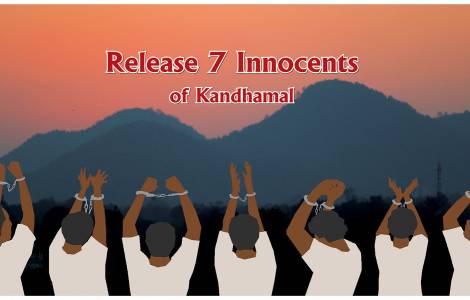

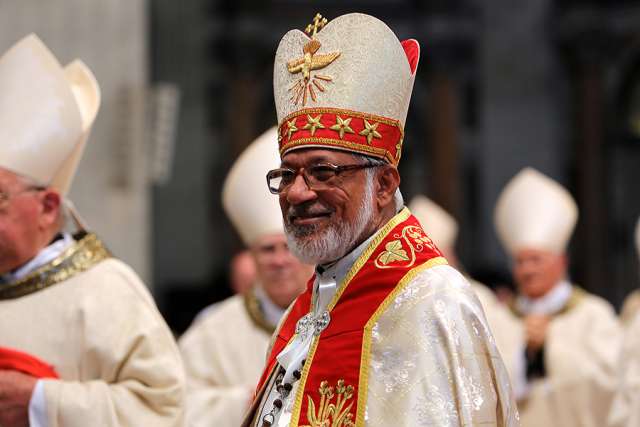
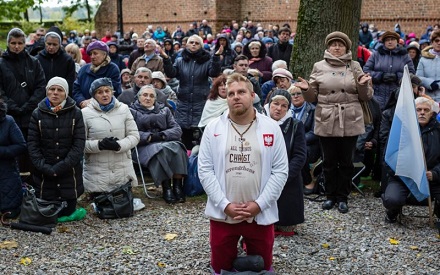

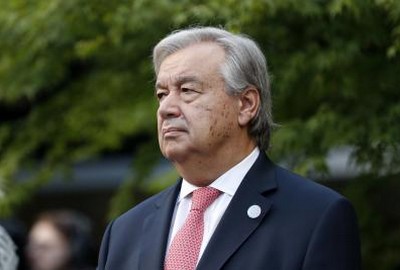 United
Nations Secretary-General Antonio Guterres attends a bell-ringing ceremony
at UN headquarters in New York, Sept. 15, 2017. (IANS)
United
Nations Secretary-General Antonio Guterres attends a bell-ringing ceremony
at UN headquarters in New York, Sept. 15, 2017. (IANS)
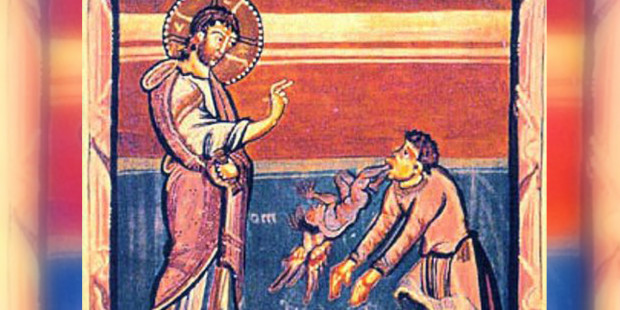
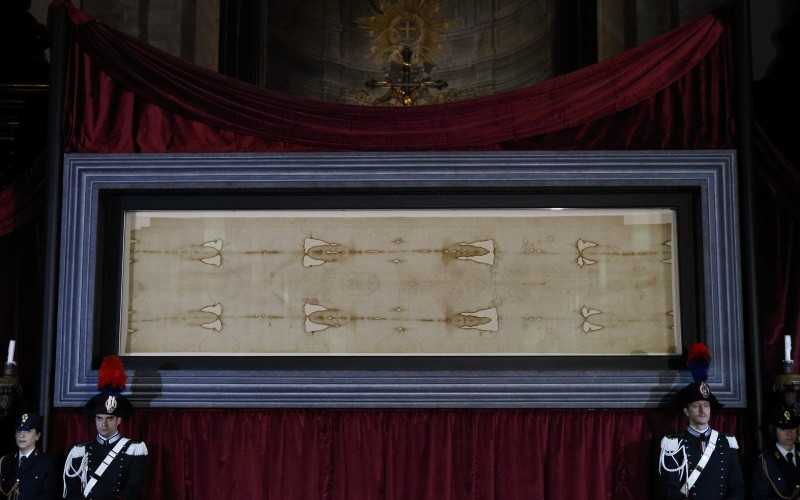


 Fady
Noun
Fady
Noun
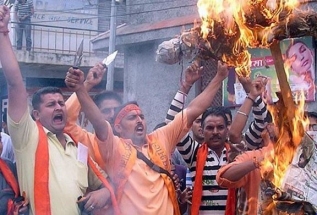
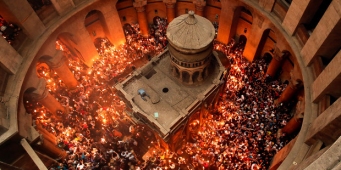
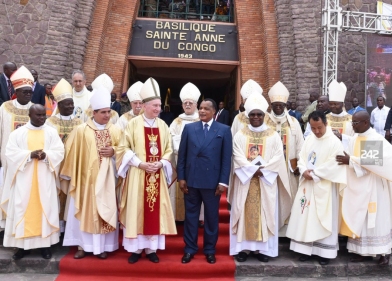
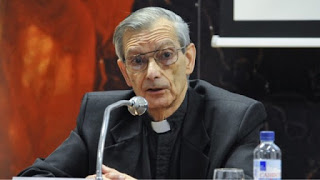
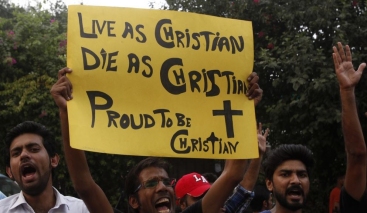 J
J
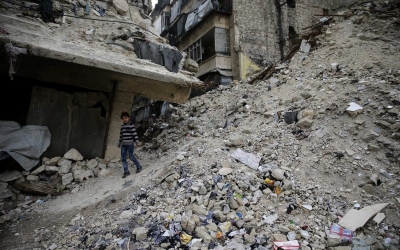
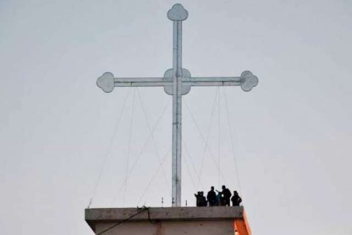
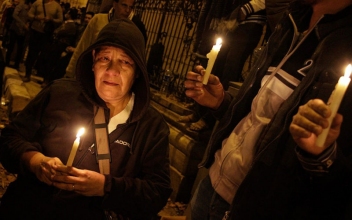 Egyptians
carry candles during a vigil for the victims of a bomb explosion that targeted
the St Peter and St Paul Coptic Orthodox Church on December 11, 2016 (Photo:
Getty)
Egyptians
carry candles during a vigil for the victims of a bomb explosion that targeted
the St Peter and St Paul Coptic Orthodox Church on December 11, 2016 (Photo:
Getty)
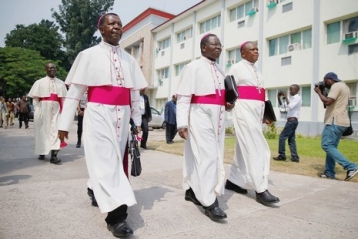
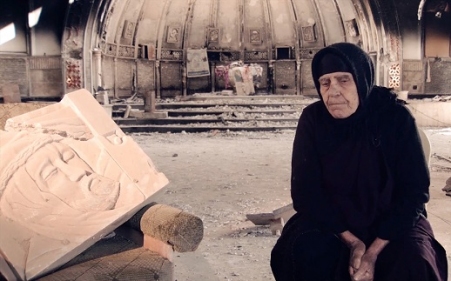 Zarefa
was forced
Zarefa
was forced
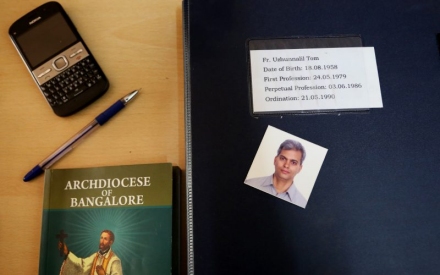
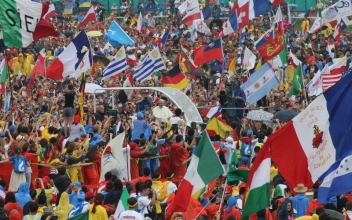
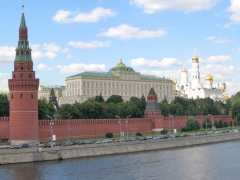
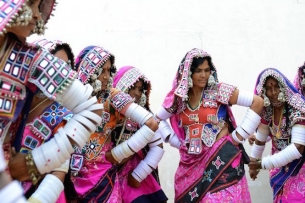 But
some question the official data, fearing it can be used for divisive politicking
More tribal people choosing Christianity in India: report
But
some question the official data, fearing it can be used for divisive politicking
More tribal people choosing Christianity in India: report
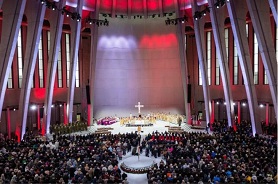
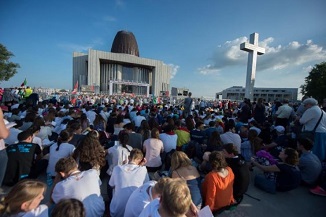
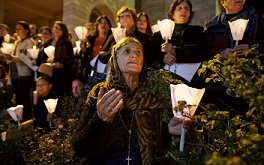 Internally
displaced Christian women pray during Mass at the St Joseph Cathedral in
Ankawa, northern Iraq (AP)
Internally
displaced Christian women pray during Mass at the St Joseph Cathedral in
Ankawa, northern Iraq (AP)
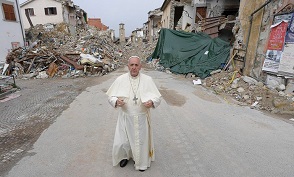
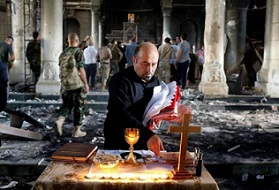 Syrian
Catholic Archbishop Youhanna Petros Mouche of Mosul presided at a Mass
in Qaragosh, Iraq, on October 30—the first time that Mass had been celebrated
in the city sine the Islamic State seized the region two years ago.
Syrian
Catholic Archbishop Youhanna Petros Mouche of Mosul presided at a Mass
in Qaragosh, Iraq, on October 30—the first time that Mass had been celebrated
in the city sine the Islamic State seized the region two years ago.
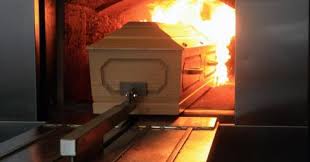 The
Congregation for the Doctrine of the Faith has released Ad resurgendum
cum Christo [To Rise with Christ], an instruction on the burial of the
deceased and the conservation of the ashes in the case of cremation.
The
Congregation for the Doctrine of the Faith has released Ad resurgendum
cum Christo [To Rise with Christ], an instruction on the burial of the
deceased and the conservation of the ashes in the case of cremation.
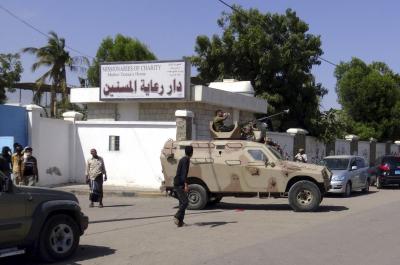 Yemeni
pro-government fighters guard outside a Missionaries of Charity elderly
home March 4 after unidentified gunmen targeted the home in Aden, Yemen.
Four Missionaries of Charity and 10 to 12 other people were killed in the
attack. (CNS photo/EPA)
Yemeni
pro-government fighters guard outside a Missionaries of Charity elderly
home March 4 after unidentified gunmen targeted the home in Aden, Yemen.
Four Missionaries of Charity and 10 to 12 other people were killed in the
attack. (CNS photo/EPA)
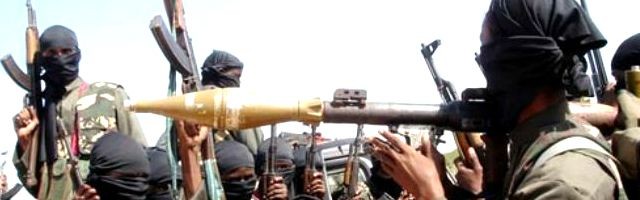 Boko
Haram jihadists were already strong in Nigeria ... now they open a section
in Cameroon, with local youth in a country before without extremists
Boko
Haram jihadists were already strong in Nigeria ... now they open a section
in Cameroon, with local youth in a country before without extremists
 Professor
Saeed Khan spoke at Cor unum convention on the 10th anniversary of "Deus
caritas est" Feb. 25-26, 2016. Credit: Alexy Gotovskiy/CNA.
Professor
Saeed Khan spoke at Cor unum convention on the 10th anniversary of "Deus
caritas est" Feb. 25-26, 2016. Credit: Alexy Gotovskiy/CNA.
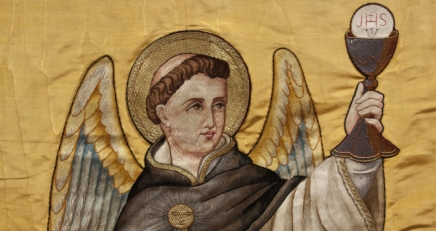
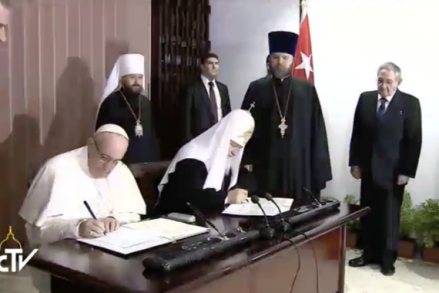 May
the Blessed Virgin Mary, through her intercession, inspire fraternity in
all those who venerate her, so that they may be reunited, in God’s own
time, in the peace and harmony of the one people of God, for the glory
of the Most Holy and indivisible Trinity!
May
the Blessed Virgin Mary, through her intercession, inspire fraternity in
all those who venerate her, so that they may be reunited, in God’s own
time, in the peace and harmony of the one people of God, for the glory
of the Most Holy and indivisible Trinity!
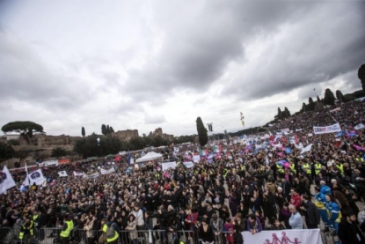
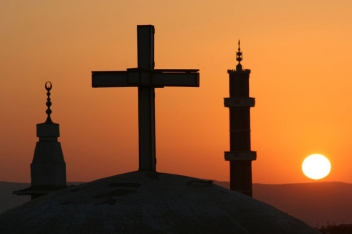 The
Middle East needs Christians, says a leading Lebanese Muslim.
The
Middle East needs Christians, says a leading Lebanese Muslim.
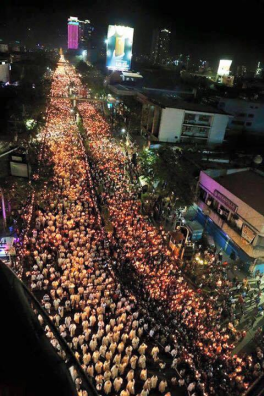
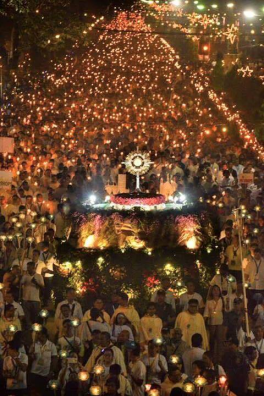
 At
great risk, Fr. Humblot lived for years in Iran, sharing the Gospel and
serving the poor
At
great risk, Fr. Humblot lived for years in Iran, sharing the Gospel and
serving the poor
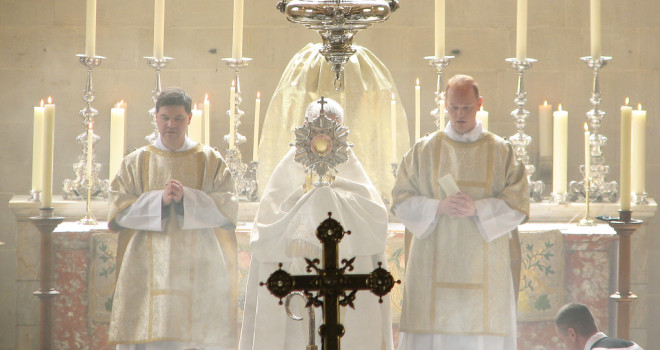
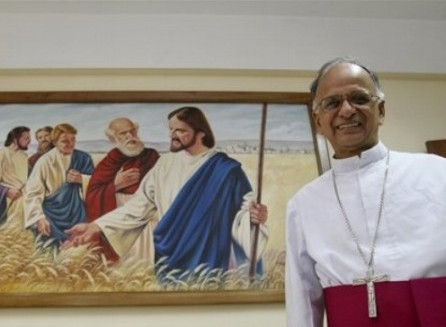
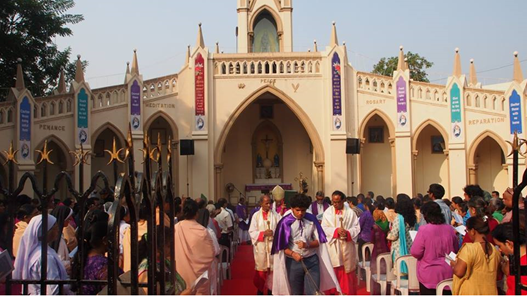
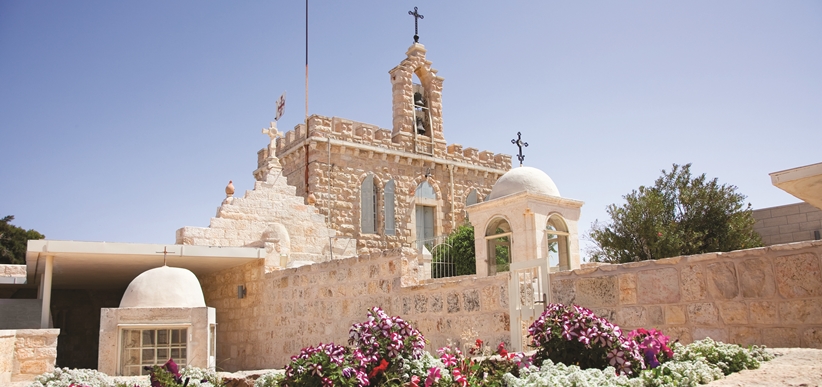 Pilgrims
experiencing fertility issues flock to the Milk Grotto in Bethlehem. Renata
Sedmakova / Shutterstock
Pilgrims
experiencing fertility issues flock to the Milk Grotto in Bethlehem. Renata
Sedmakova / Shutterstock
 Cross
of the Martyrs.
Cross
of the Martyrs.

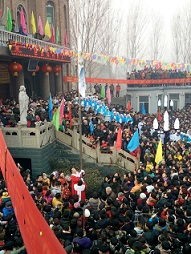
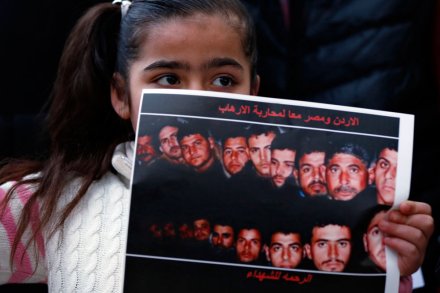
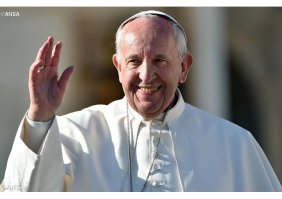
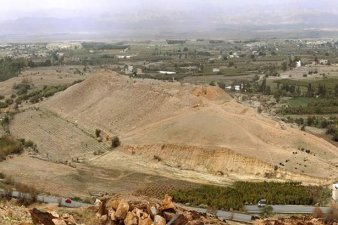
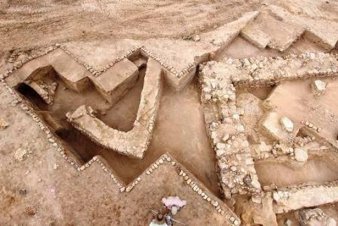
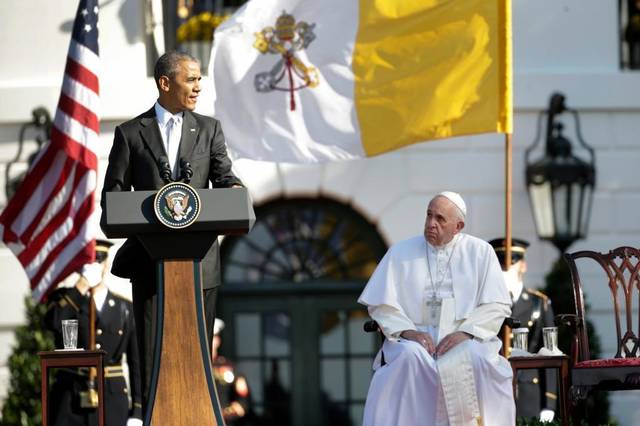
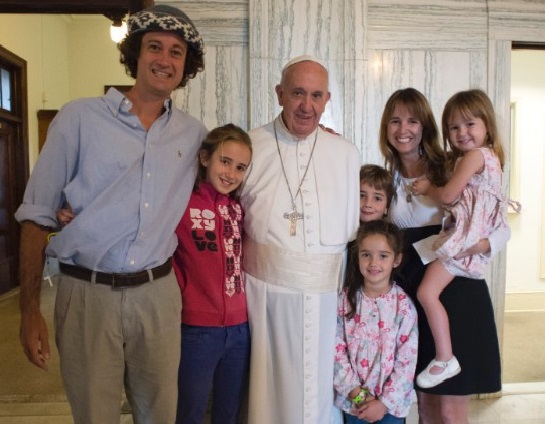 In
two speeches and a homily in Philadelphia on September 26 and 27, Pope
Francis emphasized the importance of family life. In his address to the
festival of families and vigil of prayer at the Benjamin Franklin Parkway
in Philadelphia on the evening of September 26, Pope Francis emphasized
that the family is part of God’s plan, both at creation and in the Incarnation:
God did not want to come into the world other than through a family. God
did not want to draw near to humanity other than through a home. God did
not want any other name for himself than Emmanuel (cf. Mt 1:23). He is
“God with us”. This was his desire from the beginning, his purpose, his
constant effort: to say to us: “I am God with you, I am God for you”.
In
two speeches and a homily in Philadelphia on September 26 and 27, Pope
Francis emphasized the importance of family life. In his address to the
festival of families and vigil of prayer at the Benjamin Franklin Parkway
in Philadelphia on the evening of September 26, Pope Francis emphasized
that the family is part of God’s plan, both at creation and in the Incarnation:
God did not want to come into the world other than through a family. God
did not want to draw near to humanity other than through a home. God did
not want any other name for himself than Emmanuel (cf. Mt 1:23). He is
“God with us”. This was his desire from the beginning, his purpose, his
constant effort: to say to us: “I am God with you, I am God for you”.
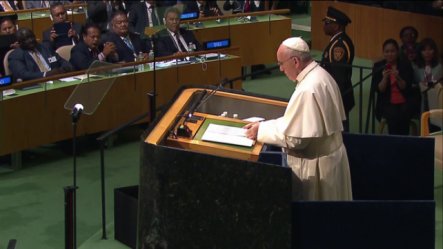
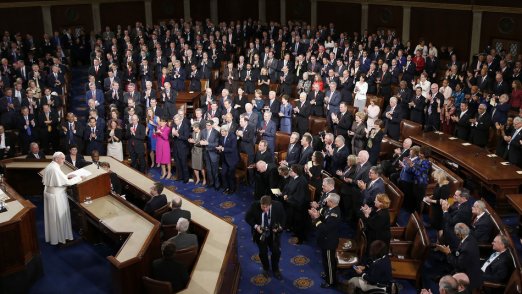 Mr.
Vice-President, Mr. Speaker, Honorable Members of Congress, Dear Friends,
Mr.
Vice-President, Mr. Speaker, Honorable Members of Congress, Dear Friends,
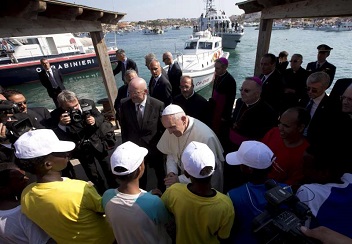
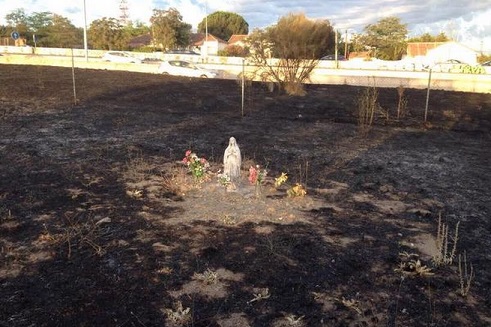
 The
Jehovah's Witnesses Church in Australia failed to report to police more
than 1,000 cases of child sexual abuse going back more than 60 years, a
government investigation into abuse and its aftermath heard on Monday.
Australia's Royal Commission into Institutional Responses to Child Sexual
Abuse, which was launched in 2013 amid allegations of serial child abuse
inside the Catholic Church in Australia, has a broad mandate to examine
religious and secular organizations.
The
Jehovah's Witnesses Church in Australia failed to report to police more
than 1,000 cases of child sexual abuse going back more than 60 years, a
government investigation into abuse and its aftermath heard on Monday.
Australia's Royal Commission into Institutional Responses to Child Sexual
Abuse, which was launched in 2013 amid allegations of serial child abuse
inside the Catholic Church in Australia, has a broad mandate to examine
religious and secular organizations.

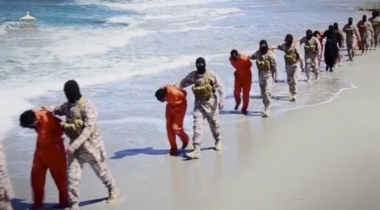
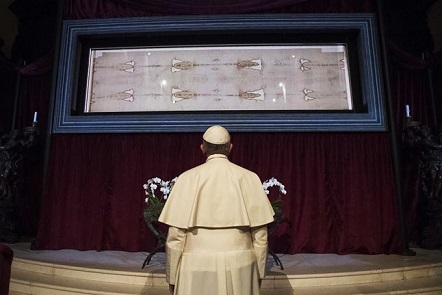 Pope
Francis with the Shroud of Turin in the Cathedral of Saint John the Baptist,
Turin on June 21, 2015. Credit: L'Osservatore Romano
Pope
Francis with the Shroud of Turin in the Cathedral of Saint John the Baptist,
Turin on June 21, 2015. Credit: L'Osservatore Romano
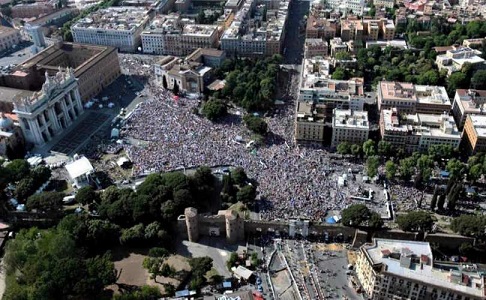
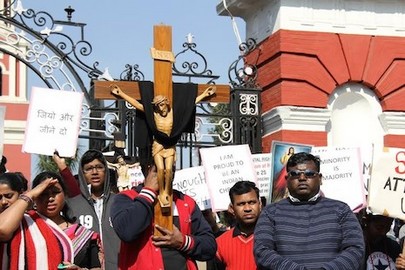
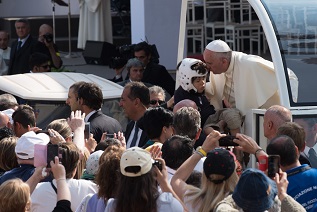 In
his last meeting on the first day of his visit to Turin, Francis met young
people in Vittorio Square. In a Question and Answer exchange, he talked
about love, friendship and loss of trust towards life. "I understand you.
How many hypocrites speak of peace and sell weapons. How can one trust?
By following Christ, whose act of extreme love, i.e. the Cross, saved humanity."
The pontiff also looked at the horrors of the 20th century as evidence
of the loss of trust towards world powers. He urged young people “not to
retire at 20,” but “live, don’t just exist.”
In
his last meeting on the first day of his visit to Turin, Francis met young
people in Vittorio Square. In a Question and Answer exchange, he talked
about love, friendship and loss of trust towards life. "I understand you.
How many hypocrites speak of peace and sell weapons. How can one trust?
By following Christ, whose act of extreme love, i.e. the Cross, saved humanity."
The pontiff also looked at the horrors of the 20th century as evidence
of the loss of trust towards world powers. He urged young people “not to
retire at 20,” but “live, don’t just exist.”
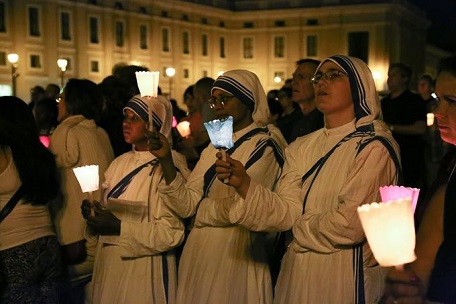
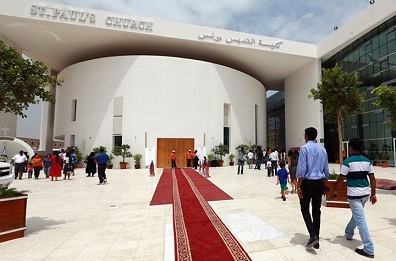
 Pakistans,
May 15, 2015: In hopes of encouraging fellow Christians to stay in Pakistan
in light of religious tensions, a Christian businessman in the country's
largest city is building a giant 14-story cross outside the entrance to
the largest Christian cemetery in Karachi.
Pakistans,
May 15, 2015: In hopes of encouraging fellow Christians to stay in Pakistan
in light of religious tensions, a Christian businessman in the country's
largest city is building a giant 14-story cross outside the entrance to
the largest Christian cemetery in Karachi.
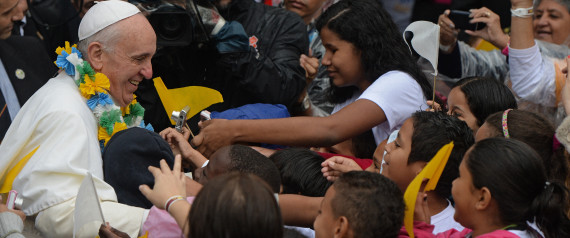
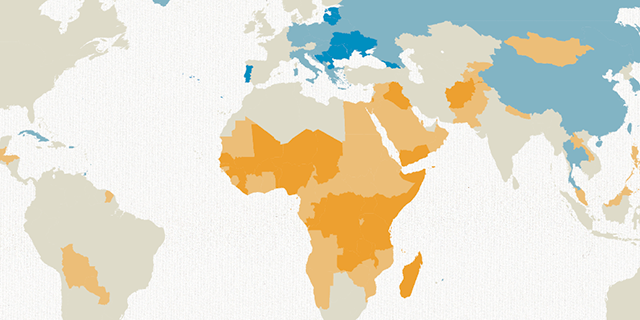
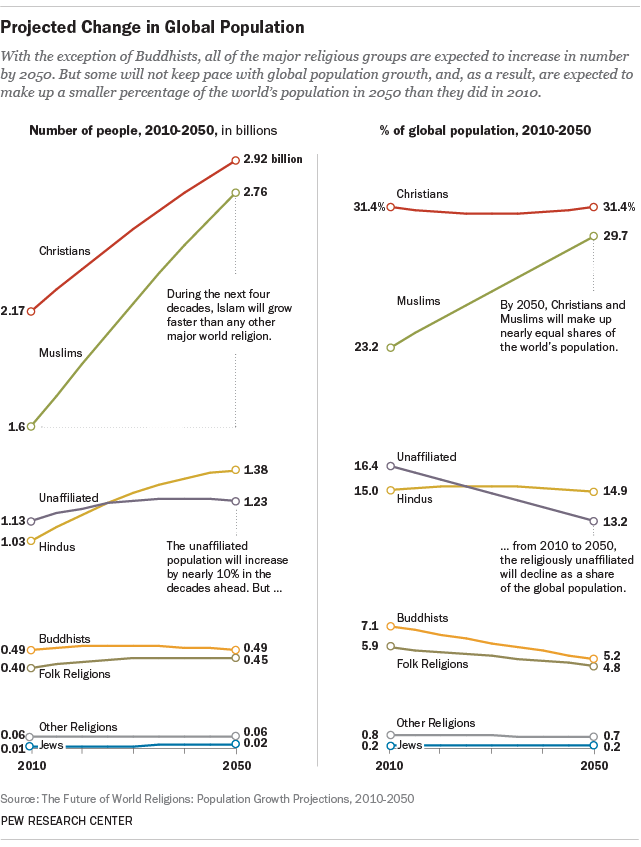
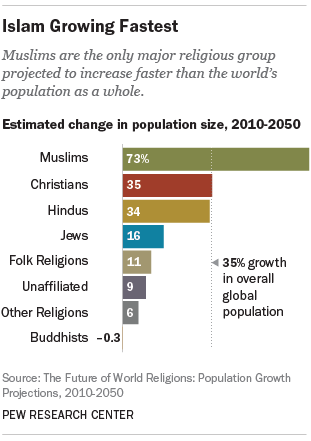
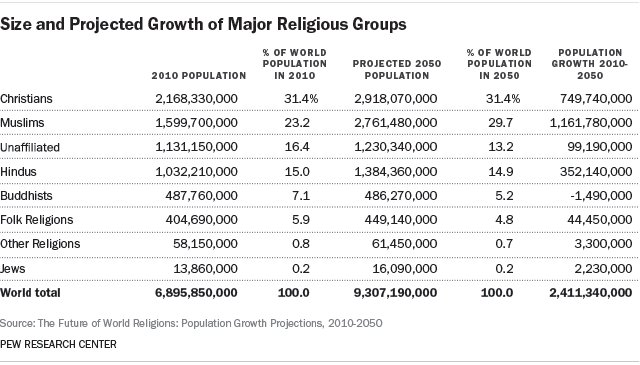
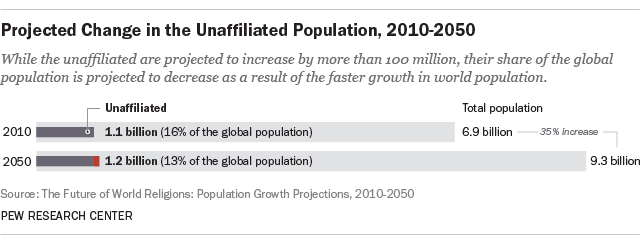
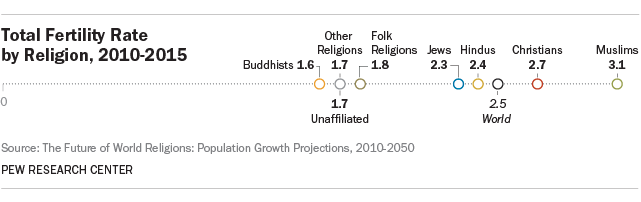

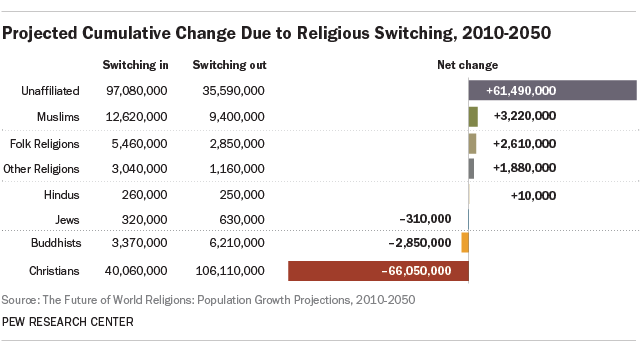
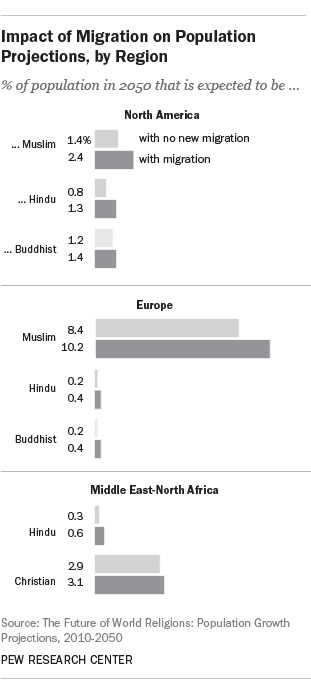
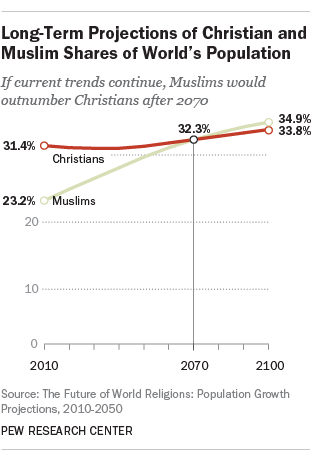
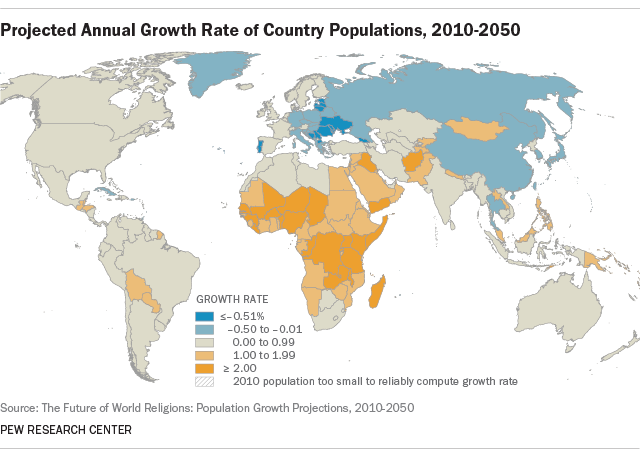
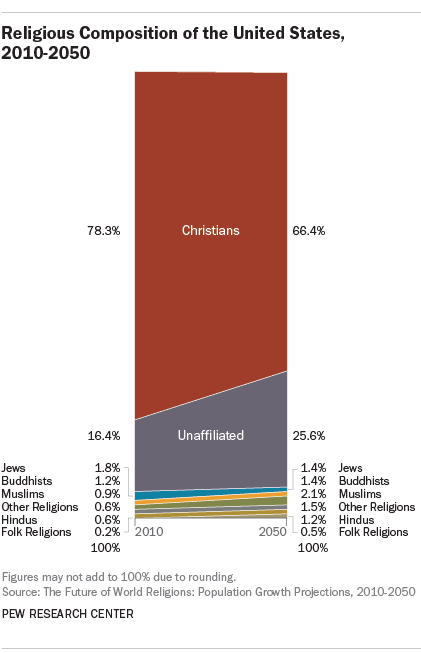

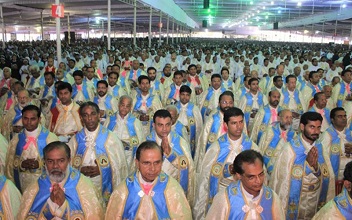
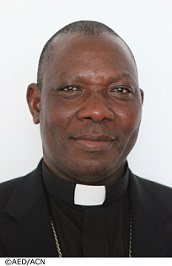 Bishop
Oliver Dashe Doeme says he is being driven by a God-given mandate to lead
others in praying the rosary until the extremist group disappears. “Towards
the end of last year I was in my chapel before the Blessed Sacrament… praying
the rosary, and then suddenly the Lord appeared,” Bishop Dashe told CNA
April 18.
Bishop
Oliver Dashe Doeme says he is being driven by a God-given mandate to lead
others in praying the rosary until the extremist group disappears. “Towards
the end of last year I was in my chapel before the Blessed Sacrament… praying
the rosary, and then suddenly the Lord appeared,” Bishop Dashe told CNA
April 18.
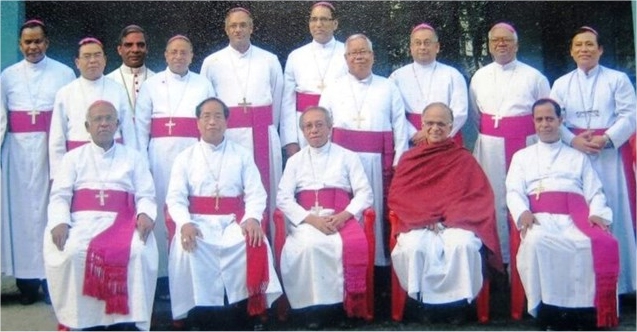 Fifteen
Catholic bishops of northeast India representing all seven northeastern
India states ?meeting in ?Miao diocese in Eastern Arunachal, 12-15 March,
2015 - RV
Fifteen
Catholic bishops of northeast India representing all seven northeastern
India states ?meeting in ?Miao diocese in Eastern Arunachal, 12-15 March,
2015 - RV
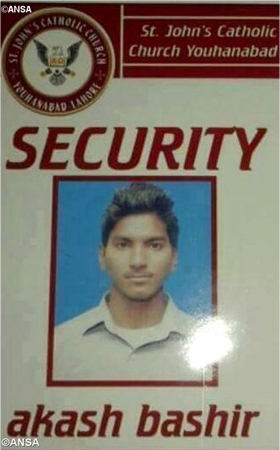
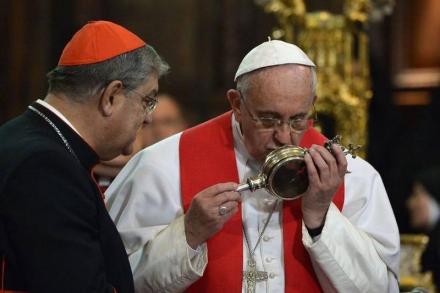

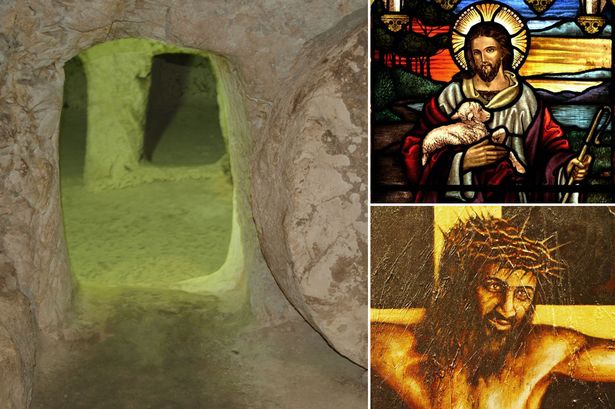
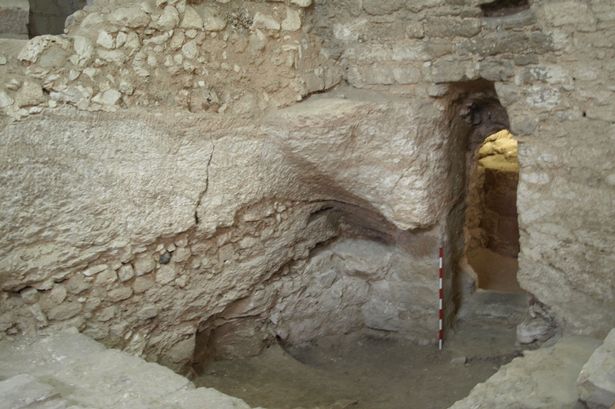
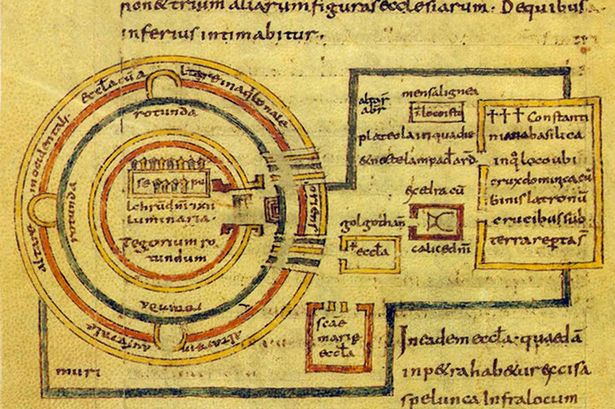 Discovery:
The key piece of evidence linking the site to Jesus is pilgrim text called
Discovery:
The key piece of evidence linking the site to Jesus is pilgrim text called
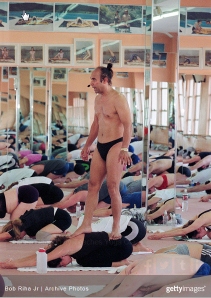 Bikram
Choudhury teaches Yoga class
Bikram
Choudhury teaches Yoga class
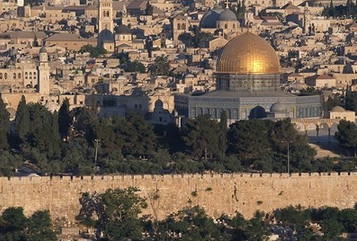
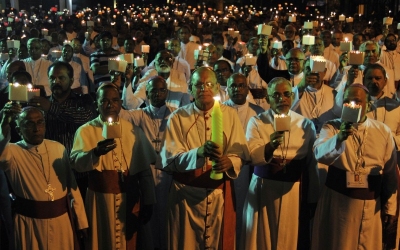
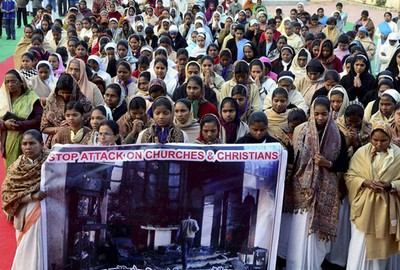
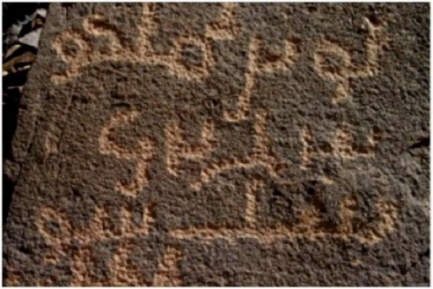
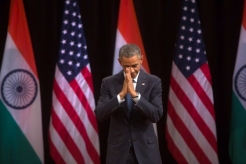
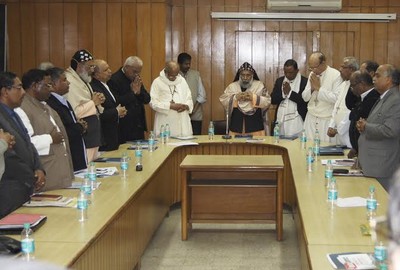 Cardinal
Cleemis opens the consultation with a prayer
Cardinal
Cleemis opens the consultation with a prayer
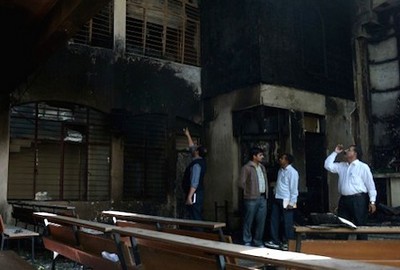
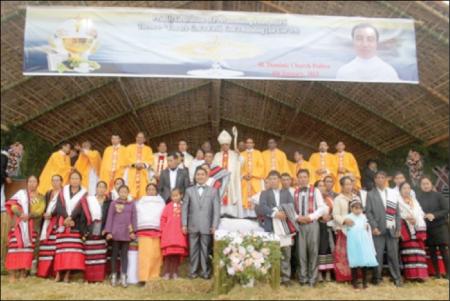
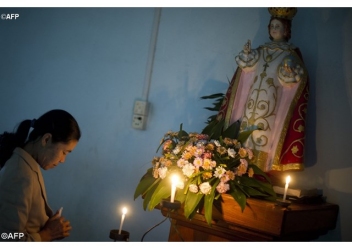 Woman
praying at Catholic church in Myanmar. - AFP
Woman
praying at Catholic church in Myanmar. - AFP
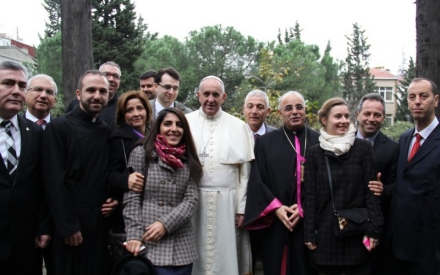
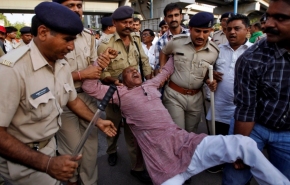 (PHOTO:
REUTERS/AMIT DAVE) A member of India's lowest caste "Dalits" shouts slogans
as he is detained by police during a demonstration in the western Indian
city of Ahmedabad, April 27, 2014. Dozens of the Dalits on Sunday held
a protest outside the venue of a yoga camp in the city demanding action
against Indian yoga guru Baba Ramdev for his recent remarks that Dalits
said were disrespectful.
(PHOTO:
REUTERS/AMIT DAVE) A member of India's lowest caste "Dalits" shouts slogans
as he is detained by police during a demonstration in the western Indian
city of Ahmedabad, April 27, 2014. Dozens of the Dalits on Sunday held
a protest outside the venue of a yoga camp in the city demanding action
against Indian yoga guru Baba Ramdev for his recent remarks that Dalits
said were disrespectful.
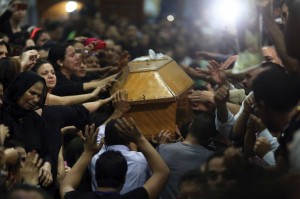 Egyptian
Copts carry four coffins down the aisle of the Virgin Mary Coptic church,
on October 21, 2013, as thousands attend the funeral of the victims, gunned
down as they attended a wedding the previous evening at the same church.
Egyptian
Copts carry four coffins down the aisle of the Virgin Mary Coptic church,
on October 21, 2013, as thousands attend the funeral of the victims, gunned
down as they attended a wedding the previous evening at the same church.
 Christian
farmer Ishaq Aziz cradles a picture of his 17 year-old daughter Nirmeen,
a school girl, who went missing in February 2013, in the Minya town of
Matai, Egypt.
Christian
farmer Ishaq Aziz cradles a picture of his 17 year-old daughter Nirmeen,
a school girl, who went missing in February 2013, in the Minya town of
Matai, Egypt.
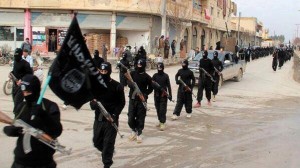 Fighters
from the al-Qaida linked Islamic State of Iraq and the Levant (ISIL) marching
in Raqqa, Syria. Once a vibrant, mixed city, Raqqa is now a shell of its
former life, transformed by al-Qaida militants into the nucleus of the
terror group’s version of an Islamic caliphate they hope one day to establish
in Syria and Iraq.
Fighters
from the al-Qaida linked Islamic State of Iraq and the Levant (ISIL) marching
in Raqqa, Syria. Once a vibrant, mixed city, Raqqa is now a shell of its
former life, transformed by al-Qaida militants into the nucleus of the
terror group’s version of an Islamic caliphate they hope one day to establish
in Syria and Iraq.
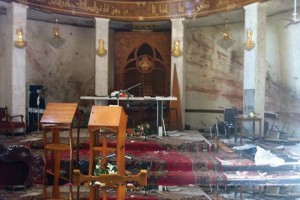 In
this mobile phone camera image obtained by the Associated Press, the interior
of the Our Lady of Salvation church is seen after gunmen took the congregation
hostage on Sunday, Oct. 31, 2010.
In
this mobile phone camera image obtained by the Associated Press, the interior
of the Our Lady of Salvation church is seen after gunmen took the congregation
hostage on Sunday, Oct. 31, 2010.
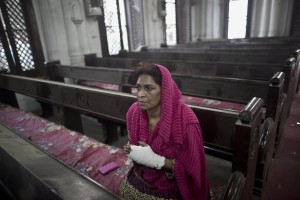 Pakistani
Rukhsana Saleem, 38, who survived the bombing of the All Saints Church,
prays at the church where the attack took place, in Peshawar, Pakistan,
Monday, Sept. 23, 2013.
Pakistani
Rukhsana Saleem, 38, who survived the bombing of the All Saints Church,
prays at the church where the attack took place, in Peshawar, Pakistan,
Monday, Sept. 23, 2013.
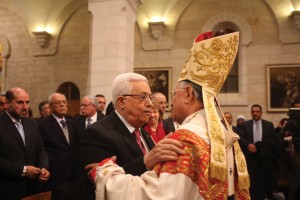 Palestinian
President Mahmoud Abbas, center, is welcomed by the Latin Patriarch of
Jerusalem, Fouad Twal, at the Church of Nativity on Christmas Eve, Wednesday,
Dec. 25, 2013.
Palestinian
President Mahmoud Abbas, center, is welcomed by the Latin Patriarch of
Jerusalem, Fouad Twal, at the Church of Nativity on Christmas Eve, Wednesday,
Dec. 25, 2013.
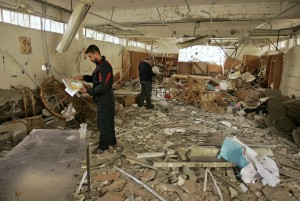 Palestinians
examine the damage to the library of the YMCA in Gaza City, Friday, Feb.
15, 2008.
Palestinians
examine the damage to the library of the YMCA in Gaza City, Friday, Feb.
15, 2008.
 In
this July 16, 2012, photo, a Palestinian Christian holds a poster of Ramez
Al-Amash, 25, during a rally at a Greek Orthodox church in Gaza City.
In
this July 16, 2012, photo, a Palestinian Christian holds a poster of Ramez
Al-Amash, 25, during a rally at a Greek Orthodox church in Gaza City.
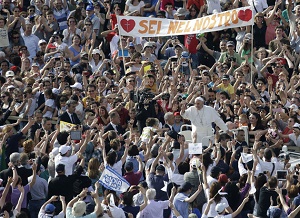 Pope
Francis at the last Pentecost Sunday Mass. Included in the massive crowd
were members of the diverse ecclesial movements from around the world.
Pope
Francis at the last Pentecost Sunday Mass. Included in the massive crowd
were members of the diverse ecclesial movements from around the world.
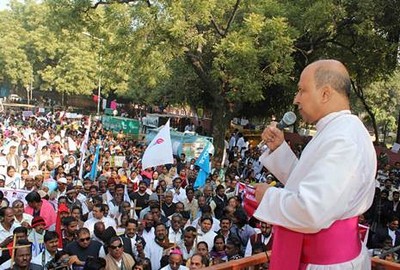 Archbishop
Anil Couto of Delhi addressing a gathering of devotees.
Archbishop
Anil Couto of Delhi addressing a gathering of devotees.
 Protesters
demand immigration-policy overhaul, ruling politicians label them "Nazis
in pinstripes"
Protesters
demand immigration-policy overhaul, ruling politicians label them "Nazis
in pinstripes"
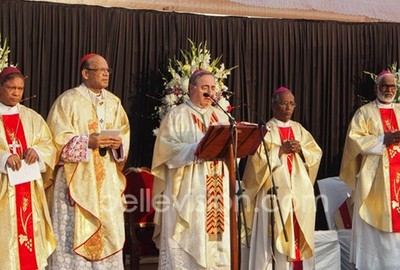
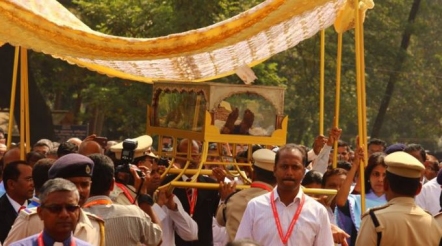
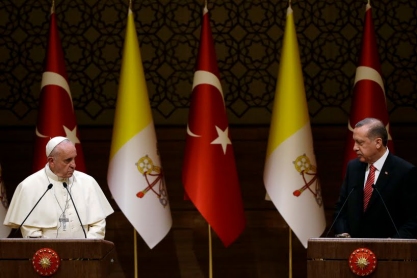
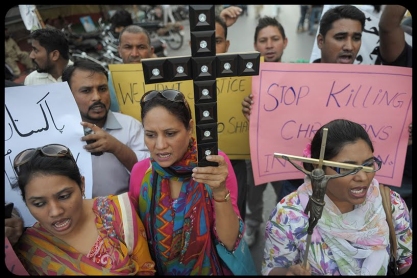
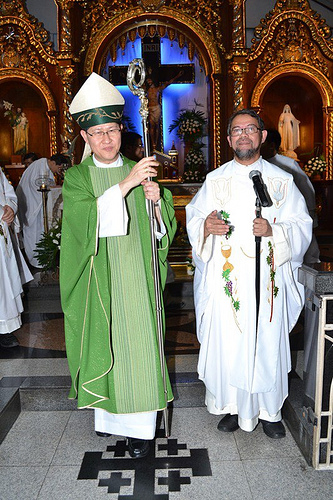
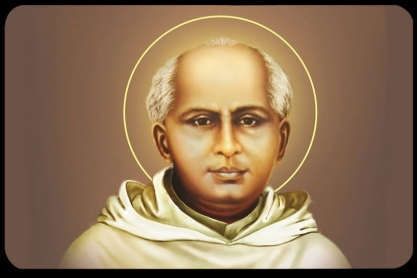
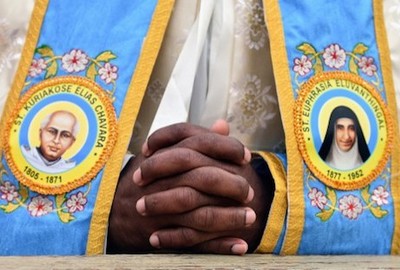
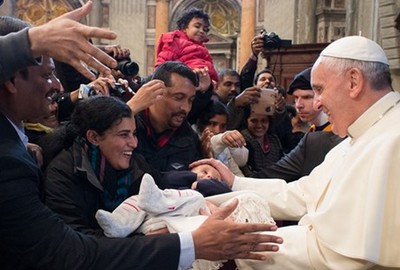
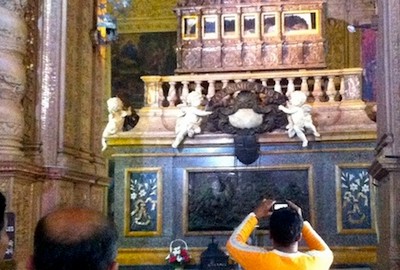

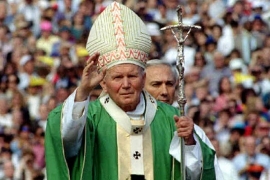
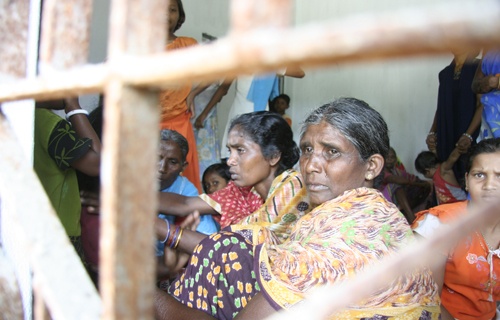
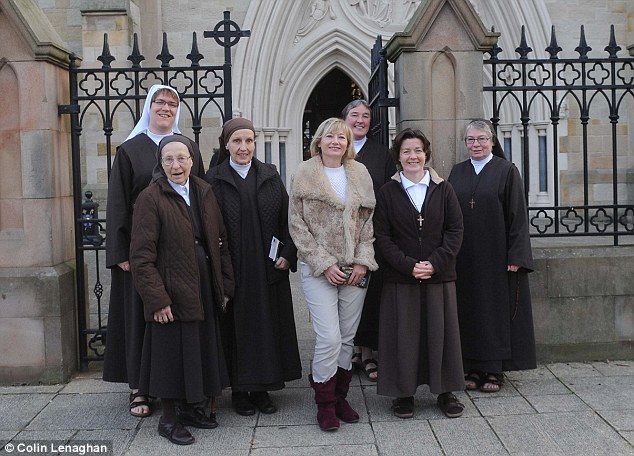
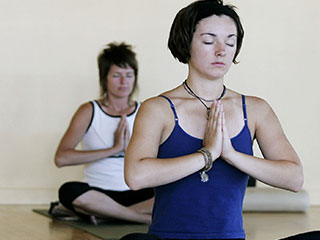
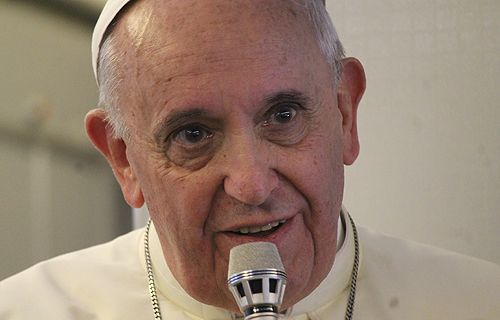
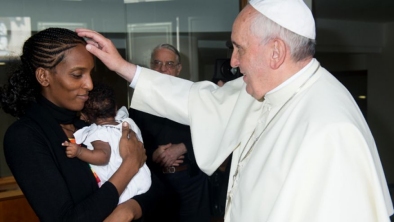
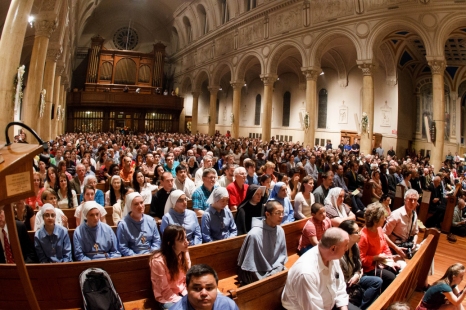
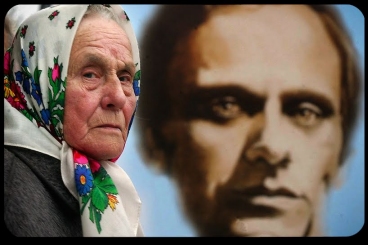
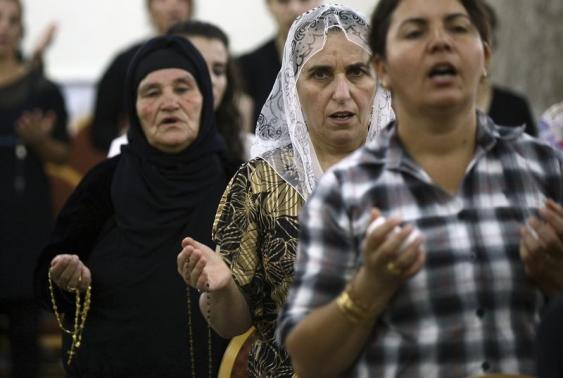
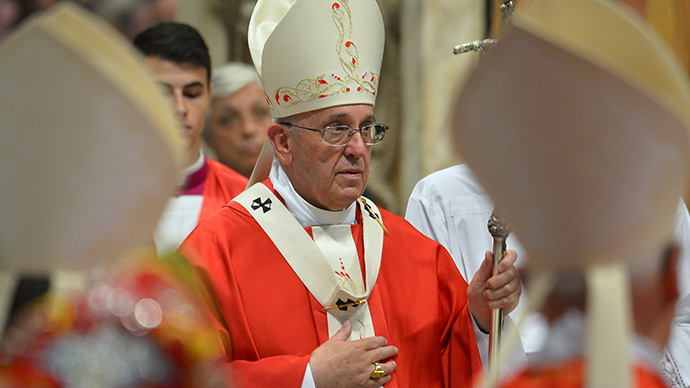
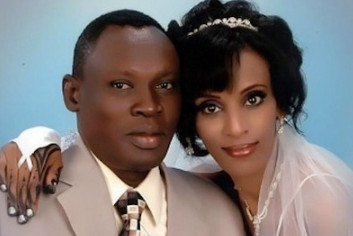

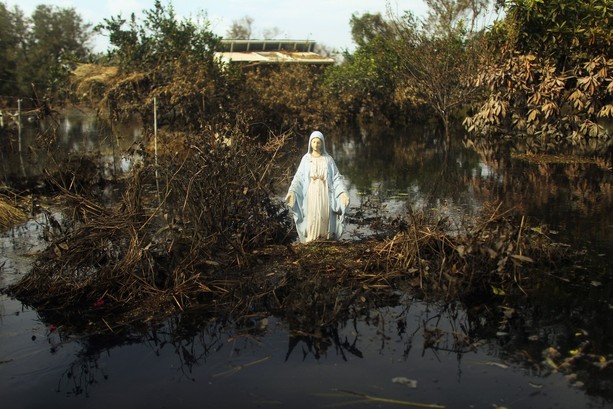
 Jesi
is a lovely Italian hill town not far from Ancona on the Adriatic coast
in the center-north of the country. A few weeks ago the local hospital
let it be known that they faced a doctor shortage of sorts. It seems that
all of the town’s 10 gynecologists refuse to perform abortions. They are
all conscientious objectors. The local office of the communist labor union
spread the news because they claimed women’s rights were being denied,
although Italy’s abortion legislation (Law 194/78) explicitly provides
a right for doctors and other medical personnel to refuse to participate
in the procedure.
Jesi
is a lovely Italian hill town not far from Ancona on the Adriatic coast
in the center-north of the country. A few weeks ago the local hospital
let it be known that they faced a doctor shortage of sorts. It seems that
all of the town’s 10 gynecologists refuse to perform abortions. They are
all conscientious objectors. The local office of the communist labor union
spread the news because they claimed women’s rights were being denied,
although Italy’s abortion legislation (Law 194/78) explicitly provides
a right for doctors and other medical personnel to refuse to participate
in the procedure.
 (Vatican
Radio) – A host of cardinals, bishops, priests, religious and lay people
drawn from throughout the Universal Church gathered around Pope Benedict
XVI Sunday morning as he declared the Thirteenth Synod of Bishops on the
New Evangelisation, officially open. Emer McCarthy reports :
(Vatican
Radio) – A host of cardinals, bishops, priests, religious and lay people
drawn from throughout the Universal Church gathered around Pope Benedict
XVI Sunday morning as he declared the Thirteenth Synod of Bishops on the
New Evangelisation, officially open. Emer McCarthy reports :
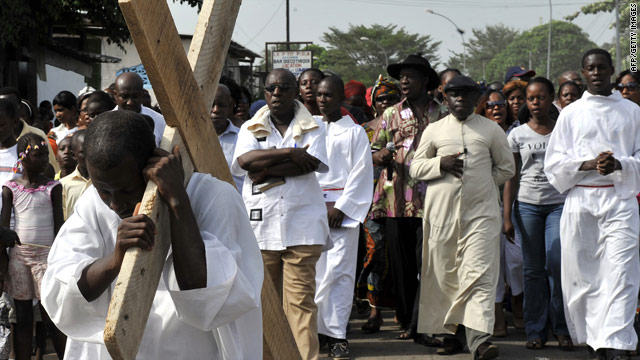
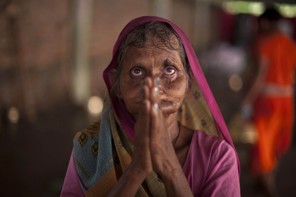
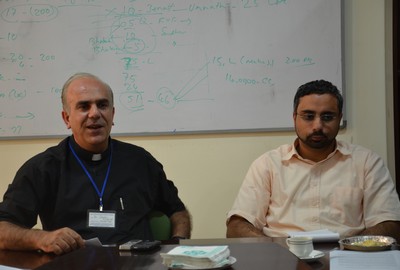
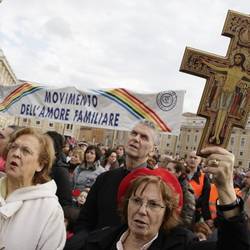
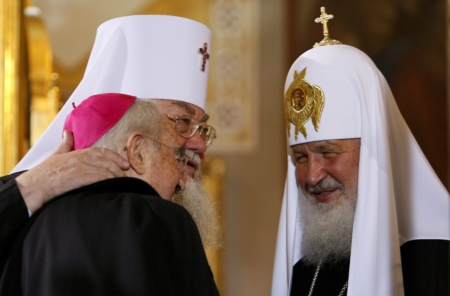 Russian
Orthodox Patriarch Kirill of Moscow, right, and Metropolitan Sawa of the
Polish Orthodox Church greet a Catholic clergyman at St. Mary Magdalene
Orthodox Cathedral in Warsaw Aug. 16.
Russian
Orthodox Patriarch Kirill of Moscow, right, and Metropolitan Sawa of the
Polish Orthodox Church greet a Catholic clergyman at St. Mary Magdalene
Orthodox Cathedral in Warsaw Aug. 16.
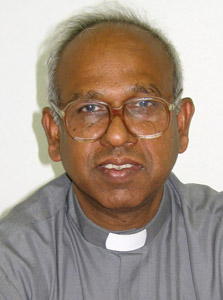
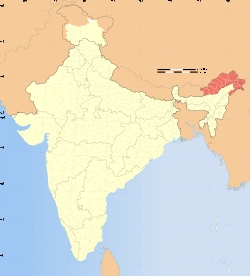
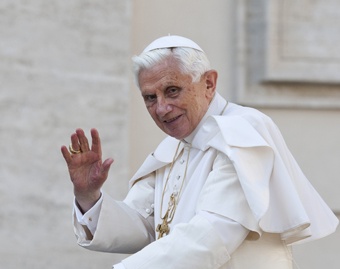
 However
right the person is, they might not be right two years later. It doesn't
matter how wonderful you appear to be to your partner at the beginning,
you will begin to display faults that we all have.
However
right the person is, they might not be right two years later. It doesn't
matter how wonderful you appear to be to your partner at the beginning,
you will begin to display faults that we all have.
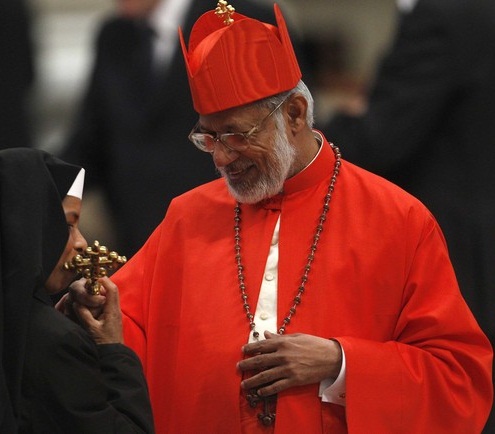
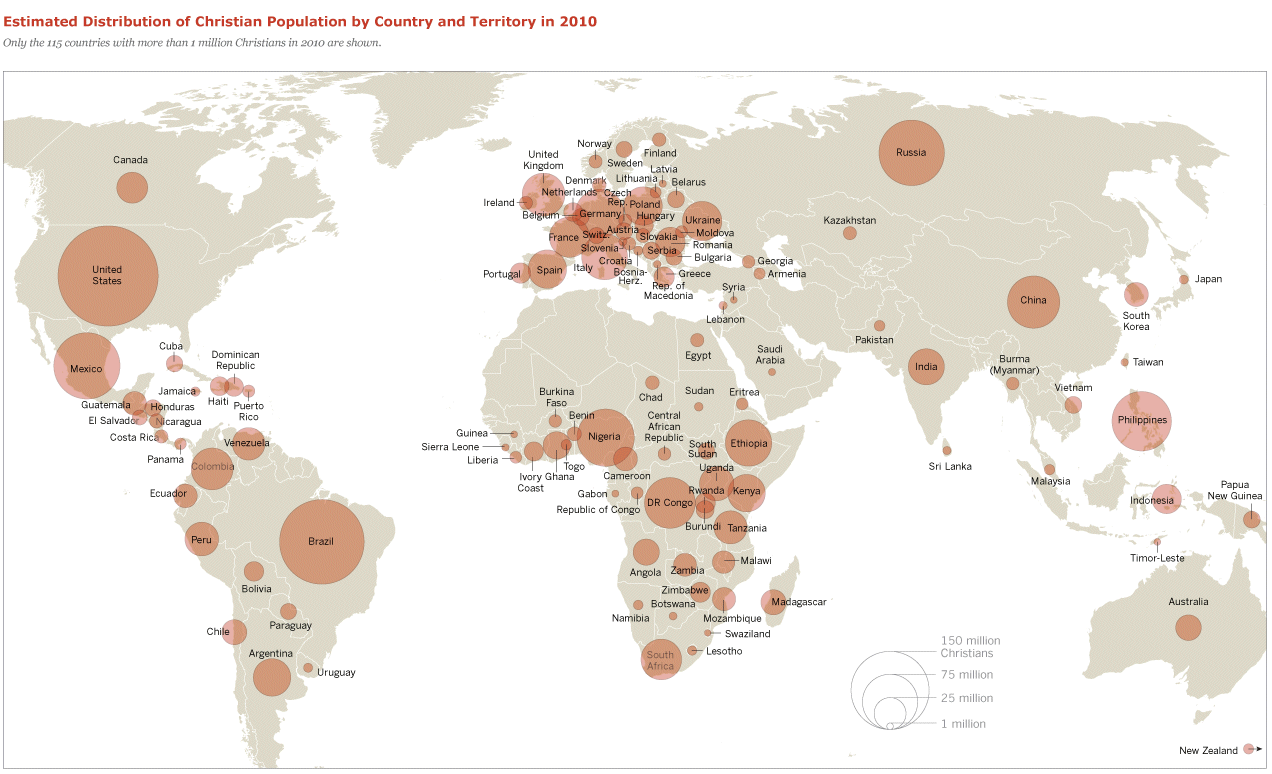
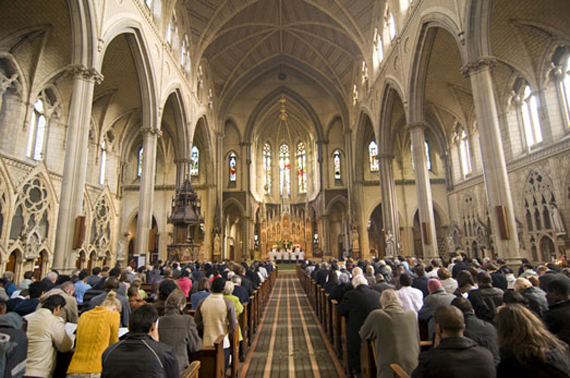 an
lower than the European average.
an
lower than the European average.

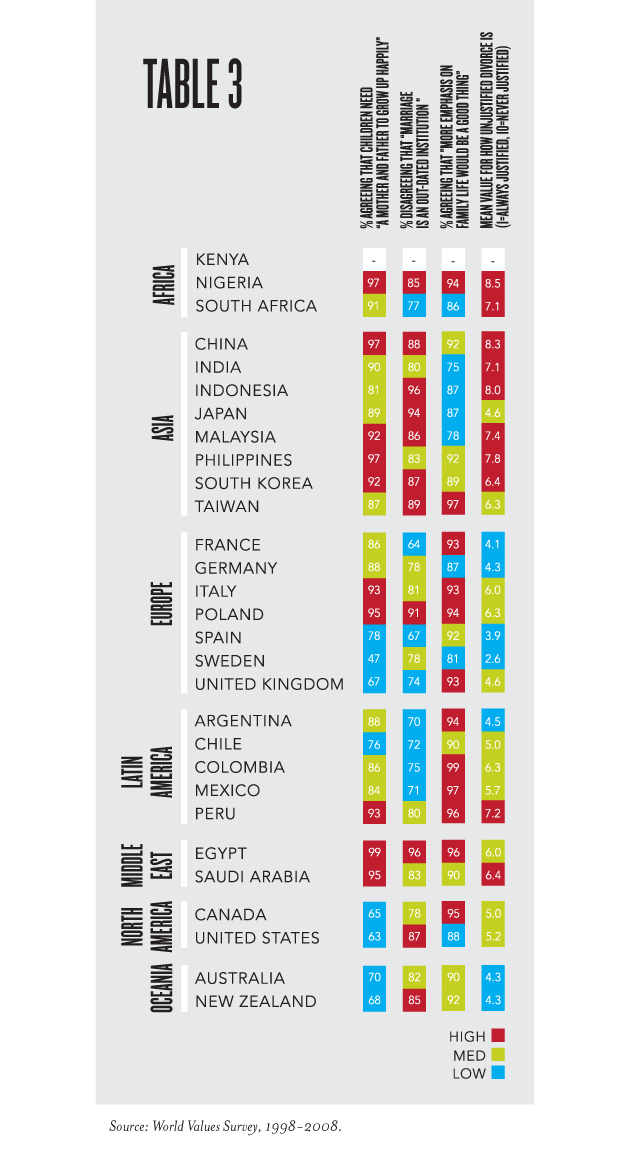
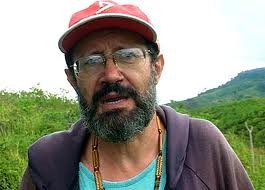
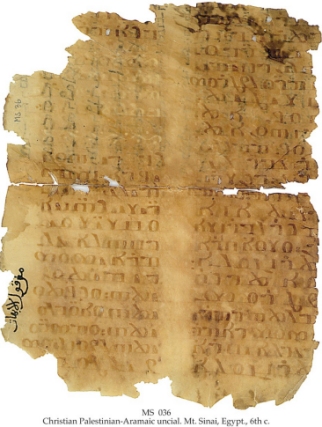



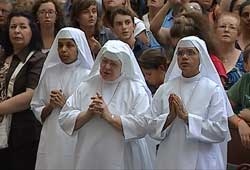

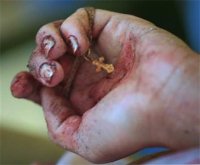
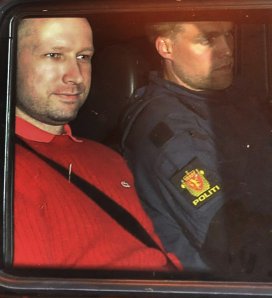
 In
March 2003, a month after the English press throughout the world falsely
proclaimed that Pope John Paul II approved of Harry Potter, the man who
was to become his successor sent a letter to a Gabriele Kuby outlining
his agreement with her opposition to J.K. Rowling’s offerings. (See below
for links to scanned copies of the letters signed by Cardinal Ratzinger.)
In
March 2003, a month after the English press throughout the world falsely
proclaimed that Pope John Paul II approved of Harry Potter, the man who
was to become his successor sent a letter to a Gabriele Kuby outlining
his agreement with her opposition to J.K. Rowling’s offerings. (See below
for links to scanned copies of the letters signed by Cardinal Ratzinger.)
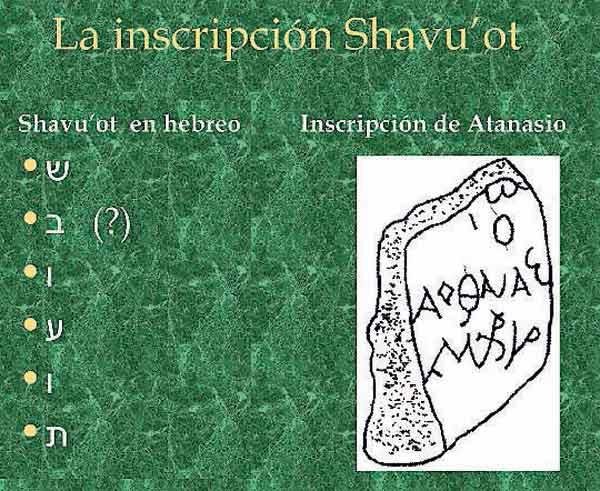
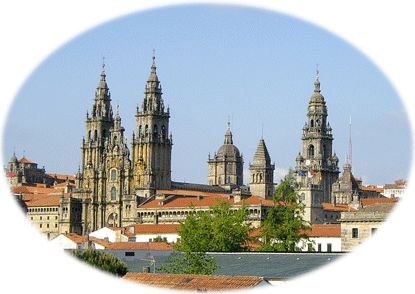
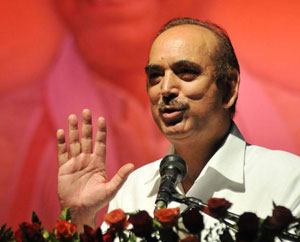
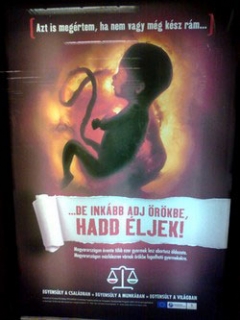
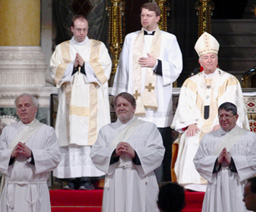

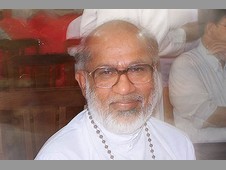
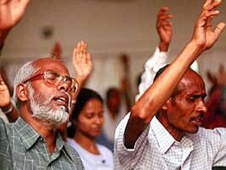
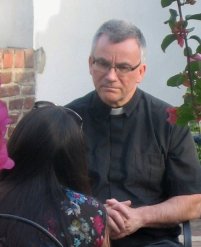
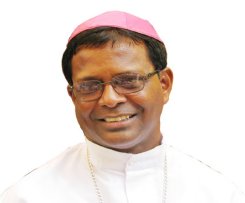
 VENICE,
Italy, MAY 8, 2011 (Zenit.org).- Benedict XVI is bringing a message of
the new evangelization to northeastern Italy, urging the region to remember
that the faith is more than a cultural and social tradition.
VENICE,
Italy, MAY 8, 2011 (Zenit.org).- Benedict XVI is bringing a message of
the new evangelization to northeastern Italy, urging the region to remember
that the faith is more than a cultural and social tradition.
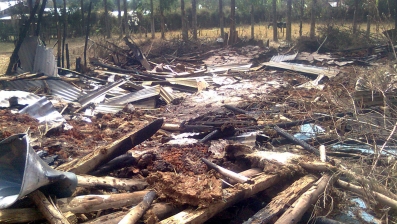
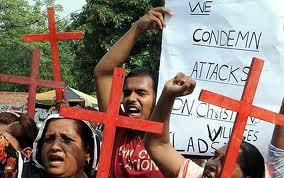
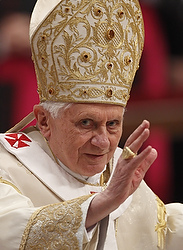
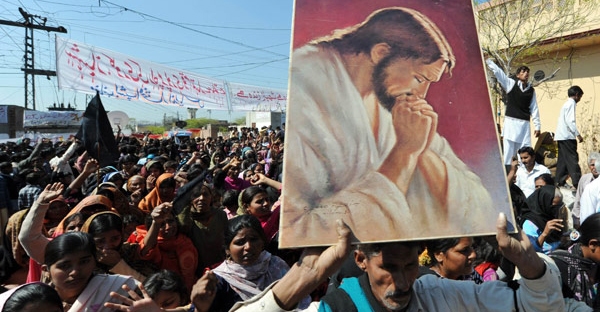
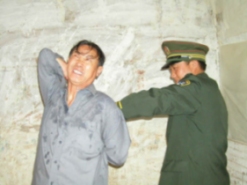
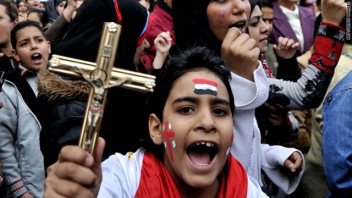
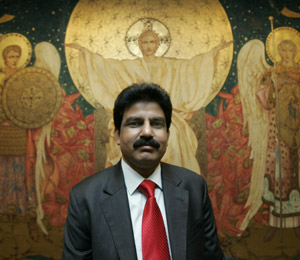
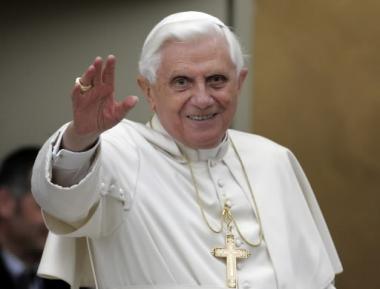
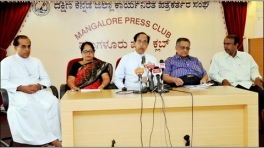

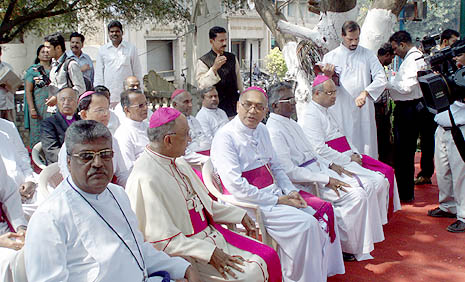
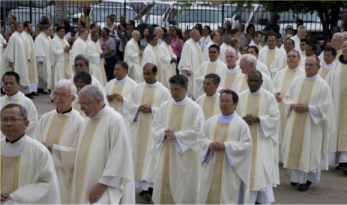 Vatican
City, Feb 11, 2011 / 05:35 pm (CNA/EWTN News).- There are more than 5,000
more Catholic priests globally in 2009 than there were in 1999, according
to official Church statistics.
Vatican
City, Feb 11, 2011 / 05:35 pm (CNA/EWTN News).- There are more than 5,000
more Catholic priests globally in 2009 than there were in 1999, according
to official Church statistics.
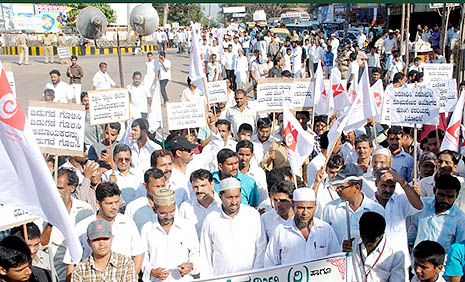
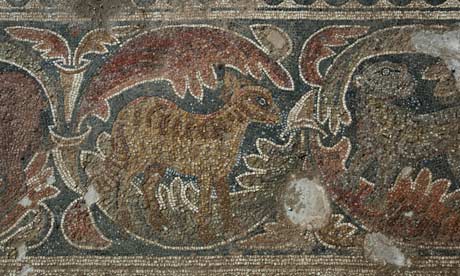 Detail
of the newly uncovered Byzantine mosaics outside Jerusalem. Photograph:
David Silverman/Getty Images
Detail
of the newly uncovered Byzantine mosaics outside Jerusalem. Photograph:
David Silverman/Getty Images
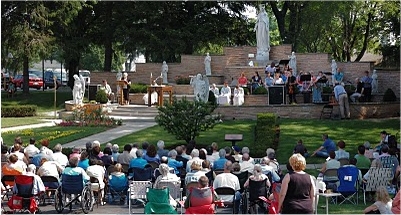
 Parish
priest of Catholic Church badly beaten. A police vehicle torched and the
court Temanggung destroyed. The wrath of the crowd unleashed over a blasphemy
sentence deemed to lenient (5 years in prison instead of death penalty).
Parish
priest of Catholic Church badly beaten. A police vehicle torched and the
court Temanggung destroyed. The wrath of the crowd unleashed over a blasphemy
sentence deemed to lenient (5 years in prison instead of death penalty).
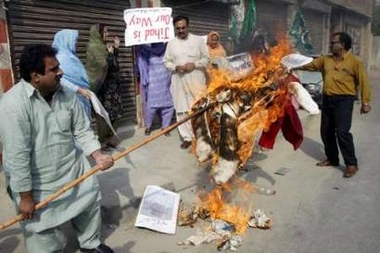
 Three
former Anglican bishops were ordained as Catholic priests on 15 January
Three
former Anglican bishops were ordained as Catholic priests on 15 January
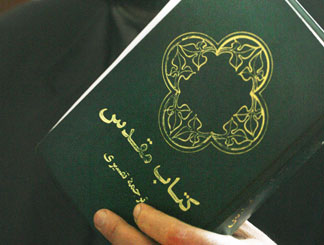
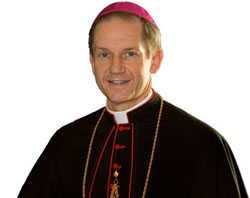
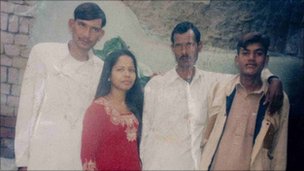
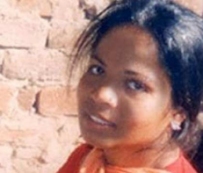 Some
of the women workers had reportedly been pressuring Bibi to renounce her
Christian faith and accept Islam. During one discussion, Bibi responded
by speaking of how Jesus had died on the cross for the sins of humanity
and asking the Muslim women what Muhammad had done for them.
Some
of the women workers had reportedly been pressuring Bibi to renounce her
Christian faith and accept Islam. During one discussion, Bibi responded
by speaking of how Jesus had died on the cross for the sins of humanity
and asking the Muslim women what Muhammad had done for them.
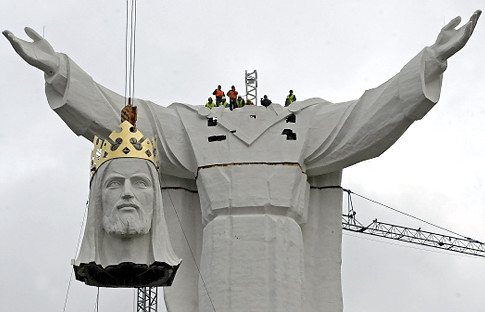
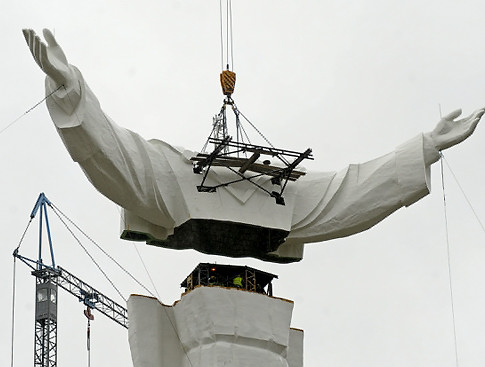
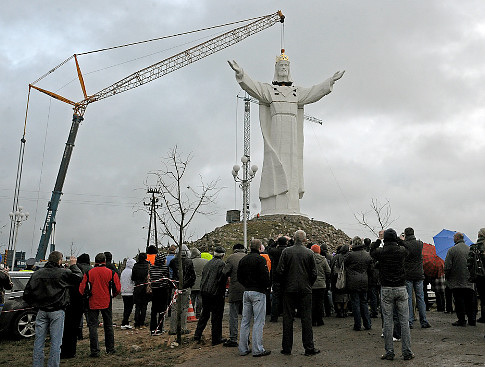
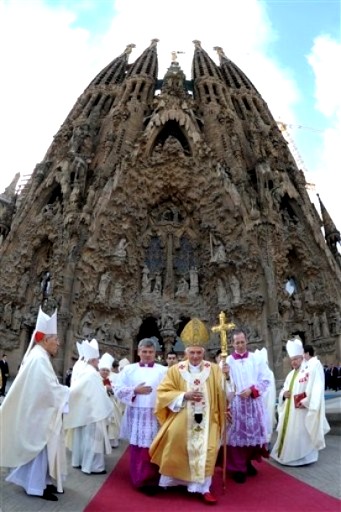
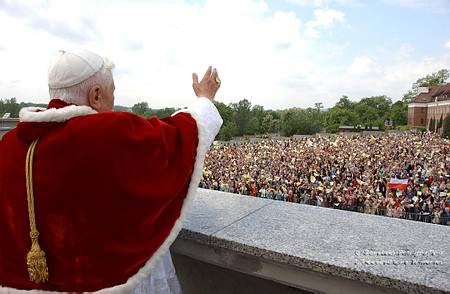
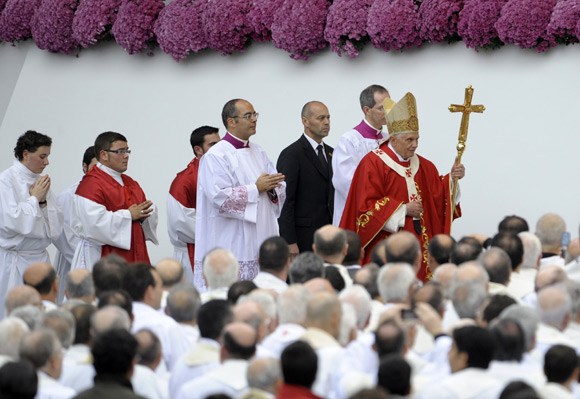 In
Barcelona, consecrating the basilica of the Sagrada Família – a
masterpiece by Antoni Gaudí, but also a joint project underway for
more than a century, like one of the ancient cathedrals – pope Joseph Ratzinger
presented it as a universal example of Christian art that is not closed
in on itself, but intends to set before all men "the mystery revealed in
the birth, passion, death, and resurrection of Jesus Christ."
In
Barcelona, consecrating the basilica of the Sagrada Família – a
masterpiece by Antoni Gaudí, but also a joint project underway for
more than a century, like one of the ancient cathedrals – pope Joseph Ratzinger
presented it as a universal example of Christian art that is not closed
in on itself, but intends to set before all men "the mystery revealed in
the birth, passion, death, and resurrection of Jesus Christ."
 Her
contribution is centred on a simple and decisive reality: God exists and
he has given us life. He alone is absolute, faithful and unfailing love,
that infinite goal that is glimpsed behind the good, the true and the beautiful
things of this world, admirable indeed, but insufficient for the human
heart. Saint Teresa of Jesus understood this when she wrote: "God alone
suffices".
Her
contribution is centred on a simple and decisive reality: God exists and
he has given us life. He alone is absolute, faithful and unfailing love,
that infinite goal that is glimpsed behind the good, the true and the beautiful
things of this world, admirable indeed, but insufficient for the human
heart. Saint Teresa of Jesus understood this when she wrote: "God alone
suffices".
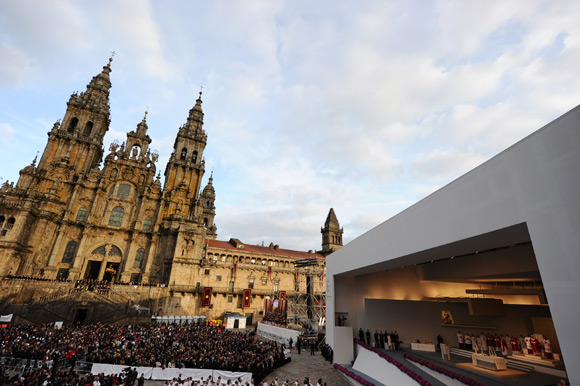
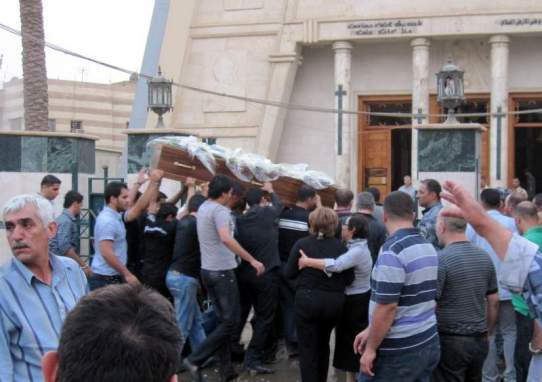 As
the sun set over Baghdad, shocked onlookers stood by, watching a truck
laden with debris drive away from the Our Lady of Salvation Catholic church.
As
the sun set over Baghdad, shocked onlookers stood by, watching a truck
laden with debris drive away from the Our Lady of Salvation Catholic church.
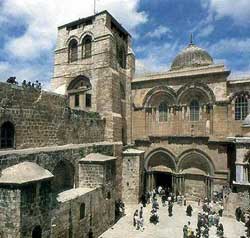
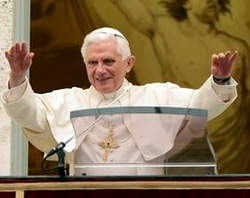

 Riaz
Masih, covering his face for security reasons, says his brothers seek to
kill him.
Riaz
Masih, covering his face for security reasons, says his brothers seek to
kill him.
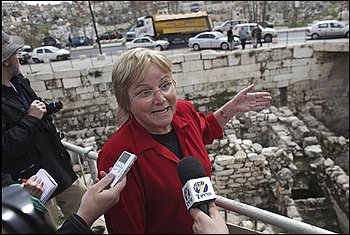
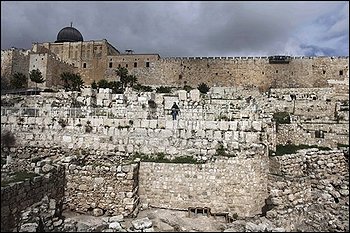
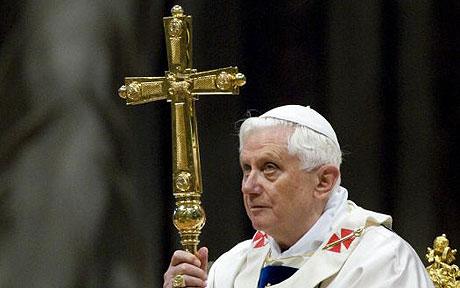
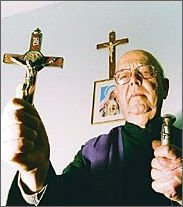
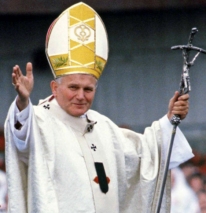
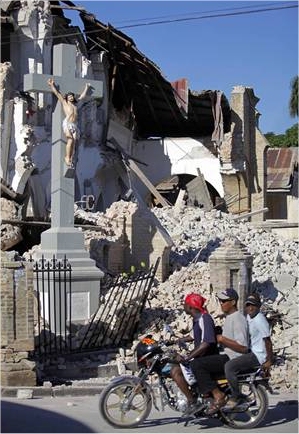
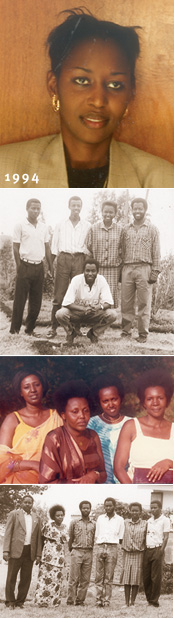 It
was a secret bathroom that even some of the minister's family didn't know
about: three by four feet and so small that Immaculée and the others
-- for those three months -- had to take turns standing.
It
was a secret bathroom that even some of the minister's family didn't know
about: three by four feet and so small that Immaculée and the others
-- for those three months -- had to take turns standing.
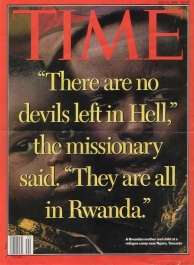

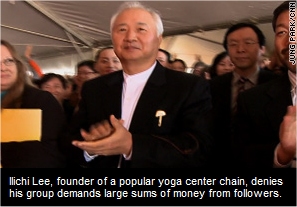
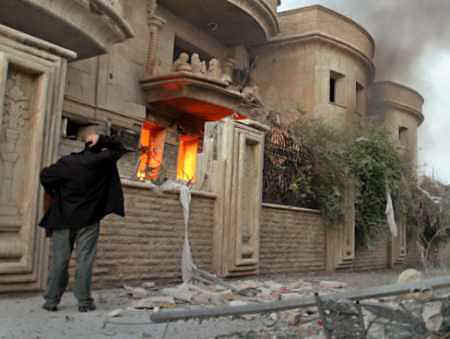

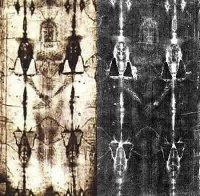
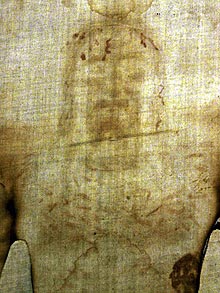
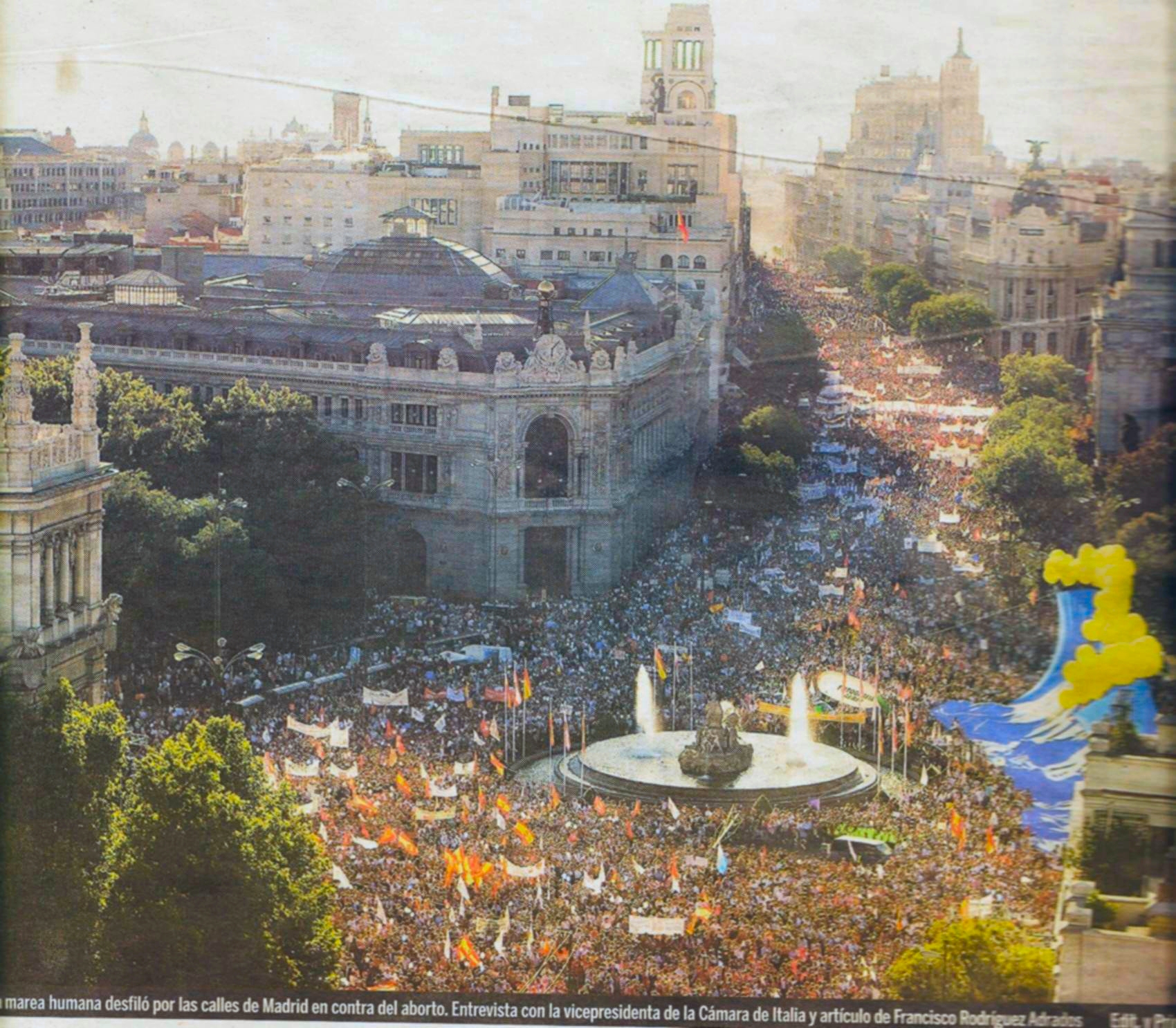
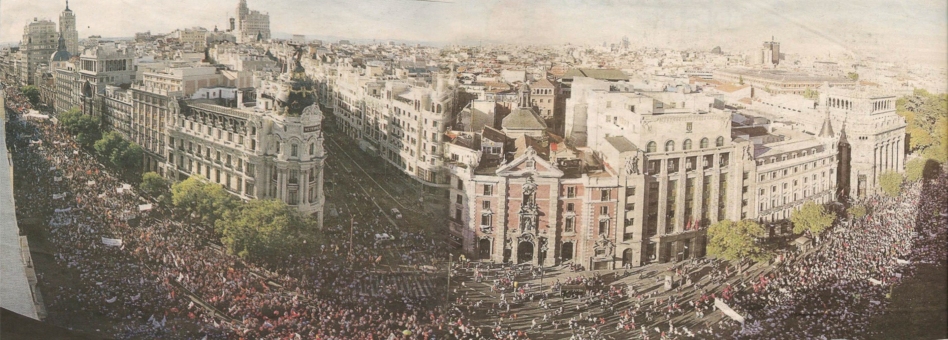
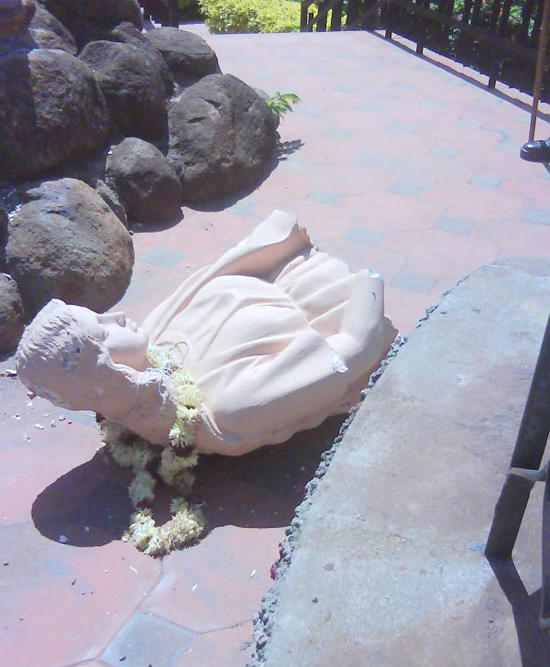
 US
Bishops Declare Reiki Therapy Unchristian
US
Bishops Declare Reiki Therapy Unchristian
 Interview
- God & I: John Pridmore
Interview
- God & I: John Pridmore


 Abortionist
Turned Pro-Life Apostle
Abortionist
Turned Pro-Life Apostle

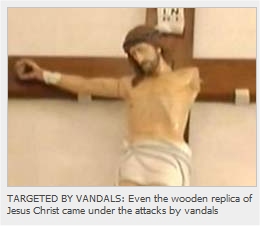
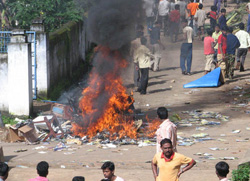 New
Dehli, Sep 17, 2008 / 09:30 am (CNA).- When they came for Narmada Digal,
she wasn’t there. She had fled, five children and mother-in-law in tow,
to the safety of the jungles. So, they set about what she left behind.
A framed picture of Jesus, a Bible in Oriya, utensils in the kitchen and
some clothes. By the time Narmada tiptoed back, her home was gone. What
was left was still hot from the ashes, and smoking. Narmada took a good
look, stood erect, and pulled her sari over her head. She began to pray.
New
Dehli, Sep 17, 2008 / 09:30 am (CNA).- When they came for Narmada Digal,
she wasn’t there. She had fled, five children and mother-in-law in tow,
to the safety of the jungles. So, they set about what she left behind.
A framed picture of Jesus, a Bible in Oriya, utensils in the kitchen and
some clothes. By the time Narmada tiptoed back, her home was gone. What
was left was still hot from the ashes, and smoking. Narmada took a good
look, stood erect, and pulled her sari over her head. She began to pray.
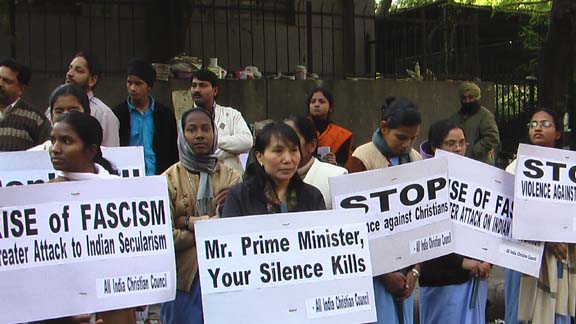 persecution
of independent religious groups is well-known. But India has its own problems
with human rights and savage religious persecution which are being ignored
by the world media. In the latest eruption of religious violence in the
poor northeastern state of Orissa, impoverished Christians have been the
target of horrific violence.
persecution
of independent religious groups is well-known. But India has its own problems
with human rights and savage religious persecution which are being ignored
by the world media. In the latest eruption of religious violence in the
poor northeastern state of Orissa, impoverished Christians have been the
target of horrific violence.
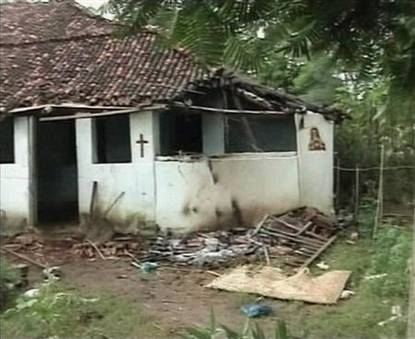 More
than 400 churches, 500 houses and many Christian institutions have been
gutted. Many Christians have fled to the jungle for safety. Similar incidents
have happened throughout Orissa. Even in its capital Bhuvaneswar, Christian
schools have been ransacked. Raphael Cheenath, the Catholic archbishop
of Cuttack-Bhubaneshwar, says that it is clear that "the fanatical forces
of Hindutva want to eliminate Christians from Orissa".
More
than 400 churches, 500 houses and many Christian institutions have been
gutted. Many Christians have fled to the jungle for safety. Similar incidents
have happened throughout Orissa. Even in its capital Bhuvaneswar, Christian
schools have been ransacked. Raphael Cheenath, the Catholic archbishop
of Cuttack-Bhubaneshwar, says that it is clear that "the fanatical forces
of Hindutva want to eliminate Christians from Orissa".